
Quick Take
- The Olympic marmot is Washington’s only endemic mammal, confined to the Olympic Peninsula and evolving for over 2 million years.
- In 2009, the Olympic marmot became Washington’s official state endemic mammal, sparked by a fourth-grade classroom’s bill proposal.
- With only 2,000 to 4,000 individuals left, climate-driven snowpack loss and rising coyote predation threaten persistence, with up to 85% of deaths in some years.
- Read on to discover how the Olympic marmot‘s fate could hinge on ESA listing and the debated wolf reintroduction.
In 2009, Washington named the Olympic marmot as its official State Endemic Mammal. While governments often choose symbols for their historical significance or popularity, the marmot’s journey actually began in a fourth-grade classroom. Today, this iconic “whistle-pig” is a meaningful symbol of Washington’s identity, particularly in an era of rapid environmental change.
What Sets the Olympic Marmot Apart
Genetic research shows that the Olympic marmot isn’t just a local variety of a common animal; it is its own distinct branch on the evolutionary tree. About 2.6 million years ago, as massive ice sheets covered North America, the ancestors of the Olympic marmot split from their closest relatives, and a small population became trapped on the Olympic Peninsula. Their isolation forced the population to evolve into a completely new species — the Olympic marmot (Marmota olympus) — perfectly suited to their specific environment.
By the time the ice retreated 12,000 years ago, the Olympic marmot had evolved new traits found nowhere else, including a distinct social structure, a “whistle” different from any of its cousins, and a color-changing fur coat.
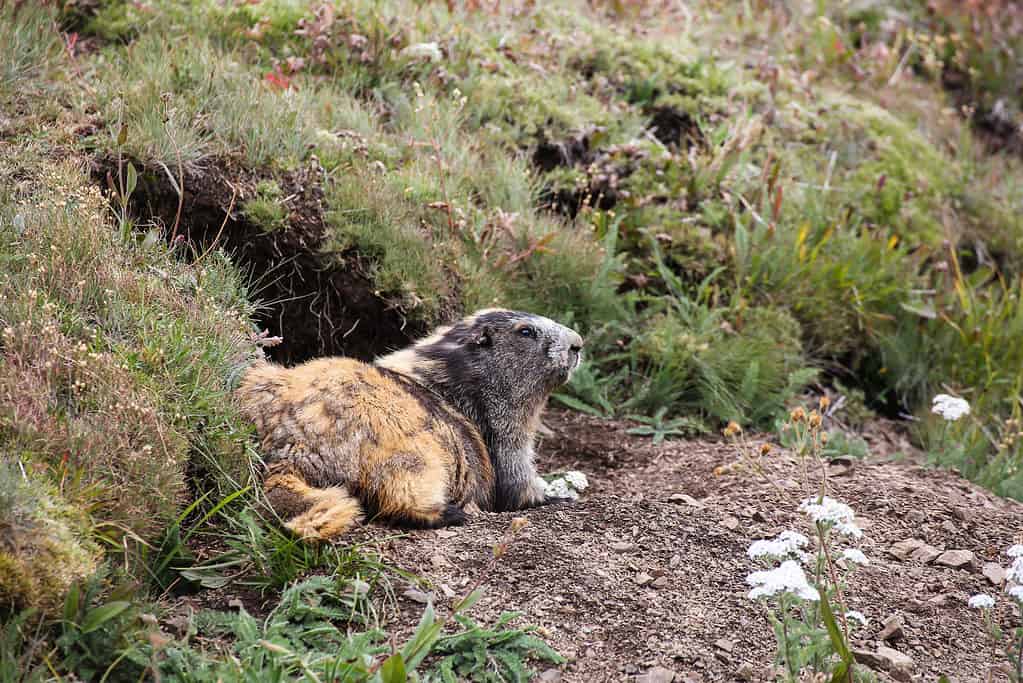
Olympic marmots shed seasonally and change colors.
©iStock.com/Mr_Fu
How a Fourth-Grade Classroom Changed State Law
In the spring of 2009, fourth-grade teacher Kelly Clark decided to show her class how a simple class project could have real-world effects. With the help of State Senator Ken Jacobsen, her class proposed a bill to make the Olympic marmot the official state mammal of Washington.
Unfortunately, the state capitol faced many of its own challenges, including the “Great Recession” and a multi-billion dollar deficit threatening its budget. Speaker of the House Frank Chopp considered the marmot bill a frivolous distraction and refused to bring it to a vote. Undeterred, Clark decided to give her students a masterclass in lobbying, determined to teach them that they were legitimate citizens with a voice.
During a field trip to the Capitol, another state representative helped the students bypass security, leading them directly into Chopp’s office to demand a hearing. When the meeting didn’t sway the Speaker, the students launched their own 30-day campaign, flooding Chopp’s inbox each night with emails explaining why the marmot deserved official recognition.
Eventually, the students’ determination and persistence broke the year-long stalemate. Whether he was truly convinced or simply wanted to clear his overwhelming inbox, Chopp finally allowed the bill to move forward. On April 14, 2009, the House passed the bill by a vote of 84 to 13. On May 12, Governor Christine Gregoire signed it into law.
Lessons in Community and Cooperation
As Washington’s official State Endemic Mammal, the Olympic marmot serves as a biological barometer for mountain health and a cultural icon of community and resilience. These incredibly social animals live in tight-knit colonies and family groups.
Their most iconic behavior is the marmot “kiss.” When family members meet, they often stand on their hind legs and touch noses like a “kiss,” reinforcing their bond after time apart. Olympic marmots also playfully wrestle and groom one another, and each of these interactions helps to strengthen the entire colony. Additionally, when one marmot whistles, the entire colony reacts. No marmot survives alone in the harsh and unpredictable environment of the Olympic Mountains.
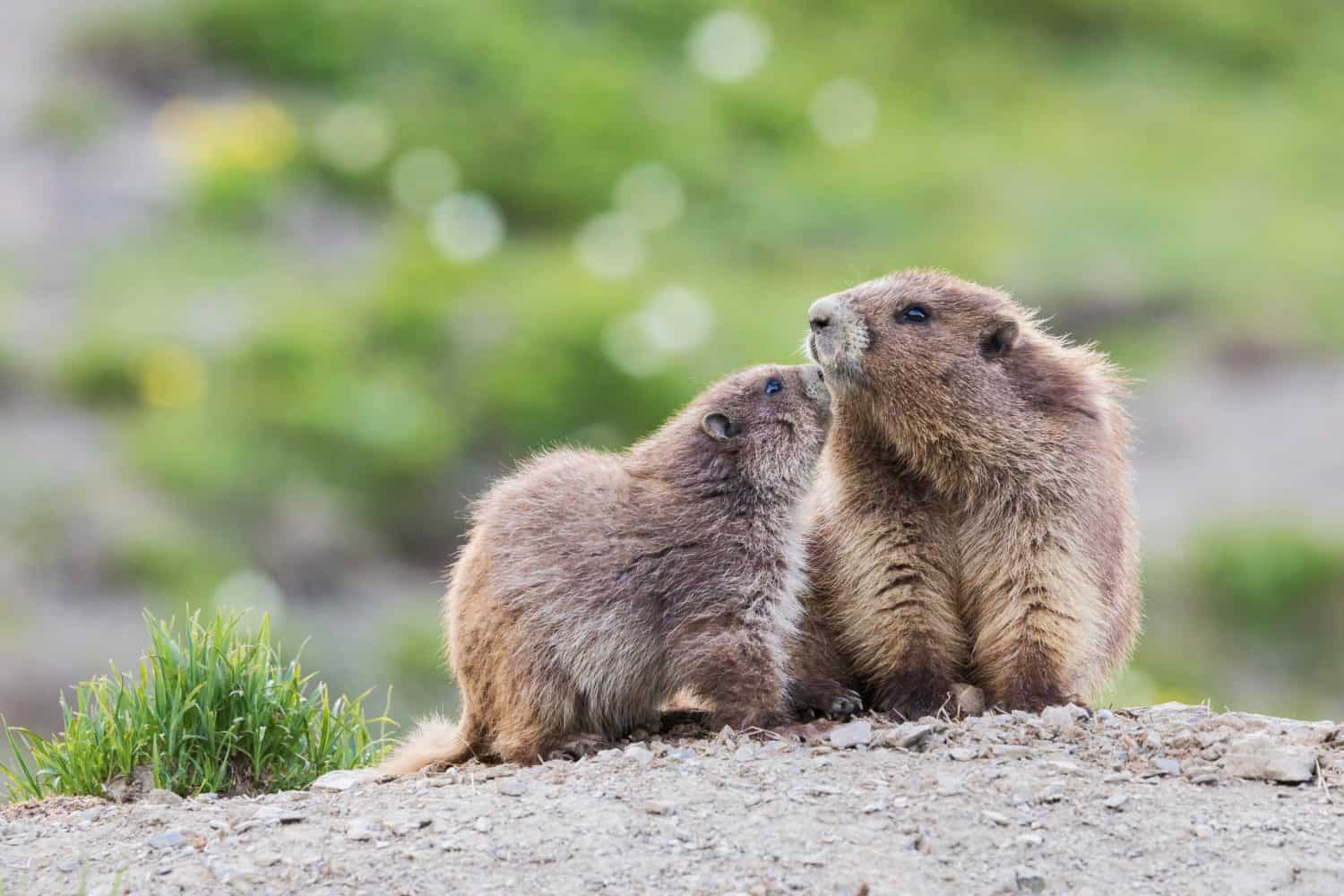
The Olympic marmot forms tight family bonds and is one of the most social marmot species.
©Danita Delimont/Shutterstock.com
Ecologically, the marmot is a keystone species and an indicator species. Because they are so specialized for high-elevation meadows, their health reflects the health of the entire Olympic Peninsula ecosystem. In addition, Olympic marmots graze on lilies and lupines, which helps stimulate plant growth and recycles nutrients back into the soil through their burrows. Their unique, high-pitched whistle warns not just other marmots, but also birds and deer of nearby predators.
Moreover, the Olympic marmot is a master of endurance. To survive the brutal Olympic winters, it hibernates for eight months of the year. It stays tucked deep in burrows, buried under up to 20 feet of snow. This ability to “shut down” and re-emerge each spring symbolizes renewal and grit. This level of endurance resonates deeply with Washington’s rugged outdoor culture.
Why the “Endemic” Label Matters More Than Ever Now
Since 2009, the Olympic marmot has evolved from a simple state mascot into an important symbol of stewardship. It is endemic to Washington, meaning it exists nowhere else on Earth. Because of this, the state bears a unique responsibility to protect the species. Unfortunately, climate change now threatens the Olympic marmot’s survival.
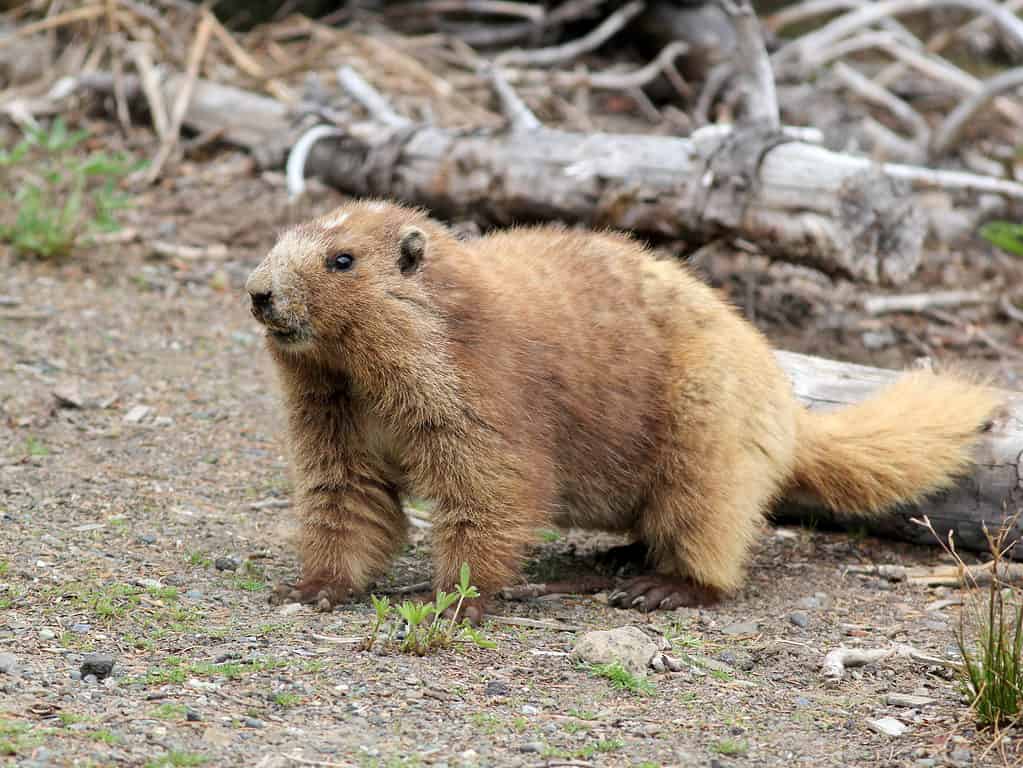
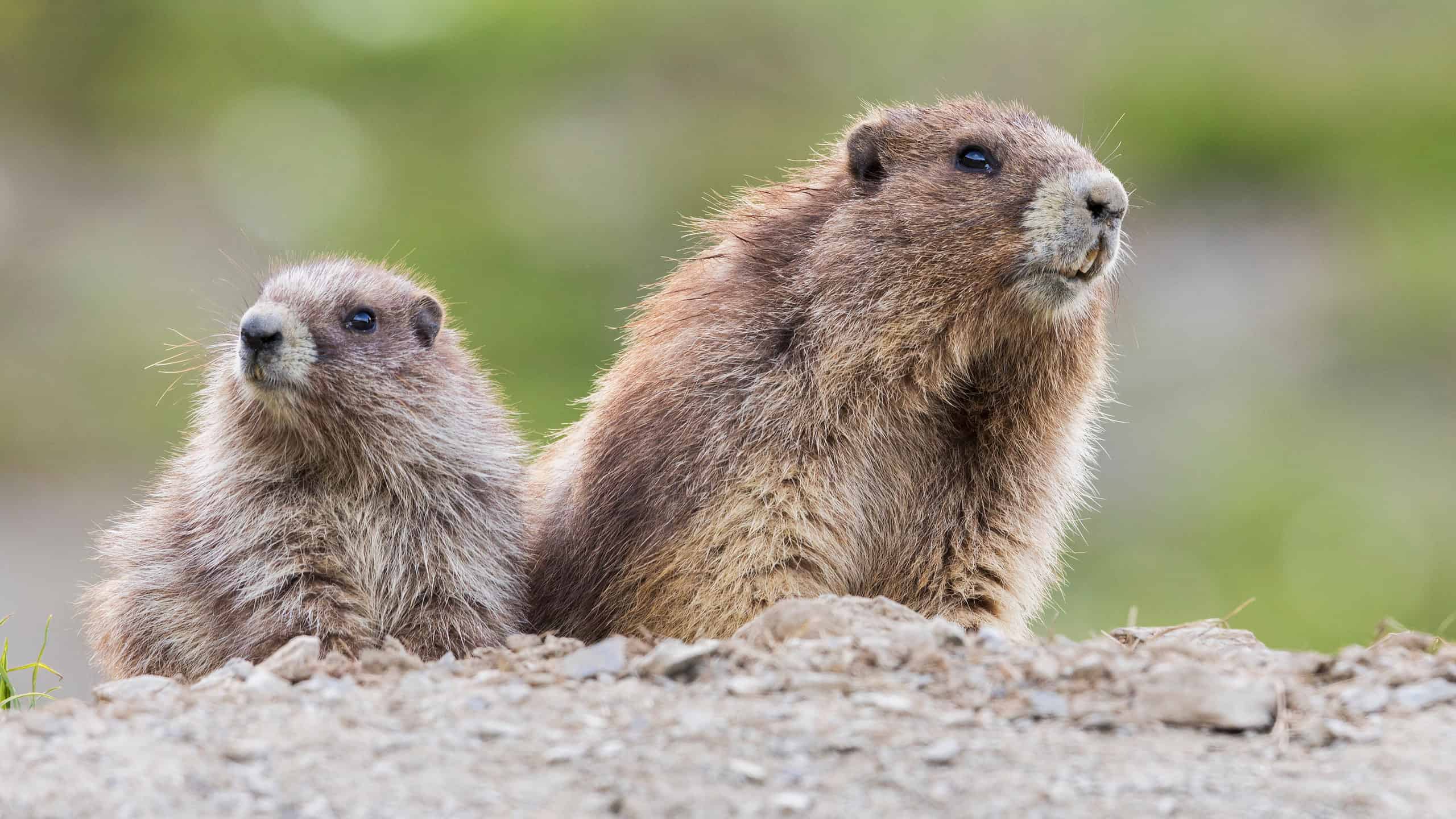
The Olympic marmot is the only endemic mammal in the Olympic Mountains.
©Randy Bjorklund/Shutterstock.com
In May 2024, the Center for Biological Diversity petitioned to list the Olympic marmot as an endangered or threatened species under the federal Endangered Species Act (ESA). The government missed its mandatory 90-day deadline to respond. Consequently, conservationists filed a federal lawsuit against the U.S. Fish and Wildlife Service on October 29, 2025. The suit argues that the government’s delay in responding to the petition could jeopardize the marmot’s survival and recovery.
Surviving a Changing Climate
With only 2,000 to 4,000 individuals left, the Olympic marmot’s home alpine habitat is rapidly disappearing as temperatures rise and snowpacks melt earlier, causing treelines to move upward. These trees are taking over the marmot’s open alpine meadows, leaving the animals with less space to find food and fewer clear sightlines to spot predators.
Beyond the changing landscape, the lack of snow is also silently killing these unique animals. Olympic marmots depend on deep snow to insulate their burrows during hibernation. As temperatures continue to rise, this snowpack is vanishing. Without it, marmots can freeze to death or wake up too early, when there is no food available and they are too weak to survive or reproduce.
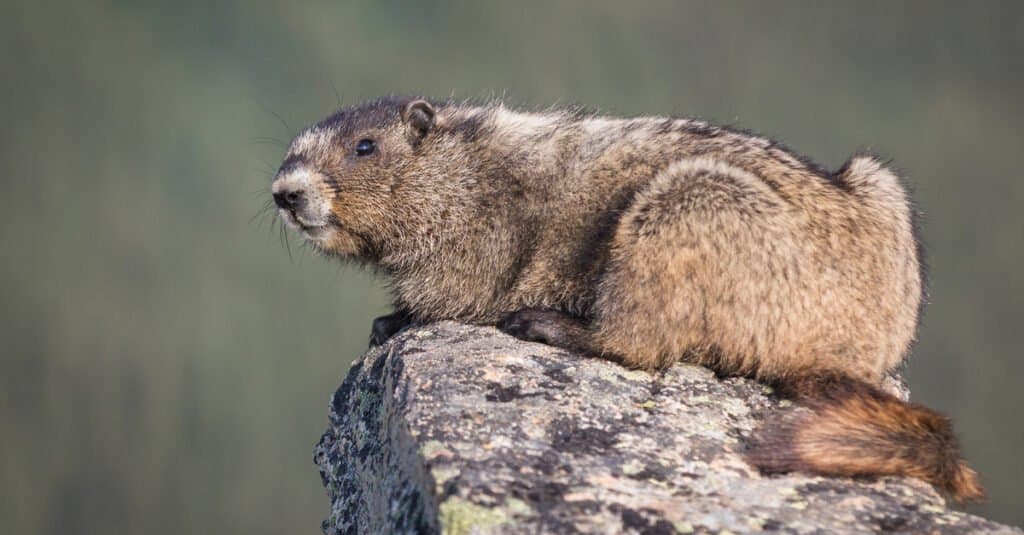
Olympic marmots often sprawl out atop sunny rocks to warm their bodies.
©Virginie Merckaert/Shutterstock.com
The marmot’s decline is also linked to an ecological imbalance that began in the 1930s. Historically, coyotes were rare in the Olympic Mountains because wolves kept them away. However, when gray wolves were wiped out on the Olympic Peninsula, it cleared the way for coyotes to move into the marmot’s high-elevation meadows. Because the snow is melting much earlier in the season, these efficient daytime hunters can now easily reach marmot colonies that were once protected by harsh winter conditions. In fact, some studies suggest coyotes are responsible for up to 85 percent of marmot deaths in certain areas during specific years.
Moreover, Olympic marmots reproduce more slowly than other North American rodents. They don’t reach maturity until they are about three years old and typically have small litters. This makes it even harder for their populations to recover from threats like predation and climate change.
Citizen Science and “Marmoteers” in Action
If the Olympic marmot disappears completely, the health of the entire subalpine ecosystem will be at risk. Listing the marmot under the ESA would require the creation of a recovery plan — potentially including habitat restoration and other measures to support population recovery. Some experts argue that a reintroduction of wolves to balance the predator population is also needed.
Despite the marmot’s continued challenges, a dedicated community is fighting to protect Washington’s State Endemic Mammal. Since 2010, volunteers known as the “Marmoteers” trek into the backcountry every summer to track colony health.
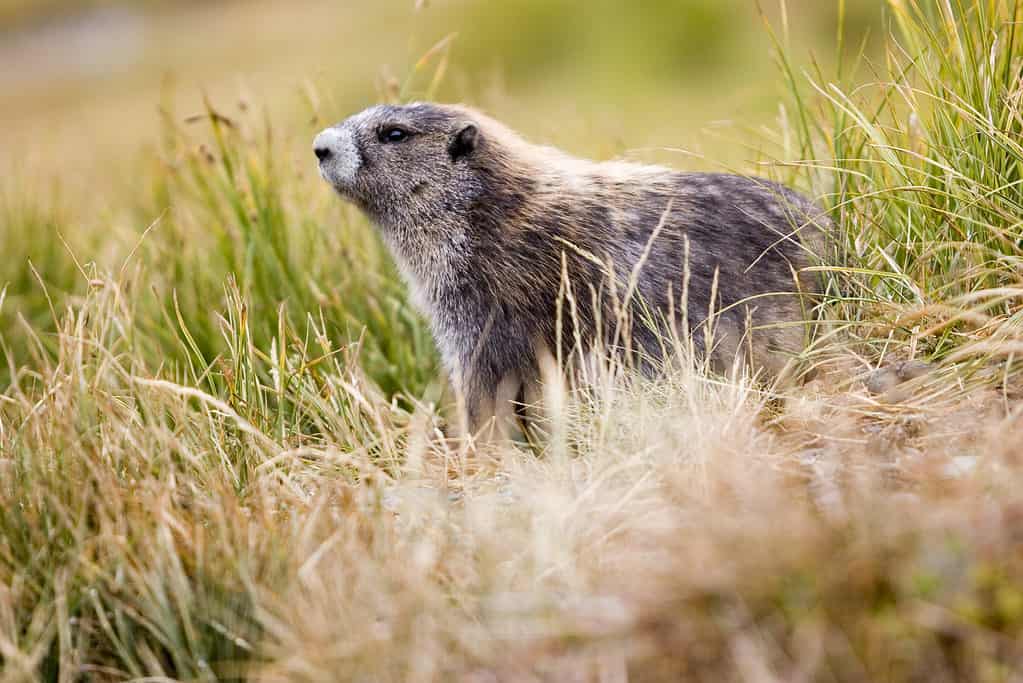
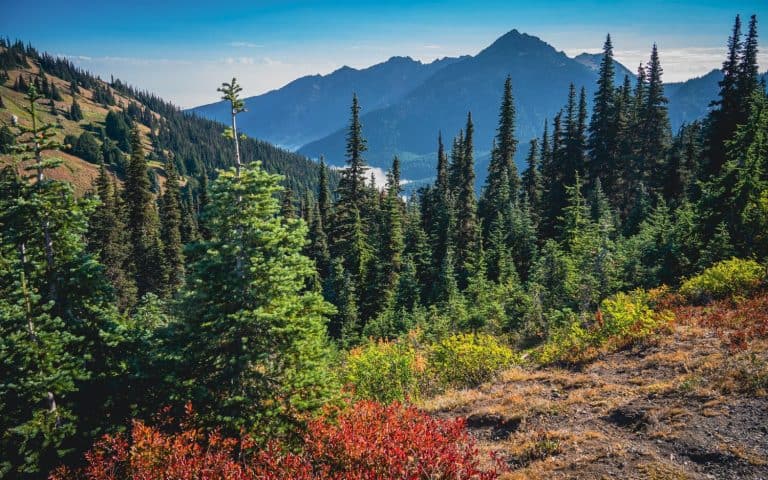
Fortunately, Washington’s Olympic National Park legally protects much of the Olympic marmot’s habitat.
©iStock.com/westlacountphoto