
Quick Take
- First-timers don't realize there's a specific permit requirement, and that catches many would-be harvesters off guard. See permit requirements →
- The two-day sport season gives recreational harvesters a rare window that commercial nets can't touch, and that window opens at a very specific moment. Check the sport season dates →
- Some of Florida's most popular diving spots are completely off-limits for lobster harvest, and the list includes a few surprises. See off-limits areas →
- One common harvesting method is a felony in Florida waters, a fact that many recreational harvesters don't discover until it's too late. See prohibited methods →
Whether you’re hoping to harvest during the spiny lobster sport season or the regular season, the Florida Fish and Wildlife Conservation Commission (FWC) has specific rules that must be followed to ensure the conservation of lobsters that inhabit Florida’s waters. If the sport season is too fast-paced, the long regular season gives everyone an opportunity to catch lobsters. However, there are regulations that all participants must follow. Check out our guide to learn everything you need to know about lobster season in Florida.
Lobster Season in Florida
In the Sunshine State, there are two lobster seasons. The first lobster season opens the last consecutive Wednesday and Thursday of July. Although the two-day sport season draws heavy crowds, it lets recreational divers and snorkelers go out on the water to harvest lobsters before the commercial fishing nets are allowed out.
However, that doesn’t mean recreational harvesting is prohibited while commercial fishing nets are out. The regular lobster season runs from August 6 through March 31. This long season provides plenty of opportunities for lobster enthusiasts to enjoy catching their favorite meal, but check the rules and regulations to ensure you are harvesting legally.
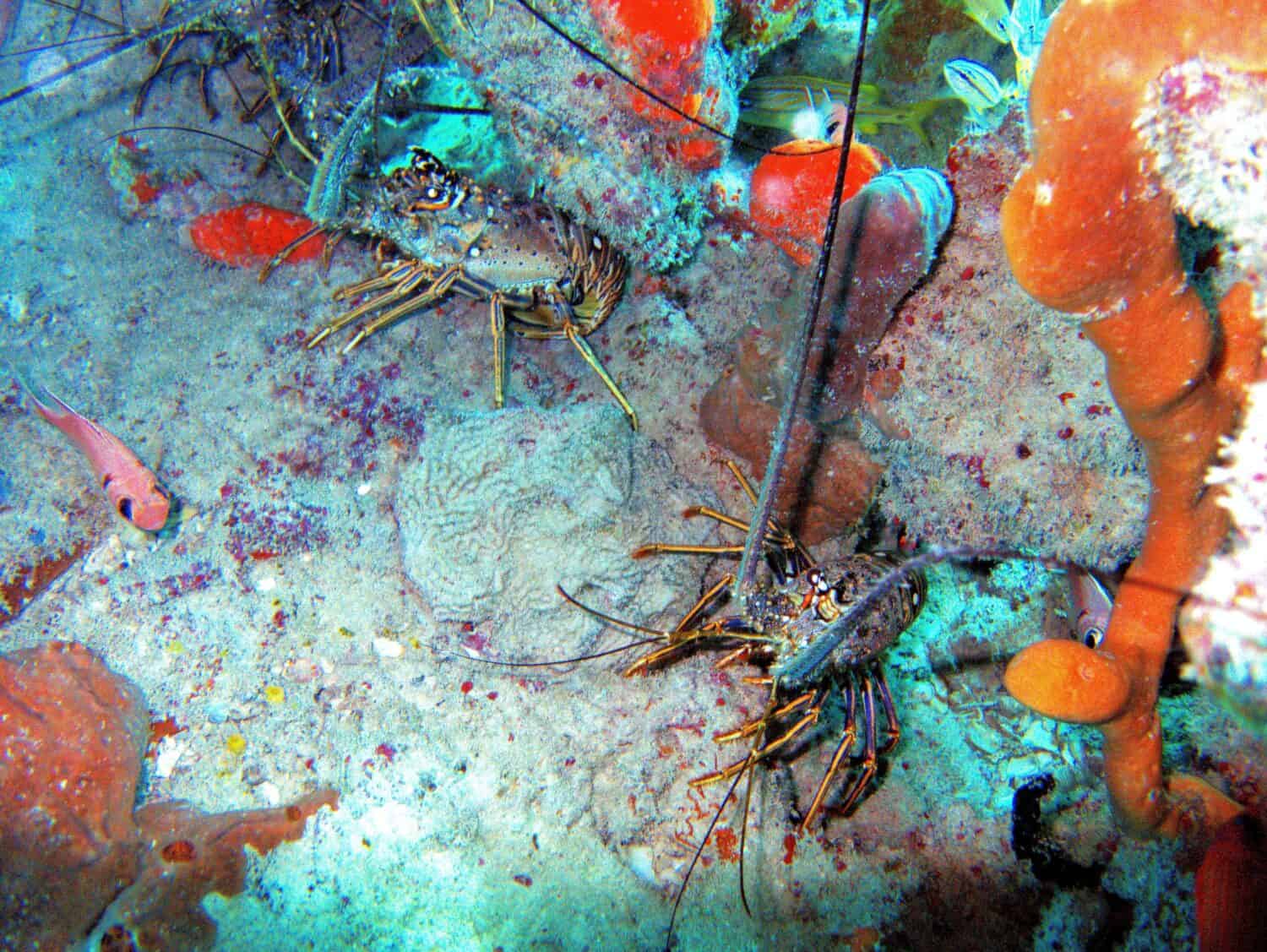
Florida’s lobster season runs from August 6 through March 31.
©fsossi/Shutterstock.com
Harvesting Rules and Regulations
When harvesting during Florida’s lobster season, there are rules and regulations you need to abide by, including:
- To harvest a lobster, measure it while still in the water. The carapace must measure more than 3 inches. The possession and use of a measuring device is required at all times.
- Dive flags are mandatory when diving, and you must remove them when leaving. Furthermore, you must stay within 300 feet of your dive flag or within 100 feet of the dive flag in a channel.
- If you see a boat displaying a dive flag, reduce to idle speed within 300 feet of the flag in open water or within 100 feet on rivers.
- Monroe County (including the Keys) and Biscayne National Park have a daily recreational bag limit of 6 lobsters. However, the rest of the state has a bag limit of 12 during the mini-season and 6 during the regular season, which are strictly enforced.
- The possession limit on the water is equal to the daily bag limit.
- The possession limit off the water is equal to the daily bag limit on July 29, 2026, and double the daily bag limit on July 30, 2026.
- You will be charged with a felony if you damage or remove lobsters from traps in federal or state waters.
- Before heading out, check and restock all essential boating safety gear.
- Make sure not to damage coral in any way. Don’t bump into it, stand on it, or anchor your boat on it.
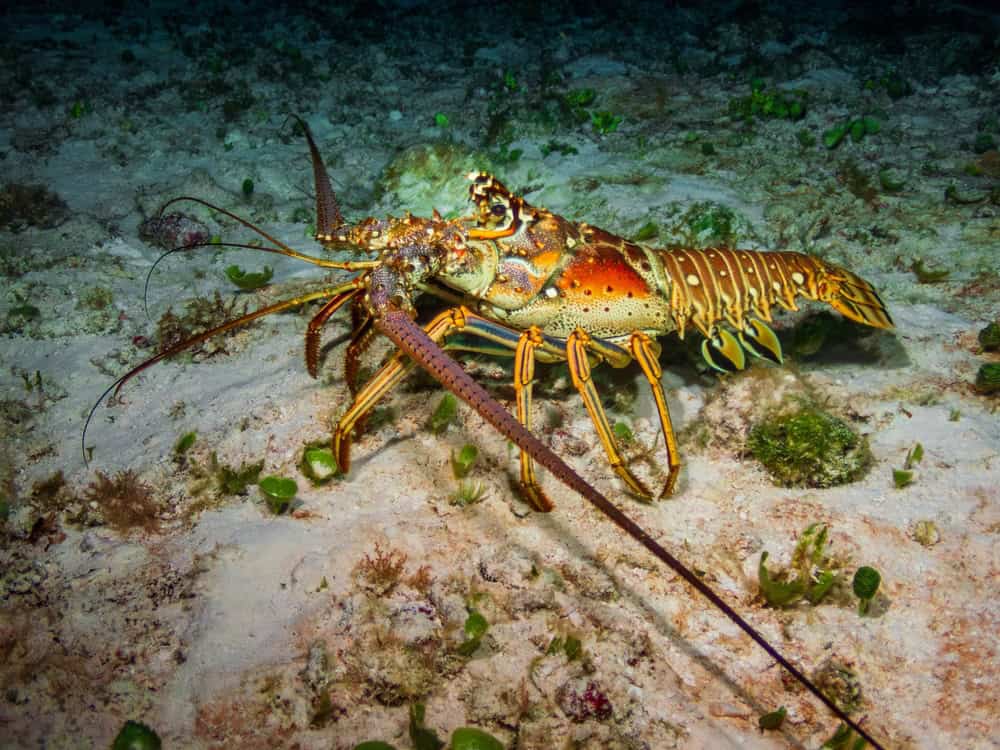
To harvest a lobster, the carapace length must be larger than 3 inches, measured in the water.
©alonanola/Shutterstock.com
Prohibitions
In addition to the rules and regulations above, Florida enforces other prohibitions that harvesters must follow. These include:
- The lobster must be landed whole, and separating the tail from the body is prohibited in Florida waters.
- Harvesting or possessing egg-bearing spiny lobsters, or other egg-bearing species belonging to the families Palinuridae (spiny lobsters), Scyllaridae (slipper lobsters) or Synaxidae (furry lobsters) is prohibited.
- Harvesting or attempting to harvest spiny lobsters using devices that puncture, penetrate, or crush the lobster’s exoskeleton or flesh is prohibited.
- Recreational trapping is prohibited.
- Bag limits are only for properly licensed individuals and those exempt from license requirements who are actively harvesting.
Prohibited Harvesting Areas
Some of the best places to harvest lobster are the Florida Keys and the Gold Coast, which includes Miami, Fort Lauderdale, and Palm Beach. However, there are some protected areas where harvest is prohibited. During the sport season, harvest is prohibited in John Pennekamp Coral Reef State Park, but it is allowed during the regular season.
Harvest of lobster is prohibited in Everglades National Park and Dry Tortugas National Park at all times. Harvest is also prohibited at all times in no-take areas in the Florida Keys National Marine Sanctuary, in the Biscayne Bay/Card Sound Lobster Sanctuary, and in the five Coral Reef Protection Areas in Biscayne National Park.
Licensing and Permit Requirements
When harvesting, you will need a lobster permit and a saltwater license, even when fishing from shore. Unfortunately, shore licenses are not valid for harvesting lobster. When obtaining these permits and licenses, you will incur the following fees:
- Lobster Permit – $5
- Annual saltwater license for residents – $17
- Annual saltwater license for non-residents – $47
- Non-resident 3-day saltwater fishing license – $17.00