
Quick Take
- Deep Hole isn’t just a Florida curiosity — it’s a natural sinkhole that becomes a major dry-season gathering spot for American alligators inside Myakka River State Park.
- Scientists have recorded Deep Hole at about 131 feet deep, and its harsh low-oxygen, hydrogen-sulfide-rich water helps explain why so little survives at the bottom.
- The site shows how one unusual landscape feature can shape an entire ecosystem, drawing fish, birds, and large numbers of gators when water elsewhere becomes scarce.
When people think of Florida, they may think of Disneyworld, sandy beaches, oranges, or sunshine. Then again, if you possess a less-optimistic outlook, you may conjure up images of giant bugs, hurricanes, or sunburns. In recent years, another scary natural phenomenon common in Florida captured people’s attention: sinkholes.
The Florida landscape features a large number of sinkholes. According to the Florida Geological Survey, Florida maintains a database of reported subsidence incidents statewide. Some may be true sinkholes, but the state says most have not been field-checked and are not verified as sinkholes. While most of these sinkholes garner little attention, others sometimes turn into national news. This tends to happen when a sinkhole rapidly appears and swallows up roads or peoples’ homes.
In particular, one Florida sinkhole attracts attention due to its dangerous residents. Known as ‘Deep Hole,’ this sinkhole becomes a major dry-season gathering spot for American alligators, with surveys and park reporting showing that well over 100 can congregate there when water levels drop. Despite its deadly residents, the surrounding area contains several popular fishing, hiking, and camping spots. Keep reading to learn more about Deep Hole, the alligator-infested sinkhole in Florida.
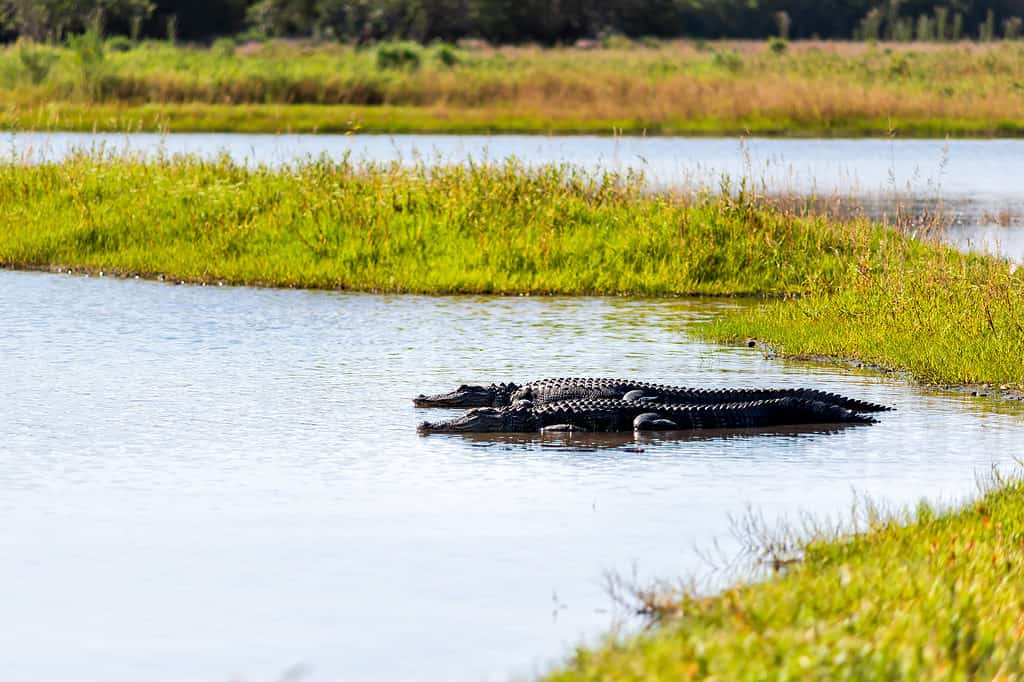
Two alligators swim in Deep Hole, a sinkhole measured at about 131 feet deep in Myakka River State Park.
©Kristi Blokhin/Shutterstock.com
Deep Hole: The Alligator-Infested Sinkhole
Deep Hole is located within the 58-square-mile Myakka River State Park outside Sarasota, Florida. Myakka River State Park ranks as one of Florida’s largest and oldest parks. You can find Deep Hole on the southwest shoreline of Lower Myakka Lake, near where the lake empties into the lower Myakka River in the park’s wilderness preserve. The Myakka River feeds into the lake and flows through Myakka River State Park, which shares its name with the river.
Scientific surveys have recorded Deep Hole at about 131 feet deep, and the sink is roughly 90 meters (about 295 feet) across. Murky water fills the Deep Hole year-round, which makes it difficult to study. Studies are further hampered by the sinkhole’s large population of American alligators. Water levels in the sinkhole vary depending on the time of year. During the wet season, water levels can rise nearly 6 feet. Similarly, in dry years the water levels can fall substantially.
Deep Hole is a static sinkhole, unlike some other sinkholes, meaning it is not fed by an underground mineral spring. Water temperatures can vary drastically near the surface and deeper within the hole. The lack of moving water, low oxygen, and high levels of hydrogen sulfide make living at the bottom of the sinkhole almost impossible. Almost no plant life lives along the bottom of the sinkhole, which is littered with fish carcasses. These fish likely die during the dry season due to a lack of oxygen or food in the sinkhole.
Where is Florida’s Alligator-Infested Sinkhole – Deep Hole Located on a Map?
Deep Hole is located within the 58-square-mile Myakka River State Park outside Sarasota, Florida. You can find Deep Hole on the northwest bank of the Myakka River near the southern end of Lower Myakka Lake. The city of Sarasota is in the central part of the state – on the western Gulf Coast side. Sarasota sits on Sarasota Bay, and Lido Key is reached from downtown via the John Ringling Causeway (State Road 789).
What are Sinkholes, and How Are They Made?
A sinkhole is a depression in the ground created after the surface layer of the ground collapses.
The majority of sinkholes form as a result of karst processes. These processes involve the dissolution of carbonate rocks by chemicals or the collapse of underground caves. While some sinkholes form slowly over time, others can form rapidly. The natural process of erosion slowly creates the optimal scenario for a sinkhole to occur. From there, the surrounding landscape determines how and when the sinkhole develops.
The Ecology of Deep Hole
You can find a diverse array of plant and animal life around Deep Hole. Myakka River State Park covers more than 37,000 acres of wetlands, prairie, hammocks, and pinelands. Common plants in the park include longleaf pine, saw palmetto, and bald cypress.
According to park records, close to 40 species of fish reside within the waters of the Myakka River and its lakes. Additionally, the park is home to around 48 reptile species, 22 amphibian species, 32 mammal species, and 255 bird species. Of these animals, the American alligator ranks as the park’s — and Deep Hole’s — most notorious species.
The number of alligators around Deep Hole varies depending on the time of year. During the dry season, animals in the park tend to congregate around water sources. At that time, you can find as many as 150 gators in the water and the land around Deep Hole. No one knows exactly why so many gators live in such a small space. Most likely, the alligators in Deep Hole gather for protection, warmth, and a greater chance of finding food. This holds especially true during the dry season when the diversity around the sinkhole increases.
American Alligators Description
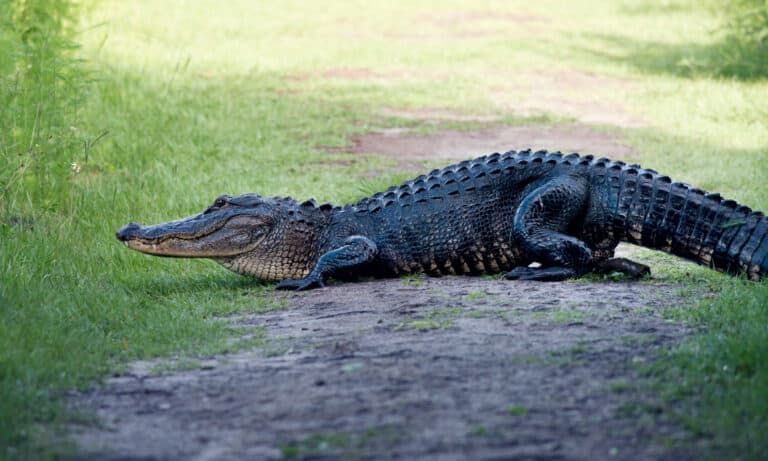
The alligators found in Deep Hole are all American alligators (Alligator mississippiensis). Also known simply as gators, American alligators belong to the family Alligatoridae in the order Crocodilia. Along with the Chinese alligator, they represent the two remaining extant alligator species on Earth. That said, American alligators measure larger than their Chinese cousins. Adult male American alligators typically reach about 10 to 15 feet long and can weigh up to about 1,000 pounds. Females are smaller and rarely exceed 10 feet. Females measure slightly smaller, with most running between 8.5 and 9.8 feet long.
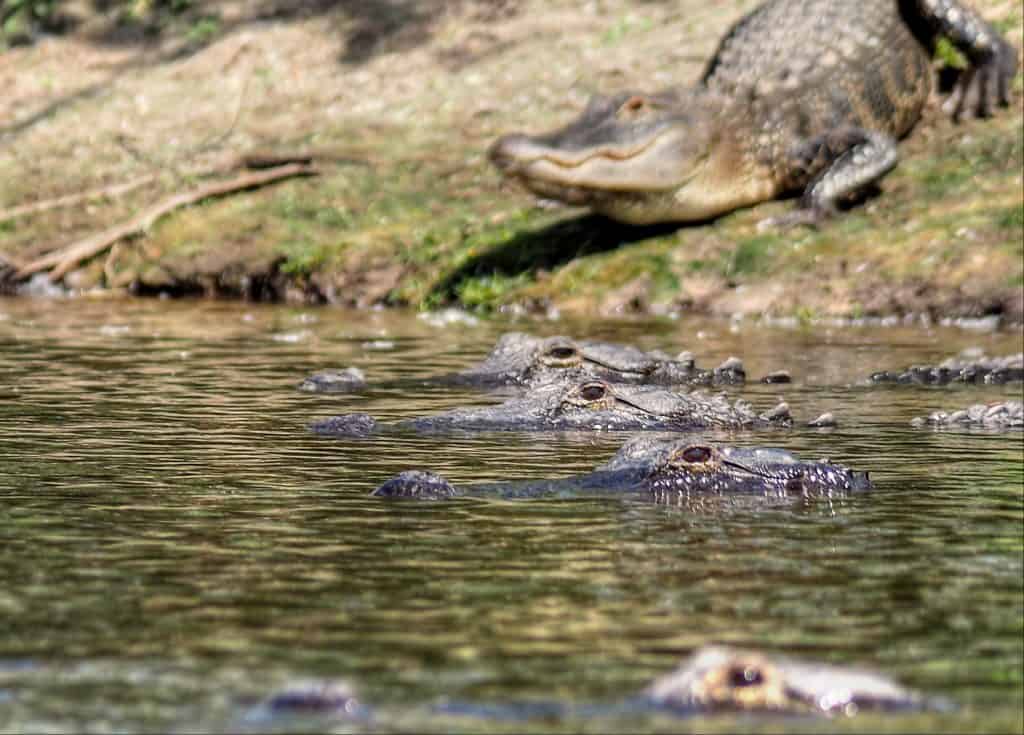
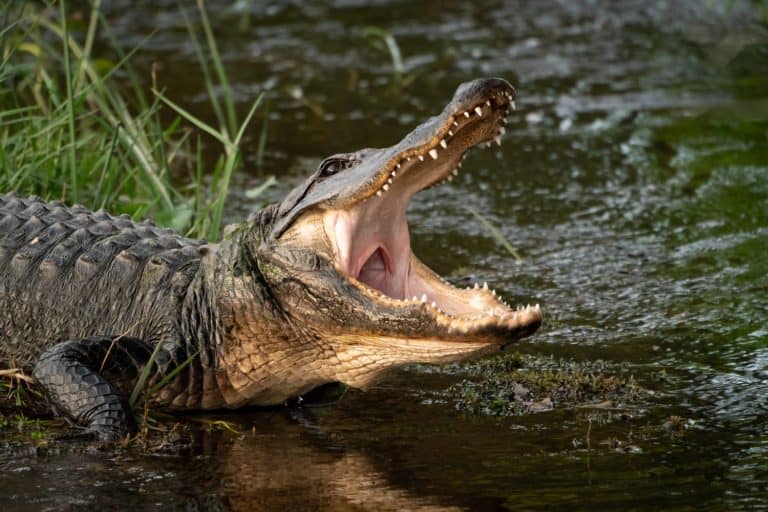
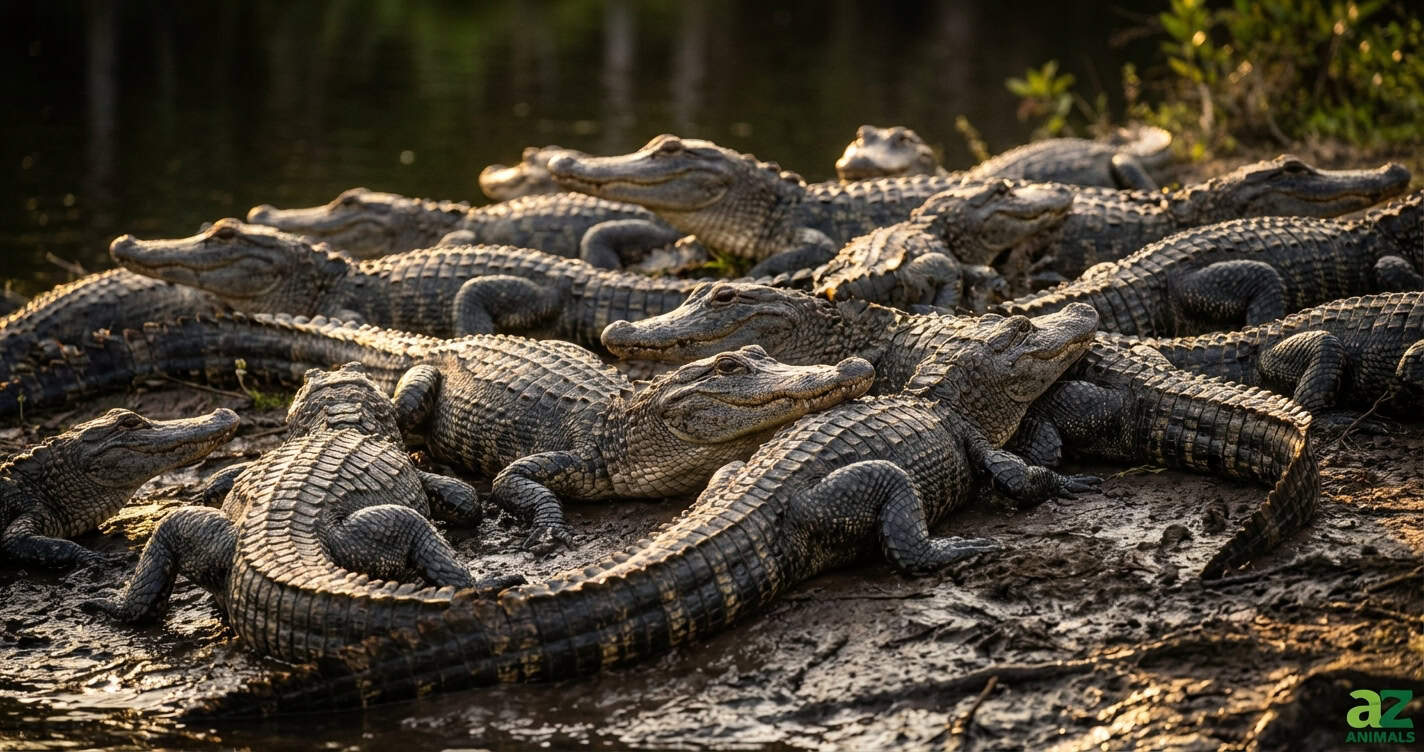
A herd of alligators mingle in the waters at Deep Hole.
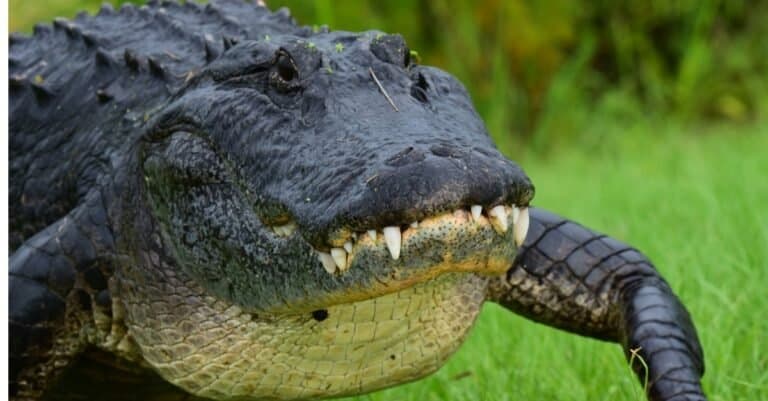
American alligators are native to the southeastern United States. You can distinguish an American alligator from an American crocodile by its broader, rounded snout, darker coloration, and the fact that with its mouth closed, only the upper teeth are usually visible. Additionally, unlike American crocodiles, which often live in saltwater, American alligators almost exclusively live in freshwater. On the other hand, American alligators tolerate cooler waters much better than American crocodiles.
American alligators represent the peak of reptilian evolution. These apex predators eat whatever they can catch, including birds, fish, amphibians, mammals, and reptiles. They will even eat other gators if given the chance. American alligators serve an important role in maintaining the health of the environment and are often viewed as a keystone species. Their gator holes — like Deep Hole — act as gathering spots for a diverse array of wildlife. American alligators are considered a keystone species because they help shape wetland habitat. In places like the Everglades, they create alligator holes that retain water during the dry season and provide refuge for other wildlife. Deep Hole, by contrast, is a natural sinkhole that functions as a similar dry-season refuge.
Today, the IUCN lists the American alligator as a species of Least Concern. However, the species faced significant threats during the 20th century. Overhunting and habitat loss drove the American alligator to the brink of extinction. Luckily, legal protections and the efforts of activist groups managed to recover American alligator populations.
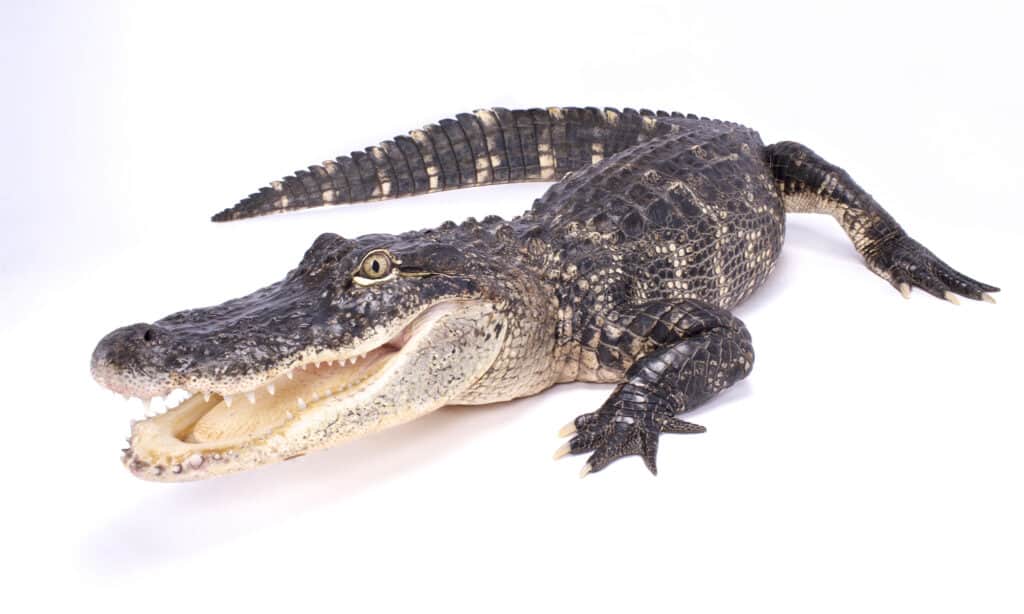
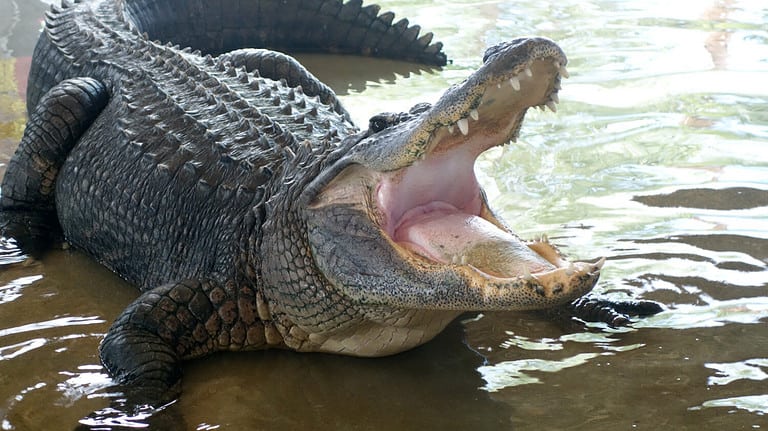
American alligators are significantly larger and heavier than Chinese alligators.
©reptiles4all/Shutterstock.com
Visiting Deep Hole
To visit Deep Hole, you need access to the wilderness preserve south of State Road 72, which requires a permit from the ranger station. Given that the sinkhole technically resides within a wilderness preserve, you cannot easily access Deep Hole. No signs mark the route to the sinkhole, and no major tour groups travel the route. In fact, park rules limit access to the wilderness preserve south of State Road 72 to 30 people per day, and visitors must register at the ranger station the day of their trip. That said, visitors consider the trip well worth it if you enjoy animal watching.
Still, you must be careful when visiting Deep Hole. While rare, alligators can and will attack humans. Most attacks happen when people accidentally disturb alligators by falling into the water near them. With a bite force of 2,980 psi, an American alligator can cause a person serious harm. That said, fatal alligator attacks are rare. Florida’s wildlife agency has documented 32 fatal unprovoked bites in the state since 1948.
Myakka River State Park is open 365 days a year from 8 a.m. until sunset. Admission is $6 per vehicle for 2–8 people, with different fees for single-occupant vehicles and pedestrians or bicyclists. Today, the park contains a visitor center, two picnic pavilions, and five log cabins available for rent. Popular activities in the park include hiking, camping, fishing, and animal watching.
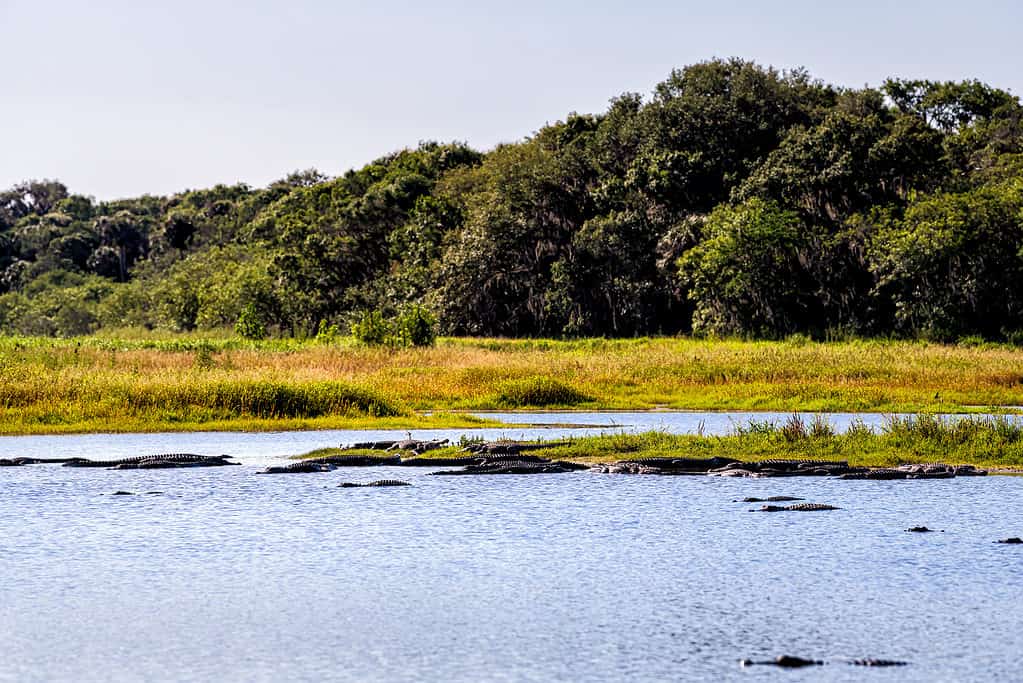
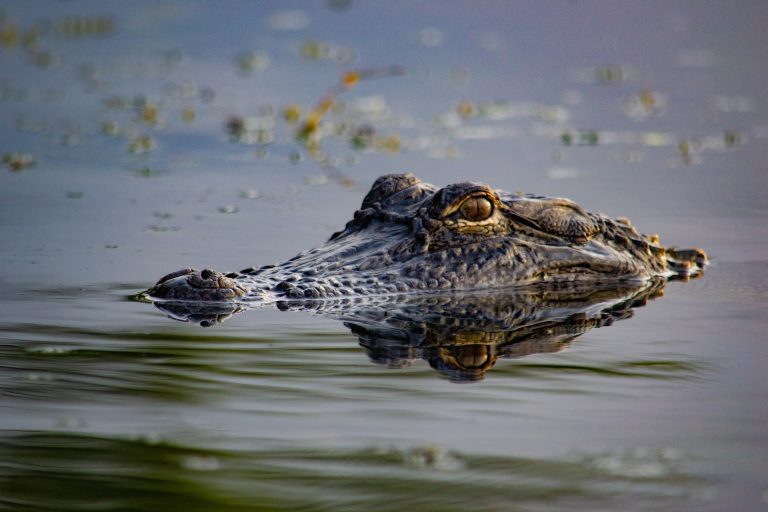
Beware of alligators swimming in Deep Hole located in Myakka River State Park.
©Andriy Blokhin/Shutterstock.com