
The domestic sheep (Ovis aries) is one of the most common livestock animals on the planet. Sheep have been domesticated for an estimated 10,000 to 12,000 years. During that time, humans have raised sheep for various purposes, including meat and wool. But, just how long is the sheep’s gestation period?
Here, we’ll learn all there is to know about the domestic sheep, starting with what they look like. We’ll learn what they eat, how they spend their days, and where you can find them. We’ll even take a brief look at the history of the domestic sheep. Then, we’ll find out how long a sheep’s gestation lasts and how many lambs they have. Finally, we’ll take a look at how often sheep can get pregnant. Let’s get started!
Sheep: The Facts
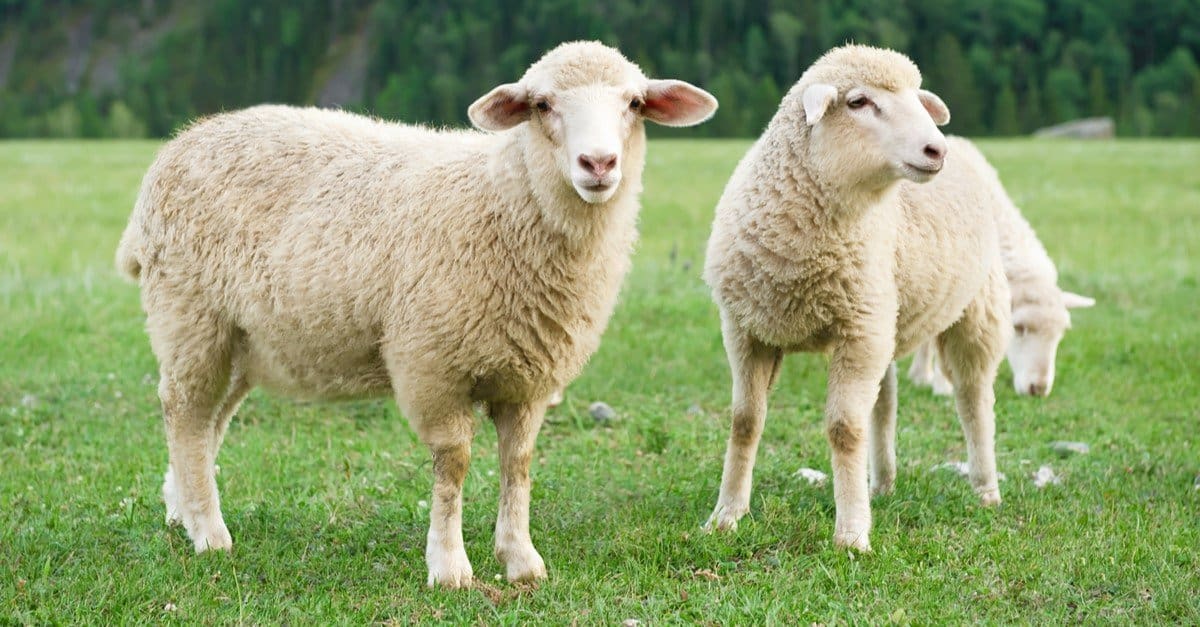
Healthy sheep need adequate and nutritious food, fresh water, safety, vaccines against diseases, and a clean place to live.
©iStock.com/DejaVu Designs
Before diving into the sheep’s gestation, let’s get to know this incredible animal just a little better.
Sheep: Appearance and Size
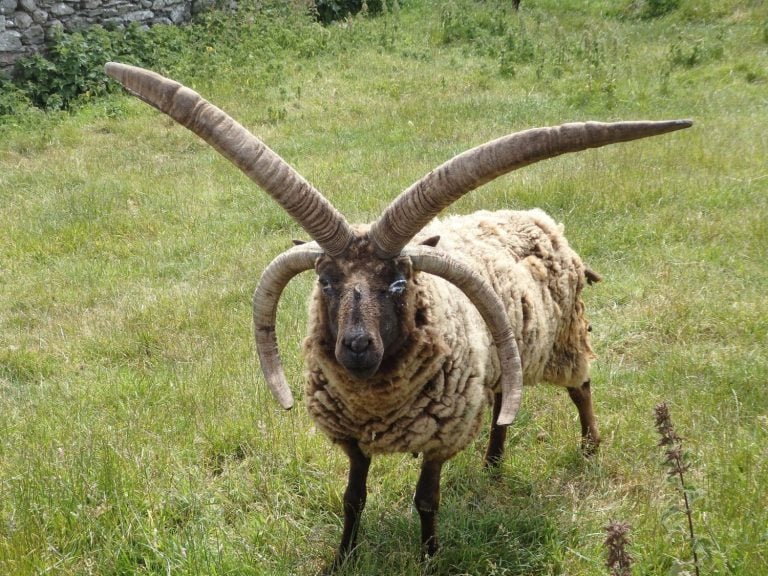
There are many breeds of domestic sheep worldwide. Some breeds are large, such as the Suffolk, which can weigh more than 250 pounds for rams, while other breeds are much smaller, such as the Shetland, which typically weighs 75 to 125 pounds. When it comes to appearance, this can vary widely too. Although many people associate sheep with being white, they can actually be grey, brown, black, and spotted, depending on the breed. Some sheep have horns — both rams and ewes — while others do not, meaning that they are naturally “polled.” Most sheep need to be sheared every year to remove their wool and prevent them from overheating in the summer, but some breeds — such as the Shetland — naturally shed their wool.
Sheep: Diet and Behavior
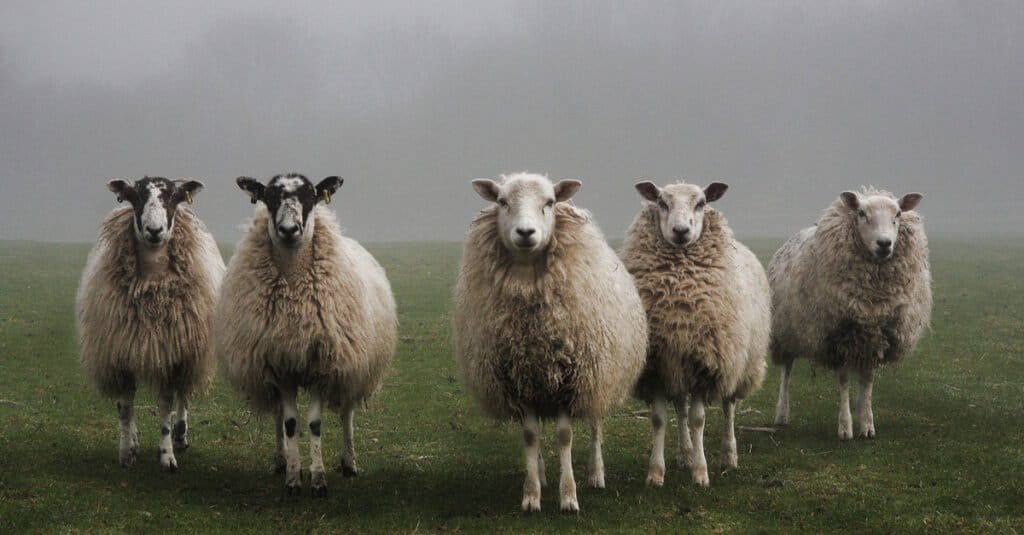
Sheep are ruminants, which means they partially digest their food, regurgitate it, chew it again, and redigest it.
©Paul Steven/Shutterstock.com
Sheep are ruminants, which means they eat tough foods that other animals, such as dogs and humans, can’t digest. These typically consist of various grasses, roughage, and forbs. Domestic sheep often eat hay too, in addition to, or in place of, grasses and forbs.
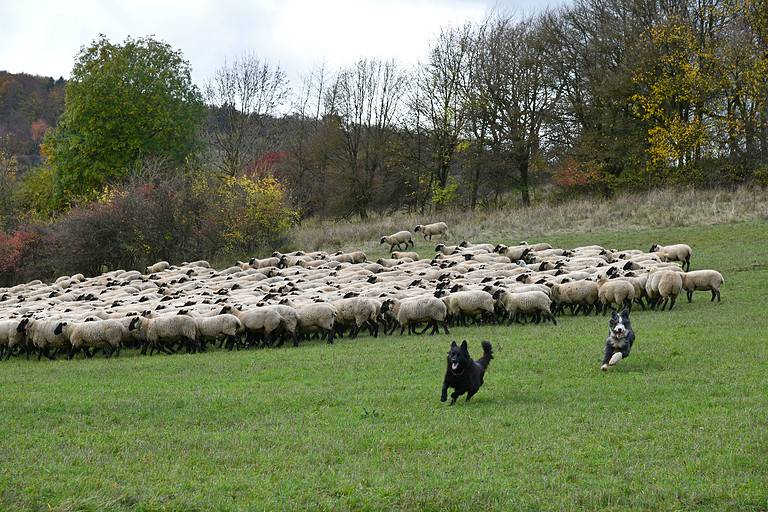
Sheep are grazers, which means that they spend most of their time, well, grazing. Sheep are also flock animals who travel in groups. It is this flocking behavior that first made sheep such excellent domestic animals thousands of years ago.
How Many Days Are Sheep Pregnant?
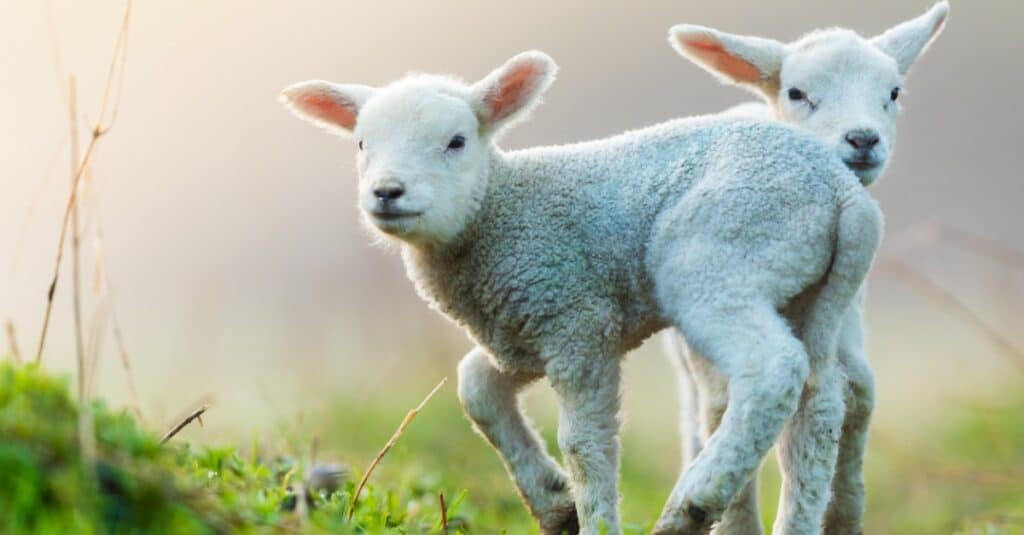
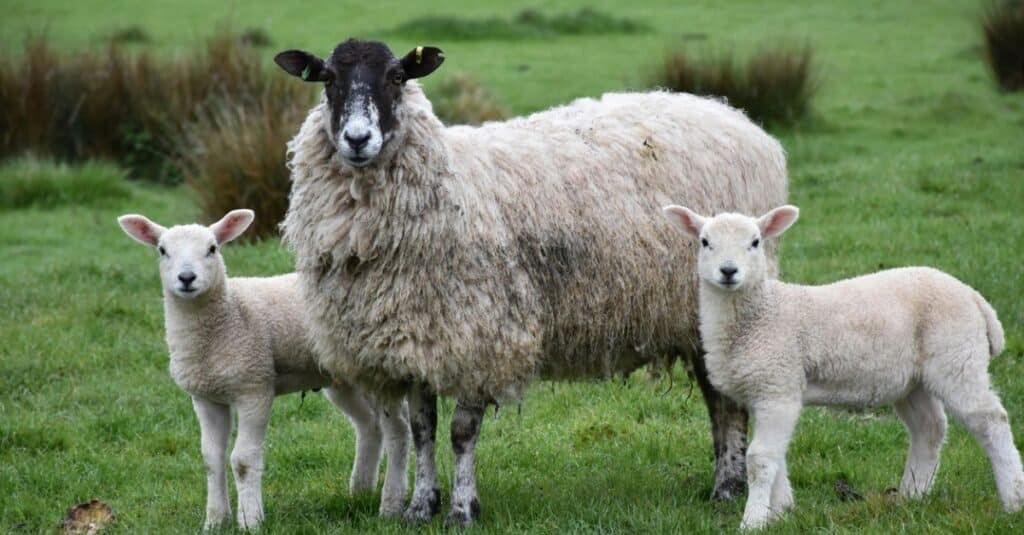
Sheep are pregnant for approximately five months and pregnancies generally result in 1 to 2 lambs.
©iStock.com/Jag_cz
Though there are over 200 breeds of sheep around the world, all sheep stay pregnant for about the same length of time. Sheep pregnancies last for approximately 146 days, or right around five months. A typical sheep gestation is between 142 and 152 days. When a ewe gives birth, it’s known as lambing. Ewes can become pregnant as young as 7 months, though most experts recommend not breeding them until they’re at least one year old. Sheep typically come into heat in the fall as the days begin to shorten and will lamb the following spring, giving birth once per year.
Most sheep give birth to one or two lambs per year. Although triplets and even quads are not unheard of, the ewe will generally struggle to rear more than two lambs herself, so in these cases, farmers will remove the extra lambs and either hand-rear them or foster them onto another ewe, often one whose own lamb has died.
How Can You Tell if a Sheep is Pregnant?
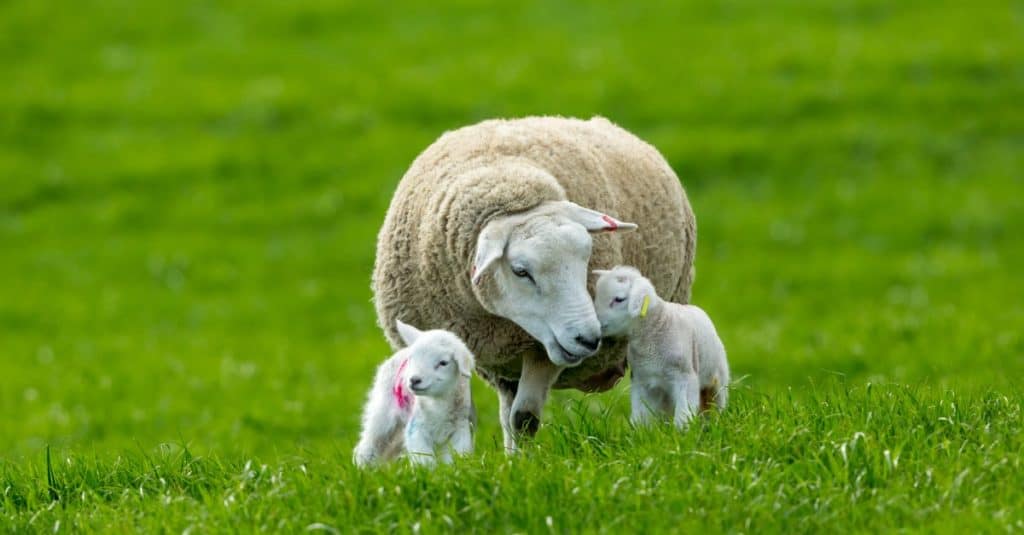
Pregnant ewes need a constant supply of food and water and should be kept in safe, clean pastures away from predators.
©Coatesy/Shutterstock.com
Signs of pregnancy in ewes begin as little as three weeks after insemination. If a ewe becomes pregnant, she will miss her next heat cycle, which should occur around three weeks after she becomes pregnant. Other signs include the ewe beginning to look rounder and heavier approximately three months into gestation, although this can differ depending on the breed and the health of the individual sheep. Finally, the ewe’s udder will begin to fill with milk in the final stages of pregnancy.
To avoid spontaneous abortion of the fetus, the ewe should be kept safe from dog attacks or scary situations, like being separated from her herd. Also, farmers have to be careful of the types of drugs they give pregnant sheep, as some vaccinations or medications could harm the fetus.