
Quick Take
- Rio, Indonesia’s first newborn giant panda, was born on November 27, 2025 at Taman Safari Indonesia to Cai Tao and Hu Chun.
- The birth strengthens Indonesia’s conservation leadership as the world panda population is about 1,900.
- Newborn pandas weigh about 3 to 5 ounces at birth and show rapid development in 30 to 60 days.
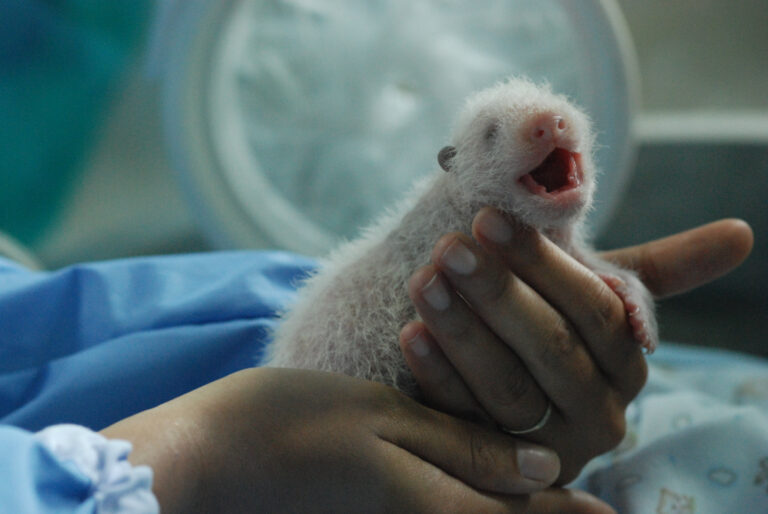
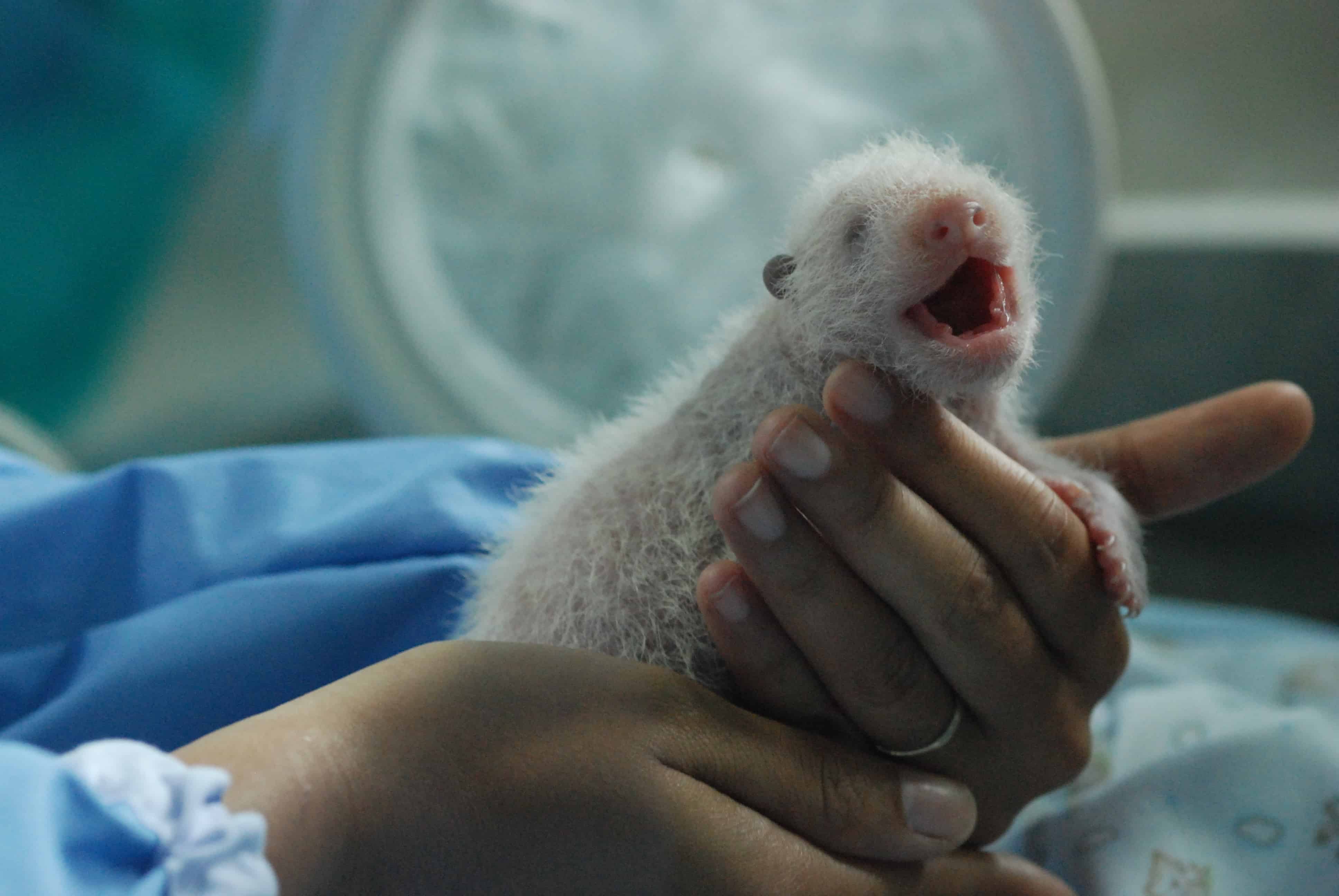
When giant pandas are first born, they don’t look much like their parents. Instead of the distinct black and white fur, these tiny creatures are covered with white downy fuzz, with pink skin showing through. The world recently got a look at an adorable newborn giant panda, the first one born in Indonesia. The park reports that the new baby is in good health, nursing well, and his mother is taking excellent care of him with lots of cuddles.
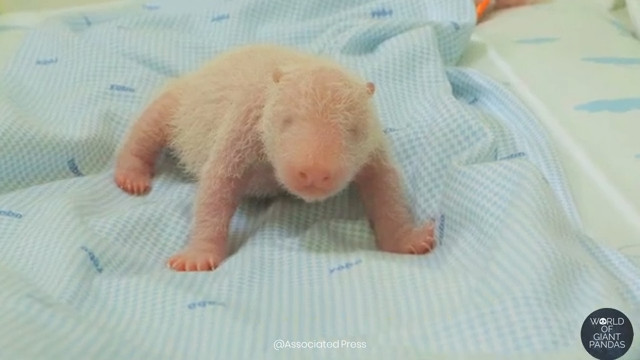
Check out the adorable newborn panda born in Indonesia on the World of Giant Panda’s YouTube Channel.
©World of Giant Pandas / YouTube
Meet Satrio “Rio” Wiratama
On November 27, 2025, 15-year-old Hu Chun gave birth to Satrio Wiratama (nicknamed Rio) at the Taman Safari Indonesia in Cisarua, West Java province. According to a press release, “This historic achievement further strengthens Indonesia’s position in the conservation of endangered species at the global level, especially as the world’s giant panda population is estimated at only around 1,900 individuals.”
Baby Rio is the first newborn giant panda ever to be born in Indonesia. The park said the cub’s name symbolizes “hope, resilience, and the shared commitment of Indonesia and China to protecting endangered species.” Rio’s parents, Cai Tao and Hu Chun, arrived at the park in 2017 as part of a 10-year conservation partnership with China.
The Significance of Rio’s Birth
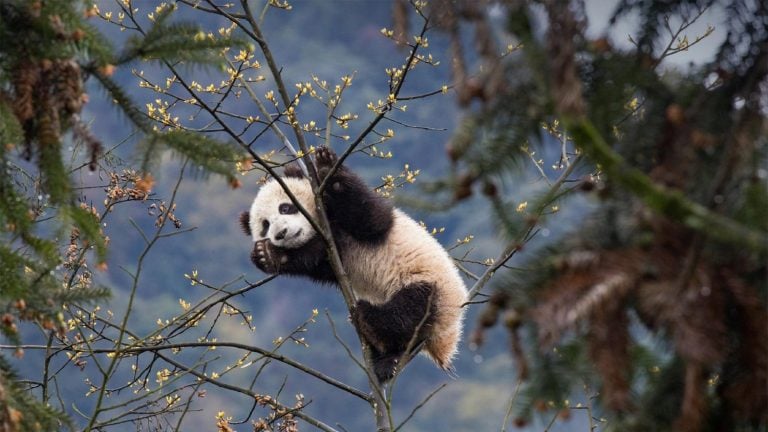
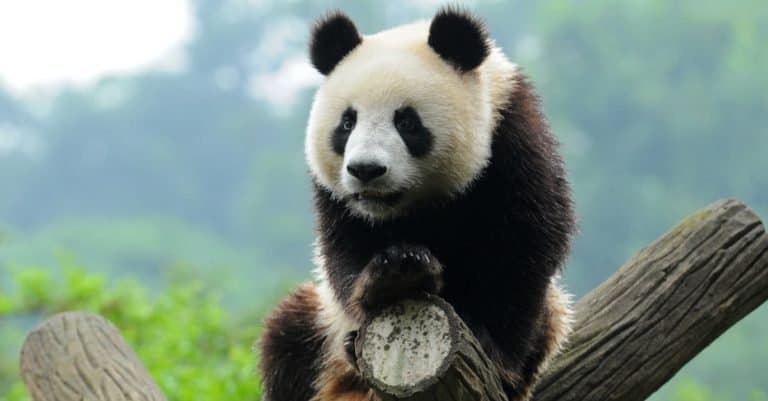
When a giant panda gives birth, it’s a reason for celebration. Giant pandas are not only an endangered species, but they are also incredibly challenging to breed in captivity. Fewer than 1,900 wild giant pandas live in their native habitats in the mountainous regions of southwestern China. In addition, about 300 pandas live in zoos and panda breeding centers around the world.
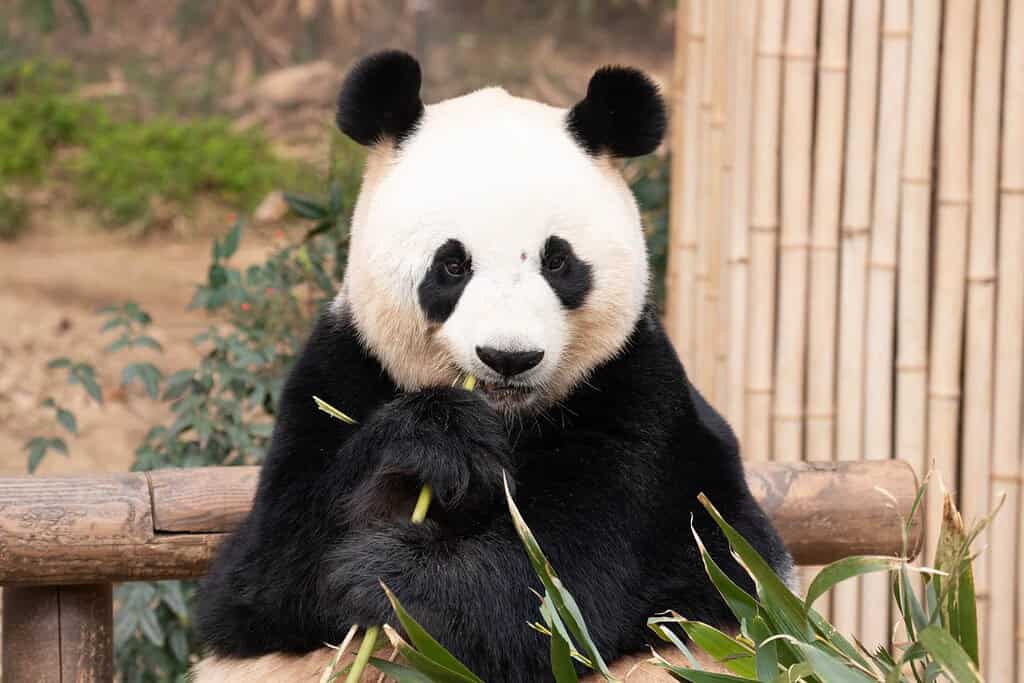
There are around 300 giant pandas living in zoos and panda centers around the world.
©Foreverhappy/Shutterstock.com
Female Giant Pandas Ovulate Once Per Year
A giant panda’s birth in captivity is rare for several reasons. For one, female pandas only ovulate once per year during their breeding season in the spring. During this time, in the wild, males will mate with multiple females. In captivity, with just one paired couple, zookeepers have to get the timing just right. A female panda is only fertile for a brief window of 24 to 72 hours each year. If a breeding center misses that window, they must wait until the next year to try again.
Giant Pandas Are Solitary Animals
Giant pandas are also solitary and territorial. Zookeepers usually keep the male and female pandas apart until they are ready to breed to avoid conflict. According to the Smithsonian National Zoo, its two giant pandas, Mei Xiang and Tian Tian, typically only interact when ready to breed: “Giant pandas are solitary, and adults do not spend much time interacting outside of the breeding season. If we were to allow Mei Xiang and Tian Tian to spend time together before Mei Xiang was ready to breed, they would likely be aggressive toward each other. In the wild, a female would avoid males until she is ready to breed.”
Mating Can Be a Challenge
Another challenge is that male pandas are not always successful at mating with females, especially in captivity. At the Smithsonian National Zoo, “Mei Xiang and Tian Tian have been given the opportunity to breed naturally nearly every breeding season, but the panda team has never observed successful breeding from them.” Zookeepers can artificially inseminate the female if the two haven’t successfully mated.
Pseudopregnancies Make It Hard For Zookeepers to Know When a Giant Panda Is Pregnant
It’s also difficult for experts to determine when a female panda is actually pregnant. Pandas sometimes have pseudopregnancies. During a pseudopregnancy, the female’s hormones change, and she acts as if she is pregnant (nesting and sleeping more). It can even be hard for veterinarians to find a tiny fetus via ultrasound inside a fully grown giant panda.
To make matters even more complicated, giant pandas do not have a fixed gestation period. Giant panda pregnancies can last anywhere from three to six months, keeping everyone guessing until the panda either has her baby or her hormones and behavior return to normal, leaving zookeepers to wait until the next spring for another attempt.
How Big Are Giant Pandas When They Are Born?
Although the park has not released an official weight for Rio, newborn giant pandas typically weigh around 3 to 5 ounces. These babies have a lot of growing to do. Adult females reach 150 to 200 pounds, and males can weigh 200 to 300 pounds. According to the park’s announcement, “Over the next 30–60 days, the cub is expected to experience significant development, including improved thermoregulation, fur growth, eye opening, and early motor skills.”
When Can the Public View Baby Rio?
A newborn giant panda is still vulnerable and needs expert attention and care. The public is usually not invited to see the new baby until it has reached key developmental milestones and is about 3 to 6 months old.