
Quick Take
- The most repeated "fact" about how the Mangalitsa was bred is completely wrong, something DNA evidence has proven. See the DNA evidence →
- The Mangalitsa nearly vanished entirely, and the group that saved it had almost nothing to do with pig farming. Discover the surprising revival →
- The Mangalitsa's most criticized trait, the very one that drove farmers away for decades, is actually the secret behind why top chefs pay premium prices for its meat. See how slow growth pays off →
- Its woolly coat looks like a quirk, but it points to an ancient lineage that predates the breed's official creation by over a millennium. Trace its ancient lineage →
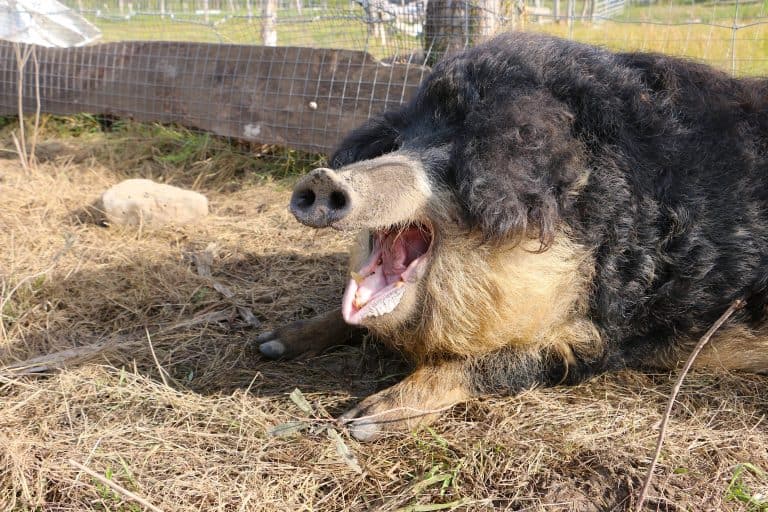
With its thick, curly coat, the Mangalitsa looks like a cross between a pig and a teddy bear. Often called the “sheep pig,” this heritage breed is famous for its woolly look, rich marbled meat, and remarkable history. But perhaps the most fascinating thing about the Mangalitsa is how it came to be.
While many people think the Mangalitsa was created by crossing domestic pigs directly with wild boars, the real story is much more interesting. Breeders in the Austro-Hungarian Empire carefully developed the modern Mangalitsa by using several hardy domestic pig breeds. Today, it remains one of Europe’s most treasured heritage livestock breeds — and one that nearly disappeared before making an incredible comeback.
To better understand how the Mangalitsa developed, A-Z Animals spoke with Barbara Meyer zu Altenschildesche of Royal Mangalitsa. As an expert breeder, importer, and founder of the Mangalitsa Breed Organization and Registry (MBOAR), she helped separate popular myths from the breed’s documented history and explain how the Mangalitsa became one of Europe’s most distinctive heritage pigs.
How the Mangalitsa Pig Was Bred
Breeders developed the modern Mangalitsa in the Austro-Hungarian Empire during the early 1800s. They wanted a hardy pig that would thrive outdoors and could produce plenty of high-quality lard for cooking and preserving food.
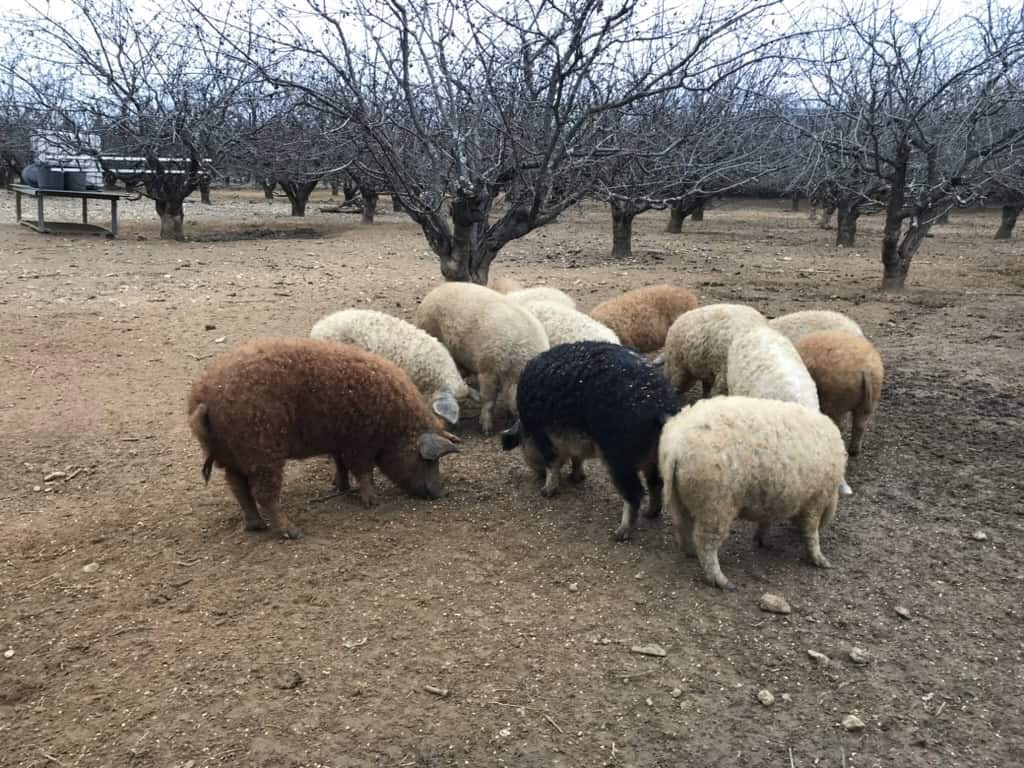
Mangalitsa pigs are social animals and prefer to live in herds.
©
To create the breed, they crossed native Hungarian pigs — including the Bakony and Szalonta — with the Serbian Šumadija (also called Sumadinka) and the Syrmian, an old Black Mangalitsa breed. Through generations of selective breeding, these domestic bloodlines resulted in the Mangalitsa pig we recognize today.
The breeding program proved remarkably successful. As Meyer zu Altenschildesche of Royal Mangalitsa explains, “That was the main reason why this breed became so popular because they could put on that fat faster and better than others.” At a time when lard was essential for cooking, preserving food, and countless other household uses, that ability made the Mangalitsa incredibly valuable.
Over time, three traditional color varieties emerged:
- Blonde: The oldest and most common type, making up over 60 percent of Mangalitsas today.
- Red: Created by crossing Blonde Mangalitsas with the red, native Szalontai hog.
- Swallow Belly: Created by crossing Blonde Mangalitsas with the now-extinct Black variety, resulting in a black back and a cream-colored belly.
While the modern breed took shape in the 19th century, its roots go back much further. The ancestral pigs that led to the Mangalitsa trace their lineage to ancient pigs raised in the Carpathian Basin over 1,100 years ago.
Was the Mangalitsa Created by Crossing Domestic Pigs with Wild Boars?
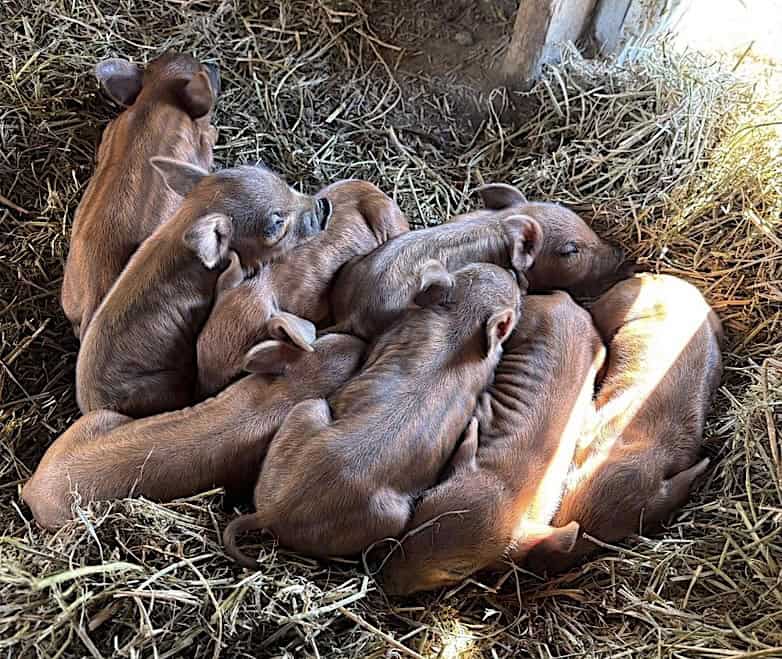
Mangalitsa sows are wonderful mothers, raising litters of five to eight piglets at a time.
©Barbara Meyer zu Altenschildesche / ©Royal Mangalitsa USA
One of the most common myths about the Mangalitsa is that it was created by breeding domestic pigs directly with European wild boars. While this claim is frequently repeated online, modern genetic research tells a much different story.
According to Meyer zu Altenschildesche and the Mangalitsa Breed Organization and Registry (MBOAR), DNA studies show that purebred Mangalitsas do not carry any more recent wild boar ancestry than other traditional European pig breeds. Even the striped coats sometimes seen on Mangalitsa piglets — which some people cite as “proof” of wild ancestry — are actually a natural trait found in several modern domestic breeds.
Instead of being a recent wild boar hybrid, the Mangalitsa is simply an ancient European heritage breed whose genetics have been carefully preserved for centuries.
Where Do Mangalitsa Pigs Live?
The Mangalitsa originated in the former Austro-Hungarian region. It remains closely associated with Hungary, although it is also found in Romania, Serbia, and neighboring parts of Central Europe.
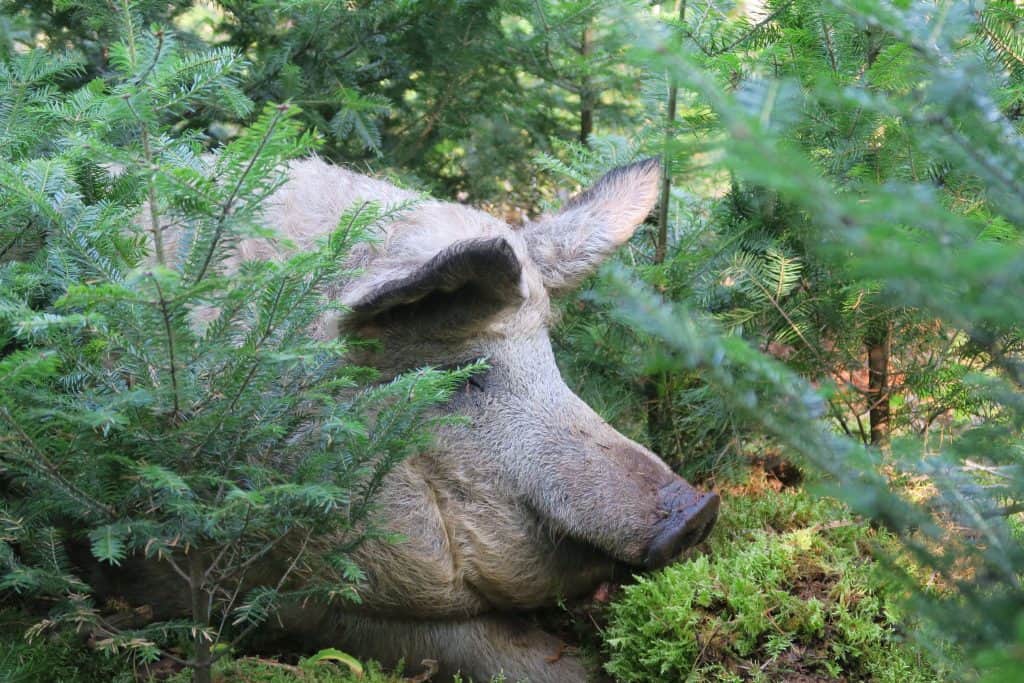
Although Mangalitsa pigs are hardy and are excellent foragers, they still require adequate shelter and intentional care.
©Barbara Meyer zu Altenschildesche / ©Royal Mangalitsa USA
Today, carefully managed breeding populations also exist in North America. Breeders first imported purebred Mangalitsas into the United States in 2007. Over the next decade, additional imports from Austria and the Netherlands helped establish the breeding stock and improve genetic diversity.
The North American population started with very few animals. Now, breeders work carefully to maintain healthy bloodlines while preserving the breed’s heritage.
How Big Do Mangalitsa Pigs Get?
Despite their thick coats, Mangalitsas are medium-sized pigs with sturdy builds. Adult sows generally stand 29 to 35 inches tall and weigh 309 to 397 pounds. Boars are slightly larger, reaching about 31 to 43 inches tall and weighing 331 to 485 pounds.
Unlike modern commercial pigs bred for rapid growth, Mangalitsas mature slowly. Piglets are born weighing only 1.3 to 2.2 pounds and typically are not ready for breeding until they reach 12 to 14 months of age. While this slow growth makes the breed more expensive to raise, it is also what creates the exceptional marbling that has made Mangalitsa pork famous.
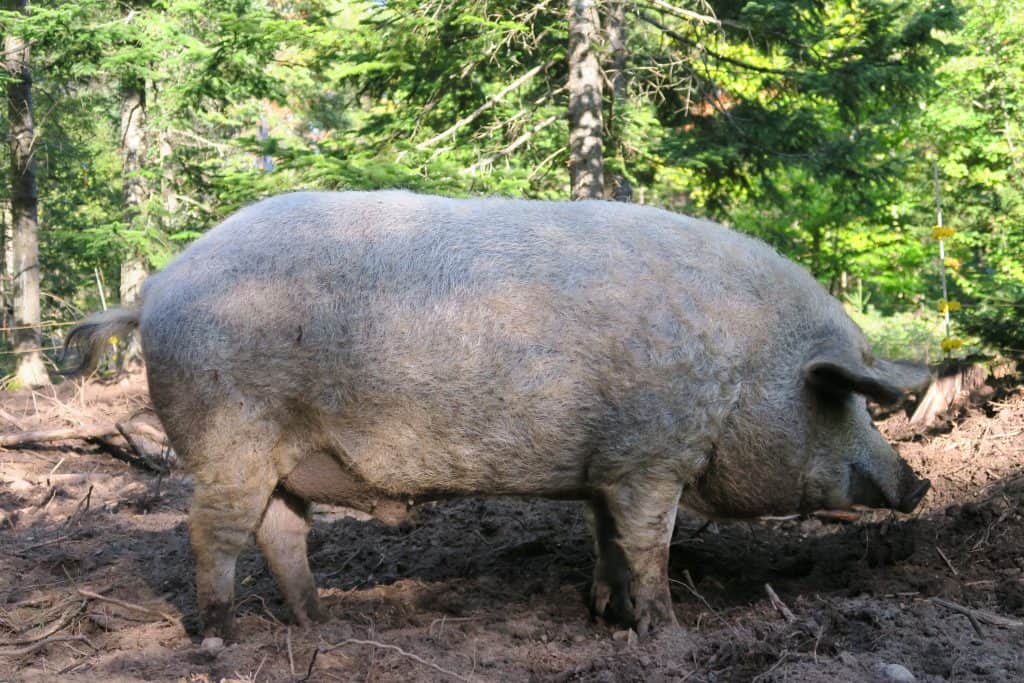
Each Mangalitsa can have different lengths and textures of hair.
©Barbara Meyer zu Altenschildesche / ©Royal Mangalitsa USA
What Makes the Mangalitsa So Unique?
Its Curly Coat
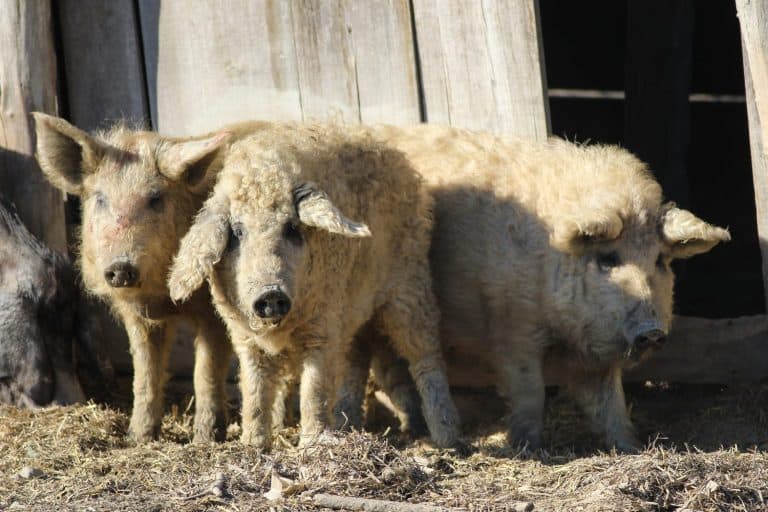
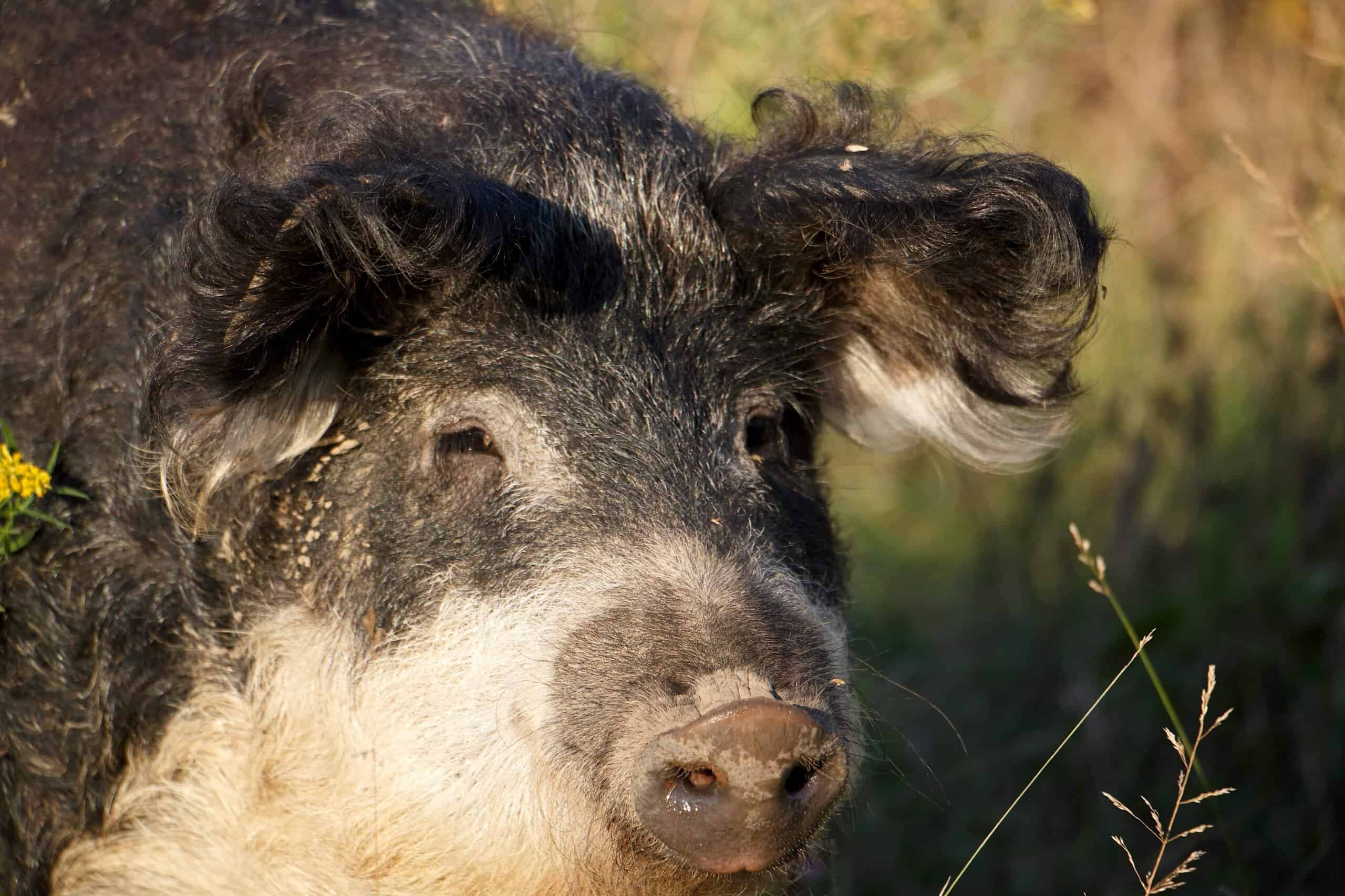
The Mangalitsa’s signature feature is its thick, curly coat. It is the only surviving European pig breed covered in dense, wool-like hair. This coat gets especially thick in the winter, providing great insulation and helping the pigs thrive in cold climates. It is easy to see why many people often mistake them for sheep at first glance.
Exceptional Fat Quality
Unlike modern commercial pigs bred for lean meat, breeders developed the Mangalitsa specifically to produce fat. At market weight, about 60 percent of the carcass is fat, and only 40 percent is lean meat. If the pig grows larger, that fat percentage climbs even higher.
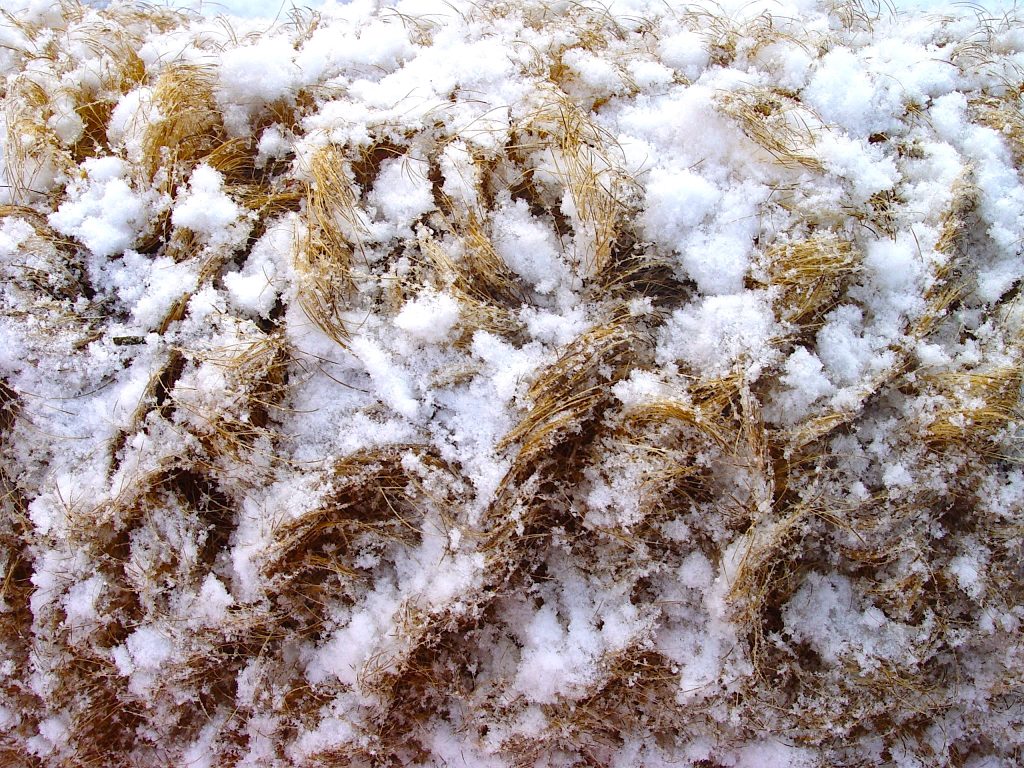
The Mangalitsa’s coarse, curly coat helps keep snow off its skin.
©Barbara Meyer zu Altenschildesche ©Royal Mangalitsa USA
Rather than being considered a drawback, this rich fat is exactly what makes the breed so valuable. Chefs prize Mangalitsa pork for its dark color, heavy marbling, tenderness, and rich flavor, making it one of the world’s best meats for high-end charcuterie.
Meyer zu Altenschildesche notes that the breed’s fat is unusually soft, with a very low melting point that allows it to melt almost instantly when warmed. In addition, it is excellent for cooking because it has a remarkably high smoke point, making it suitable for frying.
Hardy and Naturally Adaptable
The Mangalitsa retains many characteristics that have been lost in modern commercial breeds. It is well-suited for outdoor living, tolerates harsh weather, and is known for its strong maternal instincts and natural hardiness. These qualities helped make the breed successful long before modern farming practices existed.
How the Mangalitsa Nearly Disappeared
For centuries, the Mangalitsa was one of Central Europe’s most valuable livestock animals because people depended heavily on lard for everyday life. As Meyer zu Altenschildesche puts it, “The most important thing was to have pigs that could produce a lot of fat.” Before refrigeration and modern vegetable oils, that fat was essential for cooking, baking, preserving food, making soap, and even lubricating machinery.
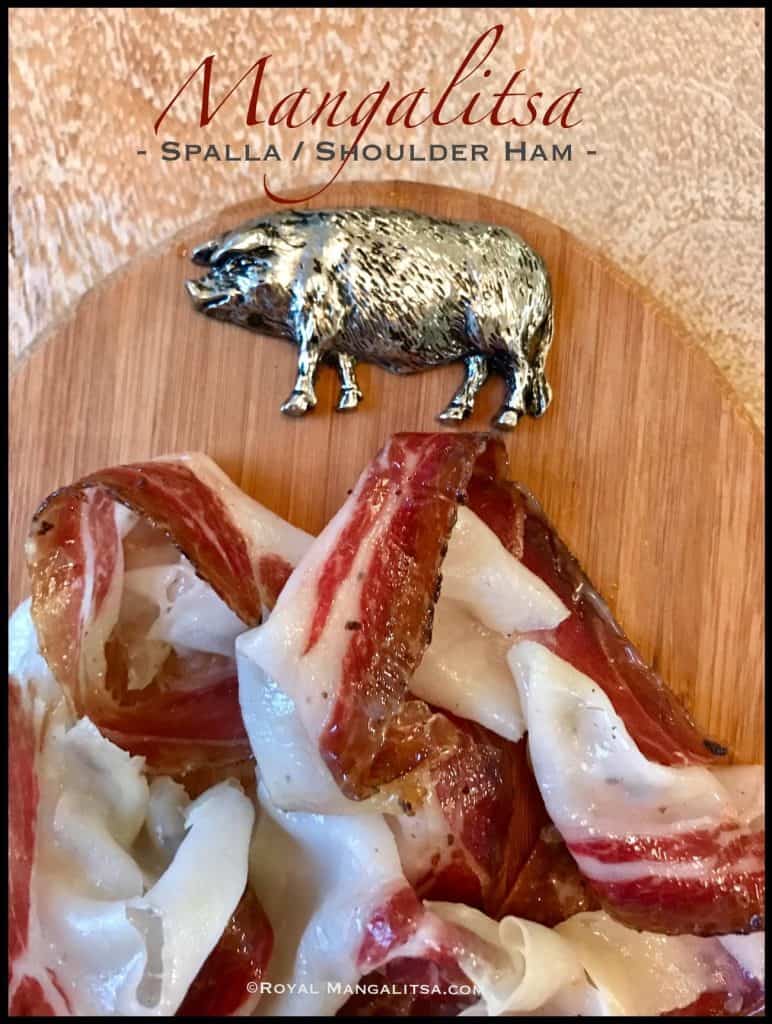
Mangalitsa fat contains high concentrations of Omega-3 fatty acids.
©Barbara Meyer zu Altenschildesche / ©Royal Mangalitsa USA – Original / License
However, as refrigeration became common and consumers started preferring lean pork, demand for fatty pigs dropped sharply. Meyer zu Altenschildesche explains, “People wanted more meat. They didn’t want an animal that produced all that fat anymore.” Commercial farms shifted to fast-growing breeds that produced more lean meat, and the slow-growing Mangalitsa quickly fell out of favor. By the 1970s, the breed had seemingly disappeared from the popular market.
An Incredible Comeback
The Mangalitsa’s surprising comeback came from an unexpected source. Meyer zu Altenschildesche explains that Spanish ham producers began noticing something unusual. “Once in a while there were these special legs that looked like Iberico legs,” she said. Curious about where they came from, producers traced them back to the nearly forgotten Mangalitsa, whose rich, marbled meat had many of the same qualities prized in Iberico ham.
In the early 1990s, Spanish ham producers searching for alternatives to Iberico ham discovered that the Mangalitsa had very similar fat qualities. The new demand for premium cured meats sparked renewed breeding efforts across Hungary, Austria, and Serbia, helping to prevent the breed from disappearing altogether. As Meyer zu Altenschildesche puts it, “Without a market, things fade away.”
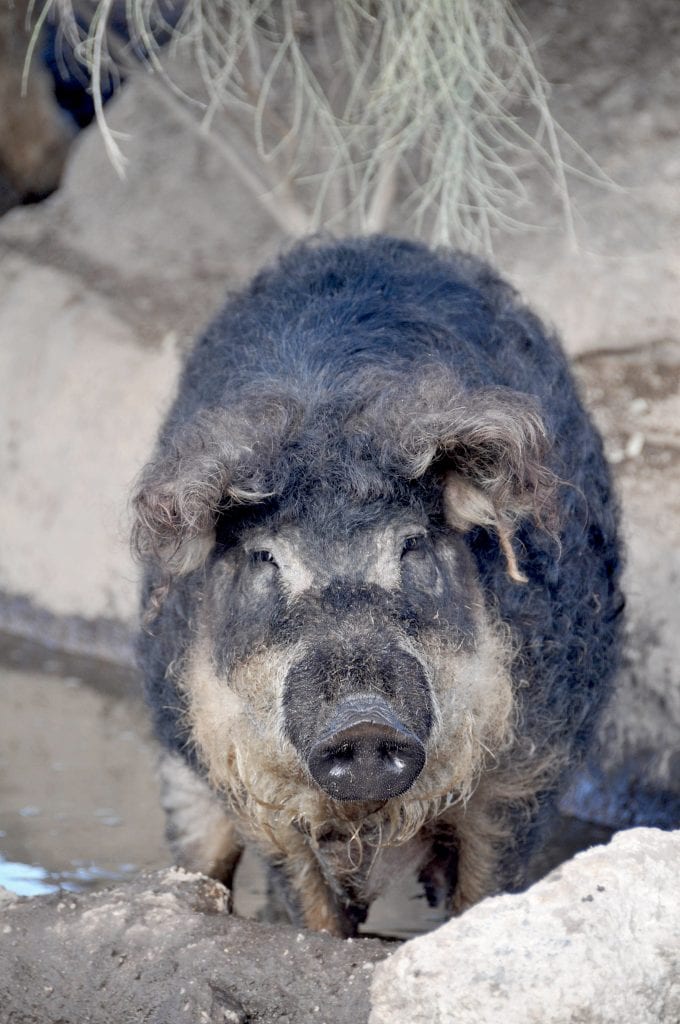
Mangalitsa pigs may have a wild appearance, but they are typically calm, curious, and friendly animals.
©Barbara Meyer zu Altenschildesche / ©Royal Mangalitsa USA
Today, the Mangalitsa is once again highly valued by farmers, chefs, and food enthusiasts around the world.
In North America, however, preserving the breed has required careful management. Because the first imported group was so small, breeders faced major challenges with genetic diversity. Today, organizations like the Mangalitsa Breed Organization and Registry (MBOAR) keep detailed herd books and DNA records to protect healthy bloodlines and preserve the breed’s unique heritage. As Meyer zu Altenschildesche says, “That’s why it’s so absolutely important to keep the herd book.”
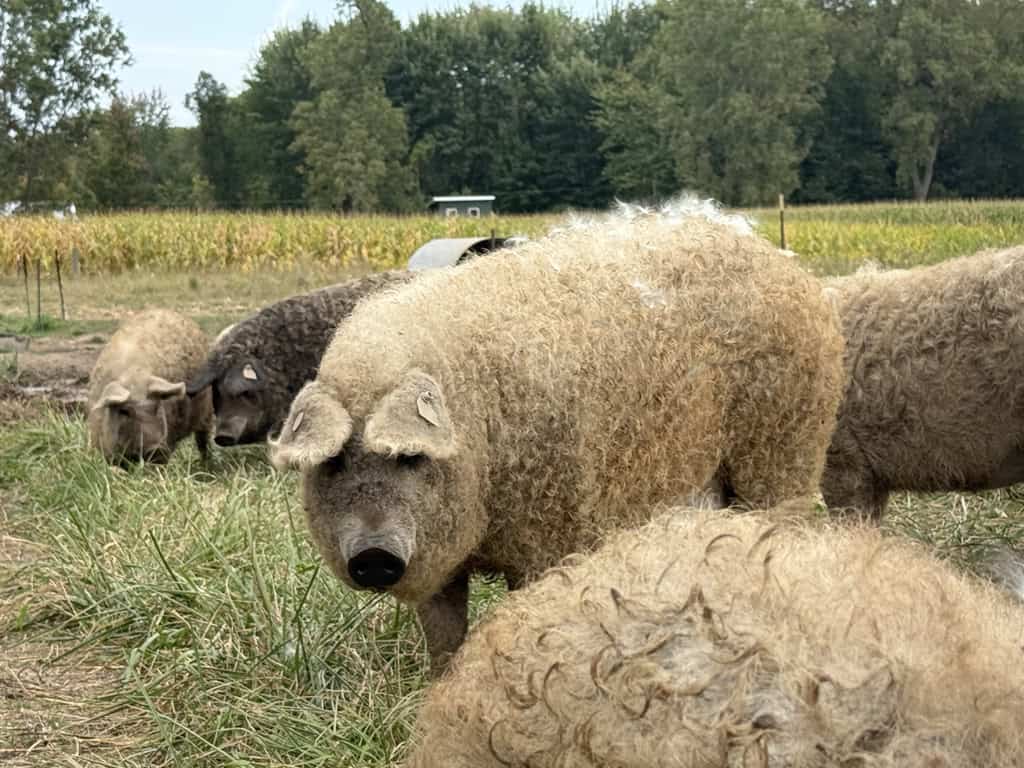
Mangalitsa pigs prefer cooler weather and can struggle in hot climates.
©Barbara Meyer zu Altenschildesche / ©Royal Mangalitsa USA
A Heritage Breed Worth Preserving
The Mangalitsa’s story is one of careful breeding, remarkable resilience, and second chances. Developed from several traditional domestic pig breeds, it became one of Europe’s premier lard-producing pigs before nearly vanishing during the rise of modern industrial farming.
Thanks to dedicated breeders and renewed appreciation for its exceptional meat quality, the Mangalitsa has made an extraordinary comeback. Today, its curly coat may be what first catches people’s attention, but its rich history, ancient lineage, and unique genetics are what truly make this remarkable heritage pig one of a kind.