
Quick Take
- One snake on this list plays dead, hisses, and emits foul odors to scare off threats, but owners say it almost never bothers doing any of that. See the hognose's theatrics →
- There's a snake here named for a British zoologist, though not because it's safe for kids despite what most people assume. Meet the Children's Python →
- Choosing a baby snake feels instinctive, but it's one of the most common mistakes new owners make. The reason why matters more than you'd think. Understand starter snake criteria →
- One of these seven species bites only under one specific condition, and that condition has nothing to do with aggression. Learn about ball python behavior →
Although snakes may be frightening to some people, others find snakes fascinating. If you are thinking about getting your first snake, snakes can be great pets. However, you may not want a snake that is difficult to care for or is extremely large. Smaller snakes take up less room, eat less, are lighter, and can be easier to handle. Keep reading to learn about seven gentle pet snakes that stay small forever.
Characteristics of a Good Beginner Snake
The following criteria will help you identify a species as a good starter snake:
- Availability (can the species be found easily?)
- The snake’s overall size and ease of handling (temperament)
- The snake’s feeding response (preferring species that accept thawed or frozen prey or even non-whole food like eggs and meat).
The last characteristic is crucial because dealing with a snake that refuses to eat can be stressful and requires some experience to resolve. Regardless of the size or species, your best approach to keeping a pet snake is to avoid buying a snake that is too young. Older juveniles between 6 and 12 months or young adults 1–2 years old have well-established feeding habits and more predictable temperaments. Another thing you can do is to confirm with the dealer that the snake is feeding on frozen prey to assess its feeding response.
Pet Snakes That Stay Small
The following snakes generally remain in the 3-5 foot range. While that may not sound very small, keep in mind that some pet snakes grow 10-20 feet long, or even longer. A snake enclosure should be at least as long as the adult snake itself; most reptile experts recommend a minimum of 4 feet long, 2 feet wide, and 2 feet high, or a 120-gallon enclosure.
1. Rosy Boa (Lichanura trivirgata or orcutti)
- Size: 2-3 feet
- Temperament: gentle, docile
- Care requirements: easy
Rosy boa snakes are native to the southwestern United States and northwestern Mexico. They have three colored stripes running down their bodies in brown, orange, and black. However, depending on where you live, you may find them in other morphs.
Rosy boas need little attention aside from keeping the humidity in their enclosure low, as well as providing them with a basking spot, substrate to burrow in, and a tight, escape-proof lid, as these snakes can easily squeeze through small gaps.
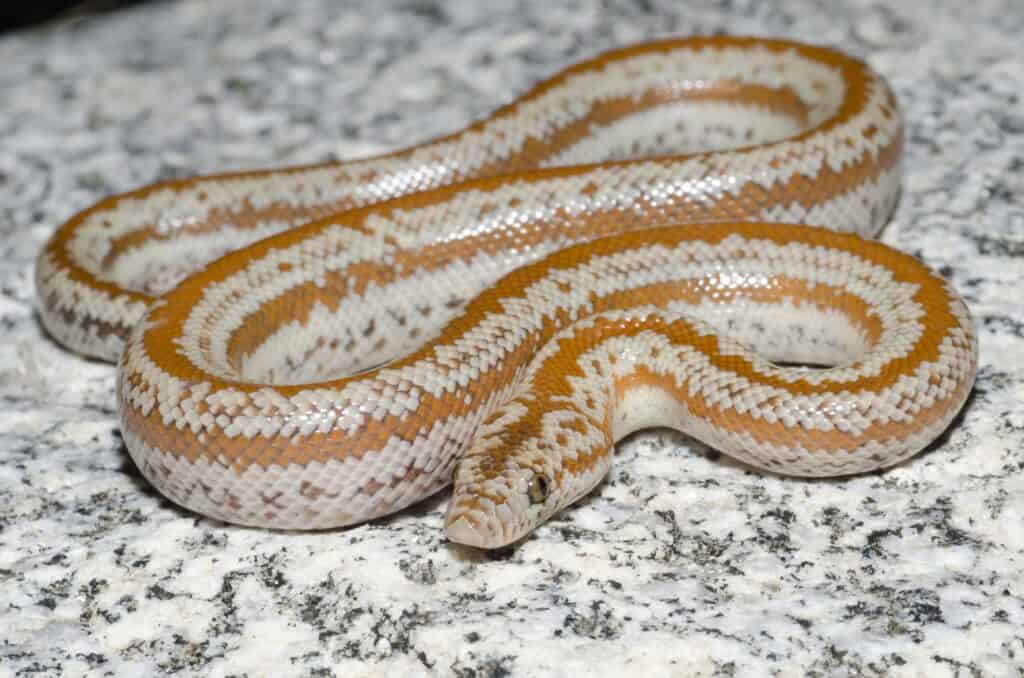
Rosy boas are native to the southwestern United States and northwestern Mexico.
©Jason Mintzer/Shutterstock.com
2. Corn Snake (Pantherophis guttatus)
- Size: 3-5 feet
- Temperament: docile, but the young ones can be erratic.
- Care requirements: easy
Corn snakes are among the most common small pet snakes, particularly among new snake keepers. Selective breeding allows experts to breed these snakes to almost any color you want. However, they are naturally orange, brown, or yellowish colored with dark red, reddish-brown, or orange blotches that have black borders.
Corn snakes are slow-moving ground snakes that enjoy burrowing. They need at least two hiding spots: one on the warm side and one on the cool side. They are docile, hardy, and rarely develop feeding issues. However, they do need humidity, especially during shedding, to mimic the conditions of their native southeastern U.S.
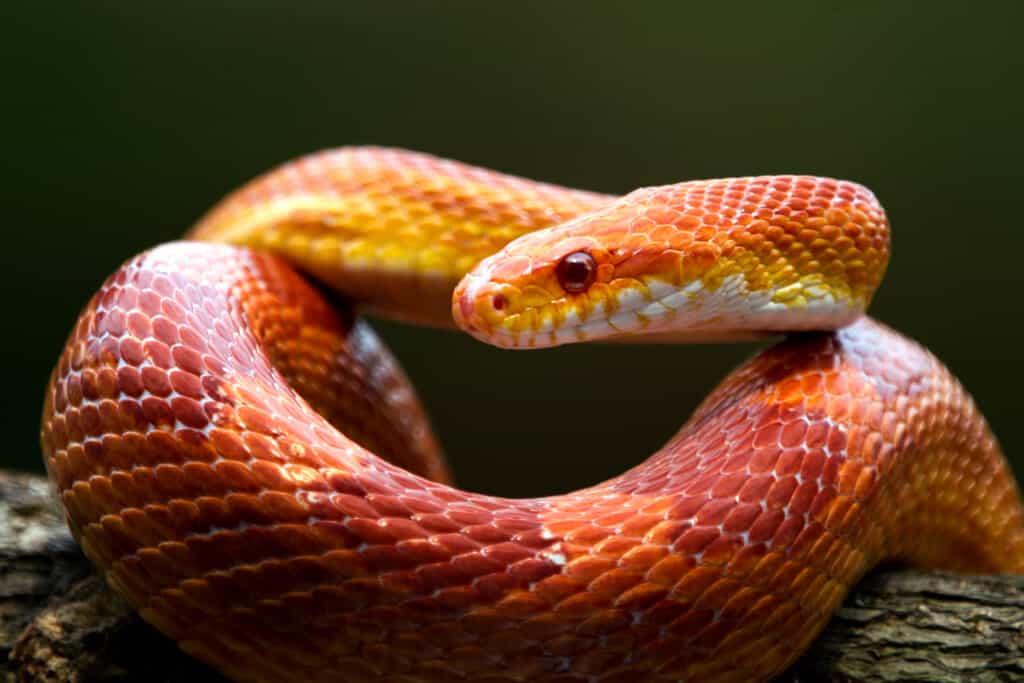
Corn snakes are docile, slow-moving, and come in various colors.
©Kurit afshen/Shutterstock.com
3. Milk Snakes (Lampropeltis spp.)
- Size: 2-5 feet on average, depending on the subspecies
- Temperament: adults are gentle, alert, and calm, but they can be nervous and nippy when young
- Care requirements: intermediate
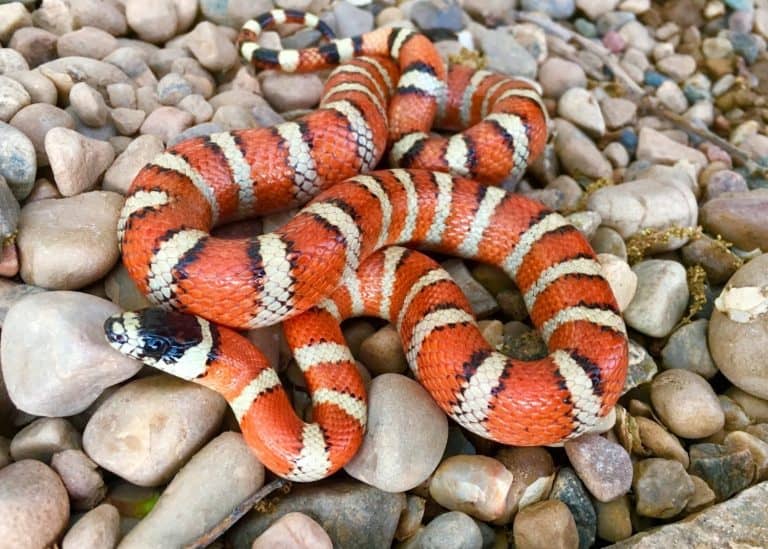
Milk snakes are a small kingsnake species ranging from parts of southern Canada to the northernmost parts of South America. They belong to the Lampropeltis genus, with 24 recognized subspecies. The New Mexico milk snake is one of the smallest species, reaching a maximum length of about 18 inches.
Milk snakes need burrowing-friendly bedding and two to three hiding places on opposite sides. Milk snakes need a thermal gradient so they can warm up and cool down as needed, which aids in their digestion. They also need higher humidity, especially during shedding. Additionally, young snakes can be stubborn about eating.
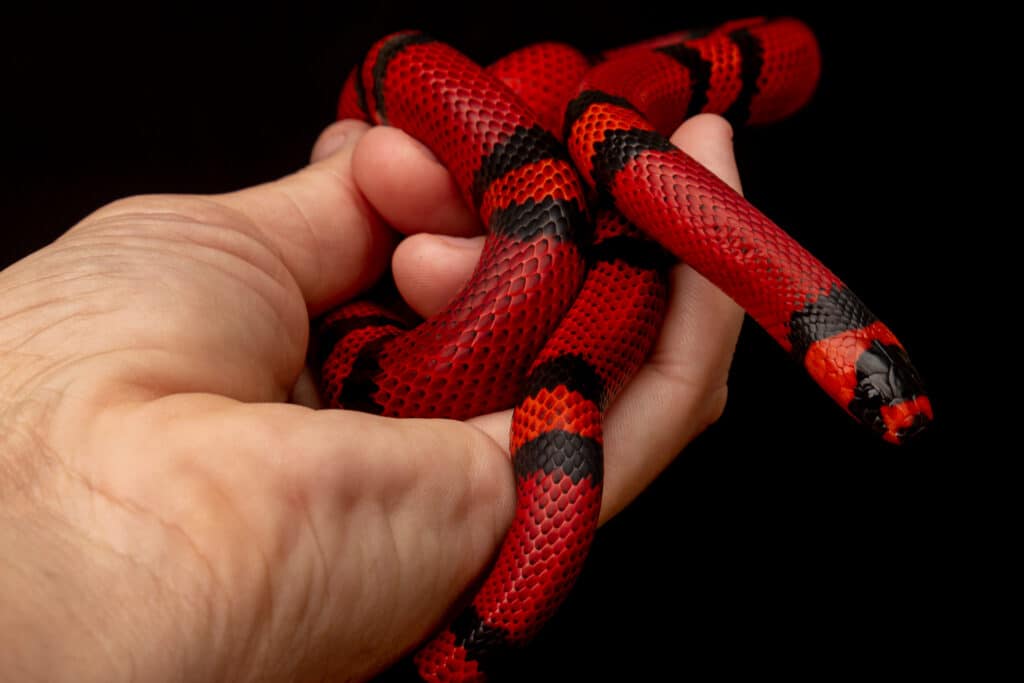
Milk snakes are generally calm, but some may bite if startled, especially juveniles.
©Murilo Mazzo/Shutterstock.com
4. Western Hognose (Heterodon nasicus)
- Sizes: 2-3 feet
- Temperament: active, docile, curious
- Care requirements: relatively easy
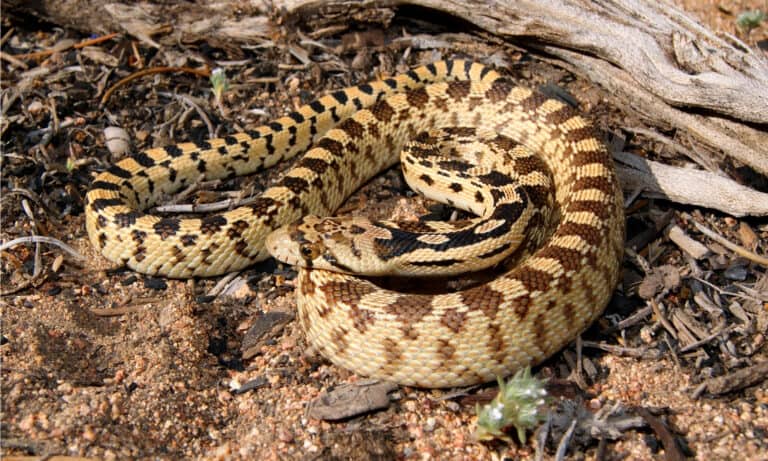
Western hognose snakes can be found from southern Canada, through the central U.S., and down into northern Mexico. These snakes have stout bodies and upturned snouts. They are usually a light tan, yellowish-brown, or olive-grey with darker brown blotches on their backs. When threatened, they exhibit bluffing behavior like hissing, flattening their bodies, and even playing dead as a last-ditch effort. Defensive hognose snakes may secrete a foul-smelling musk or strike at their opponent with their mouth closed. With their easy-going nature, captive-bred snakes rarely feel the need to put on these defensive displays.
The popularity of this species has grown over time because of their distinct facial features and small size. These snakes are easy to care for, but they need plenty of bedding for burrowing, at least two hides (one on the cool end and one on the warm end), average humidity, and a regular day and night light cycle to maintain a natural circadian rhythm.
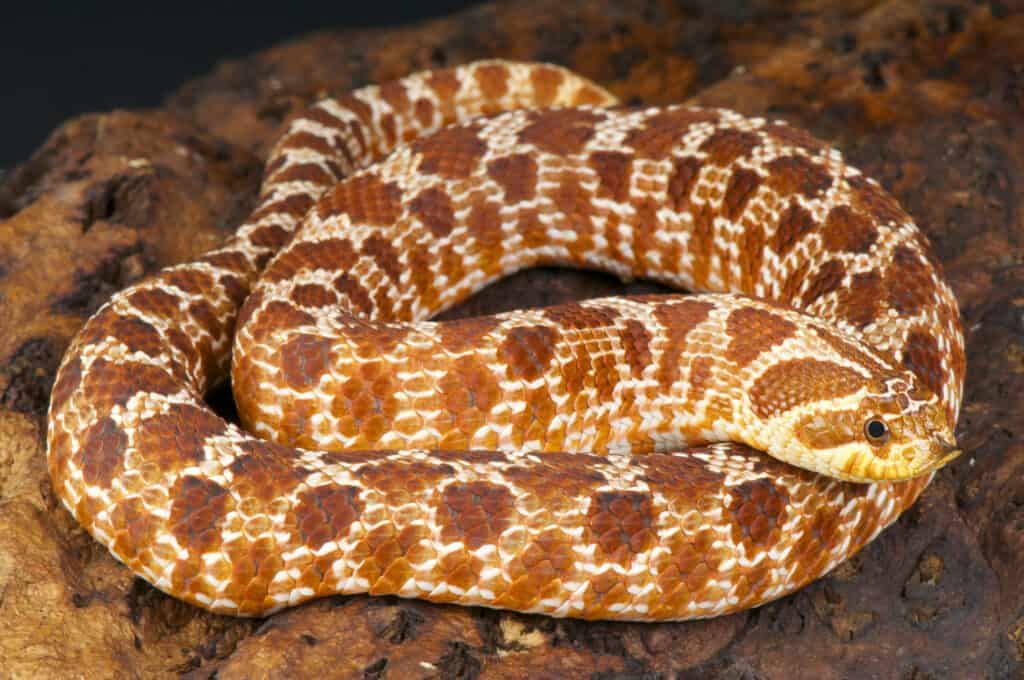
When threatened, the western hognose may emit a foul odor, but it’s unlikely for those in captivity.
©reptiles4all/Shutterstock.com
5. Kenyan Sand Boa (Eryx colubrinus)
- Size: 1-2 feet, although some females may grow up to 3 feet
- Temperament: calm and docile, but poor eyesight can make them jumpy if startled
- Care requirements: easy
Kenyan sand boas are ideal for those looking for a small snake in both girth and length. They originate from northern and eastern Africa. Their eyes and nostrils are on top of their heads to keep sand out while burrowing. They are generally a yellowish-orange color with dark brown splotches.
They need a warm, dry enclosure with low humidity, hides, and fine, loose substrate for burrowing. Most Kenyan sand boas have a docile temperament, though some can be jumpy when suddenly disturbed. However, they do not bite in defense. Bites can only occur if the snake misidentifies your hand as food.
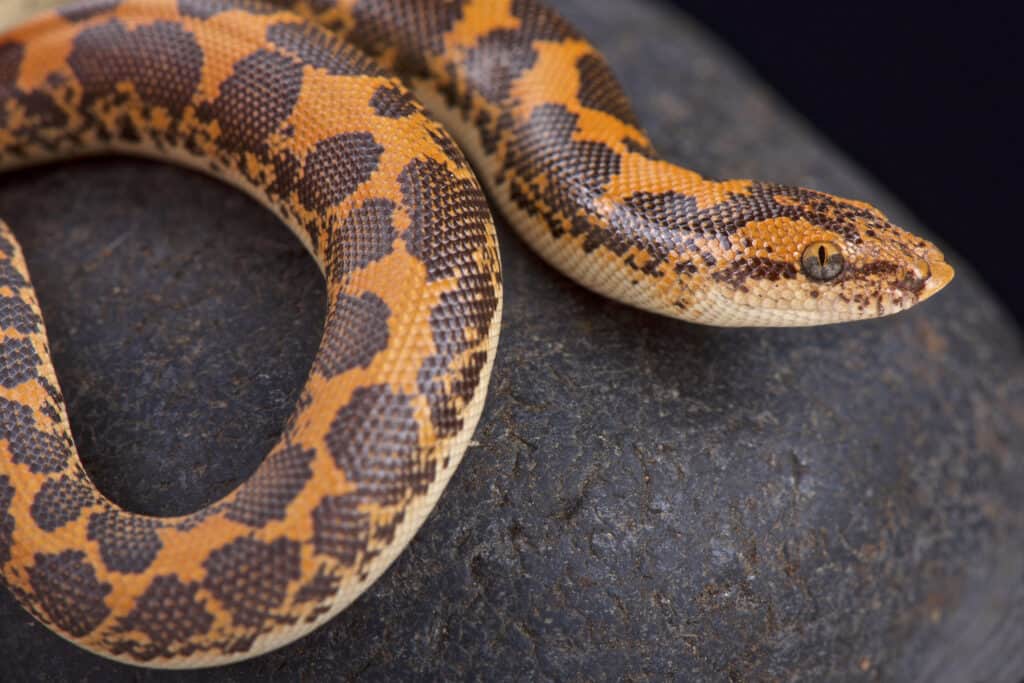
Kenyan sand boas are usually docile but may bite your hand if they mistake it for food.
©reptiles4all/Shutterstock.com
6. Children’s Python (Antaresia childreni)
- Size: 2.5-3 feet
- Temperament: as babies, they are a little feisty, but they are docile as adults
- Care requirements: easy as adults, but can be tricky to raise
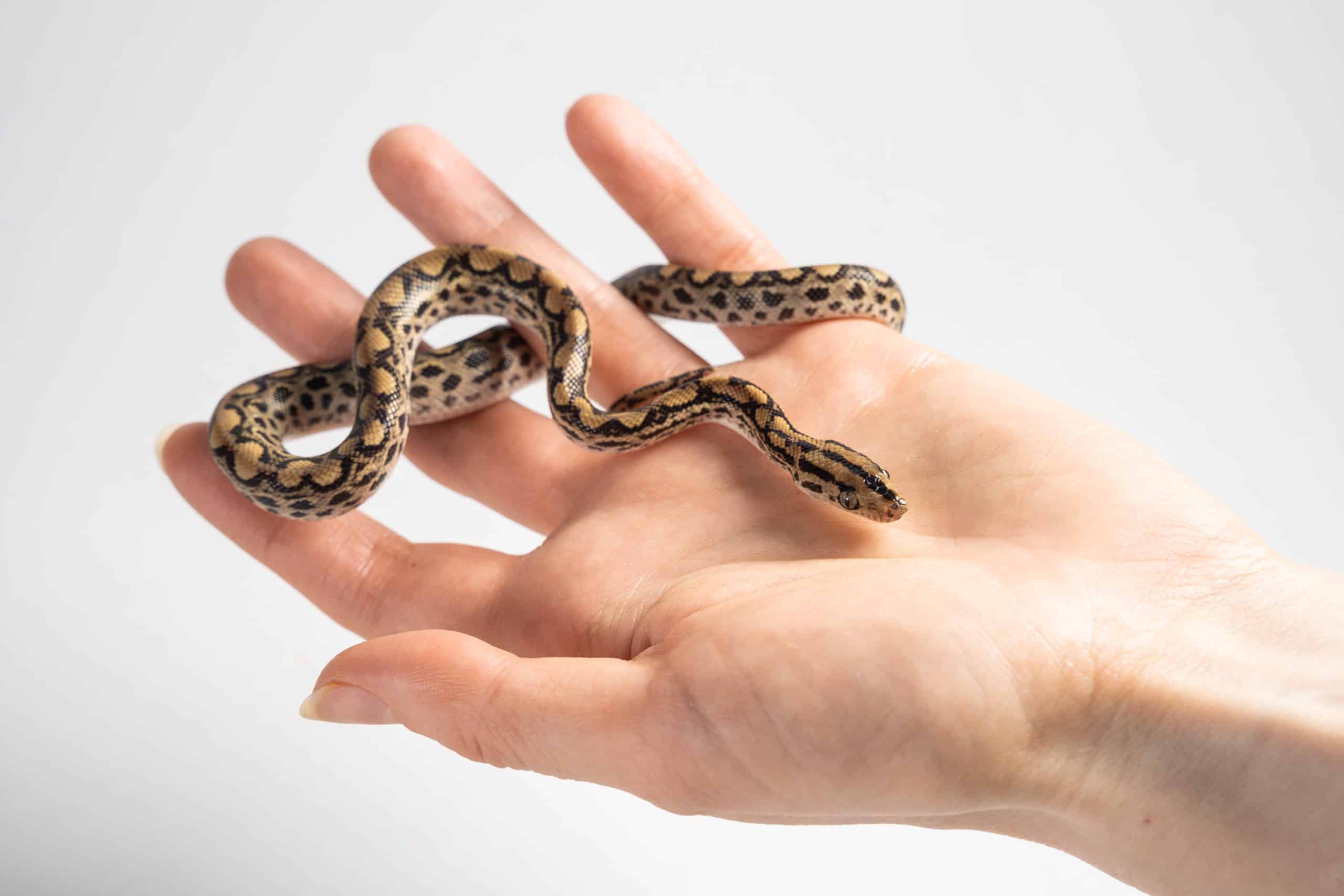
The Children’s python is native to northern and central Australia. While these small snakes are popular in pet stores, the name does not mean it is suitable for children; instead, they were named after British zoologist John George Children. These snakes are typically a light or reddish-brown shade with darker blotches and spots that may fade as the snake matures. It also has an iridescent or blue sheen in the sun.
Young Children’s pythons are tricky for beginners to raise, so prospective owners should consider an adult. They need substrate for burrowing and hides on both the warm and cool side, as well as a humid hide. They also need moderate humidity, but can tolerate a wide range if they are provided a humid hide. These snakes are nocturnal, so a day to night cycle should be maintained.
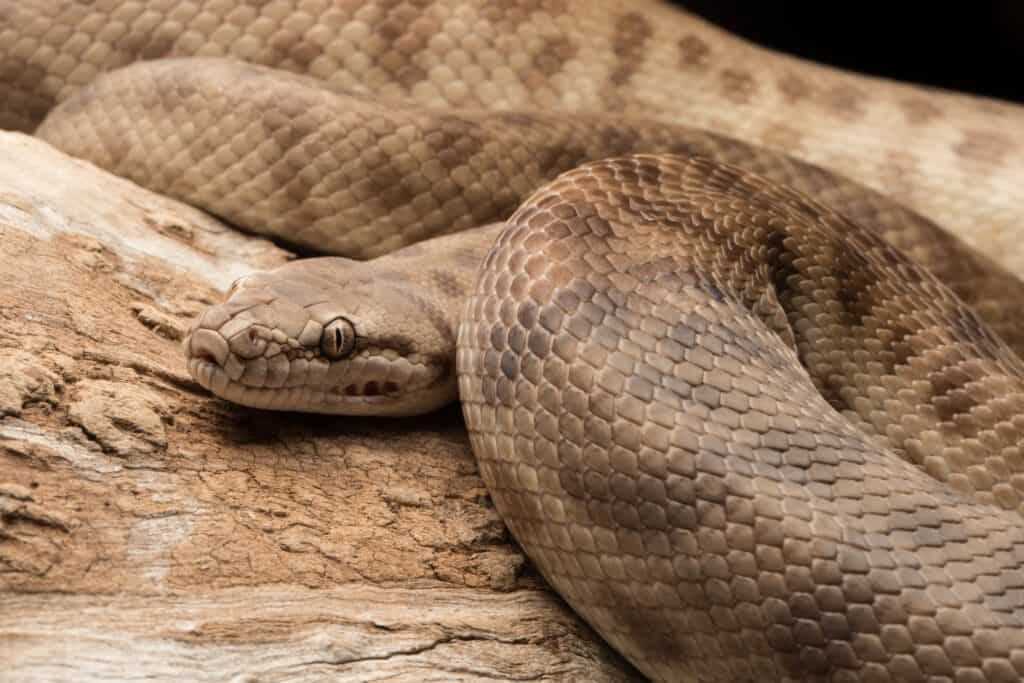
Children’s pythons only reach 2.5 to 3 feet in length.
©LIGHTITUP/Shutterstock.com
7. Ball Python (Python regius)
- Size: 3-5 feet
- Temperament: very calm and gentle
- Care requirements: easy
Ball pythons are popular small pet snakes. They are native to West and Central Africa. They have a dark brown to black base color with lighter gold, tan, or brown blotches on the sides and a broken stripe down their backs. These snakes get their name from their tendency to curl up in a ball with their heads tucked inside when they feel threatened.
These pythons require enough substrate for burrowing, a hide on the warm side and one on the cool side, and high humidity for respiratory health and to aid in shedding. Refusing food is common during winter or the breeding season, as long as they maintain a stable weight.
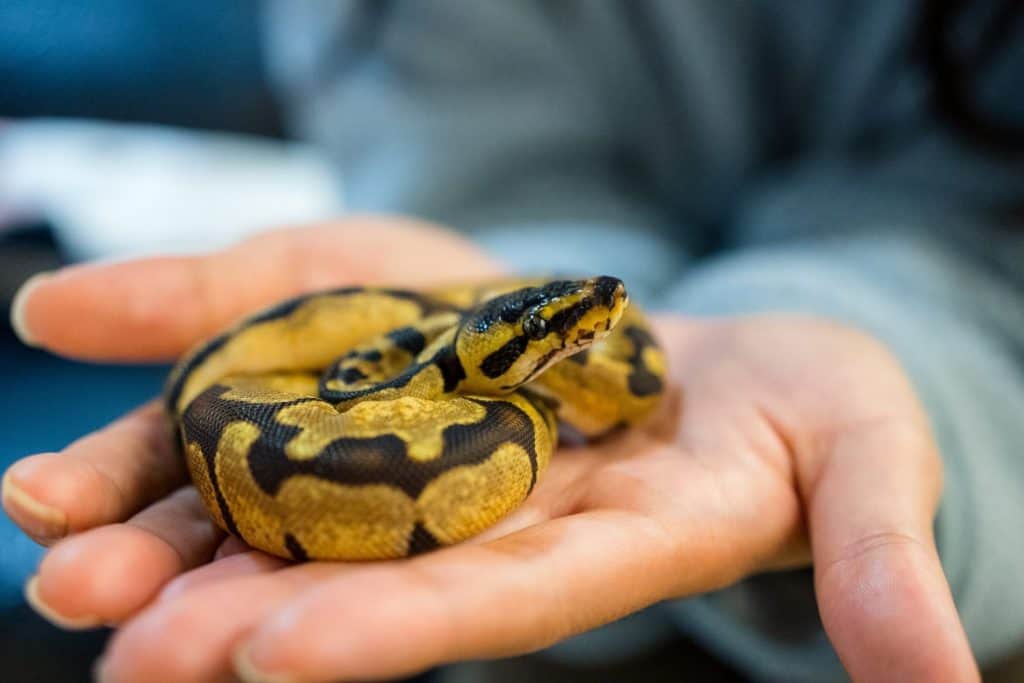
Ball pythons get their name from their tendency to curl up in a ball when threatened.
©leungchopan/Shutterstock.com