
Quick Take
- One of these black-and-white snakes actually eats venomous snakes for breakfast, and it is probably not the one you would expect. Meet the venomous-snake eater →
- Two of these snakes look nearly identical, but a single glance at the belly tells them apart instantly. Spot the belly difference →
- One stripe-patterned snake releases a secret defense weapon when handled, and that weapon has nothing to do with venom. Discover the secret defense →
Finding a snake in your yard is almost inevitable in many parts of the United States, especially as spring and summer arrive. When it comes to snakes, part of being safe and doing the right thing is knowing what kind of snake you are looking at. There are around 150 snake species in North America, and fortunately, 90% of them are nonvenomous. Today, we are going to help you identify the most common black snakes with white stripes that you could find slithering into your yard.
How Common Are Black Snakes with White Stripes?
Black is one of the most common snake colors, especially across North America. Dark or black scales absorb heat more quickly, so cold-blooded snakes warm up faster in the sunlight. However, adding the specific secondary feature of “white stripes” really narrows down the options.
To keep things organized, we have broken down the information about each of these snakes into a few key elements:
- Appearance
- Range
- Habitat
- Diet
- Danger level
Using this guide, you can easily identify the most likely black snakes with white stripes found in your yard or while on a hike. Let’s get started.
Eastern Garter Snake
Eastern garter snakes (Thamnophis sirtalis sirtalis), and all other species of garter snakes, are some of the most common snakes found in the United States. They come in many color patterns, depending on the subspecies and the region, but black is one of the most common background colors and most snakes have three pale longitudinal stripes. These snakes are often seen in gardens, which is why some people incorrectly refer to them as “garden snakes” rather than garter snakes.
- Appearance: Black, grey, or brown bodies; three longitudinal stripes running from head to tail that can be yellow or white; occasionally, they come in a more checkered pattern, which is generally found on lighter-colored snakes; can grow to 4 feet in length.
- Range: Most of the eastern United States, primarily in the south
- Habitat: Meadows, marshes, woodlands, forests, and suburban areas
- Diet: Worms, slugs, frogs, toads, and salamanders
- Danger Level: Low; considered nonvenomous to humans but will bite if poorly handled
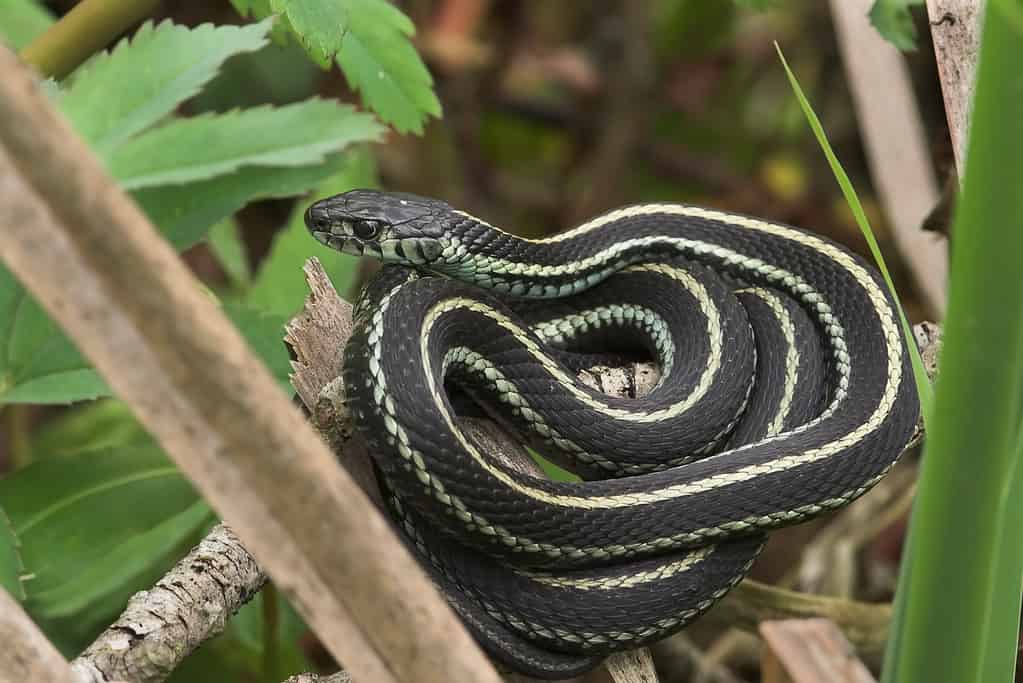
Eastern garter snakes have dark bodies with pale longitudinal stripes.
©iStock.com/rkhalil
California Kingsnake
Kingsnakes are common across much of the United States, and they come in a wide variety of colors, depending on the species/subspecies and geographical area. There are up to 45 subspecies in the kingsnake genus Lampropeltis. The California kingsnake (Lampropeltis californiae) is one of the prettiest snakes on our list. California kingsnakes are often kept as pets because of their mild nature.
- Appearance: A wide variety of solid colors with stripes; often black with strong white bands or longitudinal white stripes; typically 3 to 4 feet in length, though some individuals can exceed 6 feet.
- Range: California, Oregon, Nevada, Utah, Arizona, and parts of Mexico
- Habitat: Adaptable; often found in woodlands, forests, grasslands, fields, and deserts
- Diet: Other snakes (including venomous ones), rodents, lizards, frogs, and birds
- Danger Level: Low; nonvenomous and known for its mild disposition; often kept as pets.
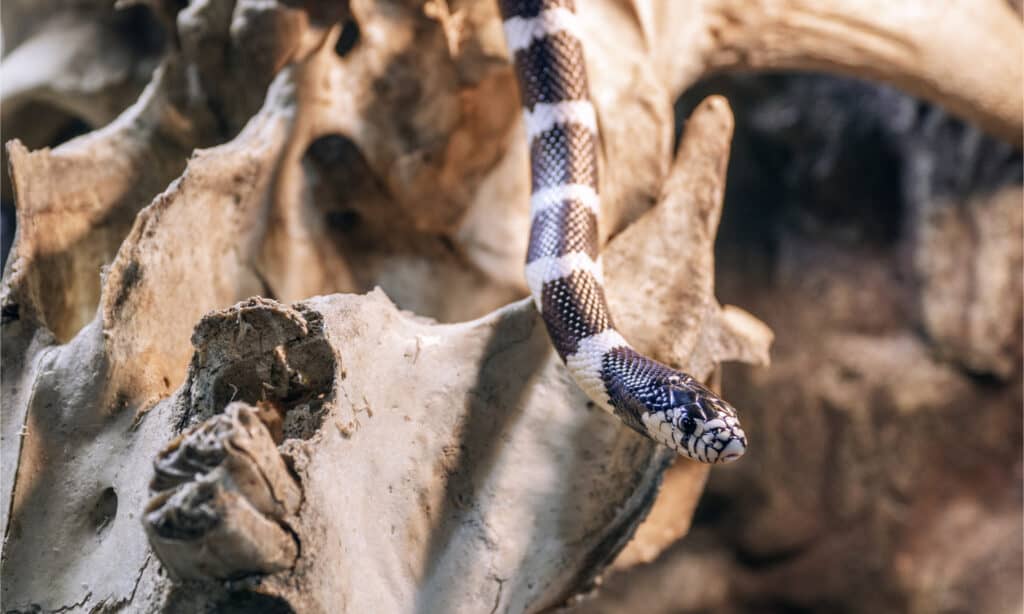
California kingsnakes come in many colors, the most common being alternating dark and light bands.
©Ann May Snz/Shutterstock.com
Common Kingsnake
As noted above, there are a many species of kingsnake. The common kingsnake (Lampropeltis getula) is also known as the eastern kingsnake. Similar to the California kingsnake, these amazing animals are called the “king” because of their diets consisting mainly of other snakes. Although they come in different colors and patterns, eastern kingsnakes are often black and white.
- Appearance: Black bodies with strong white stripes; typically grow 3–4 feet in length, with large individuals reaching up to nearly 7 feet
- Range: Eastern United States
- Habitat: From the ocean to the mountains and anywhere in between
- Diet: Other snakes (including venomous ones), rodents, lizards, frogs, and birds
- Danger Level: Low; nonvenomous and known for their mild disposition; often kept as pets
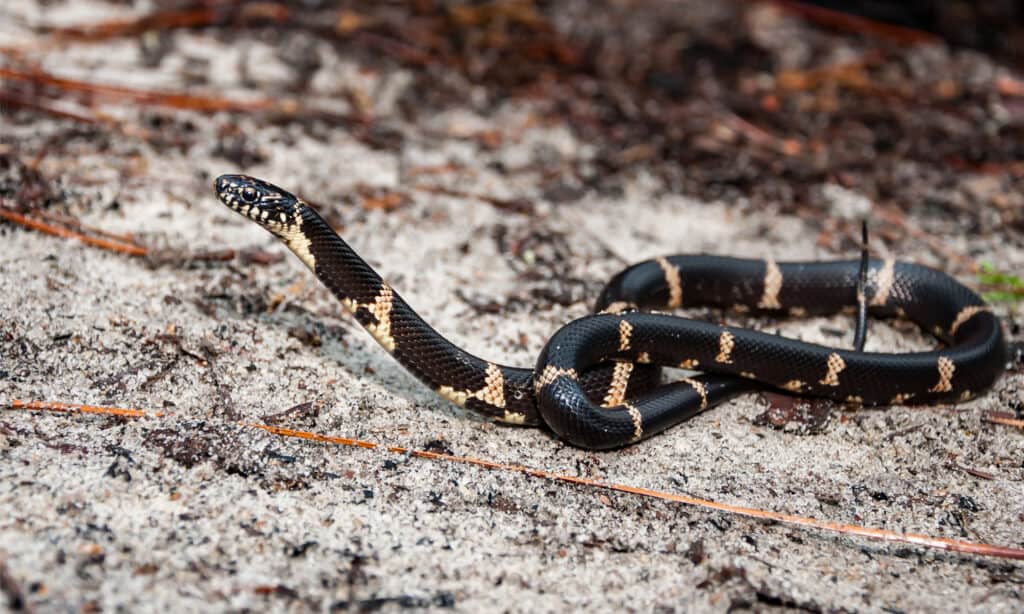
The common kingsnake frequently has a black body with strong white stripes.
©iStock.com/JasonOndreicka
California Striped Racer
The California striped racer (Masticophis lateralis), also known as the California whipsnake, is locally common in its range. These snakes are only active during the day. They are fast movers and excellent climbers, often hunting in bushes and trees.
- Appearance: Long, thin, black bodies with yellow or off-white lateral stripes; yellow or off-white bellies that transition to a reddish color toward the tail; can measure up to 5 feet in length
- Range: California and northern Baja California
- Habitat: Open woodlands, chaparral, scrublands, grasslands, and canyon foothills
- Diet: Lizards, small rodents, insects, eggs, frogs, and small snakes
- Danger Level: Low; nonvenomous, but is easily stressed and does not tolerate handling; can release a foul-smelling fluid

Striped racers are found in California and northern Baja California.
©Matt Jeppson/Shutterstock.com
Queen Snake
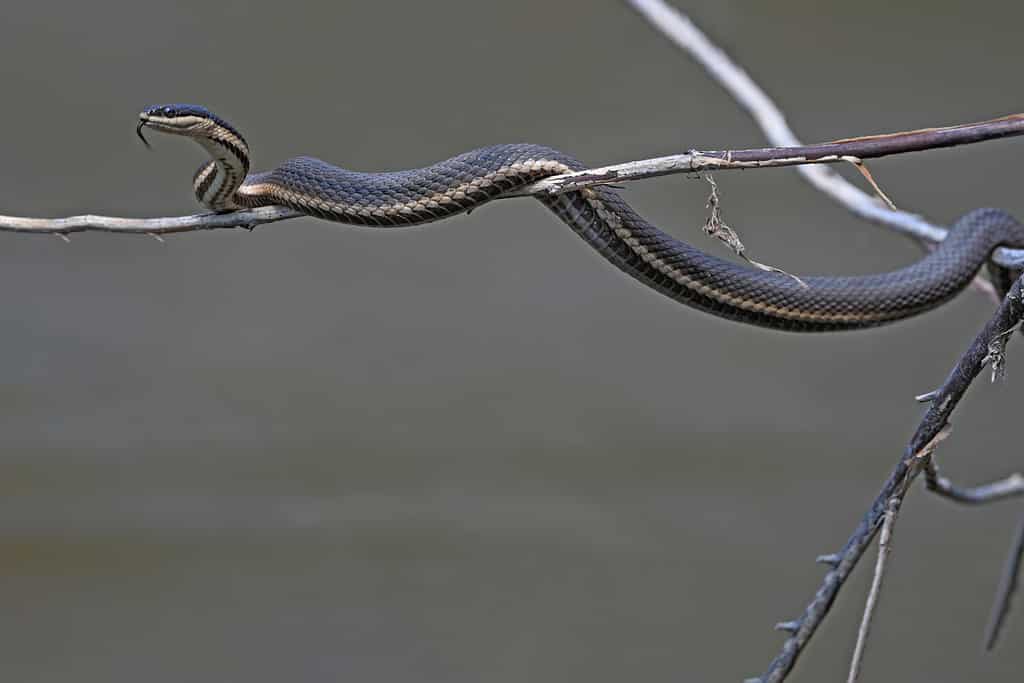
The queen snake (Regina septemvittata) is a semi-aquatic snake species that goes by many names, including the banded water snake, brown queen snake, diamond-back water snake, leather snake, and moon snake, among others. Although it can look extremely similar to a garter snake, a quick look at the belly is a great way to tell the difference between the two. Queen snakes have stripes on their bellies while garter snakes do not.
- Appearance: Black, olive, grey, or dark brown bodies with peach, yellow, or off-white stripes running down the back and similar stripes running down the belly; measures 2-3 feet in length
- Range: Piedmont and mountainous regions of the eastern U.S. and into the Midwest from the Great Lakes to Louisiana
- Habitat: Near streams, ponds, and other bodies of water
- Diet: Crayfish, fish, and small aquatic animals
- Danger Level: Low; non-venomous, but will release a foul-smelling odor if mishandled
©Lev Frid/Shutterstock.com