
Quick Take
- Corn snakes are brightly colored, yet that vivid pattern serves a surprisingly deceptive purpose against predators. See the color pattern →
- Their most impressive pattern feature is the one you almost never see, which also happens to be the most effective. Discover the belly pattern →
- Genetics, not environment, decide which corn snake gets a stunning color display, and understanding why that is the case turns out to matter quite a bit.
- Farmers actually want this snake nearby, and the reason has nothing to do with its looks. Learn about their diet →
Snakes have some of the most diverse appearances on Earth. There are so many unique patterns and colors for each species, and it feels like you can learn about a new one each day. One snake with a bright coloring is the corn snake. This Instagram post by @whiitetail shows a video of one of these snakes.
Continue reading

Corn snakes get their name from their checkerboard belly pattern resembling Indian corn.
©bugphai/iStock via Getty Images
About the Corn Snake
Corn snakes are constrictor snakes that span the eastern and southeastern United States. Growing 30 to 50 inches long, corn snakes are found in forests, swamps, fields, and other grassy areas. Like many snakes, they can be intimidating. However, corn snakes are completely nonvenomous and practically harmless to people. They are important predators, especially around farms, because they eat common rodents like mice and rats. This helps to keep rodent populations under control. Corn snakes are generally shy, but you should still try to avoid getting too close to them.
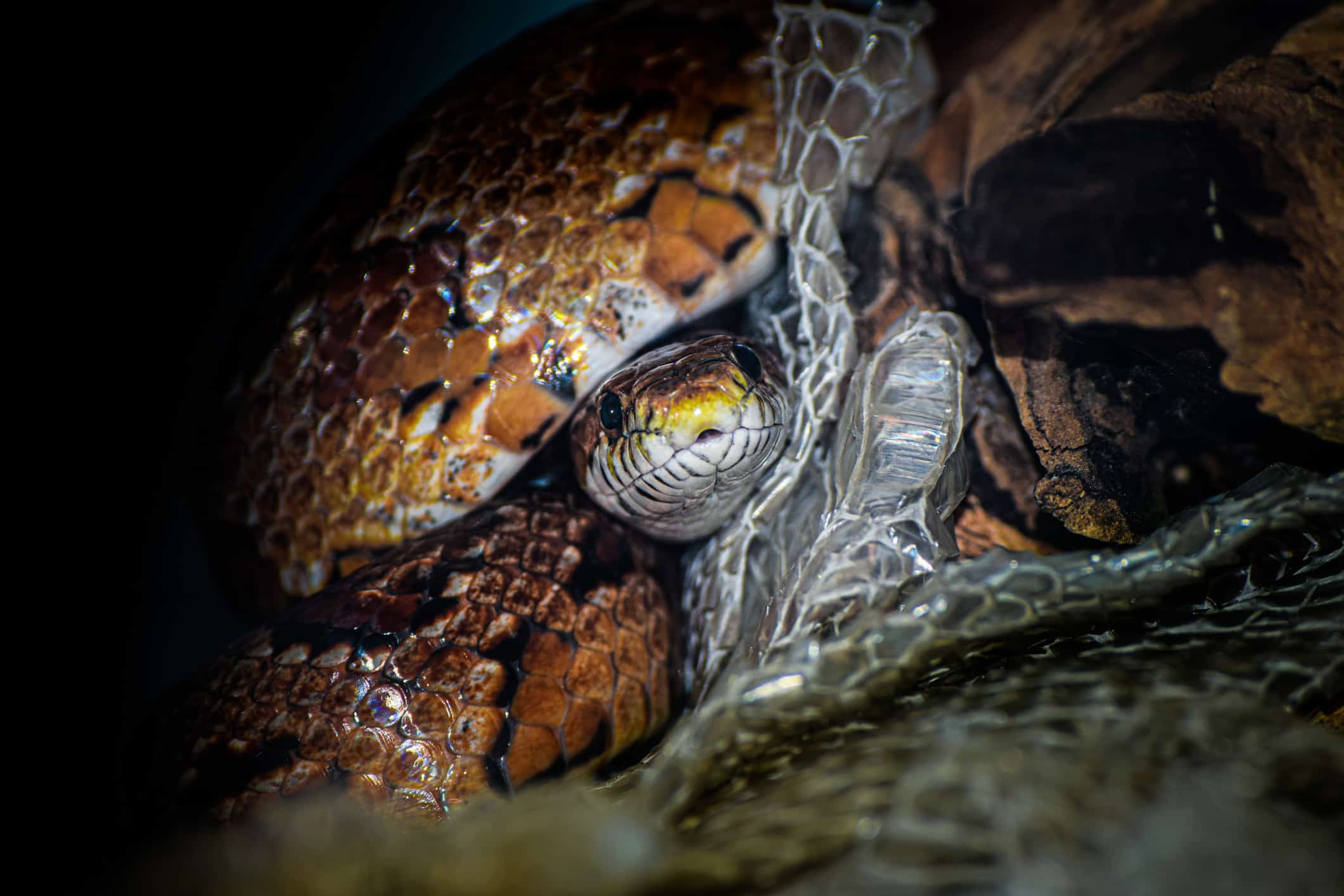
One of the most striking features of corn snakes is their color and patterning. Wild corn snakes display a mix of red, orange, and brown dotted across their backs. Their pattern creates a stained-glass-like appearance. Each dark blotch is surrounded by differently colored scales, often lighter ones, as seen in the photo above. The most striking part of their pattern is difficult to see: a black-and-white checkerboard pattern on their belly. While their red and brown coloring can help break up their outline on dirt and mud, their checkerboard pattern works for a different reason. As shown in the video above, when the snake curls its body upward, it can create a striking visual effect. This pattern can confuse predators. The varied pigments across its body come from the snake’s genetics. The snake’s genetics determine the pigment of each scale and create many unique corn snakes.