
Quick Take
- The Appalachian Trail is home to many snakes that you’re likely to encounter, but only two are venomous.
- Most snakes on the Appalachian Trail are not dangerous, so long as they are left alone.
- If bitten by a snake, no matter the snake, seek medical help immediately.
If you’re interested in outdoor recreation, the Appalachian Trail has likely called to you at some point in your life. However, hiking in this region means you’ll encounter wildlife—some of it hidden and potentially dangerous. Which snakes live along the Appalachian Trail—and which should you learn to identify to stay safe?
It’s important to note that encountering snakes on the Appalachian Trail is inevitable, and they are almost entirely misunderstood. Here are the snakes you’re likely to encounter over these 2,190 miles, as well as how to handle them if you do.
The Two Venomous Species of the Appalachian Trail
According to the Appalachian Trail Conservancy, only two venomous species occur along the AT’s full corridor. Here are the details about the snakes you should do your best to avoid while hiking here.
Timber Rattlesnake
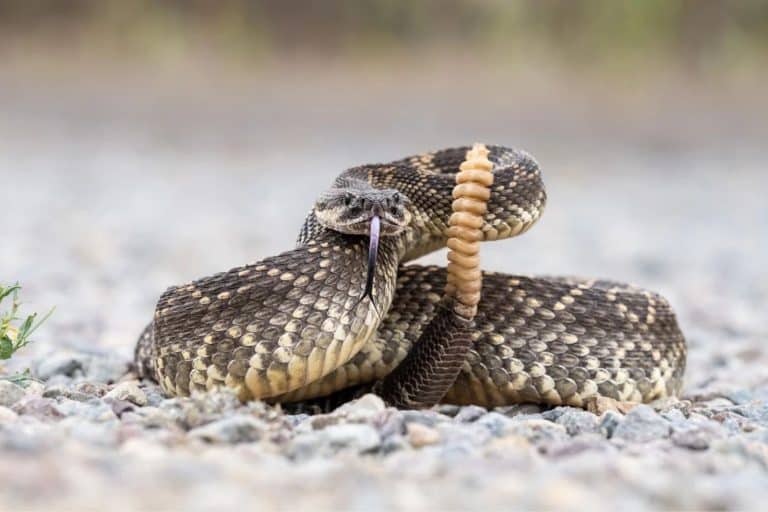
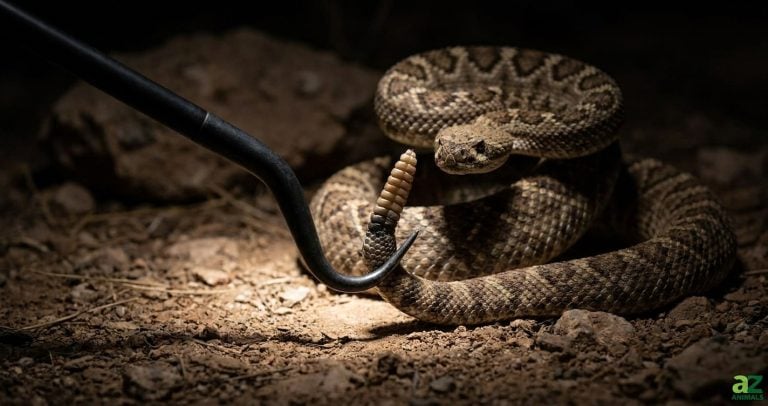
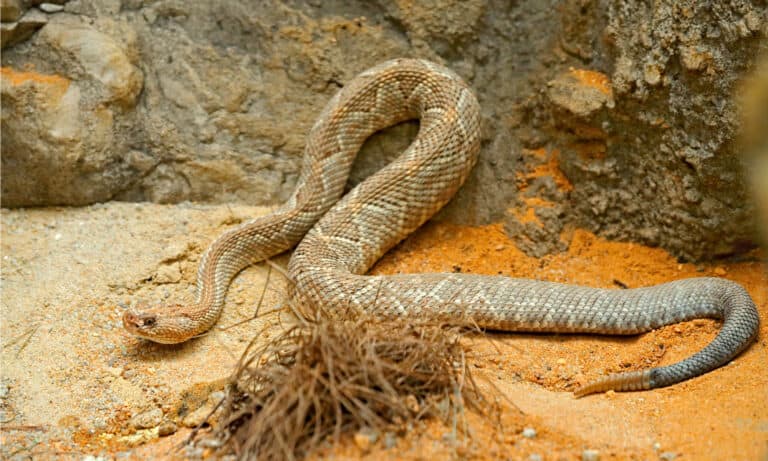
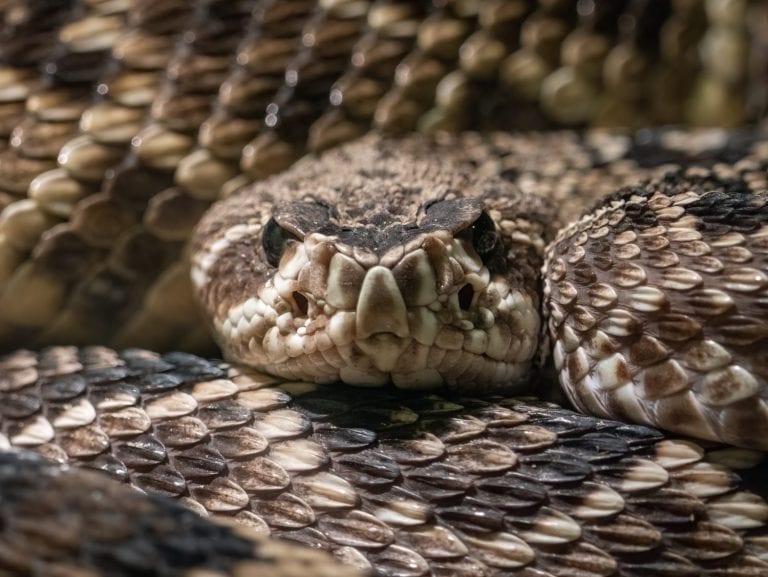
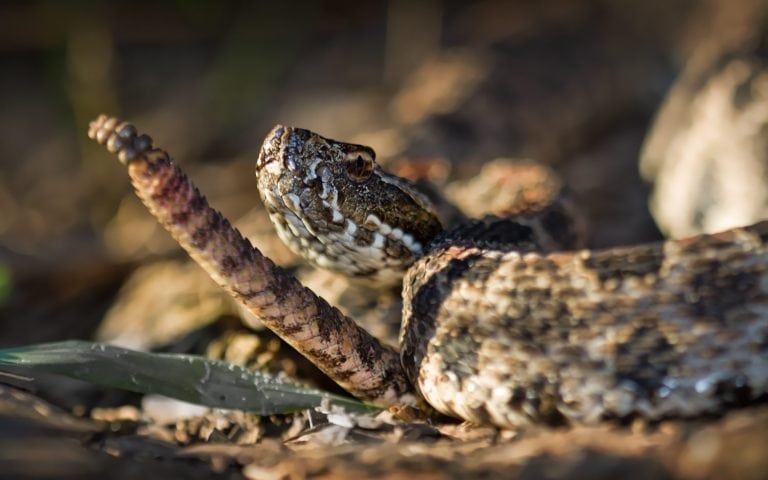
The timber rattlesnake is the AT’s most dangerous snake, and is present in every AT state except Maine. It favors rocky outcroppings and the sun-warmed trail surfaces of Pennsylvania in particular. Identification is usually straightforward for this snake: it’s a heavy-bodied pit viper ranging from two to five feet, typically showing a pattern of dark zigzag crossbands. They’re most active during daylight in spring and fall, but in summer heat, they shift to nocturnal behaviors.
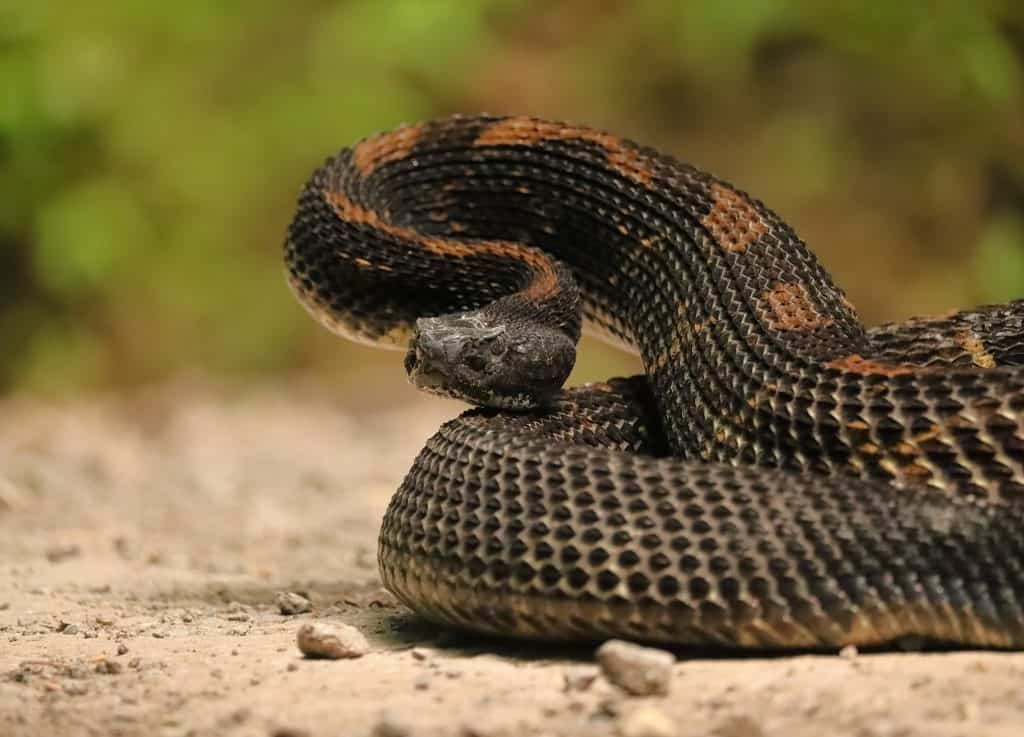
The Appalachian Trail’s most dangerous snake is the timber rattlesnake.
©onewildlifer/Shutterstock.com
When a timber rattlesnake feels threatened, it vibrates its tail rapidly, which should be enough of a warning. However, Blue Ridge Parkway biologist Bob Cherry noted that many snakebite cases he’d heard about involved “the hands of young males who have been drinking”. That’s why, if you hear a rattle, stop immediately. Locate the snake, give it at least six to eight feet of clearance, and wait for it to move on. It has no interest in you.
Eastern Copperhead
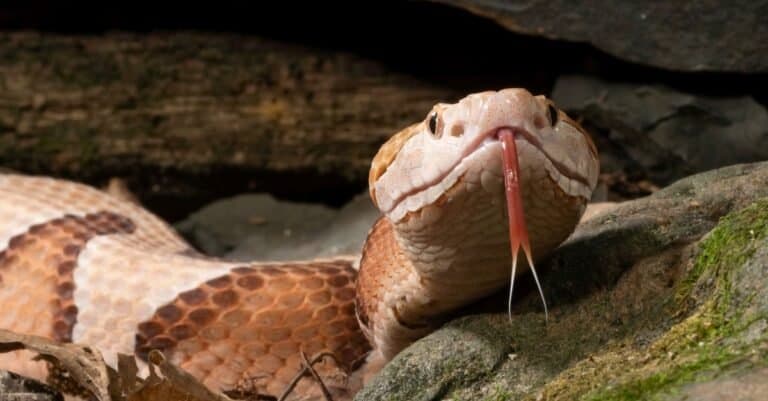
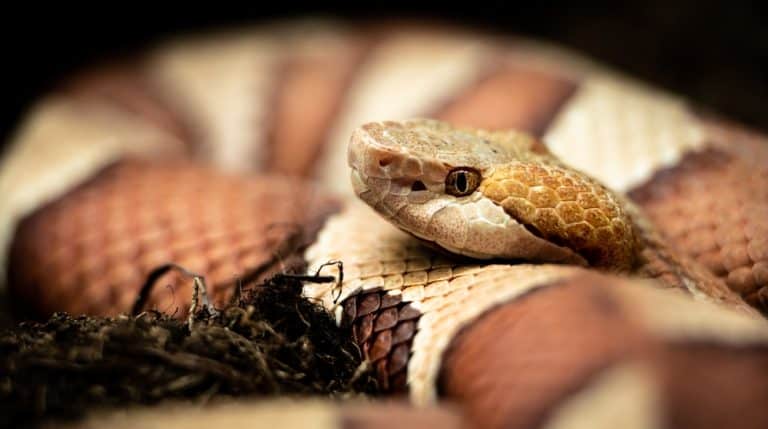
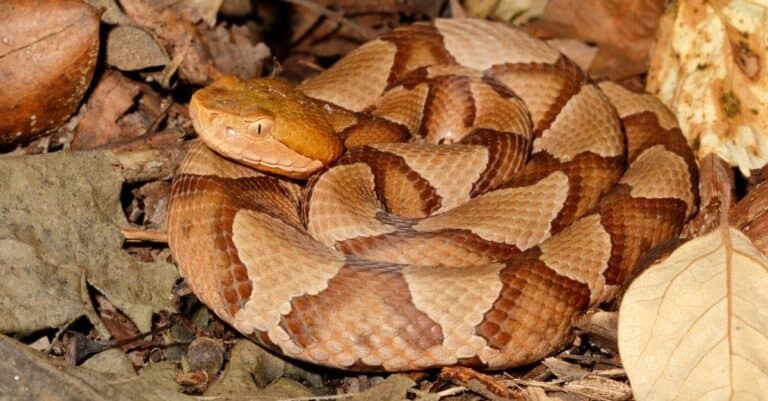
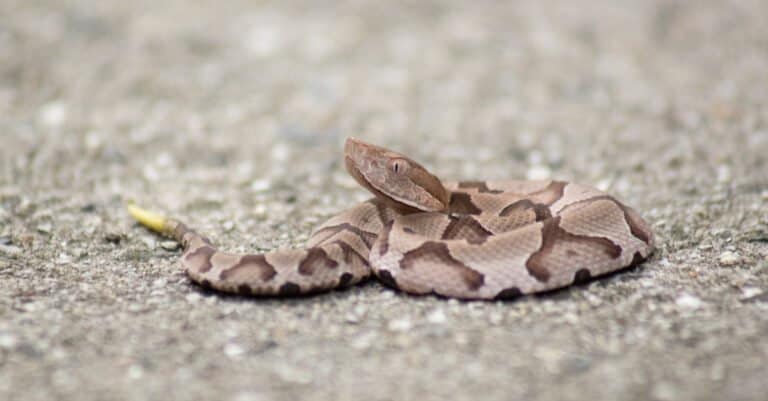
Unlike the timber rattlesnake, the copperhead is the snake most likely to actually bite you. This is mainly because its camouflage makes it difficult to see, increasing the chance of accidental encounters. Beth Schlimm, a Maryland state herpetologist, described copperheads as tan with “darker blotches in an hourglass or a Hershey’s Kiss shape.” The pattern also resembles fallen leaves or dappled light.
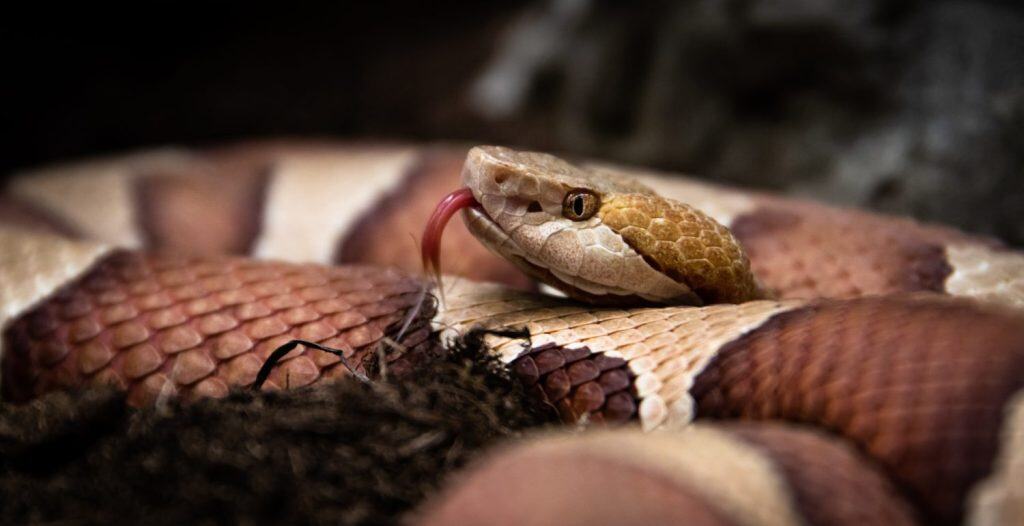
These snakes look like fallen leaves, which is how people are accidentally bitten.
©vadviz.studio/Shutterstock.com
Copperheads are found in many AT states, but are absent from Vermont, New Hampshire, Maine, and much of Massachusetts, typically inhabiting deciduous forest edges and areas near streams. Unlike the rattlesnake, a copperhead often doesn’t give much warning, typically only striking when physically contacted. However, this contact happens more often than you think, given how good at hiding this snake is.
The good news is that copperhead venom, while painful, is rarely fatal to healthy adults. A study published in the Journal of the American College of Surgeons found that 85% of copperhead bites were grade 1, which usually requires observation rather than antivenom. Still, any bite demands prompt medical evaluation, so be sure to keep this in mind.
The Nonvenomous Snakes of the Appalachian Trail
The vast majority of snakes you’ll encounter on the AT are completely harmless and tend to be beneficial to the trail ecosystem. Here’s how to identify the snakes residing along one of the most diverse wildlife corridors in the eastern United States.
Eastern Ratsnake
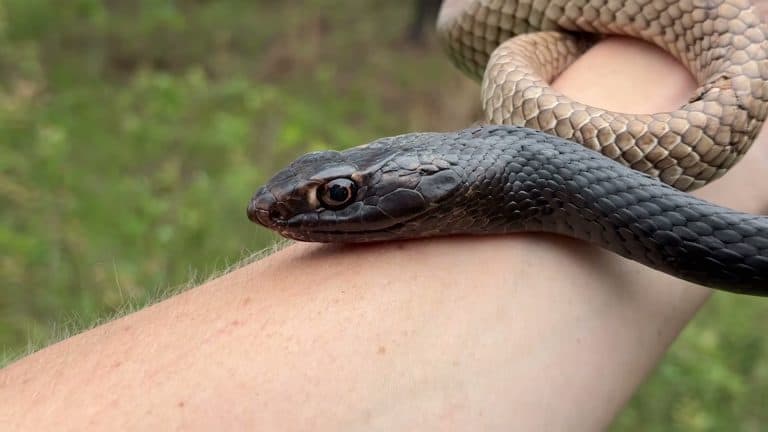
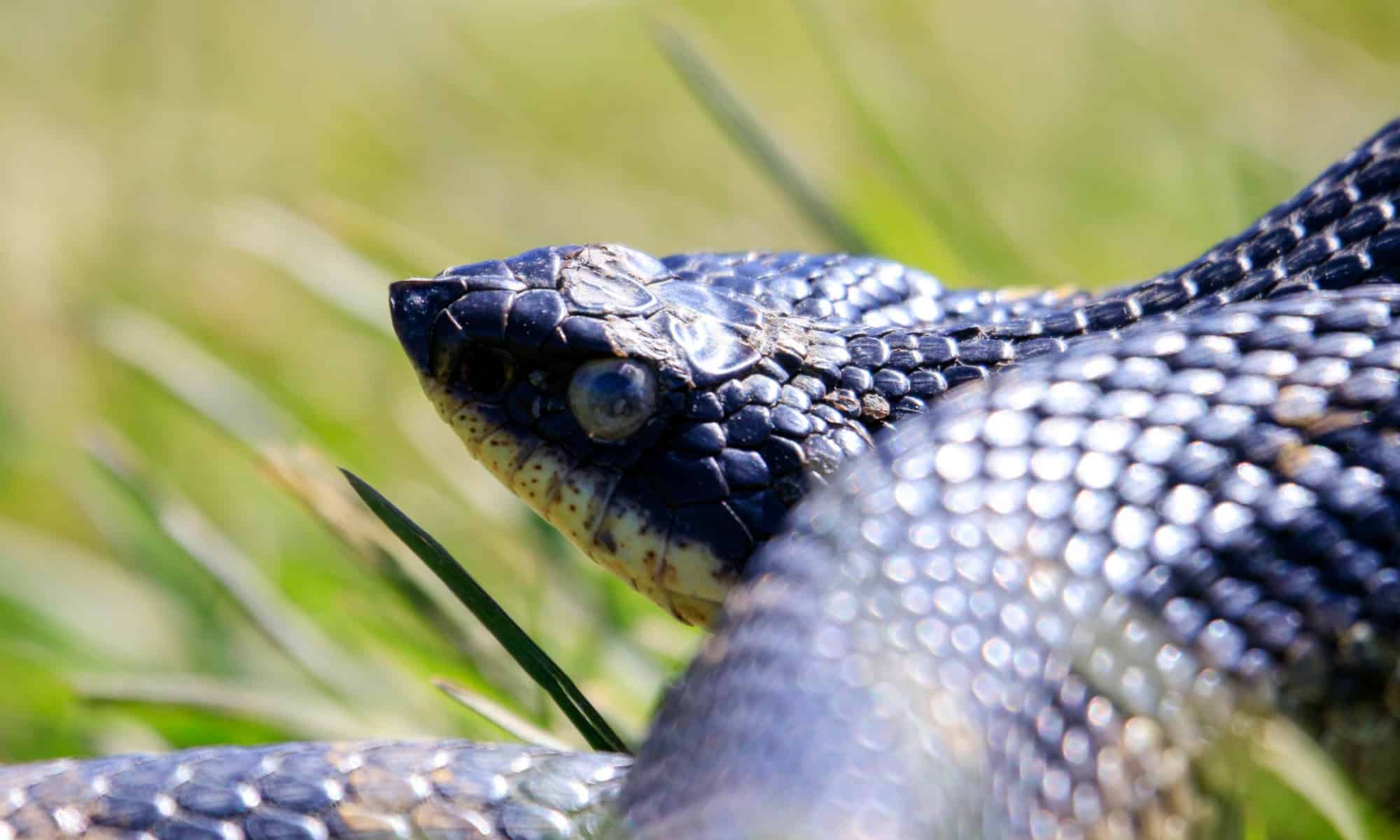
Adult ratsnakes can grow up to six feet long and are solid black with a whitish belly. Although their movement may seem menacing, they are extremely valuable for controlling pests in shelters and around campsites.
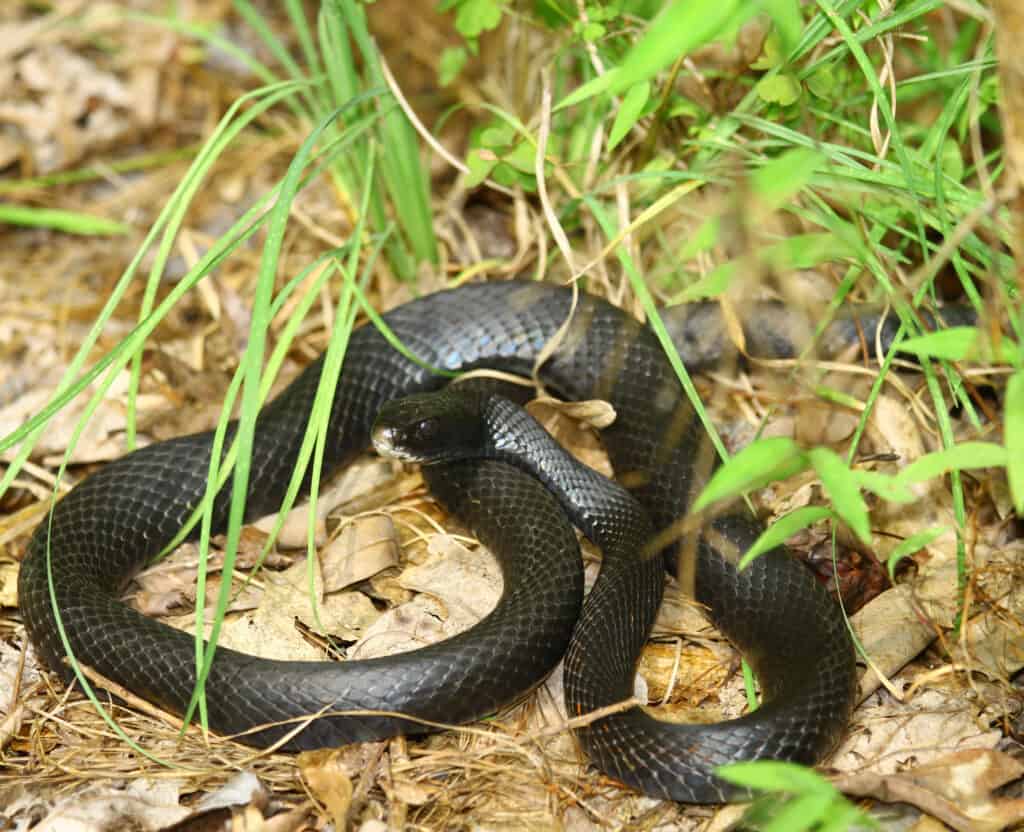
The Alleghany Ratsnake, or Eastern Ratsnake, can grow up to 6 feet in length.
©Barry Blackburn/Shutterstock.com
It’s important to note that ratsnakes regularly climb trees to raid bird nests and are typically active during the day. However, like the timber rattlesnake in summer, they may become more active at night. You may also encounter juveniles, which look entirely different from their adult counterparts: they are gray or salt-and-pepper with dark blotches.
Northern Black Racer
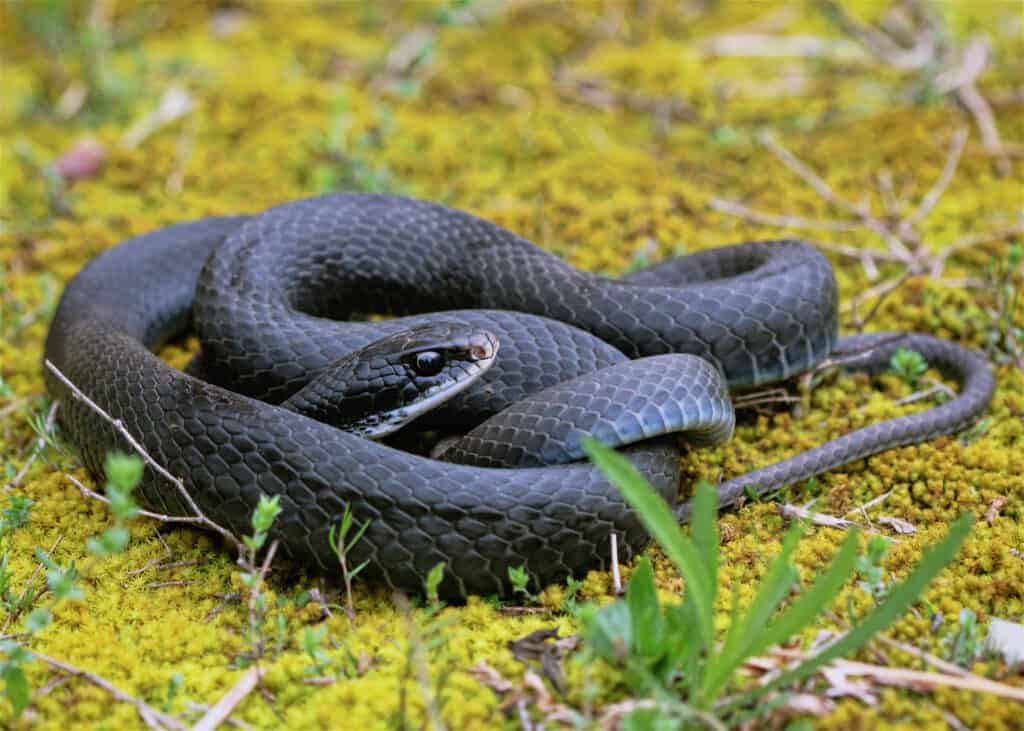
Racers eat small animals like rodents, frogs, toads, lizards, birds, and bird eggs.
©Matthew L Niemiller/Shutterstock.com
The racer is much thinner and faster than the ratsnake, despite it also being solid black. However, it’s most easily distinguished by behavior: if startled, a racer bursts away at an impressive speed. If cornered, racers are more likely to strike than ratsnakes, but their bite is nonvenomous. They’re active during daylight and range the full length of the AT from Georgia into Maine.
Eastern Garter Snake
The garter snake is one of the AT’s most widespread species and is frequently spotted at all hours and in various conditions. Typically 18 to 26 inches long with a dark gray or olive body and yellow lengthwise stripes, garter snakes are harmless, with a tolerance for varied habitats and food sources. Unlike most AT snakes, garter snakes may even be active on mild winter days.
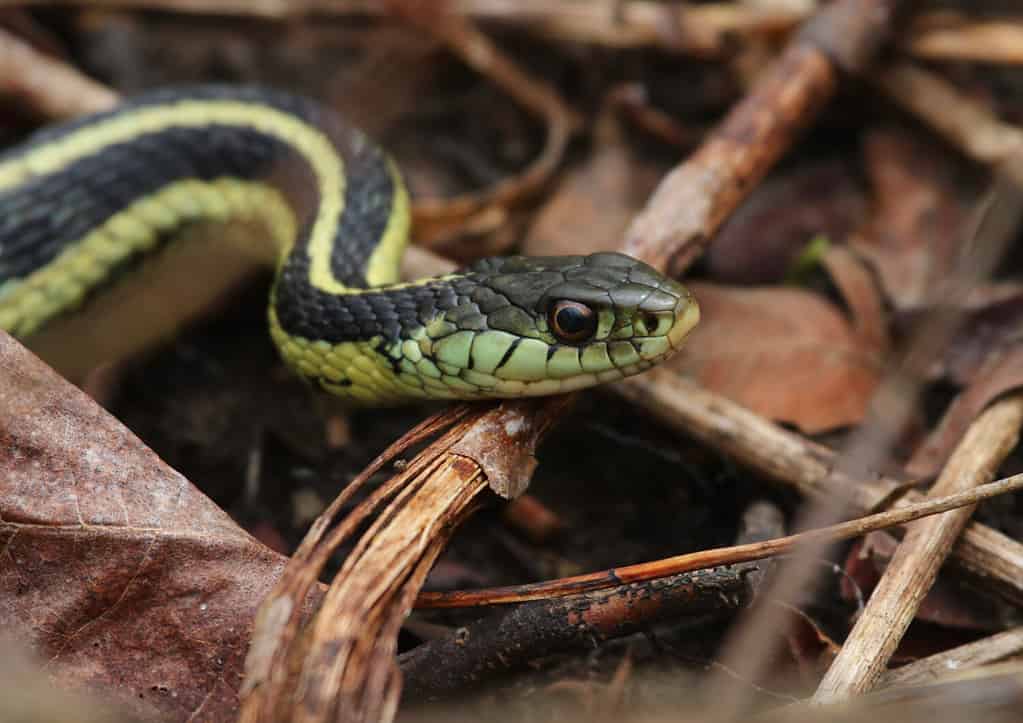
The Eastern garter snake is a harmless companion on the Appalachian Trail.
©Chris Hill/Shutterstock.com
Eastern Hognose Snake
When threatened, the hognose snake flattens its neck and hisses dramatically. If further provoked, it may roll over and play dead. They’re found from Georgia through New Hampshire, reach up to three feet in length, and come in a wide variety of colors, including orange, gray, black, and brown.
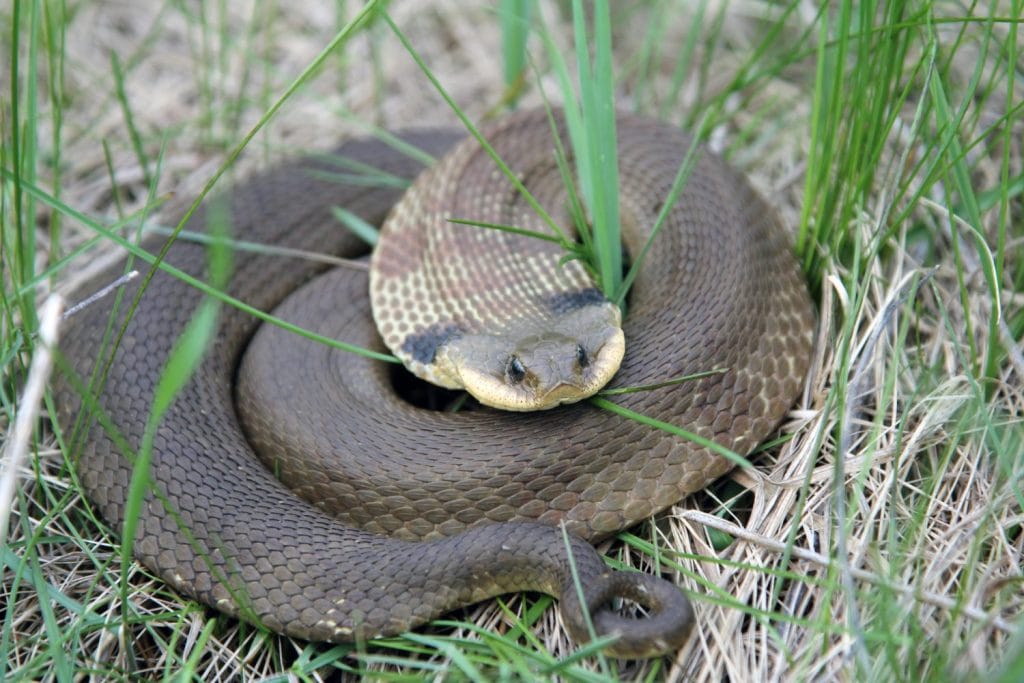
Hognose snakes attempt to look like cobras in order to scare away humans.
©Wxchsr/Shutterstock.com
What to Do If You’re Bitten on the Appalachian Trail
The Appalachian Trail Conservancy’s official guidance asks anyone bitten by a snake to stay calm, call 911, and get to a hospital as fast as possible, especially if you can’t properly identify the snake that bit you. Washing the wound with soap and water also helps, along with keeping the bitten limb below heart level, and removing rings or jewelry before any potential swelling sets in.
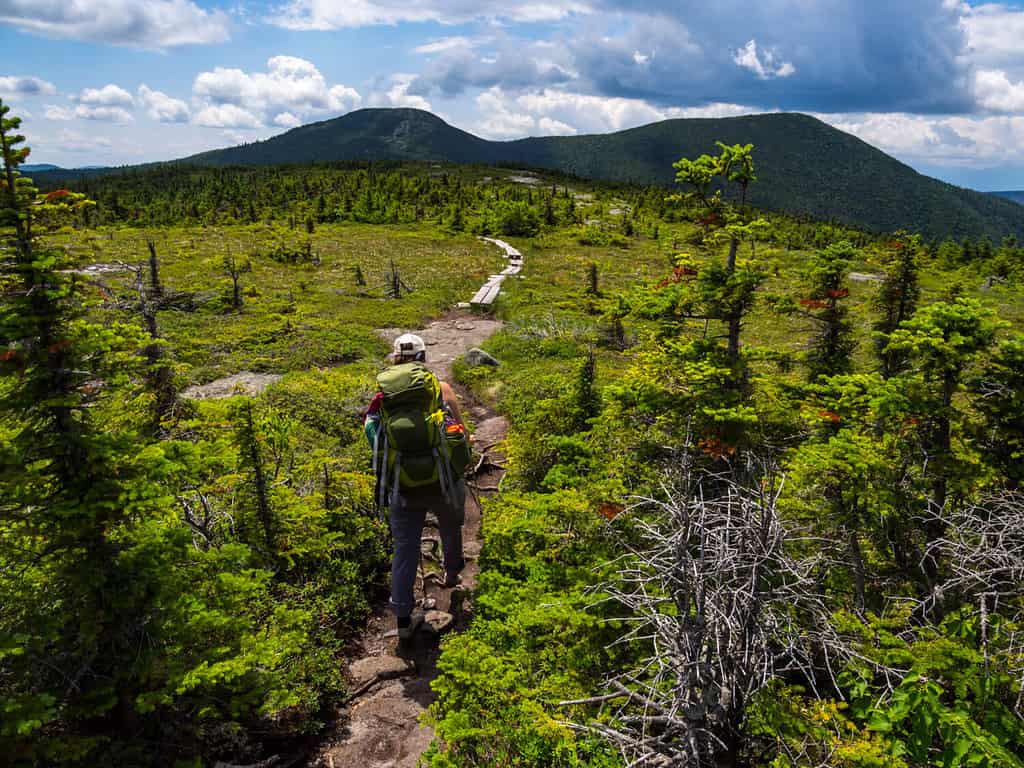
Always seek help if you’re bitten by a snake while hiking on the Appalachian Trail.
©Jonathan A. Mauer/Shutterstock.com
Other common first-aid measures for snakebites are unlikely to be effective. Antivenom may be required for some venomous snakebites, but many, such as most copperhead bites, are treated with observation and supportive care. All snakebites should be evaluated by medical professionals.
Hike the Appalachian Trail with Snake Safety in Mind
Snakebites on the Appalachian Trail are genuinely rare, with most only occurring in people who decide to handle or provoke snakes. Plus, millions hike sections of the AT each year, and the overwhelming majority finish without a single venomous encounter.
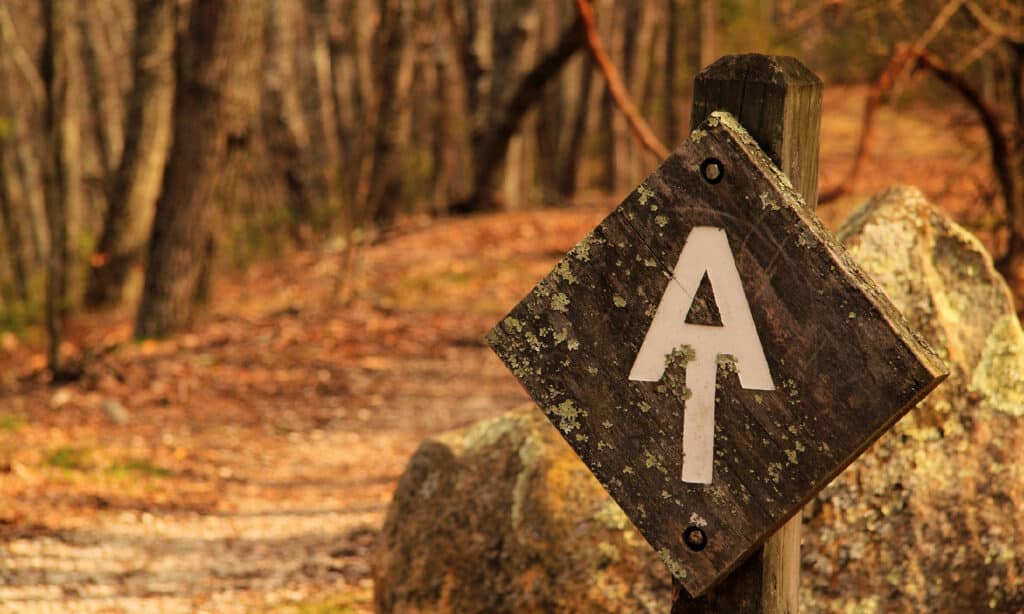
The Appalachian Trail extends almost 2,200 miles, with snakes found throughout.
©iStock.com/Wilsilver77
As long as you treat the snakes that reside here with respectful distance and curiosity, most of the time, they’ll do exactly what you want them to do: ignore you completely so you can enjoy the Appalachian Trail you are both sharing.