
Quick Take
- One of California's most destructive invasive reptiles didn't arrive through smuggling or the pet trade. Instead, it hitchhiked inside something far more ordinary. How geckos hitchhiked in →
- A beloved childhood pet is now classified as one of the world's most invasive reptile species, and it is already widespread across California. Meet this invasive turtle →
- One species owes its California population to a 1981 police raid gone wrong, and that population is still spreading today. The 1981 raid that backfired →
- Not all of these reptiles are restricted in California, and the unrestricted ones may actually pose a bigger long-term threat than those that are. Unrestricted species spreading freely →
California is home to a surprising number of non-native reptiles that have established populations far outside their natural habitats. These species primarily arrived through the pet trade, accidental relocation, or intentional releases, and some have adapted remarkably well to the state’s climate and urban environments. While a few of these invasive reptiles cause minor ecological concerns, others cause substantial ecological problems, competing with native animals for food and habitat. In some cases, they introduce diseases into local ecosystems. Because of their impact on California wildlife, these reptiles have become some of the state’s most controversial residents.
1.) Southern Watersnake (Nerodia fasciata)
©Patrick K. Campbell/Shutterstock.com
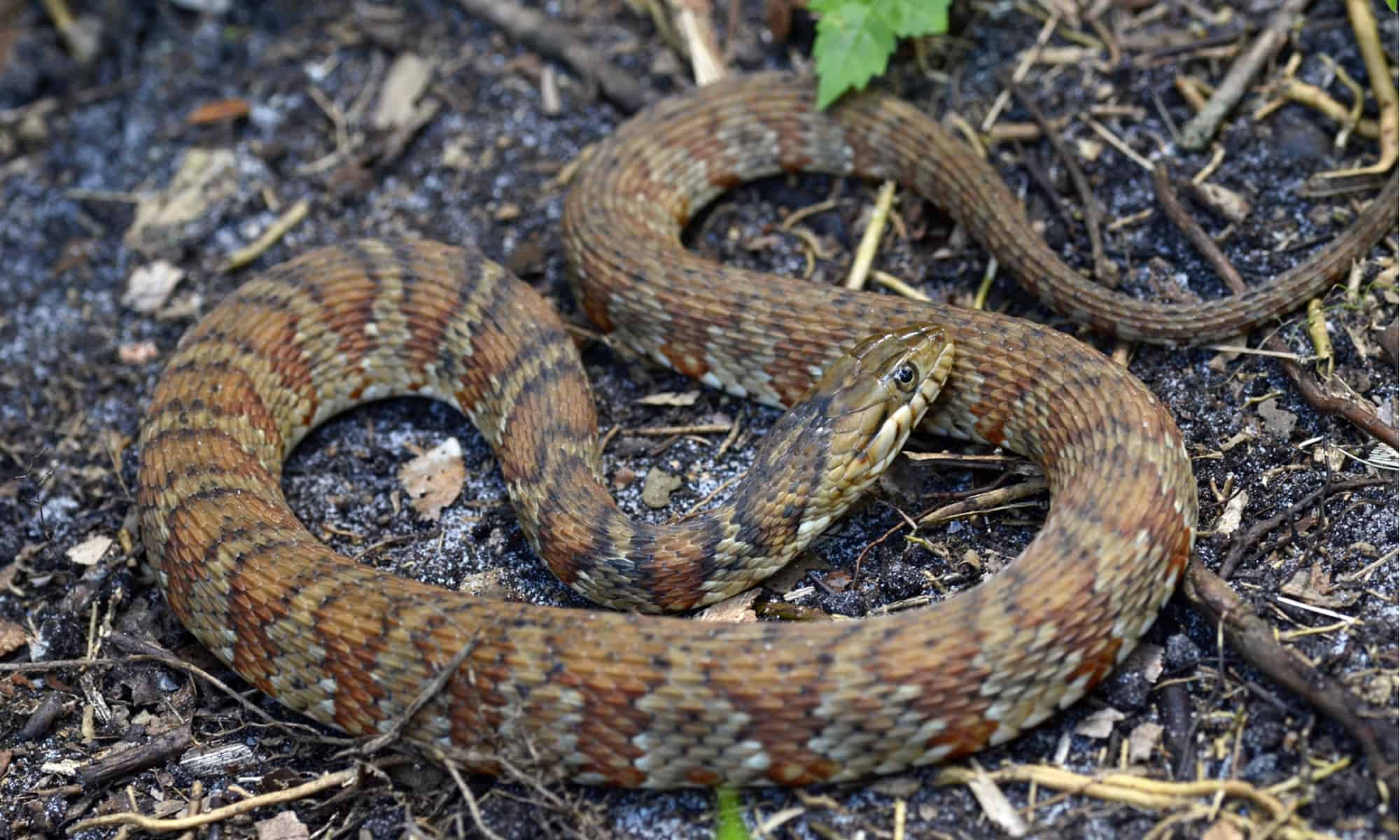
Southern Watersnakes are large aquatic snakes native to the southeastern United States that can grow up to 5 feet long. Their coloration varies widely, though older individuals often appear dark brown or black. Though nonvenomous, they may emit a foul-smelling musk and repeatedly strike when threatened. Released pets likely contributed to their spread in parts of California, particularly in Sacramento, Los Angeles, and Yolo counties. Because these adaptable predators compete with native species like the threatened giant garter snake, California restricted all Nerodia species in 2008.
2.) Northern Watersnake (Nerodia sipedon)
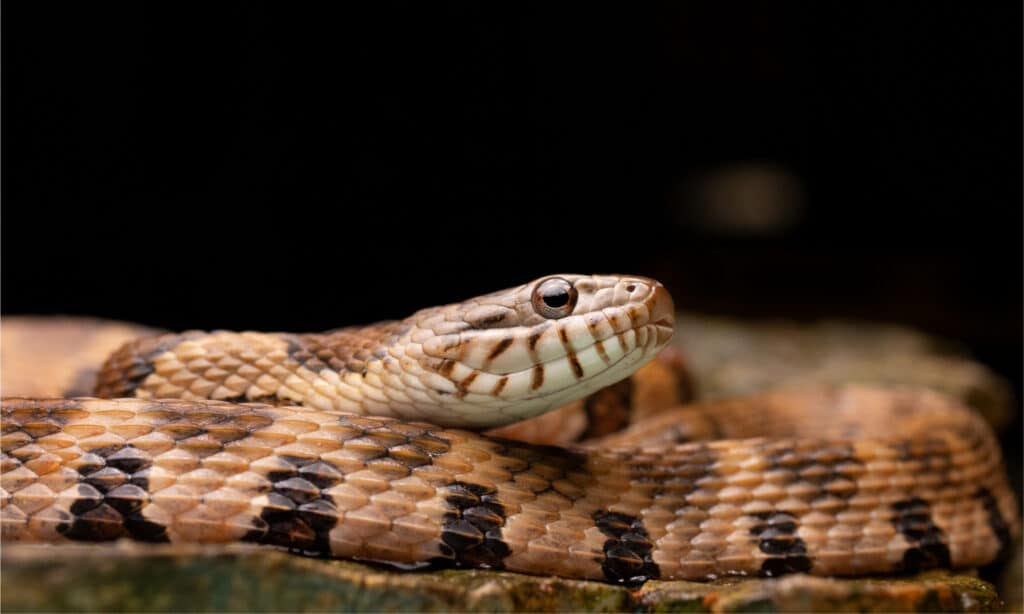
©Radiant Reptilia/Shutterstock.com
Northern Watersnakes are heavy aquatic snakes native to eastern and central North America that typically grow between 2 and 4½ feet long. Their coloration ranges from reddish-brown to gray or black, often darkening with age. Since 2007, reproducing populations have been found in parts of Placer County, likely due to released pets. These snakes primarily feed on fish and amphibians and may compete with native garter snakes for resources. As mentioned above, California classified all Nerodia species as restricted in 2008 to help limit their spread.
3.) Red-Eared Slider (Trachemys scripta elegans)
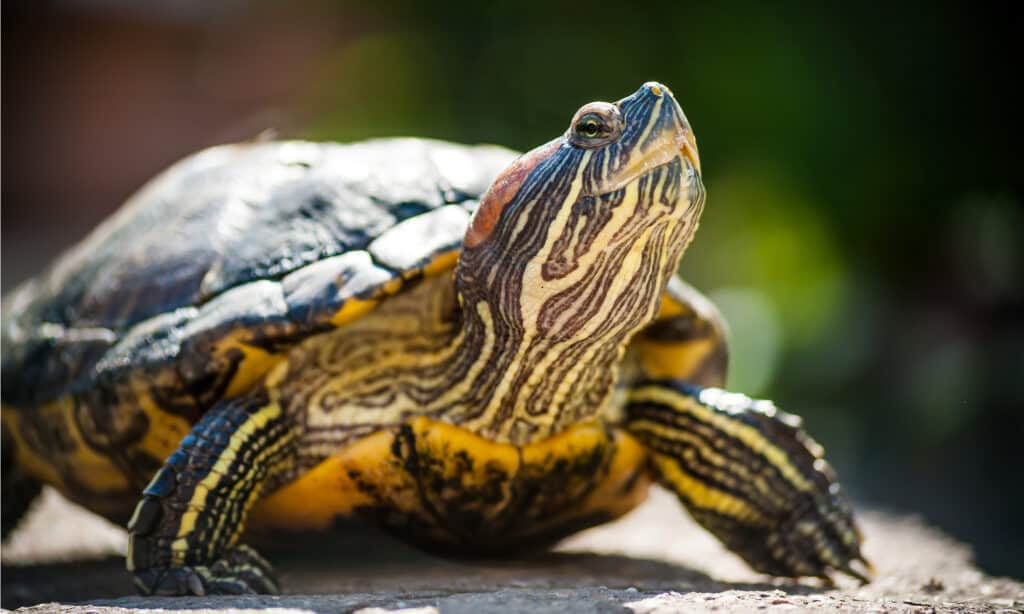
©effective stock photos/Shutterstock.com
Red-Eared Sliders are medium-sized freshwater turtles recognized by the red stripe behind each eye and their olive-brown shells with yellow markings. Native to the southern United States, they have become one of the world’s most widespread invasive turtle species due largely to the pet trade. Released or escaped pets have established populations throughout California, where they compete with native turtles for food, basking spots, and nesting areas. They can also spread diseases such as Salmonella and may carry ranavirus, which can affect amphibians, reptiles, and fish. Their rapid reproduction helps them expand quickly once introduced into new habitats.
4.) Brown Anole (Anolis sagrei)
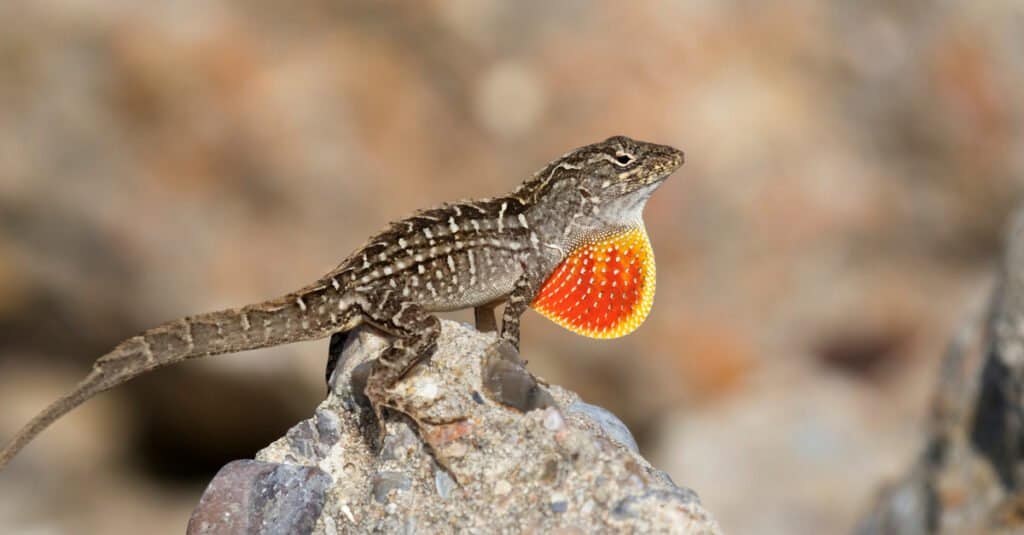
©Natalia Kuzmina/Shutterstock.com
Brown Anoles are small lizards native to the Caribbean that typically measure between 5 and 8.5 inches long. Their coloring ranges from brown to gray, and males are known for their reddish-orange throat fans. The species has spread through several counties in Southern California, possibly after arriving as accidental stowaways on cargo shipments or other transported goods. Brown anoles compete with native lizards for food and territory and may prey on small native reptiles, spiders, and insects. Their rapid reproduction has allowed them to establish large populations in some urban and coastal areas.
5.) Jackson’s Chameleon (Trioceros jacksonii)
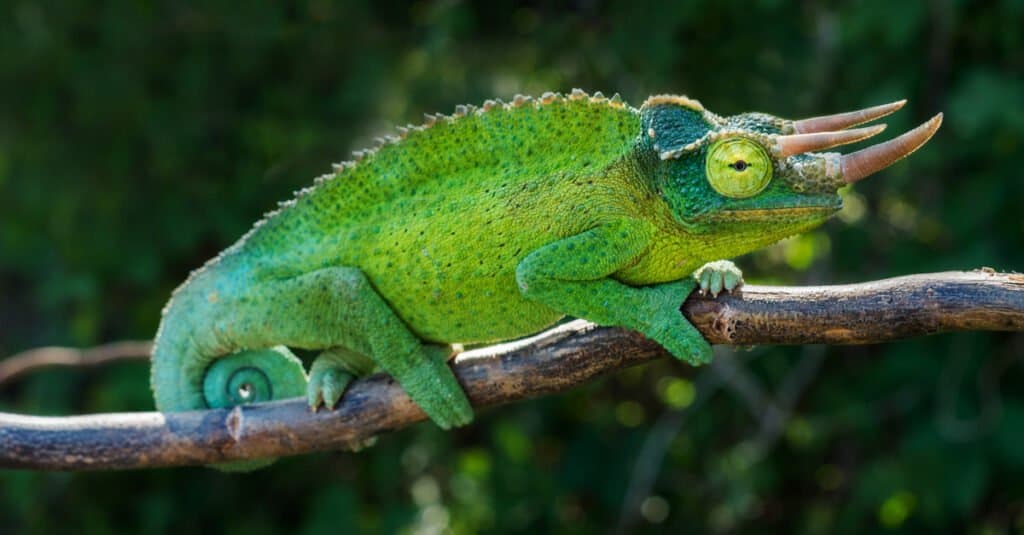
©Jan Bures/Shutterstock.com
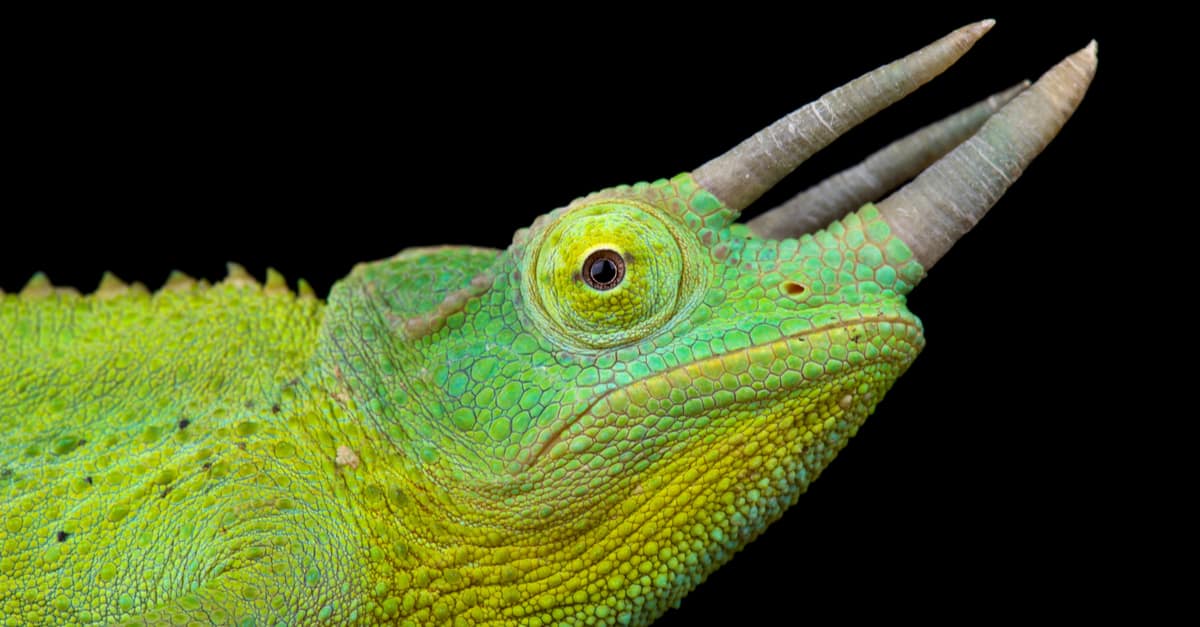
Jackson’s Chameleons are colorful reptiles native to East Africa that are known for their ability to change color and for the three horns found on males. These chameleons can grow up to 13 inches long and have established populations in areas such as Laguna Beach, Morro Bay, and parts of Southern California. Some likely entered the wild through the pet trade, while one widely repeated story claims others escaped during a 1981 reptile raid in Morro Bay. Outside their native range, they may threaten native invertebrates by preying on them and disrupting local ecosystems. Like many reptiles kept as pets, they can also carry diseases that affect humans.
6.) Italian Wall Lizard (Podarcis sicula)
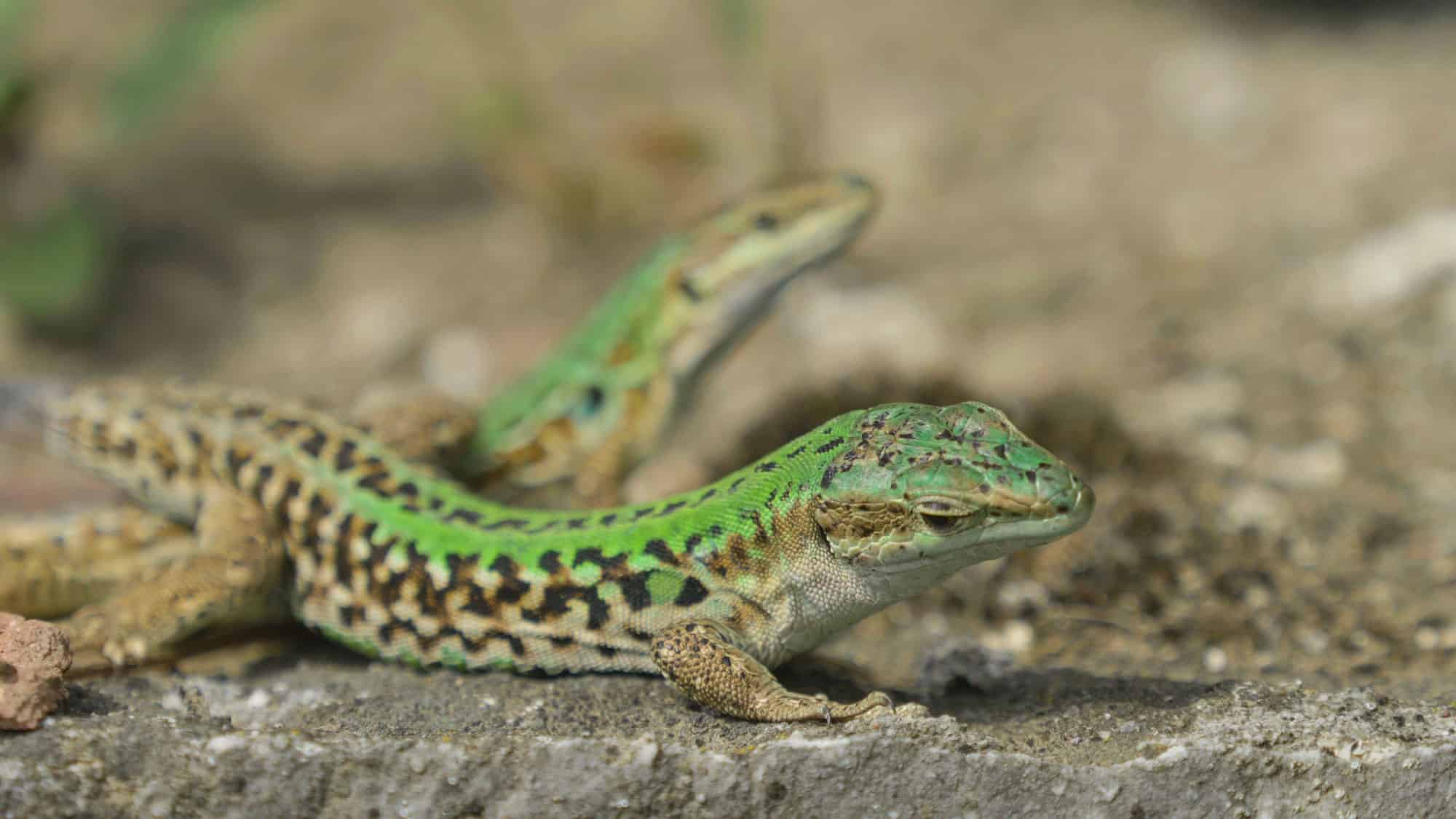
©MEDIAIMAG/Shutterstock.com
Italian Wall Lizards are colorful reptiles native to Southern Europe that typically grow between 5½ and 8 inches long. Their coloration varies from green and tan to yellowish-brown, and males sometimes develop reddish coloring during breeding season. The species became established in California after several lizards released in 1994 successfully reproduced and spread through nearby neighborhoods. Italian wall lizards may also spread through cargo shipments and the pet trade. Because they compete aggressively for food and habitat, they may negatively affect native lizard populations where they become established.
7.) Mediterranean House Gecko (Hemidactylus turcicus)
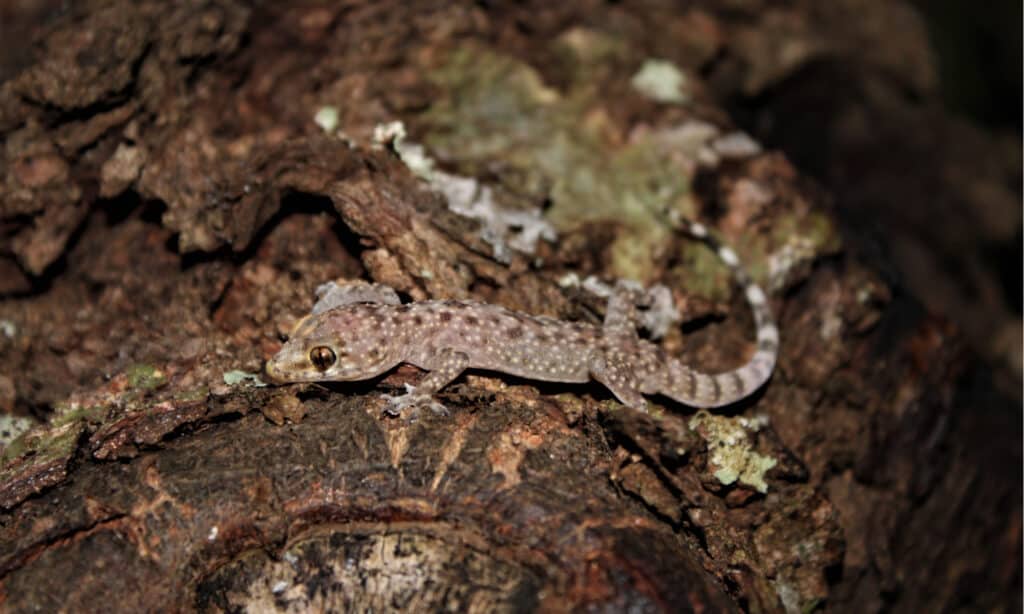
©Tucker Heptinstall/Shutterstock.com
Mediterranean House Geckos are small insect-eating lizards that usually grow to less than 6 inches long. They are recognizable by their large lidless eyes, spotted tan or purplish skin, and semi-transparent undersides. Originally introduced through imported plants carrying their eggs, these adaptable geckos have spread rapidly through urban areas of California. Although their ecological impact is still being studied, they compete for food resources and are now among the most widespread non-native lizards in the United States. Their rapid breeding and ability to thrive around human structures have helped them establish stable populations throughout the state.
8.) Common Snapping Turtle (Chelydra serpentina)
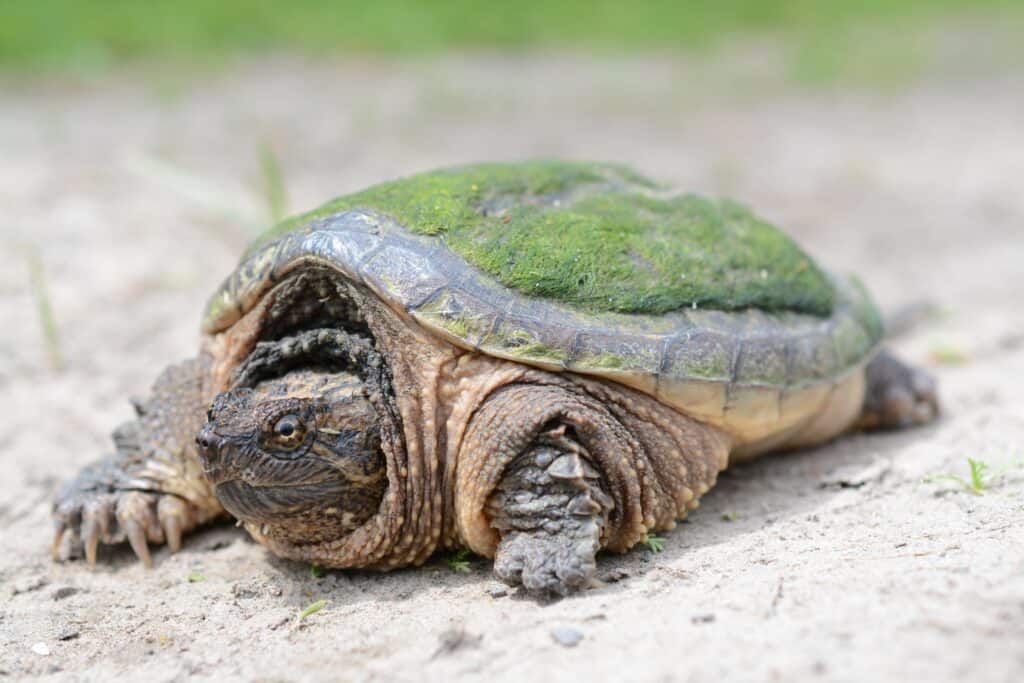
©Trevor Meunier/Shutterstock.com
Common Snapping Turtles are large freshwater turtles native to much of North America that can grow between 8 and 14 inches long. They are known for their rugged shells, powerful jaws, and long tails lined with bony ridges. Though not native to California, released pets have occasionally been found in the state, where possession and release are restricted. These turtles are opportunistic predators that feed on fish, frogs, insects, birds, and other animals. Because of their broad diet and large size, they may compete with or prey upon native turtle species and other wildlife.