
Quick Take
- There are over 200 species of stingrays found around the world.
- Stingrays are flat, cartilaginous fish that are closely related to sharks.
- Stingrays possess a venomous barb at the end of their tails that can cause severe injury to humans and, in extremely rare cases, may be fatal if a vital organ is struck.
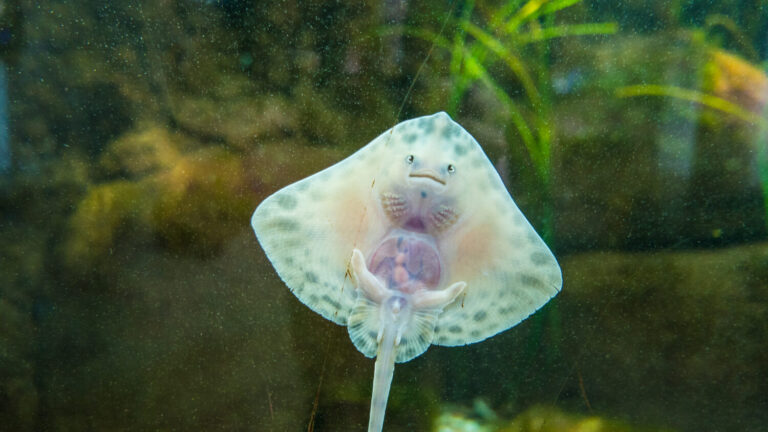
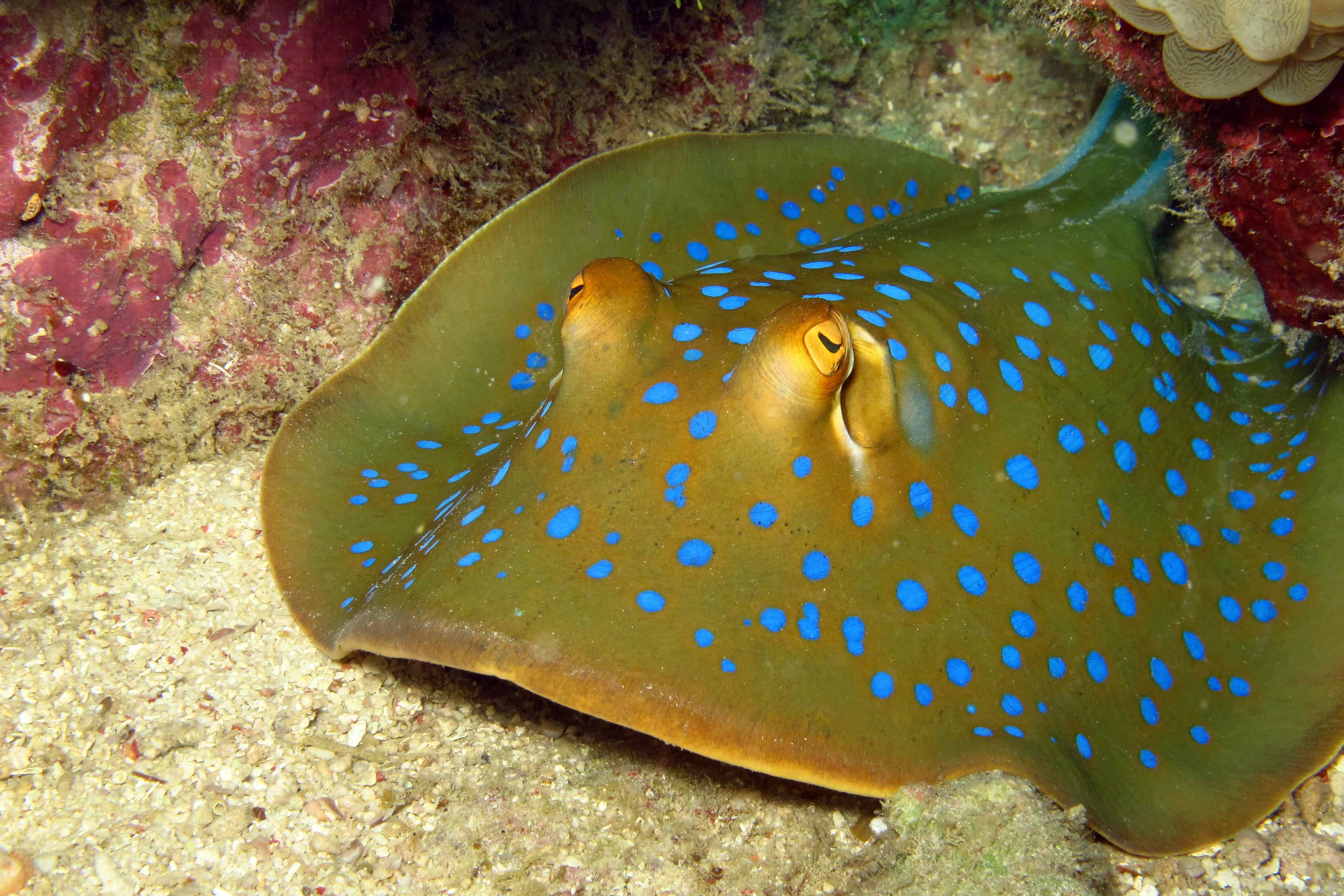
Stingrays (Myliobatiformes) are a diverse group of cartilaginous fish, related to sharks, with over 200 recognized species across several families. Found worldwide in tropical, subtropical, and some freshwater environments, they are characterized by flattened bodies that can range from four inches to 22 feet across, as well as venomous tail barbs. Most stingrays are carnivorous bottom-dwellers that live and feed on the sea floor. Continue reading to discover everything you need to know about what stingrays eat.
What Foods Do Stingrays Eat?
Stingrays are considered obligate carnivores, meaning they rely entirely on animal protein to meet their nutritional requirements. They are specialized benthic feeders that hunt crustaceans, mollusks, worms, and small fish found in sandy substrates, using electrical sensors to locate prey.
Stingrays eat a wide array of foods, including:
- Crabs
- Shrimp
- Squid
- Mantis shrimp
- Wrasse fish
- Gobiidae
- Clams
- Mussels
- Oysters
- Scallops
- Cuttlefish
- Snails
- Worms
- Prawns
- Seahorses

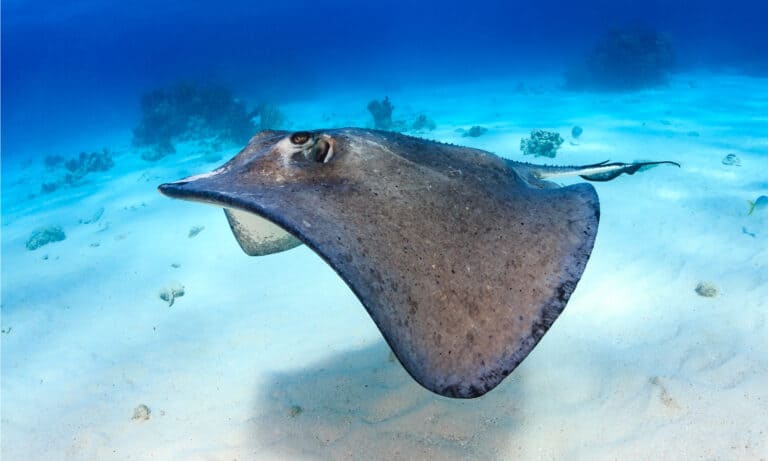
Simultaneously beautiful and frightening, stingrays only use their venomous barbs in self-defense.
©Jesus Cobaleda/Shutterstock.com
Stingrays prefer to consume numerous small meals throughout the day instead of eating large meals less often.
Younger stingrays, called pups, develop internally and are nourished by a yolk sac. Once the yolk sac has been depleted, they receive a nutrient-rich substance secreted by the mother’s uterus until birth. Stingray pups are precocial and do not rely on their mothers after birth, capable of swimming, hunting, and using their small barbs for protection.
How Do Stingrays Hunt?
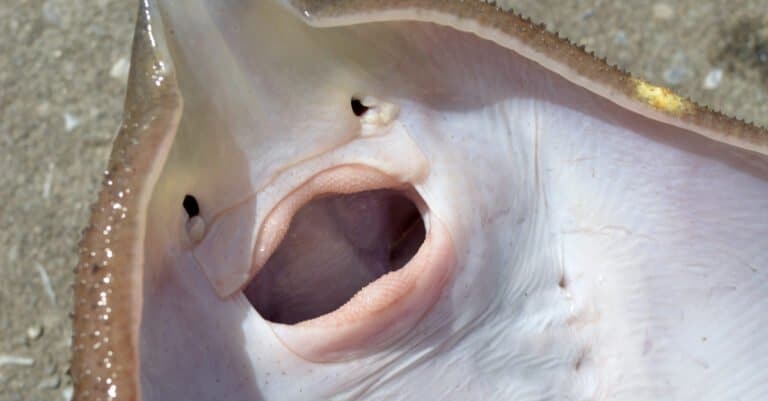
Stingrays are primarily ambush predators or demersal foragers that live on the seafloor, using camouflage and specialized sensory organs to catch prey. They frequently bury themselves under a thin layer of sand or mud, leaving only their eyes and breathing holes (spiracles) exposed to watch for prey.
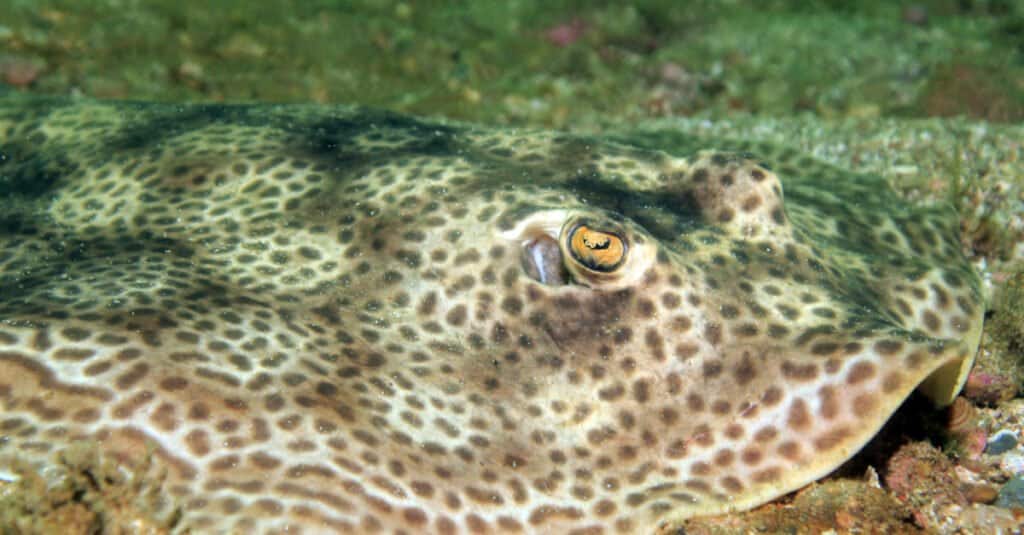
Stingrays use their ampullae of Lorenzini to find prey on the sea floor.
©Daniel Lamborn/Shutterstock.com
Using ampullae of Lorenzini, sense organs that can detect electric fields, they ambush small fish and crustaceans by pinning them with their bodies or by creating a vacuum with their flexible, disc-shaped bodies, a behavior often called tenting.
What Do Stingrays Eat in Captivity?
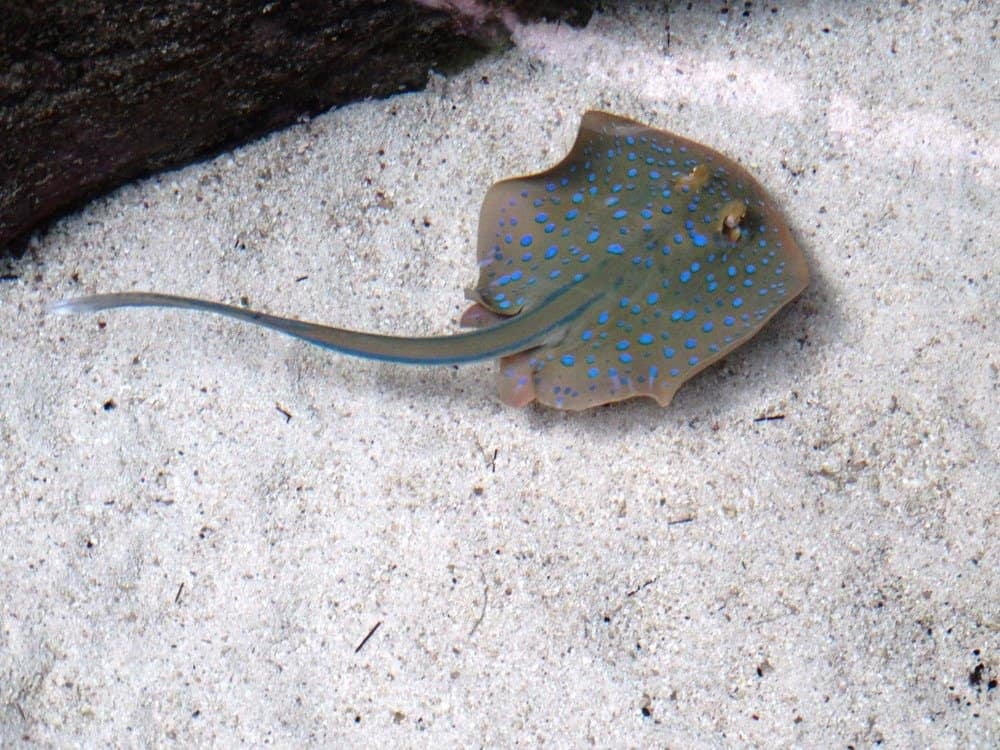
Stingrays eat earthworms, blackworms, and frozen shrimp in captivity.
©Charles B. Cardell/Shutterstock.com
Stingrays are a popular aquarium attraction. However, it’s not possible or entirely ethical for the caretakers to maintain the stingray’s natural diet. Therefore, the foods they eat in captivity are notably different from the ones they eat while in the wild.
Common meals for captive stingrays include:
- Live shrimp
- Earthworms
- Blackworms
- Frozen bloodworms
- Frozen Mysis shrimp
- Nutrition gels
These foods provide the dietary requirements for stingrays, and the nutrition gels supplement their diet where necessary. Most often, these diets are used in public aquariums, as stingrays do not make good pets.
Are Stingrays Dangerous to Humans?
Stingrays are non-aggressive and only sting in self-defense, usually when accidentally stepped on in shallow water. They do possess a venomous, barbed tail spine that can cause severe, immediate pain, intense swelling, vomiting, and, in rare cases, death if it strikes a vital organ.
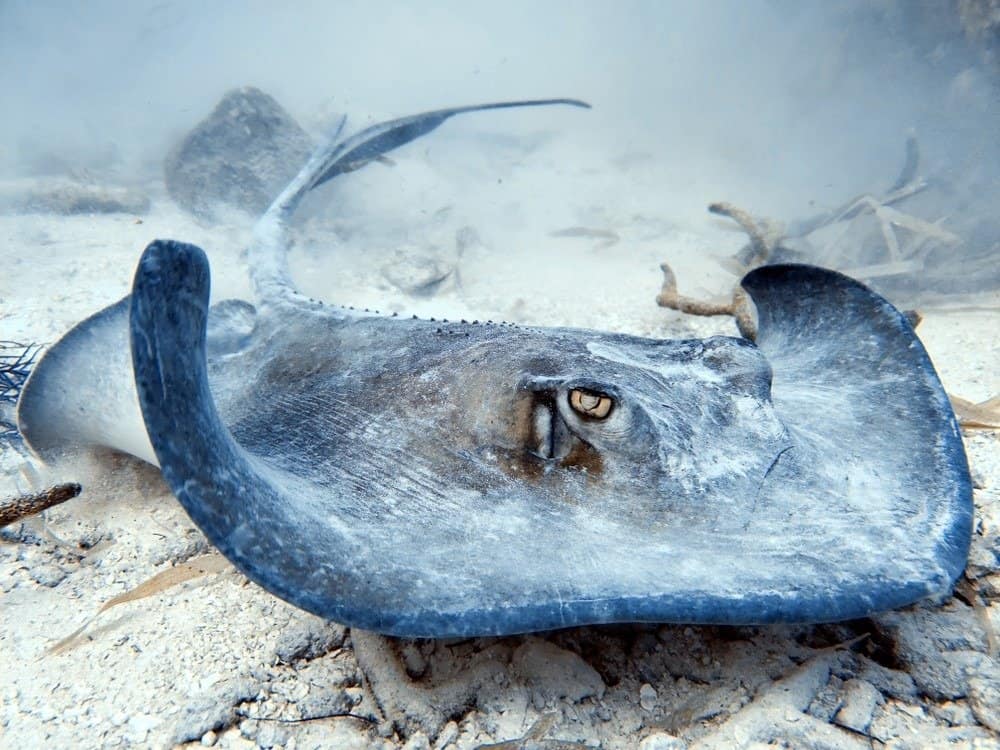
Stingrays can be dangerous, but they are not aggressive if you leave them alone.
©Nate Madden/Shutterstock.com
A stingray may sting a human if it feels threatened or is provoked. One of the most well-known attacks of a stingray on a human involved the Crocodile Hunter, Steve Irwin. It is thought that the stingray likely believed Irwin’s shadow belonged to a tiger shark. In a desperate attempt to fend off a predator, it struck Irwin in the chest.
What Predators Hunt Stingrays?
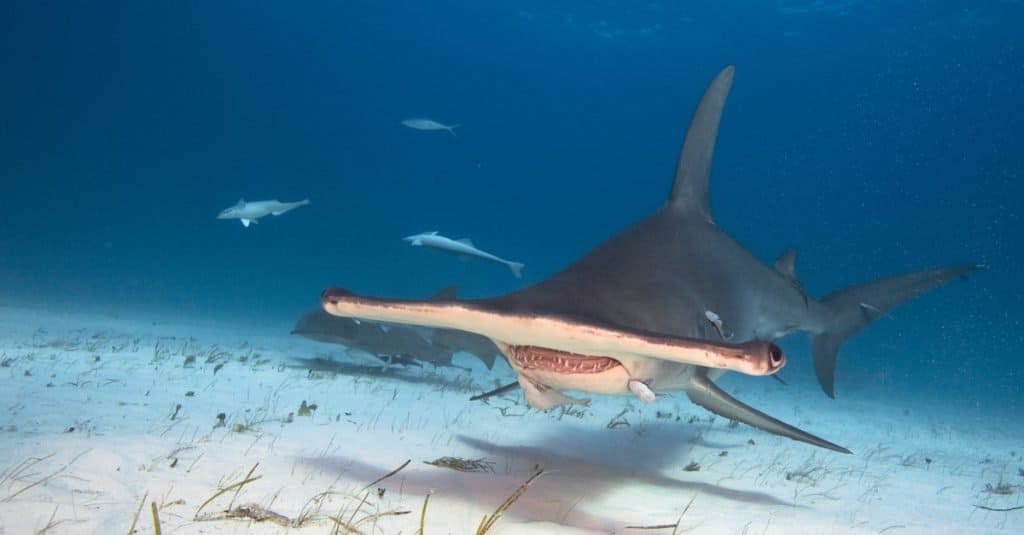
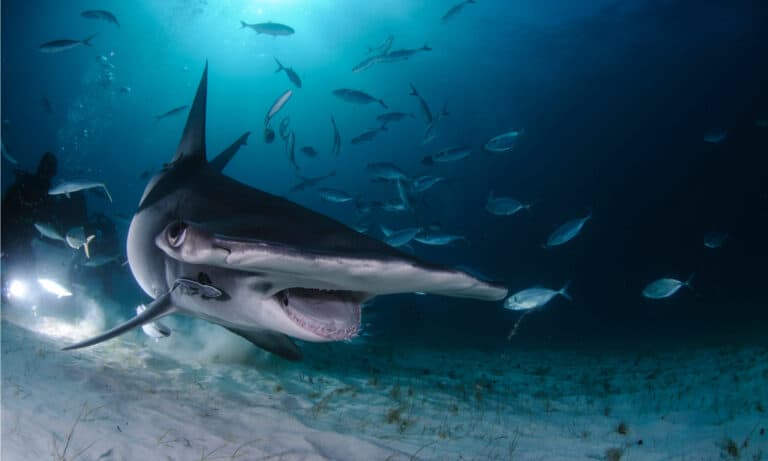
Great Hammerhead sharks are highly capable of hunting stingrays.
©frantisekhojdysz/Shutterstock.com
Although stingrays have a rather potent defensive measure in their barbed tails, they cannot turn away all predators. Some enemies are too fast, too large, or too aggressive.
Some of the predators of stingrays include:
- Lemon sharks
- Hammerhead sharks
- Seals
- Sea lions
- Dolphins
- Large, carnivorous fish
- Humans
Their massive tails and venom aren’t the only things stingrays have going for them in terms of defenses, though. They can also lie flat on the seafloor and hide from their enemies, though this trick is harder to perform against sharks that also have ampullae of Lorenzini.