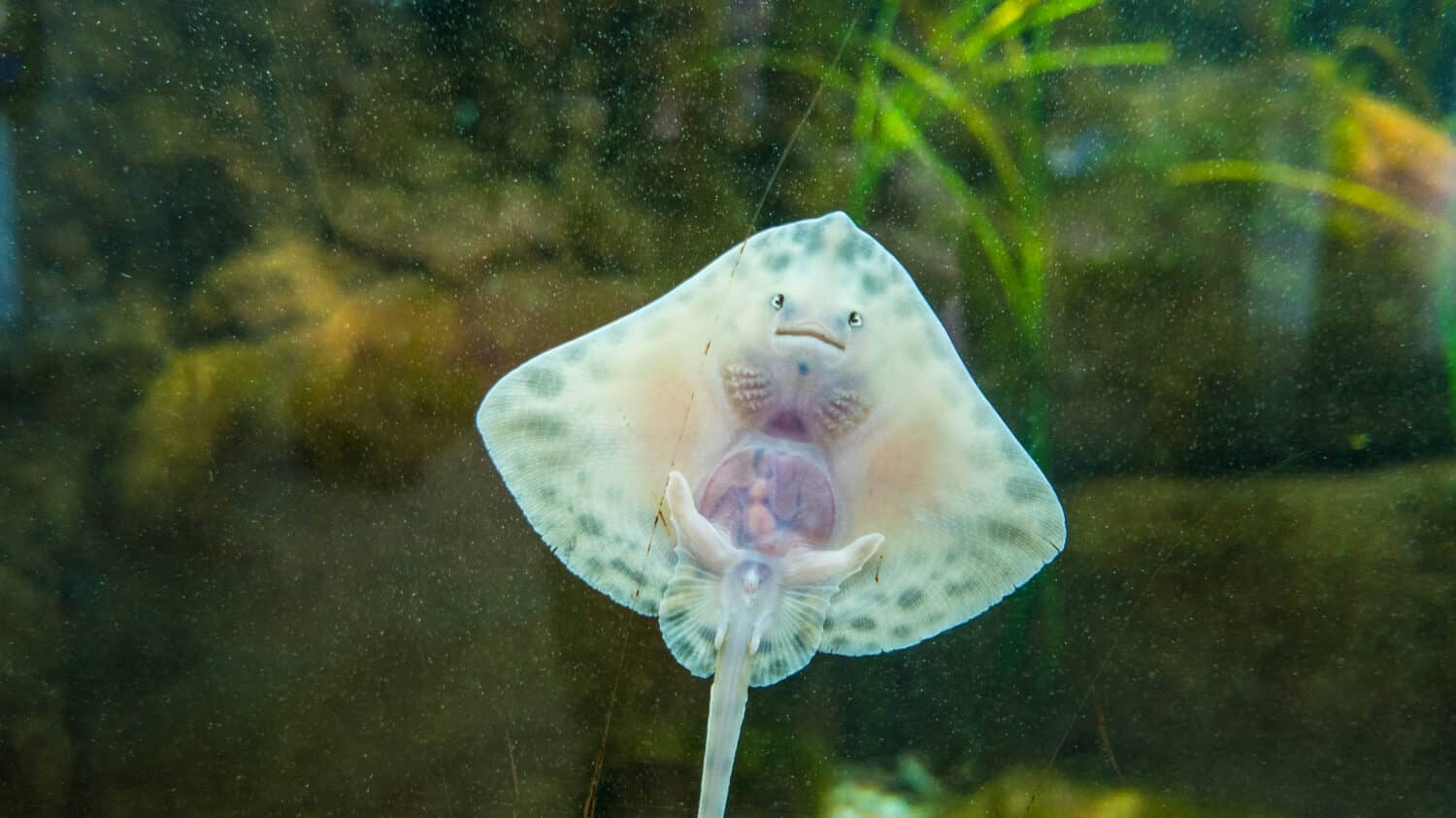

You might expect a stingray to lay eggs, like many of the world’s fish. However, stingrays give birth to live young, similar to sharks. One Instagram video from Explaining the Ocean provides a fascinating view of a mother stingray giving birth to three young babies.

There are around 220 different species of stingrays in the world, and most of them live in shallow and warm ocean waters.
©Ekaterina Kuzmenkova/Shutterstock.com
Stingrays Are Ovoviviparous
Stingrays are cartilaginous fish. Instead of bones, their skeletons are made of cartilage. While mammals use a placenta to feed their embryos, stingray embryos are nourished by the yolk inside their egg. This is similar to sharks, which stingrays are closely related to. Sharks, skates, and rays belong to the subclass Elasmobranchii.
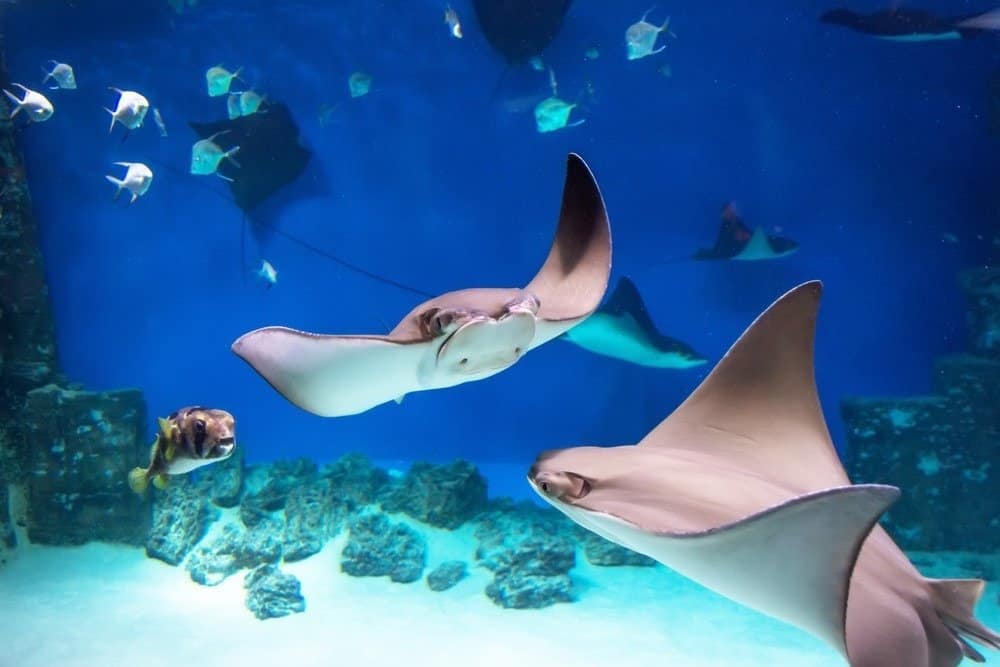
Stingrays reproduce through internal fertilization.
©aapsky/Shutterstock.com
Stingrays are ovoviviparous, meaning the animals keep their eggs inside their bodies until they hatch. The eggs stay in the mother’s womb, where they hatch and live inside their mother’s body until they are fully developed. After they hatch, they live off a milky substance produced by their mother, which gives them the nutrients they need to develop. Once they are ready to leave their mother, the female stingray gives birth, and the little stingrays swim away to care for themselves.
Where Might You Find Stingrays?
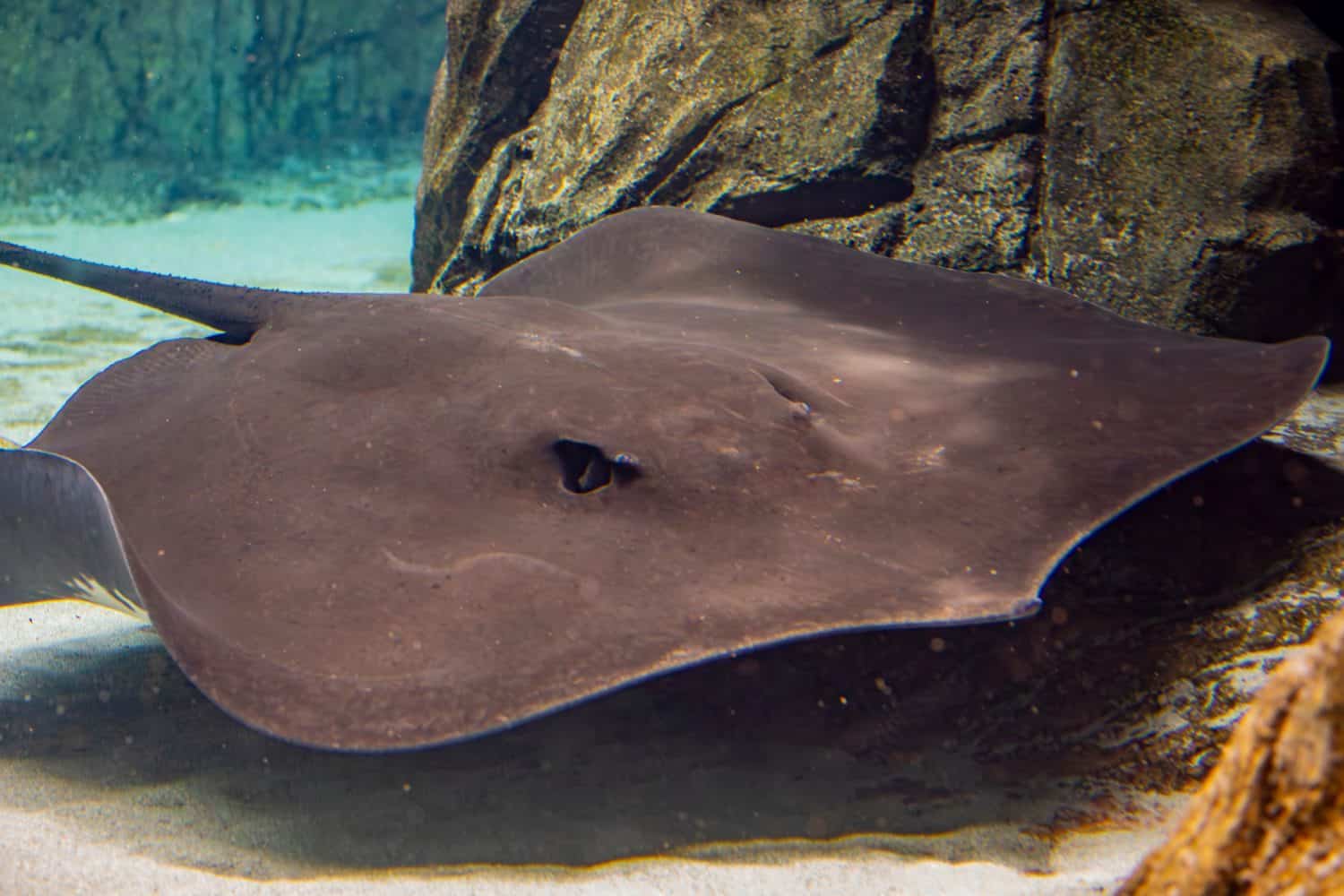
The giant freshwater stingray (Urogymnus polylepis) is the largest stingray species and one of the largest freshwater fish in the world.
©Danny Ye/Shutterstock.com
There are around 220 species of stingrays that live in both freshwater and marine environments. Most species are found in the coastal waters of tropical or subtropical oceans. Several species are found in the deep ocean. Further, some species of stingrays live in the freshwater rivers of South America, Southeast Asia, and Australia.
Eggs on the Beach?
If you’ve seen eggs on the beach that you thought were from a stingray, they were likely skate eggs. Although skates are closely related to stingrays, skates are oviparous, meaning they lay eggs. Skate eggs, also known as mermaid purses, sometimes wash up on the shore.
How Long Are Stingrays Pregnant?
Stingrays reproduce when a male uses his modified pelvic fin to internally fertilize the eggs inside the female’s body. The males court the females by following them around and biting at their pectoral fins, which form a disc. They use their teeth to hang on to the female’s back so that they don’t slip off during impregnation. Timeframes differ by species, but most stingrays give birth to fully formed babies after about a three-month gestation period.
How Many Babies Do Stingrays Have?
Stingrays have around two to six babies at a time, which are called pups. Mothers give birth around once per year. Depending on the species, the babies may only be a few inches long at birth. Adult stingrays range from around 12 inches to the largest on record at 13 feet long. The largest stingray species in the world is the giant freshwater stingray (Urogymnus polylepis) that lives in rivers of Southeast Asia and can weigh up to 1,300 pounds!
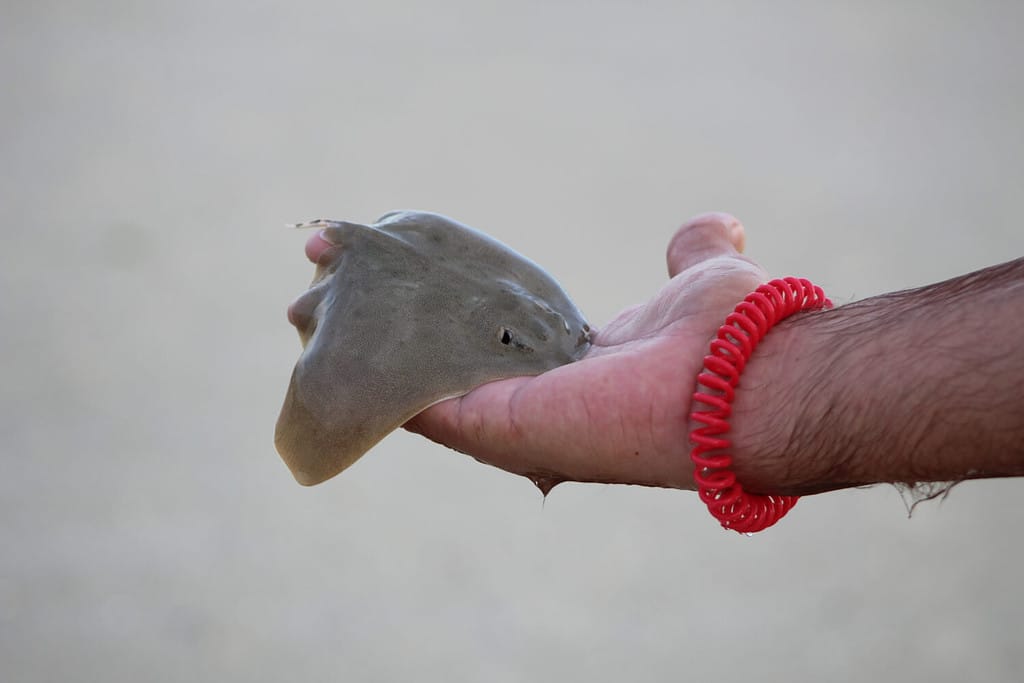
Stingray babies are smaller versions of fully grown stingrays.
©Amanda Champion/Shutterstock.com
When the babies are born, they are fully developed and look like smaller versions of their mother. Like sharks, baby stingrays are not cared for by their parents but are independent from the moment they are born. Once the babies leave their mother, they head to the bottom of the sea where they hunt for prey, including animals smaller than themselves, such as jellyfish, shrimp, and planktonic crustaceans.
Besides being able to obtain their own food, the new babies need to be able to avoid predators. Stingrays are vulnerable to hammerhead sharks, killer whales, seals, sea lions, and other large fish.
What About the Strange Case of Charlotte the Stingray? Can Stingrays Reproduce Asexually?
A stingray at a North Carolina aquarium became a media sensation when staff believed she was pregnant. The reason this was so amazing was that the stingray, named Charlotte, didn’t have any other males in her aquarium. Experts theorized that Charlotte must have become pregnant through asexual reproduction, which had never occurred in stingrays.
Sadly, the reality was more tragic. It turns out, Charlotte had developed a reproductive disease and was never actually pregnant at all. The aquarium posted an update on their Facebook page stating, “Charlotte has developed a rare reproductive disease that has negatively impacted her reproductive system. The findings are truly a sad and unexpected medical development.” Unfortunately, the aquarium later announced Charlotte’s death.