
Quick Take
- It is important to choose a captive-bred tarantula from a reputable breeder instead of a wild-caught specimen.
- Female tarantulas typically live much longer than males, so females are preferred as long-term pets.
- Enclosure size and design depends on whether your tarantula is be terrestrial, fossorial, or arboreal.
- The more docile tarantulas in the pet trade are all New World tarantulas.
Tarantulas are increasingly popular pets due to the ease of maintenance, relative affordability, small space requirements, and intriguing behavior. They are quiet, they do not smell, and best of all — there is no litter box to clean and they do not need walking. Some might even say a tarantula is the perfect roommate. However, as with any pet, keeping a tarantula comes with certain responsibilities. With proper care, tarantulas can live for many years, so pet owners must be prepared for a long-term commitment. Learn how to give your fuzzy new friend the respect and attention they need in our ultimate guide to caring for a pet tarantula.
Ethical Tarantula Keeping
It is important to choose a captive-bred tarantula from a reputable breeder. Wild-caught specimens often have parasites or pathogens that can be fatal in captivity and could infect other spiders. Wild-caught animals are also typically stressed from being taken from their native habitats, leading to high mortality rates. Removing an animal from the wild contributes to the population decline of that species as well.
So, the first step in ethical tarantula keeping is to ensure that your spider is captive bred. There are many specialty vendors online that focus on tarantulas. Exotic pet expos are another place to find captive-bred tarantulas from knowledgeable experts. Always vet the seller by researching their reputation on social media and/or dedicated tarantula forums.
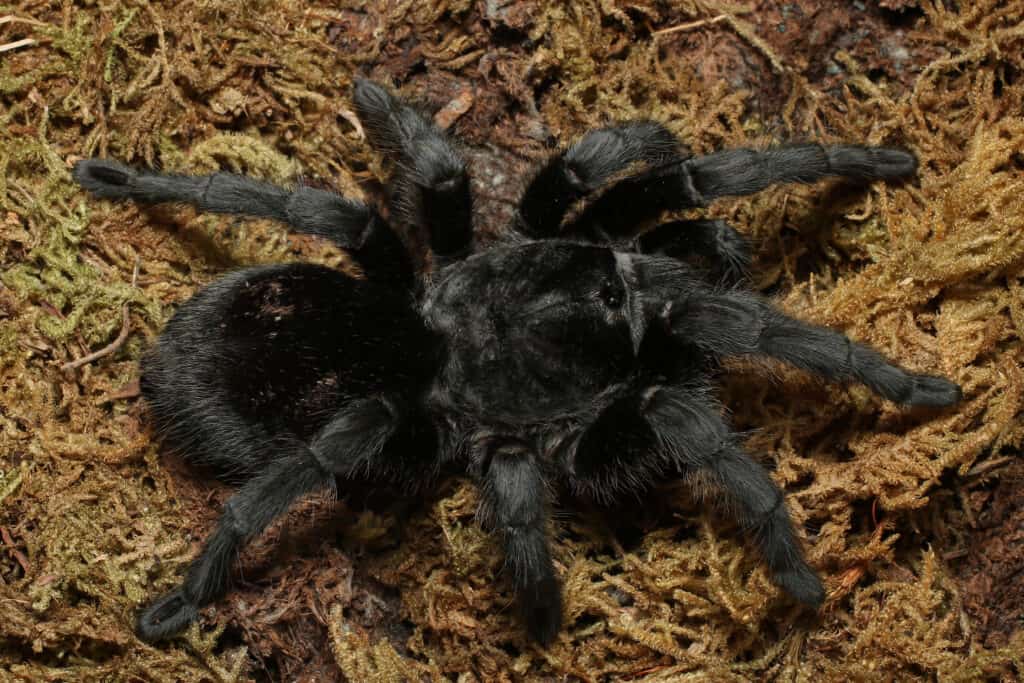
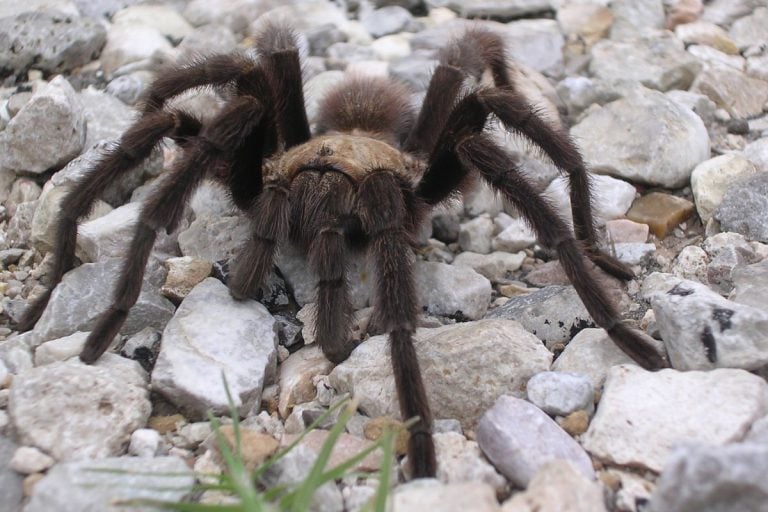
It is best to choose a captive-bred spider from a reputable breeder.
©Dan Olsen/Shutterstock.com
Should I Choose a Male or Female Spider?
A knowledgeable breeder can also tell you if you are purchasing a male or female and estimate the animal’s life expectancy. You should avoid purchasing a mature male, as the spider is nearing the end of his life. Once reaching sexual maturity, male tarantulas only have a life expectancy of around 1 to 2 years, while females may live for another 20 years. The age of sexual maturation varies depending on the sex and species, but overall, males tend to mature more quickly than females. Captive-bred specimens also mature more quickly due to consistent temperatures and feeding, which can speed up the molting cycle.
There are also differences in appearance and behavior between male and female tarantulas. Male tarantulas are generally smaller, weigh less, and have longer legs. After a male has molted for the last time, he may become restless in his desire for a mate. Males may wander the enclosure, climb, and even refuse food. Females are heavy-bodied and tend to be less active, but they are generally preferred over males as long-term pets.
Selecting the Right Species
There are 1,192 species of tarantulas in the Theraphosidae family, but not all of them make suitable pets. Take an in-depth look at tarantula habitat types, the differences between old world and new world spiders, and expert recommendations to decide which tarantula species is right for you.
Tarantula Habitat Types
Tarantulas may be terrestrial, fossorial, or arboreal. Terrestrial tarantulas live on the ground. They may be opportunistic burrowers, but they are not obligate burrowers like fossorial tarantulas, which are rarely seen above ground. Arboreal spiders live in trees, shrubs, and dense vegetation. It is crucial to know your spider’s native habitat so you can ensure they have appropriate housing.If you prefer a spider that is visible and active, a fossorial species is probably not the best choice. Generally, ground-dwelling tarantulas are recommended for new keepers.
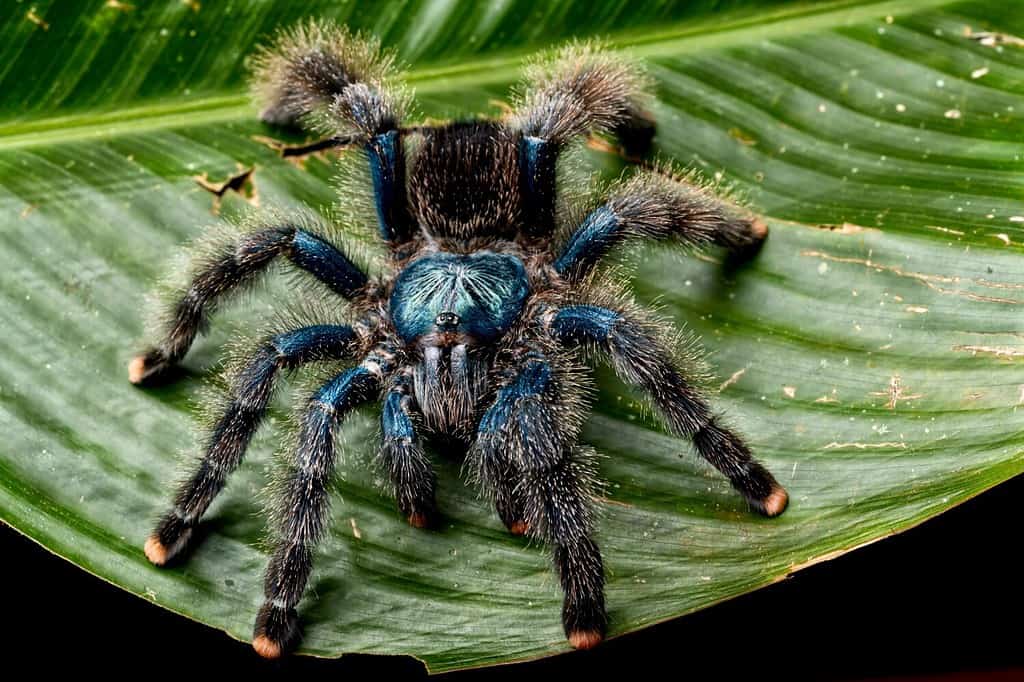
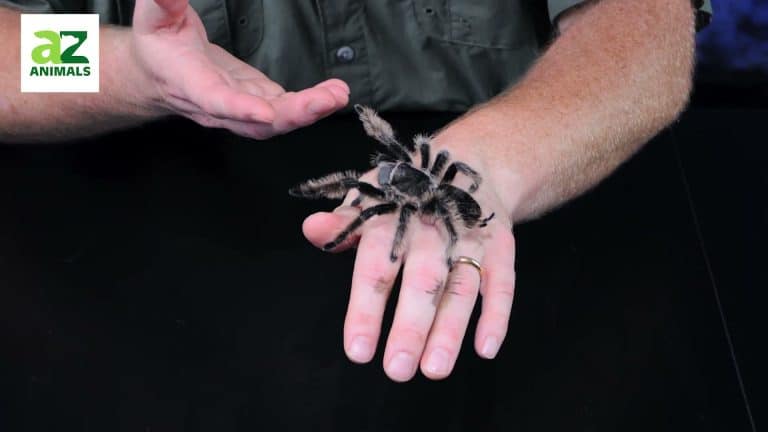
The Guyana pinktoe is a popular New World arboreal tarantula due to its striking looks and calm temperament.
©reptiles4all/Shutterstock.com
Differences Between New World and Old World Spiders
There are also big differences between New World and Old World tarantulas. New World tarantulas are found in the U.S., Mexico, Central America, South America, and the Caribbean. Old World tarantulas are spiders that are native to Africa, Asia, Europe, Australia, and Oceania. New World tarantulas have urticating hairs for defense, which are barbed hairs they kick from their abdomen when threatened. They have venom, but it is much weaker than that of their Old World counterparts. New world species also tend to move more slowly.
Old World tarantulas do not have urticating hairs, so they rely on speed and potent venom for defense. Many species have venom that is considered medically significant. While a bite from a New World tarantula is often compared to a bee sting, a bite from an Old World tarantula can cause extreme pain, swelling, muscle cramps, and potentially long-lasting symptoms due to their neurotoxic venom. They are known to be fast and feisty, and often have more complicated needs. Old World spiders should only be kept by experienced tarantula owners.
Species Selection
The more docile tarantulas in the pet trade are all New World tarantulas. One of the most popular spiders for new keepers is the Chilean rose hair tarantula (Grammostola rosea). These medium-to-large burrowing spiders are very calm, slow-moving, slow to bite, and have attractive pinkish-orange coloring. They are known to be very hardy and have relatively simple husbandry requirements.
The Mexican red knee tarantula (Brachypelma smithi) is another popular choice for beginning tarantula owners. These medium-to-large-sized, reddish-orange and black terrestrial spiders are known for their calm temperaments and long lifespans. Female Mexican red knees can live for 25 to 30 years in captivity. The Honduran curly hair (Brachypelma albopilosum) is also a frequently recommended terrestrial spider for its calm disposition and ease of care. Reports of threat postures are rare and many keepers note that they can be handled without incident. They are medium-to-large-sized spiders with long, curly light-colored hair on their legs and abdomens.
For those interested in an arboreal species, the Guyana pinktoe tarantula (Avicularia avicularia) is a small- to-medium-sized spider. They are dark gray to black with pinkish-orange hairs on the tips of their legs. These spiders are docile and rarely defensive, but can be skittish and quick when disturbed. They are not prone to biting and would rather escape than confront a threat. Frequent handling is discouraged because they may jump if startled and could be injured in a fall.
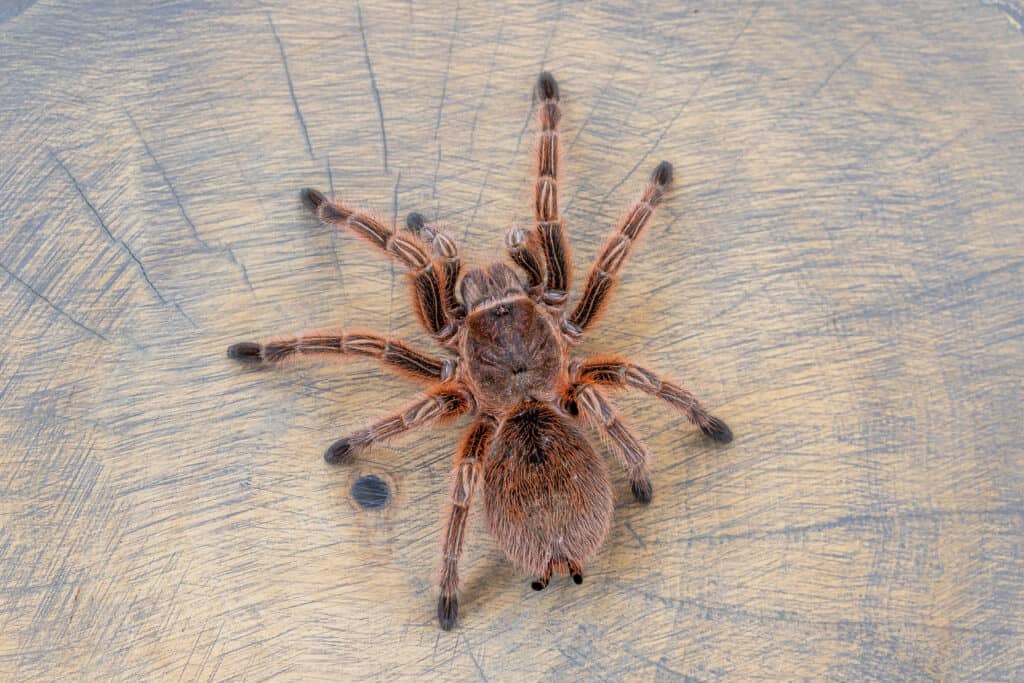
Chilean rose tarantulas are among the most popular tarantulas in the pet trade due to their calm natures.
©iStock.com/Svetlana Makarova
Tarantula Husbandry
Another reason why it is important to purchase your pet from an experienced breeder is that the breeder will know the specific care requirements for your spider. For example, a tarantula species that is endemic to the Amazon rainforest will have much different moisture needs than a tarantula that is native to the deserts of the Southwestern U.S. Tarantulas also require different housing depending on their favored habitat type. Learn more about housing, enclosure conditions, cleaning the enclosure, feeding, and veterinary care below.
Housing
Tarantulas are solitary animals, which means they are best housed alone. You also don’t need a huge enclosure in which to keep a tarantula. In fact, too large an enclosure can make it difficult for them to find prey. Tarantulas are nocturnal ambush hunters and generally wait for prey to come to them before striking. A smaller enclosure also makes it easier to maintain proper humidity and temperature levels and ensures there are no high places for them to fall from.
The enclosure height for a terrestrial spider should ideally be no taller than 1.5 to 2 times the spider’s diagonal leg span to prevent injury from falls. Arboreal spiders require more height than floor space, with keepers typically recommending a space that measures 3 to 4 times the spider’s leg span in height and 2 to 3 times in width. Burrowing spider enclosures should focus on depth to allow for deep tunneling. Experts suggest the substrate depth be 2 to 4 times the spider’s leg span. Ensure the enclosure has a tight-fitting top to prevent escapes. Mesh lids are not recommended, as tarantulas can get their legs stuck in the mesh, leading to serious injuries.
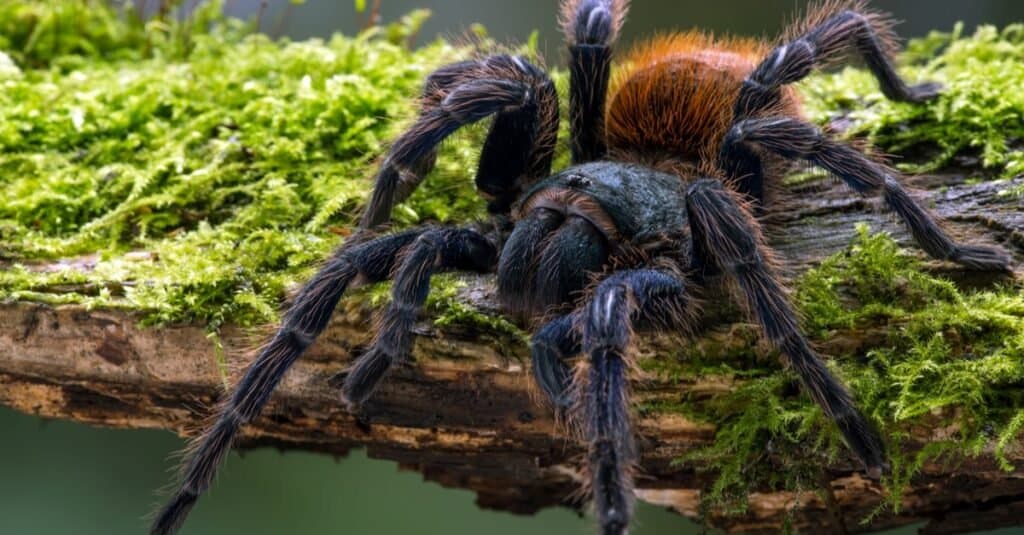
Arboreal and semi-arboreal spiders require climbing decor in their enclosures.
©davemhuntphotography/Shutterstock.com
Enclosure Conditions
Organic topsoil with no fertilizers and peat moss are popular choices for substrate. Vermiculite and sphagnum moss can also be used as additives. Some keepers recommend coconut fiber, but others note that it does not readily retain the shape of burrows. Avoid any substrate with jagged edges, sand, aquarium gravel, wood chips, and substrates with fertilizers. Add plants and climbing decor such as cork bark slabs and rounds for arboreal spiders. Provide hides for terrestrial and burrowing spiders.
It is imperative that new tarantula owners research their species for more specific care instructions regarding humidity. Most tarantulas do not require daily misting and it can even be harmful to some species. Most spiders are comfortable at room temperature. Experienced keepers do not generally recommend external heating sources. Instead, they recommend you keep your pet in a warm room. Proper ventilation is crucial. Ensure there are air holes on both sides of the enclosure for cross-ventilation. Avoid direct sunlight or bright lighting. Experts often use red lights if nighttime observation is required.
Cleaning Your Enclosure
Generally, you should spot-clean your spider’s enclosure as needed, removing uneaten food and waste to prevent mold, mites, and bad odors. Use a warm, damp paper towel to remove mold or other substances from glass or acrylic walls. Experts recommend using wooden tongs for maintenance to avoid disturbing the spider.
Deep cleaning, which involves removing the substrate and washing the tank, should only be done when absolutely necessary. Transfer the tarantula to a secure, temporary container. Replace the substrate and wash all decor and water dishes with warm water or a mild soap, rinsing thoroughly. Keepers suggest cleaning walls with hot water, vinegar, or lemon juice. Do not use any chemicals when cleaning the enclosure.
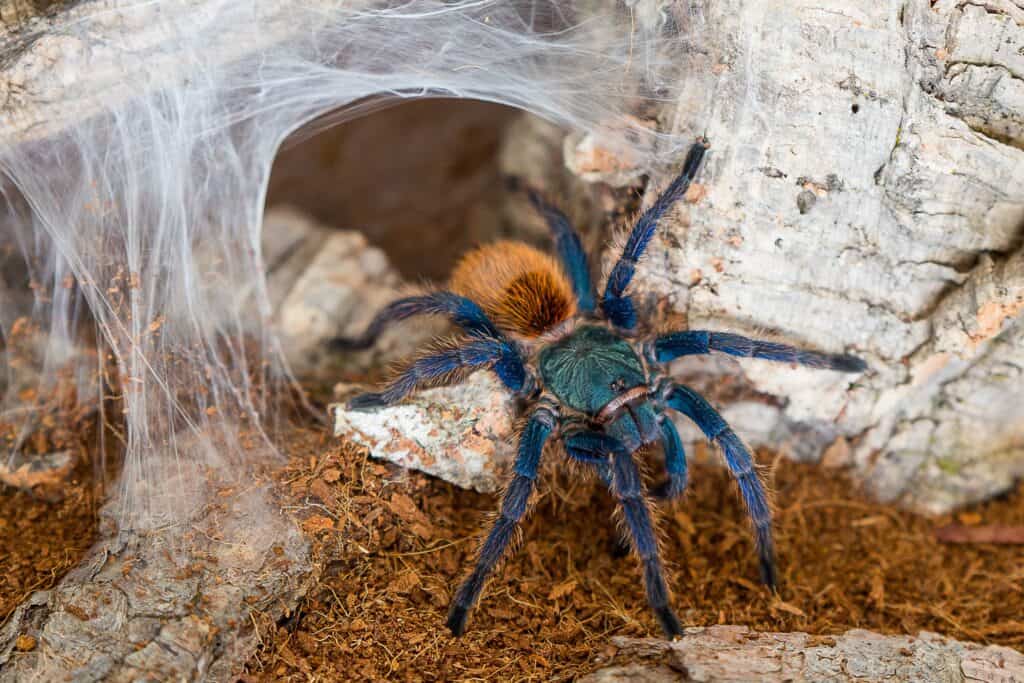
Adult spiders typically only feed once every 7 to 14 days.
©tempisch/Shutterstock.com
Feeding
Adult spiders only need to eat once every 7 to 14 days. Crickets or dubia roaches are the most common foods. Do not try to feed your tarantula if it has closed off its burrow or refused food, as this likely indicates it is preparing to molt. It is crucial to remove crickets from the enclosure during the premolt, as the crickets could seriously injure or kill your helpless spider if it molts while the crickets are still inside. Do not feed your spider until 10 to 14 days after molting to prevent fang injuries while their fangs are hardening.
Tarantulas need water, and hydration is critical after molting. A dish of fresh water should always be available in your spider’s enclosure. Use a shallow dish to avoid drowning hazards. Sponges are not recommended, as they can grow mold and harbor bacteria.
Veterinary Care
As with all pets, your tarantula may require veterinary care to ensure it remains healthy. Veterinarians can also assist with advice regarding proper humidity, hygiene, and behavior to prevent husbandry mistakes. For example, if you notice your tarantula is on its back, do not panic. Your tarantula is beginning the molting process. Leave the enclosure alone and give your tarantula time to molt. The molting process may take up to 24 hours in large spiders. As noted above, allow an additional 10 to 14 days for its new exoskeleton to harden before resuming regular care.
Common medical issues for tarantulas include trauma from falls, dehydration, incomplete molts, mites, and parasites. Seek veterinary care if:
- Your pet shows signs of injury or appears to be leaking fluid
- They are stuck in the molting process
- They have a sunken abdomen or curled legs
- Your spider has white material around its mouth