
Quick Take
- A blind, cave-dwelling tarantula bolted straight home when startled, and what it used instead of sight challenges everything assumed about spider cognition. Explore spider cognition findings →
- One tarantula repeated the exact same two-meter path every single night for two weeks, though scientists aren't yet sure what's actually driving it. See the repeated path observations →
- Burrowing tarantulas were caught climbing trees during the dry season, a time when the obvious reason for doing so simply does not apply. See the tree-climbing behavior →
Tarantulas may have the reasoning to recall how to navigate places they’ve already been, a new study published in Ecology and Evolution suggests. These researchers have documented several cases of what’s known as spatial orientation in tarantulas, species living both in trees and underground burrows. Do their findings mean that these spiders remember and reuse information? And what might they be using their recall abilities for, specifically?
A study led by Alireza Zamani of the University of Turku, Finland, alongside independent researcher Rick C. West, covers both tree-dwelling and burrowing tarantula species in their natural habitats in French Guiana and Iran. Here’s what the study revealed about how tarantulas uniquely navigate the world around them.
What Researchers Observed About Tarantula Recall
Recent research involving nine observations of arboreal and fossorial New World tarantulas, including a blind cave-dwelling species, provided rare field-based evidence that tarantulas may be capable of flexible, experience-based navigation. Here’s an overview of what they uncovered, which is so valuable for learning more about these spiders.
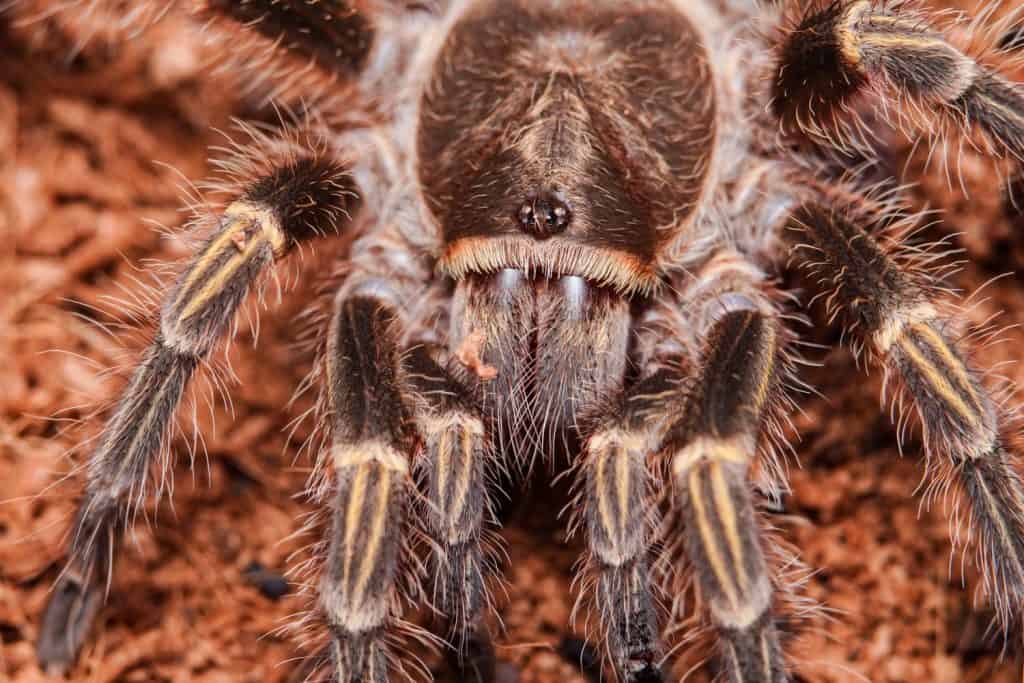
Tarantulas may have the ability to recall destinations, a new study suggests.
©Lemonade Serenade/Shutterstock.com
An arboreal tarantula at a lodge in French Guiana was observed, for two consecutive weeks, every single night, leaving its home shortly after sunset. Every single time, it traveled approximately two meters along a beam, made a precise right-angle turn, and then proceeded another two meters to a spot where flying insects gathered near an artificial light source. It maintained an identical route each and every one of these nights, suggesting tarantulas may be able to remember these vital paths to their reliable food sources.
Separate observations of arboreal Aviculariinae tarantulas showed them also repeatedly leaving their retreats to hunt near artificial lights that attracted more flying insects, a behavior researchers described as spatial learning. The artificial light might have helped them find these food sources again, but their ability to navigate the same paths was unique.
Burrowing species also showed similar patterns of movement. For example, ground-dwelling tarantulas in lowland floodplain areas would temporarily climb into shrubs and trees during the rainy season, likely to avoid flooding. However, some were spotted exhibiting the same behavior during the dry season, when flooding wasn’t a factor, suggesting they recall these locations as safe regardless of weather patterns.
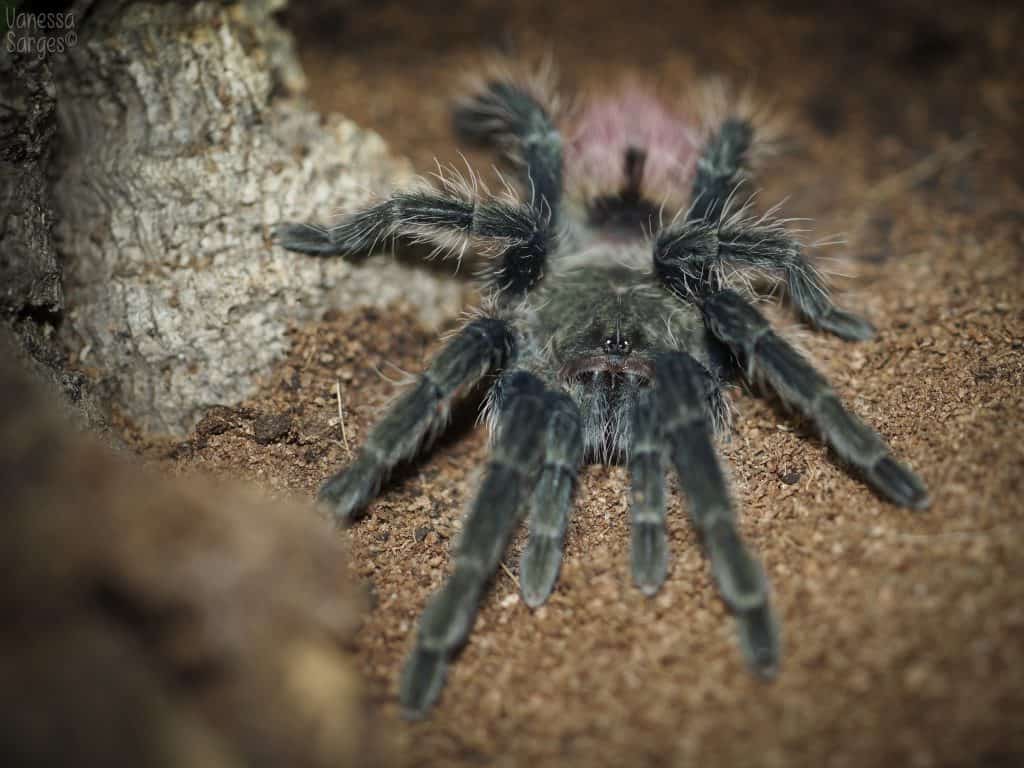
Vibrations and silk threads may also help tarantulas navigate previously explored locations.
When startled, these tarantulas returned to their burrows in straight, direct paths without hesitation, a surprising behavior for blind, cave-dwelling species. It appears that these spiders rely on multiple internal body signals, including vibrations and chemical traces, rather than sight alone.
What Does This Research Suggest About Tarantulas?
While it’s an exciting find, further experimental work is definitely needed to distinguish learned behavior in tarantulas from their potential sensory responses. Tarantulas also rely on the formation of silk trails and chemical signals to travel, which could explain their recognition behaviors without recall or reasoning being involved at all.
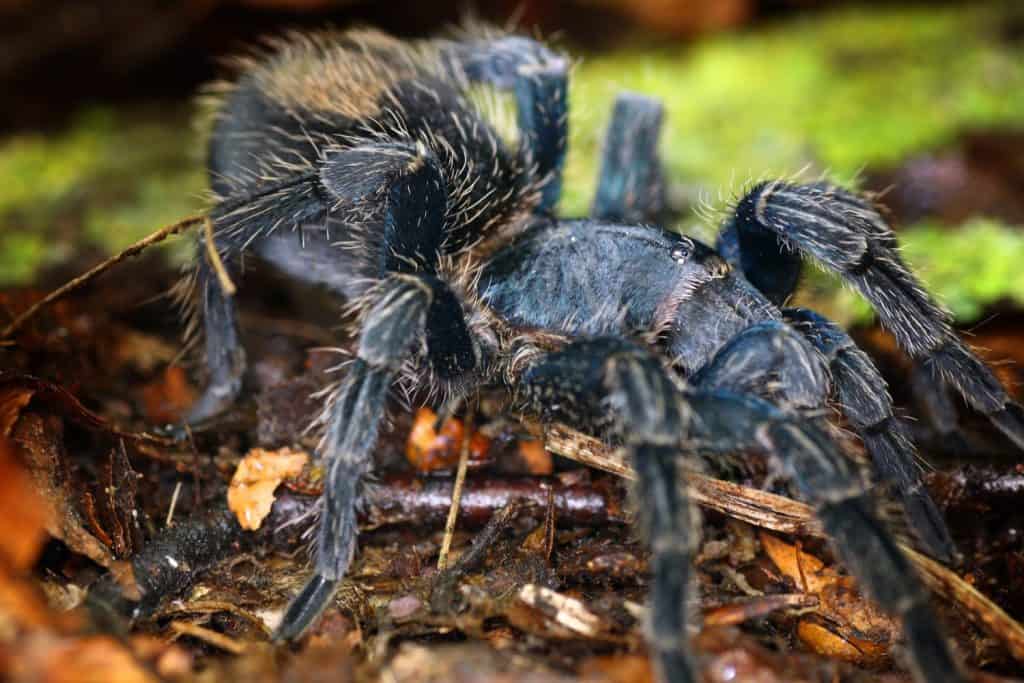
Scientists are eager to observe tarantulas in the field rather than in a lab setting.
©Geleedpotigen/Shutterstock.com
Still, scientists believe there is something more at play as tarantulas navigate their familiar environments.
Zamani stated that “previous studies have shown that tarantulas can learn to avoid unpleasant stimuli, navigate complex mazes, and remember spatial locations over time,” adding that “these abilities suggest that their nervous systems support more flexible behavior than traditionally assumed.”
What makes this research especially important is that, until recently, tarantulas were rarely studied in the field. Most cognition research on spiders has focused on other families in controlled lab conditions, making field-based observations like these especially rare. Hopefully, more field-based studies will be conducted in the near future.
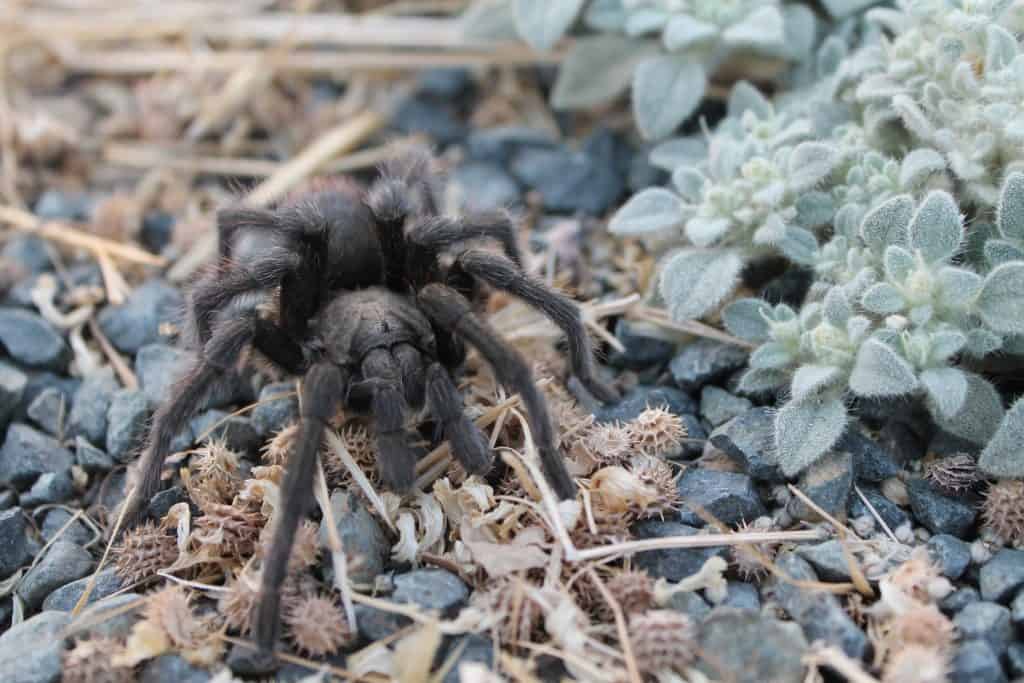
Do tarantulas remember where they’ve been? More research is on the horizon.
©Mychemicalromanceisrealemo / Public Domain CC0 1.0 – Original / License
Zamani concluded that “observations from the field, combined with controlled experiments, will be important for understanding how sensory cues, memory, and experience interact to help these spiders navigate and search for prey.”
Only time will tell what these arachnids are truly up to, but it’s exciting to consider that a tarantula moving in the dark might know exactly where it’s heading.