
Quick Take
- The bond people feel with their pets is not just emotional. Research backed by the CDC and NIH suggests pets can influence health in measurable ways, including stress reduction, more daily movement, and stronger feelings of connection. Pets often improve life through routine as much as affection.
- Dog walking, caregiving, and the structure of pet ownership can help people exercise more, spend more time outside, and maintain healthy habits. Pets can ease isolation without replacing human relationships.
- Studies suggest they may buffer loneliness, lower some physiological stress markers like cortisol and blood pressure, and even help spark social interaction with neighbors and other pet owners.
National Pet Day, aka April 11, merits its own special day because it taps into something people already know in their bones: pets matter. But that feeling is not just sentimental. Research backed by the CDC and NIH suggests that close relationships with animals can shape daily routines, stress levels, social lives, and feelings of connection in ways that are measurable, even if the effects are not identical for every person or every pet.
At the center of all of this is the human-animal bond, the relationship people form with animals they live with and care for. The NIH describes this as a real area of study, not just a cultural idea. Researchers are trying to understand how the quality of a person’s bond with an animal relates to health and well-being, because the emotional closeness itself may be part of why pets can feel so important in daily life. The NIH also notes that the science is still developing, and that results are sometimes mixed, which is an important part of the story: the bond is meaningful, but it is not magic.
The Benefits of Pets
One reason pets can feel so central is that they often change our behavior in practical ways. The CDC says pets can increase opportunities to exercise, spend time outdoors, and socialize. That is especially obvious with dogs, because they need regular walks and care on a schedule that does not wait for a person’s mood, workload, or weather excuses. The NIH makes the same point plainly: if the goal is to increase physical activity, a dog may help because walking is built into the relationship.

One big benefit of having a dog is the opportunity for you both to get some exercise.
©alexei_tm/Shutterstock.com
That routine matters. Research in older adults has found that pet ownership, and dog ownership in particular, is associated with higher physical activity and with maintaining physical function over time. A 2022 longitudinal study found that pet ownership was associated with maintained physical function among generally healthy community-dwelling older adults, while other studies have linked dog walking with greater walking behavior and better odds of staying active. This does not prove that a pet single-handedly transforms someone’s health, but it does suggest that caring for an animal can make healthy habits more likely to stick.
Companionship is another big part of why people care so intensely about pets. The CDC says pets can help manage loneliness and depression by providing companionship, and the NIH reports that some studies have found animals can reduce loneliness and increase feelings of social support. That wording matters. The strongest version of the science is not “pets cure loneliness.” It is that pets can act as a buffer against isolation for some people, giving them steady contact, a routine, and a living presence in the home.
The evidence here is encouraging, but not absolute. A 2022 review of pet ownership, loneliness, and social isolation found that many studies linked pet ownership with lower social isolation, though findings on loneliness were more mixed. That fits with lived experience. A pet may not replace human relationships, but it can soften the edges of solitude, create structure, and provide a sense of being needed. For many people, that is no small thing.
Stress reduction may be the most intuitive effect, and it is also one of the more measurable ones. The NIH says interacting with animals has been shown to decrease cortisol, a stress-related hormone, and lower blood pressure. The CDC also points to decreased blood pressure, cholesterol, and triglyceride levels among the health benefits associated with the bond between people and pets. In other words, the comfort people describe is not just poetic; in some studies, it shows up in the body.
Researchers have been looking at these physiological effects for years. Earlier NIH-indexed work found that in some settings, the presence of a pet was associated with lower heart rate and blood pressure responses during stress. The American Heart Association’s scientific statement on pet ownership and cardiovascular risk concluded that pet ownership, particularly dog ownership, may be associated with lower cardiovascular risk, while also cautioning that the evidence is not strong enough to recommend getting a pet solely to prevent heart disease. That kind of restraint is useful: the signals are promising, but the science does not support sweeping claims.
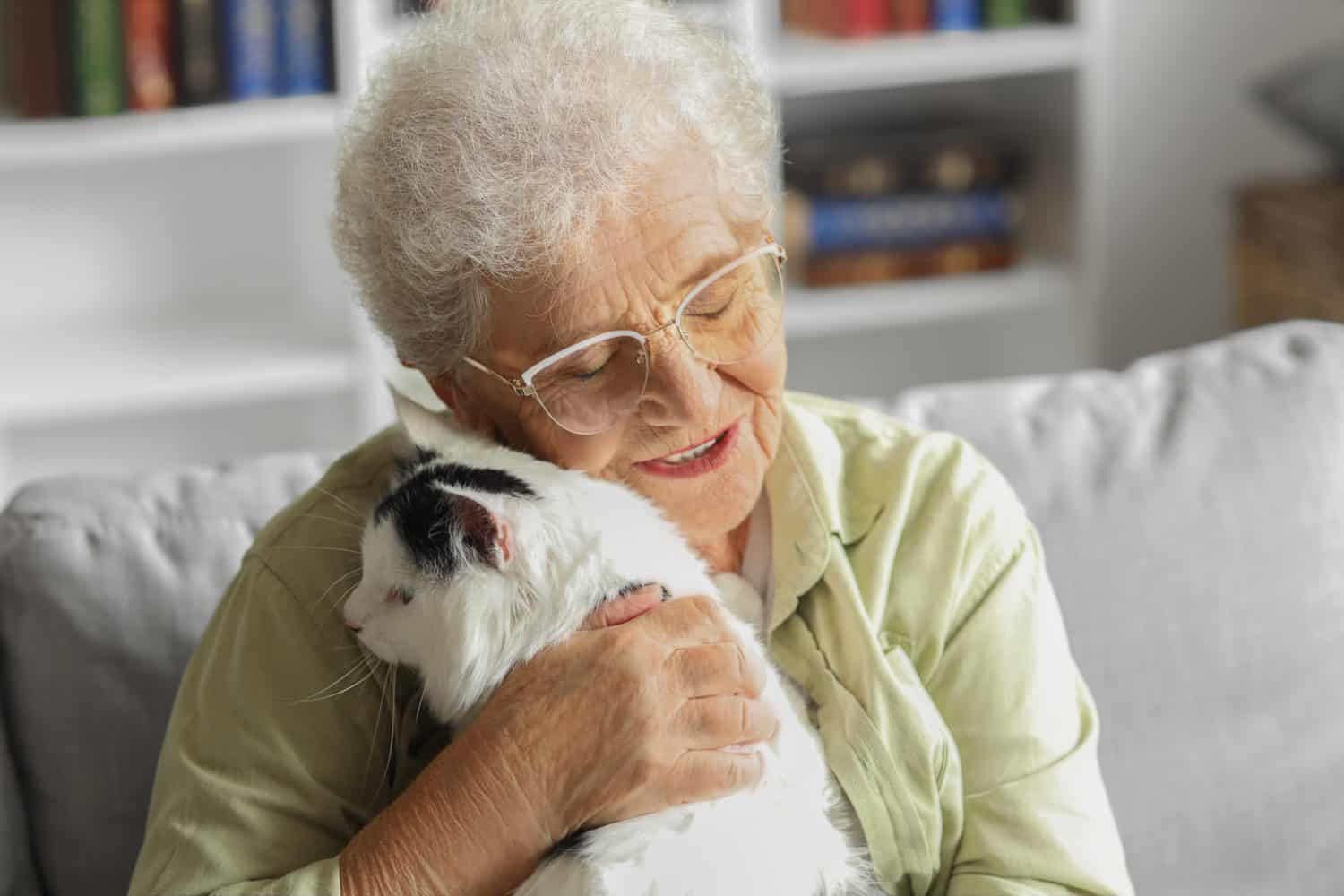
Companionship is essential as we age — and sometimes a pet can offer that unconditional love humans need.
©Pixel-Shot/Shutterstock.com
Pets can also widen a person’s social world. The CDC includes socialization among the opportunities pets can create, and researchers have long described dogs in particular as social catalysts. Walk a dog often enough and you are more likely to have brief chats with neighbors, meet other owners at parks, or become a familiar face in the neighborhood. Those contacts may seem minor, but repeated low-stakes interactions are one way community gets built.
That social effect shows up in research as well. Studies and reviews have linked dog walking with more incidental interaction and, in some groups, fewer feelings of loneliness. Some researchers frame human-animal interaction as part of the broader social environment that influences health. In simple terms, pets do not just keep people company inside the home; they can also help pull people into contact with the outside world.
Why Do We Care So Much?
So why do people care so much about their pets? Because the relationship often reaches several parts of life at once. A pet can be a source of affection, yes, but also a reason to get out of bed, go outside, move your body, talk to another person, and feel calmer at the end of a hard day. Science does not say pets are a universal prescription for better health. It does say that for many people, the bond is linked to real psychological, social, and physical benefits.
That may be the best explanation for National Pet Day. It resonates because people are not simply celebrating cute animals. They are recognizing a relationship that often makes daily life feel steadier, less lonely, and more connected. The heart responds first, but the research helps explain why.