
Quick Take
- Baby tarantulas live together, but there is a deadline after which staying with siblings or mom becomes life-threatening. Life in the burrow →
- Right after molting, a tarantula loses the ability to do the one thing it needs most to survive. Learn the reason why. Why fangs go soft →
- For male tarantulas, one particular molt marks a point of no return. Male vs. female molting →
- Molting can kill a tarantula even when nothing attacks it. Here's what can go fatally wrong. What can go fatally wrong →
In a fascinating video from Andrea’s Arachnids YouTube Channel, we get an up-close look at dozens of baby tarantulas shedding their skin. The video is a time-lapse, so we see a sped-up version of just what happens when a tarantula molts its old skin as it grows. It certainly looks dramatic, but exoskeleton shedding is a natural process that tarantulas and all arthropods must go through.
From Egg Sac to Spiderling
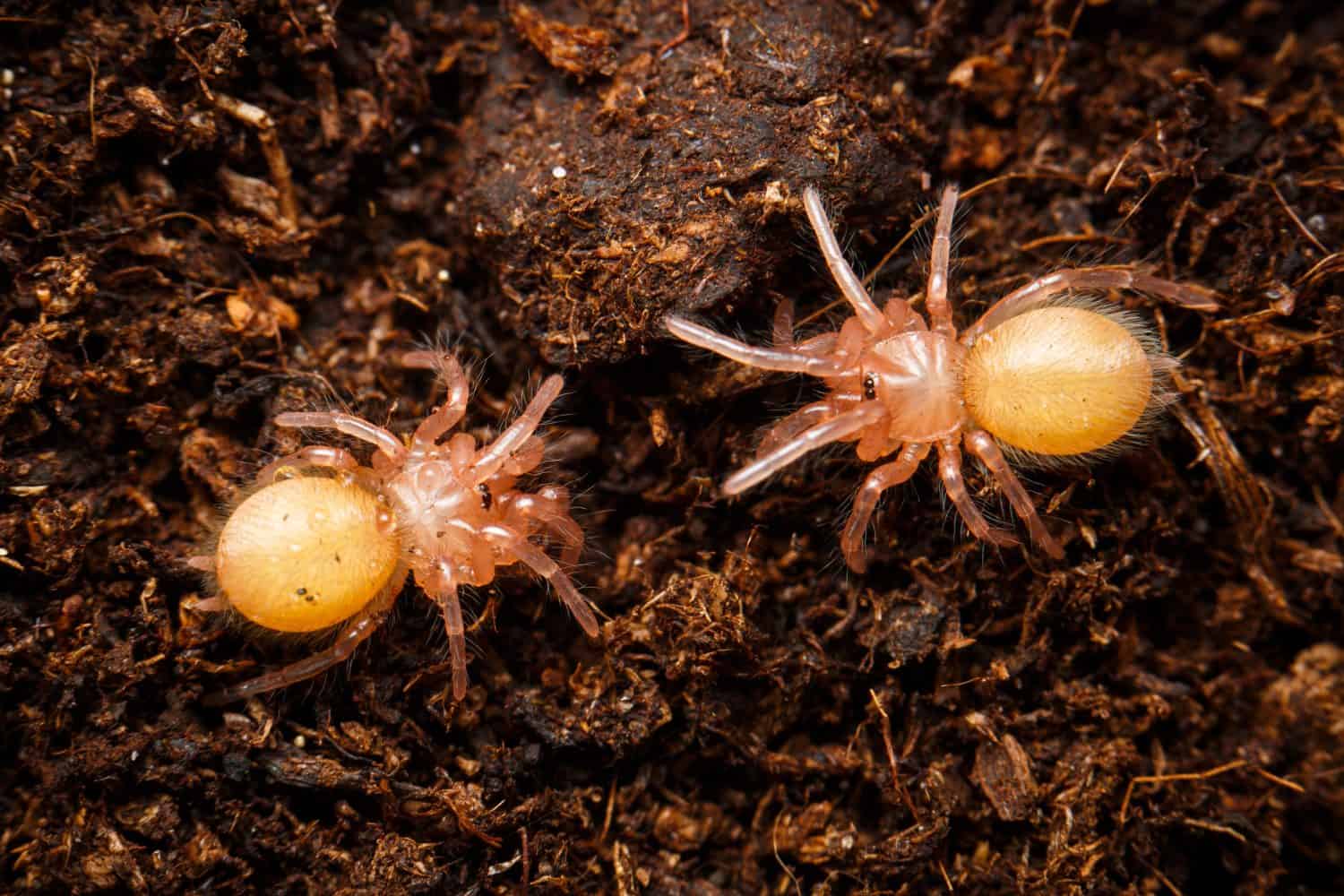
In the video, we see dozens of recently hatched tarantulas kept in a plastic container. There are over 1,000 species of tarantulas (family Theraphosidae) in the world, and it’s pretty tough to identify them when they are as young as the spiderlings in the video. Because of their tiny size, we know the babies must have recently hatched from their mother’s egg sac. Tarantulas don’t spin webs the way many other spiders do to catch prey, but they do produce silk, which they use to make protective cases for their eggs. The tarantula mother will typically guard her egg sac, which she keeps safe in her burrow, until the eggs hatch.
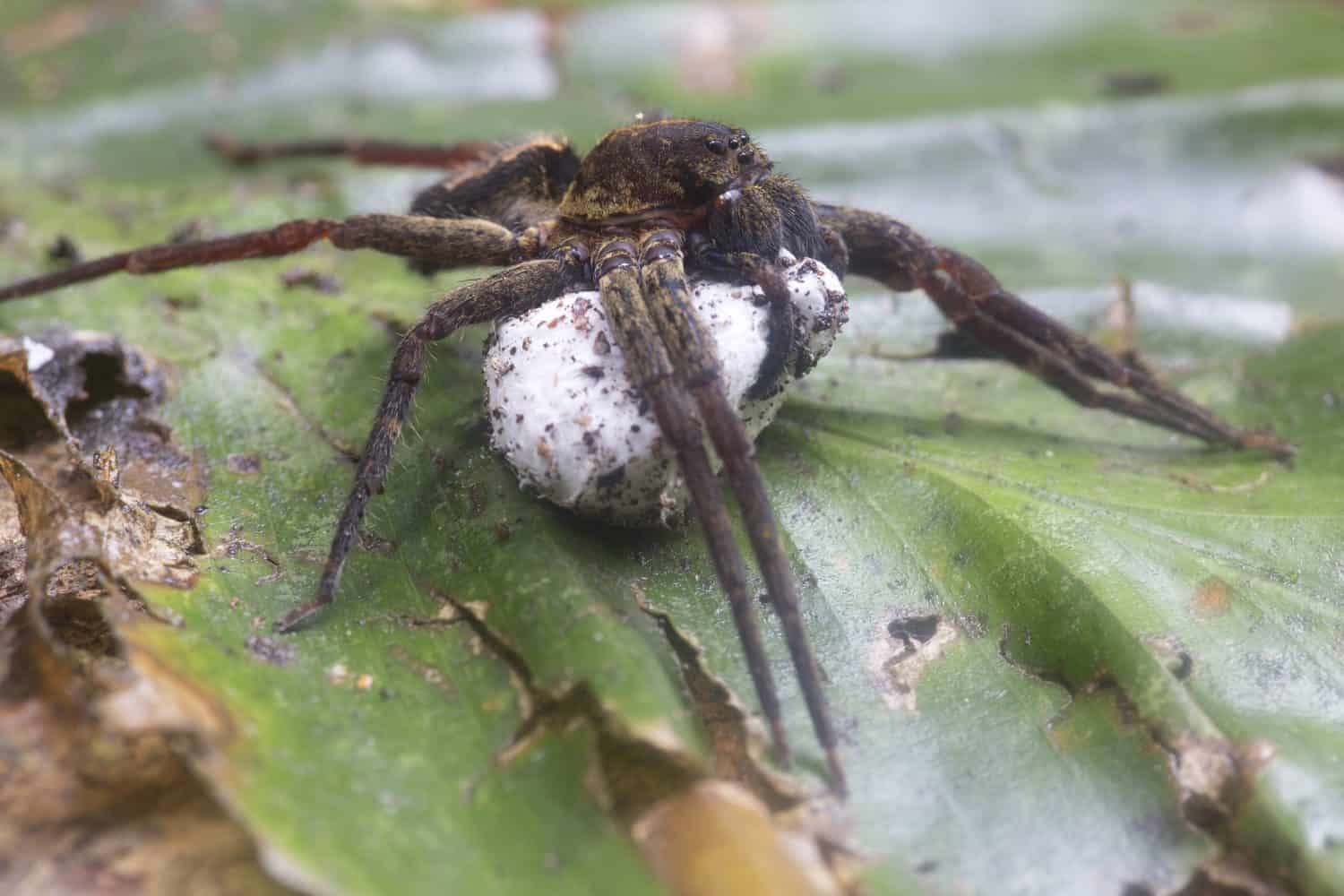
Tarantula mothers are very protective of their eggs.
©Papa Bravo/Shutterstock.com
Once the spiderlings hatch, they stay together in their mother’s burrow for a few weeks before they disperse to find homes of their own. When the spiderlings reach a certain age, it’s critical that they leave the nest, or they may risk being eaten by their siblings or their mother. The spiderlings in the video are still young enough that it is safe for them to live together a while longer.
Why Tarantulas Must Shed Their Skin
The spiderlings in the video are in the process of molting, which they must do to shed their old skin and make room for growth. This process is called ecdysis. Tarantulas must molt multiple times during their life as they continue to develop. Underneath the hard exoskeleton is their new, larger exoskeleton that is both soft and fragile. Even the tarantula’s fangs are too soft to eat food until they harden over a period of days or a week. In fact, the time directly following a molt is quite vulnerable for a tarantula.
Although it looks fast in the video, the molting process can take up to hours or even as long as a day in older tarantulas. When a tarantula molts, it flips onto its back, which can be a disturbing sight for new pet owners. But be assured, it’s a natural process that all spiders go through. Some tarantulas will spin a soft hammock to flip onto before they begin molting.
How Often Do Tarantulas Molt?
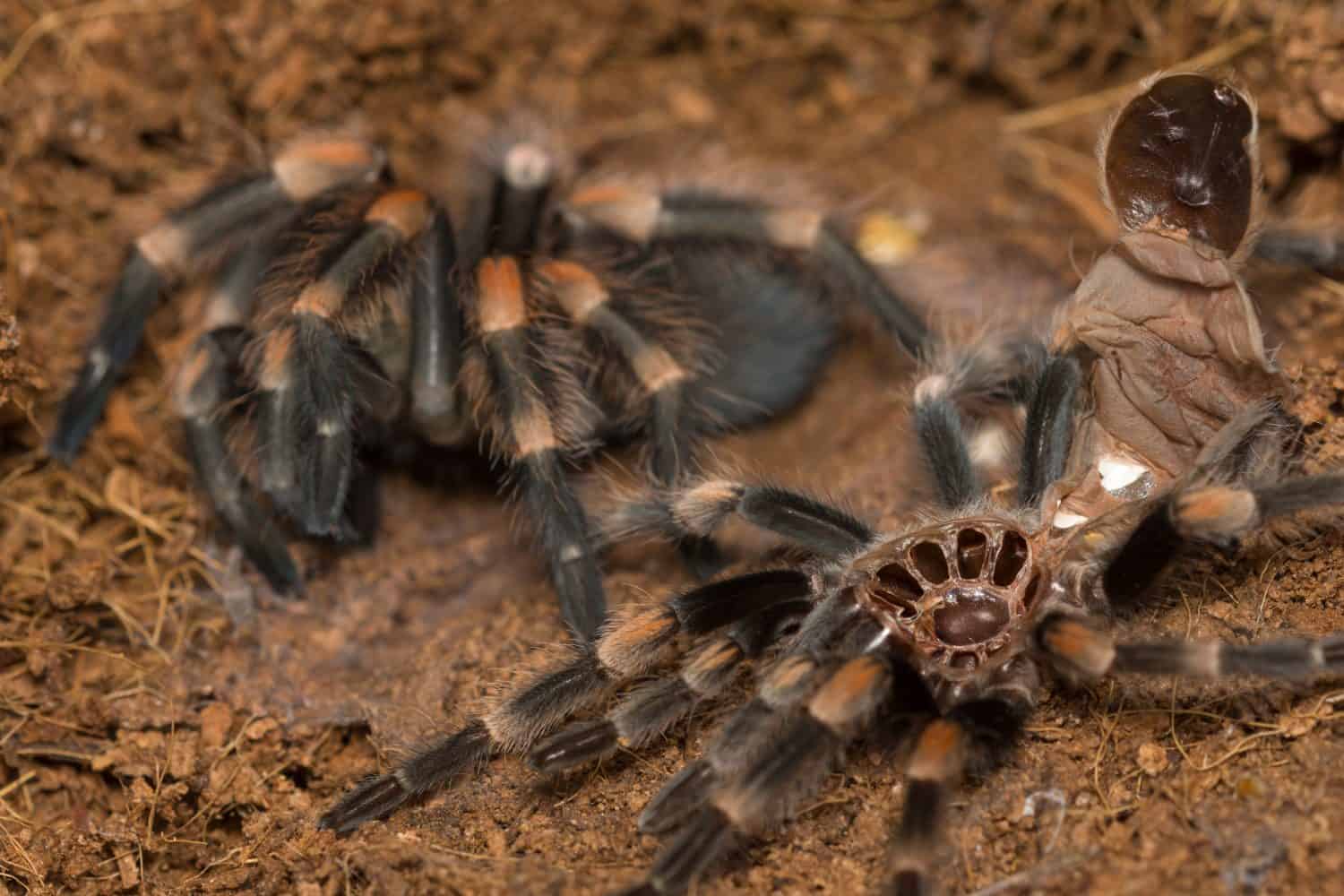
Tarantulas begin to molt less frequently as they age.
©Cornel Constantin/Shutterstock.com
Young tarantulas may molt as often as once a month. This slows down to once every year or so as the tarantula grows. Female tarantulas will continue to molt their entire lives, although it happens much less frequently as they get older. Even if they are not growing much bigger, molting can help spiders repair damage to their bodies. Males, on the other hand, have one final molt once they reach sexual maturity. They usually don’t live more than one to three years after this, and their main priority in life becomes to mate with a female.
Molting Is One of a Tarantula’s Riskiest Moments
Molting is a natural process that is not painful for the arachnid. However, it is an exhausting process, and the tarantula will be weak and stressed when it is all over. If you have a pet tarantula, it’s best to keep them undisturbed during this time. They will need water after they molt, but they won’t need to eat until their fangs are hardened.
It’s also an incredibly dangerous process for the tarantula. Many things can go wrong during a molt, such as the spider getting stuck in its old skin. A tarantula can be wounded or even die due to a bad molt. They are also incredibly vulnerable to predators when they are in the process of molting.