
Quick Take
- Chile is a long, narrow country bordered by the Andes and the Pacific, which limits tarantula diversity to just 19 native species.
- Tarantulas in the Euathlus genus inhabit high-elevation areas that are over 6,560 feet above sea level.
- Catumiri tarantulas lack the urticating setae typical of other New World spiders.
- Grammostola rosea, the rose hair tarantula, is popular in the pet trade due to its docile temperament.
With just 19 native species, Chile has fewer tarantula species than other South American countries, primarily due to its distinct geography and climate. Chile is a very long and narrow country, bordered by the Pacific Ocean to the west and the Andes Mountains to the east. This limits the variety of habitats necessary for high biodiversity. However, the arid and semi-arid conditions of the Atacama Desert region in central and northern Chile are conducive to supporting species such as the well-known Chilean rose hair tarantula, Grammostola rosea.
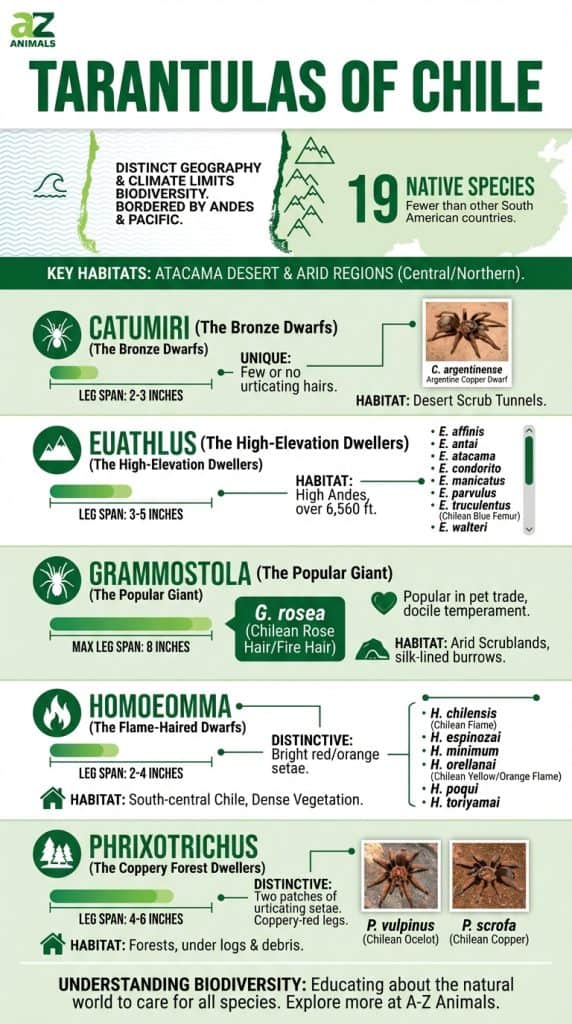
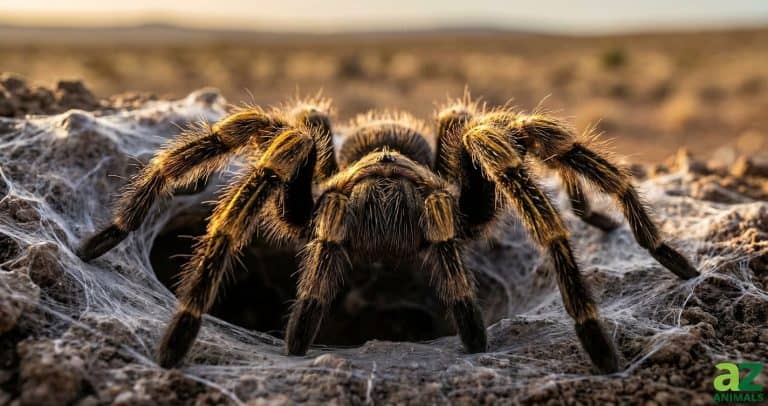
Trapped between the Andes and the Pacific, these 19 resilient species are the only spiders tough enough to survive Chile’s extreme landscapes.
©A-Z Animals
The list below includes currently recognized Chilean tarantula species based on the World Spider Catalog as of December 2025. Entries marked with an asterisk indicate the type species. For information on tarantulas in other parts of the world, click the link for a complete reference list of all tarantula species.
Catumiri Guadanucci, 2004
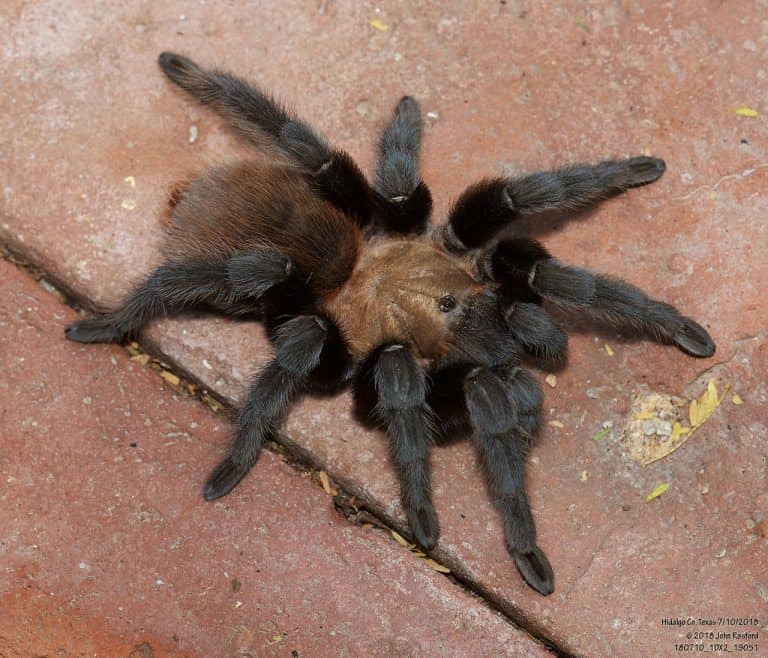
Catumiri tarantulas are very small spiders, with leg spans between 2 and 3 inches. Unlike other New World tarantulas, these spiders are unique in having few or no urticating hairs (setae). Only one species, C. argentinense, has been recorded in Chile. It is a small, bronze-brown tarantula with a darker brown abdomen. These terrestrial burrowing spiders excavate silk-lined tunnels in desert scrub habitats. C. argentinense has been recorded in Regions IV and V, Coquimbo and Valparaíso, respectively.
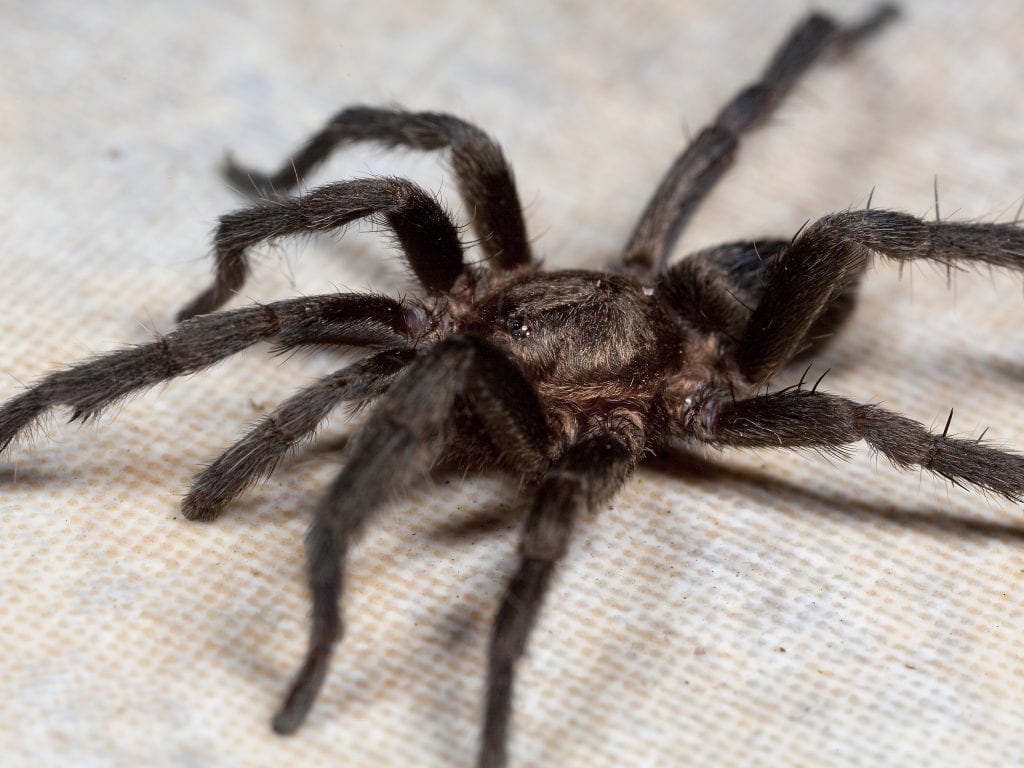
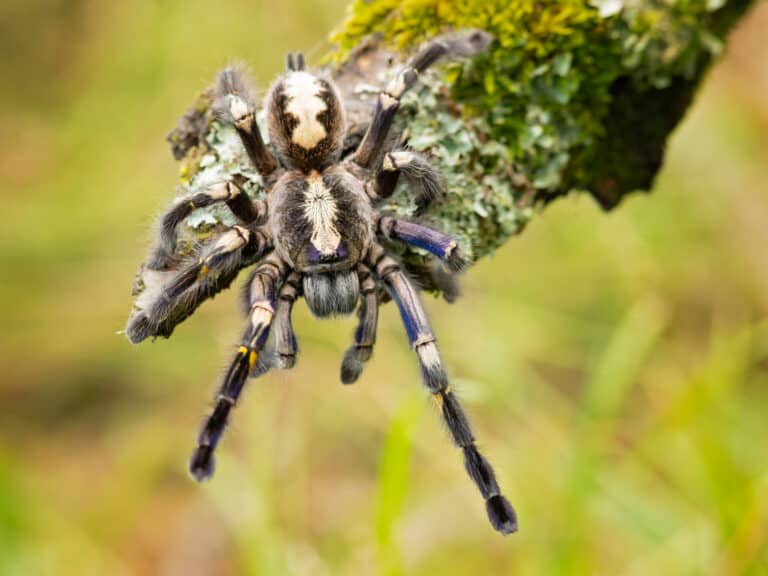
The Argentinian bronze, Catumiri argentinense, only has a leg span of around 3 inches.
- Catumiri argentinense (Mello-Leitão, 1941)
- Common name: Argentine copper dwarf or Argentinian bronze dwarf
- Distribution: Chile, Argentina
Euathlus Ausserer, 1875
Euathlus tarantulas are small to medium-sized spiders reaching 3-5 inches in leg span, although species such as Euathlus manicata may reach larger sizes. These spiders differ from other genera by having a patch of urticating setae in the middle of the abdomen. Although some species live at sea level, most tarantulas in the genus Euathlus inhabit high-elevation environments in the Andes over 6,560 feet. They have been recorded in the cold, dry climate of the northern Tarapacá region, and south to the mountainous deserts and scrub of central Chile near the coasts of the Valparaíso and Coquimbo areas.
- Euathlus affinis (Nicolet, 1849)
- Common name: N/A
- Distribution: Chile
- Euathlus antai Perafán & Pérez-Miles, 2014
- Common name: N/A
- Distribution: Chile
- Euathlus atacama Perafán & Pérez-Miles, 2014
- Common name: N/A
- Distribution: Chile
- Euathlus condorito Perafán & Pérez-Miles, 2014
- Common name: N/A
- Distribution: Chile
- Euathlus manicatus (Simon, 1892)
- Common name: N/A
- Distribution: Chile
- Euathlus parvulus (Pocock, 1903)
- Common name: N/A
- Distribution: Chile
- Euathlus truculentus* L. Koch, 1875
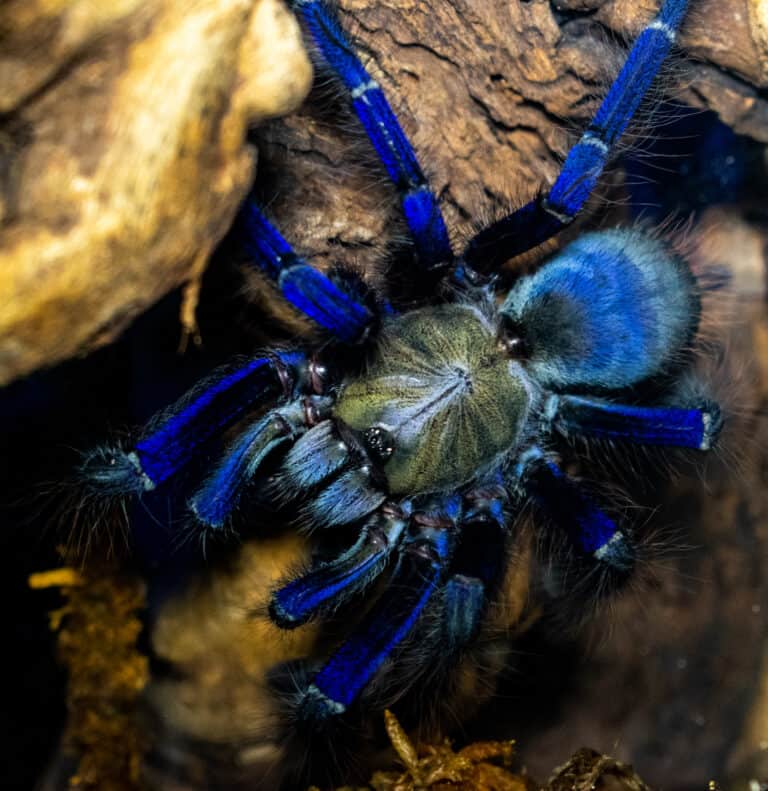
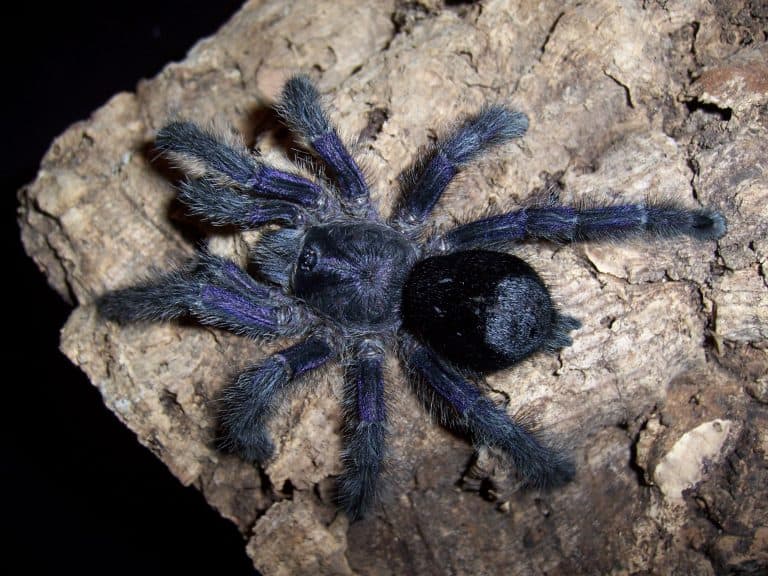
- Common name: Chilean blue femur
- Distribution: Chile, Argentina
- Euathlus walteri Taucare-Ríos, Plaza & Pérez-Miles, 2025
- Common name: Sometimes called the tiger tarantula
- Distribution: Chile
Grammostola Simon, 1892
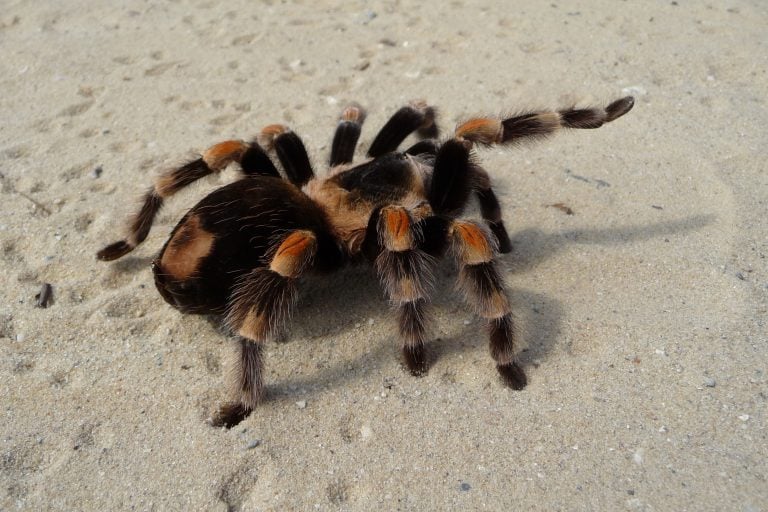
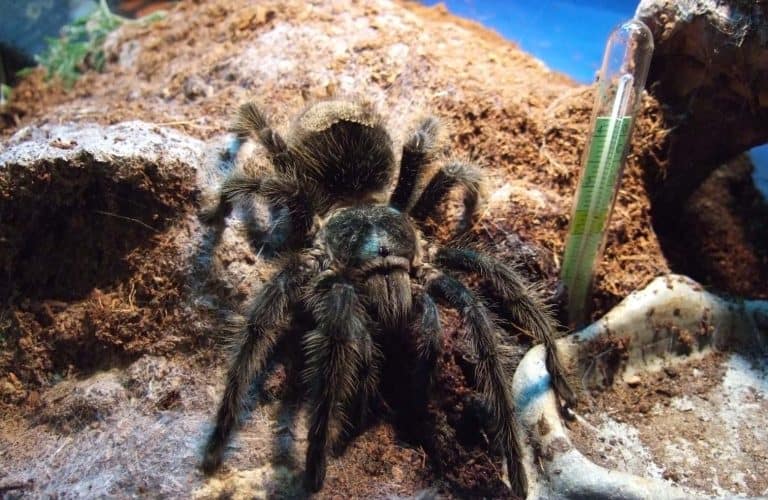
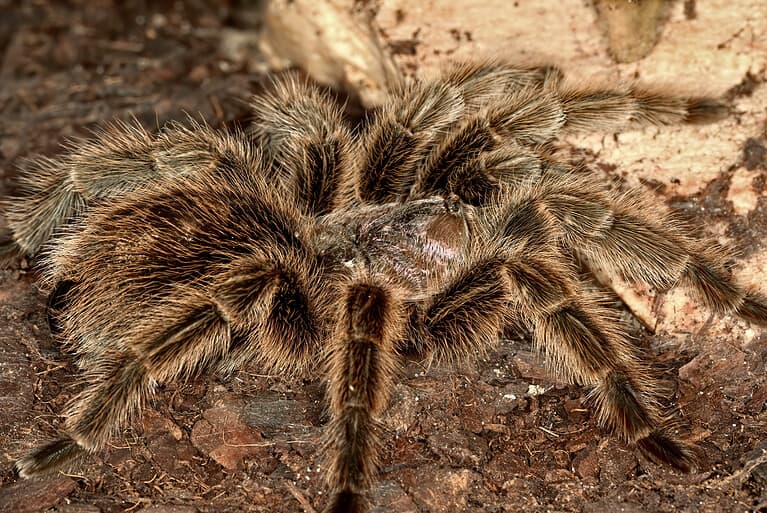
Tarantulas in the genus Grammostola are medium to large-sized spiders, with a maximum leg span of around 8 inches. They frequently have dark-colored bodies with markings on their knees and dense, reddish-colored setae. The only Grammostola species in Chile is the popular Grammostola rosea. This tarantula can be found inhabiting silk-lined burrows, often under stones or vegetation, in the desert scrublands and arid grasslands of northern Chile. G. rosea is popular in the pet trade for its pink-hued setae and docile temperament.
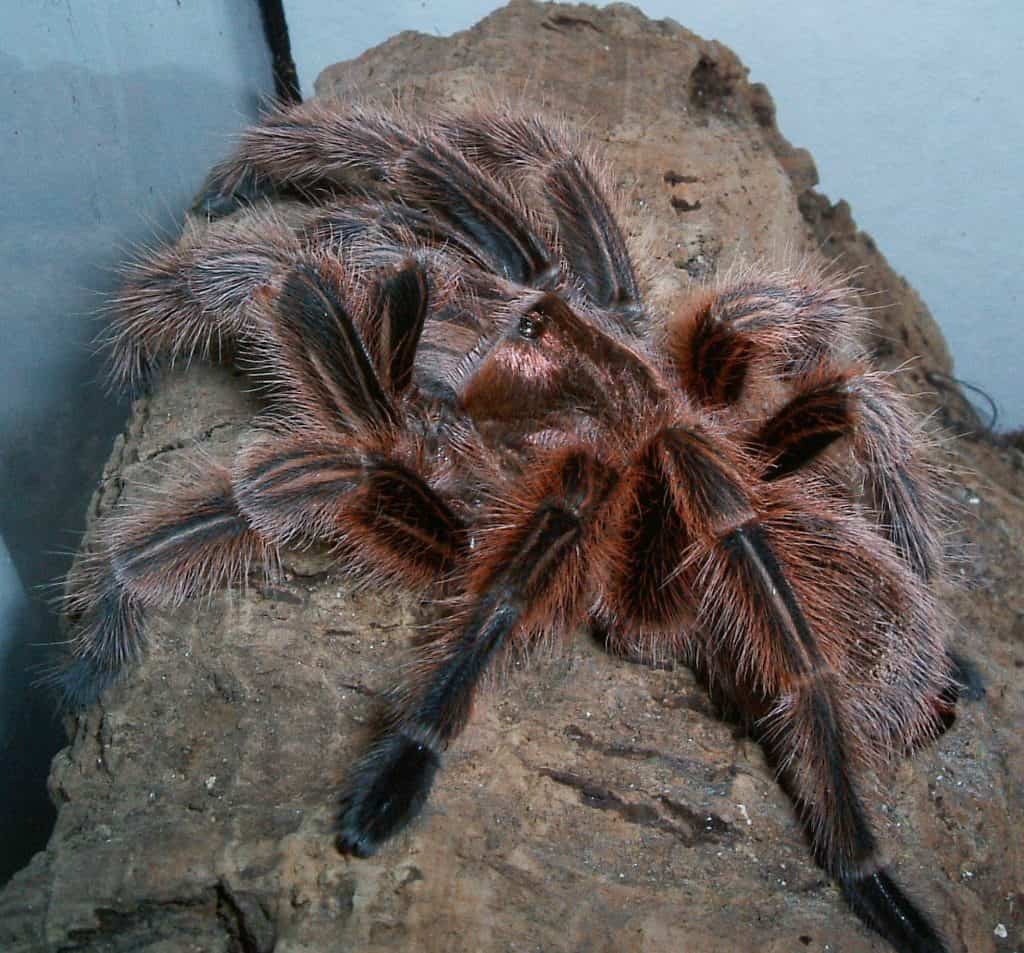
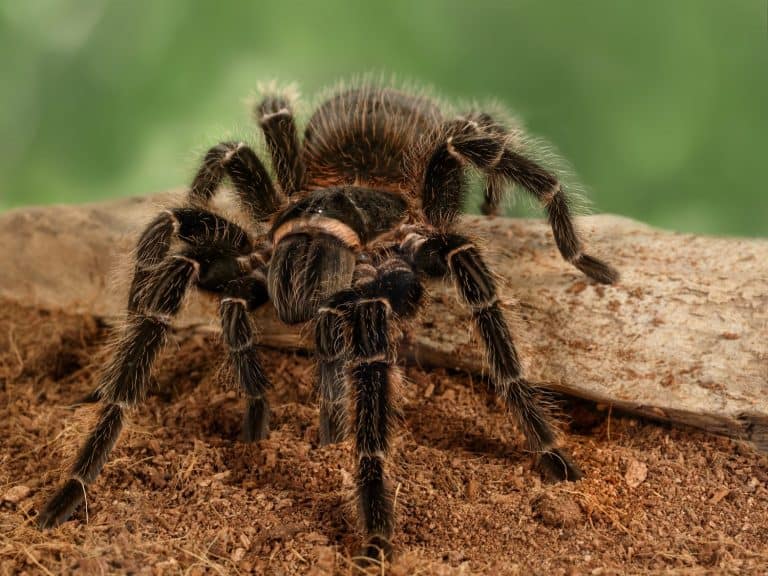
The Chilean fire hair tarantula, Grammostola rosea, is popular in the pet trade for its calm temperament.
- Grammostola rosea (Walckenaer, 1837)
- Common name: Chilean fire hair
- Distribution: Bolivia, Chile, Argentina
Homoeomma Ausserer, 1871
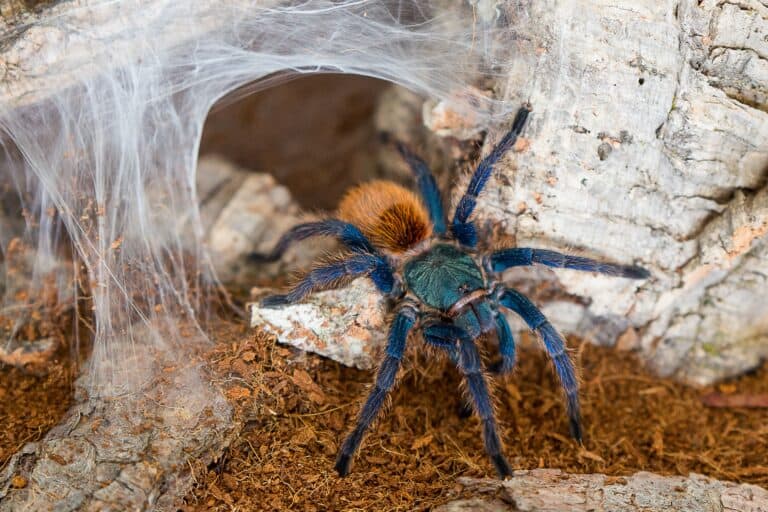
Tarantulas of the genus Homoeomma are small, with a leg span between 2 and 4 inches. These dwarf spiders typically excavate shallow burrows under rocks in areas of dense vegetation. Many spiders in this genus have dark bodies with bright red or orange setae on the abdomen. They are found in south-central Chile, specifically in the O’Higgins, Maule, and Biobío regions that lie west of the Andes. Other known Homoeomma species are found east of the Andes.
- Homoeomma chilensis Montenegro & Aguilera, 2018
- Common name: Chilean flame tarantula
- Distribution: Chile
- Homoeomma espinozai Montenegro & Aguilera, 2024
- Common name: N/A
- Distribution: Chile
- Homoeomma minimum Montenegro & Aguilera, 2024
- Common name: N/A
- Distribution: Chile
- Homoeomma orellanai Montenegro & Aguilera, 2018
- Common name: Chilean yellow flame or orange flame tarantula
- Distribution: Chile
- Homoeomma poqui Montenegro & Aguilera, 2024
- Common name: N/A
- Distribution: Chile
- Homoeomma toriyamai Montenegro & Aguilera, 2024
- Common name: N/A
- Distribution: Chile
Phrixotrichus Simon, 1889
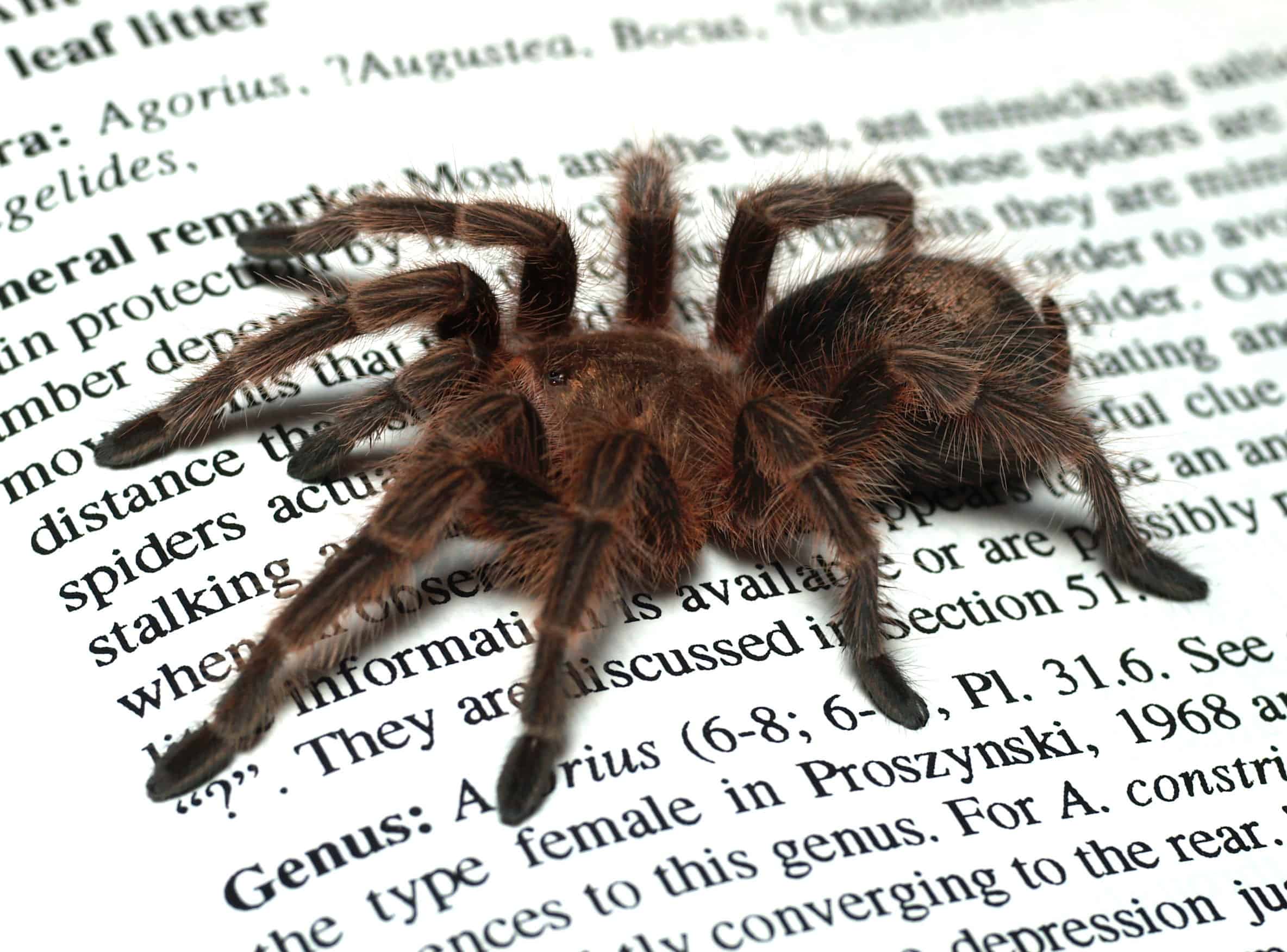
Spiders of the genus Phrixotrichus are medium to large terrestrial spiders, reaching a leg span between 4 and 6 inches. The genus is differentiated by two patches of urticating setae on the abdomen. Tarantulas in this genus are also known for the bright, coppery-red setae on their legs and abdomen. They can be found in various regions across Chile, from the colder, rainier Region VIII, the Biobío Region, south to the island of Chiloé. Phrixotrichus tarantulas are terrestrial, excavating burrows under logs, rocks, or forest floor debris.
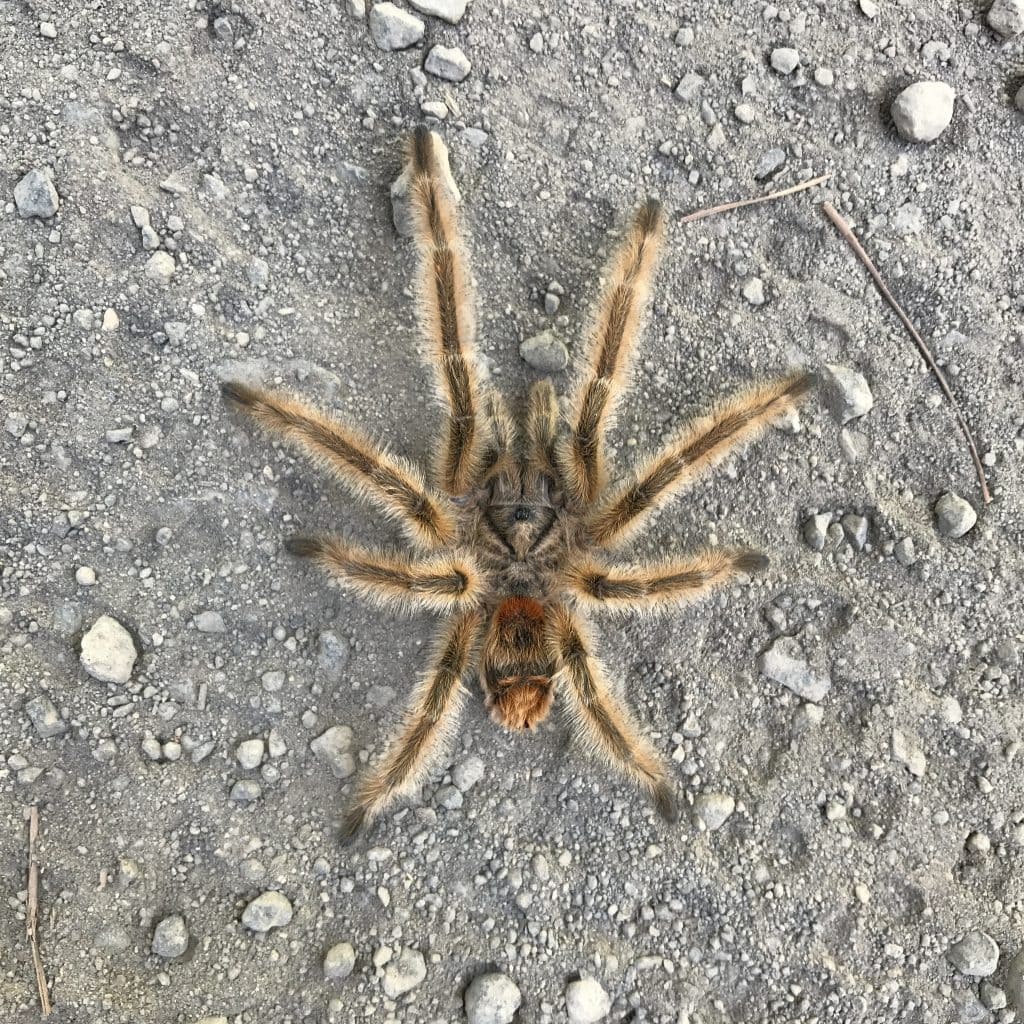
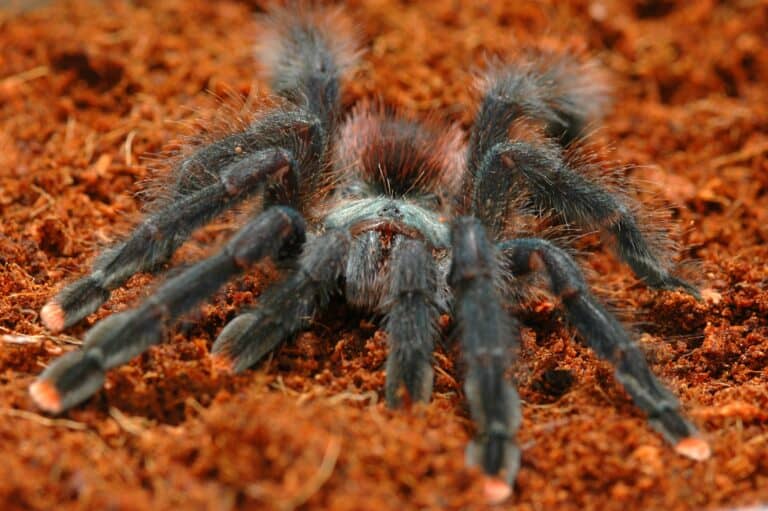
The Chilean ocelot tarantula, Phrixotrichus vulpinus, has long, light-colored leg setae.
- Phrixotrichus jara Perafán & Pérez-Miles, 2014
- Common name: N/A
- Distribution: Chile
- Phrixotrichus scrofa (Molina, 1782)
- Common name: Chilean copper, pink burst tarantula
- Distribution: Chile, Argentina
- Phrixotrichus vulpinus* (Karsch, 1880)
- Common name: Chilean ocelot
- Distribution: Chile, Argentina