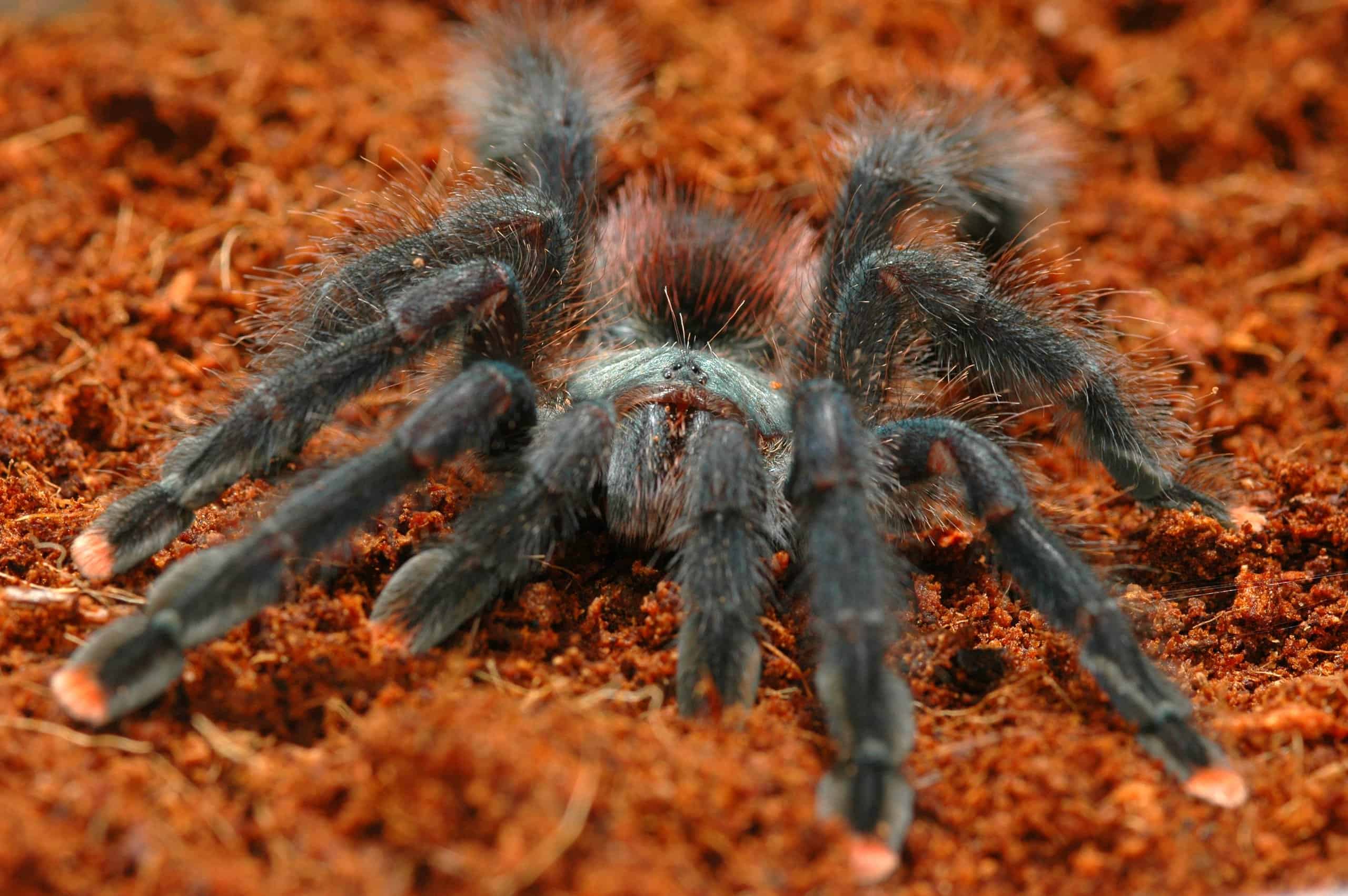

Quick Take
- Bolivia harbors more than 25 native tarantula species, signaling a rich native fauna.
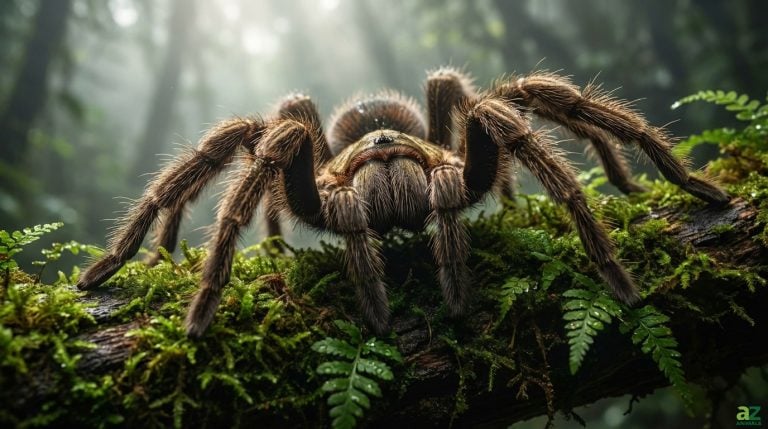
- Protected habitats such as Carrasco National Park are home to diverse Bolivian tarantulas and their rainforest ecosystems.
- Dolichothele tarantulas lack urticating setae, an uncommon trait among New World tarantulas.
- Read on to discover Pamphobeteus tarantulas, very large terrestrial spiders with a leg span of up to 9 inches.
Although Bolivia is landlocked, it is home to diverse geography, including the Andes mountains in the west, the Amazon rainforest in the northern and eastern lowlands, and the Gran Chaco in the southeastern lowlands. Bolivia also has the largest salt flat on Earth, Salar de Uyuni, which covers over 4,000 square miles. The capital city, La Paz, is the highest capital city on Earth at 11,975 feet above sea level.
There are more than 25 tarantula species native to Bolivia, but researchers believe there may be up to 50 more. The list below includes currently recognized tarantula species in the country based on the World Spider Catalog as of December 2025. Asterisks after the names indicate that the tarantula is the type species. See our complete list of tarantula species for a comprehensive reference of tarantulas around the world.

Acanthoscurria Ausserer, 1871
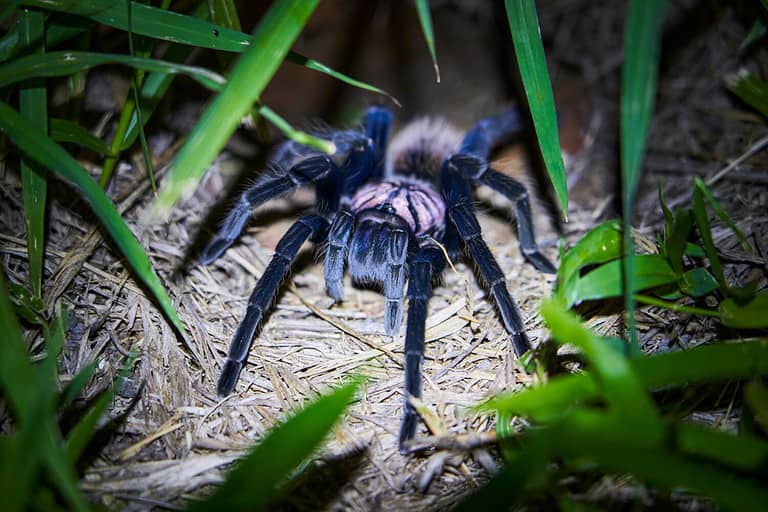
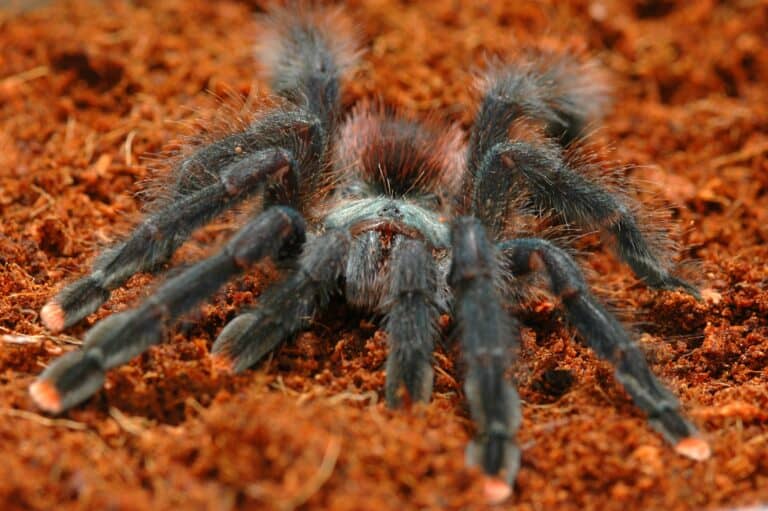
Tarantulas in the genus Acanthoscurria are large, heavily built spiders. They typically have leg spans measuring 7-8 inches. One of their distinguishing characteristics is the presence of noise-making, or stridulating, hairs called setae on the back side of the second segment of their pedipalps. Acanthoscurria tarantulas frequently have dense, reddish or pinkish setae on their abdomens and legs. They may also have light-colored bands at the leg joints. These tarantulas tend to favor the humid, tropical climates of Bolivia’s rainforests and eastern lowlands, including protected areas like Carrasco National Park.
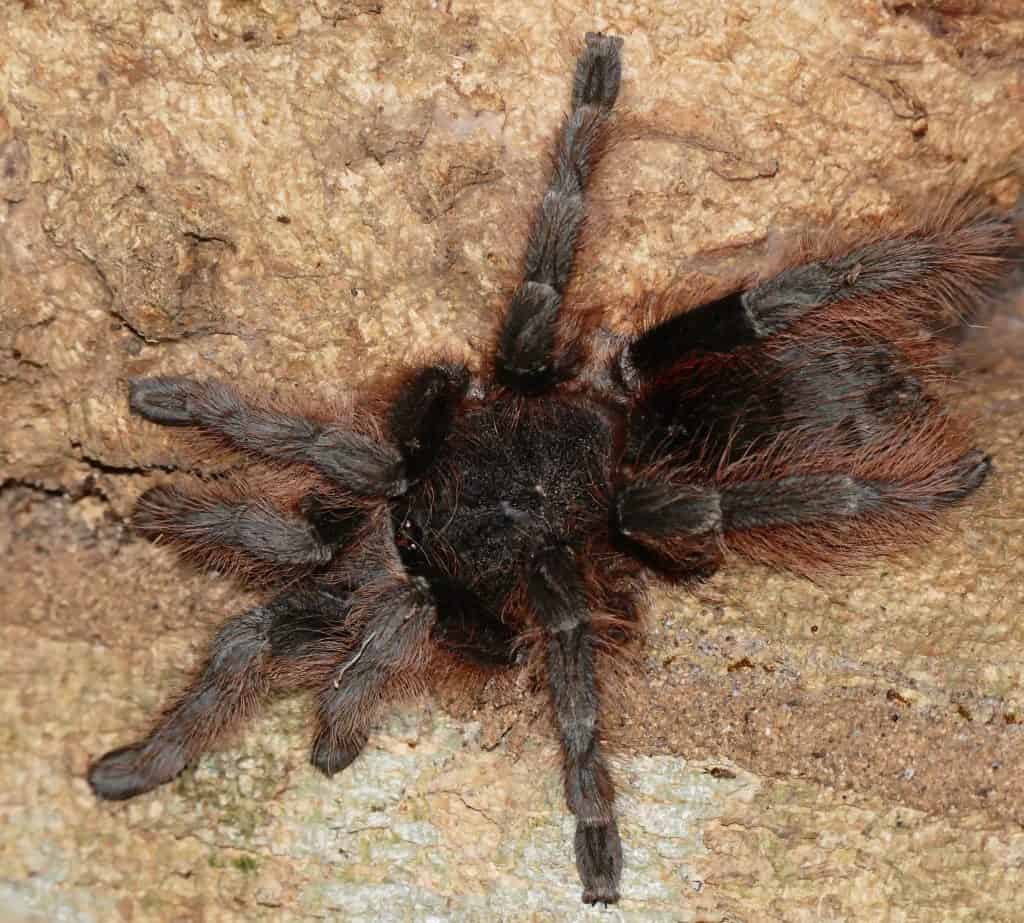
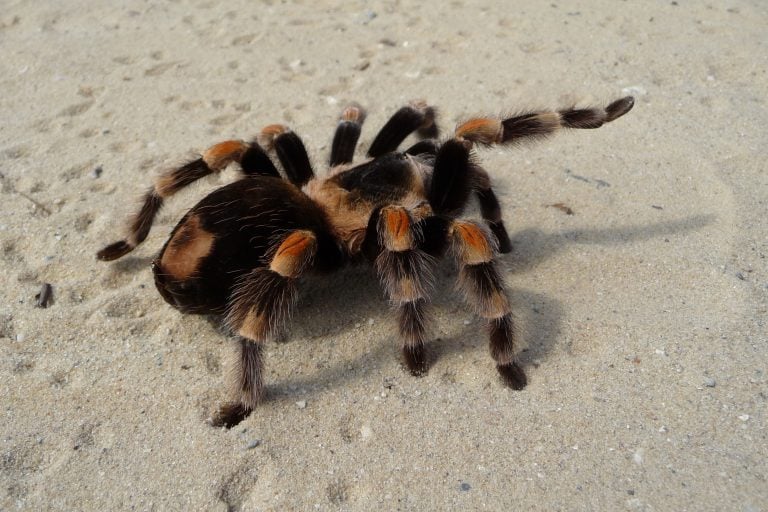
The Bolivian red rump, Acanthoscurria chacoana, can reach a leg span of 6-7 inches.
- Acanthoscurria chacoana Brèthes, 1909
- Common name: Bolivian red rump or Bolivian pink
- Distribution: Brazil, Bolivia, Paraguay, Argentina
- Acanthoscurria cordubensis Thorell, 1894
- Common name: Rusty brown birdeater
- Distribution: South America, except Colombia, Suriname, Ecuador, and Chile
- Acanthoscurria insubtilis Simon, 1892
- Common name: Bolivian black velvet
- Distribution: Bolivia, Brazil
- Acanthoscurria musculosa Simon, 1892
- Common name: Brazilian black velvet
- Distribution: Bolivia, Paraguay, Argentina
- Acanthoscurria theraphosoides (Doleschall, 1871)
- Common name: Giant black-and-white
- Distribution: Peru, Bolivia, Brazil, French Guiana
Avicularia Lamarck, 1818
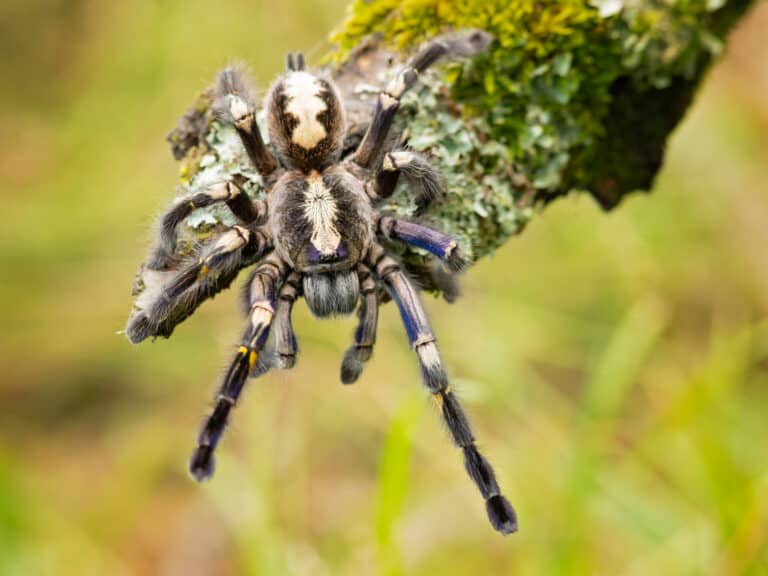
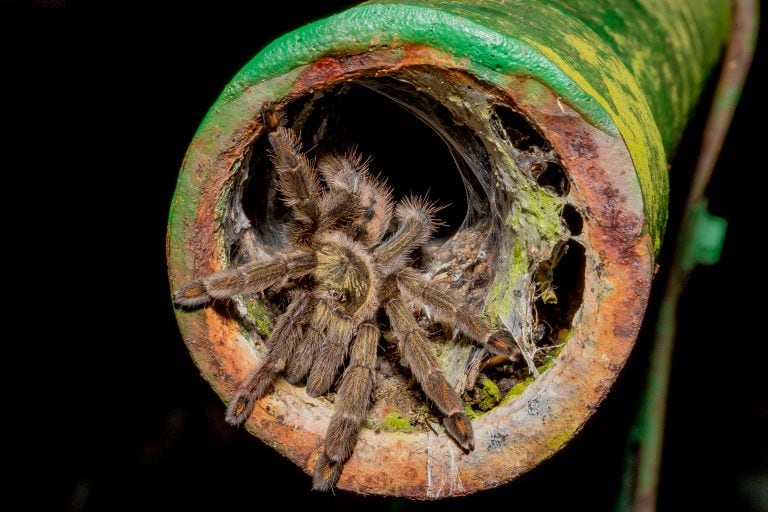
Tarantulas in the genus Avicularia are arboreal. They tend to favor mid-to-upper canopy areas in the rainforests, building web tunnels in the trees. These tarantulas are predominantly small to medium-sized, with leg spans of 4-6 inches. A. avicularia has a dark body with a greenish iridescence on its carapace and femora. It has long, dense, pinkish-orange setae, and the end of each leg is pink. It typically has a leg span of up to 4.75 inches. A. rufa has a brownish-colored body with long, grizzled guard setae, vivid yellow bands on its leg segments, and pinkish toes. It commonly reaches a leg span of 5-6 inches.
- Avicularia avicularia (Linnaeus, 1758)
- Common name: Guyana pinktoe or pink-toed tarantula
- Distribution: Venezuela, Guyana, Suriname, French Guiana, Trinidad and Tobago, Brazil, Peru, Bolivia
- Avicularia rufa Schiapelli & Gerschman, 1945
- Common name: Yellow-banded pinktoe
- Distribution: Ecuador, Peru, Bolivia, Brazil
Bermejoa Gabriel, Sherwood & Pérez-Miles, 2023
Bermejoa is a recently described genus, known from a male specimen, Bermejoa zoeae. It was collected at the type locality Refugio de Los Volcanes, Department of Santa Cruz. B. zoeae is a burrowing tarantula found in semi-deciduous forested areas of the Dry Chaco region at elevations of around 3,280 feet.It is overall brown in color with type I urticating setae, characterized by a reversed barbed area with large barbs that are a weak irritant to vertebrates. B. zoeae also lacks a stridulatory organ. The holotype specimen has a total length of 0.81 inches, and its longest legs (pair IV) measure 1.11 inches.
- Bermejoa zoeae* Gabriel, Sherwood, & Pérez-Miles, 2023
- Common name: N/A
- Distribution: Bolivia
Bumba Pérez-Miles, Bonaldo & Miglio, 2014
One way to distinguish the genus Bumba, originally Maraca, is by the presence of type IV urticating setae, which are short, very fine, and have barbs and pointed tips. They are generally medium-sized terrestrial tarantulas with a leg span of 4-6 inches. B. panuka has a brown carapace and legs with long, gold setae on the carapace edges. Its abdomen is light brown with a black longitudinal band. It is known to inhabit the Andean foothills and lowlands of the Southwest Amazon moist forest region.
- Bumba paunaka Ferretti, 2021
- Common name: N/A
- Distribution: Bolivia
Cyclosternum Ausserer, 1871
Cyclosternum tarantulas are small to medium-sized burrowing spiders that are generally found in humid grasslands and tropical rainforests. The genus is often considered problematic due to incomplete descriptions, contradictory illustrations, inaccurate type localities, overlapping species distributions, and the absence of associations between males and females. Little is known about C. ledezmae, but it was originally Metriopelma ledezmae prior to being transferred by Gabriel in 2016.
- Cyclosternum ledezmae (Vol, 2001)
- Common name: N/A
- Distribution: Bolivia
Cyriocosmus Simon, 1903
Spiders in the genus Cyriocosmus are small, or dwarf, burrowing tarantulas. C. blenginii is known from the Rio Mamoré at the northern border of Bolivia and Brazil. Its cephalothorax and legs are reddish-brown. It has a dark brown abdomen with a light brown central patch and stripes. No urticating setae were found in the male type specimen. The holotype specimen has a total length of 0.70 inches, and its longest legs (pair IV) are 1.12 inches. C. perezmilesi is known from the Beni River, San Buenaventura and Buena Vista near Santa Cruz, Bolivia. It has a reddish-brown carapace, reddish-brown and black femora, and long pale setae. This tarantula has a patterned abdomen with four stripes and a glossy, heart-shaped, reddish-brown patch of urticating setae. The holotype has a total length of 0.98 inches, and its longest legs (pair IV) measure 1.04 inches.
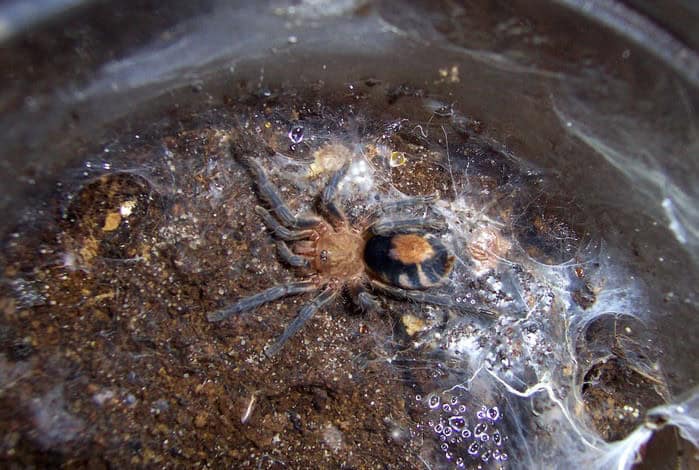
The Bolivian dwarf beauty, Cyriocosmus perezmilesi, has a heart-shaped patch of urticating hair on its abdomen.
- Cyriocosmus blenginii Pérez-Miles, 1998
- Common name: N/A
- Distribution: Bolivia
- Cyriocosmus perezmilesi Kaderka, 2007
- Common name: Bolivian dwarf beauty
- Distribution: Bolivia
Dolichothele Mello-Leitão, 1923
Dolichothele tarantulas are small, burrowing spiders that typically reach leg spans of up to 4 inches. These spiders also lack urticating setae. D. boliviana inhabits the montane dry forests in the eastern foothills of the Andes. It is light brown to brown with light brown setae on its carapace and legs. D. boliviana has a dark brown abdomen with short, gold setae and longer, light brown setae. It also has pale bands on its legs. D. camargorum females have a brown carapace with long, light brown setae. Their legs are also brown with pale bands and dark brown setae. Its abdomen is brown with four broad black markings on the sides. Males are darker with orange setae on the borders of the carapace and lack leg bands and abdomen markings. D. camargorum inhabits patches of Cerrado savanna in the Department of La Paz.
- Dolichothele boliviana (Vol, 2001)
- Common name: N/A
- Distribution: Bolivia, Brazil
- Dolichothele camargorum Revollo, da Silva & Bertani, 2017
- Common name: N/A
- Distribution: Bolivia, Brazil
Grammostola Simon, 1892
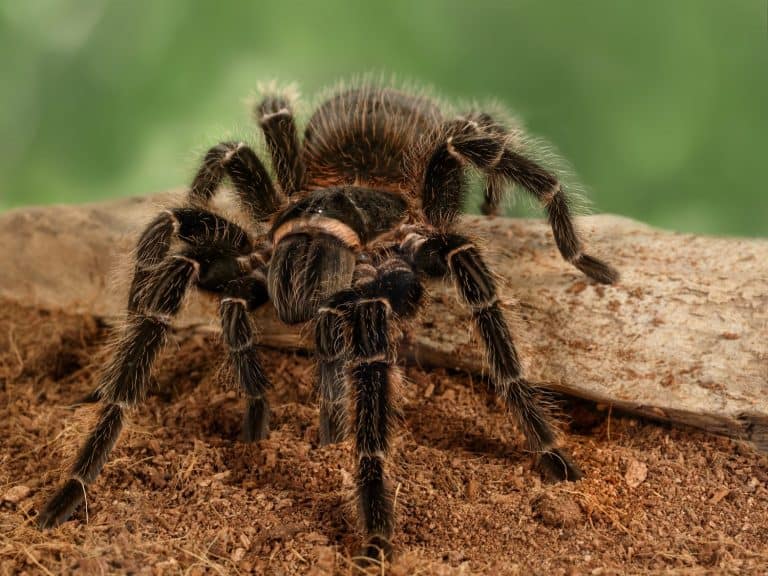
Grammostola tarantulas are medium to large burrowing spiders, with a leg span of up to 8 inches. They often have dark-colored bodies with lighter stripes on their legs and dense, reddish setae, as seen in G. rosea. It is a medium-sized tarantula with an average leg span of around 5 inches. G. rosea is found in the drier, lower-elevation scrublands and desert regions of northern Bolivia. These spiders typically excavate tube-like, silk-lined burrows or take over abandoned rodent or reptile burrows. It has historically been one of the most common tarantulas in the pet trade for its hardiness and docile temperament.
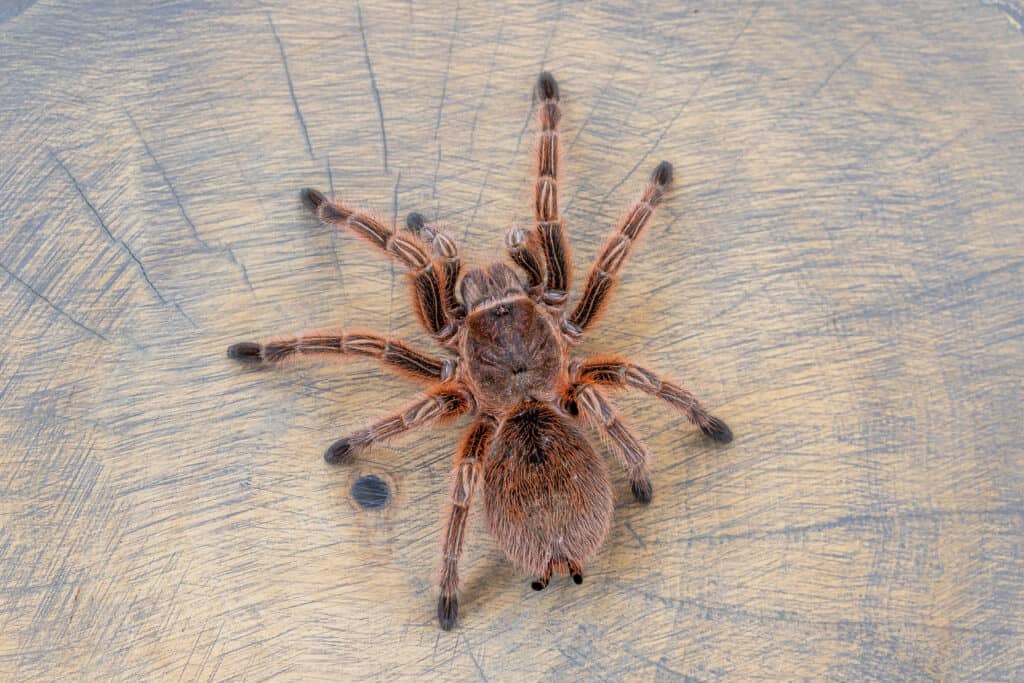
Chilean rose tarantulas, Grammostola rosea, have a leg span of up to 5 inches.
©iStock.com/Svetlana Makarova
- Grammostola rosea (Walckenaer, 1837)
- Common name: N/A
- Distribution: Bolivia, Chile, Argentina
Hapalotremus Simon, 1903
Hapalotremus tarantulas are small to medium-sized spiders with a leg span of up to 4.5 inches. They favor higher elevation cloud forests and rocky, grassy mountains in the western Andes region between 4,265 and 14,763 feet. These spiders are often found in short burrows around fallen logs or under rocks. One distinguishing feature of these tarantulas is the presence of white or red type III setae on the abdomen. H. albipes is known for the white-spotted pattern on its dark abdomen, reddish-orange patches of urticating setae, and short, white setae on its legs. H. kuka has a reddish-brown carapace and brown legs with very long, white setae. Its abdomen is light brown with pale yellow setae on the urticating patch. H. yuraqchanka also has short, white setae on its legs. It is described as being similar in color to the original description of H. albipes, except for the femora.
- Hapalotremus albipes* Simon, 1903
- Common name: Bolivian white leg
- Distribution: Bolivia
- Hapalotremus kuka Ferretti, Cavallo, Chaparro, Ríos-Tamayo, Seimon & West, 2018
- Common name: N/A
- Distribution: Bolivia
- Hapalotremus yuraqchanka Sherwood, Ferretti, Gabriel & West, 2021
- Common name: N/A
- Distribution: Bolivia
Holothele Karsch, 1879
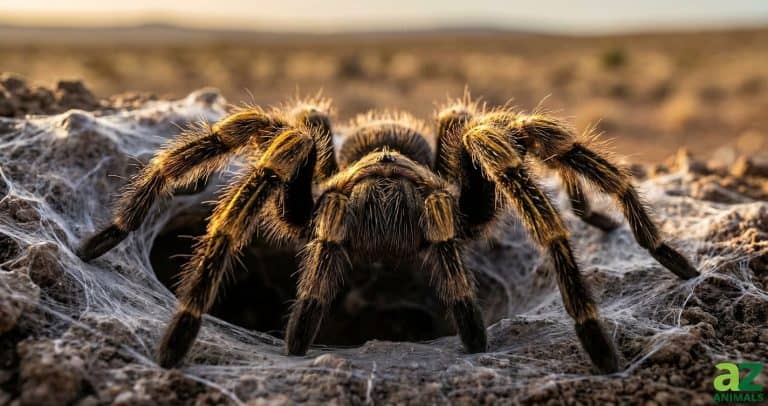
Holothele tarantulas are relatively small and are distinguished by the lack of urticating setae. They are also known to excavate extensive, heavily webbed burrows. H. longipes generally reaches leg spans of 3 to 4 inches. The cephalothorax is covered in long, pinkish-orange setae. Its dark legs and palps are primarily covered in black setae with patches of orange and blue setae. However, H. longipes has been recorded in a variety of habitats from the Caribbean across northern South America, so size and coloration may vary by geographic location.
- Holothele longipes* (L. Koch, 1875)
- Common name: Trinidad pink
- Distribution: Venezuela, Bolivia, Trinidad and Tobago, French Guiana, Suriname, Brazil
Isiboroa Gabriel, Sherwood & Pérez-Miles, 2023
Isiboroa is a recently described genus known from Isiboro-Secure National Park, Department of Cochabamba, Bolivia. The type species, I. hamelae, is primarily brown, with a glossy black abdomen and long, light brown setae. It has type III setae, which are long, barbed hairs that can cause itching, irritation, or inflammation in large vertebrates, including humans. The I. hamelae holotype has a total length of 1.37 inches, and its longest legs (pair IV) measure 1.88 inches. This tarantula inhabits the Bolivian Yungas region at elevations between 4,429 and 4,593 feet.
- Isiboroa hamelae* Gabriel, Sherwood & Pérez-Miles, 2023
- Common name: N/A
- Distribution: Bolivia
Notahapalopus Sherwood, Gabriel, Peñaherrera-R., Osorio, Benavides, Hörweg, Brescovit & Lucas, 2024
The genus Notahapalopus consists of one newly described species and three species that were transferred from Hapalopus. Notahapalopus aymara was moved from Hapalopus to Notahapalopus based on the morphology of the tibia and the male reproductive organ. N. aymara was originally located in Rurrenabaque, Beni, Bolivia, which is part of the Bolivian Amazon Basin. This tarantula is primarily light brown with a dark brown abdomen and legs. The holotype has a total length of 0.83 inches, not including the chelicerae (mouthparts) and spinnerets, and its longest legs (pair IV) measure just over 1 inch.
- Notahapalopus aymara* (Perdomo, Panzera & Pérez-Miles, 2009)
- Common name: N/A
- Distribution: Bolivia, Brazil
Pamphobeteus Pocock, 1901
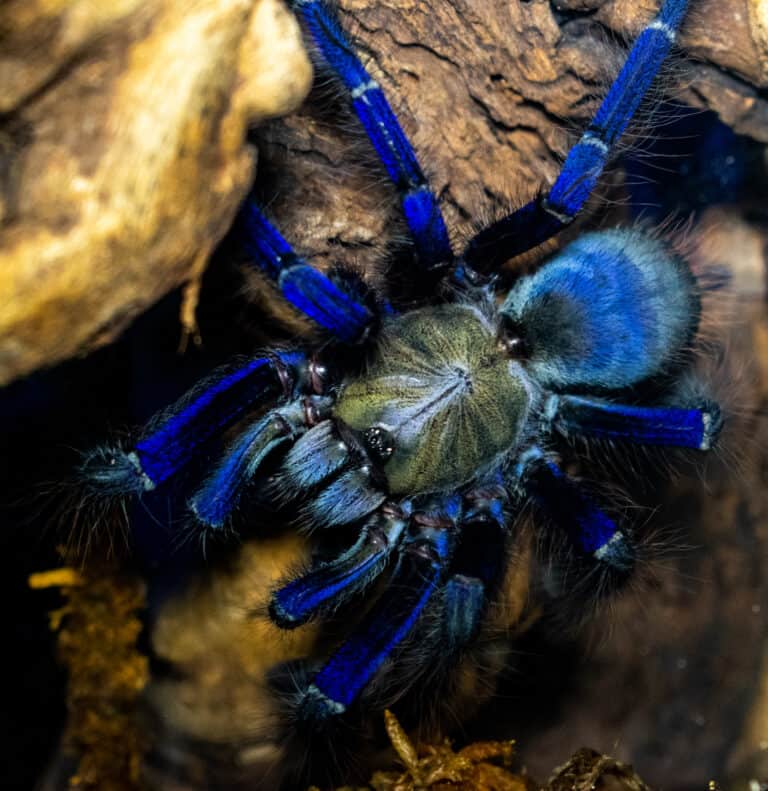
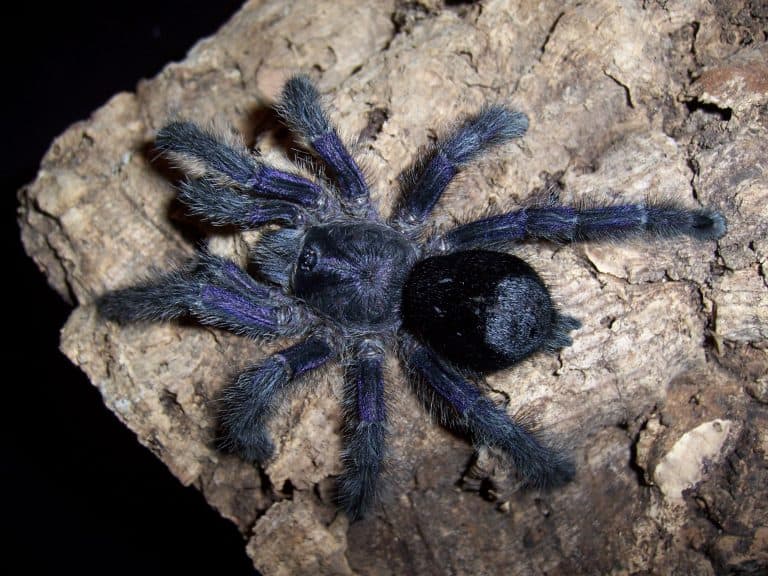
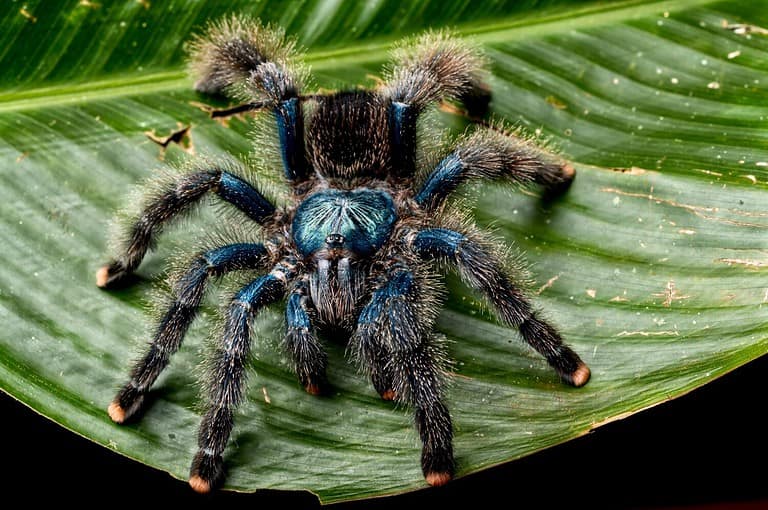
Pamphobeteus spiders are described as very large terrestrial tarantulas with a leg span of up to 9 inches, although some females may grow larger. P. antinous males can be recognized by the bright, violet-blue, iridescent patches of setae on the three inner leg segments, the pedipalps, chelicerae (mouthparts), and thorax. The rest of its setae are dark brown. In contrast, adult females are almost entirely black with long, white setae. P. antinous can be found in the rainforests of Bolivia and Peru.
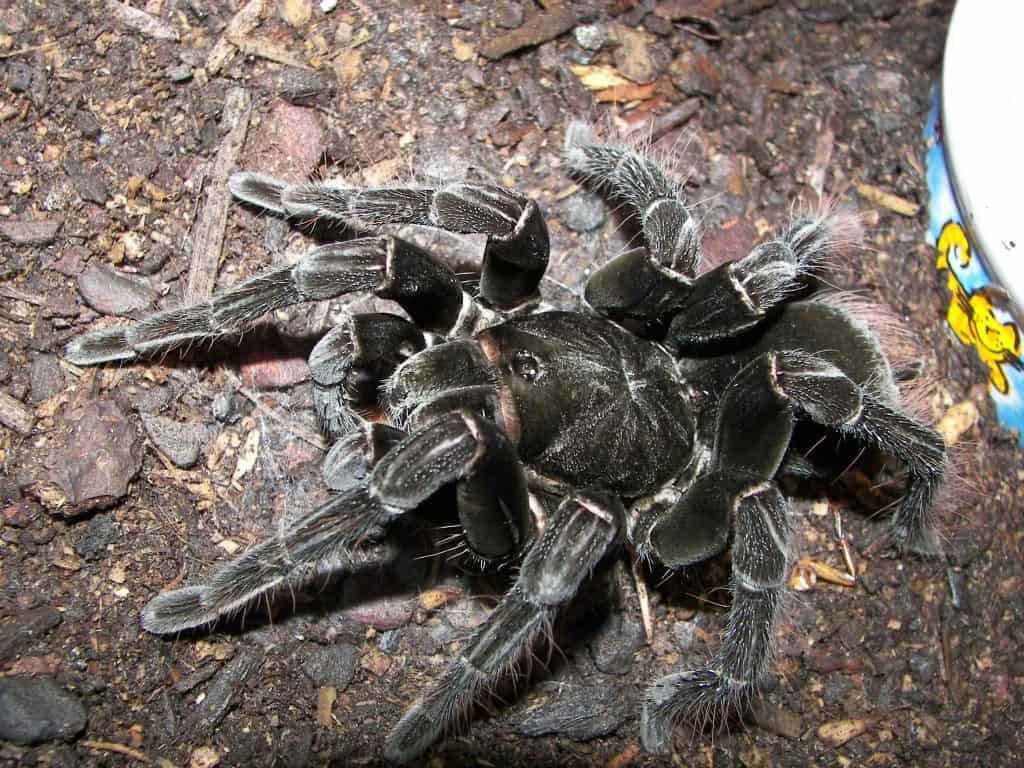
The female Bolivian blueleg, Pamphobeteus antinous, lacks the blue legs of the male and is almost entirely black.
- Pamphobeteus antinous Pocock, 1903
- Common name: Bolivian blue leg, steely blue leg
- Distribution: Peru, Bolivia
Plesiopelma Pocock, 1901
Tarantulas in the genus Plesiopelma are small to medium-sized spiders, often found in tube-like, silk-lined burrows in mountainous regions. The P. manni holotype male is 1.12 inches in total length, with its longest legs (pair IV) measuring 1.67 inches. In preservation, it appears to be mostly brown with brown setae. The female is currently unknown. This tarantula is found in the Dry Chaco region, but in a transitional zone between forest and serrano habitats, at elevations of around 3,280 feet.
- Plesiopelma manni Gabriel, Sherwood & Pérez-Miles, 2023
- Common name: N/A
- Distribution: Bolivia
Pseudhapalopus Strand, 1907
The genus Pseudhapalopus includes only a single species, Pseudhapalopus aculeatus. However, the type material collected by Strand was destroyed during WWII. There are neither scientific illustrations nor useful descriptions, and this tarantula has not yet been recollected. Researchers consider P. aculeatus as nomen dubium, or species inquirenda, meaning its identity is uncertain and requires further investigation.
- Pseudhapalopus aculeatus* Strand, 1907
- Common name: N/A
- Distribution: Bolivia
Umbyquyra Gargiulo, Brescovit & Lucas, 2018
The total length of spiders in the genus Umbyquyra generally ranges from a maximum of 1.57 inches in males to 1.73 inches in females. They are usually dark brown with light brown legs and red or gold setae. The U. acuminatum holotype has a total length of 1.26 inches, and its longest legs (pair II) measure 1.11 inches. It typically has a dark brown body and lighter brown legs. The abdomen and legs are covered with long reddish setae. In Bolivia, these spiders are known from Santa Cruz de la Sierra, Province Sara. It was transferred from Acanthoscurria to Umbyquyra due to the stridulatory bristles on leg I and the second segment of the pedipalps and the morphology of their reproductive organs.
- Umbyquyra acuminatum (Schmidt & Tesmoingt, 2005)
- Common name: N/A
- Distribution: Bolivia, Brazil
Vitriemboli Peñaherrera-R., Ríos-Tamayo, Sherwood, Gabriel, Guerrero-Campoverde, León-E., Mora-Bolaños & Cisneros-Heredia, 2025
Vitriemboli is a new genus that includes the recently transferred Bolivian species Vitriemboli herzogi (formerly Reversopelma). The transfer was based on the urticating setae type and the morphology of the male spider’s reproductive organ. The type specimen was originally collected in the Department of Tarija, between Caiza and Creveaux. It was located in the Dry Chaco region, but in a transitional area between forest and serrano at an elevation of around 3,280 feet. The male type specimen has a total length of 1.37 inches, with its longest legs (pair IV) measuring 2.22 inches. It is light brown overall with a darker area at the front on the carapace and light stripes on its legs.
- Vitriemboli herzogi (Gabriel, Sherwood & Pérez-Miles, 2023)
- Common name: N/A
- Distribution: Bolivia