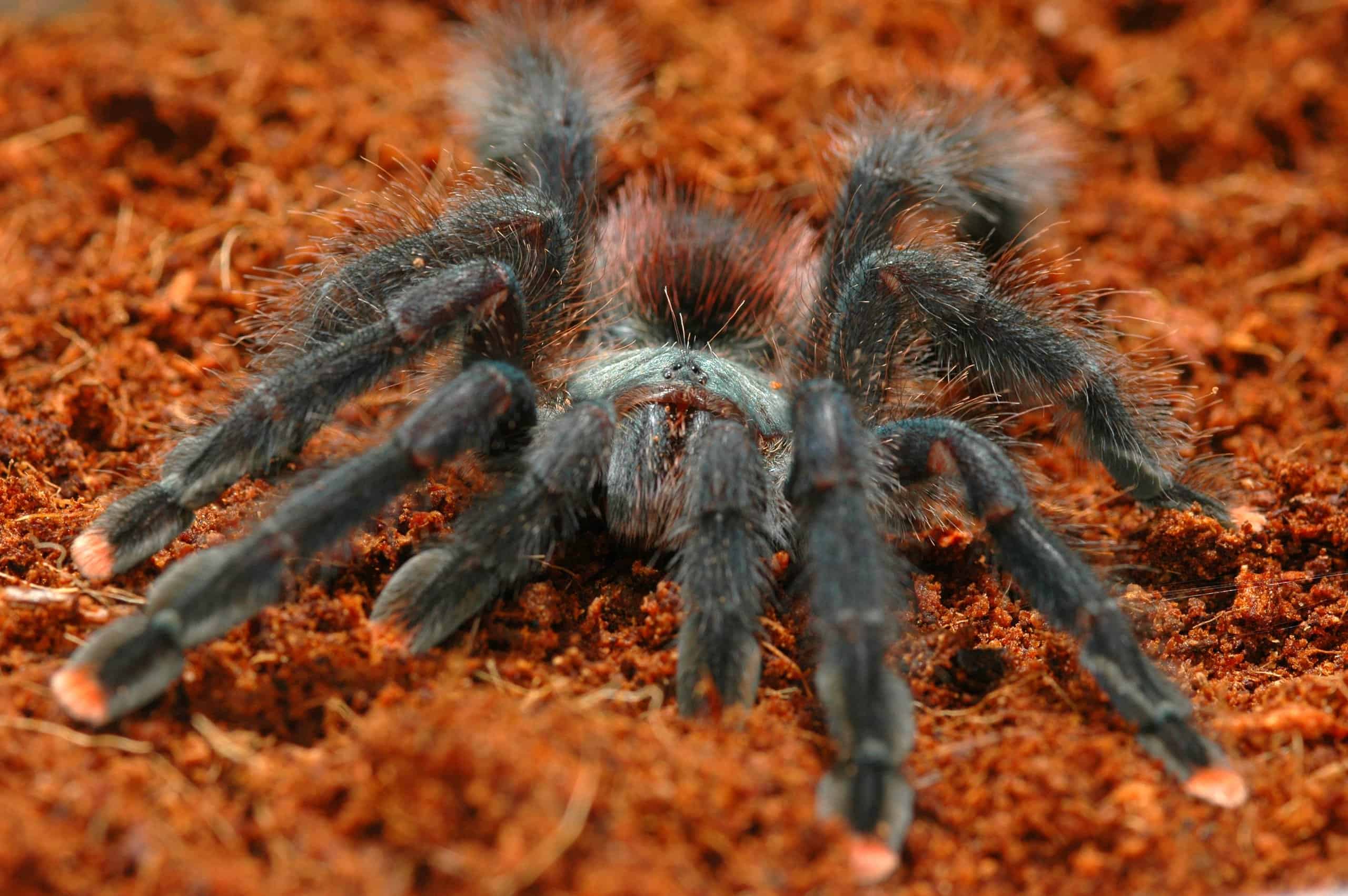

Quick Take
- Genera such as Antikuna and Bistriopelma are high-elevation, cold-weather-adapted tarantulas found in the Peruvian Andes.
- Pamphobeteus spiders can reach very large sizes, with body lengths up to 3.78 inches and leg spans up to 9 inches.
- Euthycaelus species completely lack the urticating setae expected in New World species.
- The genus Ewok is named after the small, furry Star Wars creatures that inhabit the forest moon of Endor in Return of the Jedi.
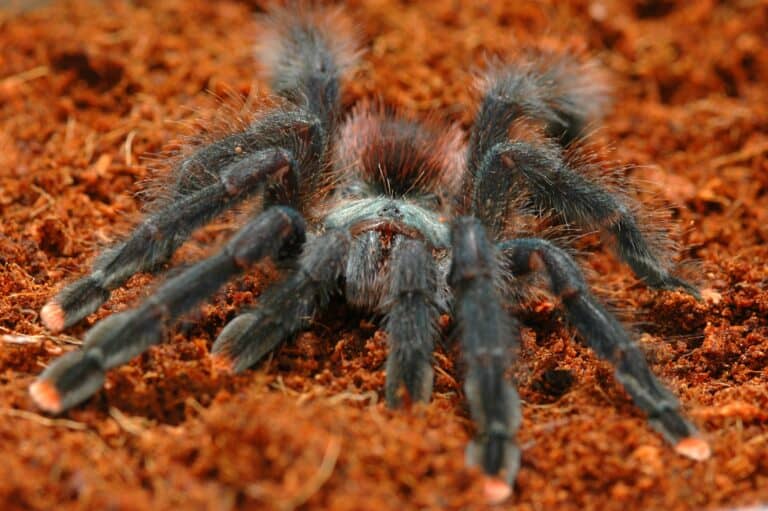
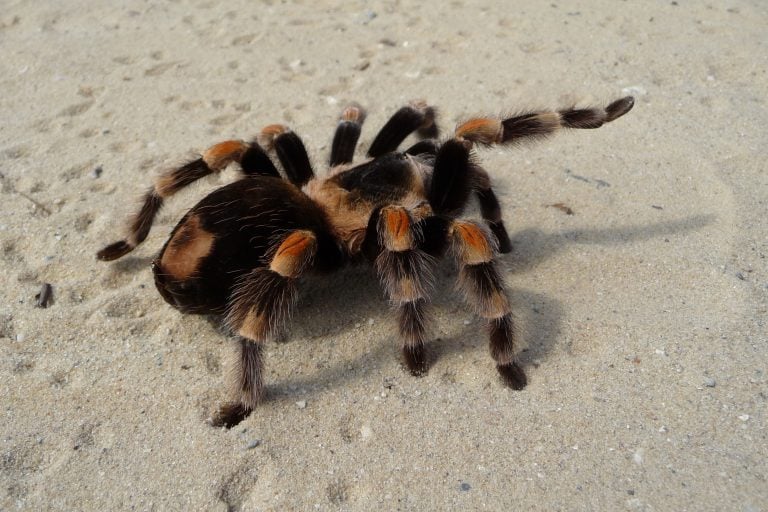
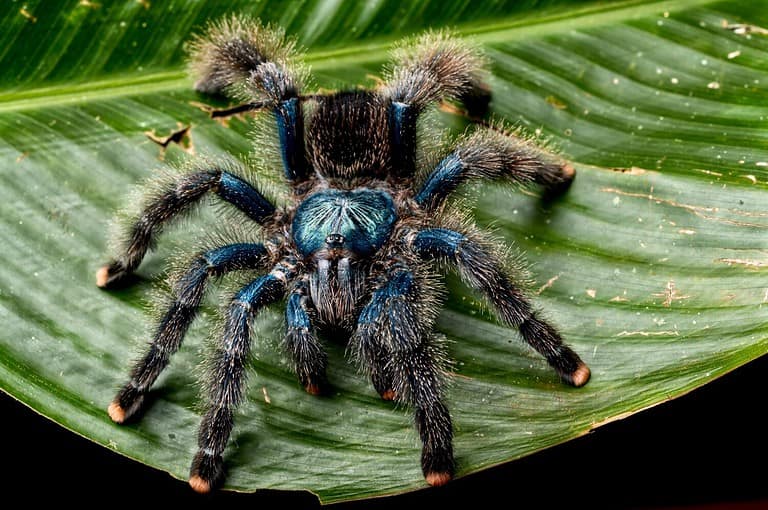
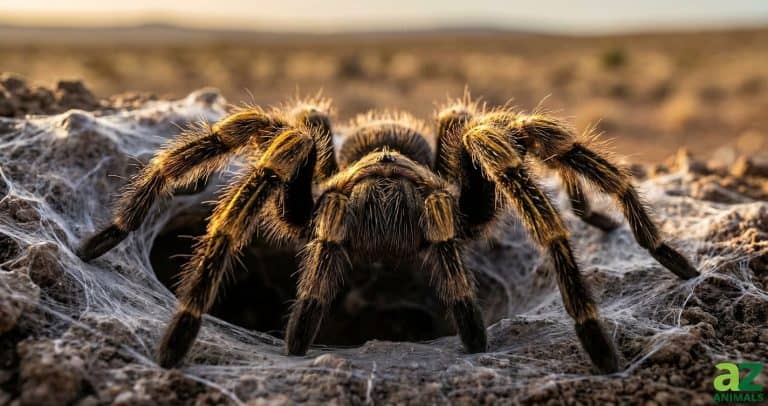
Peru is located on the Pacific coast of South America, just south of the equator. It is considered one of the most biologically diverse countries in the world. The shapes and features of the Andes Mountains provide a wide range of ecological zones and microclimates at varying elevations. Peru also has the second-largest area of the Amazon rainforest. The convergence of the Andes with the Amazon basin allows for great biodiversity, characterized by tens of thousands of endemic plants and animals.

There are nearly 90 known tarantula species ranging from the cloud forests to the lowland rainforests of Peru. The following list includes all currently recognized tarantula species in Peru based on the records of the World Spider Catalog as of December 2025. An asterisk after a species name indicates that it is the type species for the genus. For a comprehensive reference of all tarantula species, see our complete list of tarantula species.
Acanthoscurria Ausserer, 1871
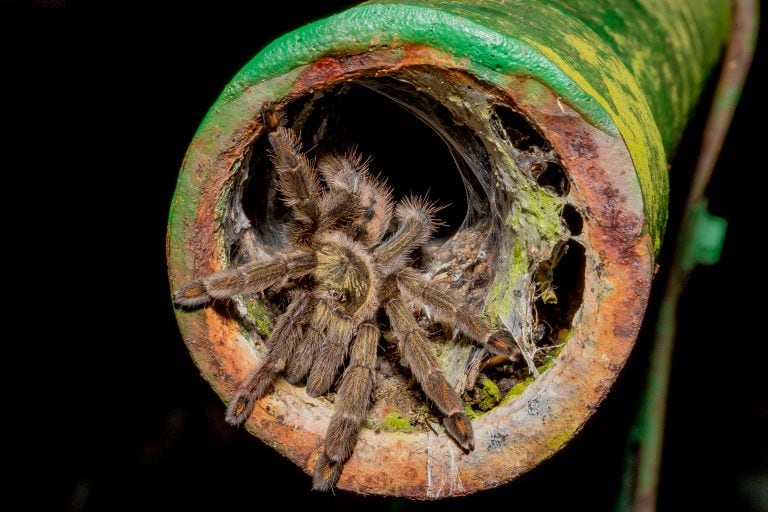
Acanthoscurria tarantulas are large, stout-bodied spiders with leg spans of 7-8 inches. These terrestrial spiders often dig burrows under fallen logs, roots, and rocks in rainforests and other wet, humid, forested areas. A. theraphosides has also been documented to dig tube-like tunnels in ravines. These spiders generally have dark bodies with light-colored bands at the leg joints and long, reddish setae (hairs) on their abdomens and legs. A primary feature of Acanthoscurria tarantulas is stridulating, or noise-making, setae on the coxa and trochanter of leg I (the first and second segments). A. cordubensis has a listed distribution that covers all of South America, with certain exceptions, but specific locality information is not provided for Peru. A. theraphosoides is found in the Amazon region.
- Acanthoscurria cordubensis Thorell, 1894
- Common name: Rusty brown birdeater
- Distribution: South America, except Colombia, Suriname, Ecuador, and Chile
- Acanthoscurria theraphosoides (Doleschall, 1871) –
- Common name: Brazilian black and white tarantula
- Distribution: Peru, Bolivia, Brazil, French Guiana
Anqasha Sherwood & Gabriel, 2022
The genus Anqasha is primarily characterized by patterned abdomens, a central patch of type III urticating setae, and the morphology of the reproductive organs. Anqasha species are small to medium-sized terrestrial spiders with a total length between 0.51 inches and 1.46 inches, not including chelicerae (mouthparts) and spinnerets. They have uniformly covered carapaces, dark lateral stripes on their abdomens, and the femora are darker than the other leg segments. A. picta and A. minaperinensis are known from the Ancash region in north-central Peru, while A. lima is known from the Amancaes Flower Hills in Lima.
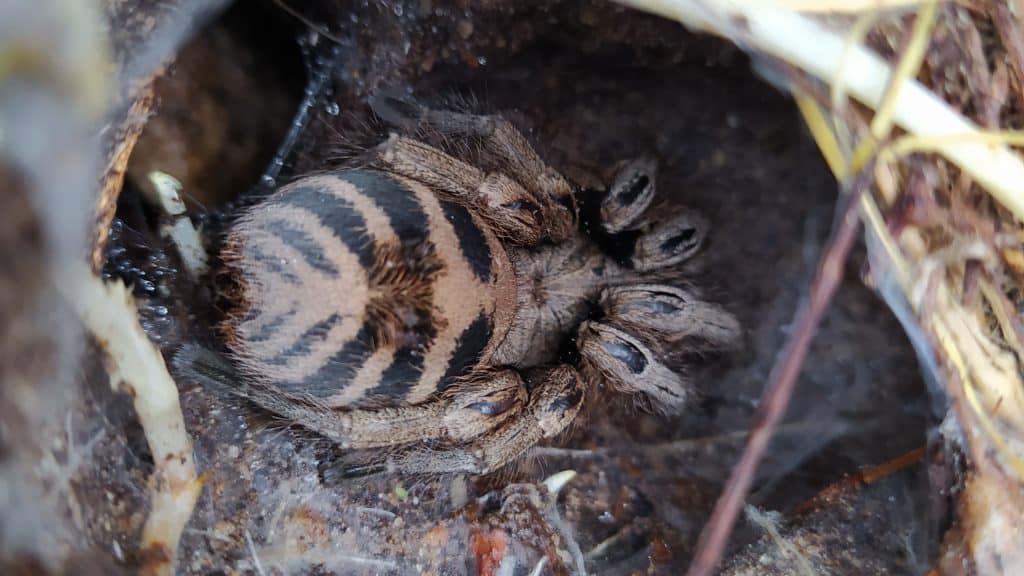
Anqasha picta, the Anqash tiger rump, is found in the Peruvian highlands.
- Anqasha lima Sherwood, Peñaherrera-R., Gabriel, León-E., Rollard, Leguin, Brescovit & Lucas, 2025
- Common name: N/A
- Distribution: Peru
- Anqasha minaperinensis Kaderka, 2023
- Common name: N/A
- Distribution: Peru
- Anqasha picta* (Pocock, 1903)
- Common name: Anqash tiger rump
- Distribution: Peru
Antikuna Kaderka, Ferretti, West, Lüddecke & Hüsser, 2021
The genus Antikuna differs from other genera by the presence of short, spiny setae on the mouthparts at the base of the pedipalps, a single abdominal patch of type III urticating setae, and the morphology of the reproductive organs. They are medium-sized spiders, with a total body length between 0.74 inches and 1.26 inches, excluding the chelicerae and spinnerets. These spiders generally have dark bodies, with the carapace and abdomen uniformly colored. Their legs are covered in setae, and they have long, reddish setae on the abdomen. Some species have stripes on their patellae. Antikuna tarantulas are found in the Andean region of central Peru, in the departments of Junín, Huancavelica, and Ayacucho, at altitudes between 12,585 feet and 15,384 feet.
- Antikuna cernickai Kaderka, Ferretti & Lüddecke, 2021
- Common name: N/A
- Distribution: Peru
- Antikuna cimrmani Kaderka, Ferretti & Hüsser, 2021
- Common name: N/A
- Distribution: Peru
- Antikuna cyanofemur Kaderka, Ferretti & Hüsser, 2021
- Common name: N/A
- Distribution: Peru
- Antikuna majkusi Kaderka, Ferretti & Lüddecke, 2021
- Common name: N/A
- Distribution: Peru
- Antikuna sapallanga Kaderka, Ferretti & Lüddecke, 2021
- Common name: N/A
- Distribution: Peru
- Antikuna urayrumi Ferretti, Kaderka & West, 2021
- Common name: N/A
- Distribution: Peru
- Antikuna valladaresi Ferretti, Kaderka & West, 2021
- Common name: N/A
- Distribution: Peru
Avicularia Lamarck, 1818
Tarantulas in the genus Avicularia are small to medium-sized arboreal spiders with leg spans of 4–6 inches. Avicularia species have urticating setae type II that are transferred to threats by direct contact instead of carried by the air, as in most tarantulas. Most species have pale rings on the ends of their femora, tarsi, and metatarsi (the longest and final two segments), as well as abdominal color patterns that change during development. However, these patterns may be lost as adults. The legs and palps are covered in long guard setae, while the setae on the abdomen are generally more evenly distributed. Avicularia tarantulas inhabit the Peruvian rainforests in the Amazon basin, making their webbed retreats in the leaves, tree trunks, and tree cavities.
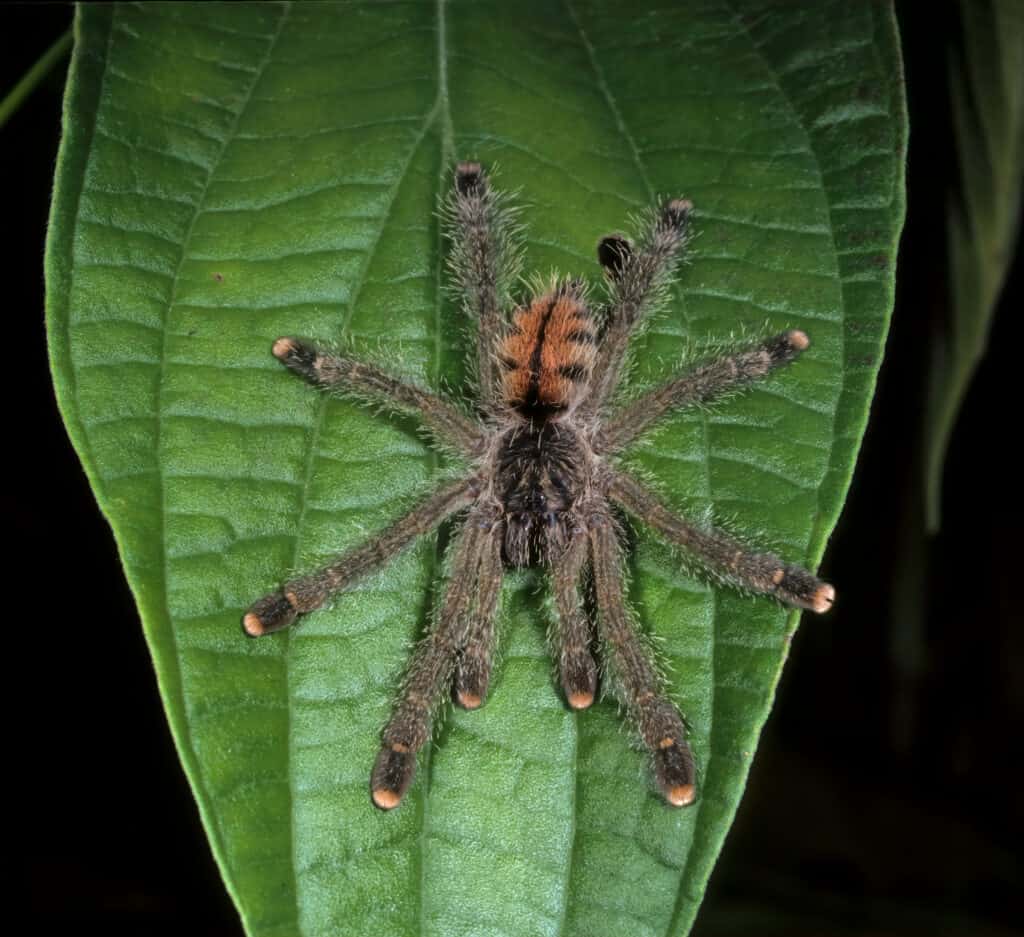
Avicularia avicularia is an arboreal spider native to the Amazon rainforest of Peru.
©Gerry Bishop/Shutterstock.com
- Avicularia avicularia (Linnaeus, 1758)
- Common name: Guyana pinktoe or pink-toed tarantula
- Distribution: Venezuela, Guyana, Suriname, French Guiana, Trinidad and Tobago, Brazil, Peru, Bolivia
- Avicularia hirschii Bullmer, Thierer-Lutz & Schmidt, 2006
- Common name: Red-sided pinktoe
- Distribution: Ecuador, Peru, Brazil
- Avicularia juruensis Mello-Leitão, 1923
- Common name: Amazonian pinktoe or Peruvian pinktoe
- Distribution: Colombia, Ecuador, Peru, Brazil
- Avicularia lynnae Fukushima & Bertani, 2017
- Common name: N/A
- Distribution: Peru, Ecuador
- Avicularia merianae Fukushima & Bertani, 2017
- Common name: N/A
- Distribution: Peru
- Avicularia purpurea Kirk, 1990
- Common name: Ecuadorian purple or Ecuador purple pinktoe
- Distribution: Colombia, Ecuador, Peru
- Avicularia rufa Schiapelli & Gerschman, 1945
- Common name: Yellow-banded pinktoe
- Distribution: Ecuador, Peru, Bolivia, Brazil
Bermejoa Gabriel, Sherwood & Pérez-Miles, 2023
Bermejoa panguana is a newly described species in the genus Bermejoa, which is differentiated from other genera by the morphology of the male and female reproductive organs. It is the second species in this genus and the first record in Peru. This small burrowing tarantula was named for the Panguana biological research station, found in the lowland rainforest of Amazonian Peru.
- Bermejoa panguana Portela & Ríos-Tamayo, 2025
- Common name: N/A
- Distribution: Peru
Bistriopelma Kaderka, 2015
Bistriopelma is a genus of high-elevation, cold-weather-adapted tarantulas primarily found in the Peruvian Andes at altitudes between 11,483 feet and 14,764 feet. They are small to medium-sized spiders, with a total length between 0.49 inches and 0.97 inches, excluding the chelicerae and spinnerets. The genus is characterized by two abdominal patches of type III urticating setae with a stripe of longer, thicker setae on either side, a highly elevated eye tubercle (the raised mound on the carapace that houses its eyes), and the morphology of the genitalia. The male of B. peyoi also has a horn on its carapace. These spiders have dark bodies and legs, with a uniformly colored carapace and abdomen. Their legs are covered with long, pale setae, and most species have stripes on the patellae and tibiae. Bistriopelma spiders burrow under stones on grass- and rock-covered mountain slopes.
- Bistriopelma fabianae Quispe-Colca & Kaderka, 2020
- Common name: N/A
- Distribution: Peru
- Bistriopelma kiwicha Nicoletta, Chaparro, Mamani, Ochoa, West & Ferretti, 2020
- Common name: N/A
- Distribution: Peru
- Bistriopelma lamasi Kaderka, 2015
- Common name: N/A
- Distribution: Peru
- Bistriopelma matuskai Kaderka, 2015
- Common name: N/A
- Distribution: Peru
- Bistriopelma peyoi Nicoletta, Chaparro, Mamani, Ochoa, West & Ferretti, 2020
- Common name: N/A
- Distribution: Peru
- Bistriopelma titicaca Kaderka, 2017
- Common name: N/A
- Distribution: Peru
Chinchaysuyu Ferretti, Chaparro, Ochoa & West, 2023
The recently described monotypic genus Chinchaysuyu is diagnosed primarily based on the unique morphology of the male and female genitalia, as well as the presence of type III urticating setae in a nearly circular central patch on top of the abdomen. C. spinosa has a reddish-brown carapace and a dark abdomen interspersed with long, pale setae. It has black femora with blue iridescence, and the other segments of the legs are dark brown with pale stripes and long, light-colored setae. These are small, high-elevation terrestrial spiders found in the northern Andes, specifically in the Cajamarca and La Encañada departments of northwestern Peru at altitudes of around 13,000 feet above sea level.
- Chinchaysuyu spinosa* Ferretti, Chaparro, Ochoa & West, 2023
- Common name: N/A
- Distribution: Peru
Cymbiapophysa Gabriel & Sherwood, 2020
The genus Cymbiapophysa was created to house Cymbiapophysa velox and Cymbiapophysa yimana, primarily based on genital morphology. This diverse genus has short geographical ranges and elevations. Cymbiapophysa includes small to medium-sized terrestrial spiders with a total body length of 0.75 inches to 1.50 inches. Little is known about the ecology of individual species, as most are only known from museum specimens. The original data for C. yimana has a listed distribution of “Peru or Ecuador,” which researchers believe was due to territorial disputes in the early 20th century.
- Cymbiapophysa yimana Gabriel & Sherwood, 2020
- Common name: N/A
- Distribution: Peru or Ecuador
Cyriocosmus Simon, 1903
The genus Cyriocosmus is known for dwarf tarantulas, but some species, such as C. giganteus, can reach medium size. Total body lengths range from 0.39 inches to 1.25 inches, excluding the chelicerae and spinnerets. Cyriocosmus spiders generally have a black or reddish-brown and black carapace. The abdomen is uniformly dark colored or may have stripes on the sides. It is covered with short black setae, longer, pale setae, and there is a reddish-brown patch of type III urticating setae. The legs may have light-colored, longitudinal stripes. They inhabit the Peruvian Amazon rainforests, lowland regions originally covered with rainforest, and high elevation areas up to 9,842 feet. Burrows are found under stones, fallen logs, leaves, or other organic debris. C. ritae spiders that inhabit Peru exhibit more arboreal habits than those in Brazil, making retreats in tree cavities and on tree trunks.
- Cyriocosmus aueri Kaderka, 2016
- Common name: N/A
- Distribution: Peru
- Cyriocosmus foliatus Kaderka, 2019
- Common name: N/A
- Distribution: Peru
- Cyriocosmus giganteus Kaderka, 2016
- Common name: Giant dwarf tarantula
- Distribution: Peru
- Cyriocosmus itayensis Kaderka, 2016
- Common name: N/A
- Distribution: Peru
- Cyriocosmus paredesi Kaderka, 2019
- Common name: N/A
- Distribution: Peru
- Cyriocosmus peruvianus Kaderka, 2016
- Common name: N/A
- Distribution: Peru
- Cyriocosmus pribiki Pérez-Miles & Weinmann, 2009
- Common name: N/A
- Distribution: Peru
- Cyriocosmus ritae Pérez-Miles, 1998
- Common name: N/A
- Distribution: Peru, Brazil
- Cyriocosmus sellatus (Simon, 1889)
- Common name: N/A
- Distribution: Peru, Brazil
Euathlus Ausserer, 1875
The spiders in the genus Euathlus are generally small to medium-sized terrestrial spiders. The genus is distinguished by the morphology of the genitalia and a single patch of type III and type IV urticating setae in the middle of the abdomen. E. vanessae has a dark brown carapace covered with light brown setae. The legs are dark brown with long golden-brown setae. Femora, patellae, tibiae, and metatarsi have longitudinal stripes. The abdomen is dark brown with coppery setae and a large patch of golden-brown urticating setae. The distribution of E. vanessae is the northernmost limit for this genus. Specimens were collected in the high Andean zone from Mariscal Nieto province, Moquegua region at elevations between 10,170 feet and 13,780 feet. The area is cold and dry with rocky soil. These spiders typically dig tubular burrows under stones.
- Euathlus vanessae Quispe-Colca & Ferretti, 2021
- Common name: N/A
- Distribution: Peru
Euthycaelus Simon, 1889
Members of the genus Euthycaelus are medium-sized terrestrial tarantulas. These spiders lack urticating setae, which is uncommon in New World tarantula species. E. janae is described from the holotype female located in the Natural History Museum, London. It has a total body length of 1.03 inches, and its longest legs (pair IV) measure approximately 1.25 inches. This species is known only from the Peruvian Amazon, in the Solimões–Japurá moist forests.
- Euthycaelus janae Sherwood & Gabriel, 2022
- Common name: N/A
- Distribution: Peru
Ewok Peñaherrera-R., Sherwood, Gabriel, León-E., Rollard, Leguin, Brescovit & Lucas, 2025
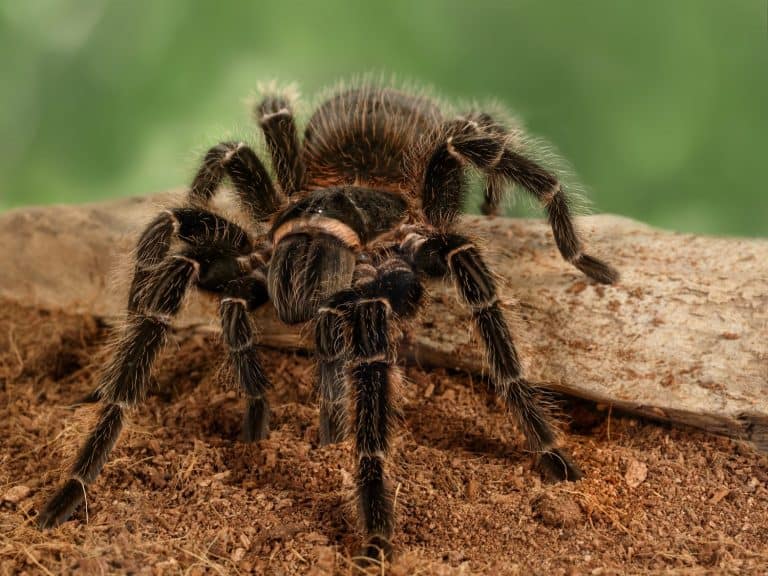
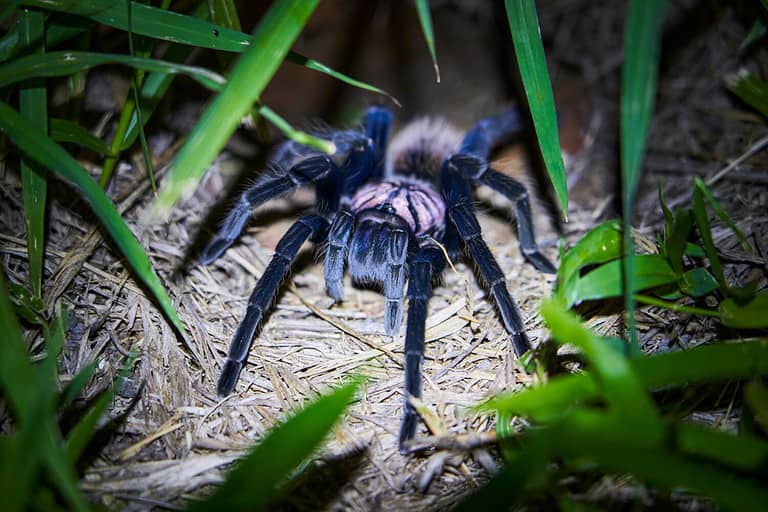
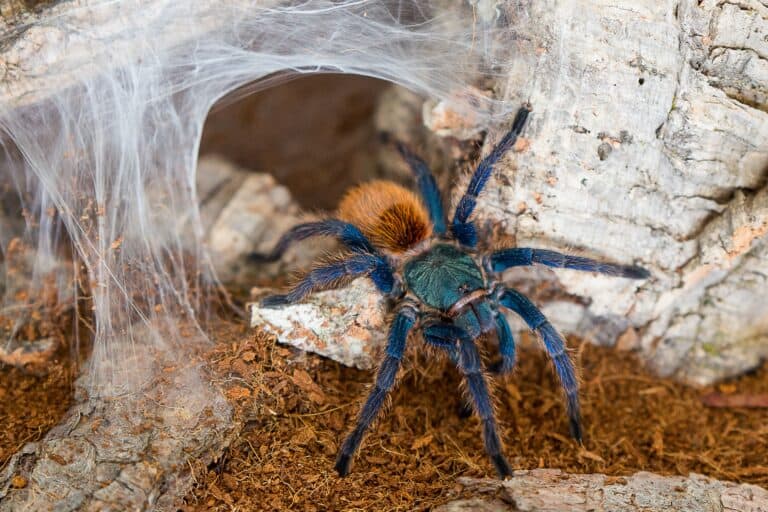
Ewok is a recently described genus for two newly described and six newly combined species transferred from Thrixopelma. The genus is named after the small, furry Star Wars creatures that inhabit the forest moon of Endor in Return of the Jedi. Ewok species differ from similar genera by the presence of type IV urticating setae, and females lack the dorsal abdominal pattern found in female members of Thrixopelma. They are medium to large-sized burrowing spiders with a total body length of up to 2.7 inches. Ewok species are found at low altitude areas such as Lima, as well as high-elevation regions in the Andes mountains.
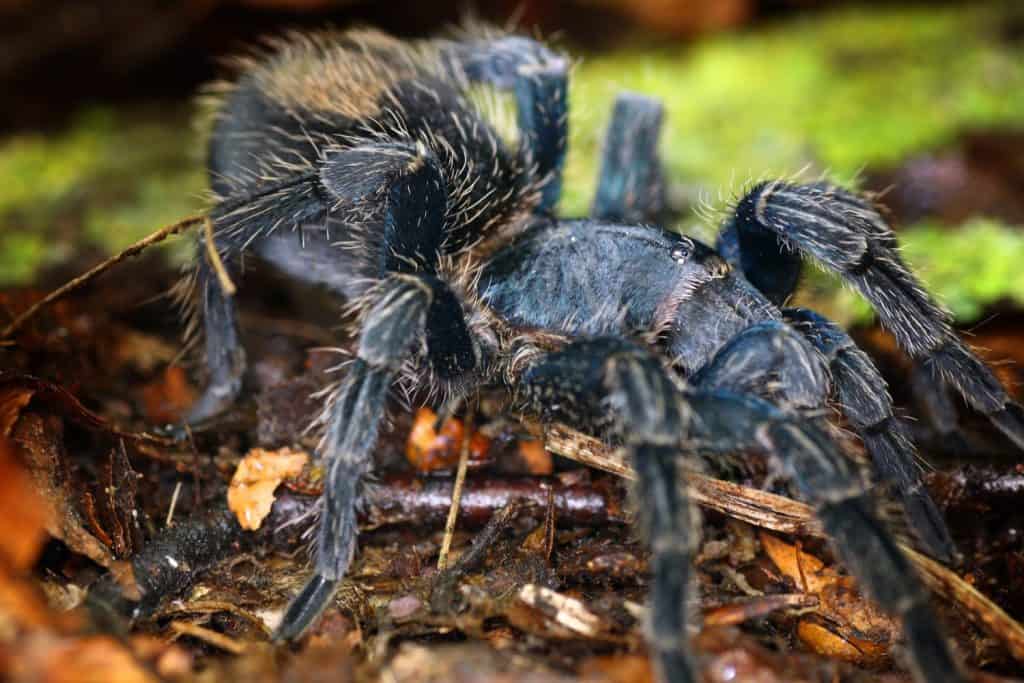
Ewok cyaneolus is a medium-sized tarantula with a leg span of up to 6 inches.
©Geleedpotigen/Shutterstock.com
- Ewok aycarabma Sherwood, Gabriel, Peñaherrera-R., León-E., Rollard, Leguin, Brescovit & Lucas, 2025
- Common name: N/A
- Distribution: Peru
- Ewok aymara (Chamberlin, 1916)
- Common name: N/A
- Distribution: Peru
- Ewok christineae (Sherwood & Gabriel, 2024)
- Common name: N/A
- Distribution: Peru
- Ewok cyaneolus (Schmidt, Friebolin & Friebolin, 2005)
- Common name: Cobalt red rump
- Distribution: Peru
- Ewok eliseanneae (Sherwood & Gabriel, 2024)
- Common name: N/A
- Distribution: Peru
- Ewok kainae Gabriel, Sherwood, Peñaherrera-R., León-E., Rollard, Leguin, Brescovit & Lucas, 2025
- Common name: N/A
- Distribution: Peru
- Ewok kimraykawsaki (Signorotto, Ferretti, Chaparro, Ochoa & West, 2025)
- Common name: N/A
- Distribution: Peru
- Ewok pruriens (Schmidt, 1998)
- Common name: Peruvian green velvet tarantula
- Distribution: Peru
Hapalotremus Simon, 1903
Hapalotremus tarantulas are small to medium-sized spiders with leg spans of up to 4.5 inches. One distinguishing feature of these tarantulas is the presence of white or red type III setae on the abdomen. Members of this genus are found from the western Andean region in central Peru to northwestern Argentina. Hapalotremus spiders favor high-altitude cloud forests and rocky, grass-covered mountains at elevations between 4,265 and 14,763 feet. Peruvian species are known from Huancarayoc, Michi Michani Cunca, Ollachea–Corani, Upis, and Usicayos–Quetapalo. These spiders are often found in short burrows among fallen logs or under stones.
- Hapalotremus apasanka Sherwood, Ferretti, Gabriel & West, 2021
- Common name: N/A
- Distribution: Peru
- Hapalotremus carabaya Ferretti, Cavalllo, Chaparro, Ríos-Tamayo, Seimon & West, 2018
- Common name: N/A
- Distribution: Peru
- Hapalotremus chespiritoi Ferretti, Cavalllo, Chaparro, Ríos-Tamayo, Seimon & West, 2018
- Common name: N/A
- Distribution: Peru
- Hapalotremus hananqheswa Sherwood, Ferretti, Gabriel & West, 2021
- Common name: N/A
- Distribution: Peru
- Hapalotremus kaderkai Sherwood, Ferretti, Gabriel & West, 2021
- Common name: N/A
- Distribution: Peru
- Hapalotremus major (Chamberlin, 1916)
- Common name: Peruvian white-banded tarantula
- Distribution: Peru
- Hapalotremus marcapata Ferretti, Cavalllo, Chaparro, Ríos-Tamayo, Seimon & West, 2018
- Common name: N/A
- Distribution: Peru
- Hapalotremus munaycha Ferretti, Chaparro, Ochoa & West, 2025
- Common name: N/A
- Distribution: Peru
- Hapalotremus perezmilesi Ferretti, Cavalllo, Chaparro, Ríos-Tamayo, Seimon & West, 2018
- Common name: N/A
- Distribution: Peru
- Hapalotremus vilcanota Ferretti, Cavalllo, Chaparro, Ríos-Tamayo, Seimon & West, 2018
- Common name: N/A
- Distribution: Peru
Isiboroa Gabriel, Sherwood & Pérez-Miles, 2023
Isiboroa is a recently described genus to accommodate the new species, Isiboroa hamelae. Acanthoscurria sacsayhuaman was transferred to Isiboroa based on genitalia morphology and the lack of a stridulation organ. The holotype has a total body length of 1.3 inches. Preserved in alcohol, its carapace and chelicerae are coppery-brown, with black legs and pedipalps. The edges of the carapace, coxae, and trochanters of the legs are covered with abundant pale setae. This terrestrial spider was found near the ancient capital of the Inca Empire, Sacsayhuamán, near Cusco in the valleys of the Eastern Cordillera of the Andes. The area is characterized by shrubs, thorny vegetation, and forested areas. I. sacsayhuaman was found at elevations from 12,106 feet to 12,411 feet.
- Isiboroa sacsayhuaman (Ferretti, Ochoa & Chaparro, 2016)
- Common name: N/A
- Distribution: Peru
Lasiodorides Schmidt & Bischoff, 1997
Members of Lasiodorides are medium to large spiders between 1.96 and 2.36 inches in total body length. They are distinguished by the genitalia morphology, the absence of stridulatory setae on the coxae or trochanters of leg I and the palp, feathery setae on the retrolateral pad of femora IV in both sexes, and type I urticating setae. The carapace is more oval-shaped and covered in setae, while the abdomen is covered with long setae and has no patterning. The legs are covered in spiny setae, and striping is apparent on the patellae, tibiae, and metatarsi of legs I–IV, as well as the patellae, tibiae, and tarsi of the pedipalps. The type locality of L. polycuspulatus is listed as the highlands of Peru, while L. striatus is listed only as “Peru.” Researchers note that the original specimens were derived from the pet trade, which is why collection information is insufficient.
- Lasiodorides polycuspulatus* Schmidt & Bischoff, 1997
- Common name: N/A
- Distribution: Peru
- Lasiodorides striatus (Schmidt & Antonelli, 1996)
- Common name: N/A
- Distribution: Peru
Megaphobema Pocock, 1901
Members of the genus Megaphobema are large spiders with leg spans of 6-8 inches. M. velvetosoma is a burrowing tarantula found in the Amazon rainforest region. The females are described as having a velvety brown coloration, while males are considered more of a blackish-brown. These tarantulas have long, light-colored setae on their legs and long, vivid reddish setae on their abdomens. The original description of the genus states that legs III and IV are “longer and stronger” than legs I and II.
- Megaphobema velvetosoma Schmidt, 1995
- Common name: Ecuadorian brown velvet tarantula
- Distribution: Ecuador, Peru, Brazil
Murphyarachne Sherwood & Gabriel, 2022
Murphyarachne is a monotypic genus consisting of only Murphyarachne ymasumacae. The genus is diagnosed by the morphology of the genitalia, specialized stridulating setae on the retrolateral palpal trochanter, type I (subtype d) urticating setae, and the lack of an abdominal pattern. The holotype female specimen is a small terrestrial tarantula with a total length of 1.09 inches, and its longest legs (pair IV) measure 1.07 inches. Its color is alcohol preserved brown, and it has a pattern radiating from the center of the carapace. This tarantula is known from Contamana, a city on the Ucayali River, which is a major tributary of the Amazon River.
- Murphyarachne ymasumacae* Sherwood & Gabriel, 2022
- Common name: N/A
- Distribution: Peru
Neischnocolus Petrunkevitch, 1925
Neischnocolus species can be differentiated from nearly all other genera by the complicated morphology of their genitalia and the presence of type I (subtype d) urticating setae. They are generally small, brown or reddish-brown burrowing tarantulas with short, reddish-brown or dark brown setae on their legs. Some species also have pale banding at their leg joints. Their abdomens are typically dark with long reddish setae on the top and sides, and some species may have light abdominal patterns. N. armihuariensis is from the Cusco region. N. iquitos is from the Iquitos area in the northern Amazon. It has a more orange-colored carapace and a patterned abdomen covered with pinkish setae. Its brownish-grey legs have pale banding and are covered in light pinkish setae.
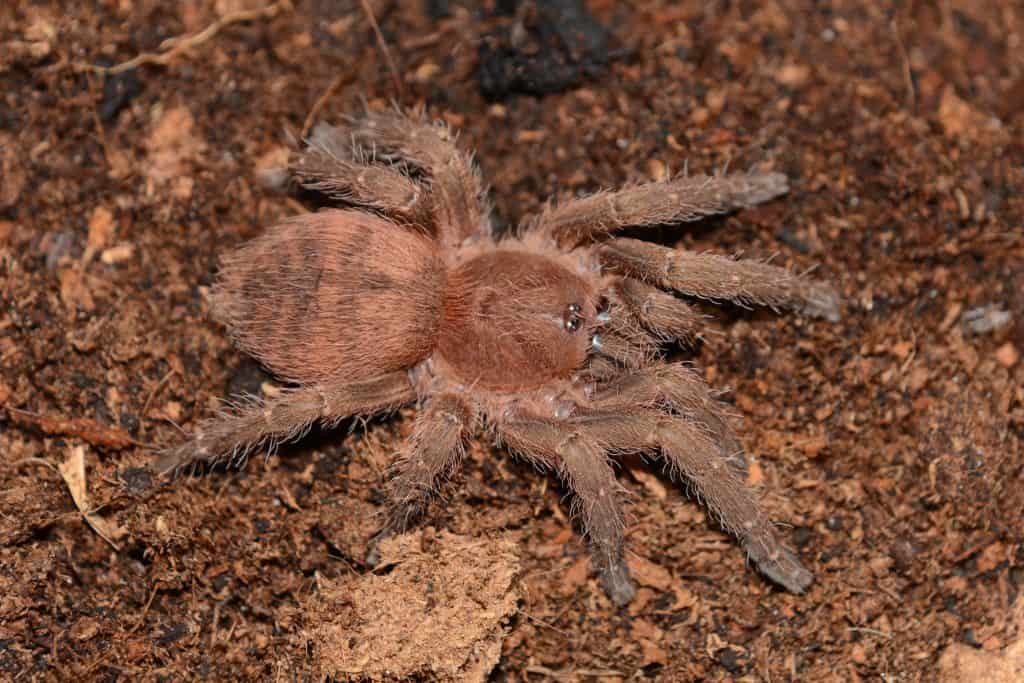
Neischnocolus iquitos is a dwarf tarantula species with a leg span of only around 3 inches.
- Neischnocolus armihuariensis (Kaderka, 2014)
- Common name: N/A
- Distribution: Peru
- Neischnocolus iquitos Kaderka, 2020
- Common name: Peruvian sunburst tarantula
- Distribution: Peru
Pamphobeteus Pocock, 1901
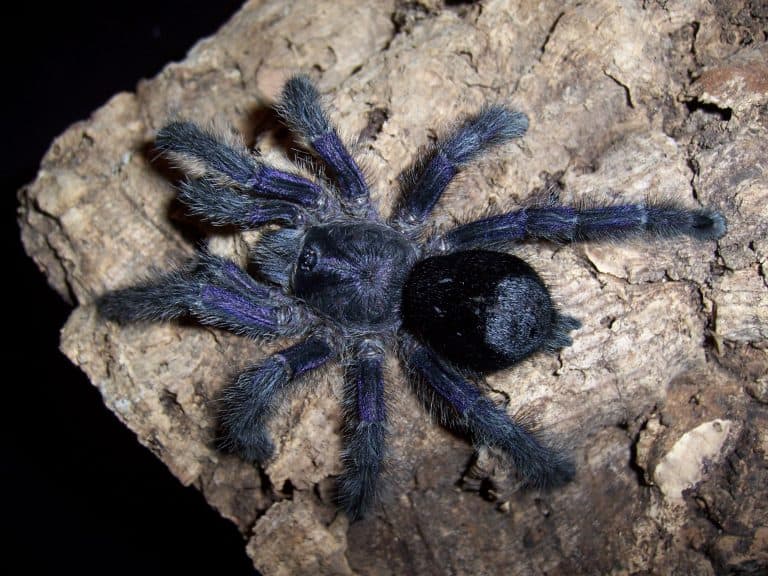
Members of the genus Pamphobeteus are medium to very large terrestrial tarantulas with a body size of up to 3.78 inches and a leg span of up to 9 inches. Many Pamphobeteus species have dark bodies with colored markings on either side of the cephalic region (head). These markings are often pink or purple and may be linked to radial striations on the carapace. They sometimes also have longitudinal stripes on their legs. There is sexual dimorphism in relation to color in some species, such as P. antinous. Males have a dark, bluish-black carapace and a black abdomen with long, reddish setae. The setae on the three inner segments, pedipalps, chelicerae, and cephalothorax are iridescent violet-blue. The rest of their legs are covered in dark brown setae. Females are almost entirely black with long, white setae. P. antinous is found in the Amazon rainforest regions of Peru and Bolivia.
- Pamphobeteus antinous Pocock, 1903
- Common name: Bolivian blue leg birdeater or steely blue leg
- Distribution: Peru, Bolivia
Reversopelma Schmidt, 2001
Tarantulas in the genus Reversopelma are primarily differentiated by the presence of unique aspects in the male’s genitalia, the morphology of the female’s reproductive organs, and urticating setae type I on the abdomens of both sexes. Members of this genus are small to medium-sized burrowing burrowing spiders. The male holotype specimen of R. petersi was collected along the Pastaza River. However, it is unclear whether it was in the Peruvian or Ecuadorian Amazonian lowlands. The female is described as having a light brown cephalothorax and a black abdomen, while the male is said to have darker coloration overall.
- Reversopelma petersi* Schmidt, 2001
- Common name: N/A
- Distribution: Ecuador or Peru
Spinosatibiapalpus Gabriel & Sherwood, 2020
As the genus name indicates, Spinosatibiapalpus is differentiated by the strong spination on the forward-facing side of the male palpal tibia, type I urticating setae, and the morphology of the genitalia. Spiders in this genus range from small to large, measuring from 0.79 inches to 2.36 inches in total body length. The S. bora male holotype is 1.07 inches in total length, and the longest legs (pair IV) are 2.06 inches. S. bora was originally collected from Pebas District in the Peruvian Amazon basin. This species was named to honor the indigenous Bora people of the Amazonian lowlands.
- Spinosatibiapalpus bora Sherwood & Gabriel, 2021
- Common name: N/A
- Distribution: Peru
Thrixopelma Schmidt, 1994
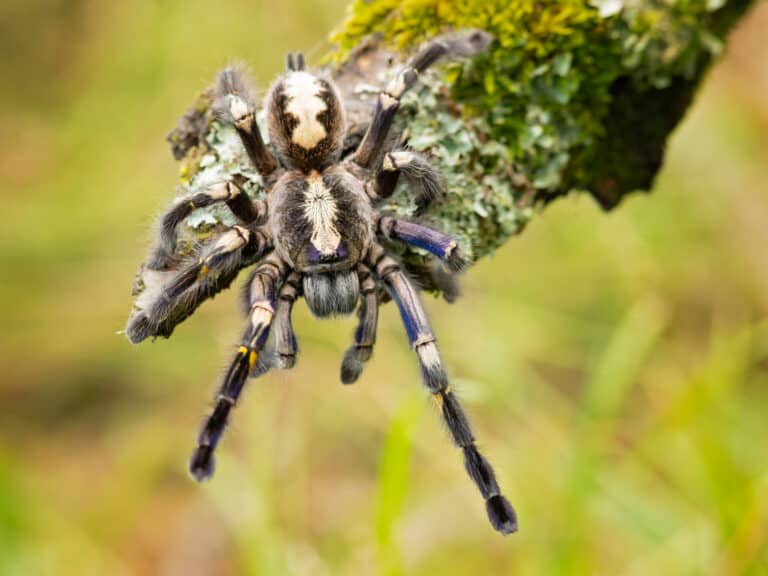
Tarantulas in the genus Thrixopelma are medium to large terrestrial spiders with a total body length between 1.38 inches and 2.36 inches. These spiders are primarily distinguished by urticating setae type III or III+IV on the abdomen, the morphology of the genitalia, two tibial apophyses (protrusions) on leg I in males, and domed or triangular apophyses on the palpal tibia in males. Females have also been recorded to have a longitudinal dark stripe on the abdomen. Thrixopelma species can be found in the Amazonian rainforest, the coastal dry forest, and the Andean dry forest. T. ockerti is semi-arboreal and has been found in the vicinity of Iquitos in the Great Plains of the Amazon Basin. T. choquequirao is known to inhabit the dry Andean forest in the Department of Cusco in south-central Peru.
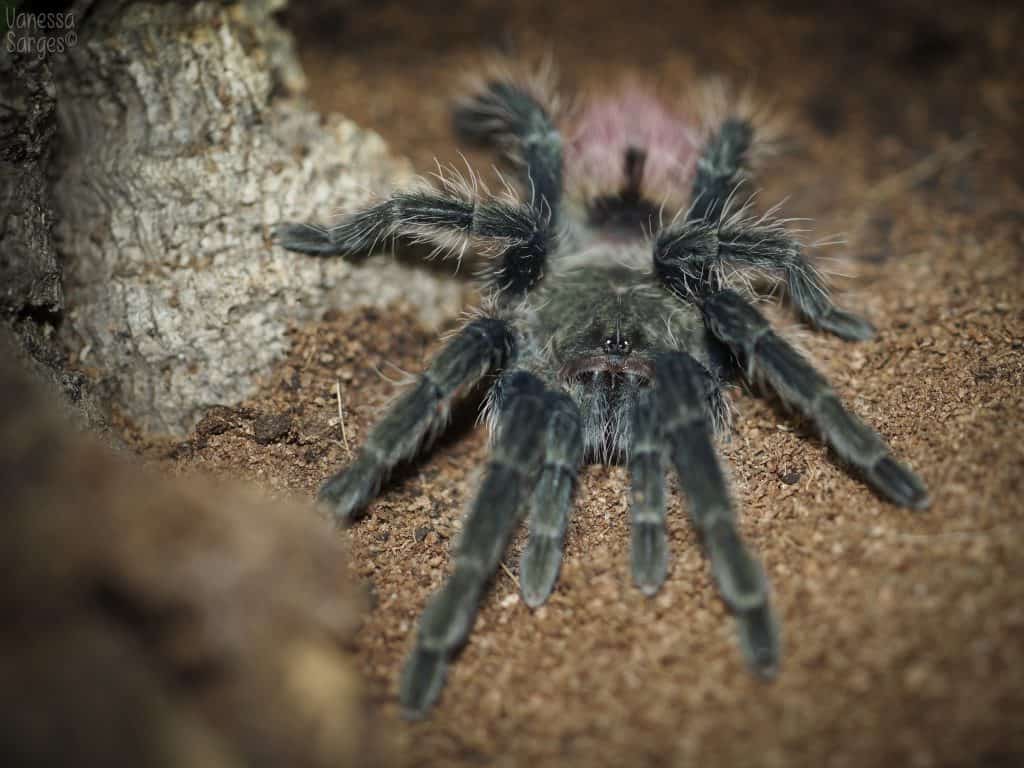
Thrixopelma ockerti is also known as the Peruvian flame rump tarantula.
- Thrixopelma choquequirao Millenpeier, Chaparro, Ochoa, Ferretti & West, 2024
- Common name: N/A
- Distribution: Peru
- Thrixopelma ockerti* Schmidt, 1994
- Common name: Peruvian flame rump
- Distribution: Peru
Tmesiphantes Simon, 1892
Tmesiphantes tarantulas are small to medium-sized burrowing spiders. They can primarily be differentiated by a thickened femur III, a rounded sternum, and urticating hair types III and IV on the abdomen. T. intiyaykuy is known from the area around Abancay in Peru’s Apurímac region. It has a dark brown carapace with a darker cephalic (head) region and light brown setae on the edges. The abdomen is dark brown with dark to light brown setae and a light brown patch of urticating setae. The legs are dark brown with light brown setae. Females have long yellow setae on the abdomen and darker brown femora. T. janeira was previously known as Magulla janeirus before its transfer to Tmesiphantes in 2019. It is currently considered species inquirenda (of doubtful identity) due to the lack of detailed information.
- Tmesiphantes intiyaykuy Nicoletta, Ferretti, Chaparro & West, 2022
- Common name: N/A
- Distribution: Peru
- Tmesiphantes janeira (Keyserling, 1891)
- Common name: N/A
- Distribution: Peru
Urupelma Kaderka, Lüddecke, Řezáč, Řezáčová & Hüsser, 2023
Urupelma is a recently described genus created to house 11 new species and the newly transferred Homoeomma peruvianum, as it did not match the diagnostic criteria for the morphology of the male and female genitalia. Like the species in their sister group, Thrixopelma, members of Urupelma share type III or III+IV urticating setae in a central abdominal patch. All currently known species are found exclusively in Peru, primarily in high montane environments.
- Urupelma ashaninka Kaderka, Lüddecke, Řezáč, Řezáčová & Hüsser, 2023
- Common name: N/A
- Distribution: Peru
- Urupelma atarraz Kaderka, Lüddecke, Řezáč, Řezáčová & Hüsser, 2023
- Common name: N/A
- Distribution: Peru
- Urupelma awanqay Kaderka, Lüddecke, Řezáč, Řezáčová & Hüsser, 2023
- Common name: N/A
- Distribution: Peru
- Urupelma dianae Kaderka, Lüddecke, Řezáč, Řezáčová & Hüsser, 2023
- Common name: N/A
- Distribution: Peru
- Urupelma humantay Kaderka, 2024
- Common name: N/A
- Distribution: Peru
- Urupelma johannae Kaderka, Lüddecke, Řezáč, Řezáčová & Hüsser, 2023
- Common name: N/A
- Distribution: Peru
- Urupelma machiguenga Kaderka, Lüddecke, Řezáč, Řezáčová & Hüsser, 2023
- Common name: N/A
- Distribution: Peru
- Urupelma megantonianum Kaderka, Lüddecke, Řezáč, Řezáčová & Hüsser, 2023
- Common name: N/A
- Distribution: Peru
- Urupelma pampas Kaderka, Lüddecke, Řezáč, Řezáčová & Hüsser, 2023
- Common name: N/A
- Distribution: Peru
- Urupelma peruvianum* (Chamberlin, 1916)
- Common name: Peruvian blue tarantula
- Distribution: Peru
- Urupelma sanctimariae Kaderka, Lüddecke, Řezáč, Řezáčová & Hüsser, 2023
- Common name: N/A
- Distribution: Peru
- Urupelma sanctitheresae Kaderka, Lüddecke, Řezáč, Řezáčová & Hüsser, 2023
- Common name: N/A
- Distribution: Peru
- Urupelma veronicae Kaderka, Lüddecke, Řezáč, Řezáčová & Hüsser, 2023
- Common name: N/A
- Distribution: Peru
Warmiru Peñaherrera-R., Sherwood, Gabriel, León-E., Rollard, Leguin, Brescovit & Lucas, 2025
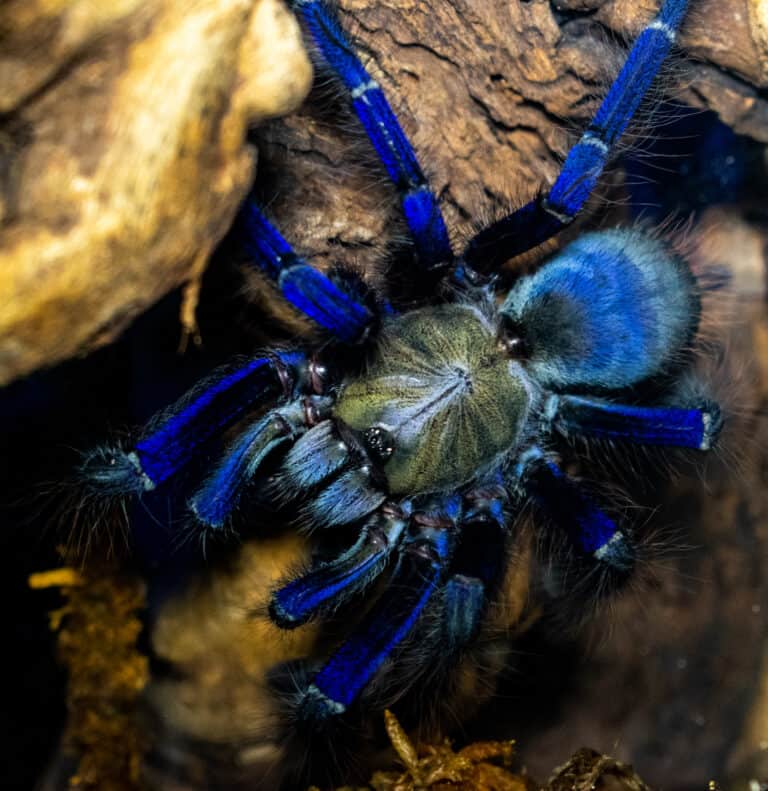
Warmiru is a recently described genus created in 2025 to accommodate former members of Thrixopelma. These tarantulas differ from Thrixopelma in the morphology of their reproductive organs and the lack of a dark longitudinal stripe on the abdomen of females. Warmiru tarantulas are medium to large-sized spiders. W. longicolli is grey-blue to midnight blue and may have a more metallic sheen after molting. They have darker femora, light-colored longitudinal stripes on their legs, and long, light greyish-blue setae on both their legs and abdomen. Researchers note that additional fieldwork is necessary to determine the accurate distribution of this species. W. lagunas appears very similar to W. longicolli, but they differ in the structure of the male genitalia. It is known from the area south of Lagunas, Peru.
- Warmiru lagunas (Schmidt & Rudloff, 2010)
- Common name: May also be called blue zebra, but W. longcolli is more commonly known by this name
- Distribution: Peru
- Warmiru longicolli (Schmidt, 2003)
- Common name: Peruvian blue zebra, Midnight blue birdeater
- Distribution: Ecuador, Peru