
Quick Take
- Mexico ranks as the second-most diverse country for tarantulas with over 100 native species.
- The unique geography of Mexico offers a wide variety of habitat niches where tarantulas can live and thrive.
- All Brachypelma tarantulas are listed by CITES to prevent them from becoming endangered or extinct due to unsustainable international trade.
- The genus Hemirrhagus includes rare, cave-dwelling tarantula species.
Mexico has more tarantula species than any other country in the world except Brazil. There are over 100 tarantula species native to Mexico. The country’s diverse geography includes tropical rainforests, thorn forests, pine-oak woodlands, deserts, mountains, and even caves, providing specific niches for many different tarantula species. Mexico is home to several well-known tarantulas in the pet trade, including species from the Brachypelma and Aphonopelma genera, which are highly sought after. In fact, all Brachypelma tarantulas are listed by CITES (the Convention on International Trade in Endangered Species of Wild Fauna and Flora) to ensure that international trade does not threaten their long-term survival as a species.
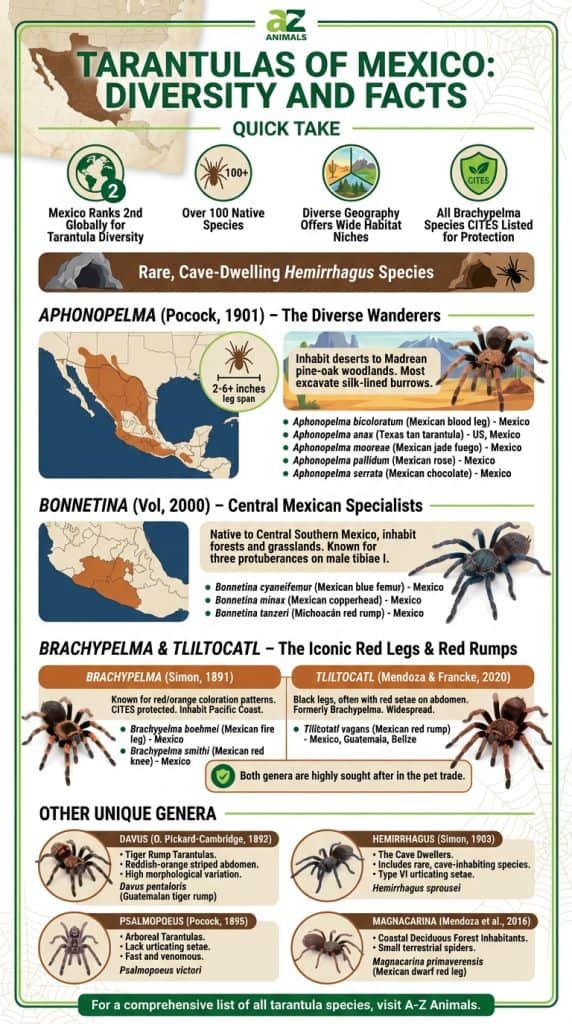
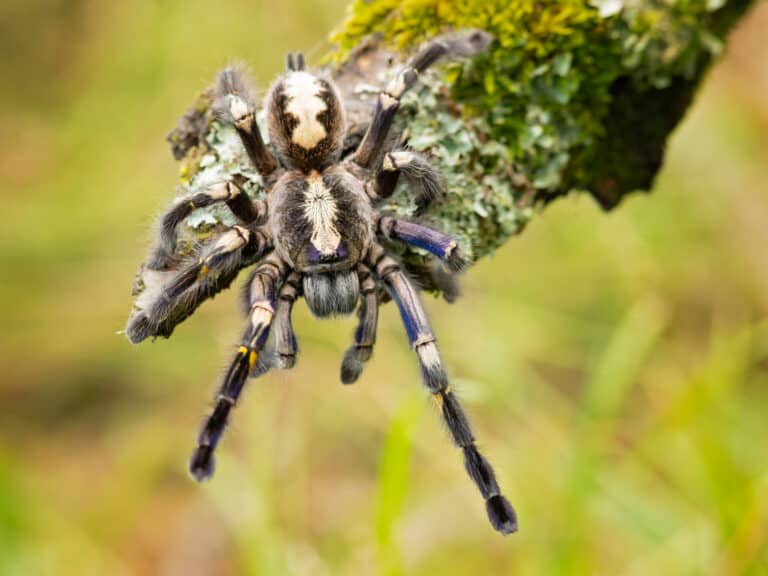
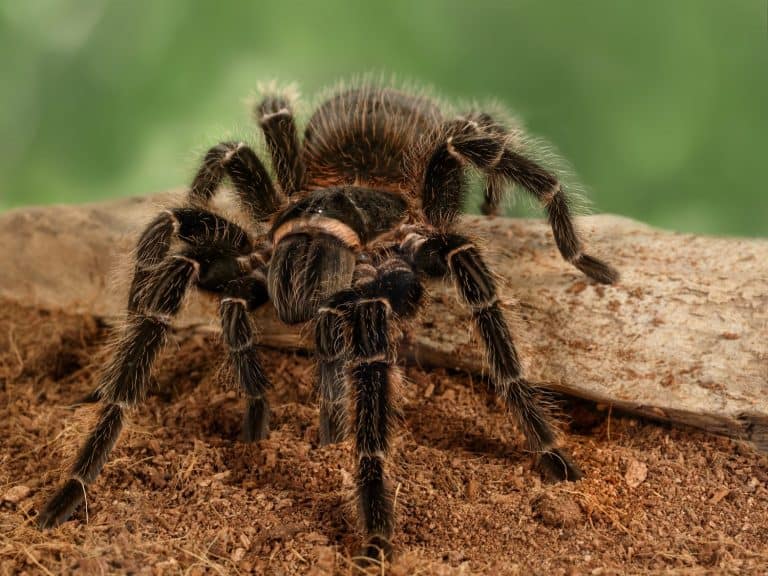
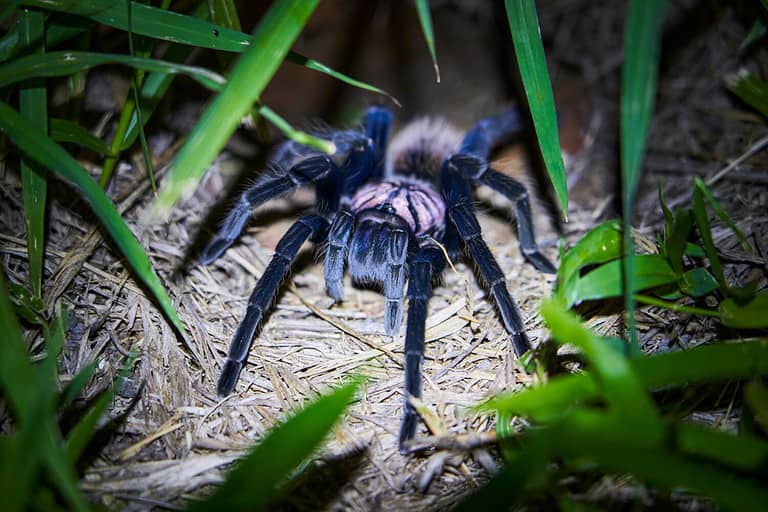
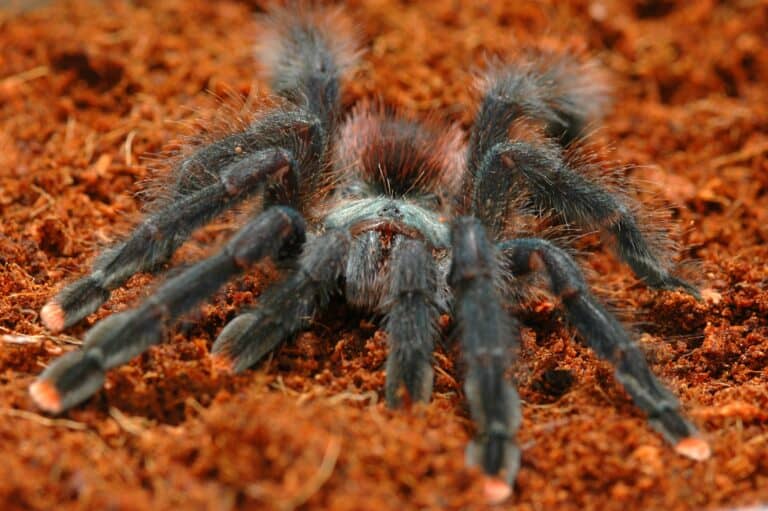
From rare cave-dwellers to the iconic red-knees, Mexico’s wild landscapes harbor over 100 specialized species. See the high-stakes diversity that makes this country the world’s second-largest spider stronghold.
©A-Z Animals
The list below includes currently recognized tarantula species in Mexico according to the World Spider Catalog as of December 2025. An asterisk after the name indicates that the tarantula is the type species. For a comprehensive reference of all tarantula species, see our complete list of tarantula species.
Aphonopelma Pocock, 1901
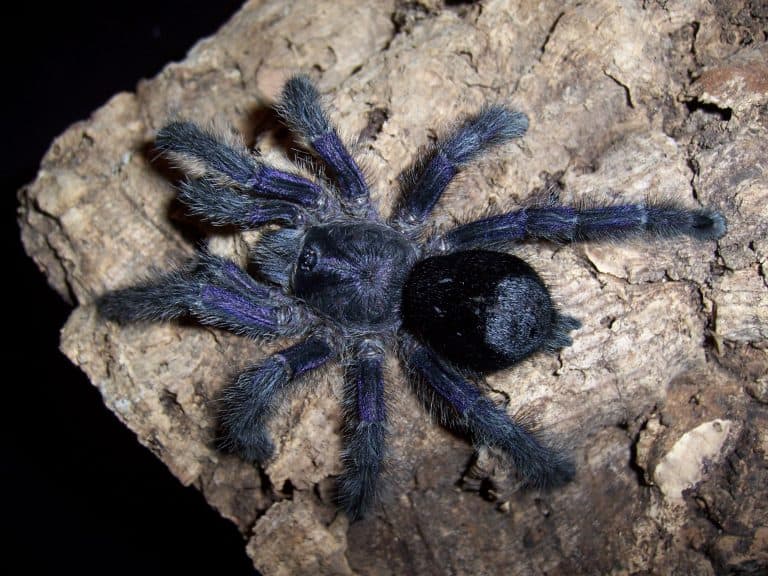
Tarantulas in the genus Aphonopelma inhabit the southern third of the U.S. from the Mississippi River to the Pacific Ocean, Mexico, and Central America. They range from small species with leg spans of 2-3 inches to large spiders with leg spans of 6 inches or more. Most Aphonopelma excavate silk-lined burrows, but they live in a wide variety of environments, from deserts to mountains. Researchers note the Madrean pine-oak woodlands are a hotspot for Aphonopelma diversity in Mexico. These tarantulas are generally shades of brown to black with short, dark setae and longer, lighter setae on the legs and abdomens. They have only type I urticating setae, which are shorter, lighter, and less irritating than the other types of urticating setae.
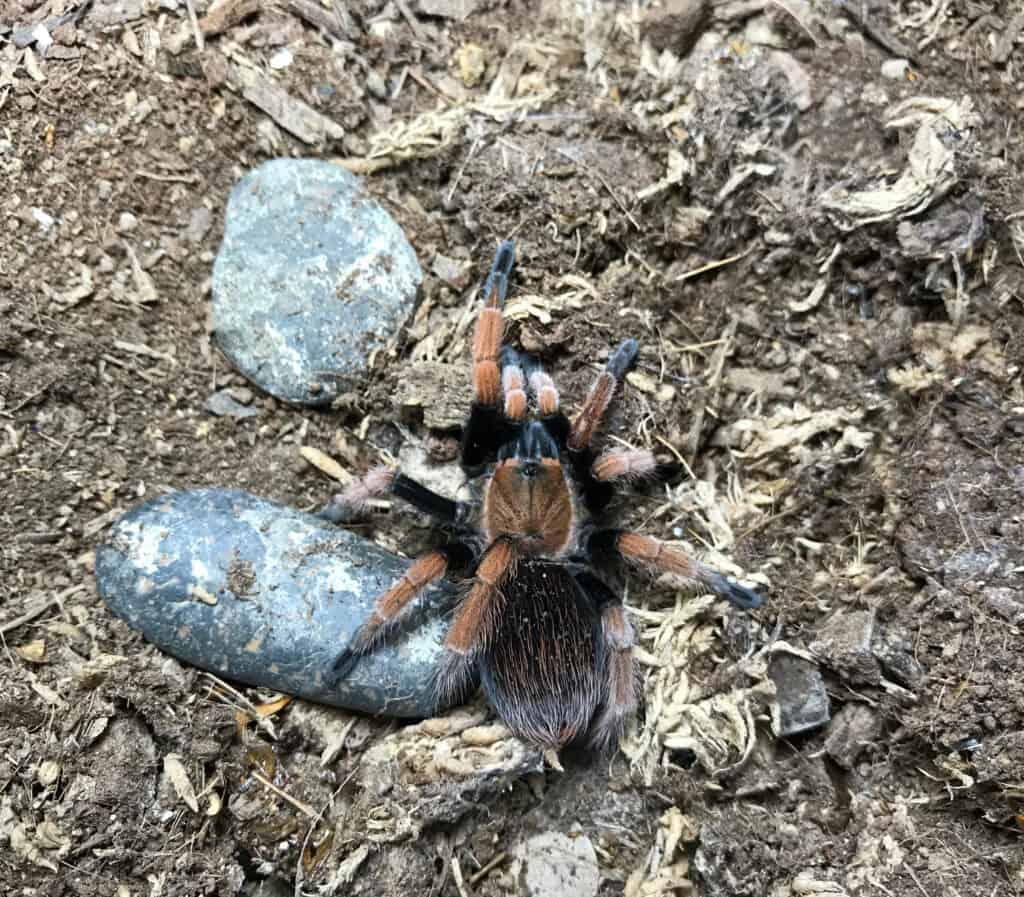
The Mexican blood leg tarantula, Aphonopelma bicoloratum, reaches about 5 to 6 inches in leg span.
©Wuttipat Jathutain/Shutterstock.com
- Aphonopelma anax (Chamberlin, 1940)
- Common name: Texas tan tarantula
- Distribution: United States, Mexico
- Aphonopelma bacadehuachi Hendrixson, 2019
- Common name: N/A
- Distribution: Mexico
- Aphonopelma bicoloratum Struchen, Brändle & Schmidt, 1996
- Common name: Mexican blood leg
- Distribution: Mexico
- Aphonopelma caniceps (Simon, 1891)
- Common name: Mexican black velvet
- Distribution: Mexico
- Aphonopelma cookei Smith, 1995
- Common name: N/A
- Distribution: Mexico
- Aphonopelma eustathes (Chamberlin, 1940)
- Common name: N/A
- Distribution: Mexico
- Aphonopelma geotoma (Chamberlin, 1937)
- Common name: N/A
- Distribution: Mexico
- Aphonopelma gertschi Smith, 1995
- Common name: N/A
- Distribution: Mexico
- Aphonopelma griseum Chamberlin, 1940
- Common name: N/A
- Distribution: Mexico
- Aphonopelma hageni (Strand, 1906)
- Common name: N/A
- Distribution: Mexico
- Aphonopelma helluo (Simon, 1891)
- Common name: N/A
- Distribution: Mexico
- Aphonopelma levii Smith, 1995
- Common name: N/A
- Distribution: Mexico
- Aphonopelma mooreae Smith, 1995
- Common name: Mexican jade fuego, North American cobalt
- Distribution: Mexico
- Aphonopelma nayaritum Chamberlin, 1940
- Common name: N/A
- Distribution: Mexico
- Aphonopelma pallidum (F. O. Pickard-Cambridge, 1897)
- Common name: Mexican rose
- Distribution: Mexico
- Aphonopelma platnicki Smith, 1995
- Common name: N/A
- Distribution: Mexico
- Aphonopelma prosoicum Chamberlin, 1940
- Common name: N/A
- Distribution: Mexico
- Aphonopelma ruedanum Chamberlin, 1940
- Common name: N/A
- Distribution: Mexico
- Aphonopelma truncatum (F. O. Pickard-Cambridge, 1897)
- Common name: N/A
- Distribution: Mexico
Bonnetina Vol, 2000
The genus Bonnetina is native to central southern Mexico, including the states of Jalisco, Michoacán, Guerrero, Colima, México, Hidalgo, Ciudad de México, Morelos, Oaxaca, and Veracruz. These spiders inhabit deciduous, semi-deciduous, and oak forests, as well as grasslands and shrublands. Bonnetina tarantulas typically inhabit either shallow or elaborate burrows under stones. One primary distinction is the presence of three protuberances on tibiae I of adult males, a feature believed to be absent in all other theraphosids, which normally have two. They are generally small to medium-sized tarantulas, with leg spans of 3-5 inches. Bonnetina tarantulas often have coppery colored carapaces, dark abdomens with reddish setae, and brown to black appendages.
- Bonnetina alagoni Locht & Medina, 2008
- Common name: N/A
- Distribution: Mexico
- Bonnetina aviae Estrada-Alvarez & Locht, 2011
- Common name: N/A
- Distribution: Mexico
- Bonnetina cyaneifemur* Vol, 2000
- Common name: Mexican blue femur
- Distribution: Mexico
- Bonnetina flammigera Ortiz & Francke, 2017
- Common name: N/A
- Distribution: Mexico
- Bonnetina hijmenseni Ortiz & Francke, 2017
- Common name: Mexican blue leg
- Distribution: Mexico
- Bonnetina hobbit Ortiz & Francke, 2017
- Common name: N/A
- Distribution: Mexico
- Bonnetina julesvernei Ortiz & Francke, 2017
- Common name: N/A
- Distribution: Mexico
- Bonnetina malinalli Ortiz & Francke, 2017
- Common name: N/A
- Distribution: Mexico
- Bonnetina megagyna Ortiz & Francke, 2017
- Common name: N/A
- Distribution: Mexico
- Bonnetina minax Ortiz & Francke, 2017
- Common name: Mexican copperhead
- Distribution: Mexico
- Bonnetina papalutlensis Mendoza, 2012
- Common name: N/A
- Distribution: Mexico
- Bonnetina tanzeri Schmidt, 2012
- Common name: Michoacán red rump
- Distribution: Mexico
- Bonnetina tenuiverpis Ortiz & Francke, 2015
- Common name: N/A
- Distribution: Mexico
- Bonnetina tindoo Ortiz & Francke, 2017
- Common name: N/A
- Distribution: Mexico
- Bonnetina unam Ortiz & Francke, 2017
- Common name: N/A
- Distribution: Mexico
- Bonnetina vittata Ortiz & Francke, 2017
- Common name: N/A
- Distribution: Mexico
Brachypelma Simon, 1891
Tarantulas in the Brachypelma genus can be differentiated by the presence of urticating setae types I and III and red or orange coloration patterns on the carapace and/or legs. Holotypes of these medium to large-sized tarantulas reach a total body length of up to 2.6 inches (not including chelicerae and spinnerets), with their longest legs (pair IV) measuring up to 2.96 inches. They inhabit the Pacific Coast region from Sonora south to Guerrero. Brachypelma tarantulas generally favor tropical deciduous forests but have also been observed in thorn scrub and oak forests. They typically dig their burrows under large, flat rocks, between tree roots on hillsides, or in open fields.
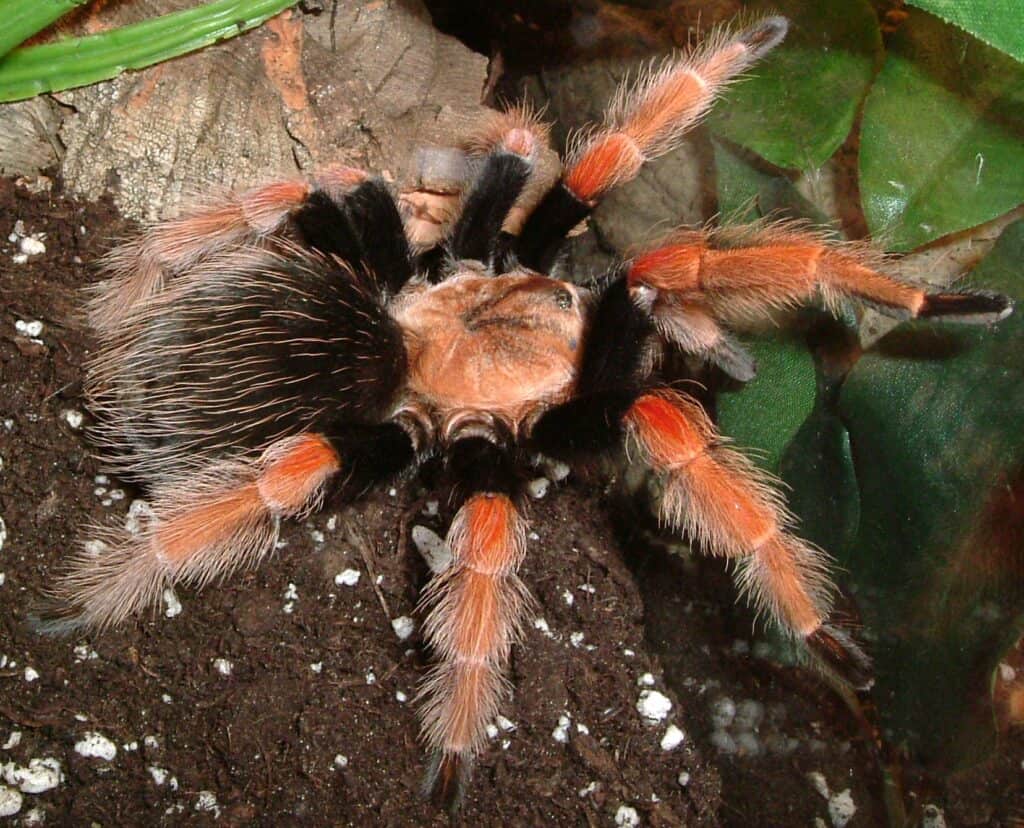
The Mexican fire leg tarantula, Brachypelma boehmei, is native to the Guerrero state on Mexico’s Pacific coast.
©1,656 × 1,339 pixels, file size: 673 KB, MIME type: image/jpeg – Original / License
- Brachypelma albiceps Pocock, 1903
- Common name: Mexican golden red rump
- Distribution: Mexico
- Brachypelma auratum Schmidt, 1992
- Common name: Mexican flame knee
- Distribution: Mexico
- Brachypelma baumgarteni Smith, 1993
- Common name: Mexican orange beauty
- Distribution: Mexico
- Brachypelma boehmei Schmidt & Klaas, 1993
- Common name: Mexican fire leg or Mexican rust leg
- Distribution: Mexico
- Brachypelma emilia* (White, 1856)
- Common name: Mexican red leg or Mexican true red leg
- Distribution: Mexico
- Brachypelma hamorii Tesmoingt, Cleton & Verdez, 1997
- Common name: Mexican orange knee
- Distribution: Mexico
- Brachypelma klaasi (Schmidt & Krause, 1994)
- Common name: Mexican pink or Mexican pink beauty
- Distribution: Mexico
- Brachypelma smithi (F.O. Pickard-Cambridge, 1897)
- Common name: Mexican red knee
- Distribution: Mexico
Citharacanthus Pocock, 1901
Citharacanthus species are generally small to medium-sized terrestrial tarantulas. The genus was created to accommodate Eurypelma longipes, which Pocock believed was misplaced. C. longipes can be found in Tabasco state in southeast Mexico. Its cephalothorax and legs are brown to black, with reddish setae. The abdomen is slightly darker than the rest of its body, with longer red hairs that are lighter at the tips. Specific location information for C. meermani in Mexico is unknown. Its cephalothorax has short, woolly, metallic copper setae. The coxae and trochanters are also metallic copper, while the rest of the leg segments are brown. Its abdomen is dark, with long, peachy-orange setae. C. meermani has a leg span of up to 5.15 inches.
- Citharacanthus longipes* (F. O. Pickard-Cambridge, 1897)
- Common name: N/A
- Distribution: Mexico, Central America
- Citharacanthus meermani Reichling & West, 2000
- Common name: N/A
- Distribution: Belize, Mexico
Clavopelma Chamberlin, 1940
Clavopelma is a monotypic genus consisting only of Clavopelma tamaulipeca. C. tamaulipeca is a medium-sized terrestrial spider with a dark brown cephalothorax and abdomen with long, scattered reddish setae. It has brown legs with dark brown femora, and its legs are covered in dense, pale, woolly setae, hence the common name Sierra Madre woolly. This tarantula was originally found in the Sierra de San Carlos Mountains in the state of Tamaulipas in northeastern Mexico.
- Clavopelma tamaulipeca* (Chamberlin, 1937)
- Common name: Sierra Madre woolly
- Distribution: Mexico
Cotztetlana Mendoza, 2012
Cotztetlana tarantulas are relatively small terrestrial burrowers distinguished by their thick back legs (pair IV). In fact, these spiders were named for this feature, as “Cotzetlana” means “of fat legs.” They are often referred to as Mexican stout legs in the pet trade. There is little authoritative information about C. omiltemi other than its type locality, Omiltemi, Chilpancingo, in the state of Guerrero. C. villadai is known from Temascalcingo, San Francisco Solís in the state of México. The holotype specimen has a total length of 2.02 inches, and its longest legs measure 1.96 inches. It is dark brown overall, with brownish-orange guard hairs on the abdomen. Its legs have brownish-orange setae that are denser on legs IV.
- Cotztetlana omiltemi* Mendoza, 2012
- Common name: N/A
- Distribution: Mexico
- Cotztetlana villadai Estrada-Alvarez, 2014
- Common name: N/A
- Distribution: Mexico
Crassicrus Reichling & West, 1996
Crassicrus tarantulas can be distinguished from most genera by the presence of only urticating setae type I on the abdomen. They can be distinguished from genera with only type I setae by the thorn-like setae on the front-facing coxae I–IV. Females have a brown carapace and light to dark brown legs with black femora. Males have a brown to black carapace with iridescent violet and copper setae. Their legs are black and may have violet iridescent setae on the front-facing segments. In both sexes, the abdomen has short, dark setae with longer, scattered yellow to orange setae. These spiders have a total length of up to approximately 2 inches. They inhabit western Oaxaca and southern Veracruz. Crassicrus tarantulas generally favor a tropical climate at elevations below 820 feet. Their burrows are found in open areas, often at the edges of crops and pastures.
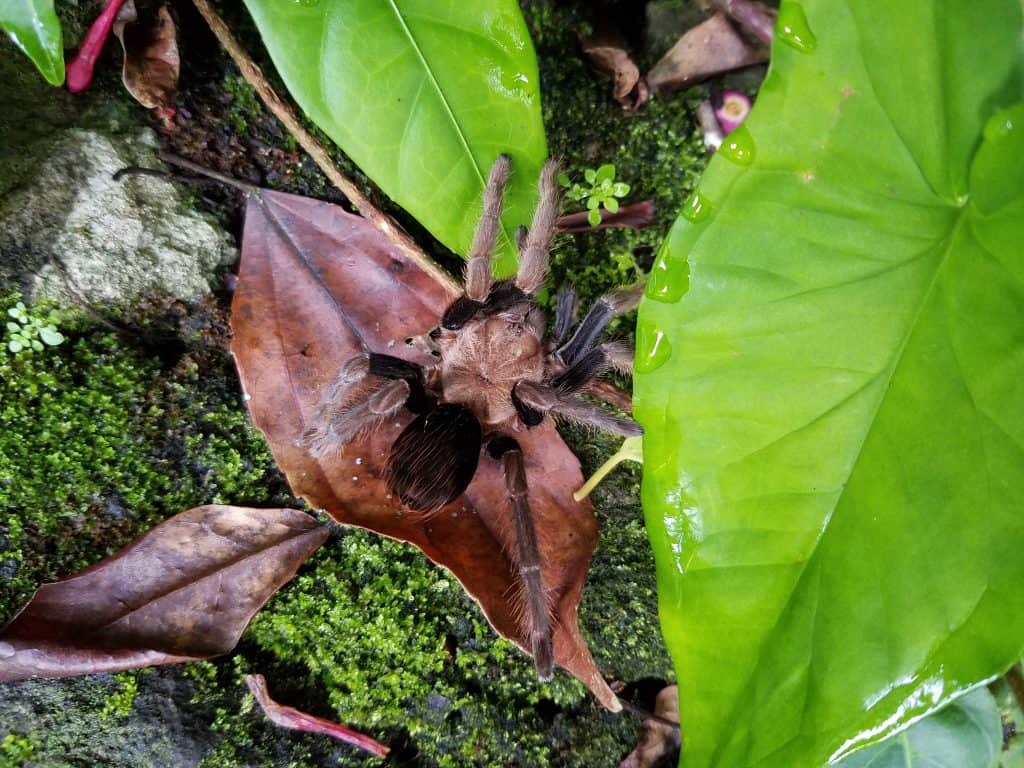
Crassicrus tochtli is also known as the Los Tuxtlas tarantula.
- Crassicrus bidxigui Candia-Ramírez & Francke, 2017
- Common name: Isthmus brown
- Distribution: Mexico
- Crassicrus cocona Candia-Ramírez & Francke, 2017
- Common name: Agua honda tarantula
- Distribution: Mexico
- Crassicrus stoicum (Chamberlin, 1925)
- Common name: N/A
- Distribution: Mexico
- Crassicrus tochtli Candia-Ramírez & Francke, 2017
- Common name: Los Tuxtlas tarantula, Los Tuxtlas cinnamon
- Distribution: Mexico
- Crassicrus yumkimil Candia-Ramírez & Francke, 2017
- Common name: N/A
- Distribution: Mexico
Cyclosternum Ausserer, 1871
Tarantulas in the genus Cyclosternum are small to medium-sized terrestrial spiders. C. palomeranum is said to be the smallest Mexican tarantula. The holotype specimen has a total length of 0.48 inches, and its longest legs (pair IV) measure 0.89 inches. It is generally described as having short, pale, gold setae on its chelicerae (mouthparts), patellae (knees), and trochanters (the second segment of the leg or palp). The rest of its legs and abdomen are covered in short brown setae with long, scattered buff-colored setae. Its carapace is a reflective copper. The male type specimens were found in hot, dry thorny scrub forests in the state of Jalisco on the western coast.
- Cyclosternum palomeranum West, 2000
- Common name: N/A
- Distribution: Mexico
Davus O. Pickard-Cambridge, 1892
The Davus genus includes medium to large tarantulas characterized by a reddish-orange pattern of stripes across their dark abdomens. This pattern gives these spiders the common name, “tiger rump.” D. pentaloris can be found in the states of Oaxaca, Veracruz, Chiapas, and Hidalgo in southern Mexico. This species is considered to have high morphological variation, particularly in size, as spiders in some locations are nearly 40% larger than others. There are also differences in coloration patterns and in male and female sexual characteristics. D. pentaloris generally has a copper-colored cephalothorax, black legs, a black and orange striped abdomen, and long, pale setae on its legs and abdomen.
- Davus pentaloris (Simon, 1888)
- Common name: Guatemalan tiger rump
- Distribution: Mexico, Guatemala, El Salvador, Honduras
Dugesiella Pocock, 1901
In 2022, the genus Dugesiella was removed from synonymy with Aphonopelma. It was restored with its type species, Dugesiella crinita, based on the morphology of the spiders’ reproductive organs and their geographical distribution. D. anitahoffmannae is known from Mexico City, while D. duplex is known from Orizaba, Veracruz. D. serrata has no precise locality, but it has a distribution similar to D. crinita in the central highlands of Mexico, particularly the state of Guanajuato. Like the Aphonopelma tarantulas they were formerly grouped with, Dugesiella tarantulas are relatively large terrestrial spiders, with leg spans of up to around 6 inches. They are generally shades of brown to black with short, dark setae and longer, lighter, sometimes reddish-tinted setae on their legs and abdomens.
- Dugesiella anitahoffmannae (Locht, Medina, Rojo & Vázquez, 2005)
- Common name: Pedregal tarantula
- Distribution: Mexico
- Dugesiella crinita* Pocock, 1901
- Common name: N/A
- Distribution: Mexico
- Dugesiella duplex (Chamberlin, 1925)
- Common name: N/A
- Distribution: Mexico
- Dugesiella serrata (Simon, 1891)
- Common name: Mexican chocolate
- Distribution: Mexico
Hemirrhagus Simon, 1903
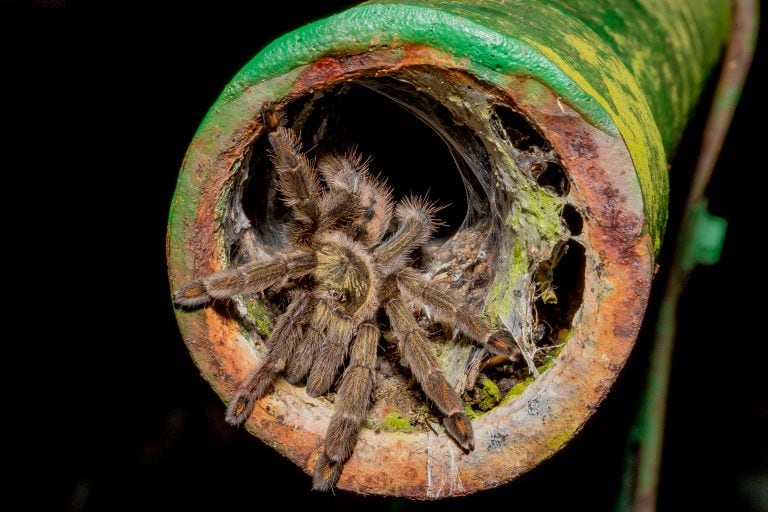
Hemirrhagus is unique in including species that live aboveground, species that inhabit caves, and species that primarily live aboveground but also inhabit subterranean environments. This genus is also distinguished by the presence of type VI urticating setae in most species. These straight, barbed hairs are pointed at both ends. These spiders are generally found from Tamaulipas south to Chiapas, primarily in high elevation areas. Cave-dwelling species are mostly found in the cave systems of Xilitla in San Luis Potosí, Cacahuamilpa in Guerrero and Huautla, Cuetzalan in Puebla, and Acatlán in Oaxaca. Hemirrhagus tarantulas tend to be shades of brown to black. They are medium-sized spiders, with specimens generally measuring 1.9 to 4.72 inches in length.
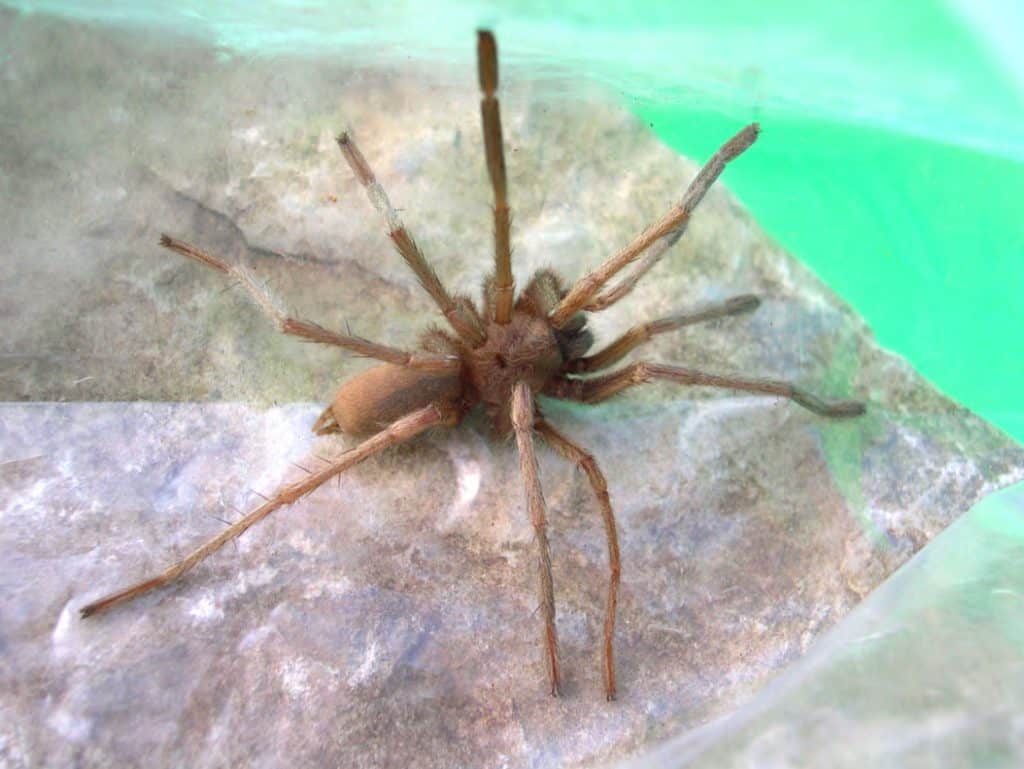
Hemirrhagus sprousei is a cave-dwelling tarantula native to Mexico.
- Hemirrhagus akheronteus Mendoza & Francke, 2018
- Common name: N/A
- Distribution: Mexico
- Hemirrhagus benzaa Mendoza, 2014
- Common name: Las Nubes tarantula
- Distribution: Mexico
- Hemirrhagus billsteelei Mendoza & Francke, 2018
- Common name: N/A
- Distribution: Mexico
- Hemirrhagus cervinus* (Simon, 1891)
- Common name: N/A
- Distribution: Mexico
- Hemirrhagus chilango Pérez-Miles & Locht, 2003
- Common name: Chilango tarantula:
- Distribution: Mexico
- Hemirrhagus coztic Pérez-Miles & Locht, 2003
- Common name: N/A
- Distribution: Mexico
- Hemirrhagus diablo Mendoza & Francke, 2018
- Common name: Diablo tarantula
- Distribution: Mexico
- Hemirrhagus elliotti (Gertsch, 1973)
- Common name: N/A
- Distribution: Mexico
- Hemirrhagus embolulatus Mendoza, 2014
- Common name: N/A
- Distribution: Mexico
- Hemirrhagus eros Pérez-Miles & Locht, 2003
- Common name: N/A
- Distribution: Mexico
- Hemirrhagus franckei Mendoza, 2014
- Common name: N/A
- Distribution: Mexico
- Hemirrhagus gertschi Pérez-Miles & Locht, 2003
- Common name: N/A
- Distribution: Mexico
- Hemirrhagus grieta (Gertsch, 1982)
- Common name: N/A
- Distribution: Mexico
- Hemirrhagus guichi Mendoza, 2014
- Common name: N/A
- Distribution: Mexico
- Hemirrhagus kalebi Mendoza & Francke, 2018
- Common name: N/A
- Distribution: Mexico
- Hemirrhagus lochti Estrada-Alvarez, 2014
- Common name: N/A
- Distribution: Mexico
- Hemirrhagus mitchelli (Gertsch, 1982)
- Common name: N/A
- Distribution: Mexico
- Hemirrhagus nahuanus (Gertsch, 1982)
- Common name: N/A
- Distribution: Mexico
- Hemirrhagus ocellatus Pérez-Miles & Locht, 2003
- Common name: N/A
- Distribution: Mexico
- Hemirrhagus papalotl Pérez-Miles & Locht, 2003
- Common name: N/A
- Distribution: Mexico
- Hemirrhagus perezmilesi García-Villafuerte & Locht, 2010
- Common name: N/A
- Distribution: Mexico
- Hemirrhagus pernix (Ausserer, 1875)
- Common name: N/A
- Distribution: Mexico
- Hemirrhagus puebla (Gertsch, 1982)
- Common name: N/A
- Distribution: Mexico
- Hemirrhagus reddelli (Gertsch, 1973)
- Common name: N/A
- Distribution: Mexico
- Hemirrhagus sprousei Mendoza & Francke, 2018
- Common name: N/A
- Distribution: Mexico
- Hemirrhagus stygius (Gertsch, 1971)
- Common name: N/A
- Distribution: Mexico
- Hemirrhagus valdezi Mendoza, 2014
- Common name: N/A
- Distribution: Mexico
Magnacarina Mendoza, Locht, Kaderka, Medina & Pérez-Miles, 2016
The genus Magnacarina is known only from the Mexican states of Sinaloa, Nayarit, and Jalisco, along the Pacific coast. These small terrestrial spiders make their homes from the coastal deciduous forest to the foothills of the Sierra Madre Occidental mountains. They dig shallow burrows or scrapes, sometimes under rocks. Magnacarina tarantulas tend to have orange carapaces with darker areas near the head. Their abdomens, legs, and palps are generally brownish, and they have orange urticating setae.
- Magnacarina aldana* (West, 2000)
- Common name: N/A
- Distribution: Mexico
- Magnacarina cancer Mendoza & Locht, 2016
- Common name: N/A
- Distribution: Mexico
- Magnacarina moderata Locht, Mendoza & Medina, 2016
- Common name: N/A
- Distribution: Mexico
- Magnacarina primaverensis Mendoza & Locht, 2016
- Common name: Mexican dwarf red leg
- Distribution: Mexico
Metriopelma Becker, 1878
Metriopelma is a monotypic genus consisting only of Metriopelma breyeri. The minimal descriptive information available indicates it has a brown cephalothorax, a hairy, dark brown abdomen, and hairy legs. This tarantula is known only from the central Mexican state of Guanajuato.
- Metriopelma breyeri* (Becker, 1878)
- Common name: N/A
- Distribution: Mexico
Psalmopoeus Pocock, 1895
Psalmopoeus is a genus of arboreal tarantulas. They are generally medium to large-sized spiders with leg spans between 5 and 7 inches. Psalmopoeus lack urticating setae, so they depend on their speed and venom to deter predators. P. victori is the first arboreal tarantula described in Mexico. It is known from Veracruz, which is the northernmost distribution for Psalmopoeus. This tarantula has a green-tinted carapace and a black abdomen with long red setae. Their legs have a dark green sheen, particularly noticeable on the femora. Males have long, grey setae on all legs, while females have long, thick, red setae on legs III and IV.
- Psalmopoeus victori Mendoza, 2014
- Common name: N/A
- Distribution: Mexico
Pseudoschizopelma Smith, 1995
In 2020, the genus Pseudoschizopelma was restored to house Acentropelma macropus, now Pseudoschizopelma macropus. The male holotype of P. macropus has a total length of 1.37 inches and its longest legs (pair IV) measure 1.9 inches. Its preserved color is brown overall, and type 1 urticating setae are present. It is known from Pico de Orizaba, Puebla.
- Pseudoschizopelma macropus* (Ausserer, 1875)
- Common name: N/A
- Distribution: Mexico
Schizopelma F. O. Pickard-Cambridge, 1897
Little is known about tarantulas in the genus Schizopelma. S. bicarinatum is only known from Xantipa (now Chautipan), Guerrero. S. juxtantricola, formerly Bonnetina juxtantricola, is only known from the Quechultenango municipality in the state of Guerrero. The male and female specimens were found under stones in a tropical deciduous forest near Juxtlahuaca Cavern.
- Schizopelma bicarinatum* F. O. Pickard-Cambridge, 1897
- Common name: N/A
- Distribution: Mexico, Central America
- Schizopelma juxtantricola (Ortiz & Francke, 2015)
- Common name: N/A
- Distribution: Mexico
Tliltocatl Mendoza & Francke, 2020
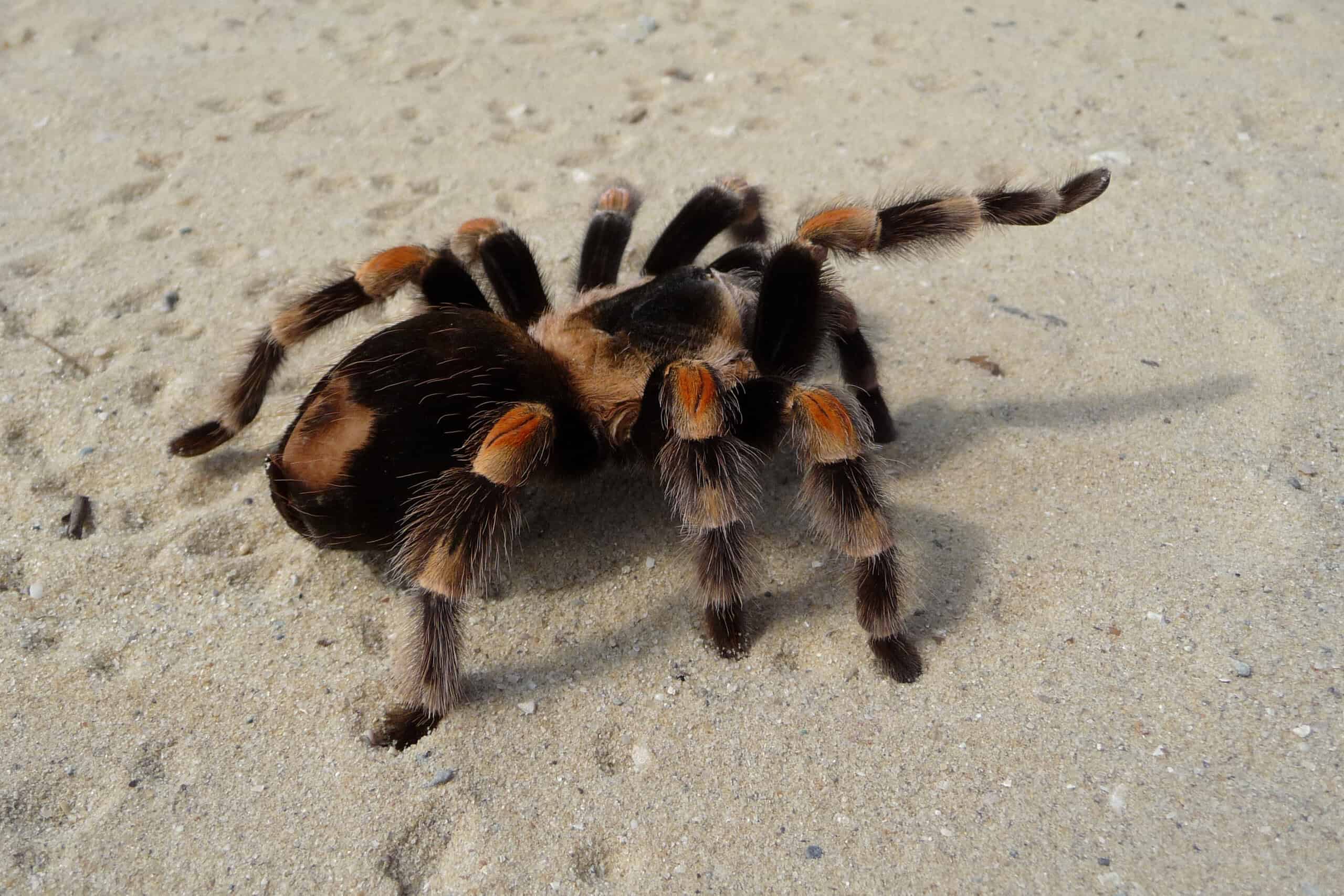
A 2019 revision of Brachypelma led to the creation of the new genus Tliltocatl. These genera can be differentiated by coloration and genital morphology. Unlike Brachypelma, Tliltocatl have black legs with no other colors or patterns. Most Tliltocatl species are black overall with long, red setae on the abdomen. They can be found in deciduous forests, rainforests, and grasslands along both the Pacific and Atlantic Coasts, as well as the Gulf. These spiders typically dig their burrows on hillsides under flat rocks, tree roots, and fallen logs. They may also excavate burrows in gardens, farmland, or near flooded areas.
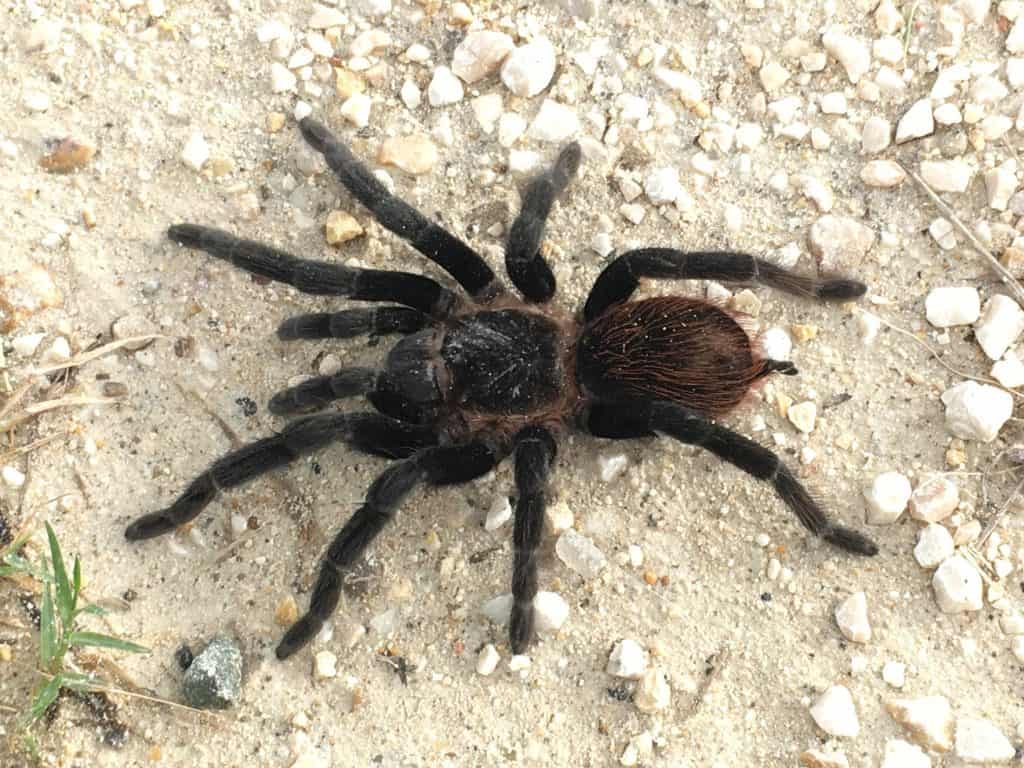
The Mexican red rump tarantula, Tliltocatl vagans, is known for its dark body and striking red abdomen.
- Tliltocatl epicureanus (Chamberlin, 1925)
- Common name: N/A
- Distribution: Mexico
- Tliltocatl kahlenbergi Rudloff, 2008
- Common name: N/A
- Distribution: Mexico
- Tliltocatl schroederi Rudloff, 2003
- Common name: N/A
- Distribution: Mexico
- Tliltocatl vagans* (Ausserer, 1875)
- Common name: Mexican red rump
- Distribution: Mexico, Guatemala, Belize
- Tliltocatl verdezi Schmidt, 2003
- Common name: N/A
- Distribution: Mexico