
Quick Take
- Fossil fragments sat unidentified in museum drawers for nearly 40 years, simply because the technology needed to crack the case did not yet exist. See the 40-year journey →
- This rhino defied every assumption scientists held about where large mammals could survive, and its location rewrites the map of prehistoric migration. Explore the Arctic corridor →
- The ancient Arctic looked nothing like the frozen wasteland we picture today, a distinction that changes everything about how we understand this animal's existence. Discover the ancient landscape →
- Scientists thought they knew which route prehistoric animals used to cross between continents, but this single fossil proved them wrong by 20 million years. See the migration revision →
For decades, a collection of fossil fragments sat forgotten in museum drawers — a paleontological “cold case” waiting for modern technology to crack it. Originally unearthed in 1986 by Dr. Mary Dawson, these remains have finally been identified as a new extinct species of rhinoceros: Epiaceratherium itjilik.
Found in the Haughton Crater on Devon Island, Nunavut, this rhino lived at 75 degrees north latitude — roughly 621 miles (1,000 kilometers) above the Arctic Circle. This makes it the northernmost rhinoceros ever recorded, proving that these animals once survived in environments far harsher than scientists previously imagined.
The species name, itjilik (pronounced eet-jee-look), honors the animal’s High Arctic origins. The research team chose the name in consultation with Inuk Elder Jarloo Kiguktak, using the Inuktitut word for “frost” or “frosty.” This “frosty” rhino lived roughly 23 million years ago during the Early Miocene. Its fossils provide a rare glimpse into an ancient Arctic world defined by extreme seasonal cycles.
The identification of the “frosty” rhino also honors the legacy of Dr. Mary Dawson, who passed away in 2020. The research team listed her as a co-author on the recent study and officially closed the investigation she started nearly 40 years ago.
A Discovery Decades in the Making
The identification of Epiaceratherium itjilik is the result of nearly four decades of persistence. The journey began in 1986 when Dr. Mary Dawson recovered several diagnostic bone fragments, including teeth and jaw parts. Although these remains stayed a mystery for years, they ultimately served as the critical evidence for a study led by Dr. Danielle Fraser of the Canadian Museum of Nature, published in 2025.
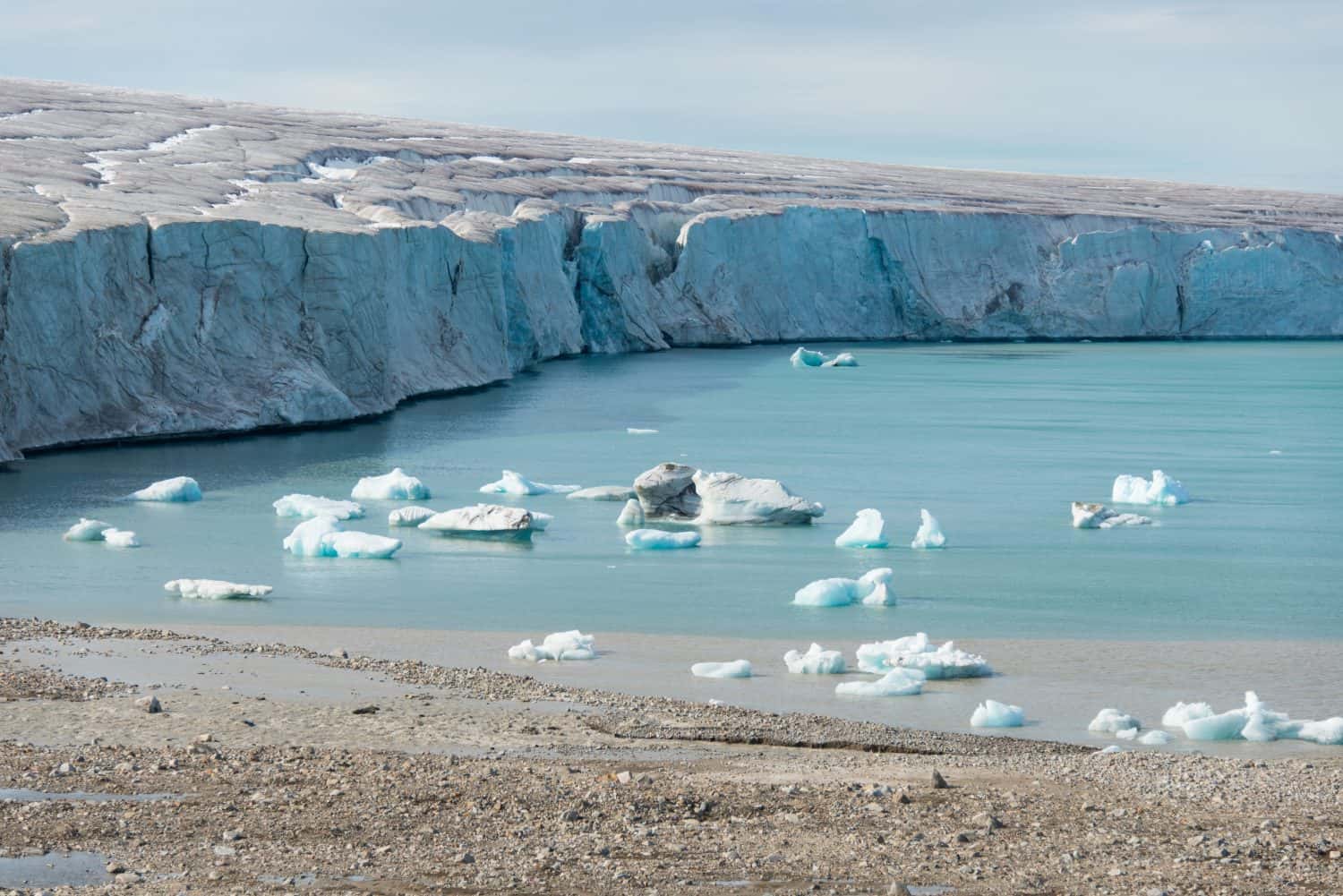
Devon Island is one of the largest uninhabited islands in the world.
©Bart Figas/Shutterstock.com
Trapped within the Haughton Crater, a 14-mile (23-kilometer) wide impact site and former lake, these fossils were perfectly preserved. For 20 million years, the crater’s sediments shielded the rhino’s skeleton from glaciers, acting as a natural time capsule for Miocene plants and animals.
The final breakthrough required modern technologies that simply did not exist during the original 1980s excavation. Scientists used ancient protein analysis to extract molecular fingerprints from the tooth enamel. They also utilized sophisticated mathematical modeling to map 40 million years of rhinoceros evolution across five different global regions. By merging these advanced tools, the team finally solved the long-standing mystery and fulfilled the investigation Dr. Dawson started decades ago.
Small, Hornless, and Hardy
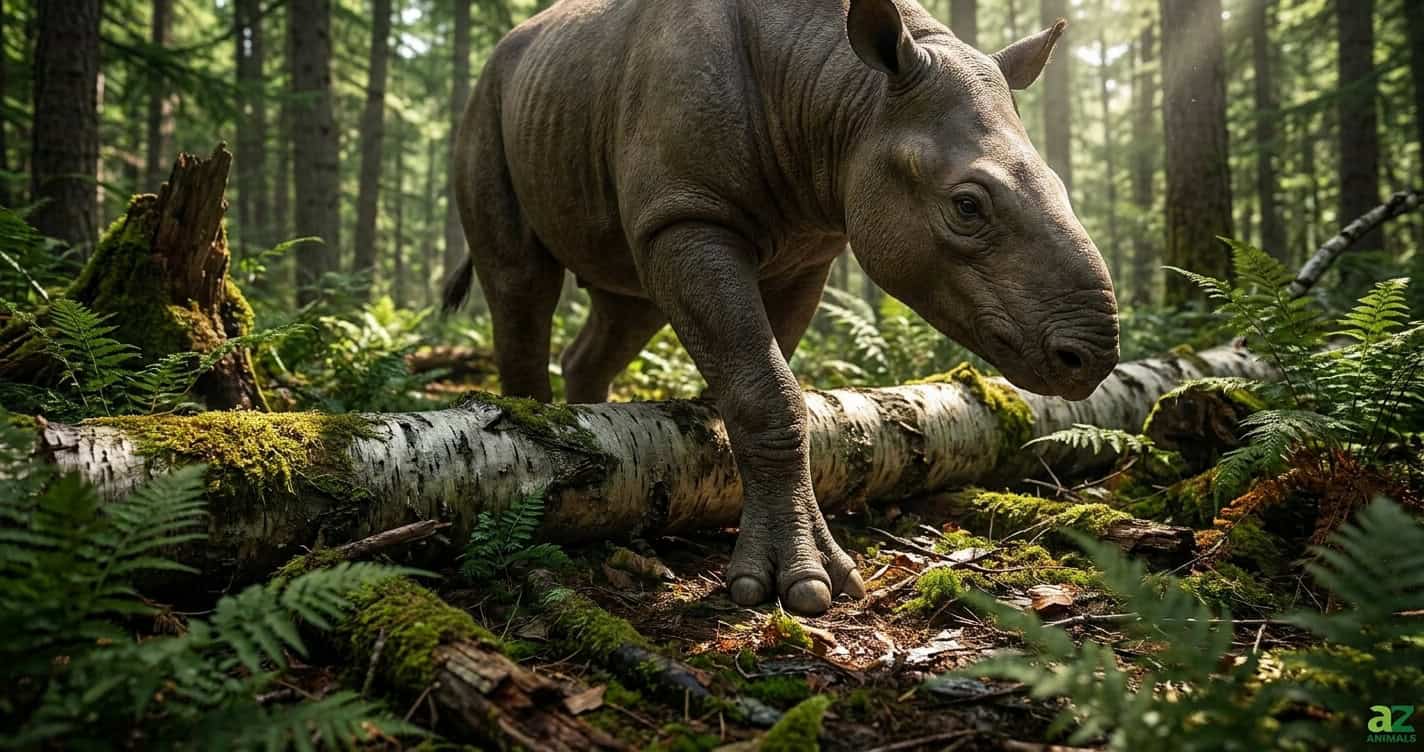
While Epiaceratherium itjilik is a rhinoceros, it is a very different one than its modern relative. This hornless species stood about 3.3 feet (1 meter) tall at the shoulder. Although it was about the size of today’s Indian rhinoceros, it had a much leaner build, resembling a large pony. It had four toes on its front feet, whereas most rhinoceros species today have only three.
This ancient specimen is particularly significant because it is one of the most complete Arctic fossils ever recovered, with approximately 75 to 80 percent of the skeleton intact. Because the rhino was encased in soft lake sediments, the bones were preserved in three dimensions with very little mineral replacement. This rare condition allows scientists to perform highly detailed analysis that would be impossible with flattened or fragmented fossils. By examining the specific wear patterns on its teeth, experts have determined that this individual was a young-to-middle-aged adult when it died.
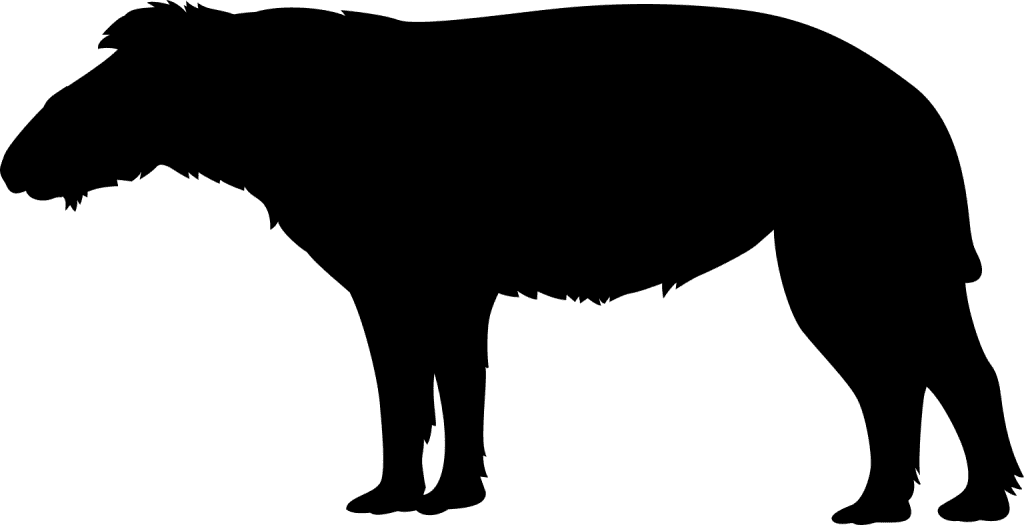
These rhinos did not have any horns.
©Michael Tripoli / CC BY 4.0 / PhyloPic – Original / License
Even though global temperatures were warmer during the Miocene epoch, this animal still had to endure months of total winter darkness. Its presence so far north proves that the species possessed incredible ecological flexibility. It thrived in extreme seasonal light cycles and harsh conditions that would prove nearly impossible for most of today’s large mammals.
The Ancient Arctic Environment
The Arctic of 23 million years ago looked nothing like the frozen polar desert we see today. Evidence from the Haughton Crater reveals a cool-temperate forest that looked more like the modern landscape of southern Ontario. This ancient region featured a lush canopy of pine, birch, larch, and alder trees, which surrounded a deep crater lake. This likely created a sheltered microclimate, protecting local wildlife from harsher surrounding conditions.
Within this green environment, Epiaceratherium itjilik lived alongside a variety of other animals. This Miocene community included waterfowl, rabbits, shrews, and even early transitional seals like Puijila darwini.
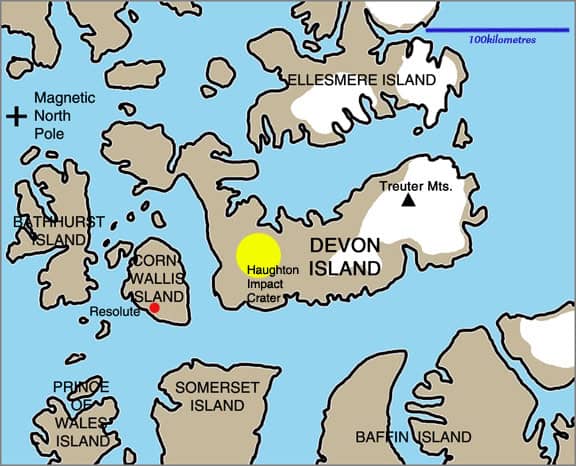
The Haughton impact crater is in the Canadian High Arctic.
©Denni / CC BY-SA 3.0 / Wikimedia Commons – Original / License
However, even this warmer, greener version of the North had its own unique challenges, particularly the extreme seasonal light cycles. Animals had to survive months of total darkness followed by months of continuous daylight. The presence of this rhinoceros species proves that the ancient Arctic was not an impassable barrier to life. Instead, it served as a dynamic highway that supported a diverse range of biodiversity.
Rethinking the Rhino Family Tree
The discovery of Epiaceratherium itjilik fundamentally reshapes our understanding of how rhinoceroses evolved and migrated across the globe. For decades, paleontologists operated under a “Beringia bias.” They assumed most prehistoric animals traveled from Asia into North America via the Bering Land Bridge. However, this rhino shifts scientific attention toward the North Atlantic Land Bridge. This route once connected Europe to North America through Greenland and Iceland.
Research shows that Epiaceratherium itjilik is more closely related to Western European rhinoceroses than to those previously found in North America. This suggests large mammals successfully used the North Atlantic route to move between continents. The discovery also provides a revised timeline for Earth’s ancient geography. While many scientists previously believed the North Atlantic Land Bridge disappeared roughly 56 million years ago, this fossil suggests the route remained passable for at least 20 million years longer than originally thought.
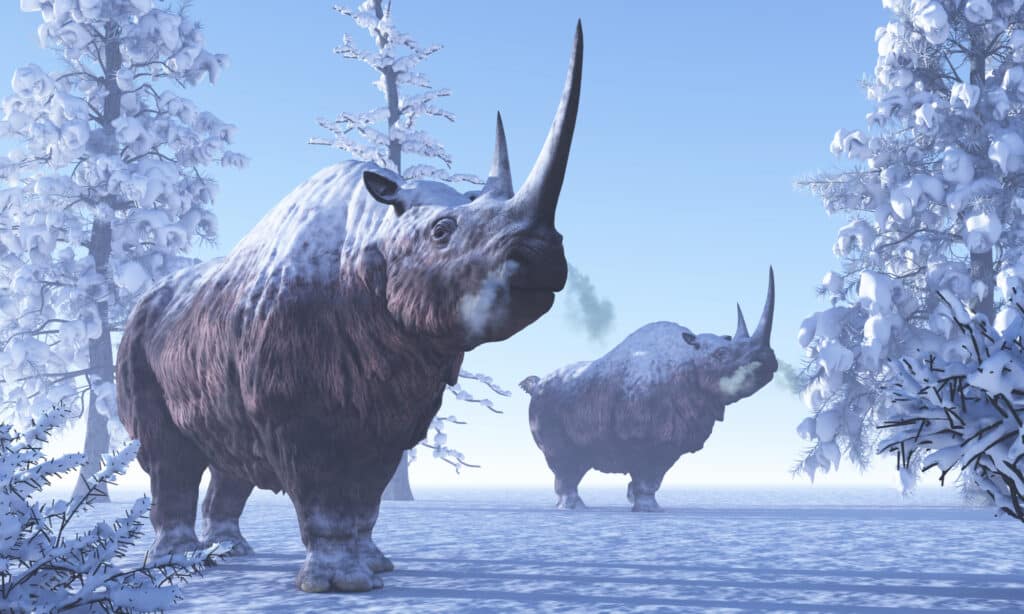
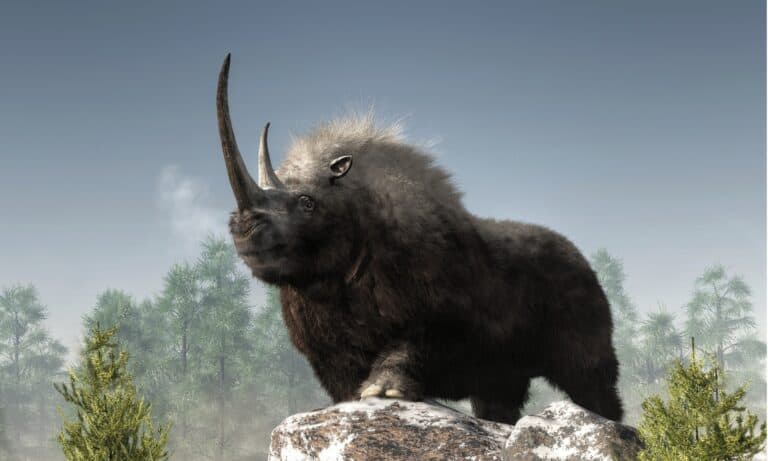
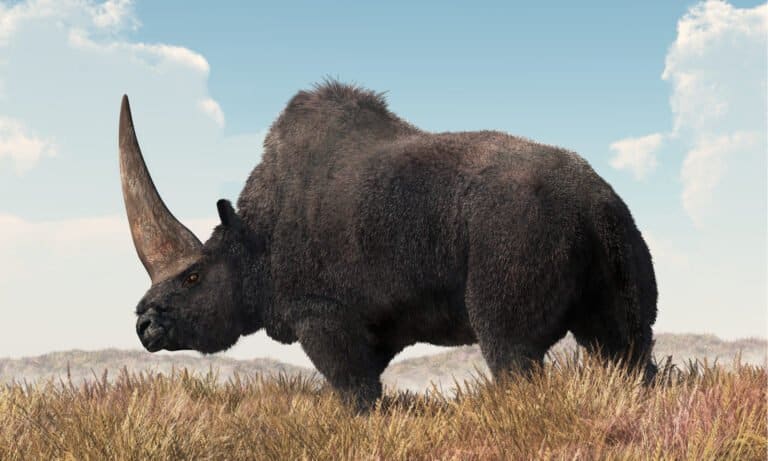
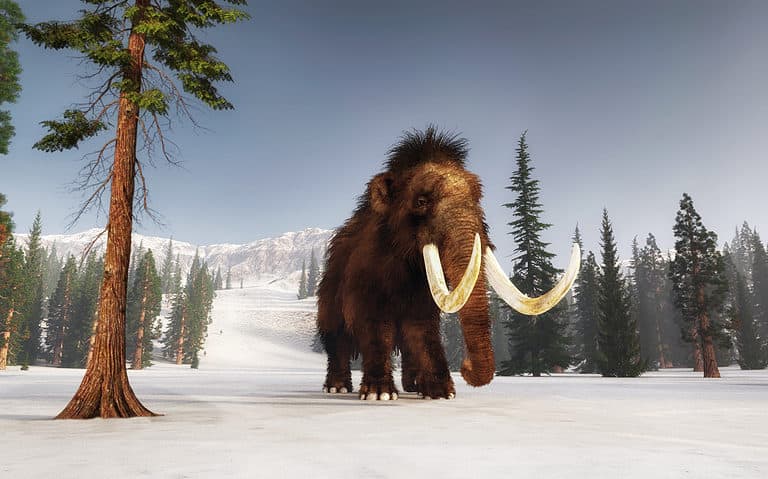
The “Frosty” rhino is more closely related to European species like woolly rhinoceros.
©Catmando/Shutterstock.com
This “frosty” rhino proves that the bridge likely supported animal movement as late as the Early Miocene epoch. It suggests that species were traveling back and forth between the two continents much later than anyone suspected.
Modern Methodology
By combining high-tech lab work with massive computer simulations, researchers finally solved the mystery of the Epiaceratherium itjilik rhinoceros. Since DNA usually breaks down over millions of years, the team turned to ancient proteins trapped within the rhino’s tooth enamel. These proteins acted as a molecular fingerprint, giving scientists the genetic proof they needed to trace the animal’s ancestry. This achievement is a landmark in paleontology, as these samples are among the oldest proteins ever sequenced.
Scientists also used advanced modeling to track how these animals moved across the Earth. They analyzed data from 57 different rhinoceros species across five major regions, discovering that migration between continents was a common, two-way journey rather than a rare event. This discovery was a joint effort between the Canadian Museum of Nature, Carleton University, and the University of Colorado Boulder. By blending traditional fossil hunting with modern chemistry, they mapped out an ancient migration network that officially gave the Arctic rhino its place in history.
The Arctic as a Prehistoric Highway
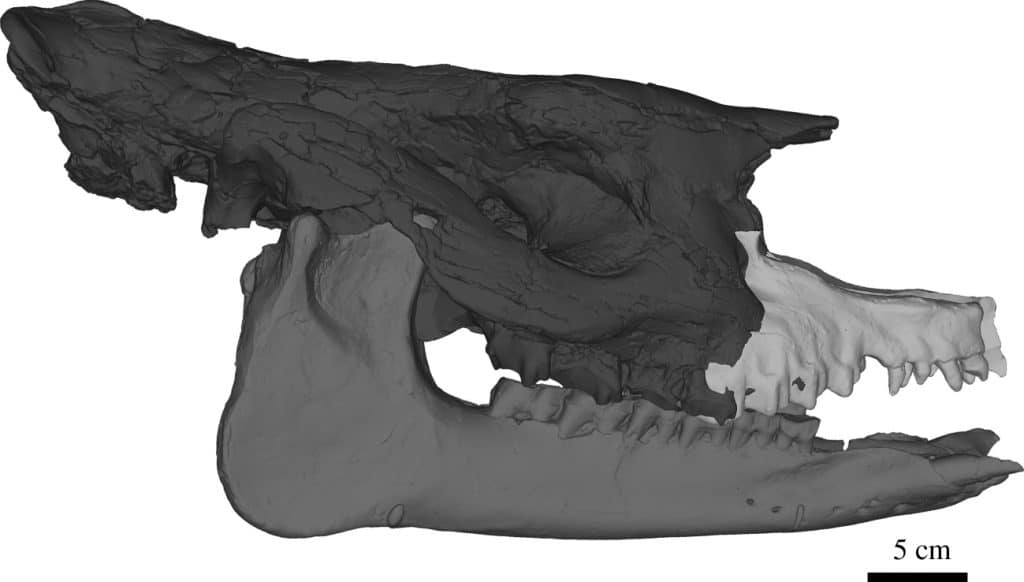
Fossils from the Epiaceratherium genus are typically found in Europe.
©Manon Hullot, Céline Martin, Cécile Blondel, Damien Becker and Gertrud E. Rössne / CC BY 4.0 / Wikimedia Commons – Original / License
The discovery of Epiaceratherium itjilik proves that the High Arctic was once a vital corridor in Earth’s history. Instead of being an impassable icy barrier, this region was a major, active pathway for animals moving between continents. The fossil also provides clear evidence that the North Atlantic migration route remained active into the Early Miocene, much later than scientists had previously assumed.
This breakthrough also honors decades of research, specifically the pioneering work of Dr. Mary Dawson. Her original 1986 discovery has finally been fully explained, showcasing the Arctic’s incredible ability to preserve fossils as both physical structures and molecular snapshots. As the northernmost rhinoceros ever found, Epiaceratherium itjilik reveals that the Arctic was once a surprisingly warm and dynamic region that played a key role in shaping the history of one of the world’s most iconic mammals.