Quick Take
- Four home inspections missed what was hiding under the porch. Where else might the snakes be getting in? See how snakes get in →
- A hole in the ground can outlast generations of people. One study proves how long. See the den study →
- November turns a basement into prime real estate for snakes. Find out why. Why basements attract snakes →
- The couple's counterattack targets just two things. Will it be enough once spring arrives? See the couple's plan →
Jessica and Jonathan Perry closed on their first house in Lexington, Kentucky, back in August. Then they met the neighbors. One neighbor told WHAS11 he was surprised the previous owners hadn’t mentioned that the snakes were free with purchase.
By November, the Perrys had found at least 25 snakes in and around the house. Several home inspections before closing had missed a snake den hiding under the front porch, and the couple now think there might be more dens built into the foundation itself. Turns out the neighbors already had a name for the place. KHOU 11, which also covered the story, reported that everyone nearby called it the snake house, and everybody knew.
The Snakes Got There First
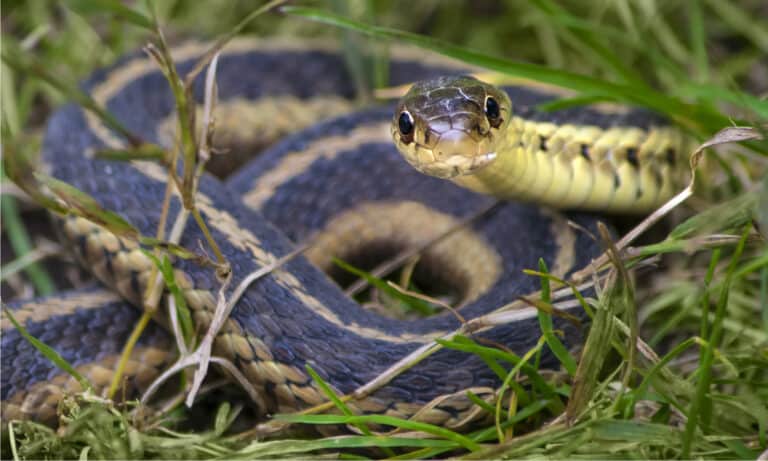
Snakes get into houses the same way mice do: by squeezing through small cracks, gaps, and holes in the foundation. The Perrys’ unwelcome houseguests have been identified as rat snakes, one of the harmless species that already live in yards around central Kentucky. Top of the list is the gray rat snake, Kentucky’s most commonly reported snake and a serious rodent hunter that can grow five or six feet long. The common garter snake is just as happy living in a garden, and since the Perrys’ place backs up to a creek, the water-loving species found along Kentucky’s streams and rivers are strong candidates too. A six-foot rat snake sounds enormous, but a snake’s body is thin for its length, and some smaller species can squeeze through a gap only half an inch wide. Put a hollow space under the porch, seams in the foundation, and a brushy creek line together, and you’ve got a property that feeds and shelters snakes all year round.
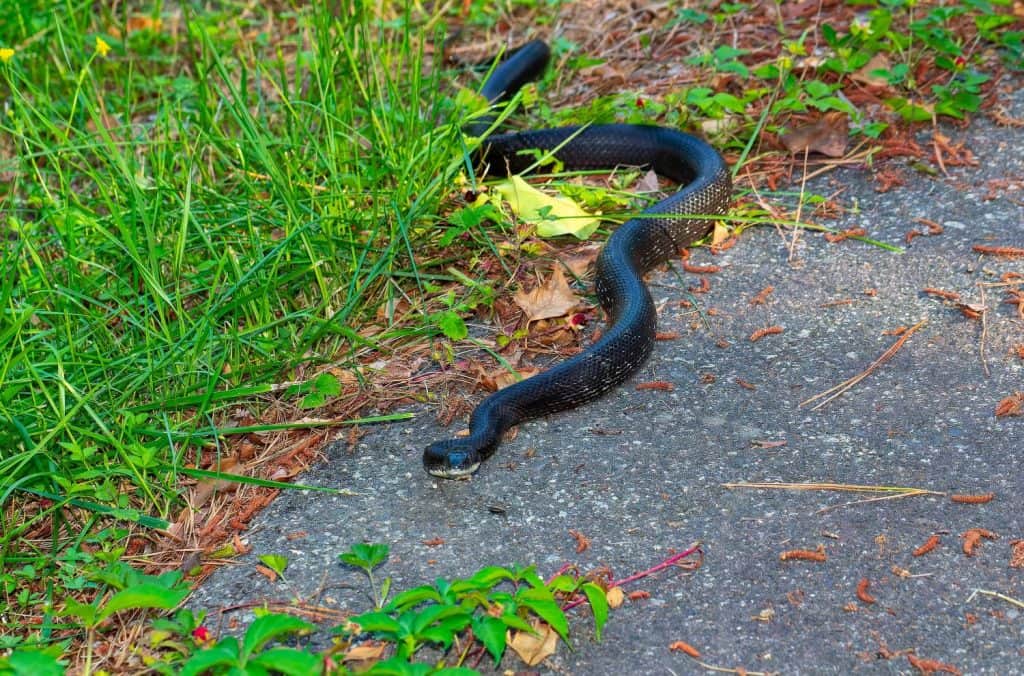
Rat snakes are common in Kentucky.
©Karel Bock/Shutterstock.com
Why This Is Older Than the Mortgage
The Perrys call it a decades-old problem, and that lines up with how snake dens actually work. A winter den isn’t something snakes build. It’s a feature of the ground itself: a pocket that stays above freezing with a way in and out of it. As long as that pocket stays open, it keeps attracting snakes winter after winter.
The best long-term look at one of these dens comes from southern Illinois. On a single day in October 1946, a researcher counted 113 snakes from eight species at a den there. Sixty years later, a team that checked the same spot across six different autumns counted [251 snakes from 11 species, found at a slightly faster pace than the original survey]src. The snakes weren’t the same ones, but the hole in the ground was, across two generations of people.
Shovel the Snow, Check the Basement
November is when snakes run out of good options. They can’t warm their own bodies, so once average nighttime temperatures drop below about 50 degrees, they start looking for somewhere safe to spend the winter. Basements fit the bill perfectly, which is why harmless snakes often show up in them come autumn, then have a hard time finding their way back out. As KHOU 11 put it, checking the basement for snakes is now just part of the Perrys’ winter routine, right alongside shoveling snow.
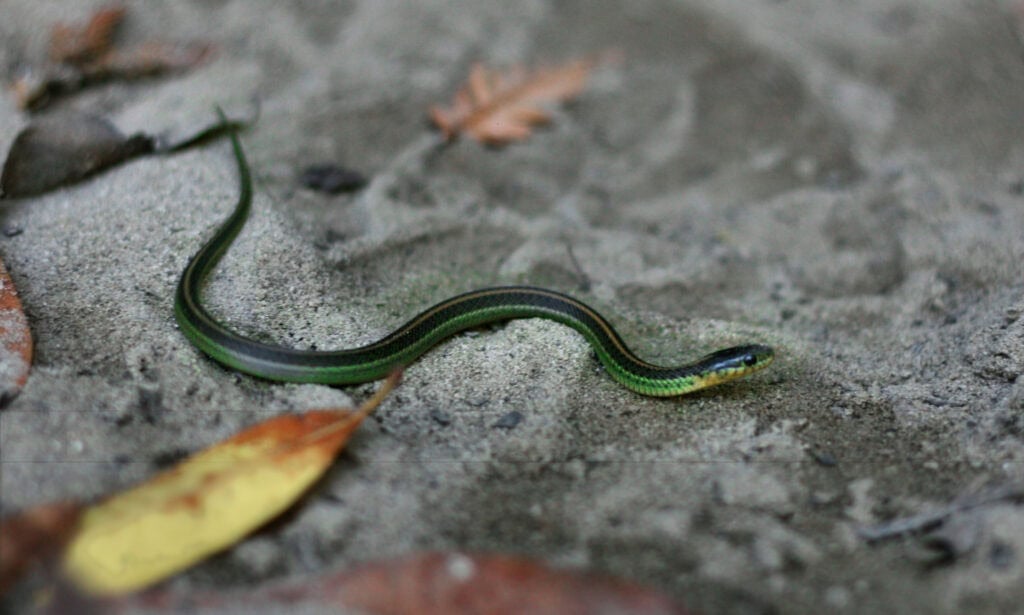
Garter snakes are commonly found in Kentucky’s streams.
What the Couple Can Actually Change
The good news: none of the snakes are venomous. Kentucky has more than 30 snake species, but only four of them are venomous, and all four belong to the same family of pit vipers, so the odds were in the Perrys’ favor from the start. That’s little comfort when you’ve got a 5-year-old running around the yard, and the couple told WHAS11 their son is exactly what worries them most.
So they’ve gone after the two things that keep snakes coming back: places to hide and things to eat. They’ve cleared brush around the nearby creek and brought in more cats, with more work planned for spring, since cover and prey are the whole reason a snake would want to stick around. Spring is also when the dens empty out again: snakes come out in March or April looking for food and mates. That’s when the Perrys will find out exactly what else came with the house.