
When the first snow falls, many animals are already tucked safely inside their dens. During this time, some enter a state of hibernation, slowing their metabolism down to conserve energy until the spring. Whether it’s a snake entering brumation or a bear entering torpor, each species has its own way of dealing with seasonal changes. However, this begs one question: What happens to insects when winter comes? While some die off as their short life cycle ends, others brave the cold and live to see another year. For these bugs, hibernation comes in many forms.
Junebugs
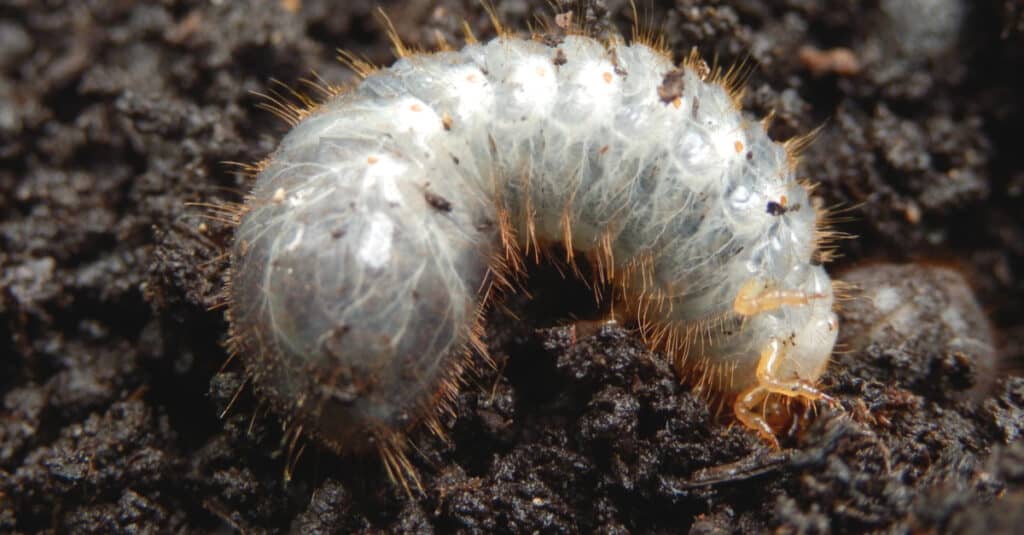
Junebug larvae spend most of their lives in the dirt.
©Stephen Farhall/Shutterstock.com
Anyone who has worked in a garden has likely seen fat, cream-colored grubs in the dirt. These are junebug larvae. They overwinter in the dirt, emerging once warmer weather hits. In fact, junebugs spend most of their lives in the dirt, consuming plant roots for nutrition. After spring arrives, the larvae pupate and become adults, entering the final stage of their life cycle. It takes several years for June bug larvae to reach full maturity, so they can remain underground for a long time. When they enter their dormant state, they burrow deeper into the soil as it gets colder.
Bumblebees
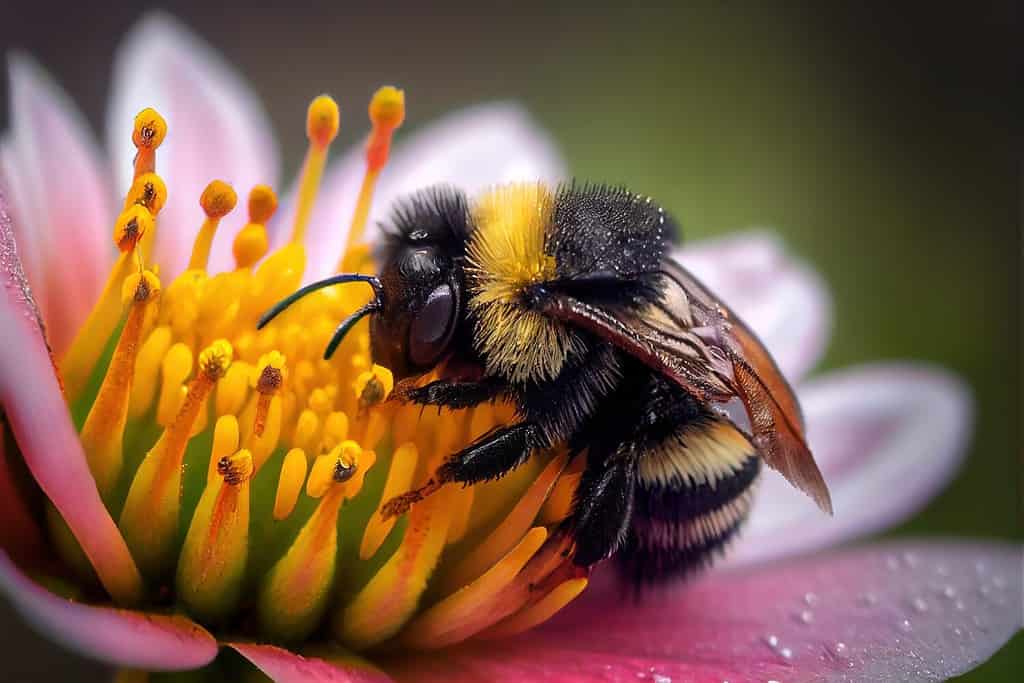
Bumblebees survive by creating newly mated queens.
©ArtEvent ET/Shutterstock.com
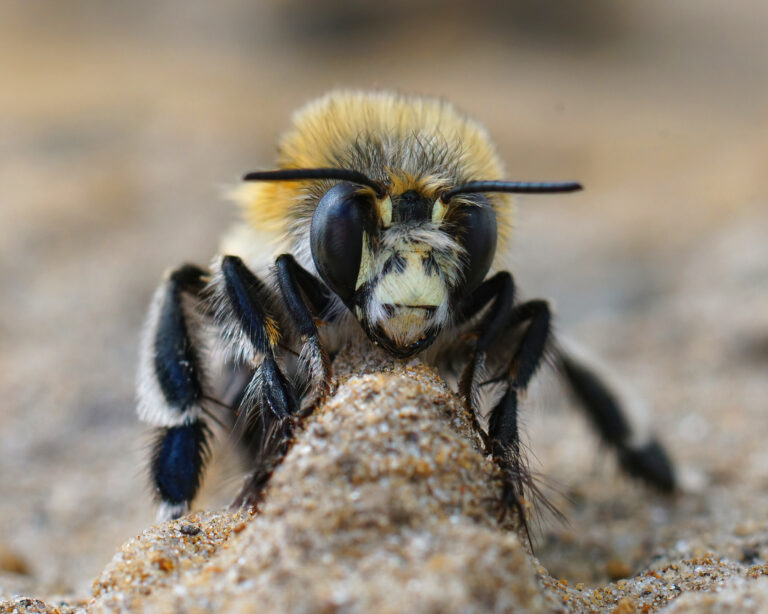
The only hibernating members of a bumblebee colony are the newly mated queens. Their winter survival ensures the survival of the next generation of bees. Before entering diapause, a type of hibernation, bumblebee queens increase their caloric intake. Then, they find a safe spot to shelter, such as abandoned animal burrows, holes in the ground, hollow leaf stems, or leaf piles. As winter approaches, queens produce a chemical that acts as antifreeze for their bodies. When spring arrives, they emerge from their winter shelter, ready to start a new colony.
Houseflies
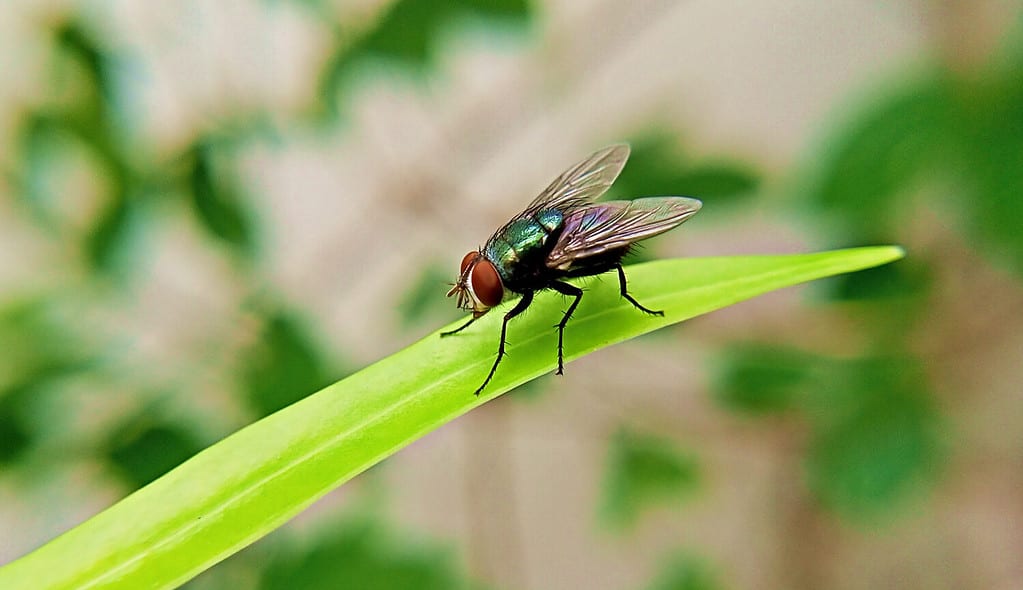
Houseflies might be an annoyance, but they are skilled at winter survival.
©AvishekS/Shutterstock.com
Houseflies also enter diapause during the winter. Their bodies slow down enough to conserve energy while hiding away in crevices, walls, attics, or anywhere else that’s safe and warm. This is why you might notice an increase in fly populations in your home. As houseflies enter diapause, their bodies produce an antifreeze-like chemical similar to that produced by bumblebees. This wears off as spring approaches, allowing them to fully awaken and fly off in search of food and a new place to lay eggs.
Ladybugs
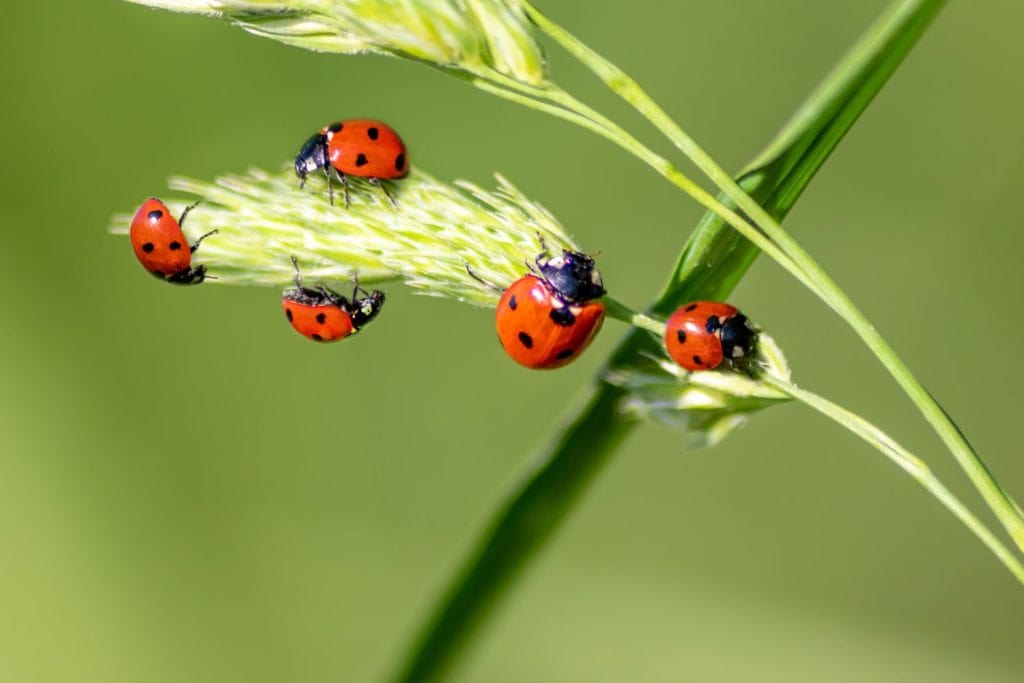
Ladybugs huddle together for warmth and survival.
©sunakri/Shutterstock.com
As ladybugs enter diapause, they also huddle together to form a group. This enormous mass is called a cluster, and it helps retain body heat, allowing them to regulate their body temperature. Once they’ve gathered in a safe place—typically a wall crevice, under rocks, or between rocks—they enter a dormant state. Ladybugs release aggregation pheromones to attract others to suitable overwintering sites, which can result in large groups returning to the exact location each year. In rare cases, these spots may turn out to be the inside of a home.
Asian Lady Beetle
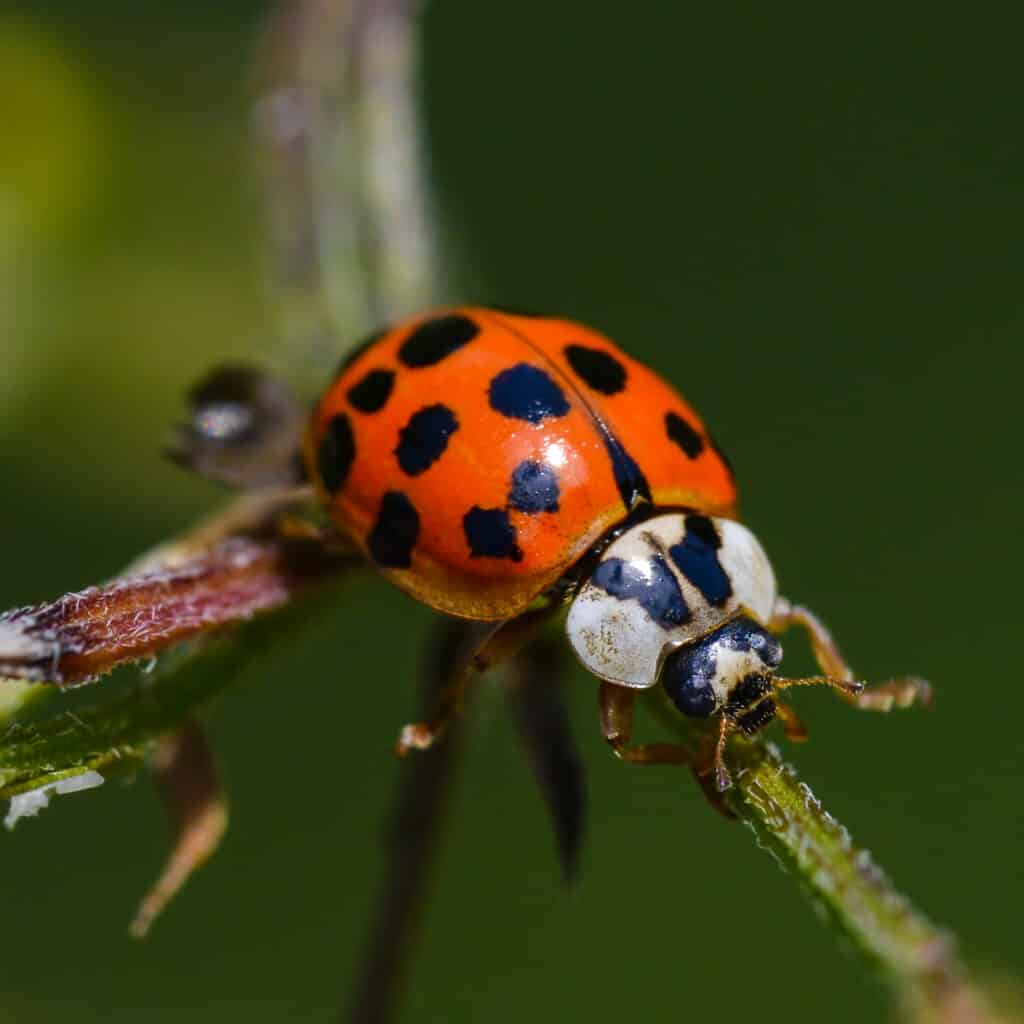
Asian lady beetles emit a foul odor when squished.
©iStock.com/Bob Grif
While often mistaken for ladybugs, the Asian lady beetle is an invasive species. Its hibernation habits can cause stress for homeowners because it tends to gather on sun-facing walls. The heat radiating from a house’s exterior walls sometimes leads them to wander indoors. This is why many people often find dead Asian lady beetles around their homes as winter approaches. However, if Asian lady beetles are successful in finding a safe spot for hibernation, they aggregate, conserving body heat, and enter a dormant state. If this happens indoors, homeowners may end up with swarms of Asian lady beetles as they seek a way out during spring.
Seven-Spot Ladybird
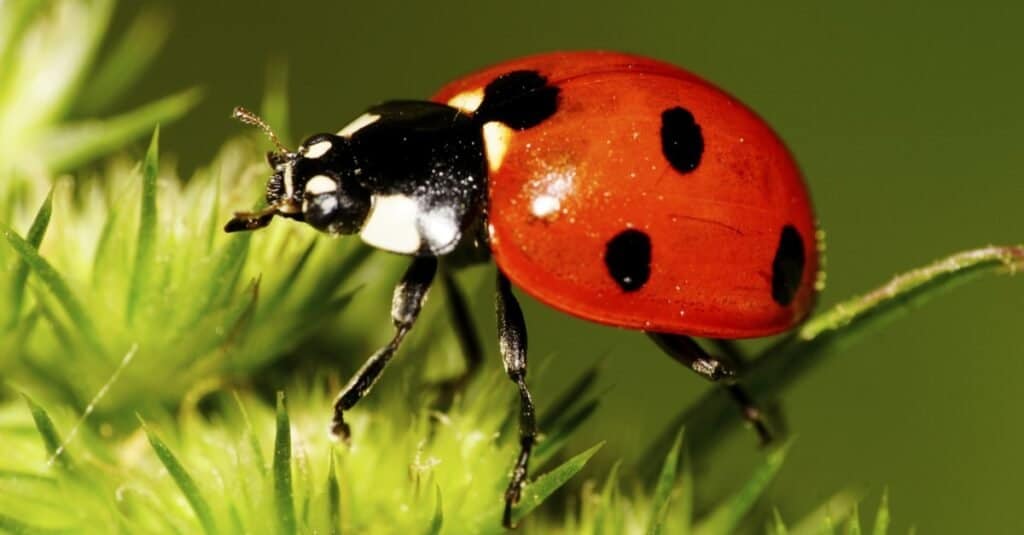
Seven-spot ladybirds seek food as soon as they awaken in the spring.
© Sergey/Shutterstock.com
Seven-spot ladybirds follow the same patterns as many other beetles. When cooler weather arrives, they form groups to find shelter for the winter. They can also accidentally end up inside a home, which is excellent news for anyone with indoor plants. Once they emerge from diapause, the priority of a seven-spot ladybird is to find food, which happens to be aphids. If there are any houseplants or gardens within their vicinity, chances are, they’ll find them.
Peacock Butterfly
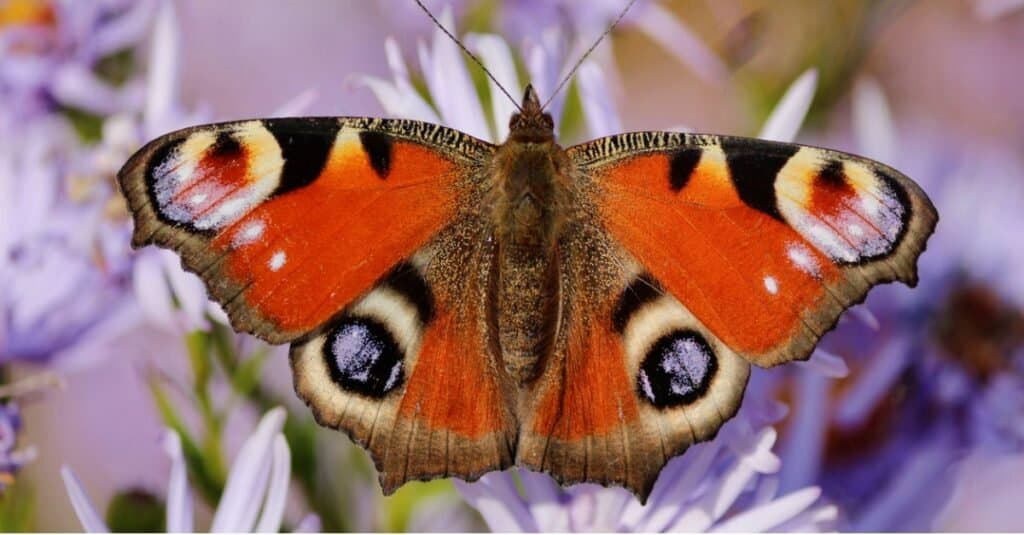
Peacock butterflies tough it out during the winter to survive until spring.
©iStock.com/Svetlana Sinichkina
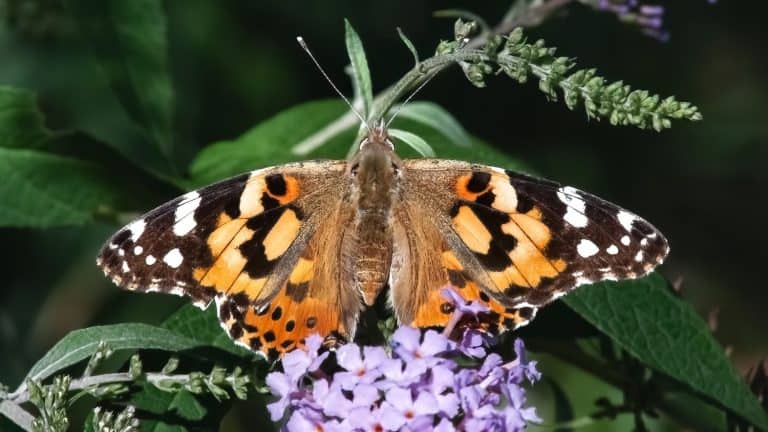
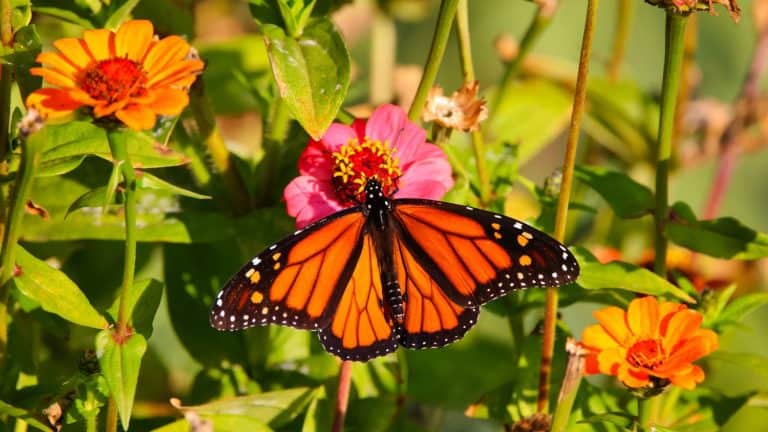
While many butterflies have short lifespans, such as the monarch, the peacock butterfly endures the cold. It survives by entering diapause, slowing its metabolism down, and conserving body heat. To do this, it must first find a safe place to shelter. This typically includes anything from a hollow tree to a shed or an attic. Some people even create butterfly shelters, since they’ll shelter anywhere that’s warm and dry through the winter. Peacock butterflies enter their dormancy during the late summer and don’t emerge until early spring.
Yellowjackets
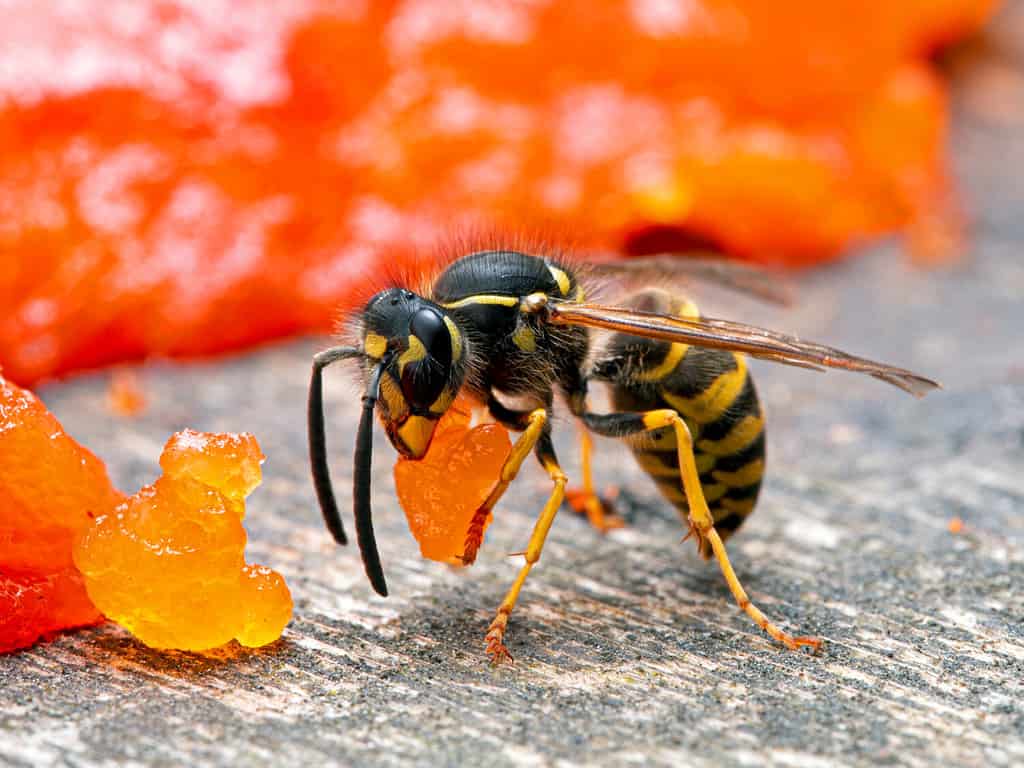
While most of the colony dies off in the winter, new yellowjacket queens survive.
©Ernie Cooper/Shutterstock.com
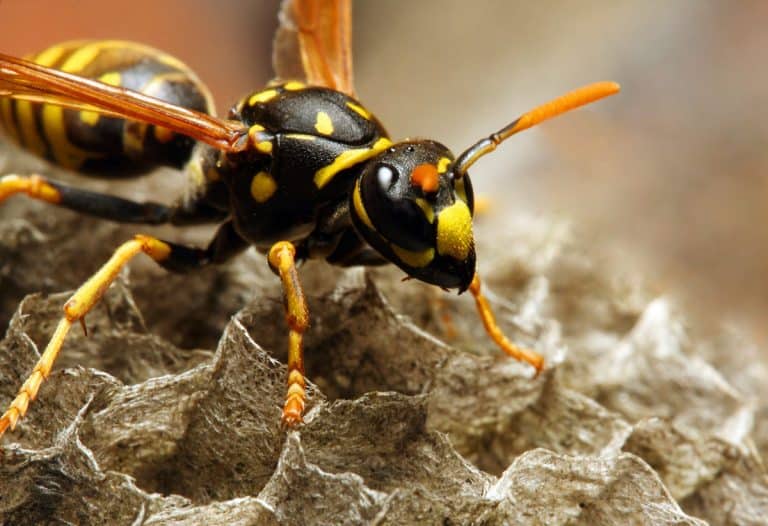
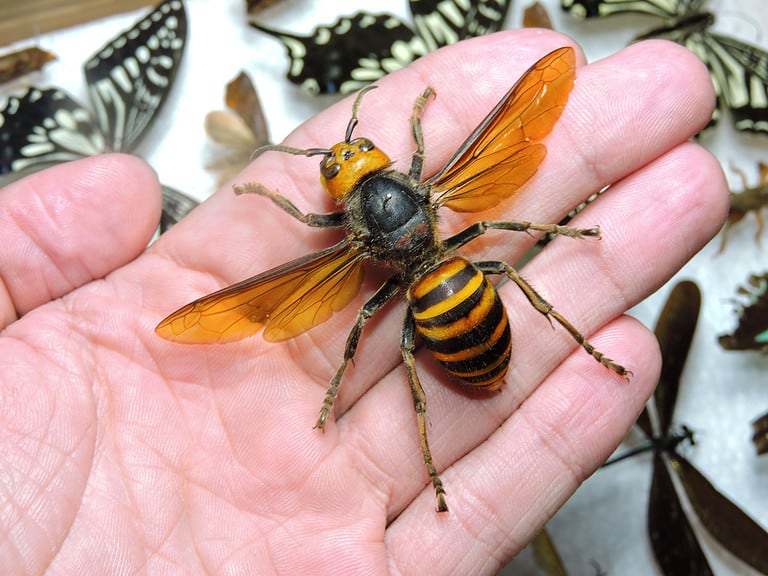
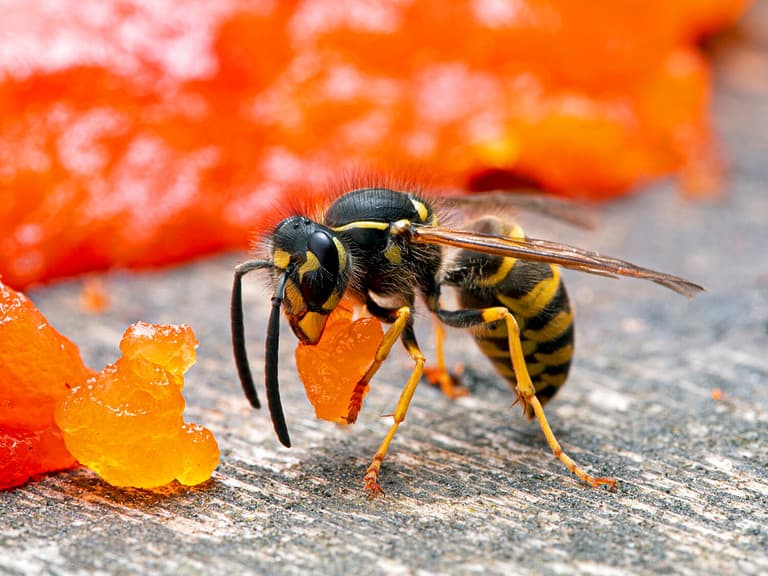
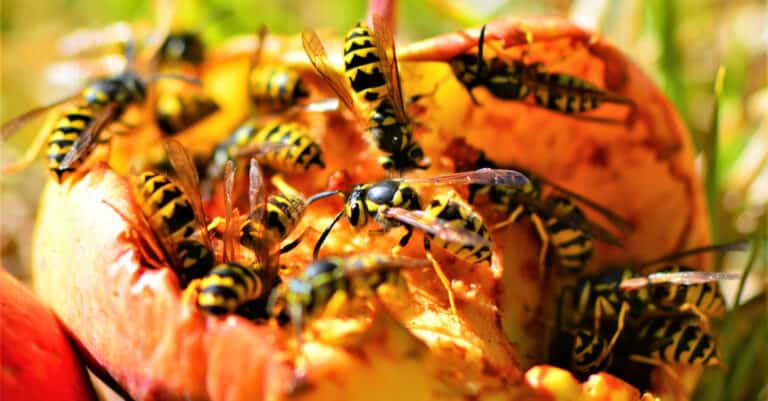
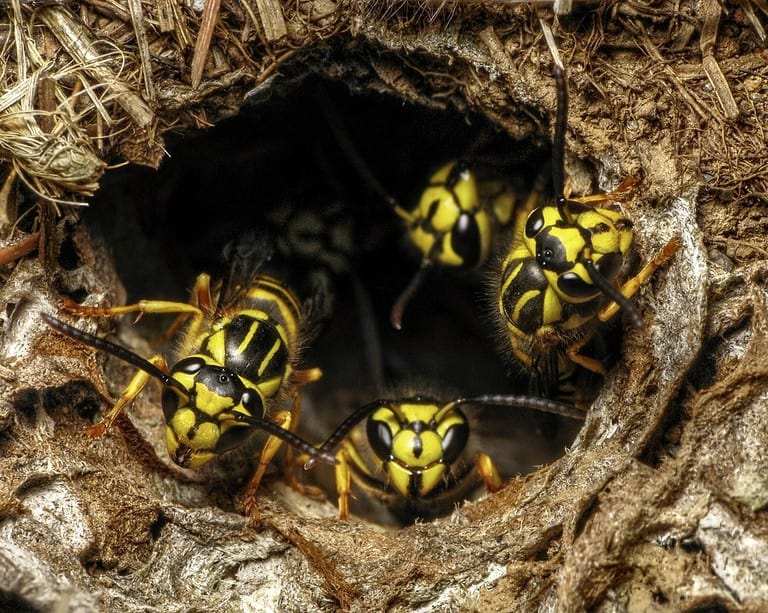
Yellowjackets might not be everyone’s favorite insect, but they do serve as pollinators and predators on the insect food chain. Similar to bumblebees, the yellowjacket queen is the only member of the colony to survive the winter. As the workers and old queens die in cold weather, the new queens frantically seek warm shelter. This could be anywhere they can fit, such as in wall crevices, attics, hollow logs, or leaf piles. They enter diapause, emerge in the spring, shake off their sluggishness, and fly off to start a new colony.
Paper Wasps
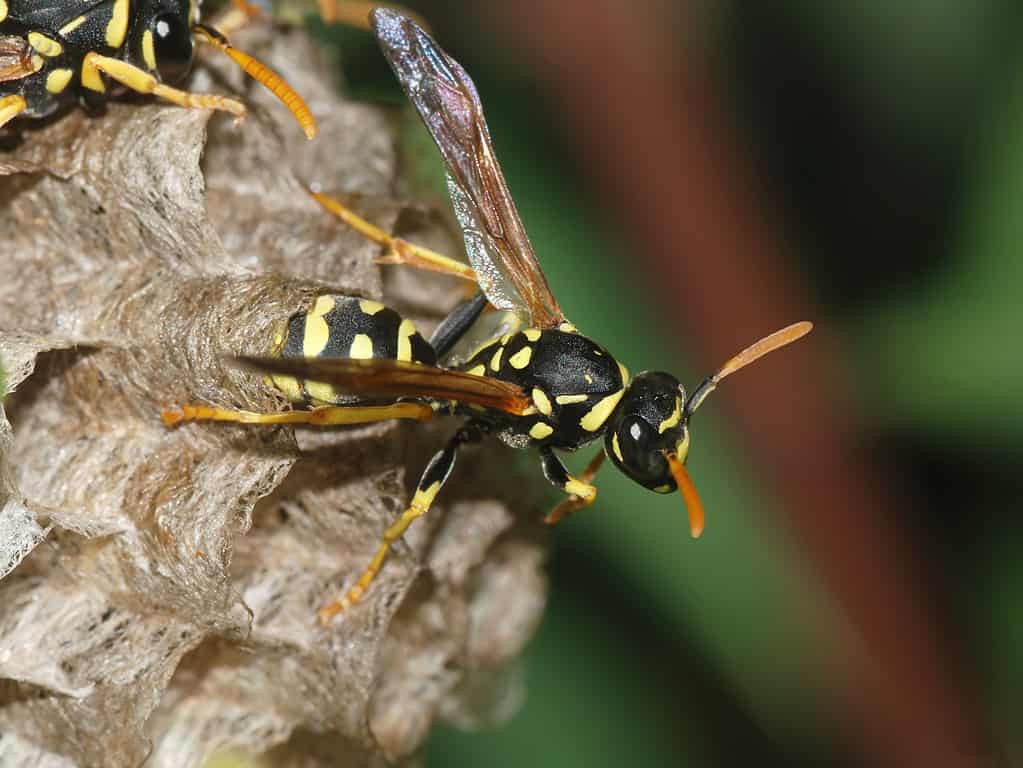
Paper wasp queens build new nests on their own after emerging in the spring.
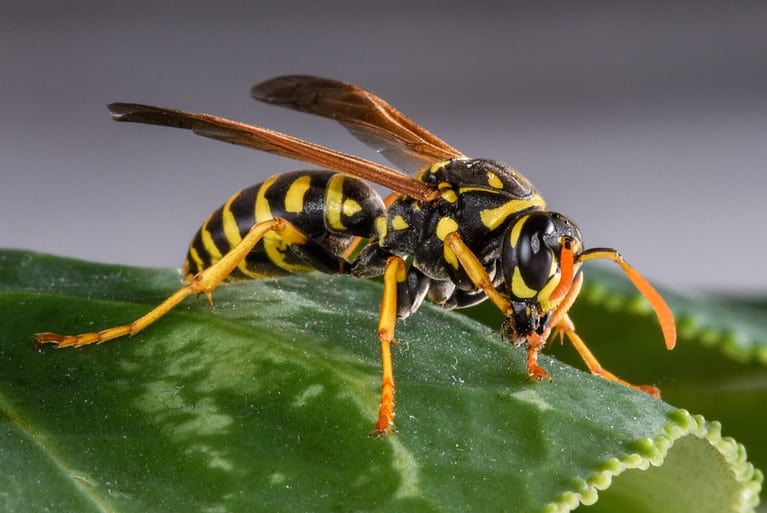
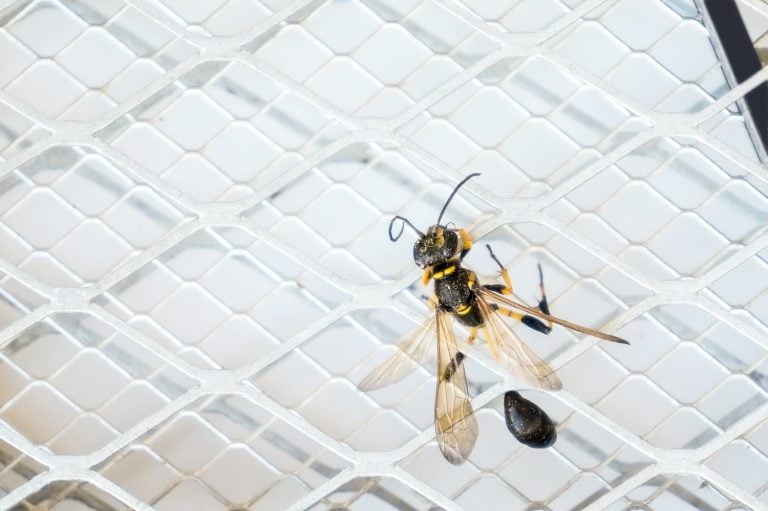
Wasps, such as the paper wasp, follow yellowjackets’ lead. As they leave their large, intricate nests for the last time, the rest of the colony dies off. It’s up to the new queens to seek shelter and survive the winter. They enter diapause as soon as they find a warm, dry location, and emerge in the spring to start building a new nest. Paper wasps must scavenge for building materials each year because they rarely return to the same nest. Once the construction of the new paper nest is finished, they begin the process of building a new generation of wasps.
Honeybees
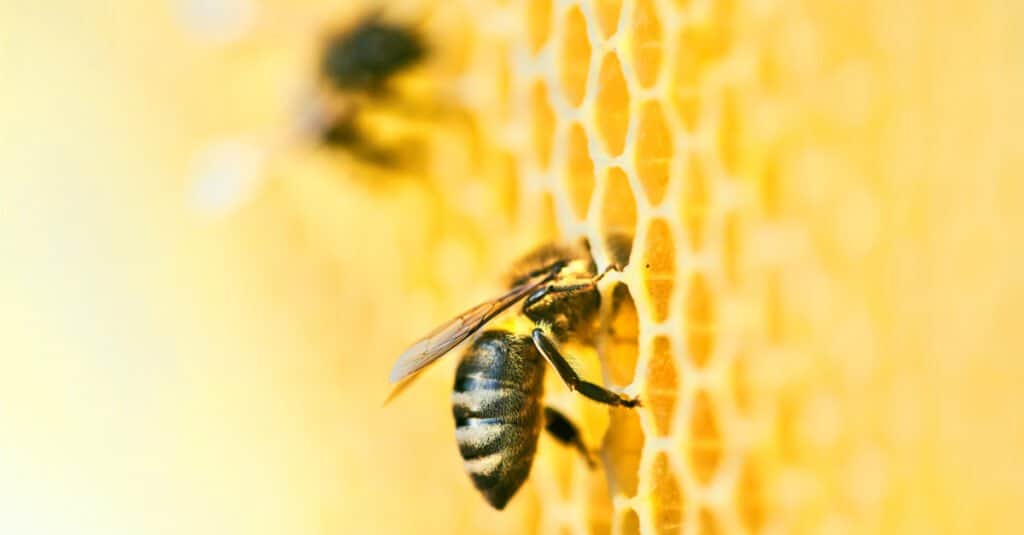
Honeybees huddle for warmth inside their hives through the winter.
©Aleksandr Rybalko/Shutterstock.com
In stark contrast, honeybees utilize their hives more than any other bee or wasp species. During the winter, they huddle together, creating body heat that’s retained by their hive. As they do this, they vibrate, creating temperatures between 80 and 95 degrees Fahrenheit. As they remain in their hive through the winter, they consume honey as needed to survive. This group of honeybees aims to survive the winter and will be responsible for building a new colony in the spring. Once in a while, bees take a “cleansing flight” to use the bathroom so they do not urinate in the hive.
Mourning Cloak Butterflies
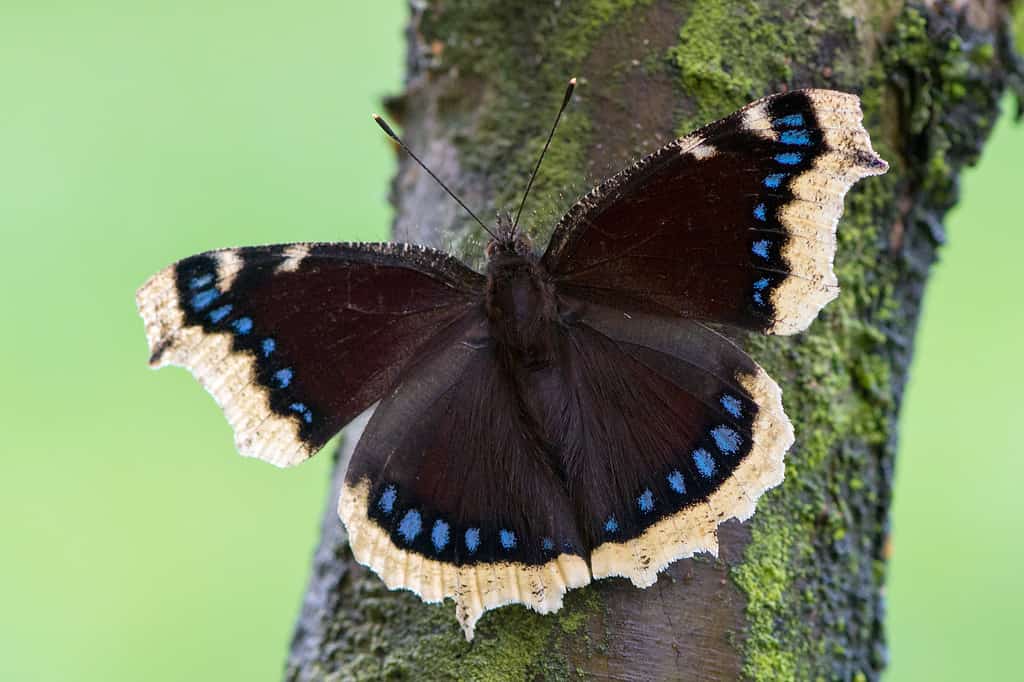
Mourning cloak butterflies are often some of the first to emerge in the spring.
©Marek R. Swadzba/Shutterstock.com
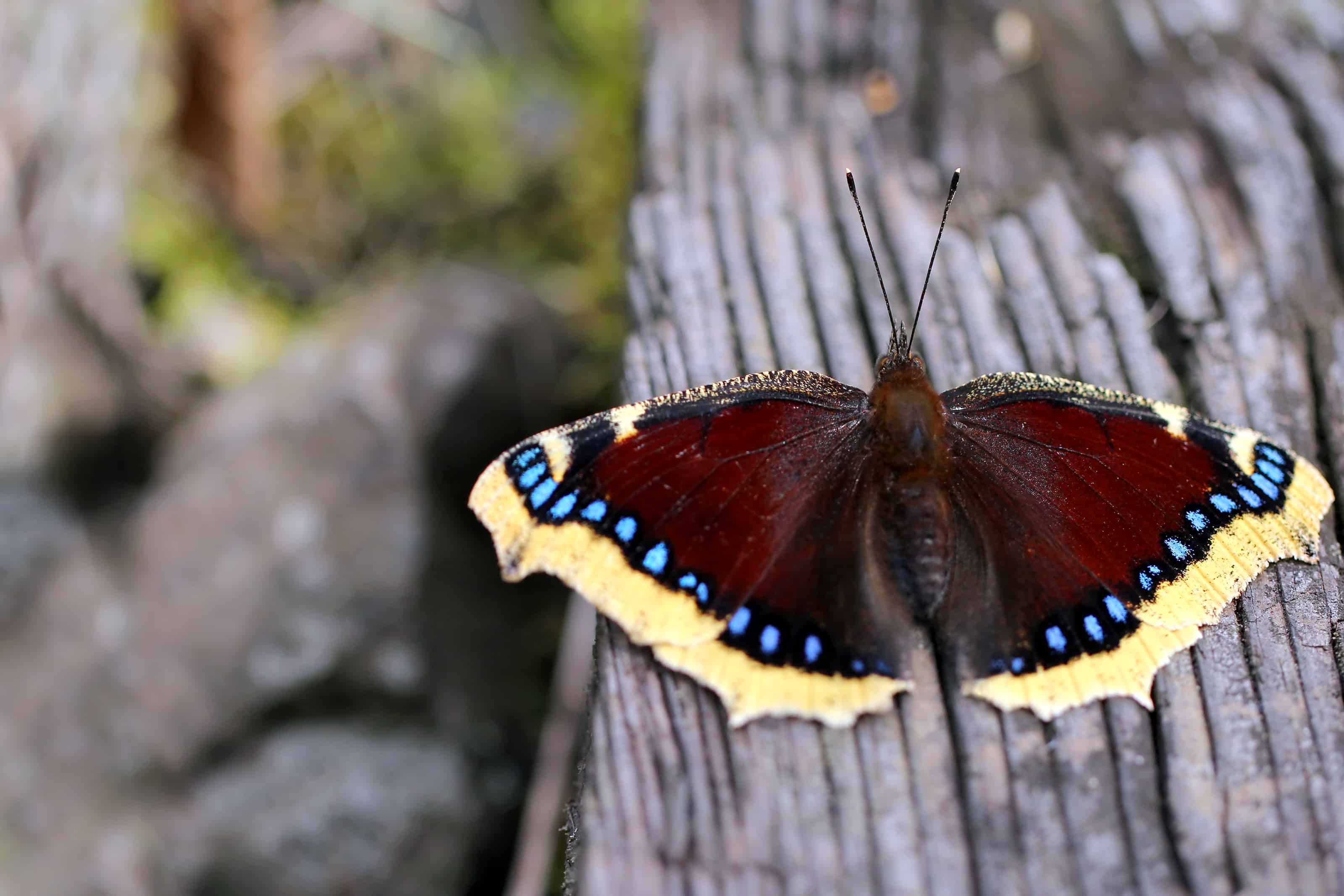
One of the first butterflies people often see as spring arrives is the mourning cloak butterfly. These miraculous insects overwinter by entering a state of dormancy, which allows them to slow their metabolism enough to conserve energy and body heat. They shelter in hollow logs, underbrush, and other dry locations as they wait out the winter. During this time, their bodies produce high levels of sugar, which helps prevent freezing. Their existence, along with bees, is one reason to push spring yard cleanups until the last minute. You never know what might emerge once the weather gets warm!
Boxelder Bugs
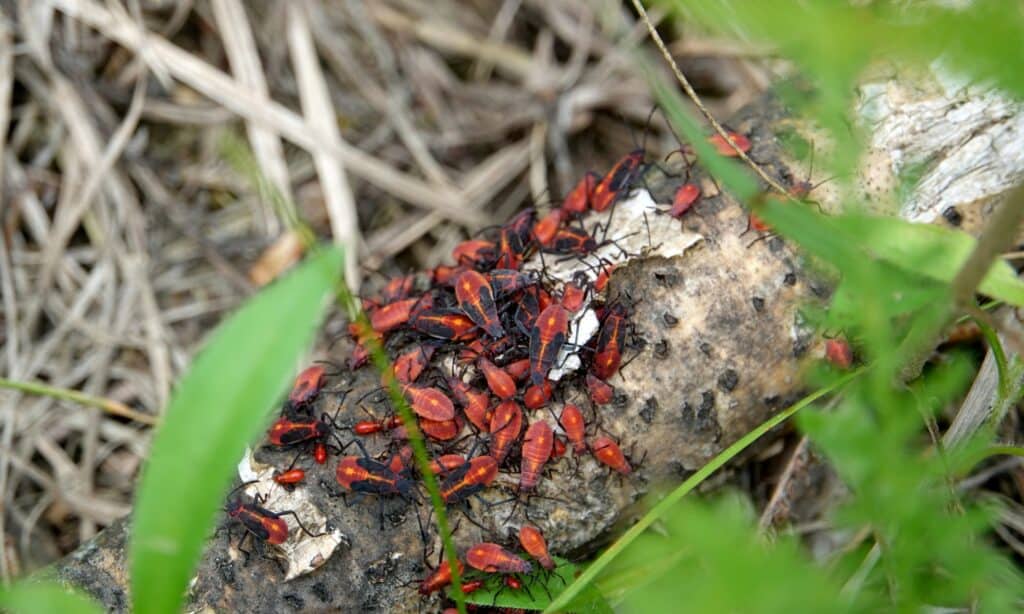
Boxelder bugs congregate in large masses during the spring.
©iStock.com/ErikAgar
Yet another seasonal pest for homeowners is the boxelder bug. These red and black bugs enter dormancy in the winter and emerge in whole swarms during the spring. Like Asian lady beetles, they also gravitate toward the warmth of exterior building walls. Here, they huddle together and can easily enter indoors through cracks and crevices in walls or foundations. Boxelder bugs are known for infiltrating attics and basements in search of warmth, and homeowners often do not realize they are present until the bugs awaken from dormancy.