
Quick Take
- Finding a snake in your pool feels like an invasion, but learning the real reason it's there might completely change how you react. Why snakes really enter →
- Your pool isn't the only surprise on a snake's accidental itinerary; they can get into the tiniest entry points into homes. See the accidental traps →
- Calling animal control isn't always the right move. Find out when to act and when you can let a snake have some space. When not to intervene →
- Most North American snakes are harmless, yet thousands of venomous bites still happen every year. Avoid the costly mistake →
As the weather warms up, snakes emerge from their winter brumation and become more active. On the hunt for food and shelter, they may end up giving homeowners a fright by finding a way into garages, basements, and attics, or perhaps deciding to take a dip in a swimming pool. Snakes are incredibly beneficial, helping to keep the balance of the ecosystem by feeding on unwanted pests. Also, most snakes in North America are harmless to humans. However, that doesn’t mean you want to share your home with the slithery reptiles. When do you need to call a professional, and when is it best to simply give the animal space? Let’s find out.
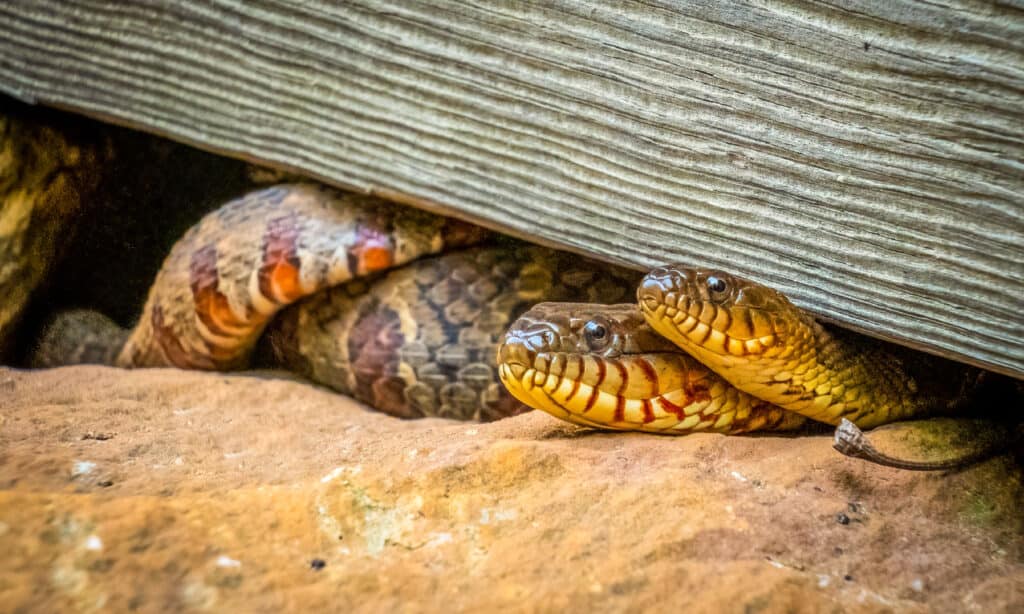
Snakes seek out dark and quiet spaces for shelter.
©samray/Shutterstock.com
Not an Invasion but a Search for Survival
Many people have an irrational fear of snakes. If a snake swims in your pool or inhabits your basement, it may feel like an invasion. However, that snake is not after you. It’s after what all animals want: warmth, water, food, and shelter.
Shelter, Water, Food, and Accidental Traps
Many times, snakes in your home will have come in by following rodents inside. Like rodents, snakes can enter houses through small cracks, gaps, and openings in your foundation.
Because snakes are cold-blooded, they can’t regulate their body temperature on their own. When the weather turns too hot or too cold, snakes look for a more comfortable place to hang out. A crawl space or basement will be dark, quiet, and cool during hot summers, which is just what a snake may need. On the other hand, a sun-drenched patio may be just the spot where a snake wants to bask to warm up on a cool day.
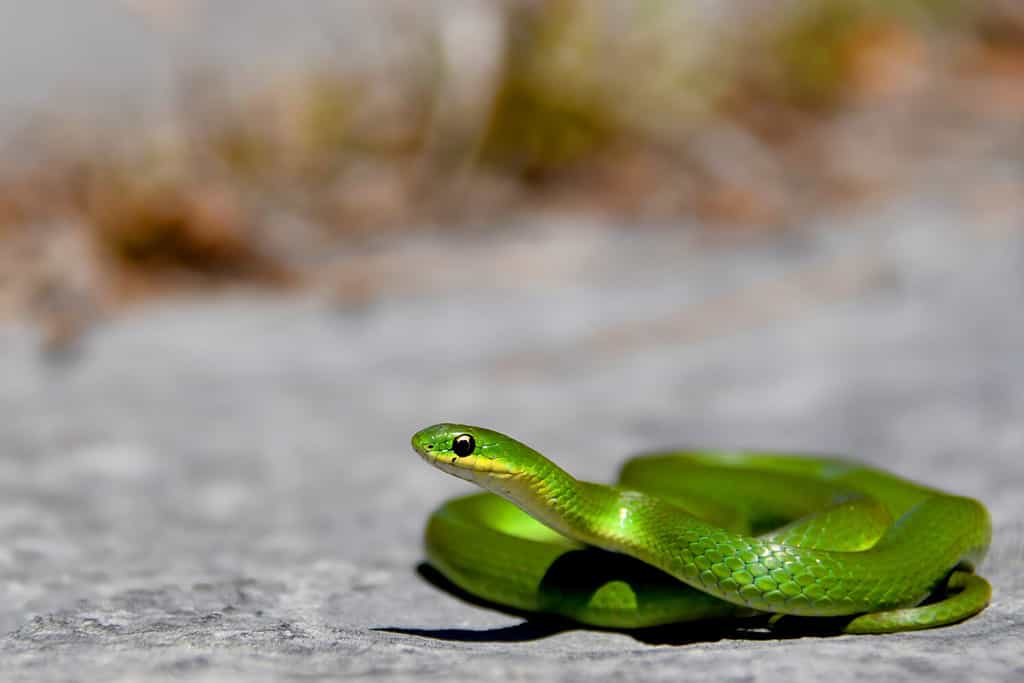
Snakes bask in the sun to regulate their body temperature.
©Lev Frid/Shutterstock.com
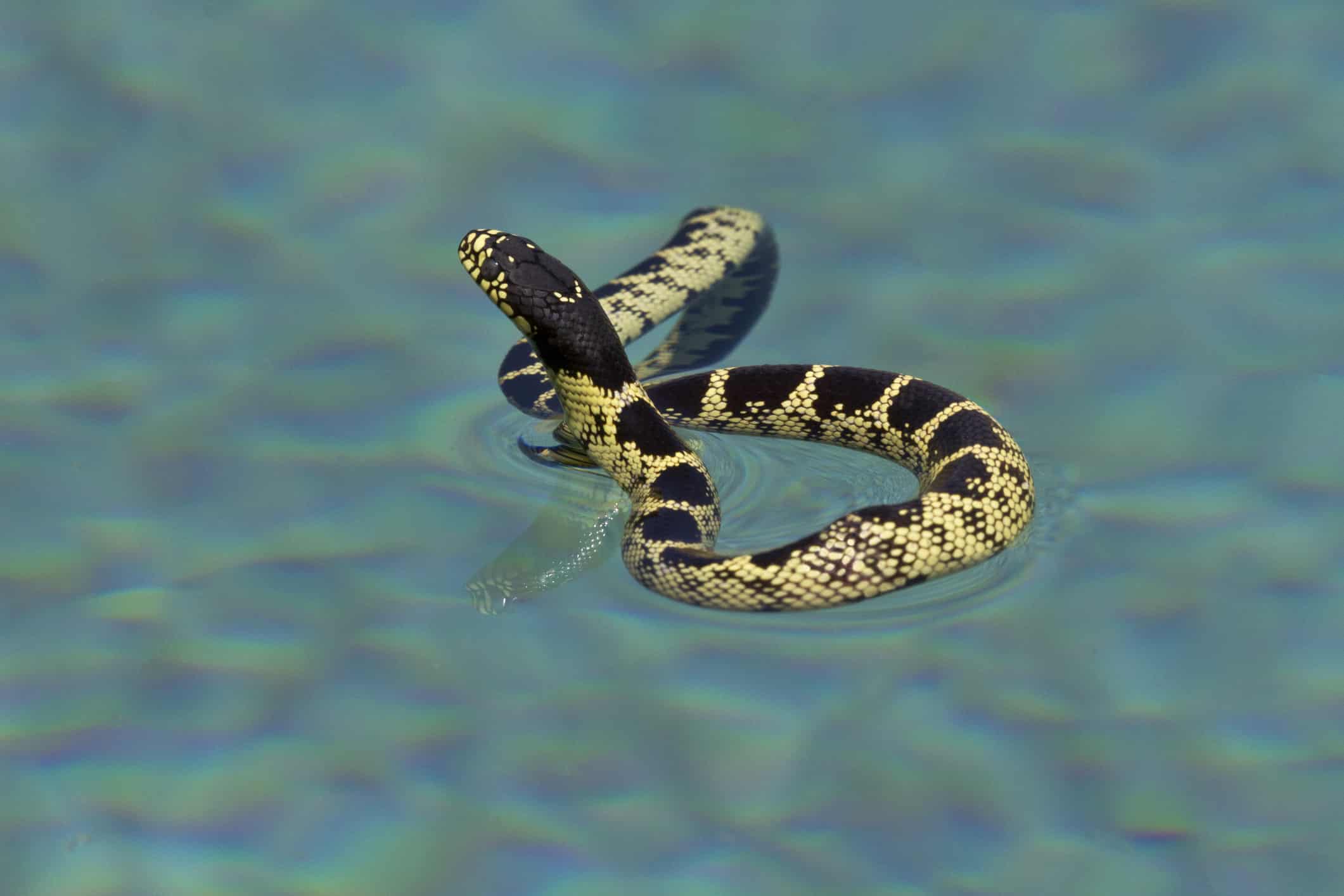
Snakes that end up in your pool have most likely fallen in by accident. They generally do not seek out chlorinated water to swim in, but if they are trying to get a drink or are chasing prey, they might slip inside and become trapped. Once a snake enters your patio, garage, basement, or pool, it may have difficulty finding its way back out.
When to Give Space and When to Call a Professional
Most snakes you encounter in North America are not venomous and pose no threats to humans. Further, snakes are important to the environment. They play a role as predators of pests, and they are also prey for other animals in the food chain. However, some snakes can be dangerous. The CDC reports there are about 7,000 to 8,000 venomous snake bites in the U.S. each year, and around 5 deaths. It’s best to give snakes plenty of space and not try to handle them.
Experts suggest that if you find a snake outside on your property and do not believe it is venomous, it is best to leave it alone. Snakes have a large home range, and they will probably leave on their own. If you believe a snake on your property is venomous, or if you find a snake inside your home or pool, the New Jersey Department of Fish and Wildlife recommends that you call your local animal control or a professional wildlife removal service.