
The goose (Anatidae) is a big, long-necked waterfowl that has earned a fearsome reputation for its repeated attacks on humans, as well as a starring role in the comical video game Untitled Goose Game, but geese are much more fascinating than this simplistic caricature suggests. Geese are doting parents, extreme endurance fliers, and a fascinating study of bird anatomy and behavior. Those who have been bitten by a goose could swear that geese have teeth. However, they would be wrong. Geese do not have teeth. Continue reading to discover how geese eat without teeth, and why a toothless goose bite still hurts.
Goose Behavior

Despite their reputation, geese are doting parents.
©Albert Beukhof/Shutterstock.com
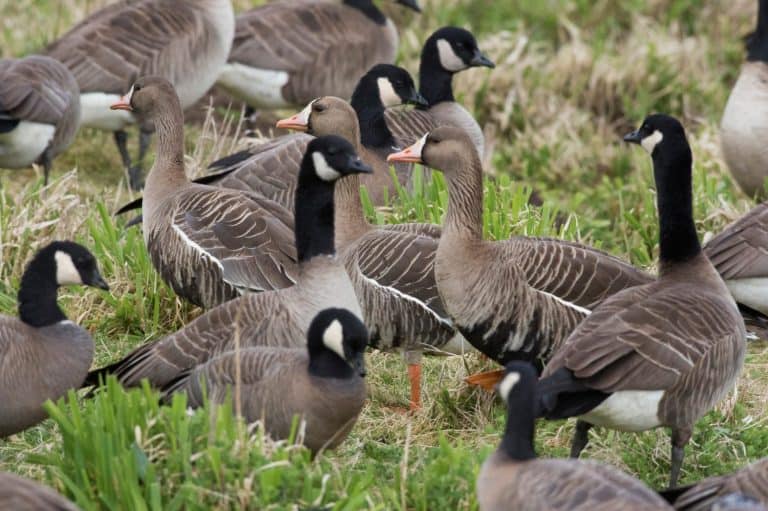
True geese can be divided into two groups: the gray geese and the white geese of the genus Anser and the black geese of the genus Branta. They are found all over the Northern Hemisphere, from the extreme frigid climates of Northern Siberia to the pleasant, wind-swept islands of the South Pacific. While true geese are absent from the Southern Hemisphere, there are other goose-like birds there, though they are classified differently.
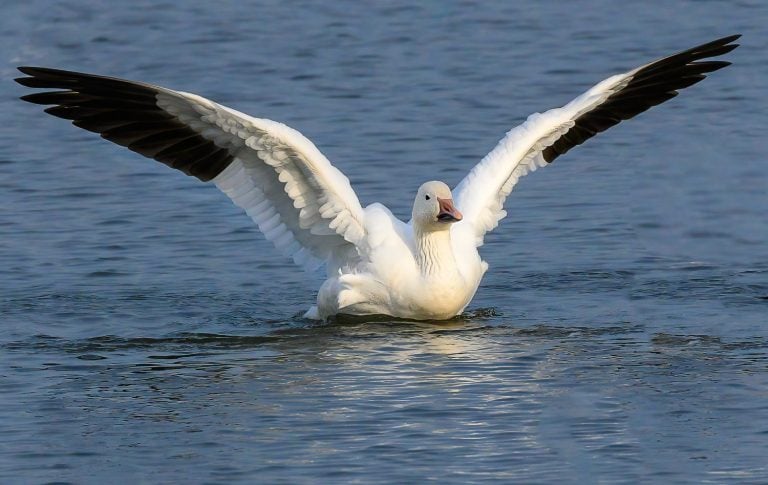
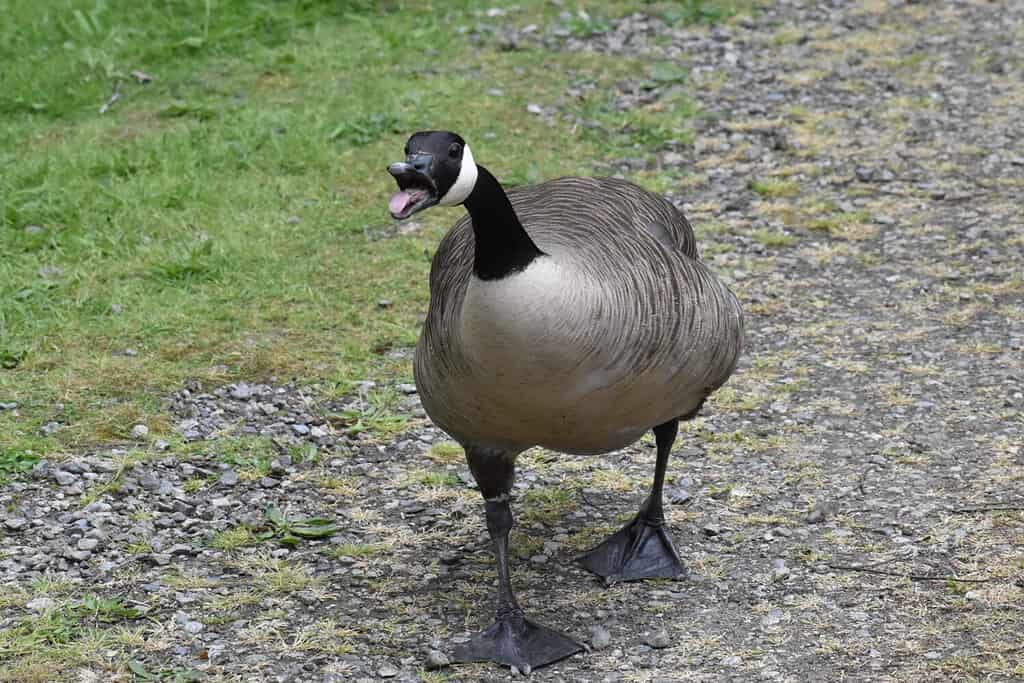
The goose’s penchant for loud honking and aggressive action is intensified by their territorial behavior in the mating or nesting season. While this sometimes leads to conflict with people, their intention is actually to protect their young goslings from danger. Geese will also stretch and flap their wings to show their full wingspan in an attempt to become as imposing and physically large as they possibly can. When they emit a warning call, they will often stretch forward and open their mouths to display the tooth-like projections lining their tongue and beak.
Geese Do Not Have Teeth

Geese have tomia, which are sharp, serrated extensions of cartilage along their beak and tongue, instead of teeth.
©Courtesy of Keven Law from Los Angeles, USA, CC BY-SA 2.0 – Original / License
Instead of teeth, a goose has sharp, serrated edges along its beak and tongue called tomia (singular: tomium). Tomia are composed of cartilage rather than enamel; cartilage is essentially the same substance found in joints, ears, noses, and vertebral discs. Cartilage allows for more flexibility than bone, but it is also much harder than the typical soft tissue, which is perfect for gripping and handling food. The second way in which tomia differ from true teeth is that they’re a natural extension of the beak and tongue, inseparable from the surrounding tissue.
Geese do not have teeth. True teeth are made from a protective outer coating called enamel. They are then attached to the jaw or the inner mouth via deep roots. While many vertebrates (and even some invertebrates) have some kind of teeth, birds, as a general rule, do not. The only exception to this rule is the egg tooth, located on the upper beak, which helps a young hatchling break through the eggshell. However, the egg tooth is more like a bone covered by a horn and is lost immediately after hatching.
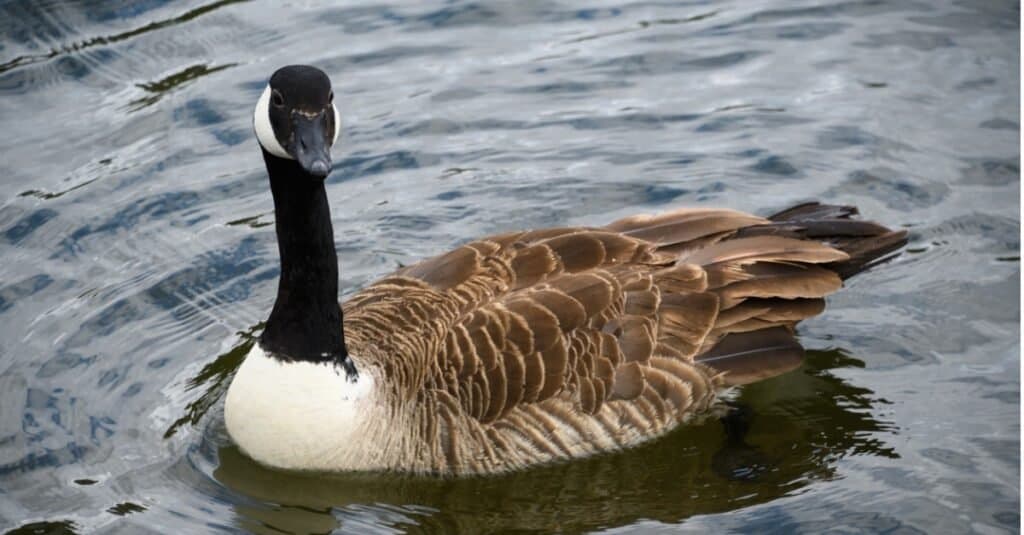
A Canada Goose swimming on a lake.
©Roger Utting/Shutterstock.com
How Geese Eat and Digest Their Food
A goose’s diet consists primarily of grasses, grains, leaves, roots, stems, and other low-lying vegetation. They may supplement their diet with small insects, especially as goslings, but adult geese are primarily herbivorous, and will supplement their diet with snails and small insects found when grazing. The tomia work together to grip, tear, and uproot food, but they aren’t strong enough to chew food into smaller bits. The function of breaking apart food is handled by a separate organ called the gizzard, a muscular chamber located near the stomach that reduces organic tissue to smaller, digestible bits. In humans, this function is performed by the molars at the back of the mouth.
The gizzard is composed of many grooves and ridges that contract together to grind up hard food bits such as meat and tough plants before entering the actual stomach. Birds will often swallow pebbles and stones to store in the gizzard, which improves its grinding capability. The gizzard also shifts the center of gravity downward, making flying easier.
Why Geese Don’t Have Teeth
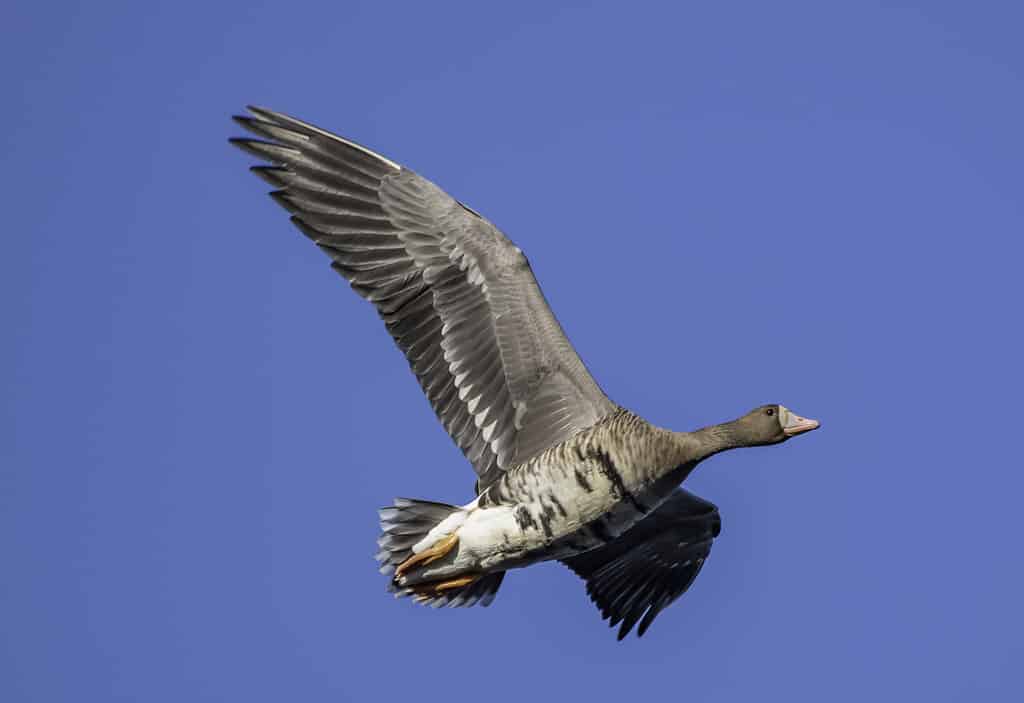
The most popular theory is that birds lost their teeth to improve their ability to fly.
©iStock.com/Supercaliphotolistic
Birds, as a whole, lost their teeth at some point during the course of their evolution. The most popular theory is that birds lost their teeth to improve their flying ability. The large jaws of their reptilian ancestors were quickly lost as birds evolved smaller skulls and lighter skeletal structures necessary for true flight.
As the jaws shrank, there was no longer any room for the teeth. They evolved gizzards to compensate for this loss.
A less accepted theory suggests that birds lost their teeth to dramatically reduce their incubation times. It’s estimated that the development of teeth requires up to 60% of the incubation period, which is a particularly vulnerable time. Once birds lost their teeth, they could hatch in a few weeks.
Based on fossil evidence, birds evolved most of their modern features during the Cretaceous Period between 145 million and 66 million years ago. This is when they gradually lost their teeth and gained the ability for more powerful, sustained flight. Shortly after the massive extinction event around 66 million years ago, the early ancestors of modern waterfowl began to arise, probably with some form of tomia already evolved.
Does a goose bite hurt?
©TheBirdyStore/Shutterstock.com
Being bitten by a goose is not a pleasant experience. While the tomia aren’t designed to cut deeply, they are hard and can potentially draw blood. Geese are highly territorial birds during the nesting season and seem to treat almost everyone as a potential threat. If they feel threatened, they will charge, flutter, or fly at people with wings extended. The most important thing you can do to avoid a goose attack is to give them lots of space and avoid provoking them in any way. You should also avoid the temptation to feed them because this encourages them to approach people.