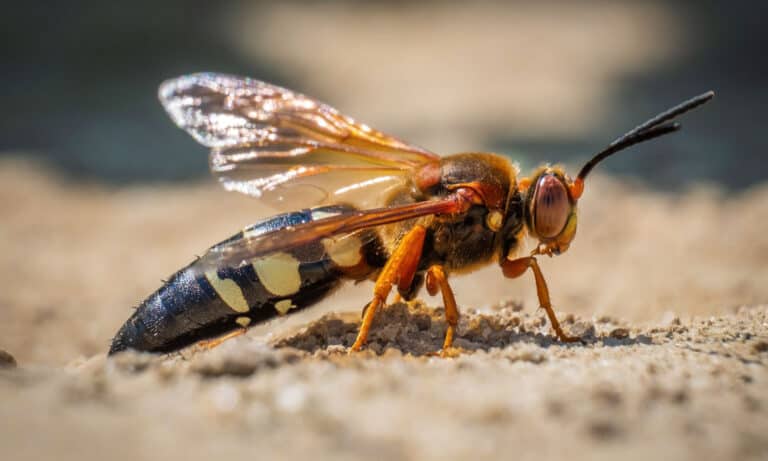

Have you seen a really big bee outside? We’re talking really, really big: a scary-looking wasp that is 2 inches in length.
You may be wondering: did I just see a murder hornet? Should I kill it? Should I call the authorities? Am I in danger? Here, we’ll examine how budding entomologists in North America can tell the difference between the native cicada killer wasp and the possibly invasive Japanese hornet.
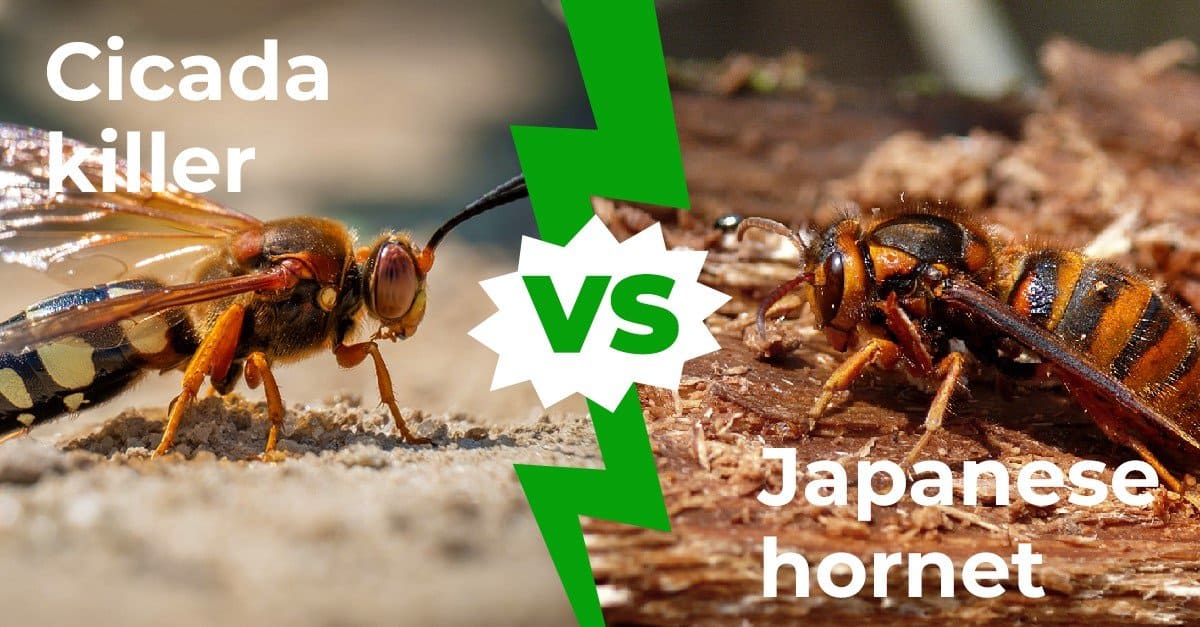
Cicada Killer vs. Japanese Hornet
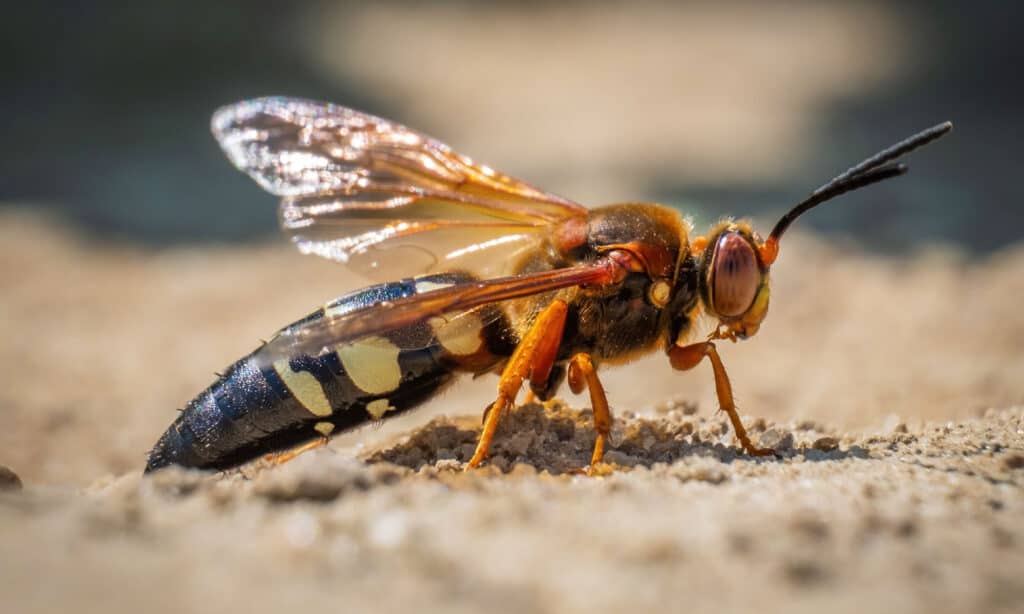
Japanese hornets and cicada killers occupy different parts of the world.
©samray/Shutterstock.com
Eastern cicada killers (Sphecius speciosus) and Japanese hornets (Vespa mandarinia) don’t normally occupy the same continent, but sightings of Japanese “murder hornets” in the U.S. have sparked many misidentifications of the cicada killer, a large and harmless native wasp.
Since these insects are about the same size, how can you tell them apart? Consider where you sighted it, the coloration, and the stinger. Here are some additional differences to help you tell them apart.
Comparing Cicada Killer vs. Japanese Hornet
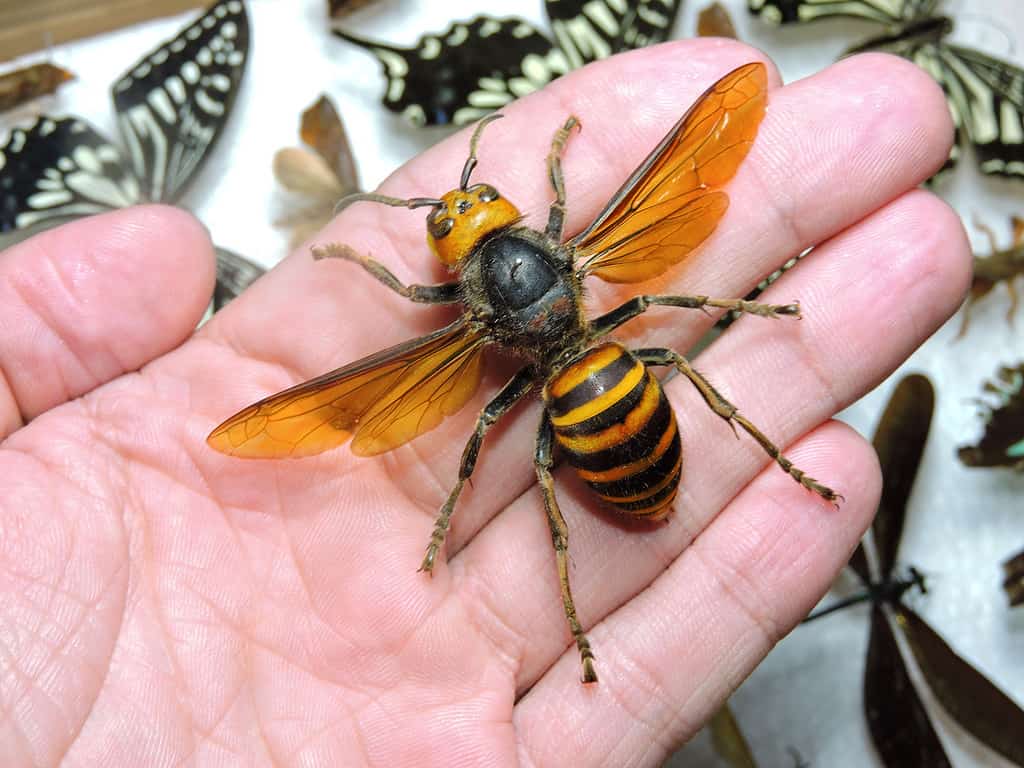
Cicada killers are darker than Japanese hornets.
©iStock.com/Bruno Uehara
Consider the following differences between cicada killers and Japanese hornets.
| Cicada Killer | Japanese Hornet | |
|---|---|---|
| Geographic Location | The United States, concentrated in the east | Asia, Russia, and North America’s Pacific Northwest |
| Coloration | Darker with fewer yellow bands | Yellow head, yellow and brown-banded abdomen |
| Stinger | Black, blunt stinger; non-aggressive | Long, sharp stinger; aggressive |
The 3 Key Differences Between Cicada Killers and Japanese Hornets
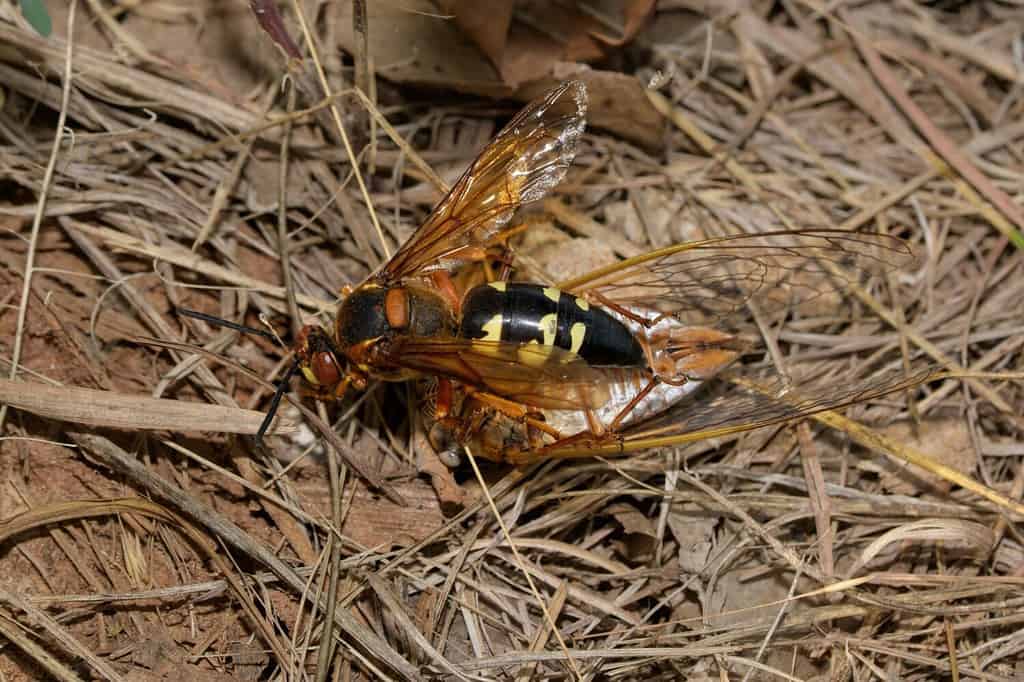
The stinger of cicada killers appears more blunt compared to Japanese hornets.
©Sari ONeal/Shutterstock.com
If you happen to see a two-inch-long bee or wasp, take note of these three features in order to identify them.
Geographic Location
The Japanese hornet and cicada killer wasp have geographically distant native habitats. The Japanese or Asian giant hornet inhabits much of Asia, as far north as Russia. If you see a large wasp there, it is almost certainly the Japanese hornet, the largest hornet in the world.
The eastern cicada killer, the largest and most well-known cicada killer species, lives in North America. Its range is concentrated on the eastern two-thirds of the continent, especially the east coast. If you spy a very large hornet in North America, it is almost certainly an eastern cicada killer.
Appearance
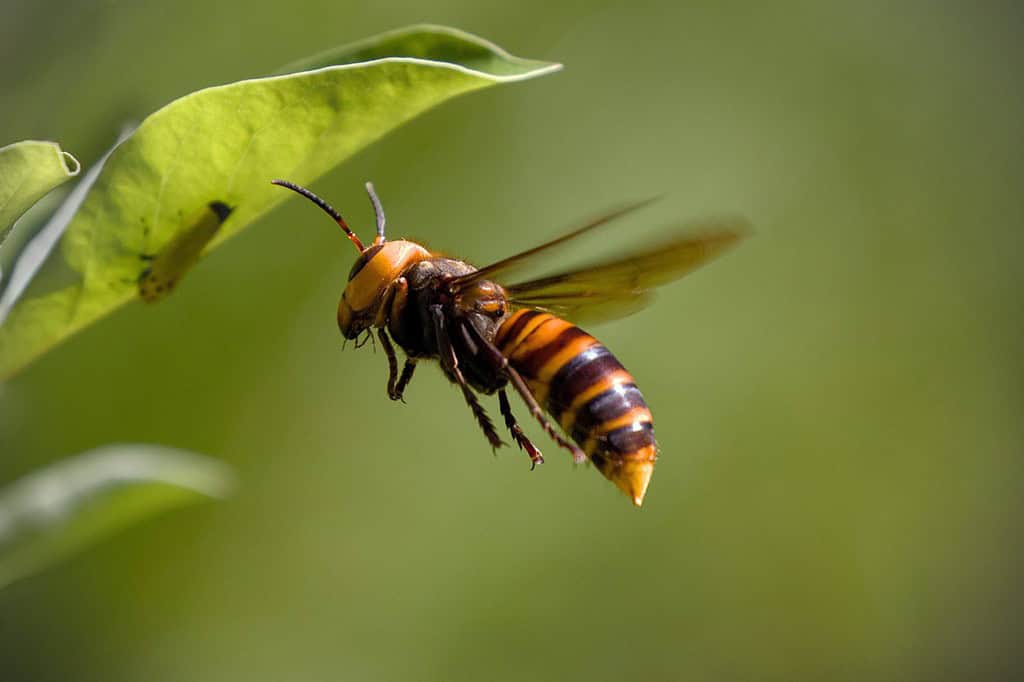
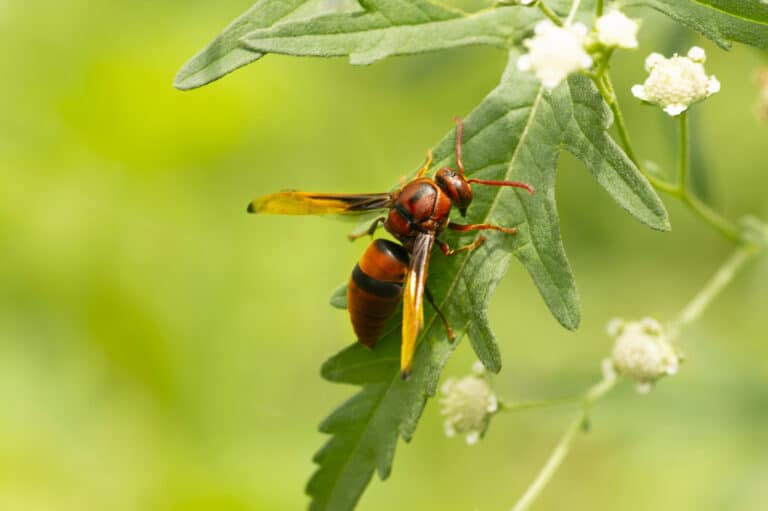
The yellow head of the Japanese hornet is more striking compared to the brown head of the cicada killer.
©Bilkis Akther/Shutterstock.com
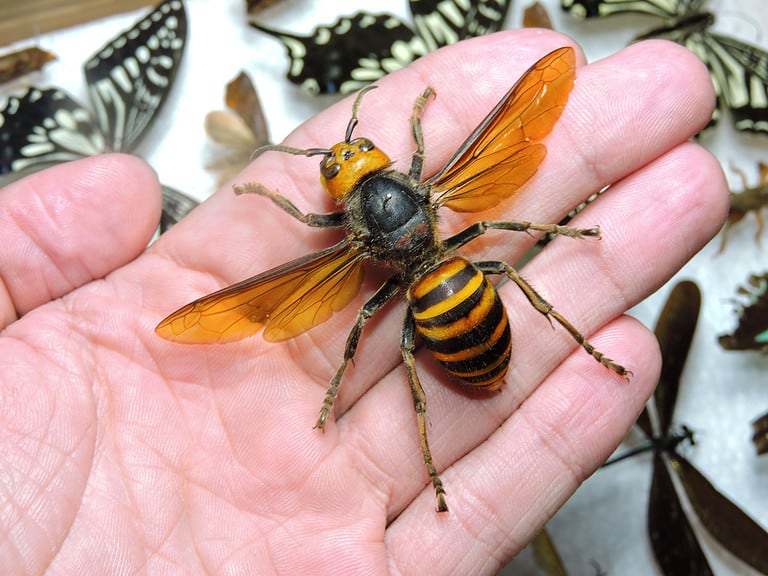
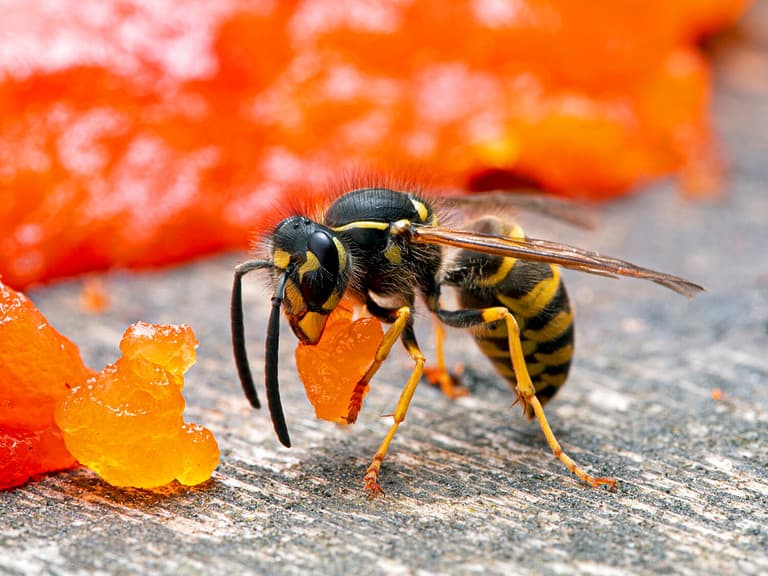
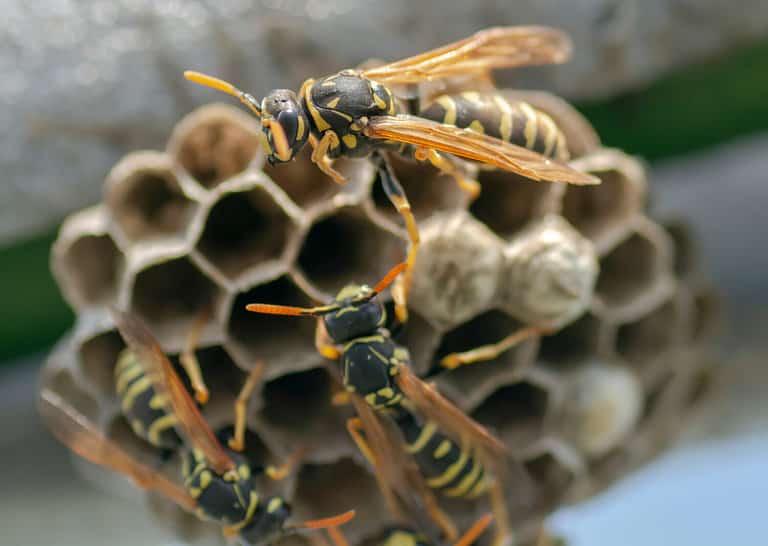
Next, you can look at the overall color of the wasp. The abdomen is the most distinctive. Cicada killers have black abdomens with three interrupted bands of yellow, while Japanese hornets have many unbroken, alternating bands of brown and orange-yellow.
Next, look at the head. Japanese hornets have an orange or yellow head, while cicada killers have a dull brown head with a small yellow patch on the face.
Finally, look at the thorax. Japanese hornets have a dark brown to black thorax, while cicada killers have a lighter brown to orange thorax.
Stinger
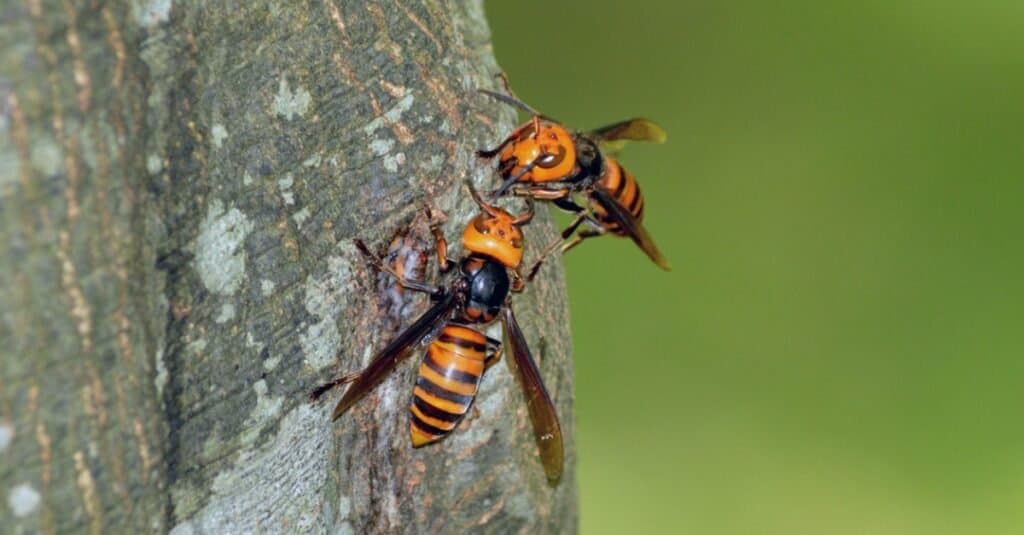
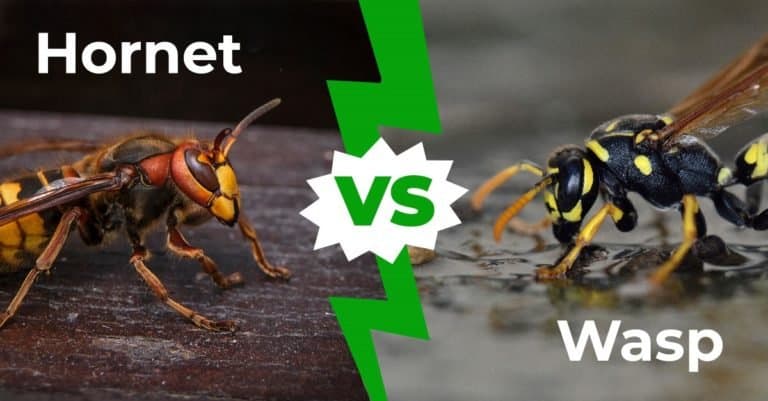
Once you see the two side by side, it should be easy to tell Japanese giant hornets and cicada killers apart.
©iStock.com/kororokerokero
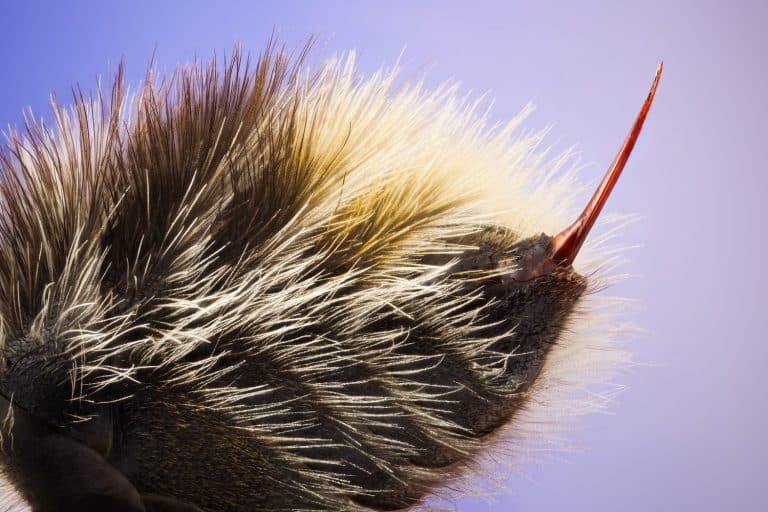
Japanese giant hornets are known for their painful sting. They have a long, sharp stinger visible at the tip of the abdomen. Cicada killers do have a stinger, but it appears blunt by contrast. The tip of the abdomen is black and rounded.
Sting behavior can also indicate the species. If you receive a painful sting from a 2-inch-long wasp, you’ve probably encountered a murder hornet. Murder hornets inject venom that can be painful and potentially dangerous, especially to those allergic to wasp venom. Fatalities are rare and usually occur due to anaphylactic shock. Male cicada killers can’t sting, and females are non-aggressive and will only sting if severely threatened.