
Quick Take
- Not every wasp near your backyard barbecue is a threat, but mistaking an aggressive species for a harmless one can get you stung. Spot the difference →
- Wasps don't attack randomly. There's a specific trigger that sends a whole colony after you at once. See what triggers them →
- Removing a wasp nest yourself can backfire badly, but there is one condition that makes it safe to try. Find out when it's safe →
- A plastic bottle from your recycling bin might be the most effective wasp deterrent you're not using. Build the bottle trap →
With summer right around the corner, insects that left as the cooler months approached will make their return. One such insect is the wasp.
Some properties are more prone to wasp activity than others. With this comes the fear of being swarmed. However, there are safe ways to manage aggressive summer wasps, allowing you to enjoy outdoor activities and warm days without fear of being stung.
Recognizing An Aggressive Wasp Versus a Docile One
There are both aggressive and docile wasps. Docile wasps will not attack unless picked up or provoked. Aggressive wasps will attack at the slightest change in vibration near their nests. This is why distinguishing an aggressive wasp from a docile one is so important.
Social wasps are those that will sting without being provoked. These wasps include:
- Yellowjackets
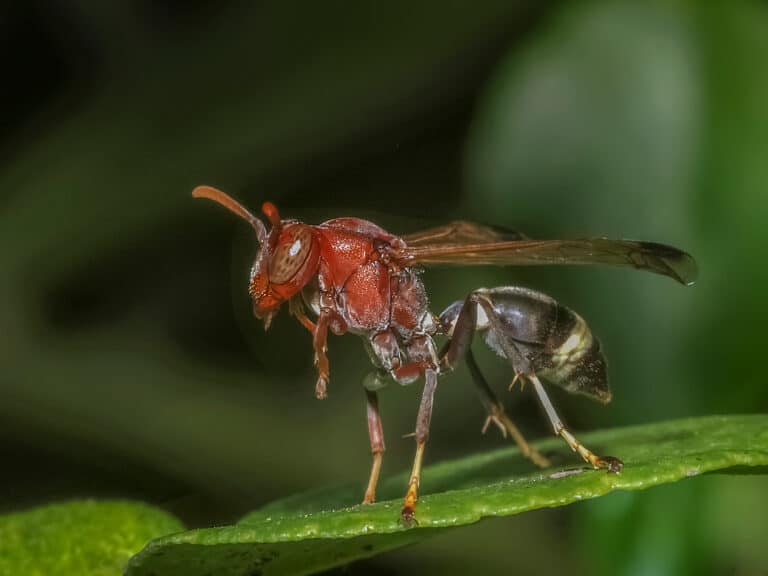
- Paper wasps
- Hornets
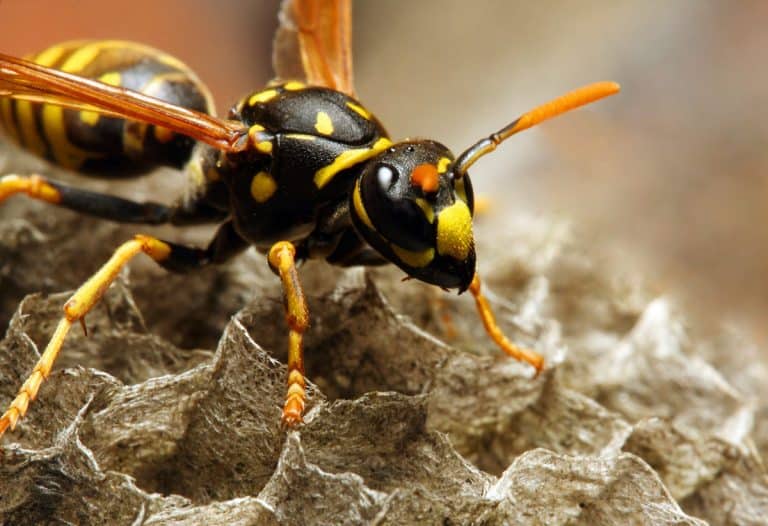
Social wasps are those that create large paper or mud nests as they live in colonies with workers and a queen. They are easily identified by their bright colors and/or black-and-yellow striping and slender bodies.
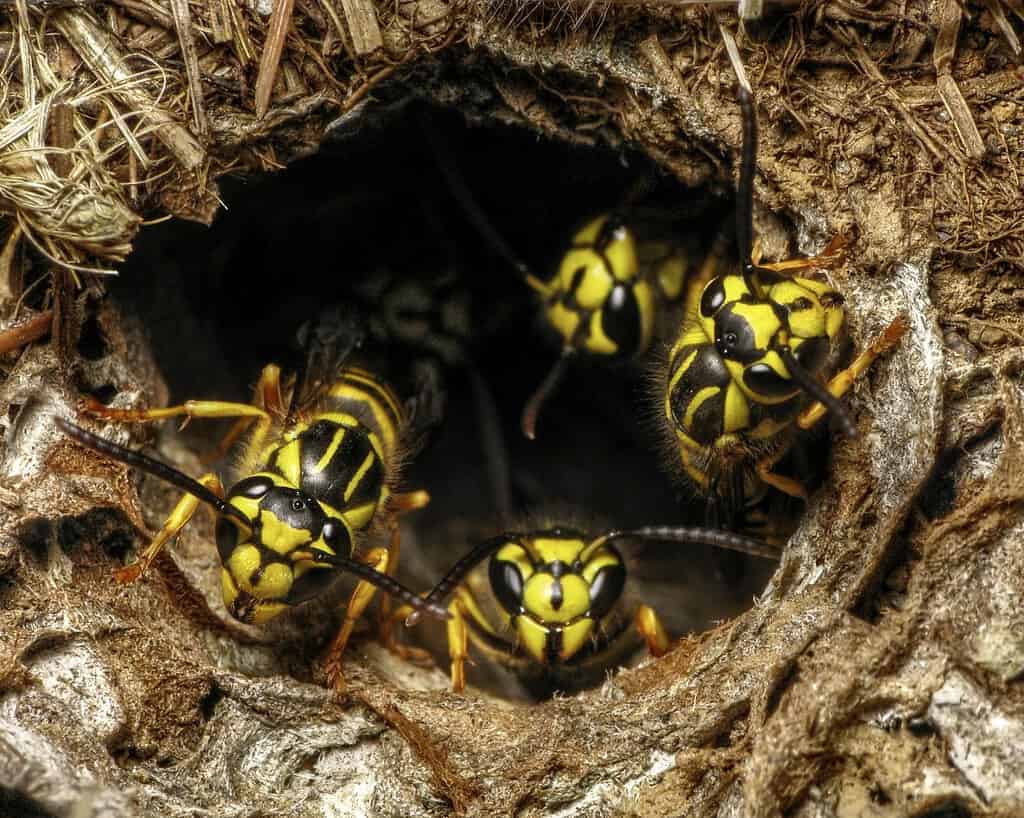
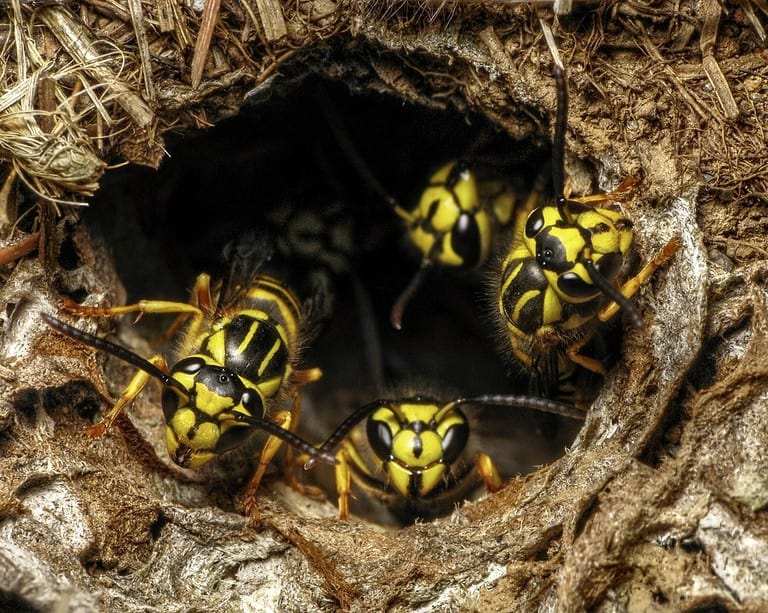
Yellowjackets are among the most aggressive wasp species.
©Sean McVey/Shutterstock.com
Docile wasps tend to leave people alone. These wasps include:
- Cicada killers
- Potter wasps
- Mud daubers
Unlike social wasps, docile wasps tend to be solitary. They do not have the bright coloring of social wasps and have thicker bodies as well. Their nests are significantly smaller and may consist of leaf nests, mud cells, or even burrows.
Why Aggressive Wasps Are Aggressive
Not all wasps share the same temperament. However, those who are aggressive present this behavior for the same reasons, which can be traced back to their sense of community.
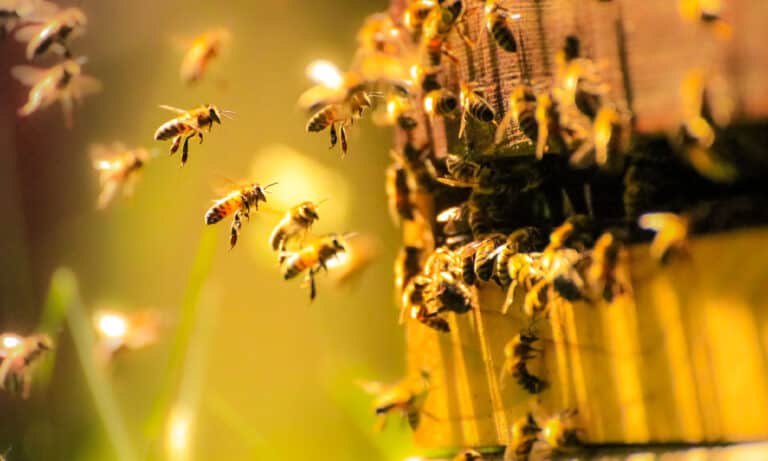
Aggressive wasps are fiercely protective of their nests. These nests are built annually. After construction, the queen is busy laying eggs to build the colony. If something happens to the nest, the colony could die. This is why wasps will swarm if they believe their nest is being threatened.
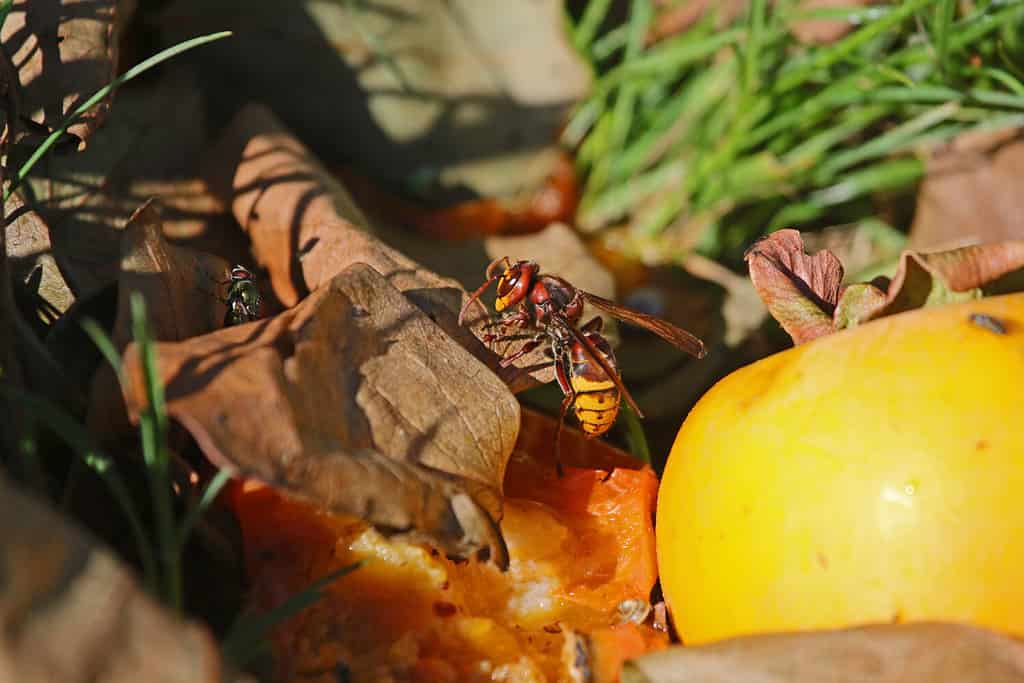
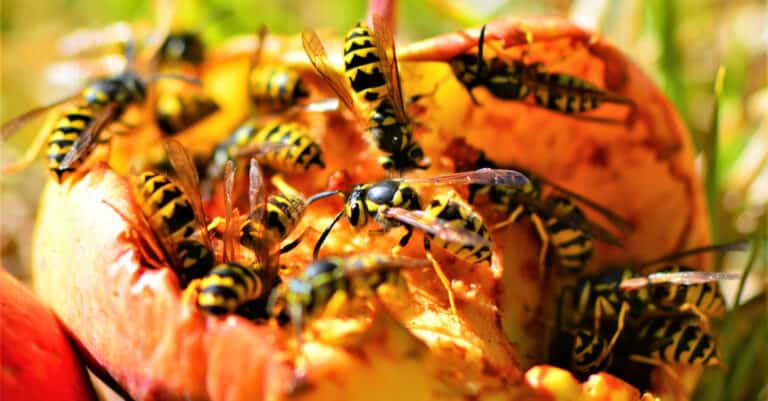
Aggressive wasps have this behavior to protect their nests and food sources.
©Ruth Swan/Shutterstock.com
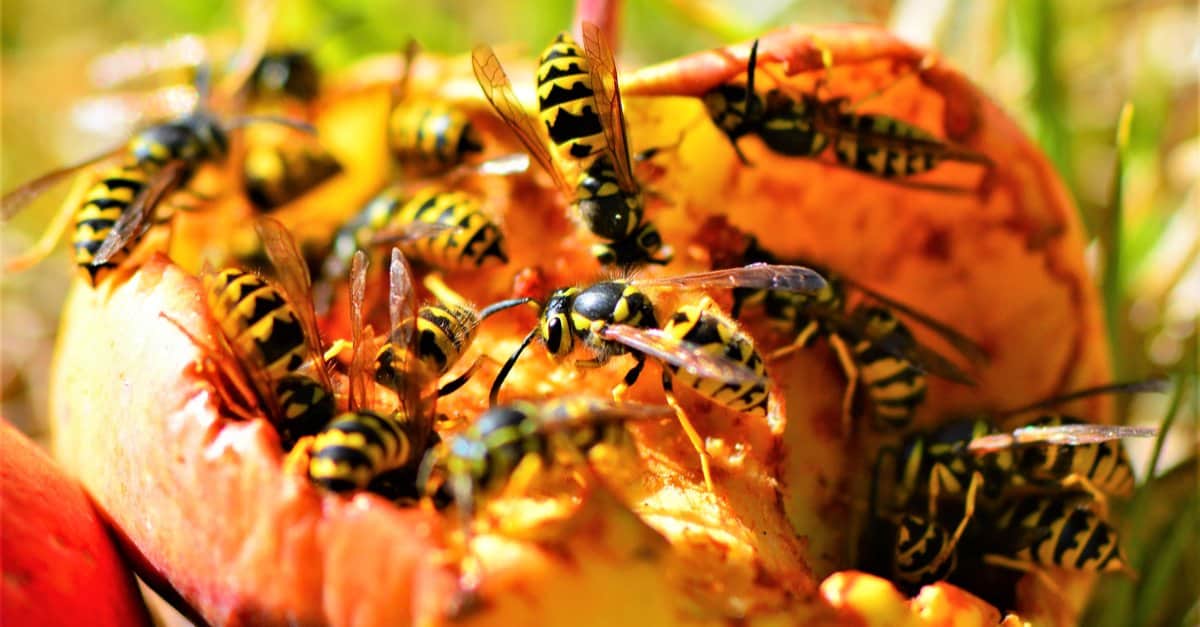
Food protection is another reason certain wasps are aggressive. Wasps that live in a colony need to provide food for the larvae growing into adult wasps. If wasps see their food sources in danger of being taken away, they will attack to stop it.
Aggressive wasp behavior is unpleasant, but understanding why some wasps act this way can help us see them not as ruthless insects, but as creatures simply protecting their colony.
Do All Wasp Nests Need to Be Removed?
Not all wasp nests need to be removed. If the nest is in a location away from people and the nest was built by a docile wasp, leaving it be for the season may be the best option. Since wasps do not reuse old nests, homeowners can decide whether to remove the nest after it is abandoned.
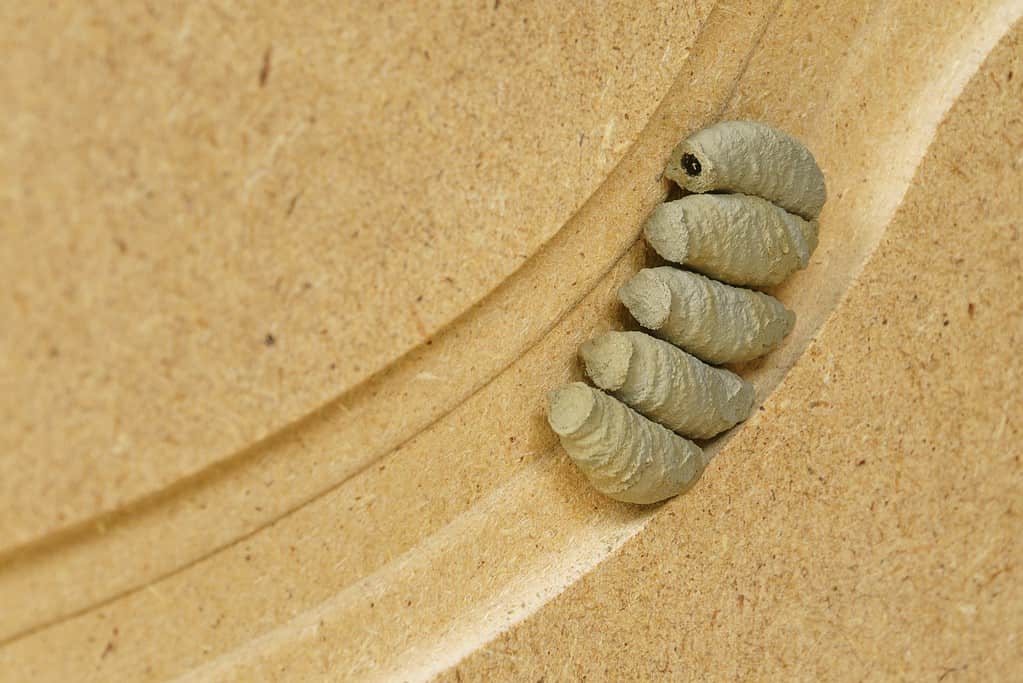
Mud cocoons from potter wasps are among the nests that can be safely removed without professional help.
©Marinodenisenko/Shutterstock.com
For those who choose to remove a docile wasp nest, it is important to remember that even docile wasps will sting if they feel threatened. By following a few steps, it is possible to remain safe when removing a nest. The steps for removing a docile wasp nest are as follows:
- Identify the wasp species to ensure that it is not aggressive
- Remove the nest in the early morning or late afternoon when wasps are less active
- Wear protective clothing and a hat to prevent accidental stings
- Use wasp spray or soapy water to kill wasps
- Remove the nest after 24 to 48 hours have passed to ensure wasps are dead
- Remove the nest from the side and quickly discard it
- Spray the area with insecticide to prevent wasps from rebuilding
Note that this should only be attempted with docile wasps. If an aggressive wasp nest is located on the property, it is recommended to contact a professional for removal. This is especially important if there are pets or small children on the property, to prevent stings.
How To Keep Wasps from Approaching in the Summer
Summertime is when most people enjoy outdoor activities. This is also the time when wasps are most active. Fortunately, there are ways to both spend time in the warm temperatures and sunshine without having to worry about being stung by a wasp.
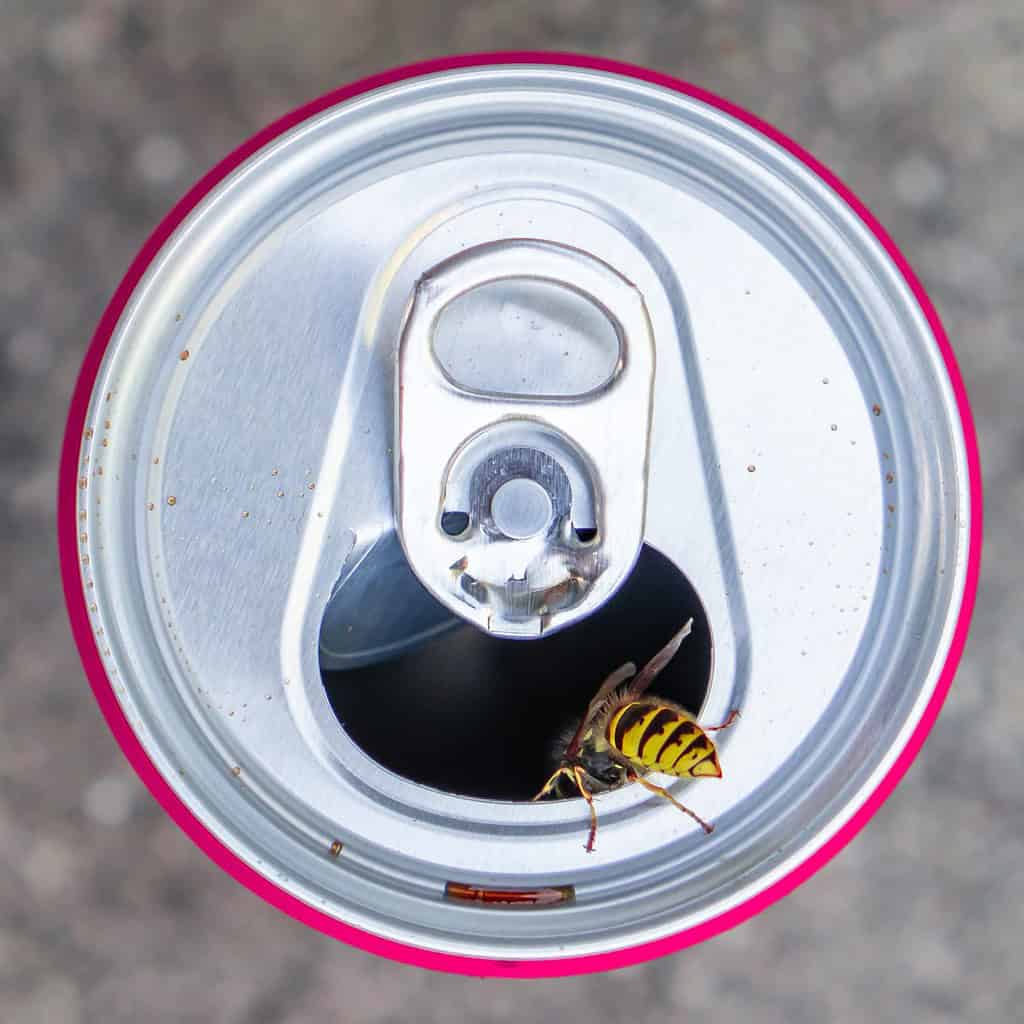
Rinsing out cans before putting them in the recycling bin helps keep wasps at bay.
©A. Kiro/Shutterstock.com
Ways to keep wasps at bay when outdoors include:
- Keep food covered
- Clean up after fruit trees
- Keep compost bins sealed
- Rinse bottles and cans before placing them in the recycling bin
- Plant essential oil plants like rosemary, peppermint, mint, and citronella
- Keep bushes trimmed to prevent wasps from nesting and to reduce the number of insects they prey on
By consistently following these steps, the chances of wasps taking refuge in common outdoor spaces are substantially reduced.
Can You Create a Wasp Bait Trap from Household Items?
Even after taking all preventative measures, wasps may still approach when you are outdoors. To help limit this, wasp baits are recommended. Commercial wasp bait traps are available. However, for those who opt for a non-chemical approach, wasp baits are simple to make using household items.
The items needed for making a wasp bait trap are as follows:
- Clear plastic bottle
- Marker
- Knife or scissors
- Dish soap
- Spring to summer: Protein-based bait and grease; Late summer to fall: Fruit-based bait
- Tape
- String
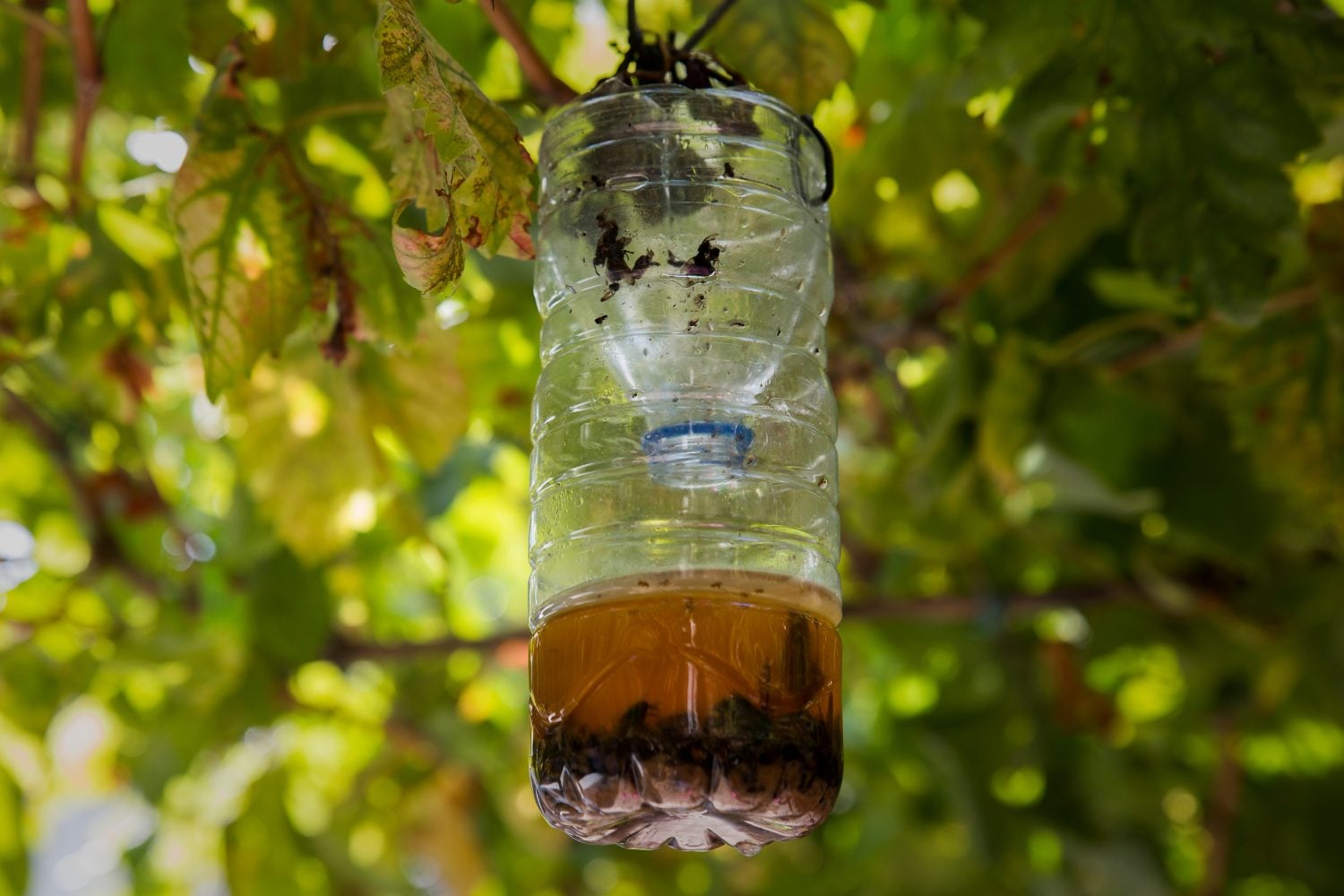
Wasp bait traps can easily be constructed from household items.
©GeorgeVieiraSilva/Shutterstock.com
Once the items have been assembled, creating a wasp bait trap is fairly easy to do. The steps include:
- Remove any labels from the bottle so it is transparent and easy to see inside.
- Draw a line around the top third of the bottle and cut that portion off.
- Fill the bottom of the bottle with appropriate bait for the time of the year.
- Add two to three drops of dish soap to the bait.
- Create a hole on each side of the bottle near the top to run string through to hang the trap.
- Insert the cut-off top of the bottle upside down into the bottom portion to create a funnel that traps the wasps. Secure it with tape.
The bait trap is highly effective. It will need to be changed every few days to remove any captured wasps and to continue attracting more to the trap.
When choosing a location for the bait trap, place it away from gathering areas. This will keep wasps away from people while trapping them, making your outdoor space more comfortable and worry-free.