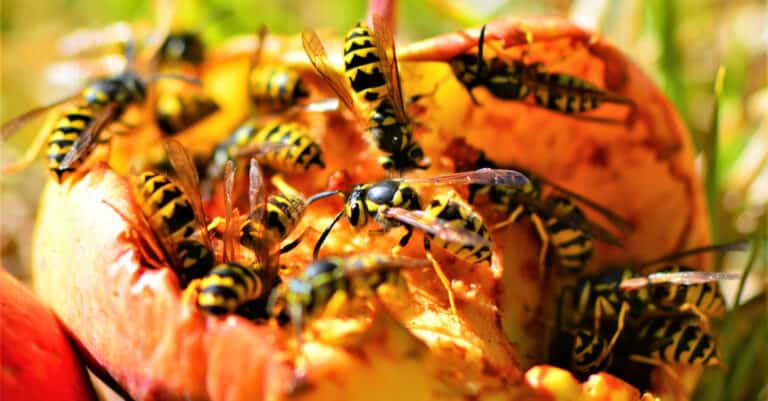

A fear of wasps is relatively common among many. If it’s not the anticipatory buzz of nearby wings that gets you, it’s the thought of the giant stinger they wield. But what about their size? Compared to the largest wasp species in the world, yellow jackets would look like chump change. If the insect world has taught us one thing, it’s that size always matters. These are ten wasp species that are among the largest in the world.
Mahogany Wasp
Mahogany wasps (Polistes sp.) can measure three-fourths of an inch in length, making them relatively large insects. While they’re not naturally aggressive, they will sting if they feel threatened. These wasps love hot weather and thrive in the south-central U.S.
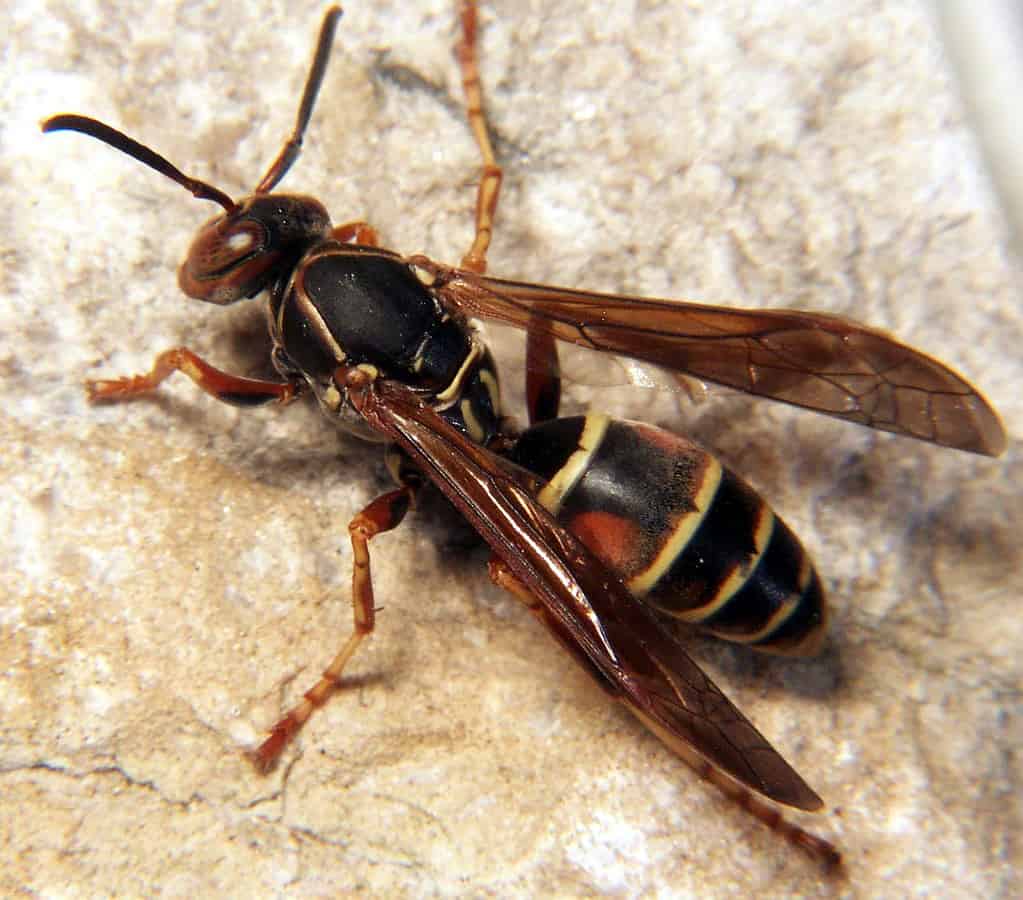
The mahogany wasp uses tree bark for its nest.
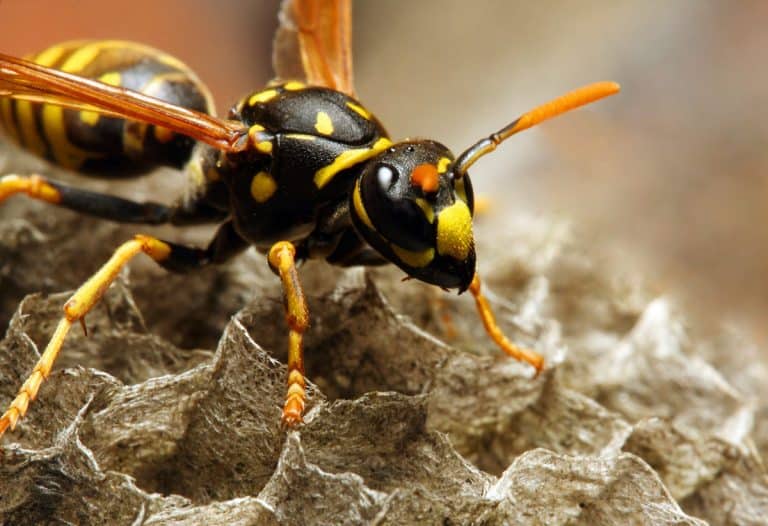
Mahogany wasps are a species of paper wasp, which means their nests are easily recognized. These are typically hung upside-down, with plenty of holes for future larvae. The nests themselves are made from a combination of the wasp’s saliva and chewed-up wood. These “umbrella” nests are found underneath overhangs, the corners of sheds, and anywhere they can be attached and easily hung. Females build the nests during the spring, which is why many people don’t notice them until late spring and early summer. Despite their nasty sting, they’re essential pollinators and also prey on invasive caterpillar species.
Great Black Wasp
Great black wasps (Phex pensylvanicus) are a scary-looking insect species, but are typically non-aggressive toward humans. They can reach lengths of 1 to 1.3 inches. If you see a great black wasp that’s larger than average, it’s likely a female. Males are smaller and do not have stingers, despite their intimidating appearance. Instead of sharing the shape of a typical wasp, great black wasps are similar to mud daubers. Both are part of the digger wasp species, which means their bodies are long and segmented.
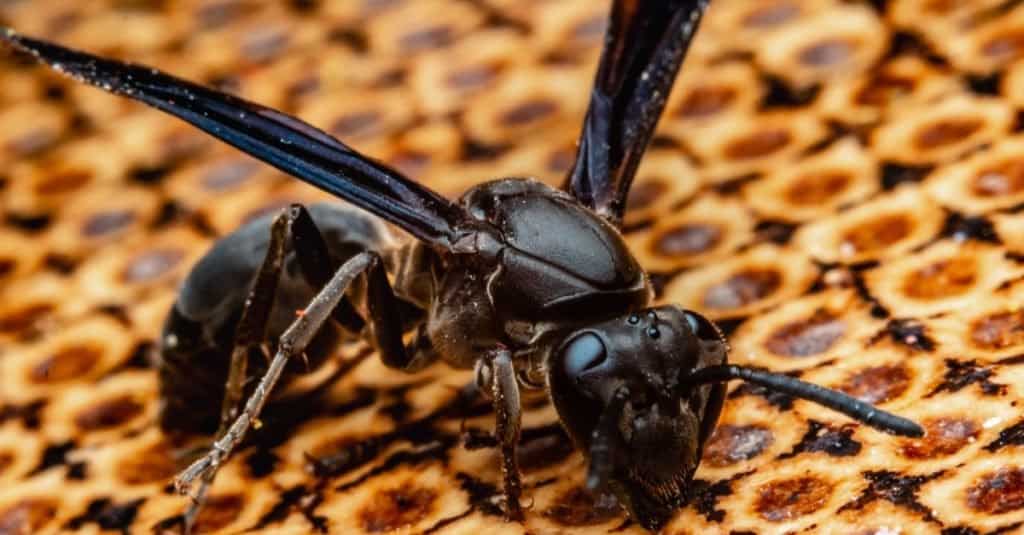
The great black wasp is a solitary creature.
©JULIO CHINAZZO/Shutterstock.com
Great black wasps are known for their adaptive nature and can be found across North America. Rather than making hanging nests, they burrow into the ground. These wasps are solitary insects and prefer to fly solo rather than live within a colony. Another thing that differentiates them from many wasps is their parasitic nature. After mating, they lay larvae in living insects like katydids and grasshoppers. When the egg hatches, the larvae consume the insect, which provides the wasp with the nutrition it needs.
Mammoth Wasp
The mammoth wasp (Megascolia maculata) is Europe’s largest wasp, easily recognized by its size and coloration. It has a black body with a yellow head and distinct yellow markings on its thorax. These wasps are massive in size, with females capable of growing up to 2.4 inches long. Females are larger than males, and both are covered in fuzzy hair with red-tinted wings. They’re found throughout southern Europe, parts of Russia, North Africa, and the Near East. In recent years, their range has expanded northward. Despite their size, they’re rarely aggressive and are somewhat rare to see in the wild.
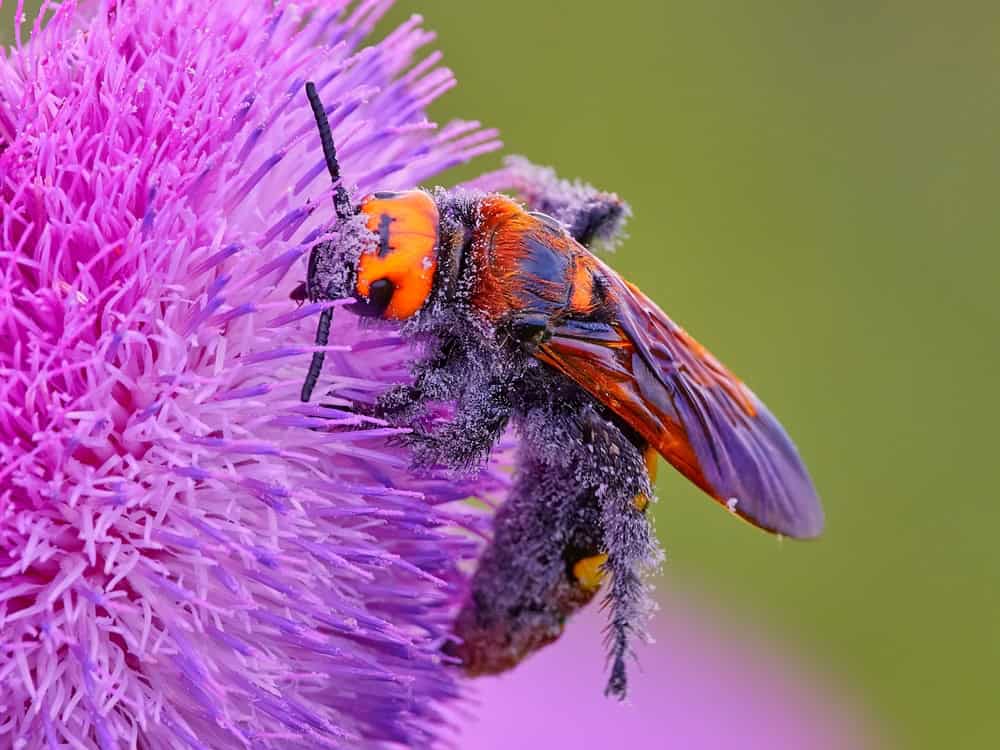
The mammoth wasp relies on a beetle species for its survival.
©aaltair/Shutterstock.com
Mammoth wasps prefer Mediterranean-like environments and thrive in the same places as their prey, scarab beetles. They don’t eat the scarab beetles, but the wasps require them for reproduction, as they’re parasitic. The wasp hunts and stings its prey before laying eggs within the scarab beetle. When the larvae emerge, the beetle serves as its first source of nourishment.
Long-Tailed Giant Ichneumon Wasp
The term “wasp” can sometimes be misleading, especially regarding the long-tailed giant ichneumon wasp (Megarhyssa macrurus). While it is a member of the wasp species, it’s entirely harmless to humans and does not possess a stinger. However, that doesn’t mean it’s not one of the largest wasp species in the world, measuring up to two inches long. Its ovipositor (used to lay eggs) adds another two to three inches to its overall length. This means females can sometimes reach lengths of 4.5 inches, making this a massive insect. They are highly adaptive and can be found throughout North America.
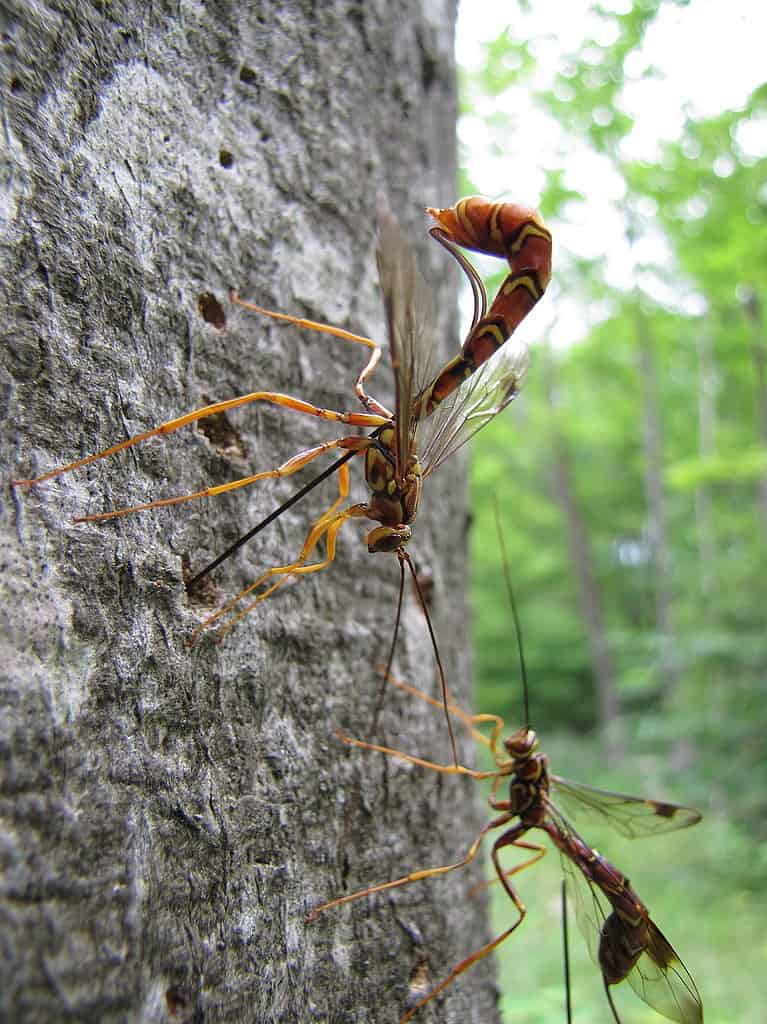
This is a massive wasp.
©Seney Natural History Association / CC BY-SA 2.0 – Original / License
These wasps are typically found near decaying or rotten wood. This is also where you can see their prey of choice, the wood-eating sawfly. Also known as horntails, the wood-eating sawfly is the perfect place for the long-tailed giant ichneumon wasp to lay its eggs. As a parasitic wasp species, it requires a living host to reproduce. When the larvae hatch, they devour the wood-eating sawfly.
Cicada Killer
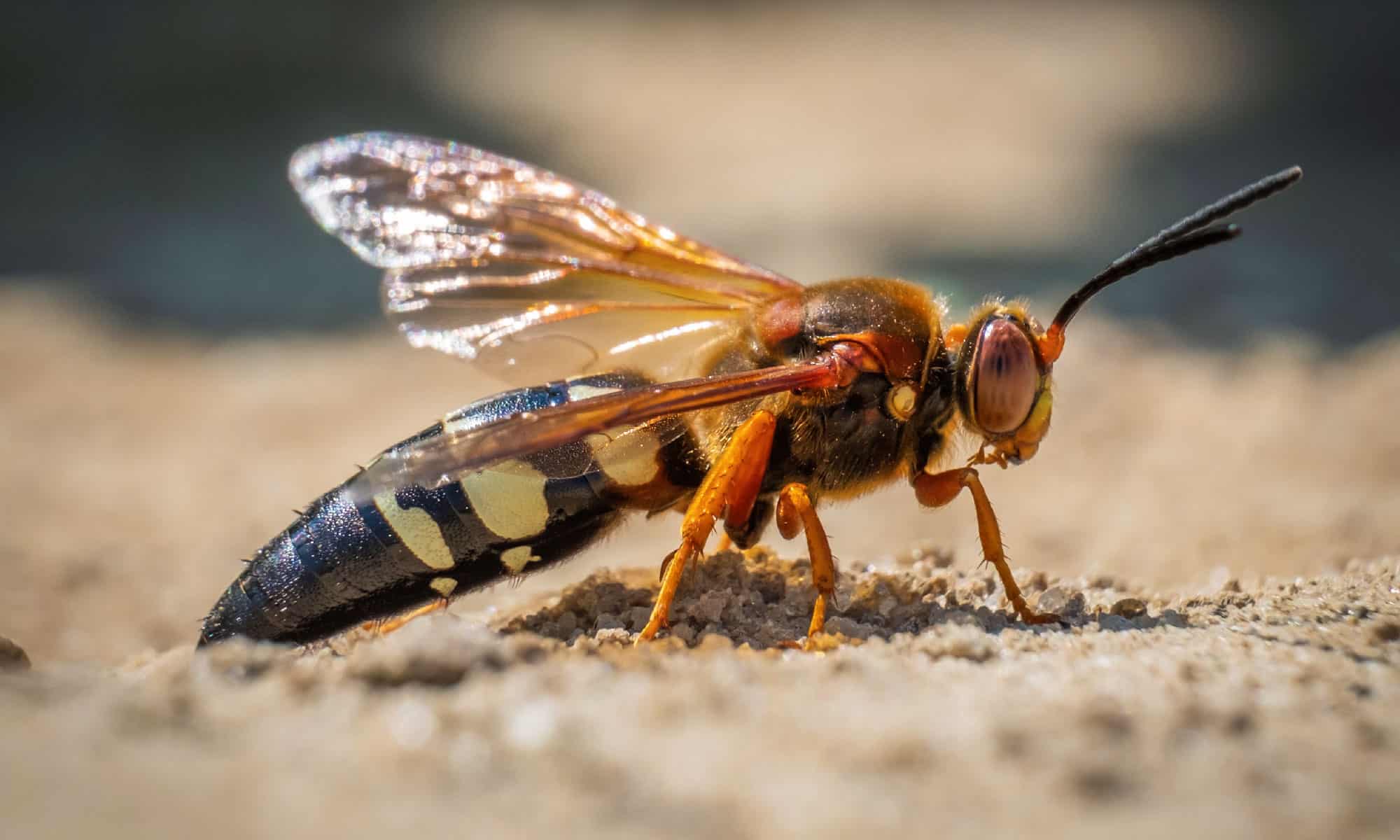
These wasps are often mistaken for yellow jackets or hornets due to their coloring. While they look similar, their behavior is far different from that of a typical wasp. Cicada killers (Sphecius speciosus) have little interest in humans and are non-aggressive. However, their size makes them intimidating. Females can grow between 1.5 and 2 inches, while males grow between 1 and 1.5 inches. Eastern cicada killers are found throughout the eastern U.S.
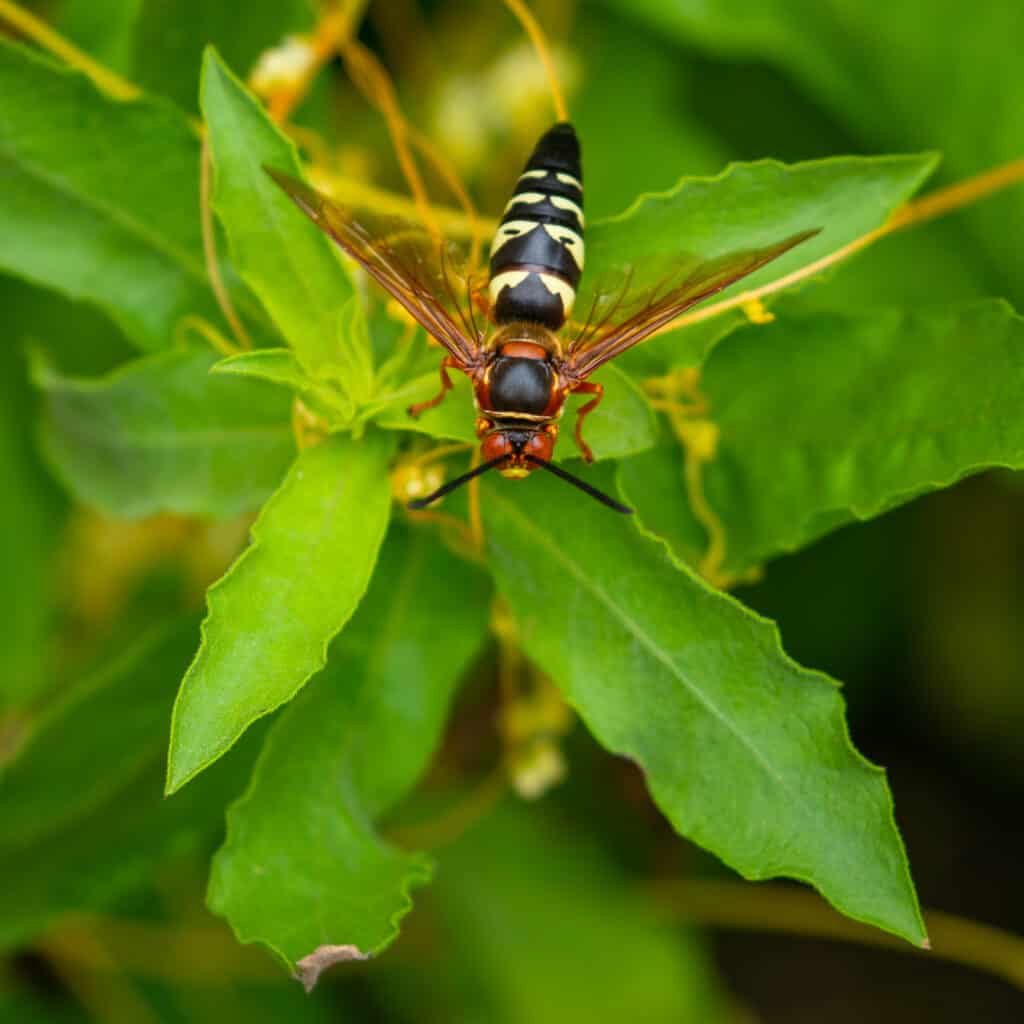
These wasps are active during summertime.
©iStock.com/Art Sublimina Photography
While these wasps are highly active in the summer and can sometimes be clumsy fliers, not all of them can sting. Males are born without a stinger, and females rarely sting humans unless they feel threatened. They are territorial, but tend to avoid confrontation, preferring to fly away instead. They are aggressive toward cicadas, which are their primary target and the food source for their larvae.
Giant Scoliid Wasp
The giant scoliid wasp (Megascolia procer) is one of the largest and most unique-looking wasps in the world. It has a black body with yellow markings, and its thorax is a distinct rusty-red color. These wasps can reach lengths of three inches, with females having a larger wingspan than males. Giant scoliid wasps are generally solitary and are not aggressive toward humans. They can be found in Asia’s tropical regions, preferring the climates of Sumatra, India, Malaysia, Thailand, Singapore, and Java.
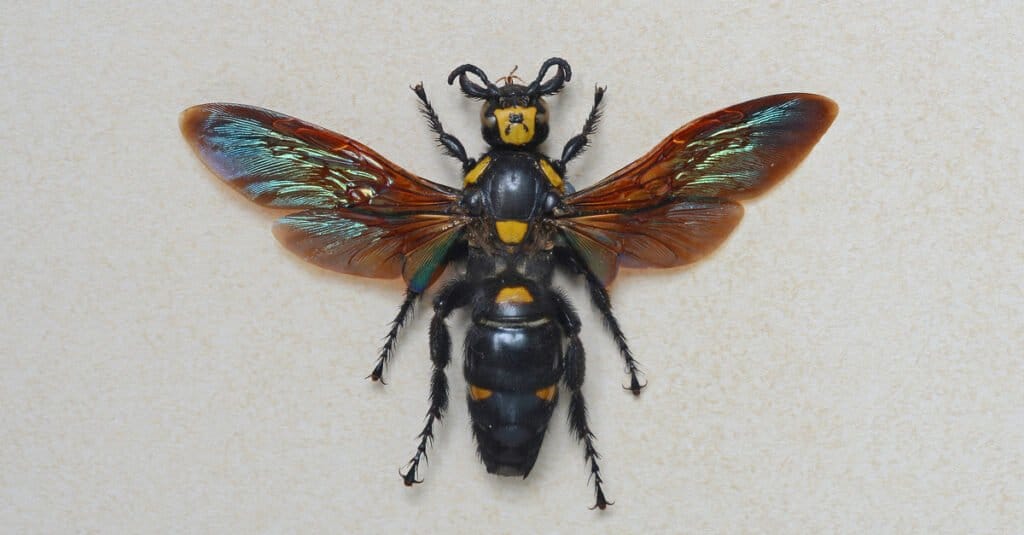
The giant scoliid wasp has multicolored wings.
©revers/Shutterstock.com
One unique feature of the giant scoliid wasp is its wings. They’re iridescent and can appear blue or green when the light hits them. This is why seeing them in the wild is so exciting for insect lovers, despite their elusiveness. This species is also highly beneficial and is considered a natural form of pest control. They typically prey on the pests that would destroy crops and agricultural land.
European Hornet
Despite its name, the European hornet (Vespa crabro) is native to Europe but can also be found throughout North America. It also remains the only true hornet species established in North America as of 2025, despite confusion about other native wasp species. European hornet queens can grow up to 1.5 inches long, with worker hornets topping out around one inch. They can be mistaken for large yellow jackets, as their coloring is almost identical.
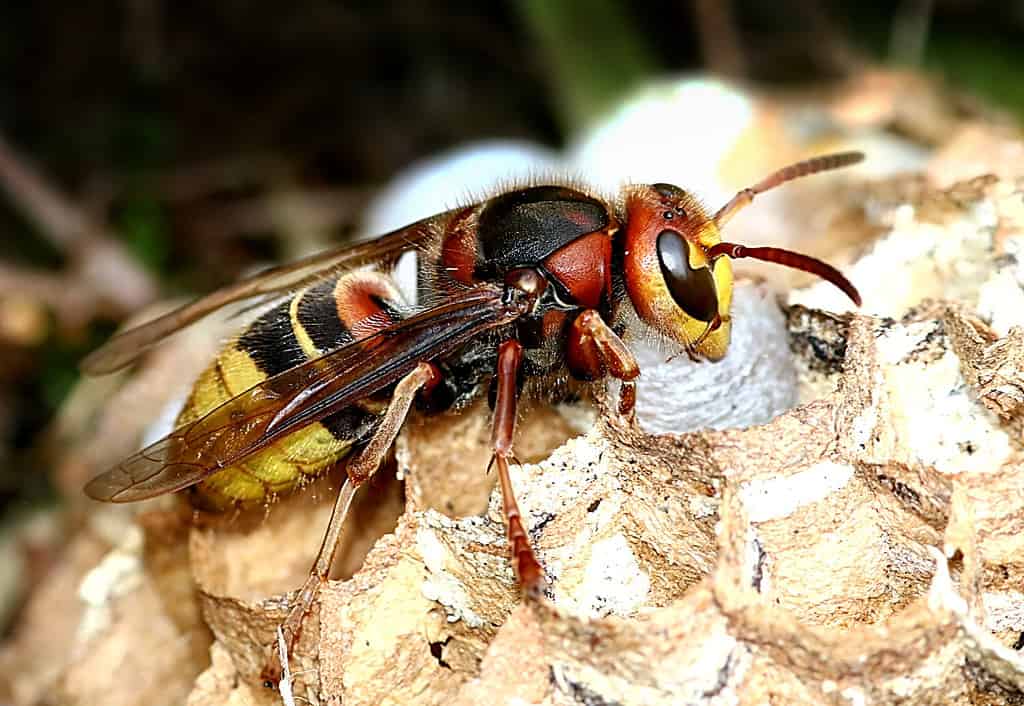
This hornet has a nasty bite.
©Ger Bosma Photos/Shutterstock.com
While the European hornet is not naturally aggressive toward humans, it won’t hesitate to defend its nest. A hornet will also sting if it feels threatened, leaving behind a nasty welt. This is a social wasp species, which means they work in tandem to build nests, forage, and reproduce. They’re also known for their attraction to artificial light, and can sometimes be seen flying around porches or car headlights after dark.
Asian Giant Hornet
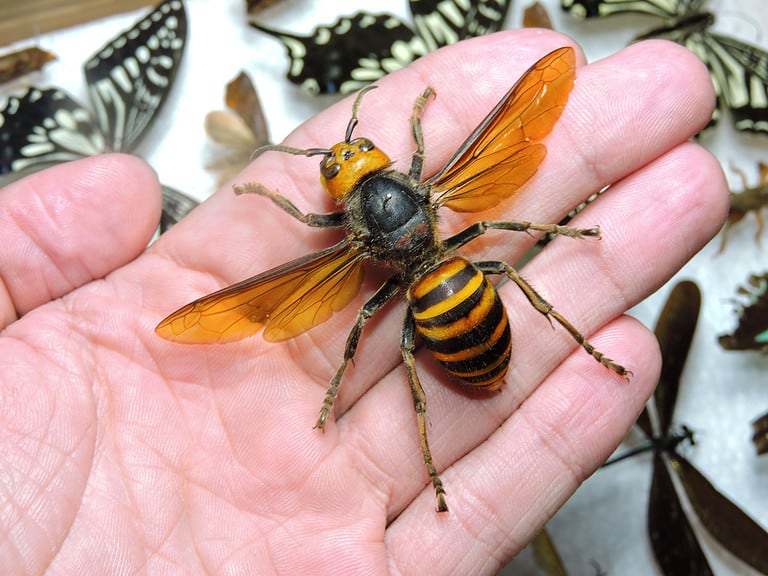
Known as the “murder hornet,” the Asian giant hornet (Vespa mandarinia) is one species that causes reasonable fear. It was found in the Pacific Northwest in 2019, and with ongoing efforts, it was declared eradicated in early 2025. These massive hornets are native to tropical eastern Asia, thriving in Korea, China, Japan, India, Nepal, Thailand, Vietnam, and Sri Lanka. Females can grow up to 2.2 inches, making it the largest hornet in the world.
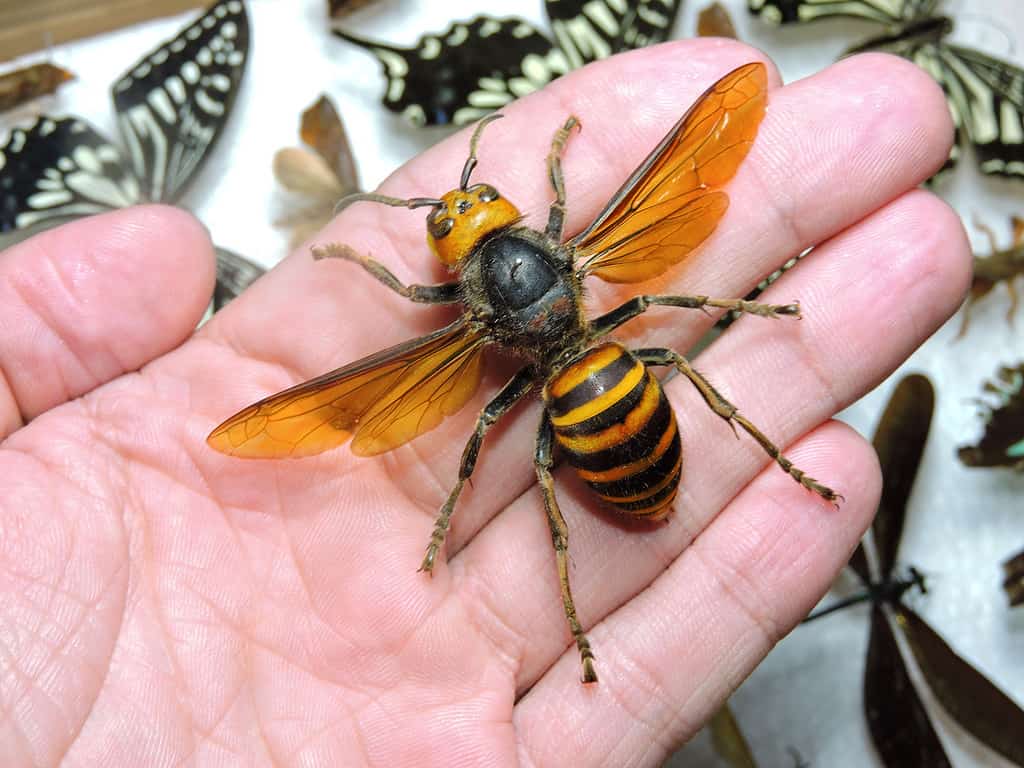
There’s a reason this one is called the murder hornet.
©iStock.com/Bruno Uehara
The Asian giant hornet is unlikely to attack a human, but that doesn’t mean it won’t. It’s not an aggressive species, but it will defend its territory if it feels threatened. Similar to other wasps, the Asian giant hornet is capable of multiple stings. Its size makes this dangerous, especially for those who are sensitive or allergic to bee or wasp venom. The stinger can penetrate clothing, even the protective suits worn by professional beekeepers.
Tarantula Hawk Wasp
The tarantula hawk wasp (Pompilidae) is a large insect species living on every continent except Antarctica and Europe. As their name implies, they prey on tarantulas, which is why their size is so extraordinary. They are among the largest wasps in the world, measuring up to four inches long. They are part of the spider wasp family, which means they hunt spiders to feed their larval offspring.
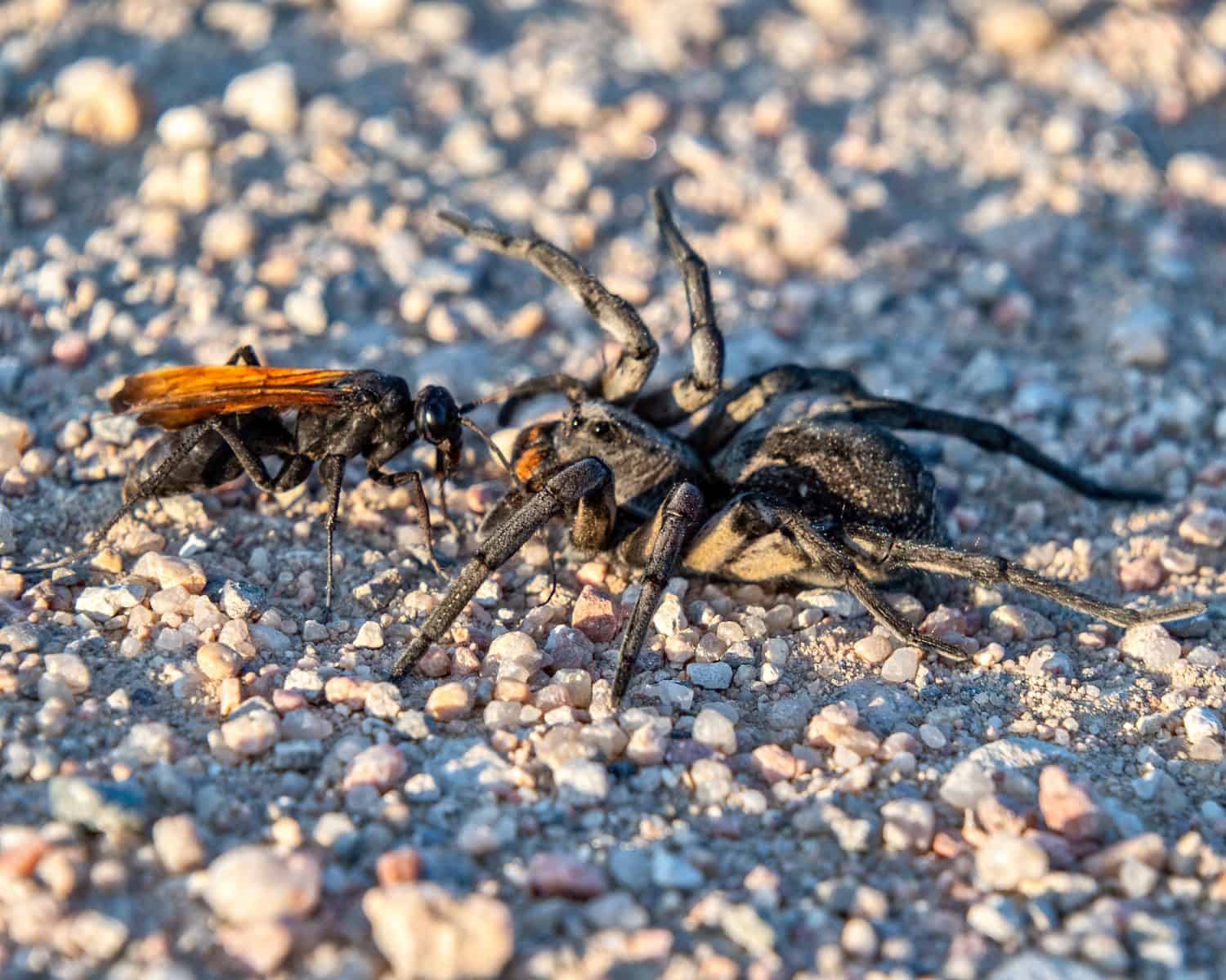
The tarantula hawk wasp is no spider.
©Aaron J Seltzer/Shutterstock.com
The tarantula hawk wasp can paralyze a spider in seconds, and it can sting humans. It’s believed to be one of the most painful stings in the world, measuring at 4+ on the Schmidt pain index. People have described the sting as similar to that of a bullet ant, with intense, excruciating pain and numbness. This pain can last anywhere from 12 to 24 hours. However, this same paralytic venom is what makes it so efficient at hunting and killing tarantulas. Its size, hunting ability, and reputation make it one of the largest and most feared wasps in the world.