
Quick Take
- Black-spotted pond frogs resist hornet venom and eat hornets even after multiple stings.
- In experiments, frogs attacked hornets from three species, including the northern giant hornet, with no harm from stings.
- Studying their immunity could advance pain medications and venom tolerance research in humans.
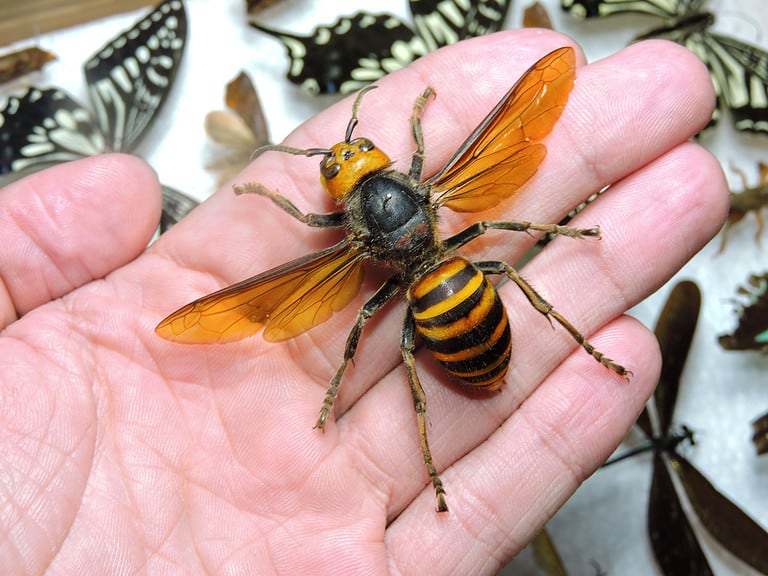
Northern giant hornets, also known as murder hornets, incite fear in many. These venomous hornets can take out an entire hive of honey bees in a matter of hours. A single sting can kill a mammal many times larger than the hornet itself. And if one stings a person, the pain is said to be agonizing. Surprisingly, one small amphibian, the black-spotted pond frog, is not only immune to the hornet’s painful sting but can also consume the hornet while being stung multiple times.
Researchers found in a recent study that the frogs are uniquely immune to both pain and the ill effects of the hornet’s toxin. Scientists hope that studying the frog’s immunity can lead to advancements in pain medication and venom tolerance. What looks like a quirky ability of the frogs to eat dangerous insects may have broad implications for medical innovations.
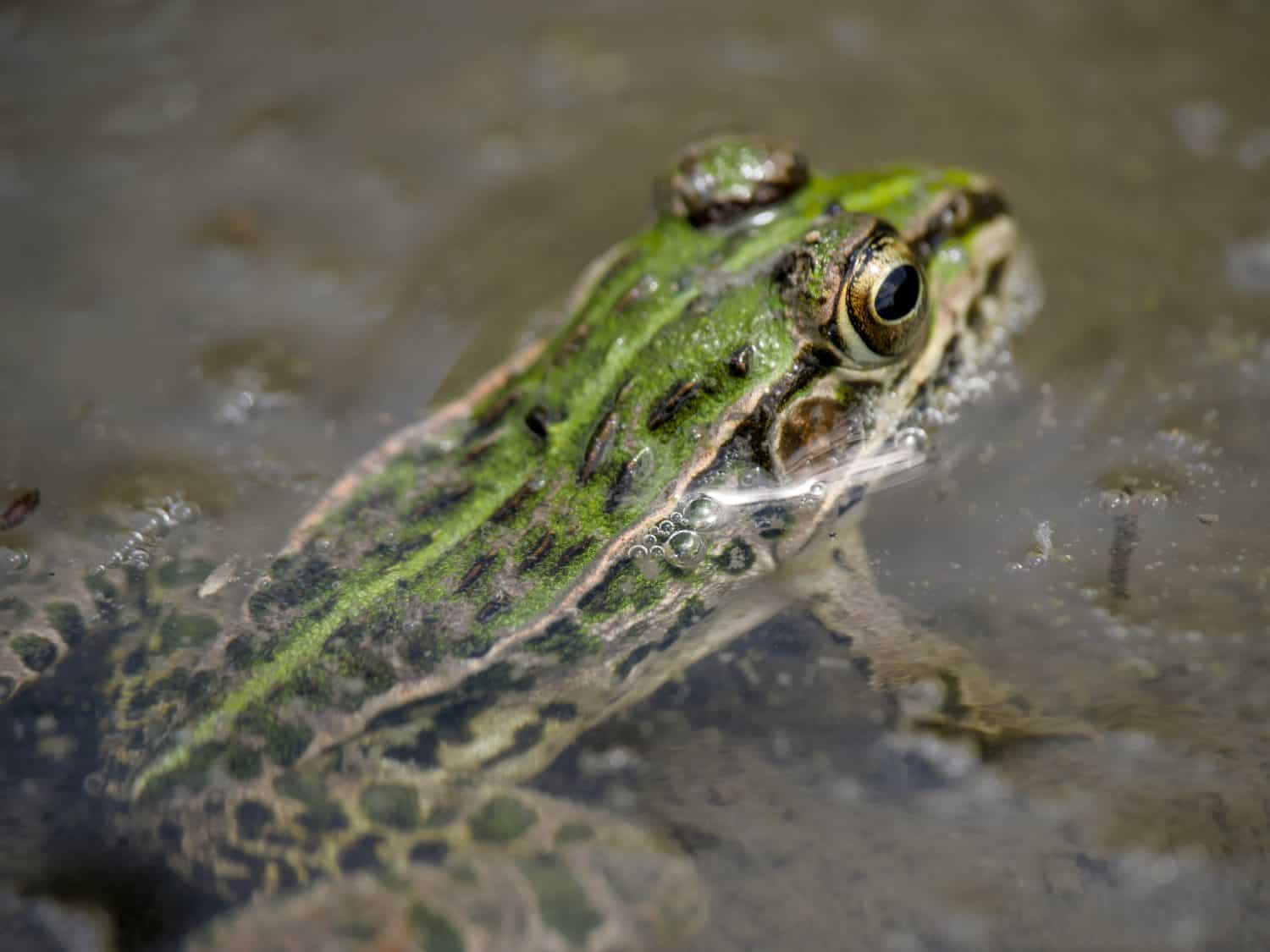
Black-spotted pond frogs tolerate hornet stings that could kill another animal of the same size.
©Lee waranyu/Shutterstock.com
Scientists Observed Pond Frogs Eating Venomous Hornets
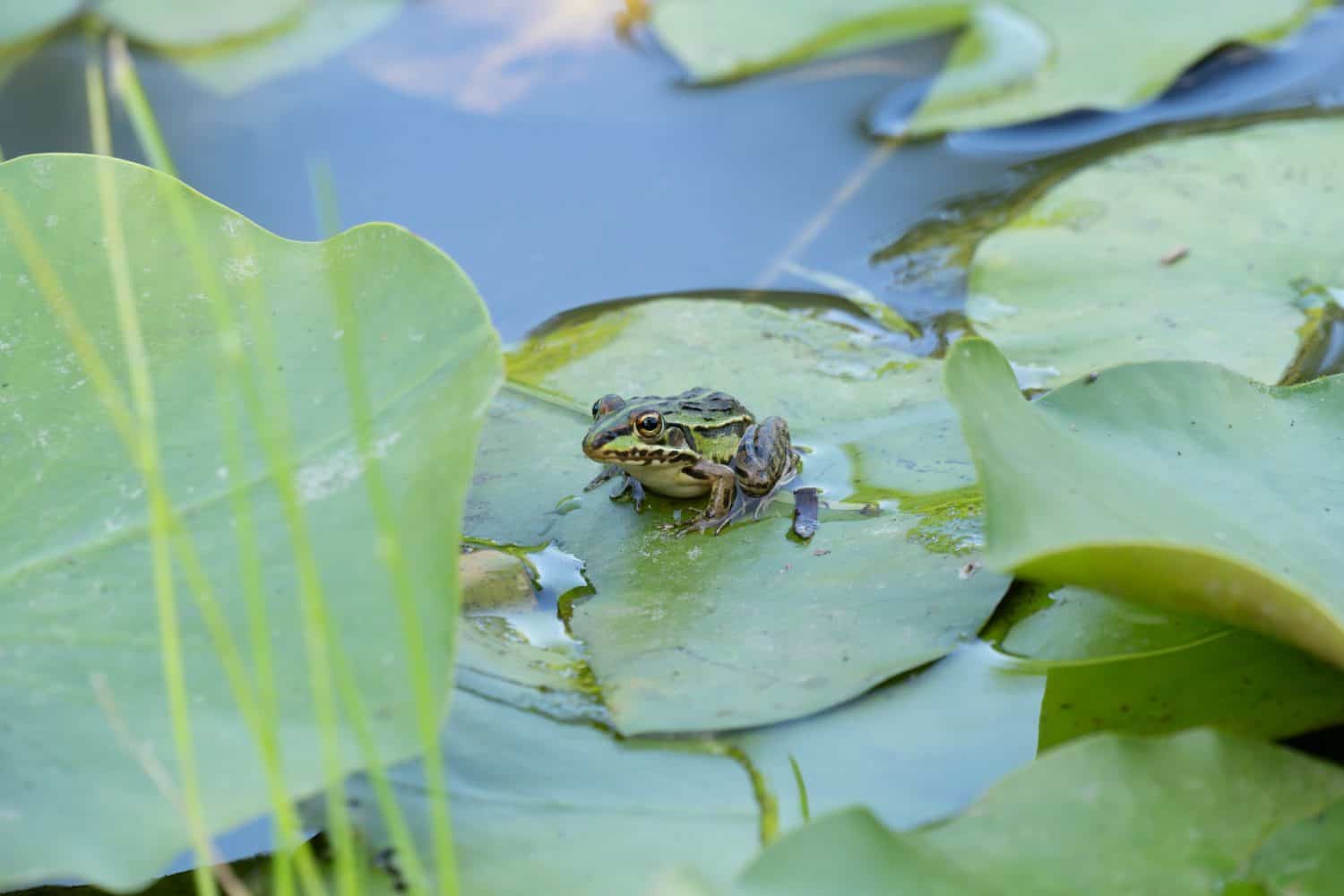
In a study published in the journal Ecosphere, ecologist Shinji Sugiura of Kobe University in Japan discovered that black-spotted pond frogs (Pelophylax nigromaculatus) have a strong resistance to hornet venom. Sugiura said in a statement, “Although stomach-content studies had shown that pond frogs sometimes eat hornets, no experimental work had ever examined how this occurs.”
Sugiura is the sole author of the study. He wanted to find out if the frogs were either avoiding getting stung by the hornets or were immune to the venom. Sugiura presented the pond frogs with worker hornets from one of three different species: the yellow hornet (Vespa simillima), the yellow-vented hornet (Vespa analis), and the northern giant hornet (Vespa mandarinia). Check out the video of a frog happily munching on a murder hornet here.
Each frog was given one hornet. Almost all of the frogs attacked and ate the hornets. Even when the hornets stung the frogs, the frogs were seemingly unaffected. Some frogs were stung in the eyes, and one even had a stinger embedded in its mouth. Despite being stung multiple times, the frogs consumed the hornets without any apparent ill effects. “While a mouse of similar size can die from a single sting, the frogs showed no noticeable harm even after being stung repeatedly,” Sugiura said. “This extraordinary level of resistance to powerful venom makes the discovery both unique and exciting.”
Percentage of hornets consumed by the frogs:
- 93% of the frogs ate the yellow hornets.
- 87% of the frogs ate the yellow-vented hornets.
- 79% of the frogs ate the northern giant hornets.
Why Are Some Amphibians Resistant to Venom?

The northern giant hornet was formerly known as the Asian giant hornet.
©AyhanTuranMenekay/Shutterstock.com
According to the study, “The venom injected by their [hornets’] stingers can cause sharp, intense pain as well as local tissue damage and systemic effects such as destruction of red blood cells and cardiac dysfunction, which may even be fatal.” However, some amphibians are unbothered by toxins that would harm other animals. Sugiura told the New York Times he believes the hornet’s venom is tailored to more frequent predators, such as birds and mammals. Frogs are less of a threat.
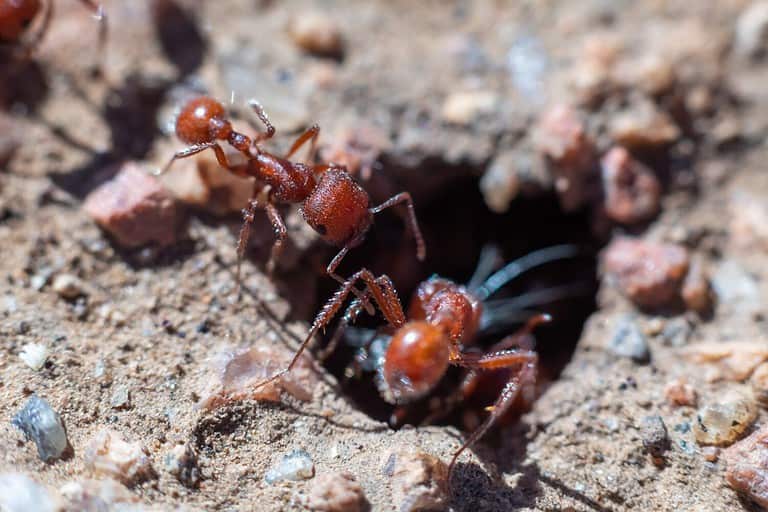
Brian Gall, a biologist at Hanover College in Indiana, told the New York Times, “Amphibians seem to have the perfect weaponry to consume dangerous prey. Their prey is consumed whole and swallowed immediately, and they produce considerable mucus that can envelop the prey.” Gall conducted a study that revealed that American toads (Anaxyrus americanus) and Fowler’s toads (Anaxyrus fowleri) can eat velvet ants without any problems. Many animals avoid velvet ants due to their painful stings and tough exoskeletons. Gall also theorized to the New York Times that amphibians may have resistance to toxins because many of them produce their own.
What Are the Future Implications?
Sugiura explained in a statement, “This raises an important question for future work. Namely, whether pond frogs have physiological mechanisms such as physical barriers or proteins that block the pain and toxicity of hornet venom, or whether hornet toxins have simply not evolved to be effective in amphibians, which rarely attack hornet colonies.” By studying the frogs, scientists can learn more about pain resistance and venom tolerance.
About Black-Spotted Pond Frogs
The black-spotted pond frog, also known as the dark-spotted frog, lives in China, Russia, Japan, and Korea. It can survive in a variety of habitats, but prefers slow-moving or stagnant water. These frogs typically grow to about 2 to 3 inches in length. They were traditionally hunted as a food source, but today, black-spotted pond frogs are often used in scientific research.