
Quick Take
- Basil's surge in popularity since the pandemic lockdown means your dog is more likely to encounter it than ever, and whether that's a problem depends on something most owners overlook. Check basil safety basics →
- There's a hidden trade-off buried in basil's health benefits that determines exactly how much your dog can safely have. See the health trade-offs →
- If your dog just demolished your basil plant, you might be surprised which one of you came out worse. Find out what happens →
- A rare reaction to basil can turn a harmless snack into an urgent situation, so it's worth knowing what to watch for. Spot allergic reactions →
Basil is an aromatic herb belonging to the mint family Lamiaceae, with between 35 and 150 distinct species within the genus Ocimum. The range fluctuates because these plants cross-pollinate and hybridize very easily. Originally native to the tropical and subtropical regions of Asia and Africa, basil has achieved a worldwide distribution and is cultivated globally. While there are dozens of botanical species, the vast majority of culinary basils are varieties or cultivars of sweet basil (Ocimum basilicum). The pandemic lockdown marked a permanent shift in how consumers purchase and use basil. When restaurants closed, people began cooking at home more often, leading to higher demand for fresh herbs like basil. Basil has remained popular, which increases the likelihood that a pet dog might ingest it. This raises the question: Is basil safe for dogs to eat? Continue reading to discover the answer.
Is Basil Toxic to Dogs?
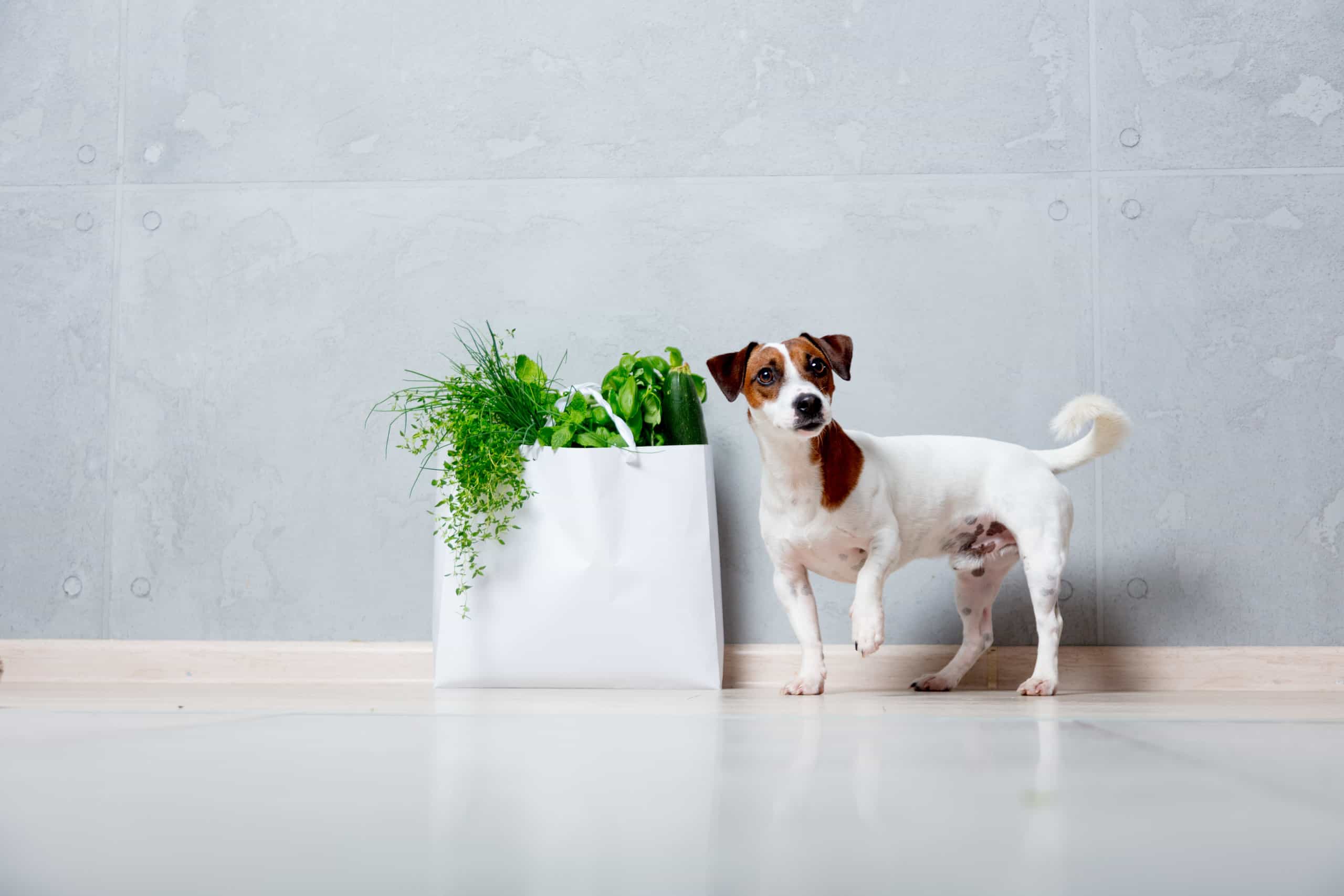
Basil is not toxic to dogs and actually has some health benefits. A small amount of basil sprinkled on their kibble or baked into dog treats may help lower inflammation and support your dog’s ability to fight bacteria. However, dogs should only be given basil sparingly, as a treat, as too much basil can cause digestive upset due to its high fiber content.
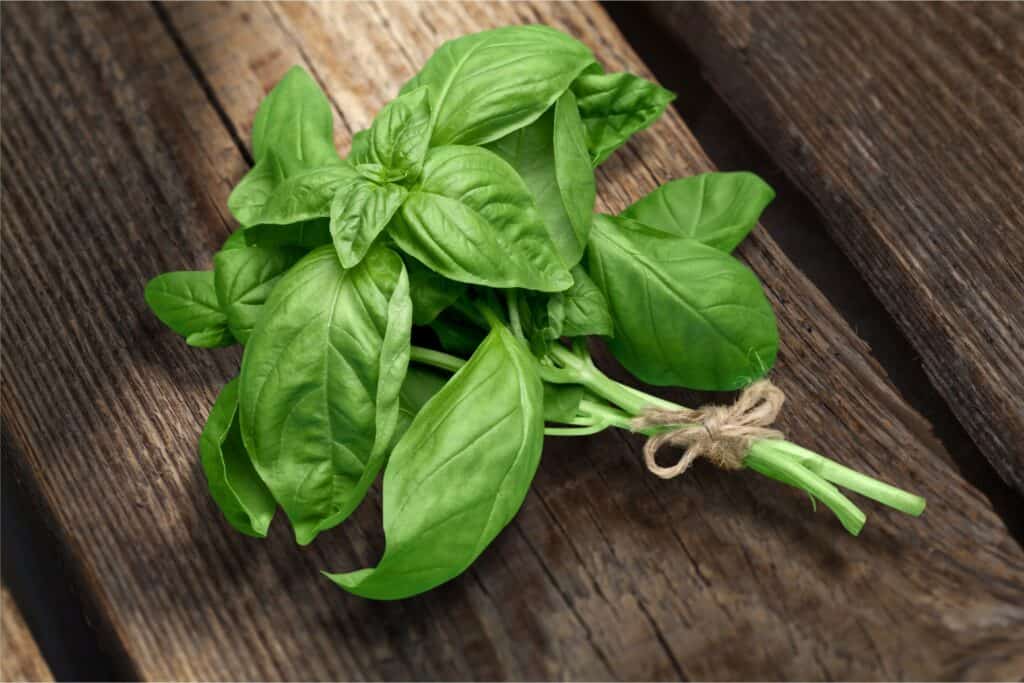
Basil is not toxic to dogs, but before feeding your dog human foods that contain basil, it’s important to know every ingredient in the food.
©Billion Photos/Shutterstock.com
When feeding your dog new food, including basil, start slow. Give them a tiny amount and monitor them for any signs of an allergic reaction or stomach upset.
Once your dog has adapted to having basil in its diet, you can give it a bit more. Remember, treats should never make up more than 10% of your dog’s diet. The rest of their diet should consist of high-quality dog food to ensure they receive all the nutrients necessary to stay healthy and maintain an appropriate weight.
If your dog eats more basil than recommended, it is unlikely to be a problem. They might develop diarrhea or other stomach problems, which should pass within a couple of days, but it is generally nothing to worry about.
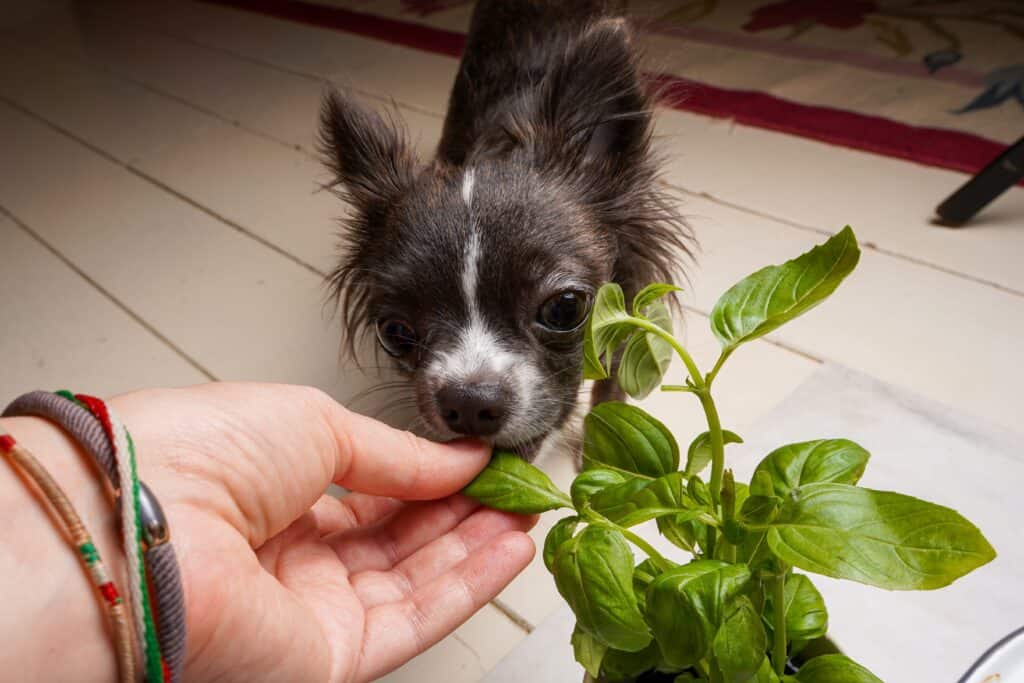
Dogs should only get a couple of bites of basil at most as a treat. Too much basil can cause digestive upset due to its high fiber content.
©Polina Eugenevna/Shutterstock.com
Help! My Dog Ate My Basil Plant
If your dog ate your basil plant, don’t fret; they’ve likely harmed the plant more than themselves. The worst that will happen to your dog if it eats a basil plant is a bout of diarrhea and an upset stomach.
Depending on how much basil your pup has eaten, they may not experience any side effects at all.
Since basil contains fiber, it can cause slight digestive upset, which is why your dog may experience a bit of diarrhea, stomach pain, and, less often, vomiting. If your dog has eaten a large portion of the plant, be sure to monitor them and watch for signs that they need to be let outside quickly.
Rarely, a dog can have an allergic reaction to basil, which may cause more severe symptoms.
Although basil is not toxic to dogs, many common houseplants, garden plants, and herbs can be toxic to them.