
Quick Take
- One shark in this order looks so unlike a shark that calling it one feels wrong, and its hunting method is even stranger than its unusual appearance. See the eel-like hunter →
- The smallest shark here is the most likely to confront a human, and its size is the very reason why. Meet the small aggressor →
- One species in this order is among the most widely distributed sharks on Earth, yet almost nobody has seen one, and there is a specific reason why sightings are so rare. Explore the elusive species →
Most shark species have only five gills, but one primitive order has six, and some even seven. This anatomical difference is one of many that set them apart from others in their genus. The literal translation of hexanchiformes means “six arches,” but it’s also appropriate that there are only six remaining sharks that reside in this order today.
The hexanchiform order dates back roughly 190 million years, making this one of many ancient shark families. Little is known about those lurking in the deep sea, but it includes several frilled and cow shark species. Each one is crucial to its ecosystem, whether as a predator or a slow-moving opportunistic hunter.
Frilled Shark (Chlamydoselachus anguineus)
The frilled shark lives in pelagic zones around the world and is found as deep as 4,200 feet. They prefer continental slopes where they can swim slowly as they hunt for small fish and squid. Despite their name, frilled sharks look more like eels. They have elongated bodies that swish side to side, propelling them forward in the water. Often called a living fossil, they can grow up to 6.5 feet and have large eyes that allow more light to enter the darkest parts of the ocean.
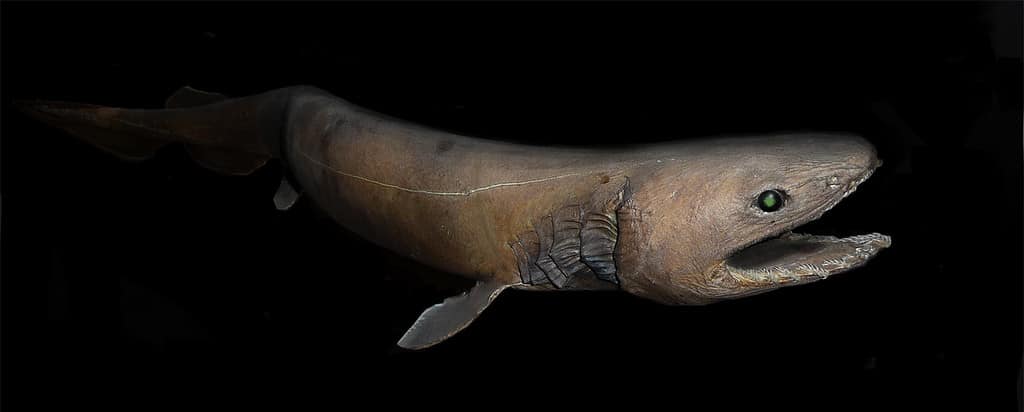
Frilled sharks are named for the unique ruffle-like frills on their sides.
©Citron / CC-BY-SA-3.0 / Wikimedia Commons – Original / License
One of their most unusual features is the rows of teeth that would terrify the most steadfast predator. Frilled sharks have 25 rows of 300 razor-sharp teeth that are shaped like pitchforks. When a frilled shark bites into prey, these work like prongs to hold it in place. They’re also slightly curved backward, which makes it nearly impossible for prey to escape once they’ve been bitten. Despite the surgical nature of the frilled shark’s teeth, it still devours its prey whole rather than chewing or gnashing.
The solitary nature and deep-sea habits of the frilled shark make it relatively harmless to humans. There have never been any recorded shark attacks. Their teeth are designed for the specific prey they hunt and are not as versatile as those of a great white or thrasher shark. However, they are somewhat vulnerable and often become bycatch from deep-sea trawls.
African Frilled Shark (Chlamydoselachus africana)
The African frilled shark is extremely rare and was only discovered by scientists in 1988. Even then, it wasn’t described as a “new” species until 2009. It was accidentally caught off the coast of South Africa at a time when it was believed the frilled shark was the only one of its kind. Since then, more African frilled sharks have been caught from depths of 4,040–4,590 feet. Their range is primarily the deep southern waters off Africa, but little more is known about their preferred habitat.
Similar to the frilled shark, the African frilled shark features the same slim, eel-like body. Its eyes are comparable in size, but it is much smaller, with the longest known specimen measuring 46 inches long. Its head is also slightly different and is more triangle-shaped and flat. This speaks to its prehistoric ancestry, emphasizing how long this genus has been around.
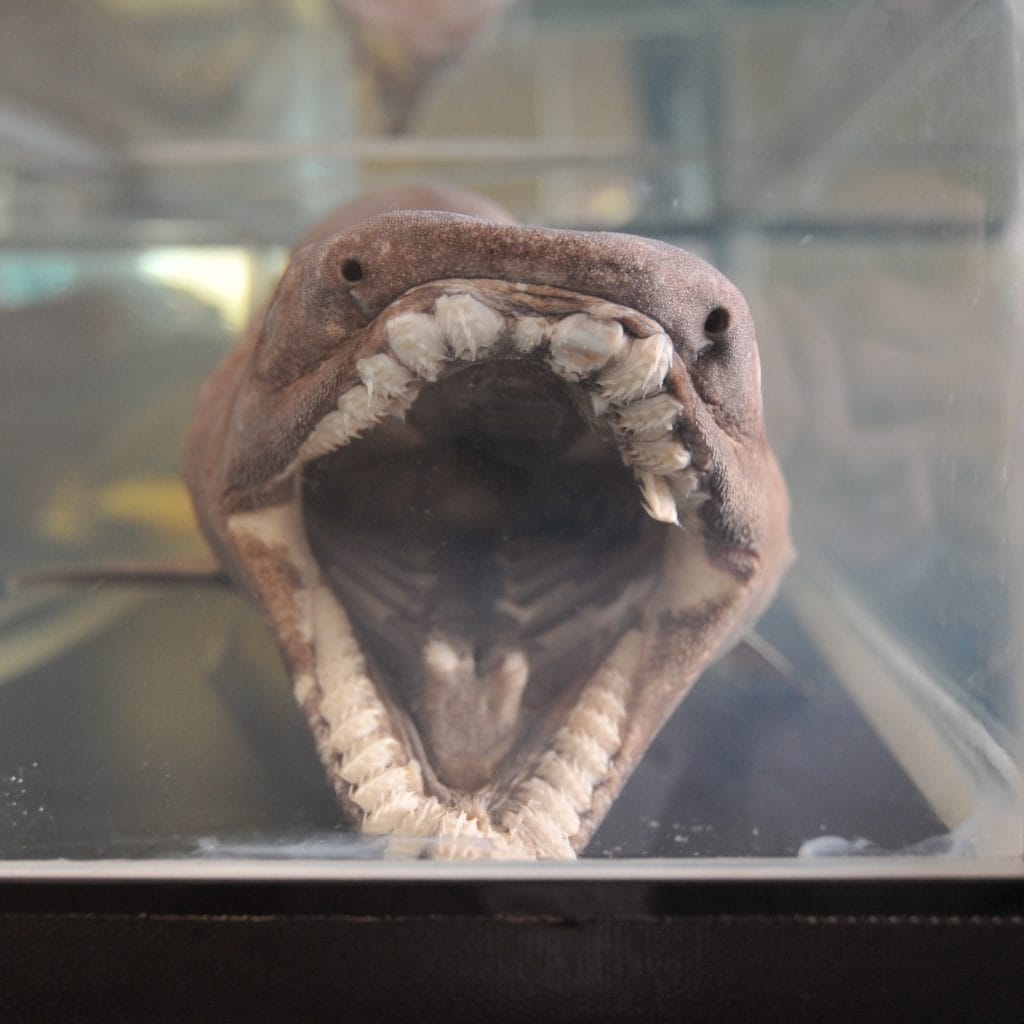
The teeth of the African frilled shark are like tiny knives, situated backward in its mouth to efficiently lock onto prey.
©saname777 from Tokyo, Japan, CC BY 2.0, via Wikimedia Commons – Original / License
In contrast to its larger cousin, the African frilled shark has similar rows of teeth, but has 30 on the top and around 27 on the bottom. Despite its smaller size, it has the same, if not more aggressive, hunting power as the frilled shark. It’s believed that they hunt smaller sharks, such as the African sawtail catshark. It also swallows its prey whole and uses the same technique as the frilled shark to lock on and consume smaller fish.
Bigeye Sixgill Shark (Hexanchus nakamurai)
The bigeye sixgill shark is a cow shark, meaning its body is more fish-like and less eel-like. It has six gills as its name implies, but they look more like what you’d expect to see on any other shark species. Another unique characteristic of the bigeye sixgill shark is the dorsal fin on the back of its two-toned body. Similar to tropical shark species, the bigeye sixgill shark has a lighter underbelly and a darker top half, which helps it camouflage in shallow water.
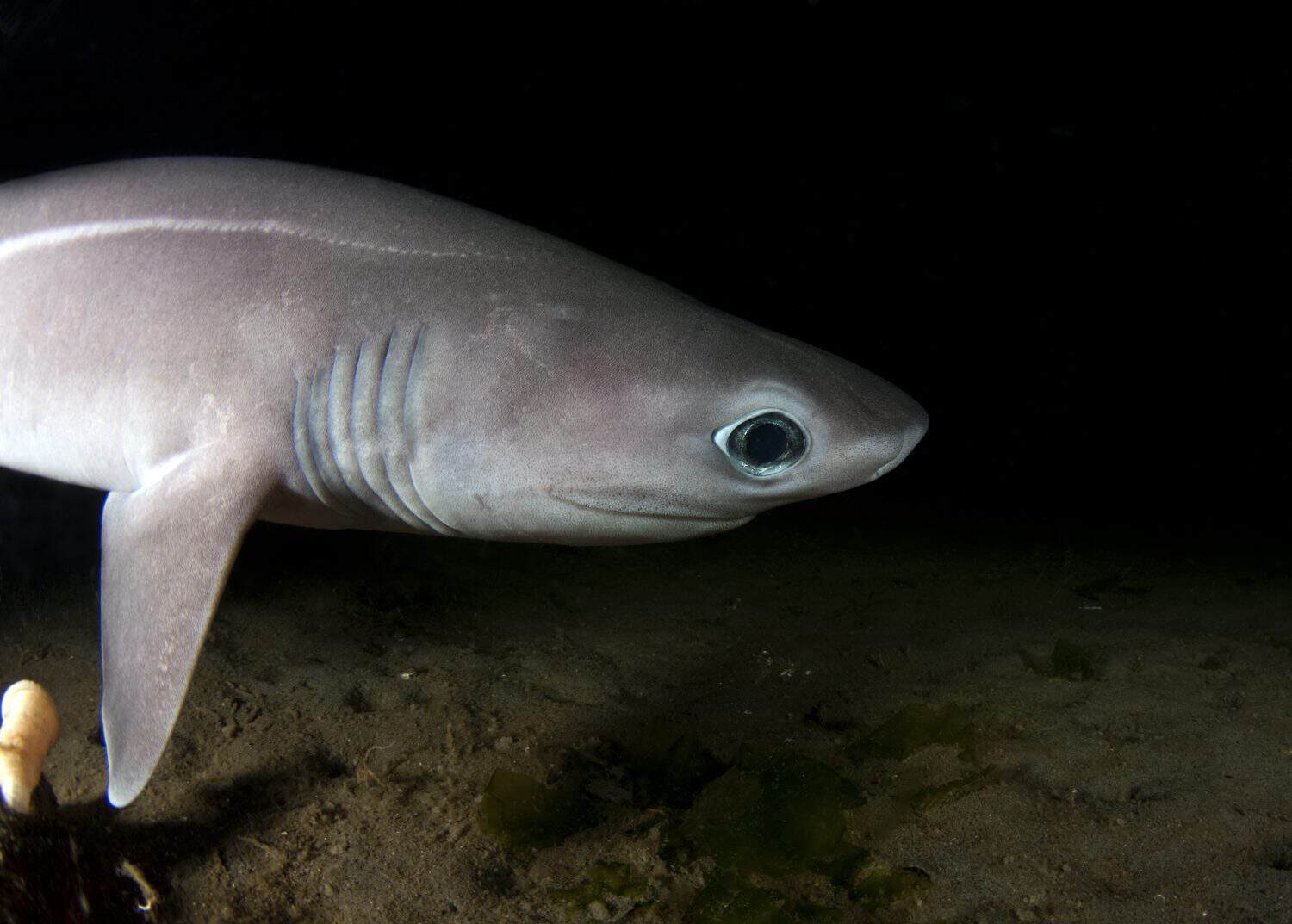
Sixgill shark sightings are rare, and typically come to the surface at night when it’s too dark to observe them.
©Greg Amptman/Shutterstock.com
They remain in deep water, typically around 200 to 300 feet below the surface, and are generally shy by nature. The species prefers temperate waters in the northeast and central Atlantic, Mediterranean Sea, Pacific, and the Indian Ocean. Little is known about their lifestyles here, but these sharks have been observed remaining in deep waters during the day before coming to the surface at night. Because of this, they have been observed by divers, though it’s almost always unintentional as sightings are rare.
In contrast to many shark species, the bigeye sixgill is a bottom-feeder. It prefers crustaceans and the small, bony fish that are found along continental slopes. It also consumes cephalopods, such as squids and other soft-bodied creatures that roam the seabed. These sharks only grow up to 5.9 feet, which gives them the natural agility needed to navigate sea cliffs and drop-offs. They are not typically aggressive and are quite docile, but can be worked into a feeding frenzy when there’s an abundance of prey.
Bluntnose Sixgill Shark (Hexanchus griseus)
Surprisingly, the bluntnose sixgill is one of the most widely distributed sharks in the world. Its ancestry dates back at least 200 million years, also making it one of the oldest in the Hexanchiformes order. They can be found in most temperate waters, preferring to remain deep in the ocean’s twilight zone around 8,000 feet.
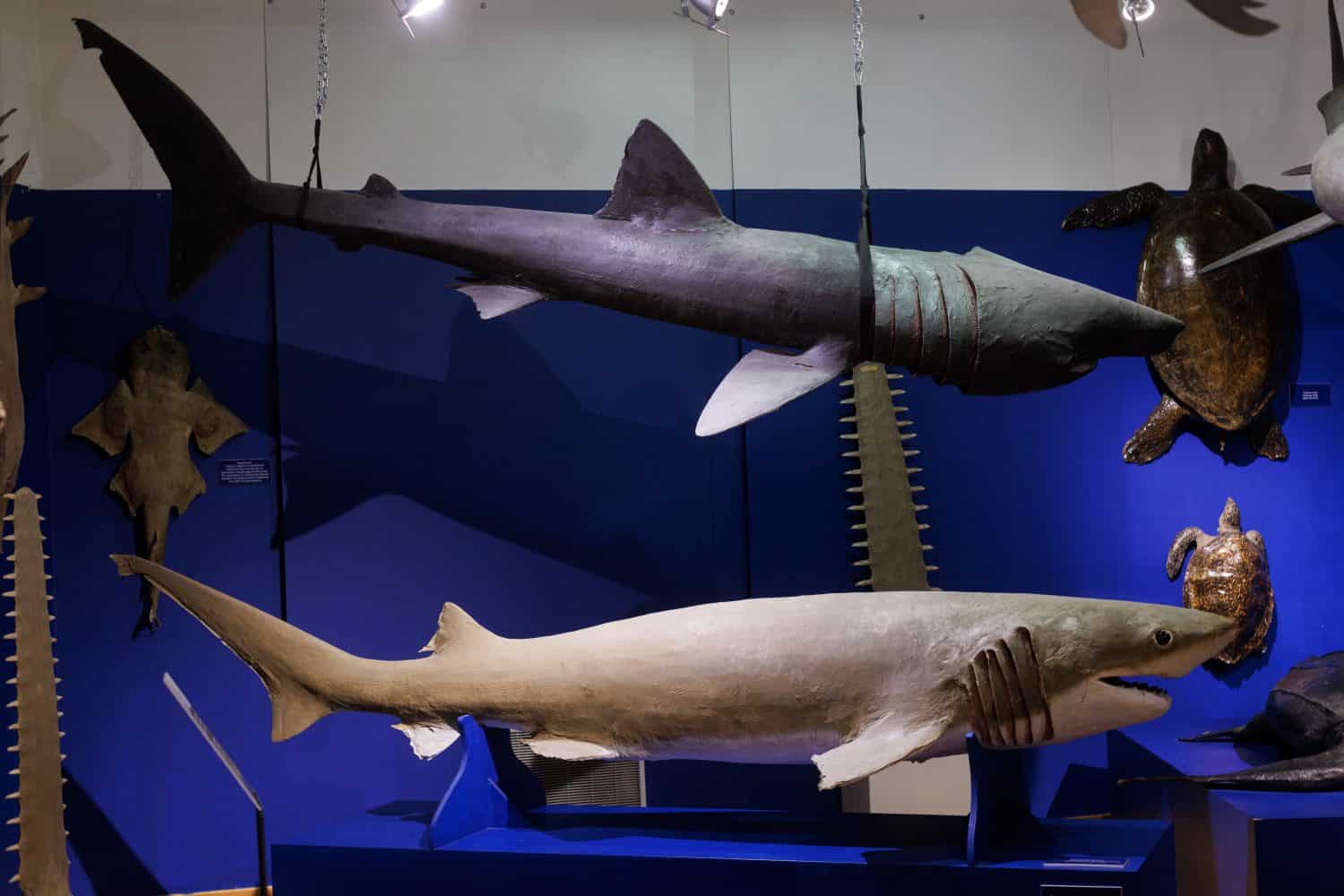
Bluntnose sixgill sharks closely resemble the classic “Jaws” shape, but have unique anatomical differences.
©bepsy/Shutterstock.com
Similar to the bigeye sixgill shark, the bluntnose sixgill shark has also been observed in shallower waters at night. Scientists believe this is to feed, and it has a varied diet that consists of anything from skates and rays to squid and even other, smaller sharks. There’s evidence that bluntnose sixgills prey on seals, particularly as part of an opportunistic diet when they’re in shallow water.
The feature that stands out the most about bluntnose sixgill sharks is their size. Some can grow up to 18 feet, making them an intimidating predator in the deep ocean. While they’re not typically aggressive, they won’t hesitate to defend their food if threatened. Sadly, the status of bluntnose sixgill sharks is Near Threatened by the IUCN because it takes up to 20 years for them to reach sexual maturity. Additionally, their slow-moving nature and soft dorsal fins make them easy, unintentional targets for deep-sea trawls and fishing nets.
Broadnose Sevengill Shark (Notorynchus cepedianus)
It’s unclear just how widely distributed the broadnose sevengill shark is, but they have been found in temperate waters around the world. They have a heavy presence in Pacific waters, as well as the southern coasts of South America, Africa, Australia, and New Zealand. Broadnose sevengill sharks live in slightly shallow waters, preferring to remain in the bathyal and mesopelagic zones, or around a depth of 1,900 feet.
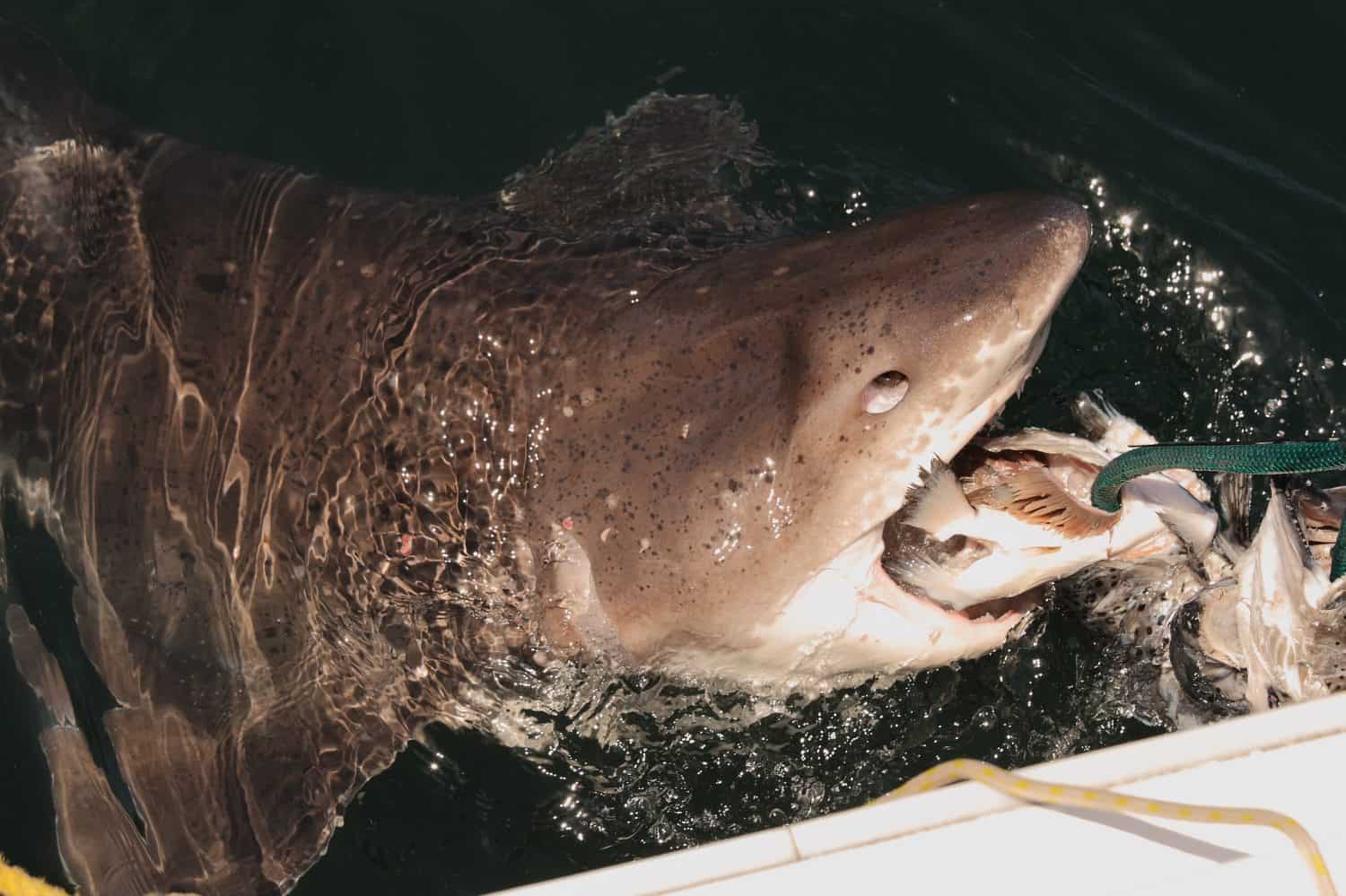
Broadnose sevengill sharks will consume a wide variety of prey, which makes baiting them somewhat easier.
©Alessandro De Maddalena/Shutterstock.com
They have the most gills of any shark species, although theirs are not frilled like the sixgill. However, they most closely resemble white sharks, with a classic dorsal fin on the top of their bodies, gray and white coloring, and a rounded, blunt nose. Their teeth are one of their most unique features and are comb-shaped on the bottom, while their upper jaw features jagged, sharpened points. These sharks are also fairly large, growing up to 9.8 feet.
This versatility in tooth size allows them to consume practically any marine species that comes their way. The broadnose sevengill shark is not picky and will consume anything from octopuses to large fish, seals, and other sharks. This species is also highly opportunistic and won’t turn away a whale fall or discarded fish corpse. This dual hunting nature is what often leads them into small, shallow bays as juveniles. As adults, they remain in deep water.
Sharpnose Sevengill Shark (Heptranchias perlo)
Also known as the one-finned shark or the sevengill cow shark, the sharpnose sevengill is a small but fierce ocean predator. It can be found in most deep-water tropical and temperate waters around the world. However, little is known about its distribution because of the depths at which it lives.
This small shark measures only 2 to 3.9 feet long, but it has an attitude to compensate. In contrast to many others in the hexanchiforme order, the sharpnose sevengill shark will fight back rather than evade a human. This is what earned it the reputation of being one of the top predators in its habitat. With rows of tiny, surgically sharp teeth that anchor into prey, there aren’t many fish that could escape this shark.
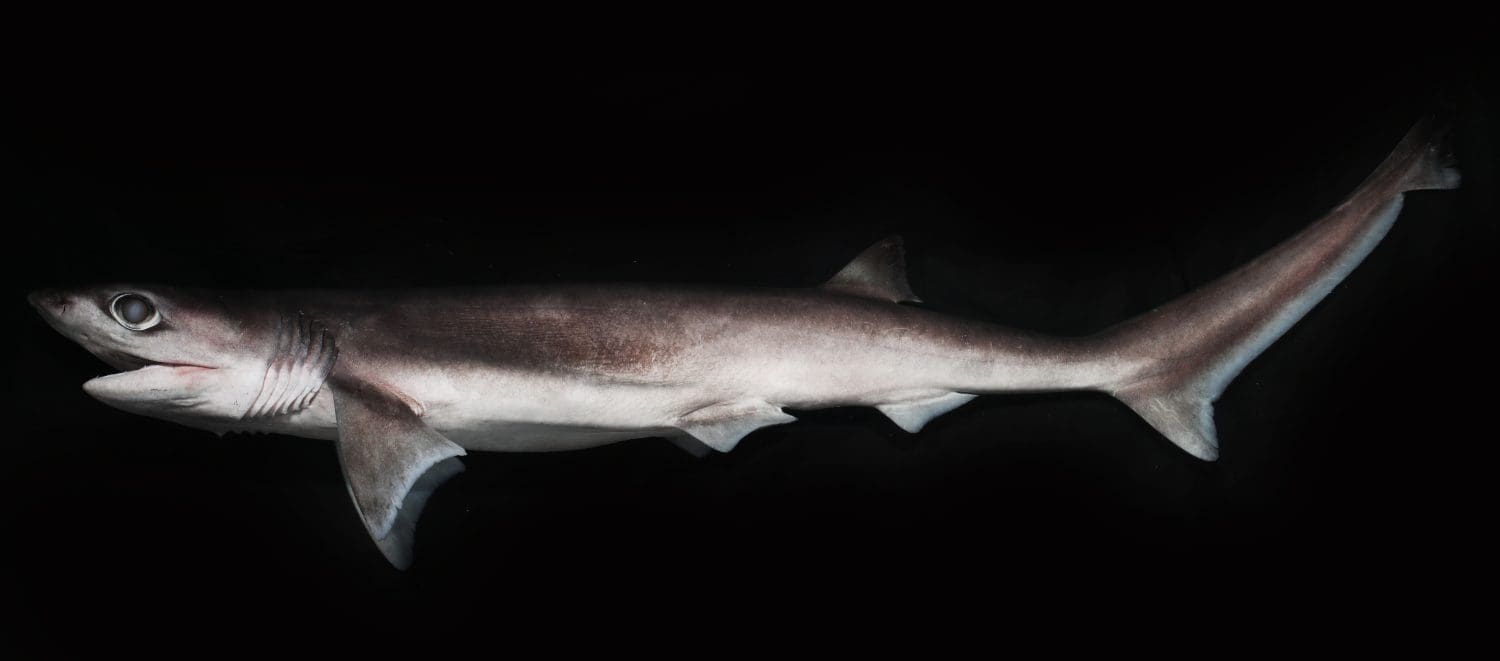
Small but mighty: the sharpnose sevengill shark has an aggressive streak.
©Pavaphon Supanantananont/Shutterstock.com
Its primary diet consists of bony fish, cephalopods, and ray-finned fish. It’s also a night hunter, which means it’s primarily active after sundown. Its slender, narrow body helps it cut through the water with ease, allowing it to outrun most larger predators. However, like many other species, it is prone to becoming bycatch from deep-sea trawls.