Quick Take
- The personal crisis that pushed one photographer to document every species on Earth is far more haunting than anyone would guess. Discover the origin story →
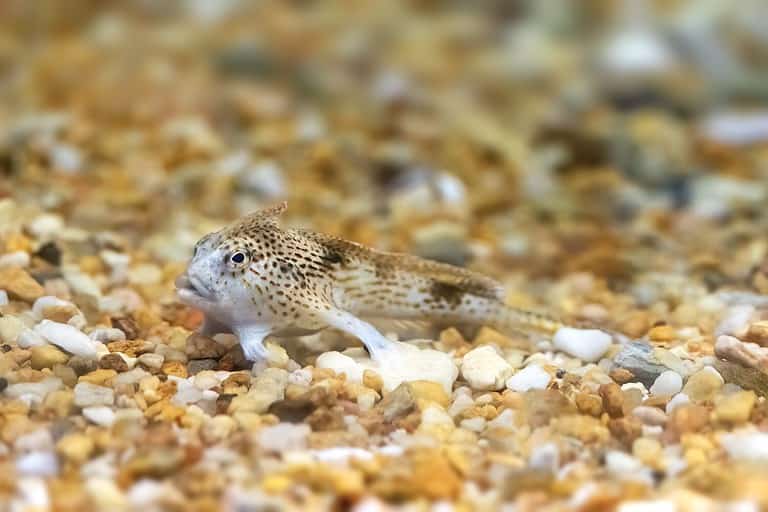
- A fish that walks instead of swims sounds like a myth, but this tiny creature does exactly that, and the way it pulls it off is stranger still. See how it walks →
- Fewer than a few hundred of this species survive, yet it was chosen over thousands of other candidates for one of conservation photography's biggest milestones. Meet the 18,000th species →
Every creature, no matter how small or obscure, deserves a moment in the spotlight. This notion is what initially inspired National Geographic Explorer and photographer Joel Sartore to launch the Photo Ark in 2006. In this ambitious project, Sartore set out to document every species living in zoos, aquariums, and wildlife sanctuaries around the world. Now, twenty years on, Sartore has reached a major milestone by photographing his 18,000th species.
And what better species to mark the occasion than the red handfish? Although it measures only a few inches in length, the red handfish is one of the most interesting-looking fish in the ocean. It also has some impressive walking abilities. Let’s learn more about this fish and how it serves as a symbol for raising awareness about endangered species and the need for biodiversity conservation.
Continue reading
The Photo Ark
When Joel Sartore launched the Photo Ark in 2006, he was facing the uncertainties of both nature and life. While caring for his three young children as his wife was being treated for cancer, Sartore considered his own future. This experience, combined with his love of animals, led him to pursue an ambitious goal: to photograph every living species in zoos, aquariums, and sanctuaries around the world. The first animal he photographed was a naked mole rat at the Lincoln Children’s Zoo.
He initially planned to take 12,000 photographs of different species. In the process, he saw an estimated 10 of his subjects go extinct. Just recently, however, he reached an even more incredible milestone: 18,000 photographs. To mark the occasion, Sartore sought out the red handfish, a critically endangered fish found in just two small patches of rocky reef in Frederick Henry Bay, Tasmania.
Red Handfish

The red handfish uses modified pectoral and pelvic fins to awkwardly walk along the seafloor.
©YouTube/fame_foundation – Original
To celebrate the massive milestone, Sartore took a picture of a red handfish. First described in 1844, the red handfish (Thymichthys politus) is only a few inches long, has a bright red coloration, and a permanent frowny face. Its scientific name translates to “warty growths fish” because it has wart-like bumps all over its body.
Not much is known about their diet, except that they eat creatures living in the benthic region of the ocean, such as crustaceans and polychaete worms. Perhaps the red handfish’s most remarkable feature, however, is its ability to walk. Using modified pectoral and pelvic fins, this frowny fish clumsily walks along the ocean floor.
Observing this behavior in the wild has become increasingly rare. Because they cannot swim very far, they are confined to two small patches of rocky reef in southeastern Tasmania. This limited range, combined with other factors, has made them incredibly vulnerable. In fact, fewer than 250 mature red handfish still remain in the wild. To photograph this elusive fish, Sartore had to visit the Institute for Marine and Antarctic Studies at the University of Tasmania.
He told Discover Wildlife, “The rare and remarkable red handfish is brilliantly unique and critically important to marine biodiversity. We should care about their future as much as we care about our own.”