
Quick Take
- One of these photos was taken by a 13-year-old lying beside a pond, and it went on to beat out entries from seasoned wildlife photographers to win multiple awards. Meet the teen photographer →
- The 2025 overall winner was chosen from roughly 10,000 entries and captures an animal doing something so human it almost looks staged. See the winning shot →
- Several of the funniest moments in this collection are actually the result of serious survival adaptations that just happen to look ridiculous on camera.
- One bird is among the most elegant hunters in its habitat, yet a single photograph exposes an embarrassing flaw it can't avoid. Watch the clumsy landing →
Wild animals do not know when a camera is pointed at them, which is exactly what makes these photos so funny. One perfectly timed expression, awkward landing, or unexpected interaction can make even the most graceful animal look completely ridiculous.
The Nikon Comedy Wildlife Awards celebrate those rare moments when nature seems to deliver its own punchline. The images are not staged, yet some look almost too perfectly timed to be real. From dramatic faces and clumsy poses to playful behavior that feels surprisingly human, each photo captures a side of wildlife people do not always get to see.
These 16 hilarious wildlife photos prove the animal kingdom is not only beautiful, powerful, and unpredictable. It can also be incredibly funny when a photographer happens to press the shutter at exactly the right second.
Smile, You’re Being Photographed
© Photo by Valtteri Mulkahainen / Nikon Comedy Wildlife Awards
©
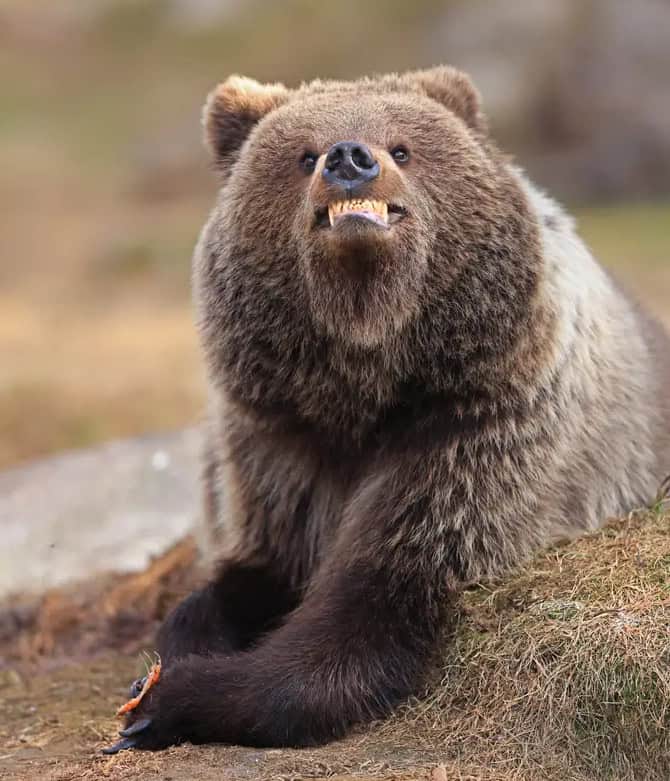
This young bear cub in Finland appears to be flashing the photographer an enormous, camera-ready smile. Of course, bears do not smile to express happiness in exactly the same way humans do. The effect comes from the cub’s open mouth, raised cheeks, and perfectly timed glance toward the lens. Young bears are naturally curious and spend much of their early lives playing, investigating unfamiliar objects, and learning survival skills from their mothers. Those playful behaviors often produce the expressive poses that photographers love. Valtteri Mulkahainen captured the cub at precisely the right moment, creating a portrait that looks less like a cautious wild animal and more like an enthusiastic child posing for a school picture.
The Choir
© Photo by Meline Ellwanger / Nikon Comedy Wildlife Awards
©
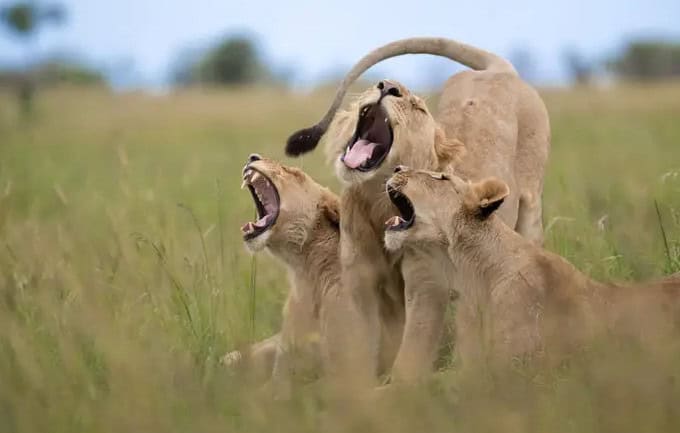
Three lions open their mouths at nearly the same moment, creating what looks like a perfectly rehearsed wildlife choir. The animals were actually yawning, a familiar sight among lions because they can spend as many as 20 hours of the day resting or conserving energy. Lions are highly social cats that live in prides, so their behavior is often influenced by the animals resting and moving around them. One lion standing, stretching, or yawning can prompt others to become active as well. Meline Ellwanger’s timing transformed an ordinary moment of group drowsiness into a scene that looks almost musical. The expressions suggest three enthusiastic singers, although their imaginary song would probably sound more like a series of deep grunts and roars.
Landing Gear Down
© Photo by Erkko Badermann / Nikon Comedy Wildlife Awards
©
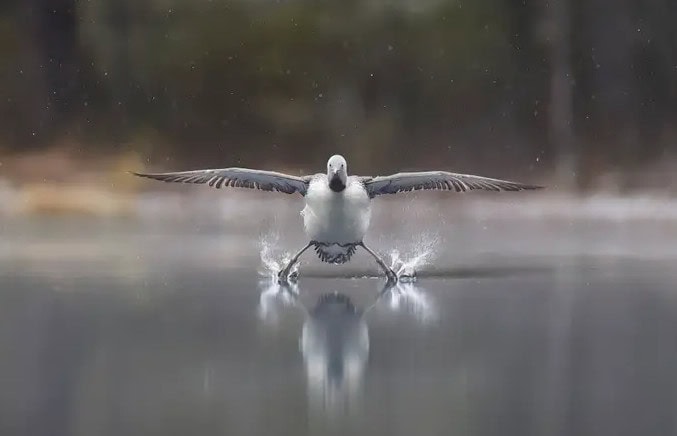
This red-throated loon looks as though it has suddenly remembered to lower its landing gear before touching the water. Loons are graceful swimmers and powerful underwater hunters, but the position of their legs makes takeoffs and landings look surprisingly awkward. Their feet sit far back on the body, providing excellent propulsion while diving but making it difficult to balance or walk on land. Red-throated loons typically take off by running across the water while rapidly beating their wings. Landing requires them to lower their feet and use the water’s surface as a runway. Photographer Erkko Badermann caught this bird in a split-second pose that makes an efficient natural adaptation look like a panicked emergency landing.
Monkey Circus
© Photo by Kalin Botev / Nikon Comedy Wildlife Awards
©
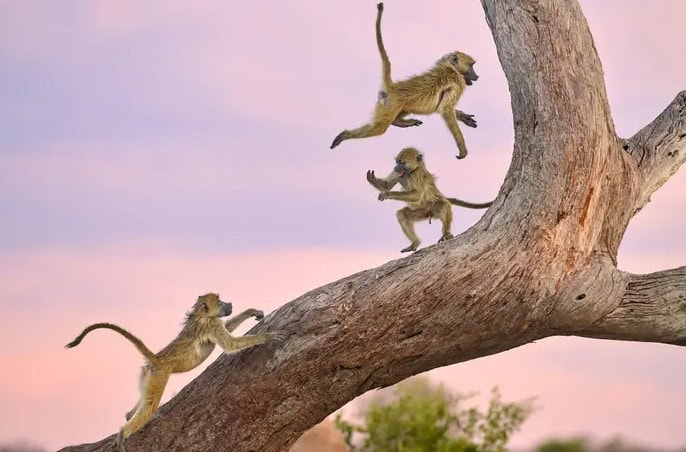
A group of baboons in Zimbabwe’s Hwange National Park turned an ordinary tree into what looked like a crowded circus act. Photographer Kalin Botev watched as the animals climbed, chased one another, and produced a rapid series of acrobatic poses. Baboons live in complex social troops that can contain dozens or even hundreds of members. Play is especially important for younger baboons because it helps them develop coordination, test their strength, and learn the social boundaries of the group. Adults may tolerate the chaos, join briefly, or simply attempt to stay out of the way. In this photograph, the tangle of arms, legs, and tails makes it difficult to tell whether anyone is in control, which is part of what makes the moment so funny.
Bad Hair Day
© Photo by Christy Grinton / Nikon Comedy Wildlife Awards
©
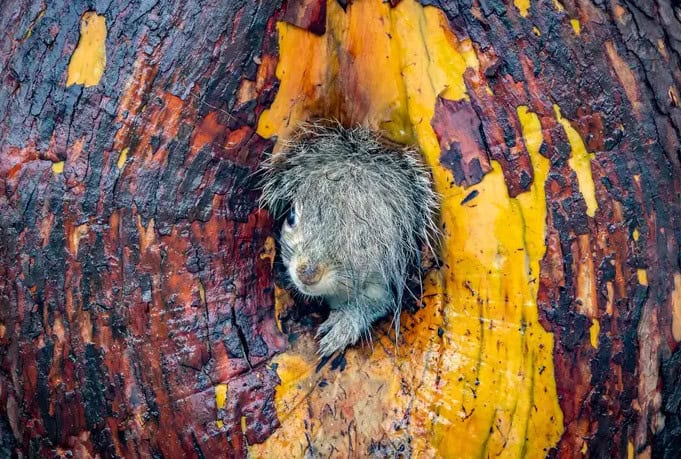
This grey squirrel was not experimenting with a new hairstyle. Photographer Christy Grinton saw the mother relocating her babies to another nest in a park in Victoria, British Columbia. As the squirrel ran through wet grass, her large tail became damp. When she turned inside the new nest, the soaked fur briefly flopped over her head, creating the appearance of an unruly wig. Mother squirrels may move their young when a nest becomes damaged, disturbed, or otherwise unsuitable. They transport the babies individually, carrying each carefully in their mouths. The work can require several hurried trips, so the squirrel probably had more important things to worry about than her appearance. The camera still caught her during a truly spectacular bad hair day.
I Just Can’t Wait to Be King
© Photo by Bret Saalwaechter / Nikon Comedy Wildlife Awards
©
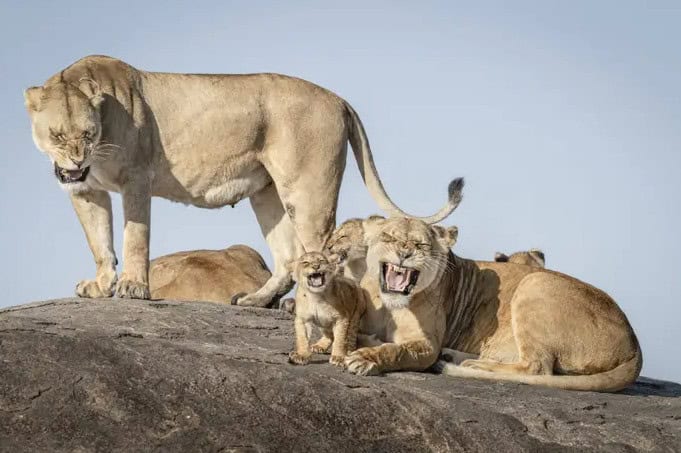
These energetic lion cubs followed their mother around a rocky kopje in Tanzania’s Serengeti, repeatedly trying to play, nurse, and demand her attention. The lioness, already uncomfortable in the heat, responded with roars of protest and attempted to move away. Her determined cubs simply followed her. Young lions depend on the adults in their pride for food, protection, and instruction, but they also spend enormous amounts of time wrestling and testing everyone’s patience. Play helps cubs develop the balance, coordination, and stalking skills they will eventually need for hunting. Bret Saalwaechter captured the family at the peak of the commotion, making the cubs look less like future predators and more like children refusing to let an exhausted parent rest.
Fonzies Advertising
© Photo by Liliana Luca / Nikon Comedy Wildlife Awards
©
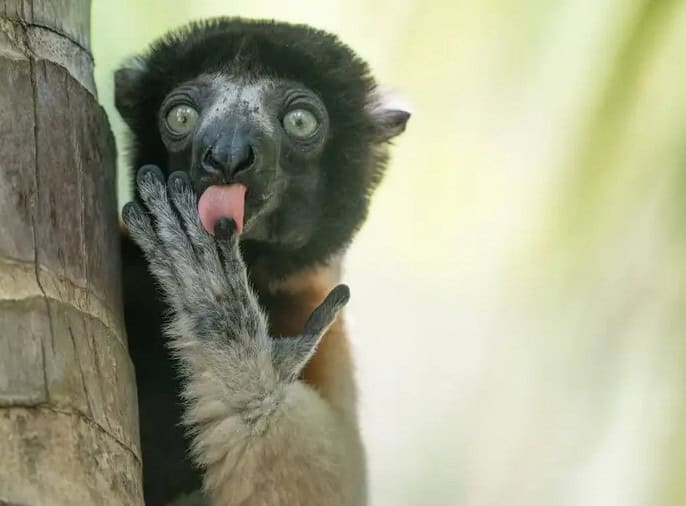
While photographing wildlife in Madagascar, Liliana Luca noticed a lemur staring back with wide, curious eyes. The animal then slowly raised one hand, licked its fingers, and paused in a pose that reminded the photographer of a snack advertisement. Lemurs use their hands to grip branches, handle food, and groom themselves or other members of their social groups. Those familiar movements can look remarkably human when frozen in a photograph. Madagascar is the only place where wild lemurs naturally occur, and the island supports more than 100 living species and subspecies. This lemur had no intention of promoting a snack, but its careful timing and thoughtful expression make it look like an experienced actor waiting for someone to deliver the product slogan.
Now Which Direction Is My Nest?
© Photo by Alison Tuck / Nikon Comedy Wildlife Awards
©
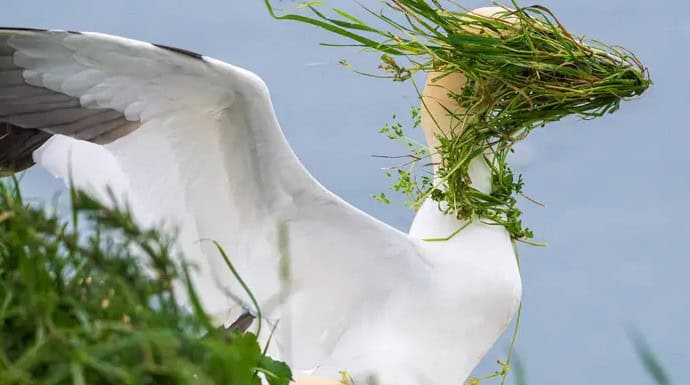
A nesting gannet at England’s Bempton Cliffs temporarily lost its view when a gust of wind blew a bundle of grass directly across its face. Northern gannets gather vegetation, seaweed, feathers, and other available material to build nests on crowded coastal ledges. The birds frequently steal nesting material from their neighbors, adding another layer of confusion to an already busy colony. Gannets normally look sleek and elegant, especially when diving into the ocean at high speed to catch fish. This particular bird appears completely defeated by a few strands of grass. Alison Tuck captured the harmless mishap before the material shifted again, turning a routine nest-building challenge into a scene of total avian disorientation.
Go Away
© Photo by Annette Kirby / Nikon Comedy Wildlife Awards
©
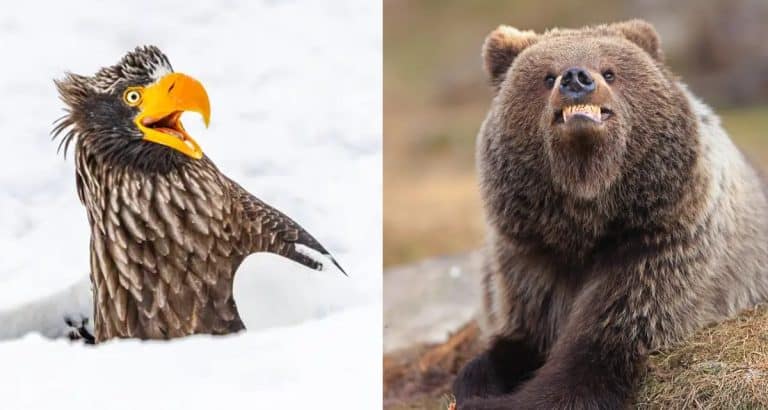
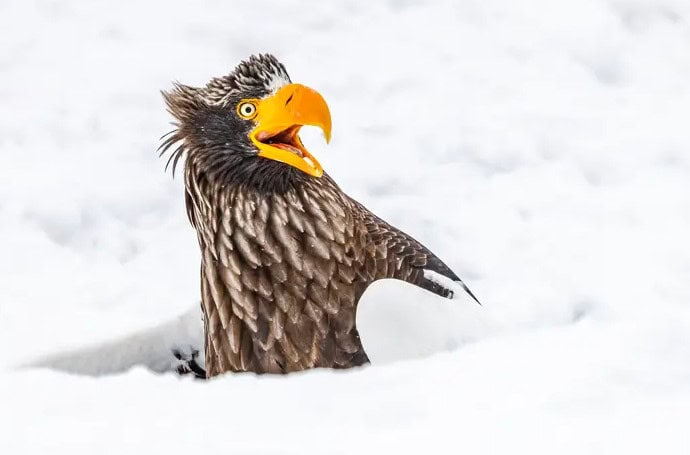
This Steller’s sea eagle found a fish and settled into a deep patch of snow in Hokkaido, Japan, to eat it. When competing birds began circling nearby, the eagle raised its head and produced a glare that seemed to communicate one unmistakable message: go away. Steller’s sea eagles are among the world’s heaviest eagles, with large females sometimes weighing more than 20 pounds. Their enormous yellow bills are well suited for tearing apart fish, which make up much of their diet. Competition around a valuable meal can be intense, even for such a powerful bird. Annette Kirby photographed the eagle while it remained alert over its catch, turning a serious act of food protection into the wildlife equivalent of an angry diner guarding the last slice of pizza.
Aaaaaw Mum
© Photo by Mark Meth Cohn / Nikon Comedy Wildlife Awards
©
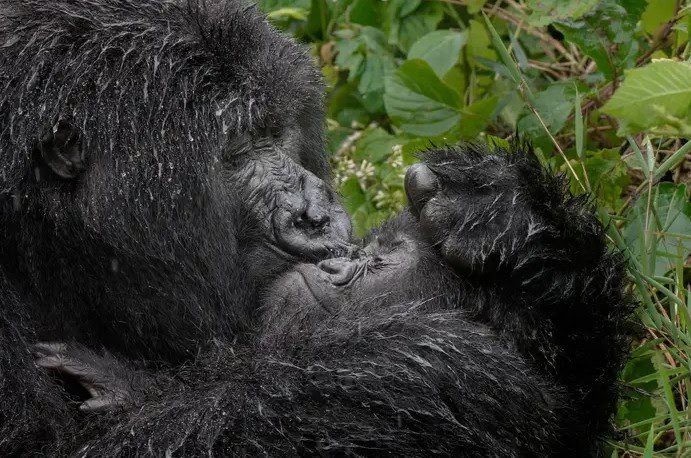
A young mountain gorilla appears to be hiding its face in embarrassment as its mother sits nearby in Rwanda’s Virunga Mountains. The human interpretation is irresistible, although the youngster was probably playing, resting, or reacting to another member of the family group. Mountain gorillas live in stable social units led by one or more adult males and supported by close bonds between females and their offspring. Young gorillas remain dependent on their mothers for several years and spend much of their free time climbing, tumbling, and wrestling with other juveniles. Photographer Mark Meth Cohn captured the group in a forest clearing, freezing a small gesture that will feel familiar to anyone who has ever watched a child become embarrassed by a parent in public.
Headlock
© Photo by Warren Price / Nikon Comedy Wildlife Awards
©
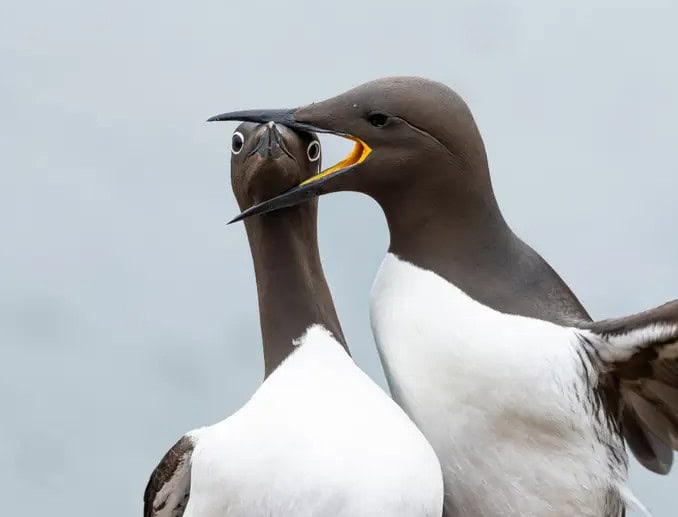
These guillemots were nesting on a crowded cliff ledge where personal space was in extremely short supply. The birds can become fiercely territorial during the breeding season, and disputes may involve jabbing bills, loud calls, and attempts to force a neighbor away. Warren Price photographed one guillemot with its head firmly clamped inside another bird’s beak. The trapped bird’s direct stare toward the camera makes it look as though it is silently asking for help. Guillemots often lay a single pear-shaped egg directly on bare rock rather than building a traditional nest. That strategy allows enormous colonies to occupy narrow cliffs, but it also means adults must tolerate neighbors close enough to start a headlock without taking a single step.
Smiley
© Photo by Jenny Stock / Nikon Comedy Wildlife Awards
©
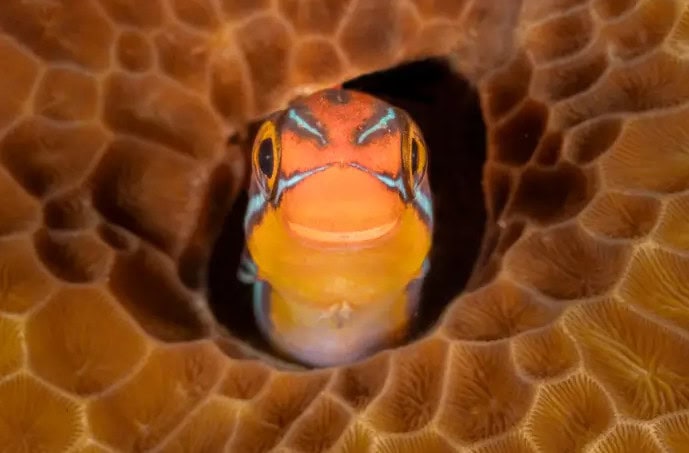
A tiny bluestriped fangblenny peeks from a coral opening with an expression that resembles a mischievous grin. Photographer Jenny Stock encountered the fish while diving in the Philippines and captured its face at just the right angle. Fangblennies are small, slender reef fish named for the enlarged canine teeth found in their lower jaws. Some species use those teeth defensively and can deliver venomous bites to predators, although their small size makes them appear far less intimidating than larger venomous animals. Bluestriped fangblennies frequently shelter inside narrow holes and abandoned worm tubes, leaving only their heads visible. That behavior explains the portrait, but not the cheeky expression that helped “Smiley” win the aquatic category.
Baptism of the Unwilling Convert
© Photo by Grayson Bell / Nikon Comedy Wildlife Awards
©
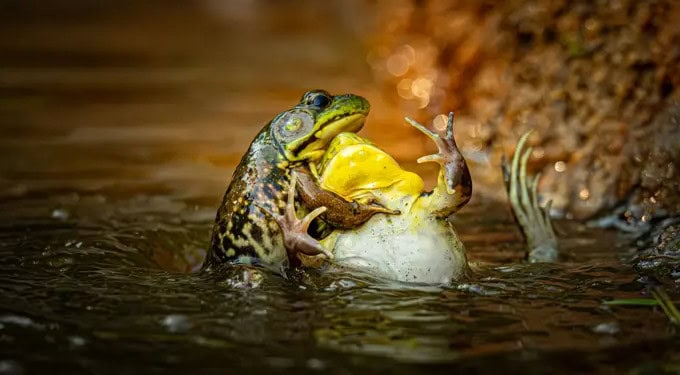
Thirteen-year-old photographer Grayson Bell was lying beside a pond in Maine when he captured two frogs in a pose that looked like an extremely forceful baptism. Bell did not immediately notice how funny the photograph was. The scene became obvious only after he reviewed the images with his family. Frogs gather in ponds during breeding season, when males may compete for space or accidentally grab other frogs while attempting to find a mate. The resulting splashing and wrestling can produce chaotic poses that last only a fraction of a second. Bell’s perfectly timed image won both the junior award and the reptiles, amphibians, and insects category, proving that patience and sharp observation matter more than a photographer’s age.
Hit the Dance Floor
© Photo by Paula Rustemeier / Nikon Comedy Wildlife Awards
©
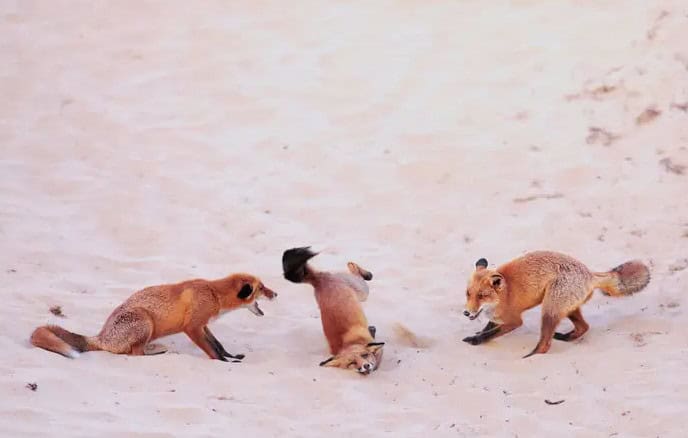
Two foxes interacting on a nature reserve in the Netherlands kicked up a cloud of sand and produced what looked like a competitive breakdance battle. Foxes use pounces, leaps, chases, and mock fights during play, especially when they are young. Those games help sharpen the coordination and timing needed to capture prey while also teaching the animals how to communicate without causing a serious fight. Their quick movements can appear almost choreographed when a camera freezes them in midair. Paula Rustemeier’s photograph captures one fox low to the ground while the other twists dramatically nearby. The scene earned the Nikon Young Photographer award and makes the animals look ready to settle their disagreement through dance rather than teeth.
Digging for Gold
© Photo by Maggie Hoffman / Nikon Comedy Wildlife Awards
©
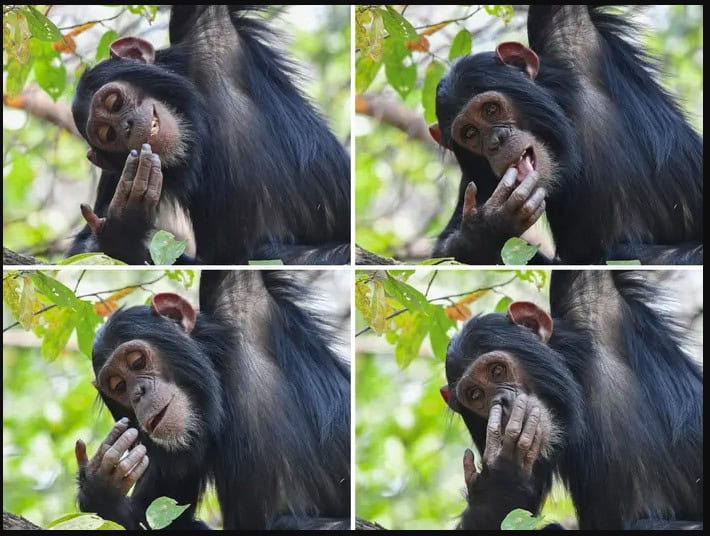
This chimpanzee in Tanzania’s Gombe National Park was photographed with one finger pushed deeply into its nostril, showing that some embarrassing habits are not limited to humans. Chimpanzees share many physical traits and behaviors with people, including expressive faces, careful hand movements, social grooming, and the ability to use tools. Their fingers can perform highly precise tasks, whether they are removing termites from a mound or investigating an irritated nose. Photographer Maggie Hoffman’s image was part of a winning portfolio that focused on amusing chimpanzee behavior. The title “Digging for Gold” gives the scene an added punchline, although the chimp appeared far more interested in the task than in how it might look to an audience.
High Five, the 2025 Overall Winner
© Photo by Mark Meth Cohn / Nikon Comedy Wildlife Awards
©
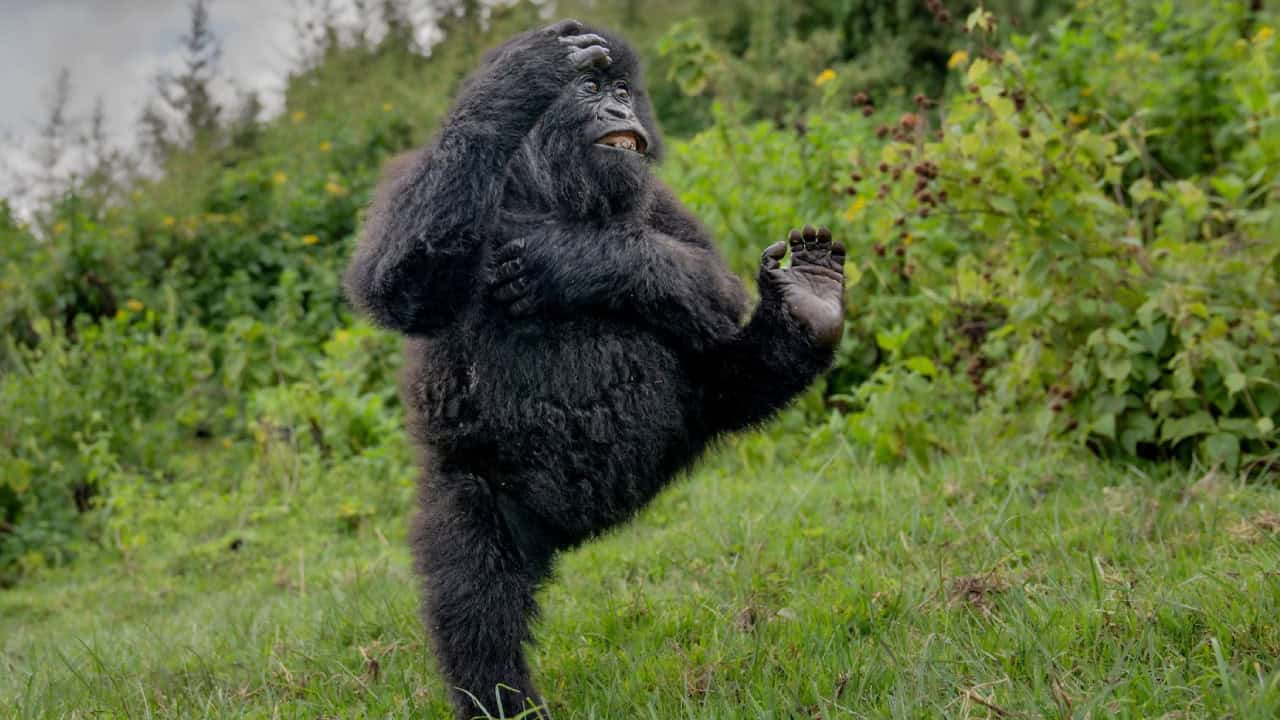
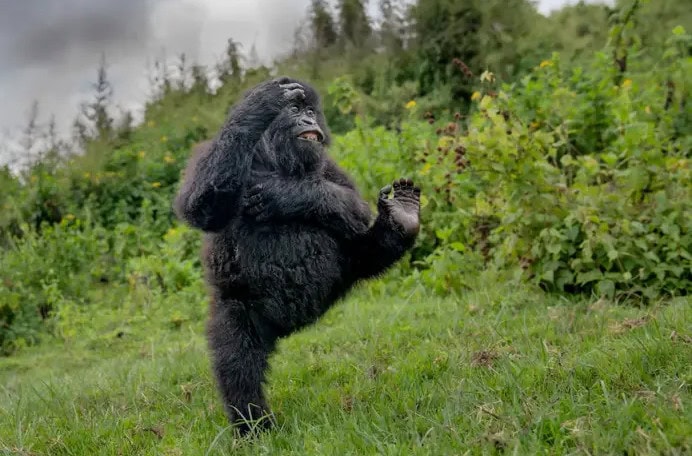
The overall winner captures a young mountain gorilla raising one arm and kicking a leg into the air as though celebrating with an enormous high five. Mark Meth Cohn photographed the youngster while visiting Rwanda’s Virunga Mountains, where the Amahoro gorilla family had gathered in a forest clearing. The adults were calmly feeding while the younger gorillas played, tumbled, and showed off. Play allows juvenile gorillas to develop physical strength and learn the social signals used within their family groups. This particular male repeatedly pirouetted and kicked, giving the photographer several opportunities to capture his performance. “High Five” ultimately stood out from approximately 10,000 entries and also won the competition’s mammal category.