
Quick Take
- A hat vanished into a hippo's habitat through a gap barely a foot wide. How it got there is stranger than you'd guess.
- Vets turned to human specialists for help, yet one lifesaving option was off the table. Why?
- A hippo's body is built in ways that make anything swallowed hard to find and harder to fix.
- A borrowed scope and a borrowed vibration plate: the unusual last-ditch measures the team tried.
On Tuesday, Nov. 17, vets at the Cincinnati Zoo sedated Fiona and ran a 9-foot scope, borrowed from the Columbus Zoo, through her colon to look for a hat she had swallowed, WVXU reported. On Wednesday, she stood several times on a vibration plate borrowed from a local horse farm.
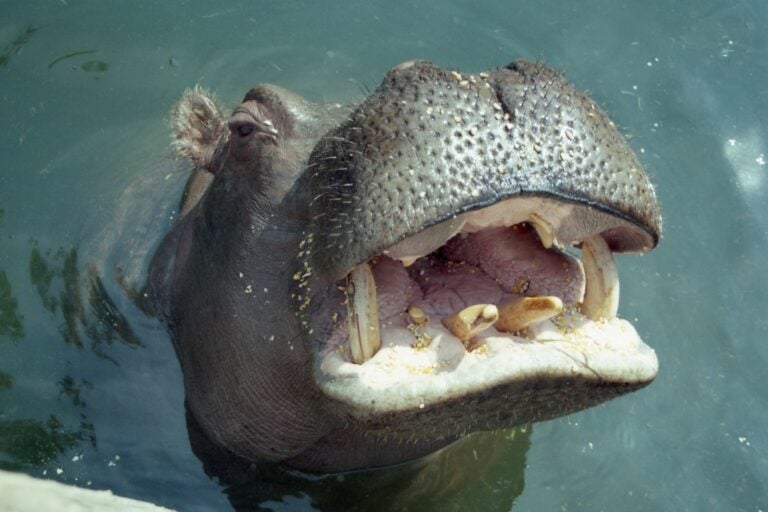
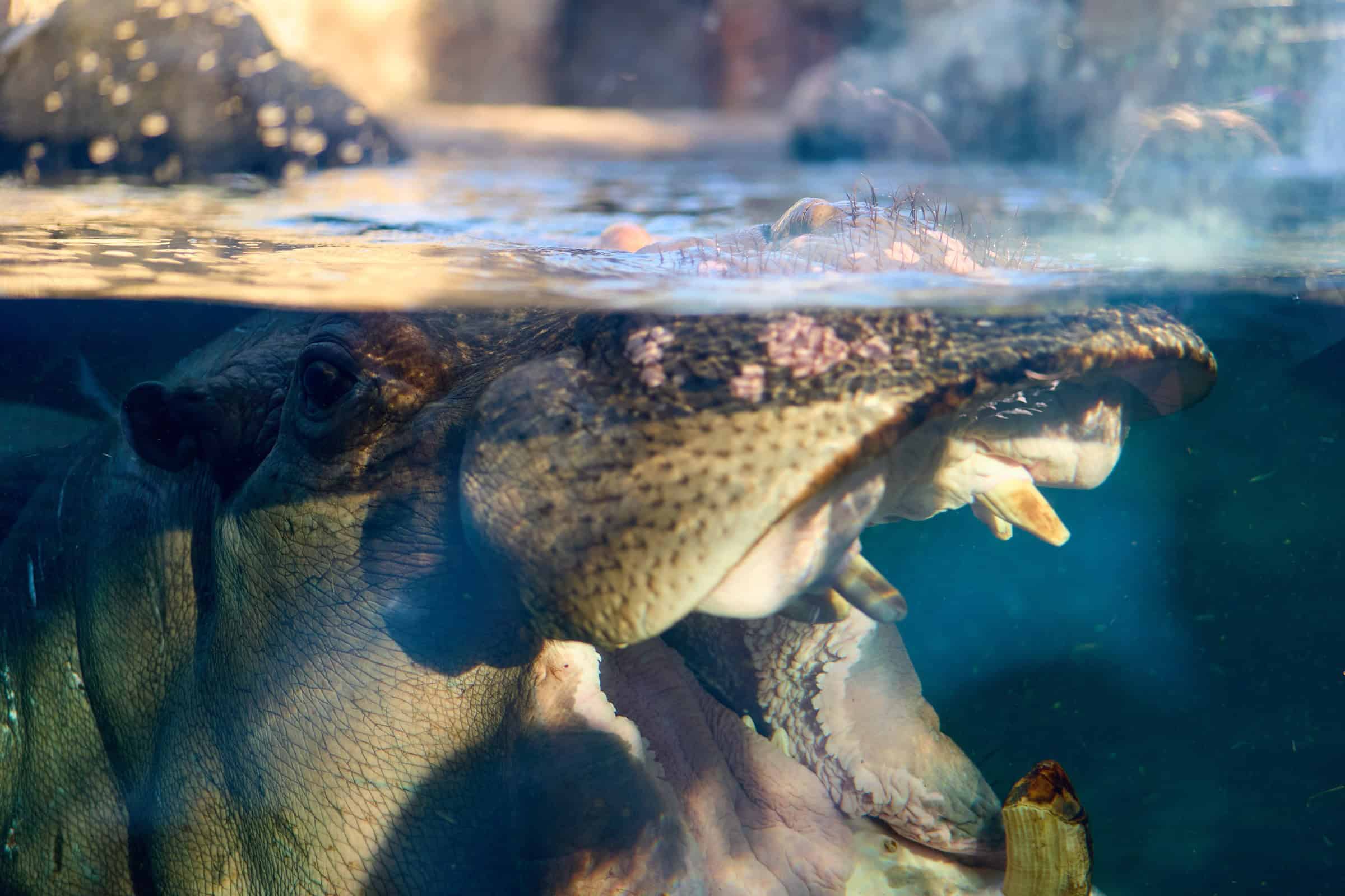
Fiona, a Nile hippopotamus, died Thursday, Nov. 19, at age 9, 11 days after the hat landed in her habitat. “Despite multiple attempts to move the hat out of her system, it was ultimately too much to overcome,” the zoo said in its announcement. “The team performed necessary supportive care today in an attempt to save her, but it was not successful and she did not recover.”
“We are in shock at the moment,” zoo director Dave Jenike said. “We did not expect this outcome. She fought until she couldn’t anymore.”
Why did the zoo expect her to pass the hat?
The hat landed in Fiona’s habitat on Nov. 8. The zoo first said that at about 2,400 pounds she was large enough for a small hat to pass, and she showed no symptoms, WVXU reported.
After a few days, keepers noticed her appetite dropping. Staff gave her extra fluids and enemas, ran blood work and offered her favorite foods to help push the hat through. She also received rectal fluids, pain medication and antiemetics so she would not feel nauseous, WLWT reported.
Why couldn’t the scope reach it?
Dr. Mike Wenninger, the zoo’s director of animal health, described the colonoscopy in a video the zoo posted Tuesday. A Columbus Zoo technician came along to help set up the scope. “The scope’s about nine feet long, and we weren’t able to reach any farther than that,” Wenninger said.
The team did not find the hat in her colon, ABC News reported. An ultrasound the same day showed “some bunching of intestines, so we do think she’s passing something through her small intestine,” Wenninger said.
Why wasn’t surgery possible?
Wenninger said the team consulted “both veterinary and human specialists” and learned that “surgery isn’t an option for full-grown hippos”. The best chance was for Fiona to pass the hat on her own.
Vets who have operated on hippos have published accounts of the difficulty. A 2012 case series in the Journal of the American Veterinary Medical Association, covering 10 adult males being castrated, concluded that “common hippopotami are difficult to anesthetize”.
Discover Magazine described a Theriogenology paper on castrating 10 hippos, whose authors wrote, “In the past, hippopotamus anesthesia has been fraught with serious complications”. Each procedure took about an hour and a half, and the surgeons worked deep inside the body, where it was hard to see.
The Toronto Zoo lists hippo skin as up to 3 inches thick in most places, with a fat layer about 2 inches thick.
How does a hippo digest food?
Hippos are non-ruminating foregut fermenters, and food moves through them slowly. In a 2004 study in Comparative Biochemistry and Physiology, food particles took 48 to 106 hours to pass through four common hippos, or two to nearly four and a half days. Those particle markers were fibers smaller than a tenth of an inch.
Hippos are poor chewers. A 2023 PLOS ONE paper noted that hippos have been described as the mammals with the lowest chewing efficacy, and found that their jaws move mainly up and down. In common hippos, interlocking upper and lower incisors prevent the jaw from moving side to side.
The University of Michigan’s Animal Diversity Web says a hippo eats 1 to 1.5% of its body weight each night, which is 24 to 36 pounds for an animal Fiona’s size. Food goes down in large pieces: the 2004 study noted a “generally high average ingesta particle size”. The Cincinnati Enquirer reported that Fiona swallowed “a significant part” of the hat.
Why a vibration plate?
The zoo said the vibrations were meant to encourage movement along Fiona’s digestive tract and help her pass the object. Keepers had one encouraging sign that Wednesday: she responded positively to the scent of coffee, one of her favorites.
How did the hat get into her habitat?
A child in front of the habitat tossed the knit cap, as A-Z reported on Nov. 17, and a ceiling fan caught it and flung it through a 1-foot gap above the 12-foot-tall viewing window, zoo spokesperson Michelle Curley said. The zoo asks visitors to secure their belongings near habitats and to tell a staff member immediately if something falls in.
Michael San Filippo, a spokesperson for the American Veterinary Medical Association, called it “a very unusual accident”. He said “animals can be seriously harmed when they swallow things they shouldn’t, whether they’re pets at home, animals on the farm, residents of a zoo or animals in the wild”.
Fiona is survived by her mother, Bibi, and her half-brother, Fritz. She would have turned 10 in January.