
Quick Take
- A young fisher completed a record-breaking 89-mile journey, exceeding the species average of roughly 12 miles.
- Tracking the fisher known as F003 revealed how modern roads and habitat patches turn a standard dispersal into a dangerous undertaking.
- Biologists discovered that population growth does not guarantee the safety or long-term survival of this predator, as many threats still exist outside of what wildlife management teams can predict.
- F003’s journey taught biologists and researchers more about how fishers migrate and why as well as how they can better protect this species moving forward.
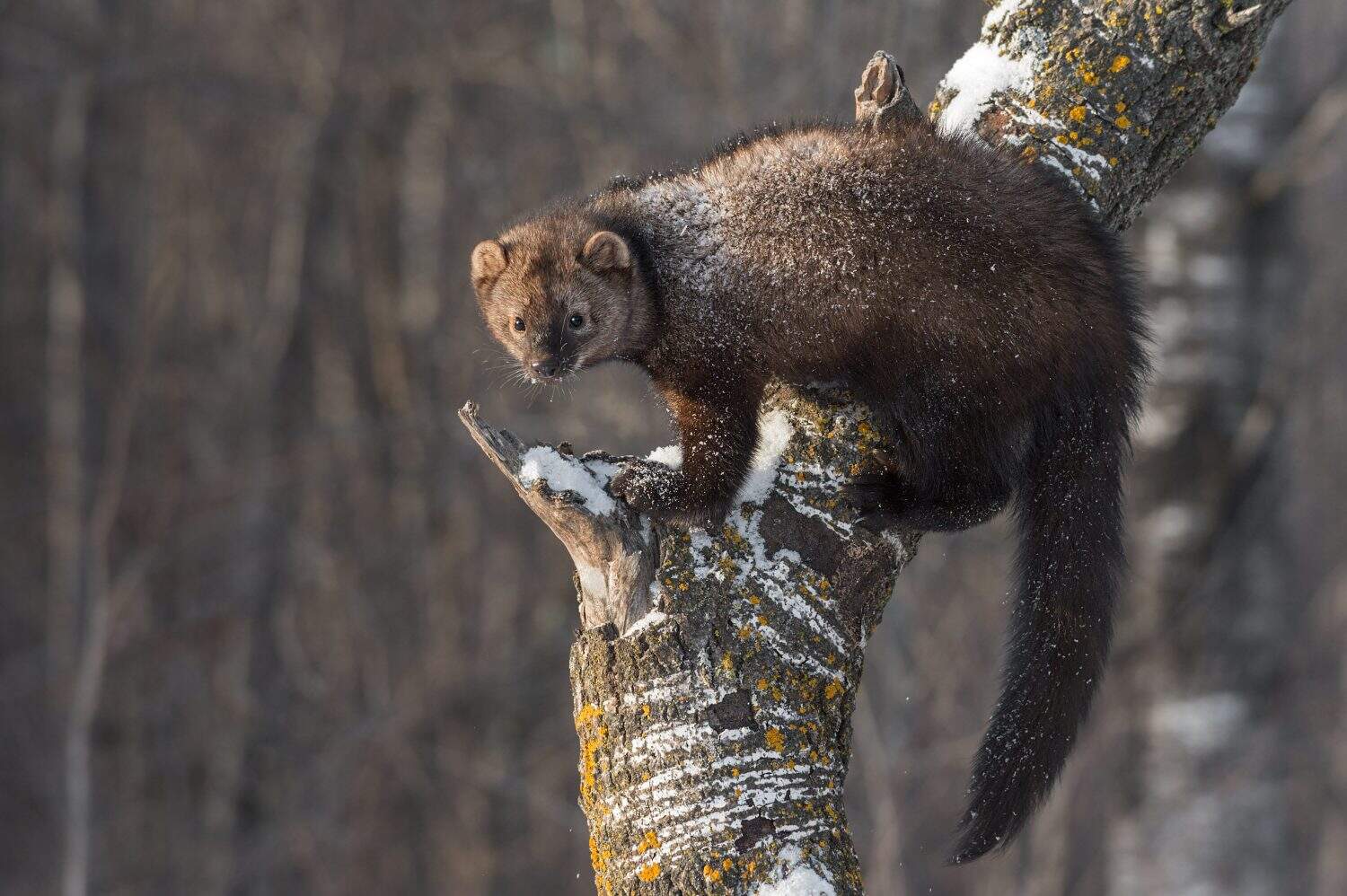
A creature in New Hampshire accomplished a feat that biologists rarely observe: completing a journey of miles and miles to make a home for itself. The fisher (Pekania pennanti), the only living species in its genus and a carnivore wandering northernmost forests, is known to travel, but this particular fisher beat any previously observable records.
According to reporting from New Hampshire Public Radio and a study performed by the University of New Hampshire, this fisher (known as F003) traveled an 89-mile (143-kilometer) path from Durham, New Hampshire, to the outskirts of Lincoln, setting the longest documented dispersal journey for this animal. What happened to this fisher on its long trek, and why did she take such a long trip in the first place? What did biologists learn from this migration, and how might one fisher change the scope of population management for her entire species?
We’ll go over F003’s journey in detail, including the potential motivations behind her long quest for space and new territory. Using wildlife management sources and research from leading scientific studies, here’s what happened to the fisher known as F003, as well as what her travels mean for both her species and other mammals that venture in similar ways.
The Journey of F003: Why and Where She Travelled
F003 was under a year old when researchers at UNH encountered her in Durham. They fitted her with a GPS collar to track her journey, which turned out to be much longer and more meandering than researchers could ever predict. She first moved south and reached Great Bay, only to turn back and try another route. Eventually, she crossed into Maine, returned to New Hampshire, traversed Lake Winnipesaukee while it was frozen over, and finally settled near Lincoln in the White Mountains.
By the end of F003’s journey, her route measured nearly 80 miles, finishing roughly 73 miles from where she started.
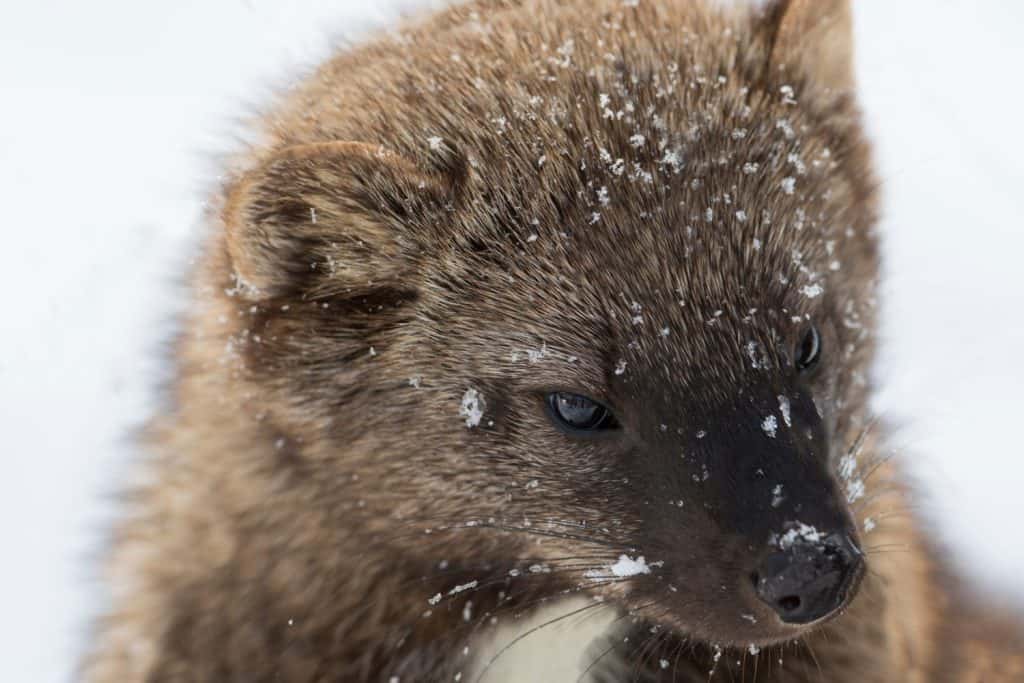
A medium-sized carnivorous mammal, young fishers often migrate to find new territory, away from their parents.
©Mircea Costina/Shutterstock.com
Described by UNH researchers as an “instinctual movement,” F003’s journey was due to the young animal being ready to leave her mother and head out on her own, a common theme among fishers. They also suggested that F003 may have been looking for a place that felt somewhat familiar, saying she may have had a “search image” of home before eventually settling in Lincoln. Her meandering path makes more sense with this specificity in mind; she needed to test territories and various habitats before determining where she’d be most comfortable.
Researchers in this study importantly noted that most fishers disperse along much shorter distances, around 12 miles, which is why F003’s behavior is fascinating. Scientists described her trek as “quite remarkable,” especially for such a petite carnivore navigating harsh winter conditions and deep snow. Long-distance fisher dispersal has rarely been documented in the animal world, so one well-tracked individual like F003 can teach scientists a great deal about the species’ movement and desires, including why fishers opt to leave their familiar birthplace at all.
Why Do Fishers Leave Home?
Fishers aren’t the only animals that leave their families when they are old enough; plenty of species do it, and for good reason. A home range already occupied by adult animals may not have enough food or denning availability, and another predator of the same sex may further complicate things, especially for territorial fishers. Dispersal ultimately reduces competition in a given habitat and lowers the odds of inbreeding, moving genes and bloodlines into other areas and regions. UNH noted in their aforementioned study that F003’s dispersal was crucial to the survival and genetic diversity of fisher populations.
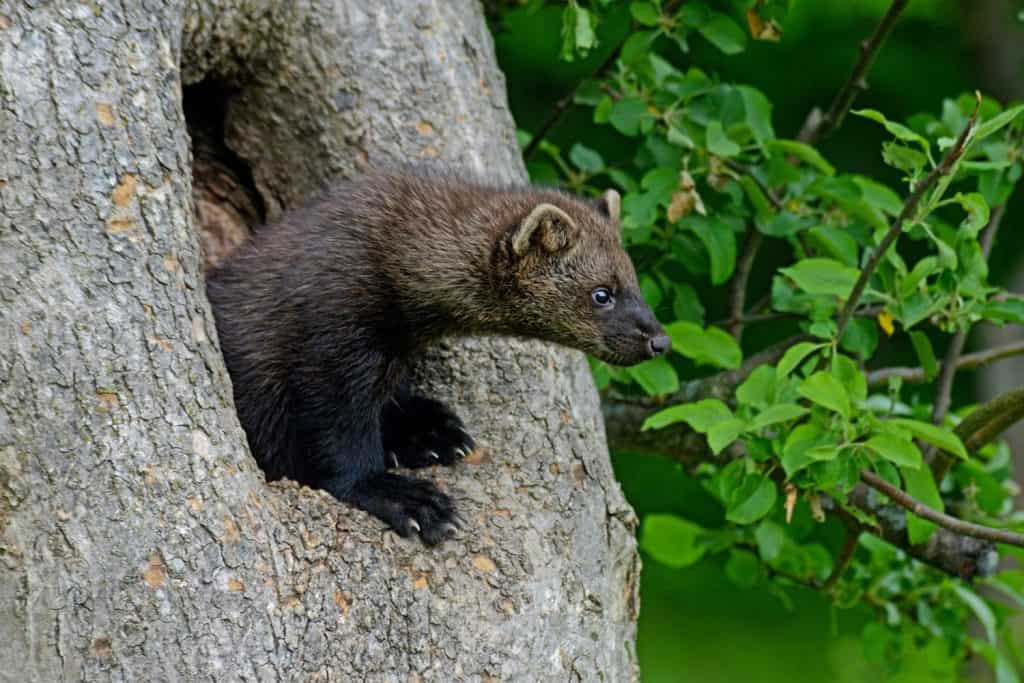
Fishers need habitats with cavities in trees, as this is where they prefer to den.
©Betty Shelton/Shutterstock.com
As medium-sized carnivores in the weasel family, fishers need functional forest habitats that are fully formed and active so that they can both hunt and hide effectively. The U.S. Fish and Wildlife Service lists fishers occupying forested and semi-forested areas across Canada and the northern United States from Washington to New England, with moderate to dense canopy cover part of their ideal habitat. They tend to rely on cavities in live or dead trees for denning, which is just one likely reason why F003’s journey took so much time to accomplish.
She ultimately needs an ecosystem with enough prey and limited competition (from other female fishers in particular). Where she decided to land informed scientists a great deal, as the chosen location was outside of a fisher’s preferred habitat.
What Tracking F003 Proved to Scientists
The collared GPS tracking of F003 allowed researchers follow her in every sense: her route choice, failed attempts, the seasonal timing that likely affected her every single day, and why she finally selected a territory and began to settle in her new home range. All of this recently acquired information is vital to scientists.
The U.S. Fish and Wildlife Service notes that fisher studies funded through wildlife restoration grants have expanded our understanding of their habitat requirements, movements, travel corridors, survival, food habits, and even the effects of pesticides on their health and decision-making. In New Hampshire and F003’s journey in particular, those tools include both GPS-collared fishers and a large trail-camera network used in partnership with UNH. The collars are also capable of sending mortality signals that help researchers recover animals and investigate how they died.
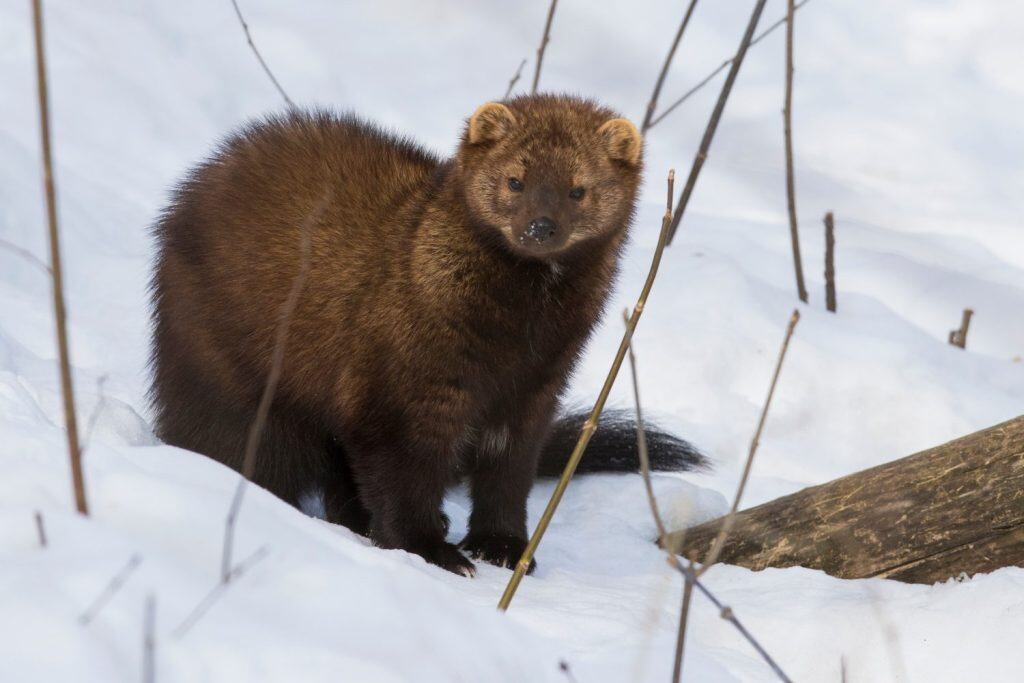
There are many dangers that a fisher may face along its instinctual journey, including human development like vehicles.
©Mircea Costina/Shutterstock.com
In another part of the country, National Park Service biologists in the Olympic Peninsula have used aerial and ground telemetry to track fishers, alongside wildlife cameras and hair-snare stations to monitor reintroduced fishers and see where they settle. They are increasingly interested in what habitats fishers use, and whether their local population is reproducing, as many assumptions have been made about this particular carnivorous mammal.
Speaking of assumptions, tracking F003’s journey is vital, as many locations that have fishers assume their population numbers are increasing after historical losses. But is this really the case?
The Endangered Species Status of Fishers
Fishers were hit hard by logging, agricultural clearing, development, and heavy trapping pressure in the 18th and 19th centuries, leading to declines across much of the eastern United States. Washington’s fisher recovery was also hard-fought, with the species disappearing from this state by the mid-1900s after unregulated harvest, habitat loss, fragmentation, and predator-control campaigns decimated them. While fishers have been protected and carefully regulated since, is it enough to bring them to healthy population levels?
For that answer, we look to individual states. In the East, New Hampshire was able to maintain a fisher population even when neighboring states saw steeper declines, and these NH-based animals were later used to help rebuild populations in neighboring states, including Connecticut, Pennsylvania, and West Virginia. On the West Coast, various agencies and partners reintroduced fishers to Olympic National Park between 2008 and 2010, a fairly recent effort. The Park Service in this particular area noted that those animals have since dispersed widely and established home ranges in both managed and wilderness forests.
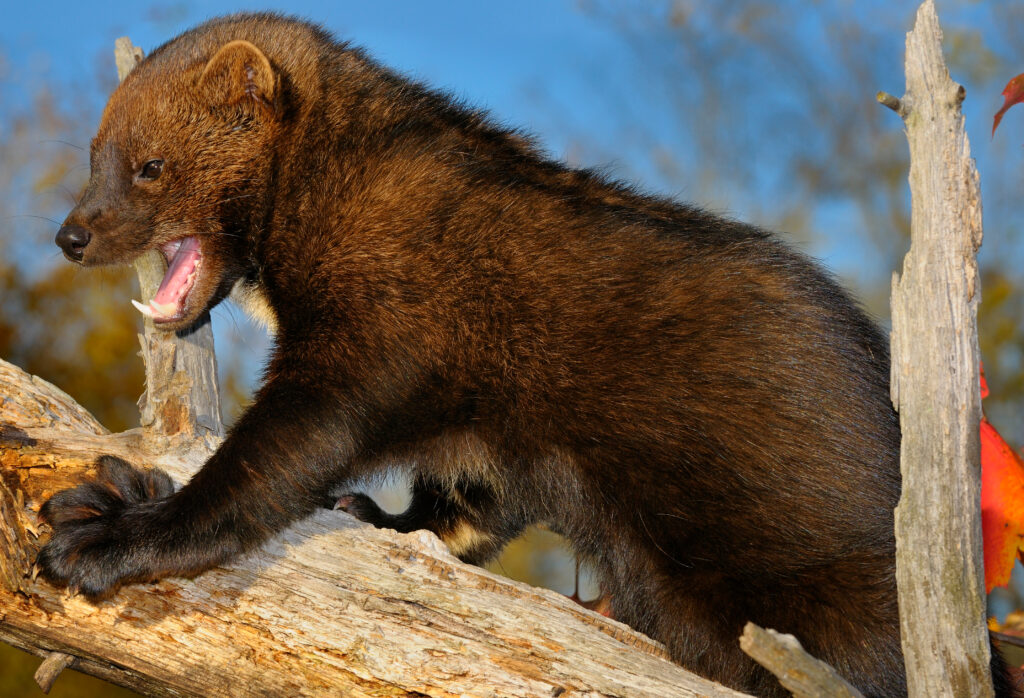
Fisher populations have increased in some regions, but other populations remain endangered.
©Reimar/Shutterstock.com
But that isn’t the only park to assist the fisher population; Washington has pushed that effort further into the Cascades. A Washington Department of Fish and Wildlife fisher progress report explains that the goal has always been to re-establish self-sustaining fisher populations in both the southern and northern Cascade recovery areas. This process must include post-release monitoring focused on movements, survival, home range establishment, and reproduction to best track how the species is faring in this region.
F003 is one of the few outliers in previously monitored fishers, giving rise to such questions as: once an animal is turned loose, where can it successfully thrive? And is it likely to survive such a long journey?
Our Modern Landscape and How Fishers Cross It
F003’s route might’ve once been an easier feat, but modern expansion into forested regions likely affected her deeply. She navigated a complicated landscape of roads, developed areas, water barriers, and habitat patches of uneven quality, likely leading to her constant indecision. During travel, fishers face several hazards, like disease, human development that disrupts forest habitat, cars, and various poisons meant for pests. Plus, fishers often move across wildlife management lines, which can affect their protections in both the long and short term.
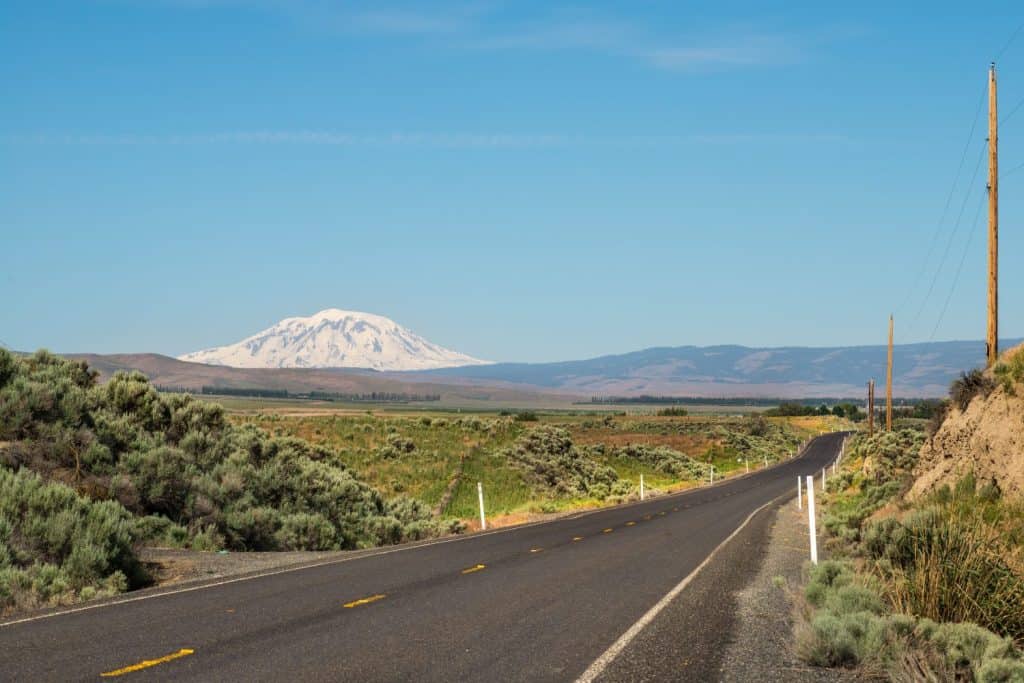
Human development threatens many migrating species, as their habitats grow more limited and dangerous.
©Heidi Ihnen Photography/Shutterstock.com
An Oregon Conservation Strategy’s overview of barriers to animal movement explains that our roads, buildings, development, fences, and other structures can block or complicate movement among many animal species, increasing the potential of both injury and death when animals try to pass through developed areas. New Hampshire’s study of F003 pointed out much of the same information: losing wildlife corridors adds ample barriers to dispersal, eventually leading to local isolation and the potential death of a species in a given area.
For fishers specifically, vehicle strikes, disease, predation, and poisoning all contribute to their mortality rates, especially in vulnerable, small populations, and this is true across the country. Even in places where fishers are faring better than they once were, a young animal searching for territory still has to survive our modern roads and developments, which is ultimately where F003’s story comes to a tragic end.
What Happened to F003, and What the Future Holds for Fishers
NHPR tragically reported that F003 passed away shortly after completing her trek, likely killed by a bobcat. While unfortunate, especially for such a young fisher, wildlife researchers are used to tracking animals that meet an untimely end, which makes any movement data vital. These data show not just where an animal might go, but what might happen when it arrives at a destination it believes to be safe.
Wild animals do incredible things every single day, often without us noticing. A singular, young fisher crossed 80 miles-worth of bays, frozen lakes, towns, roads, and forests to find a place of her own, accomplishing what her species has always done, but in a landscape that proves far more dangerous than ever before.
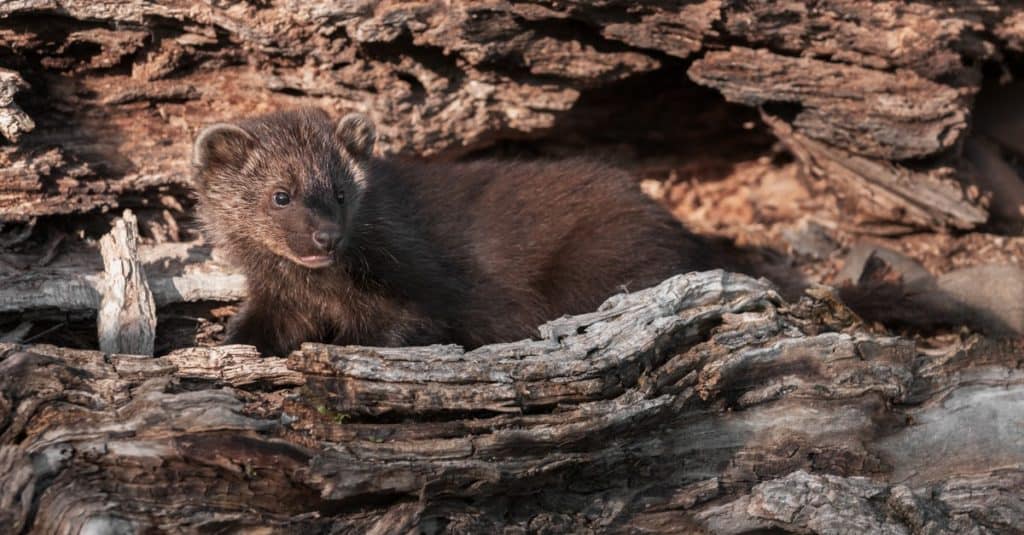
F003 helped scientists better understand fishers, even though her story ended in tragedy.
©Holly Kuchera/Shutterstock.com
While fishers have steadily made a comeback in their overall population levels, an increase in numbers is not the same thing as guaranteed safety and survival. These carnivores have returned to parts of North America because habitat protection, management, reintroduction, and monitoring gave them a chance, albeit a slim chance. Whether young animals like F003 can keep finding the room and safety to live will ultimately depend on us, including how much attention we pay to their instinctual journeys moving forward.