Quick Take
- The owner says he knows what happened to the ewe. Officials aren't buying it. See the owner's claim →
- One quiet mistake by a ranch could wipe out an entire wild herd. It has happened before. Understand the disease risk →
- The rancher behind this has a history with wildlife law, and it explains why officials are wary.
- The first cloned sheep in this saga ended up somewhere you'd never expect. Find where Tilek ended up →
Though it sounds like something out of a horror movie, a “Frankenram” bighorn sheep is loose and threatening wild herds in Montana’s mountains. A hybrid bighorn escaped a breeding ranch weeks ago, and its whereabouts remain a mystery.
A “Frankenram” Bighorn Sheep is on the Loose in Montana
Montana Fish, Wildlife, and Parks is seeking the assistance from the public to locate a “Frankenram” that has been on the lam for nearly two months.
The “Frankenram” is a hybrid sheep. Created in a backyard lab using genetic material from the Montana bighorn and the Marco Polo Argali, the sheep was first reported missing on September 18, 2026. However, FWP believes the sheep went missing closer to early September.
The sheep is described as a bighorn ewe “weighing about 120 pounds and is primarily white in color with a red ear tag.”
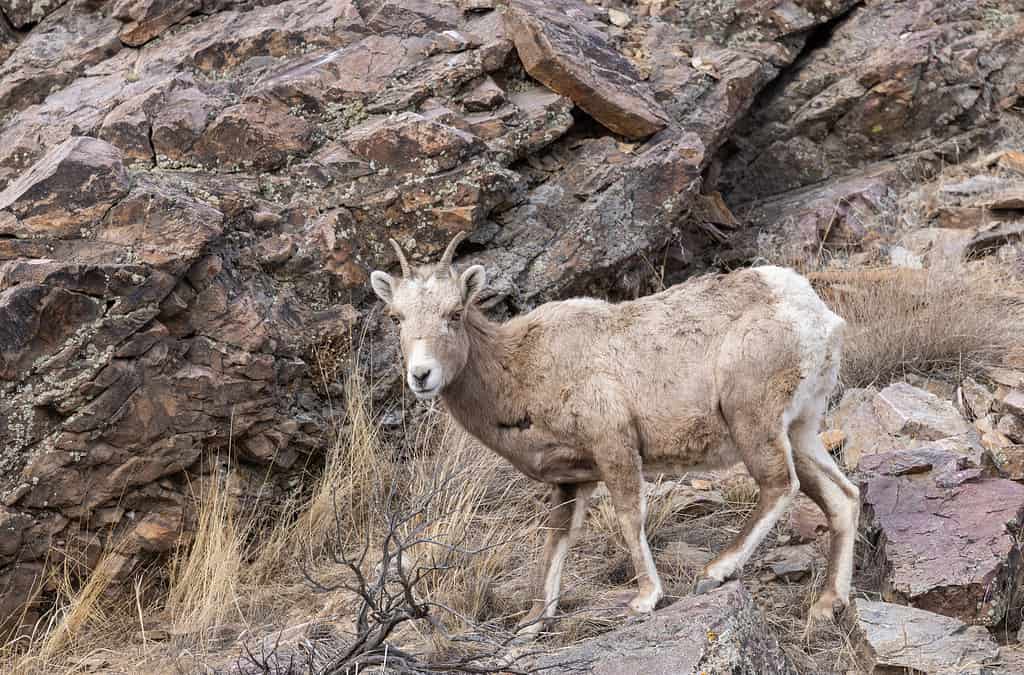
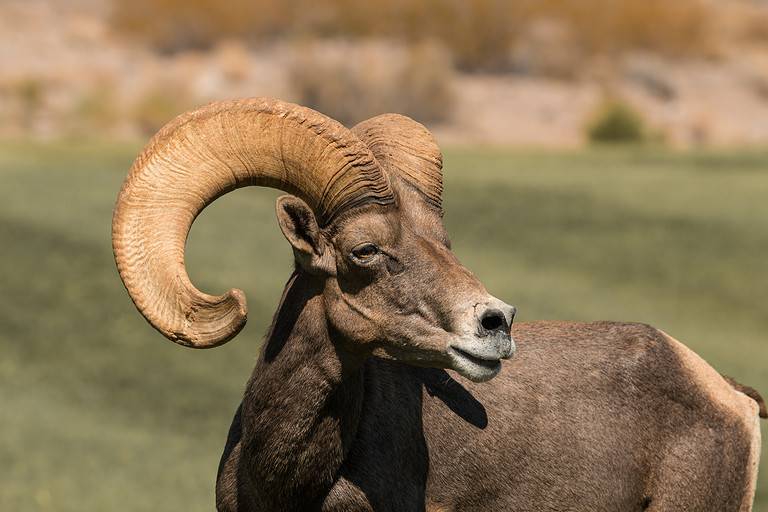
A bighorn sheep ewe, similar to this ewe, has been on the loose in Montana since the beginning of September.
©twildlife/iStock via Getty Images
“According to our records, the ewe in question reportedly escaped on Sept. 2, and our game wardens heard about it the next week,” Dave Hagengruber, FWP’s public information officer, explained to Outdoor Life. “Wardens went out to talk with Schubarth in mid-September, and he basically said, ‘Oh yeah, I meant to tell you.'”
Officials are referring to Jack Schubarth, who was found guilty in 2024 of violating the Lacey Act. The Lacey Act is a conservation act that prohibits “trade, transport, import, or sale of wildlife, fish, and plants taken or traded illegally under federal, state, tribal, or foreign law.”
Since the FWP’s news release, no one has seen the escaped ewe, leaving many to wonder whether the sheep is truly roaming the Montana countryside. According to officials, the ewe may have been sold to an “out-of-state game farm.”
However, Schubarth maintains that the sheep likely escaped through a damaged fence or an accidentally left-open gate. If so, Schubarth says the ewe is likely dead, becoming the target of coyotes.
Why Officials Are Concerned About the Missing Hybrid Bighorn Sheep
Officials are concerned about the hybrid sheep on the loose because Schubarth’s ranch is so close to local wild bighorn sheep herds. This means there is a real possibility of the domesticated hybrid passing along diseases, including pneumonia, to the wild bighorns.
“Cascade is 30 miles from his farm, and there’s a sizeable band of [wild] bighorns there,” Hagengruber told Outdoor Life. “The Birdtail Hills are 20 to 25 miles to the west, and there are bighorns in those hills. The Rocky Mountain Front, home to Montana’s most treasured bighorn sheep herd, is 60 or 70 miles west. Fortunately, this is not a ram, so it’s less likely to roam widely, but the threat of disease transmission is a significant concern. That’s why we want to hear of any sightings.”
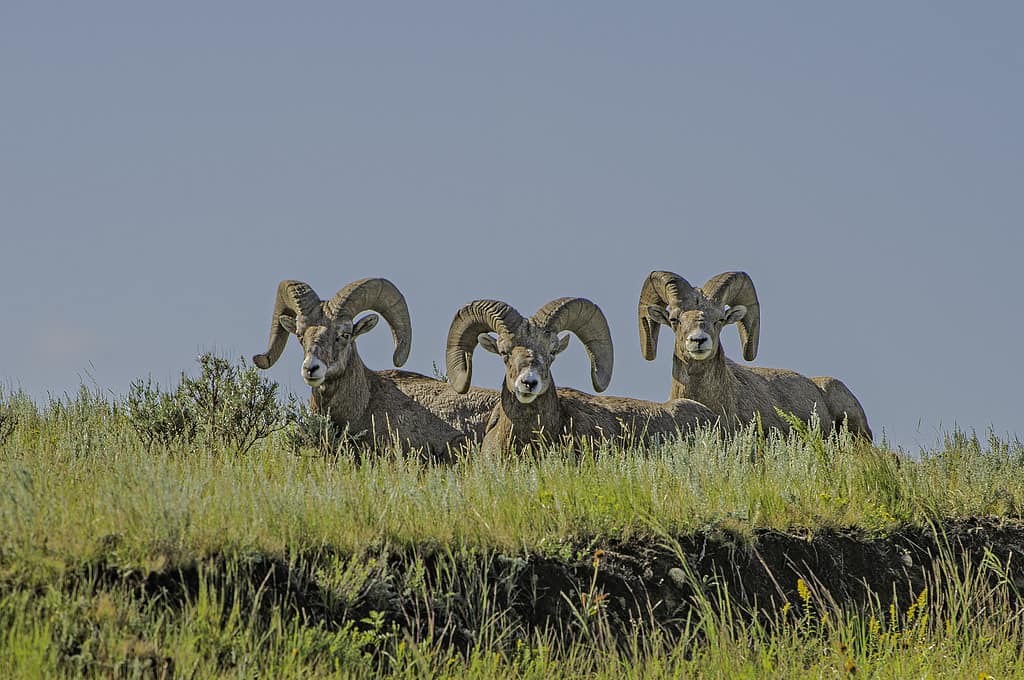
Bighorn sheep are prone to catching pneumonia from domesticated sheep. When infected, the disease is nearly 100% fatal.
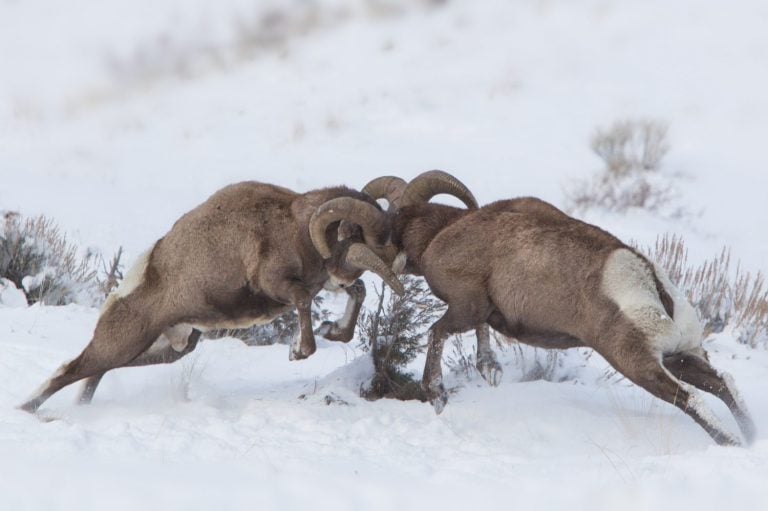
©Gerald Corsi/iStock via Getty Images
Since 1979, Montana’s wild bighorn sheep herds have had 22 episodes of pneumonia outbreaks. One was so devastating that it caused the extinction of an entire herd.
Once bighorn sheep contract pneumonia, usually by interacting with domesticated sheep or goats, it is nearly fatal. The disease kills lambs first and then works its way through the herd. With no cure or treatment, the only way to keep bighorn sheep safe is to keep domestic sheep away. When a potential hybrid is on the loose, there is no telling how much damage could be done to local bighorn populations.
How Was the Hybrid Bighorn Sheep Created?
To explain how the hybrid bighorn sheep was created, a bit of backstory is necessary.
In 2017, Schubarth created a purebred Marco Polo lamb. He did so by cloning genetic material from Marco Polo Argali sheep in Kyrgyzstan. Schubarth called this purebred the Montana Mountain King and later used it to help create hybrid bighorn sheep on his ranch.
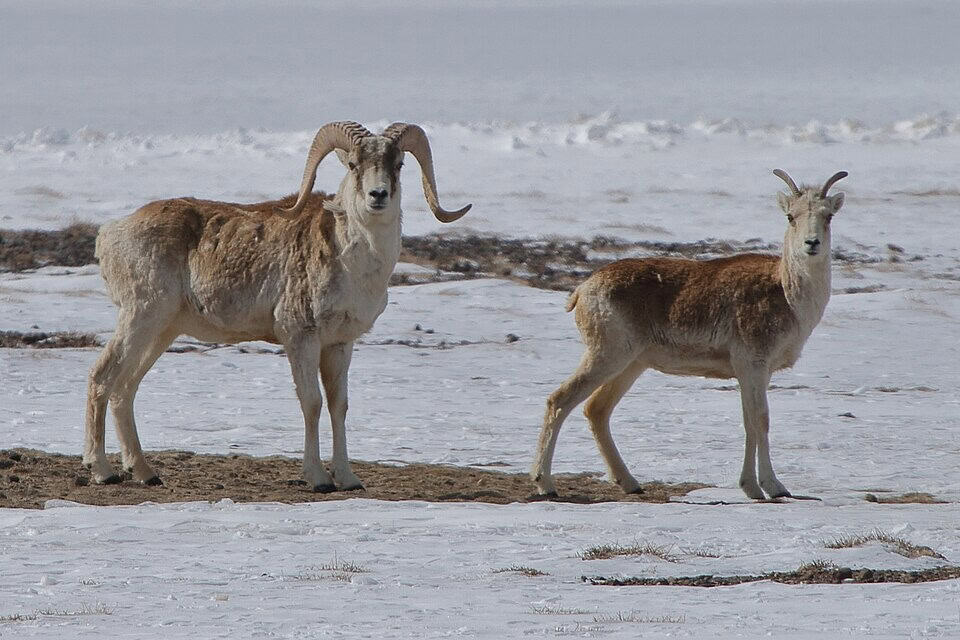
The hybrid was created by cloning a Marco Polo sheep, similar to this ram.
©<a href="https://commons.wikimedia.org/wiki/File:Marco_Polo_sheep_pair_by_F%C3%A1bio_Olmos_(cropped).jpg">Fábio Olmos</a>, <a href="https://creativecommons.org/licenses/by/4.0">CC BY 4.0</a>, via Wikimedia Commons – Original / License
Over the next several years, Schubarth created countless hybrids. The particular one that escaped is “mainly bighorn,” according to Schubarth, who is “probably three or four domestic crosses from the original cross that was 50 percent bighorn.”
“I added some more bighorn from that original [parentage],” Schubarth explained to Outdoor Life. “So they’re probably 62.5 percent bighorn.”
But because she is a domesticated sheep, the ewe still poses a danger to the wild bighorns, no matter what percentage of bighorn genes run through her.
Where is the Original Cloned Sheep Today?
Wildlife officials took Tilek, the original Marco Polo Argali sheep, from Schubarth in 2021. At that time, Tilek was transferred to Grants Pass, Oregon, where he spent 41 months in rehabilitative care. FWP was not interested in killing Tilek. Instead, they wanted to find a suitable home for the sheep.
After months of research, the zoo that was chosen to care for Tilek in 2025 was the Rosamond Gifford Zoo. Officials chose the zoo because of its expertise with “hoofstock species.”
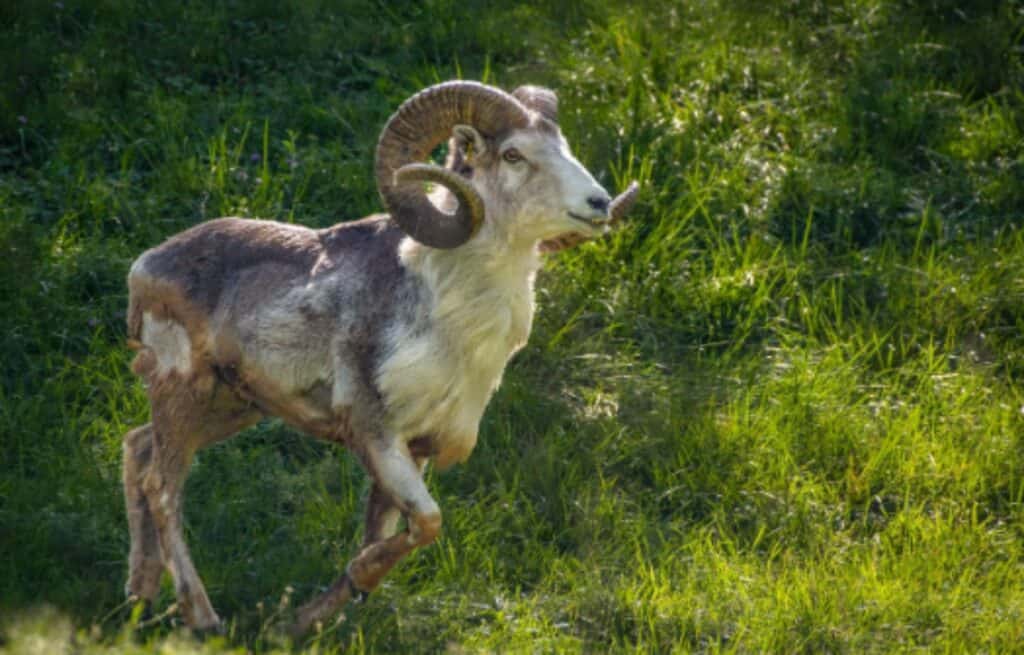
Tilek was the Marco Polo sheep that was cloned by Schubarth in 2017.
©syracusezoo / Instagram – Original
“We are thrilled to welcome this Marco Polo Argali to our zoo,” Rosamond Gifford Zoo Director Dan Meates explained in a press release. “He endured a lot in his lifetime, but our team is committed to providing every animal with the specialized care they need to thrive.”
Before being introduced to other animals in his enclosure, Tilek went through a quarantine and acclimation period at the zoo. Today, Tilek roams with male Tadjik markhor goats.
From “trailer park chemistry” experiment to ambassador for his species, Tilek can now live a life of leisure as he enjoys his middle-aged years.
Conservation of Marco Polo Argali and Montana’s Bighorn Sheep
The future of Marco Polo Argali and Montana’s bighorn sheep is uncertain. While hunters pursue the former for its massive horns, the latter is prone to pneumonia that can wipe out an entire herd in one season.
Marco Polo Argali sheep are considered near-threatened by the IUCN. This means that while the species is not on the brink of extinction, monitoring is necessary to determine what protections are needed to prevent further population decline.
Beyond hunting pressure, Marco Polo sheep also face competition from other species in an already degraded habitat, driven by glacier and permafrost loss, and hybridization with domestic sheep. This is why CITES Appendix II regulates the sheep to control international trade.
Montana bighorn sheep once roamed the state freely before European settlers claimed the territory. After that, settlers overhunted the sheep. By the early 1900s, most of the herds were gone.
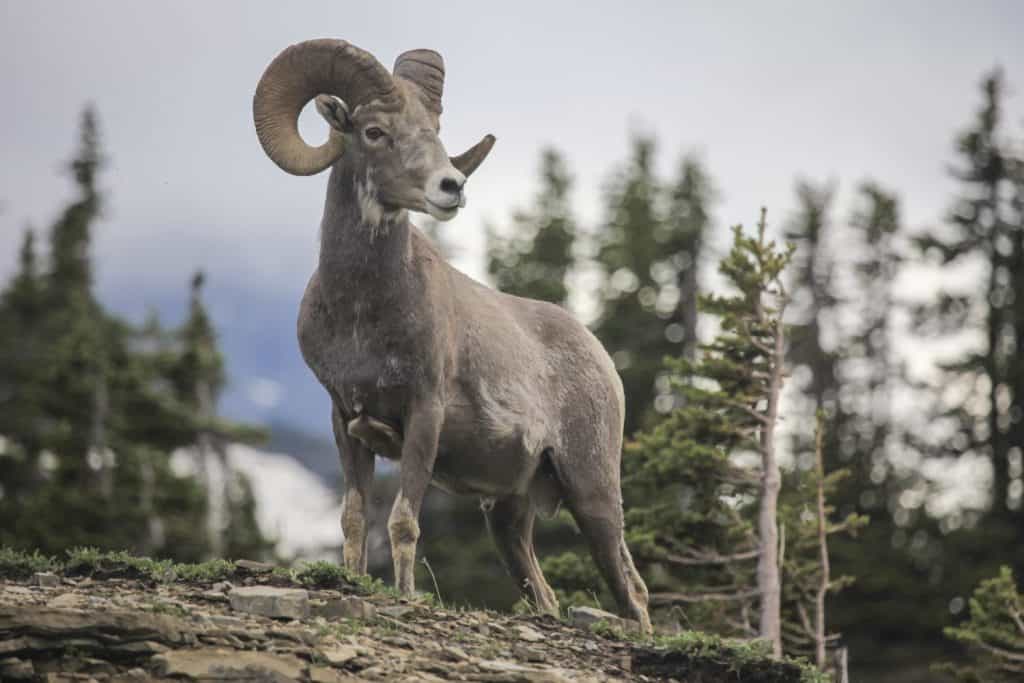
Bighorn sheep and Marco Polo sheep need conservation if they are to survive.
©Tory Kallman/Shutterstock.com
In recent years, the FWP has worked hard to reintroduce bighorn sheep herds to their historic habitats. While there has been some success, herds in Montana remain small because of limited winter food, habitat fragmentation, and human encroachment. However, none of these are the biggest threats to bighorn sheep survival. Their biggest challenge is interaction with domestic sheep.
When bighorn sheep come into contact with domestic sheep, the possibility of contracting a pulmonary disease is high. All it takes is one ram coming into contact with an ill sheep to pass the disease on to the wild herd. Once infected, the herd is unlikely to survive.
Consequently, if Montana’s bighorn sheep are to survive, they need continued monitoring. Without this oversight, all the work done to bring bighorn sheep back to Montana could be for naught, and the state could once again lose these animals that historically roamed its mountains.