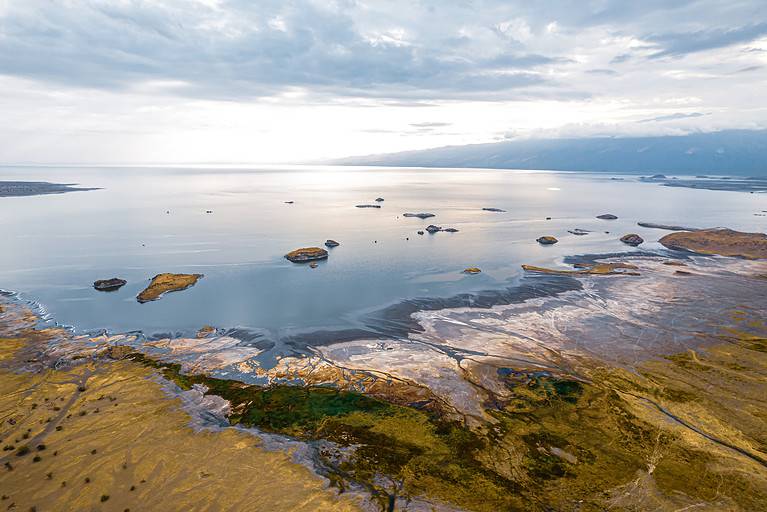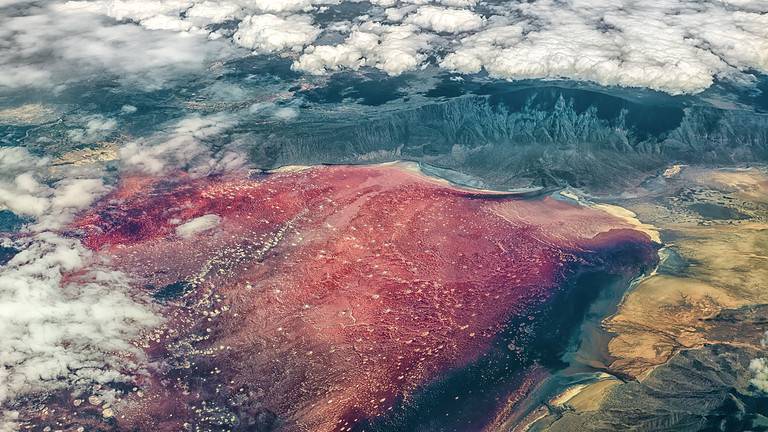

In Tanzania, an otherworldly lake feels like it belongs on Mars, given its vibrant red color. The lake is not particularly deep, which may pique visitors’ curiosity and encourage them to wade into the water. This should be avoided at all costs, however, given the caustic nature of Lake Natron.
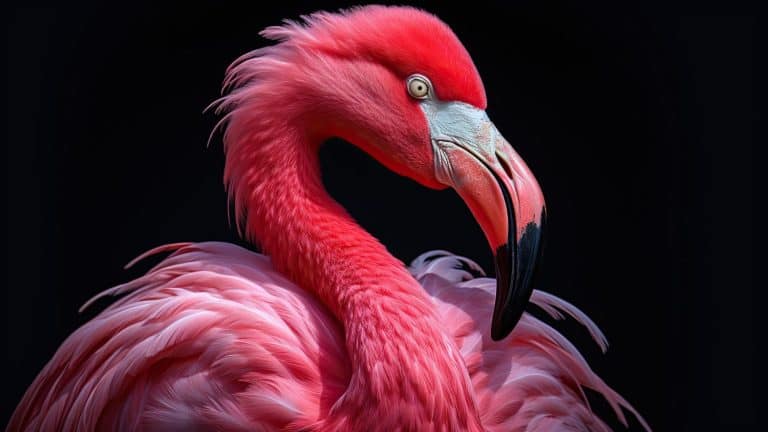
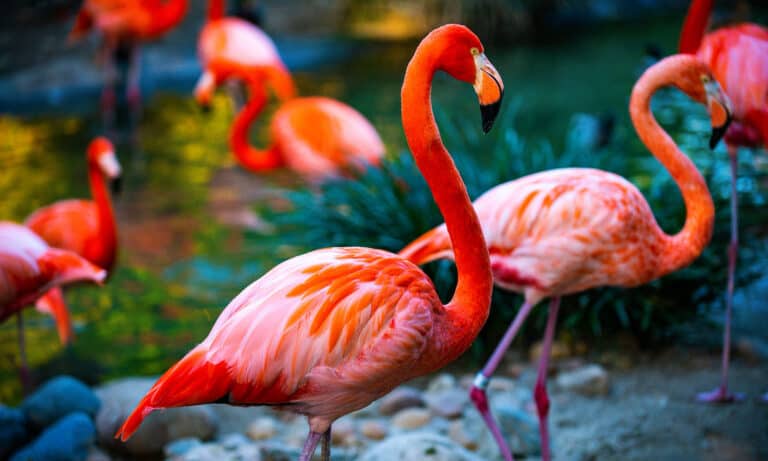
With an incredibly high pH, Lake Natron can cause instant burns to the skin and eyes. Animals that venture into the water turn to stone. Yet, despite the danger of the water, Lake Natron became the world’s largest breeding ground for lesser flamingos.
Lake Natron Is A Hostile Environment for Most Animals
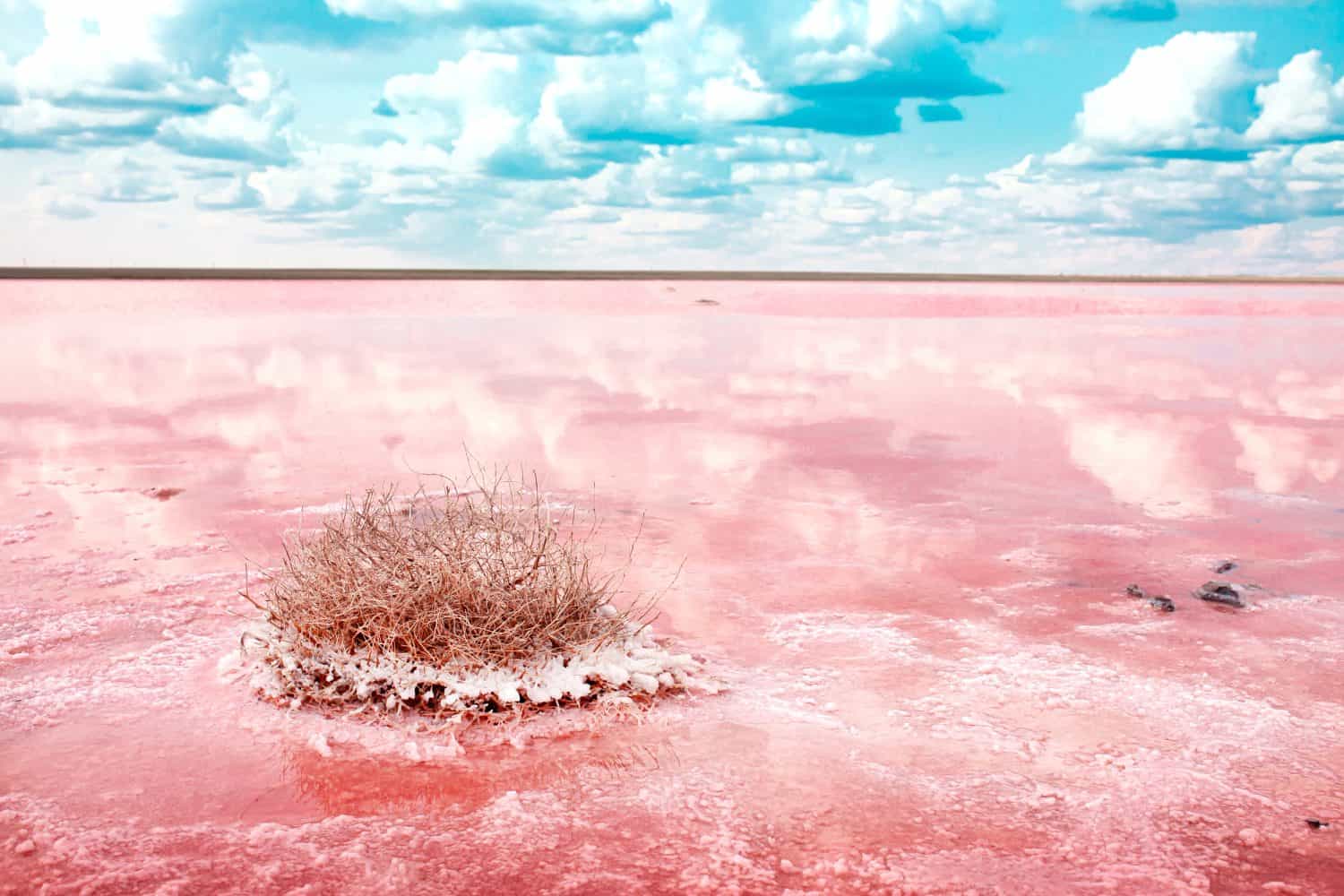
Lake Natron is a lake located in Tanzania that is approximately one to two million years old.
©Vera Larina/Shutterstock.com
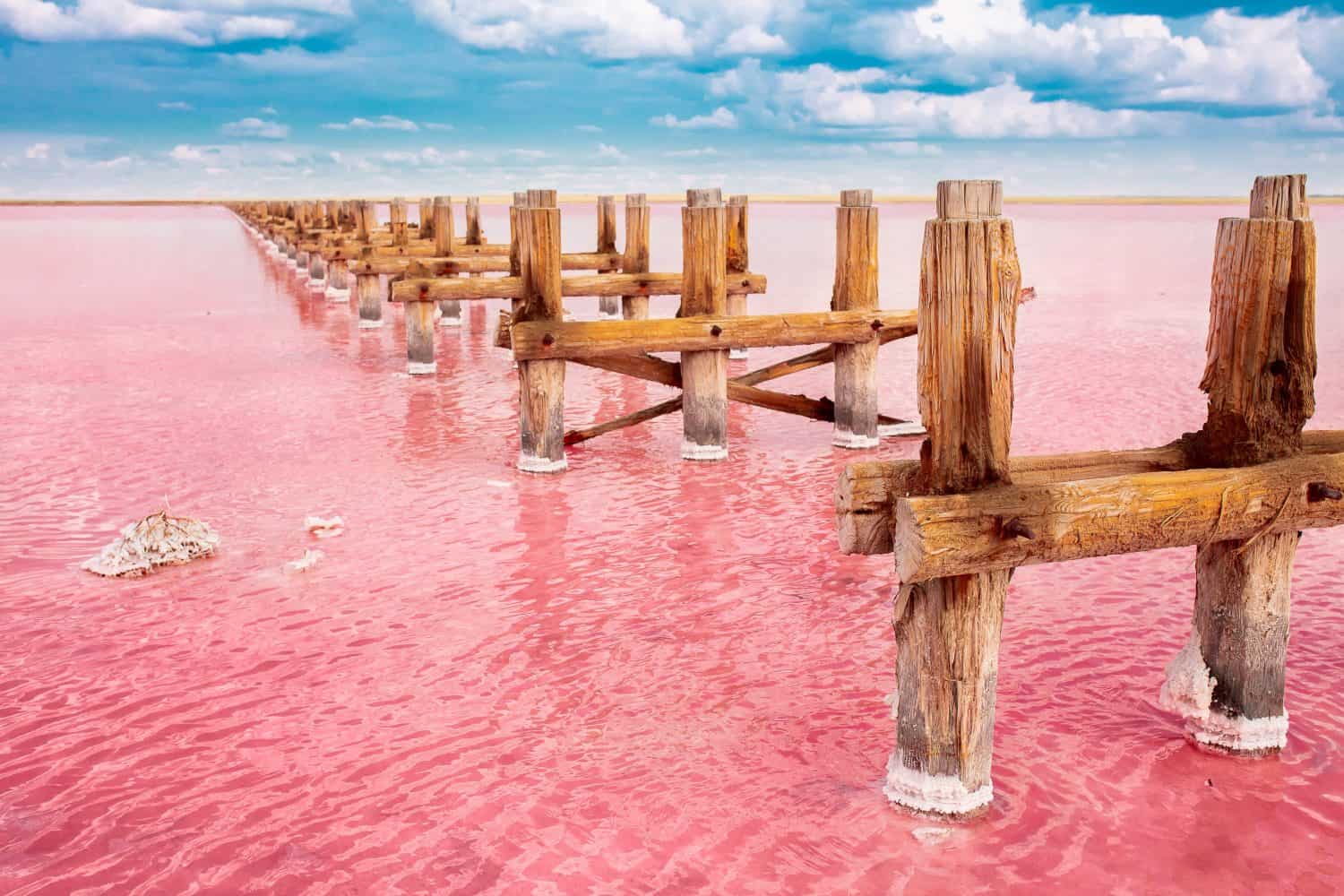
Lake Natron is an impossibly beautiful lake. From its bright red color to the salt crystal formations both in and around the lake, the body of water almost seems to exist on another planet.
One to two million years old, Lake Natron has been collecting volcanic minerals since its formation. While rain, hot springs, and nearby bodies of water flow into the lake, there is no outlet. Consequently, Lake Natron has become one of the most alkaline lakes in the world.
Lake Natron has a pH that can reach 12. This makes the water caustic. It can burn the skin of animals that come too close, which unfortunately includes migratory birds who believe they are landing on a body of water to rest, only to perish.
In addition to the high pH levels, the water can also reach temperatures of up to 140°F. While this makes the water uninviting for most, it does provide a perfect spot for bacteria and algae to grow, the latter of which is responsible for the lake’s red color (along with salt). The abundance of this flora in the lake depends on the size and depth of Lake Natron. In most instances, the lake is no more than 10 feet deep, but it is quite expansive, measuring 14 miles wide and 35 miles long.
Lake Natron was added to the Ramsar List of Wetlands of International Importance in 2001, not only because of the unique ecosystem the lake provides, but also because Lake Natron is a crucial habitat for the majority of the world’s lesser flamingos.
Lesser Flamingos Flock to Lake Natron for Security
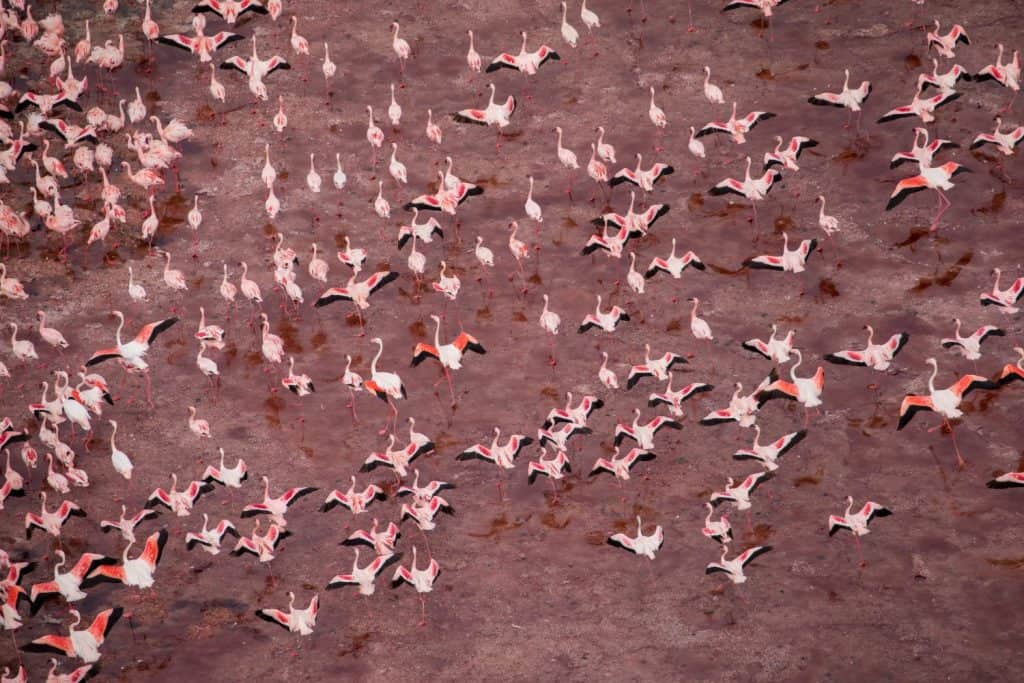
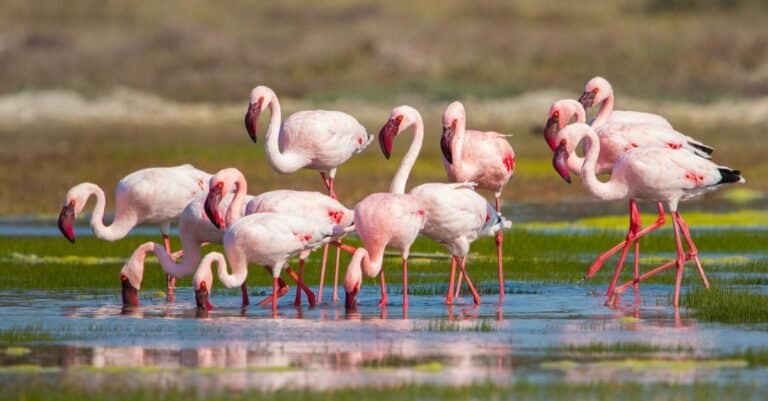
Lake Natron is a place where lesser flamingos nest due to how protected the area is from predators.
©Danita Delimont/Shutterstock.com
Lake Natron creates an environment that many animals avoid due to its deadly nature. Lesser flamingos welcome the hostile habitat, however, as it keeps both adults and young chicks safe from predators.
With a normal pH of 10.5, people and animals alike in Tanzania give Lake Natron a wide berth. The water alone has the capability to dissolve skin and cause death within a matter of minutes. Yet these dangerous aspects are exactly the reasons lesser flamingos choose to spend time in the highly alkaline water. There are no threats from predators in and around the lake, making Lake Natron a breeding sanctuary for lesser flamingos.
So, how to flamingoes withstand the corrosive water’s harmful effects? Unlike other animals, lesser flamingos’ have an almost leather-like quality to their legs that is not negatively affected by the high alkalinity. When the lake levels are ideal, lesser flamingos can wade into the water to feed without fear of being attacked, given that the water acts as a barrier to any predators.
Because of the security Lake Natron provides, both from the salt crystal islands where they lay their eggs and the caustic water, it is no wonder 75% of the world’s lesser flamingo population are frequent visitors to the lake. But it is not only protection Lake Natron provides; the lake offers an invaluable food source as well.
Lake Natron’s Algae Is Imperative for The Survival of Lesser Flamingos
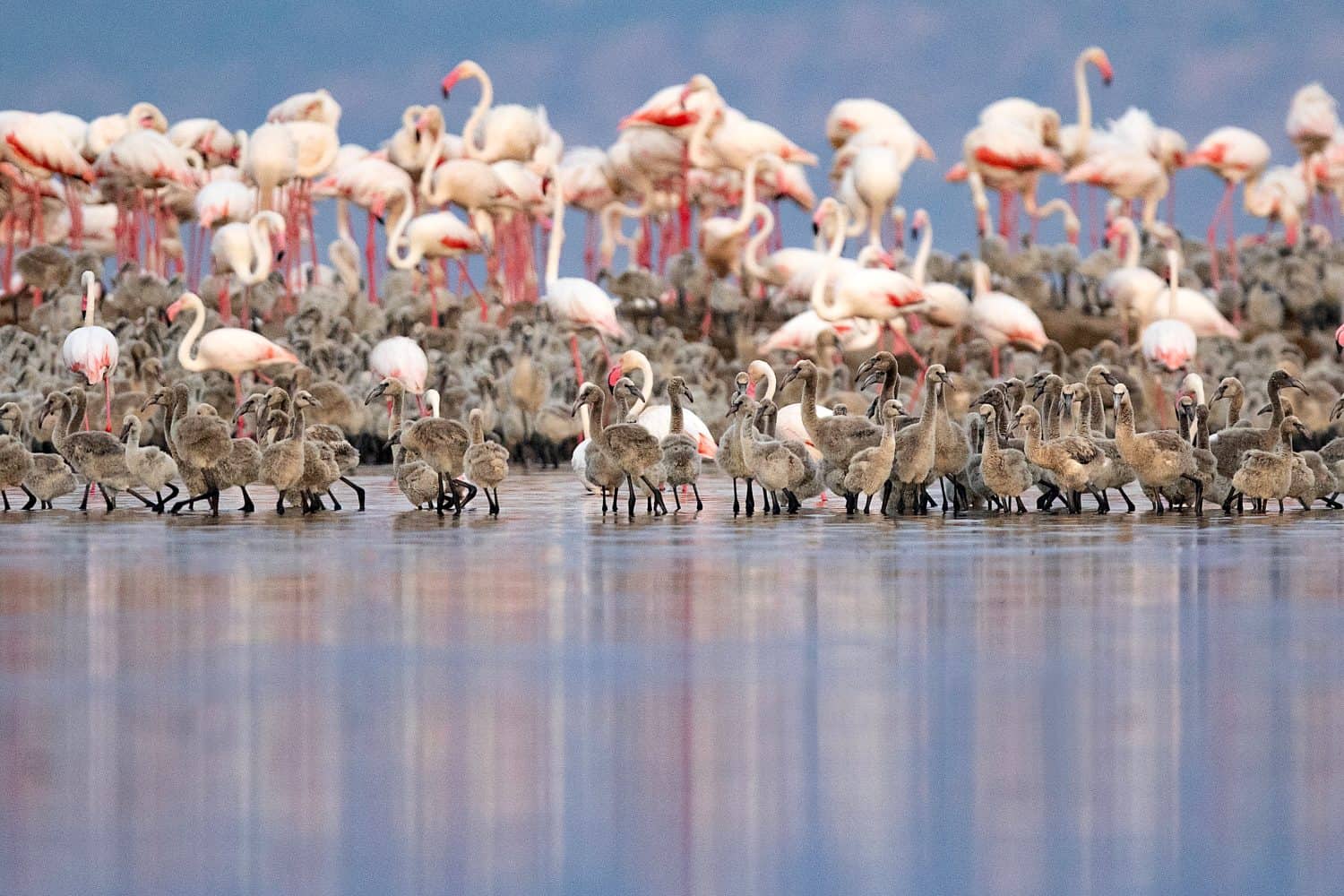
Lesser flamingos feast on the blue-green algae that grows on Lake Natron.
©Dominyk Lever/Shutterstock.com
Lesser flamingos have a very specific diet. This diet can only be found in salt pans, coastal lagoons, or lakes with high alkalinity levels, such as Lake Natron. This is just another reason why the lake is so essential to the lesser flamingos.
The main food that lesser flamingos consume includes:
- Blue-green algae
- Spirulina
Less frequently, the flamingos will also eat small invertebrates and crustaceans. The lesser flamingos can filter out the caustic water and larger substances, ensuring their specific diet is adhered to.
What gives Lake Natron its stunningly beautiful red color is the large amounts of blue-green algae present. The algae thrive in the water’s unique pH.
Eco protections also allow the flamingoes to call this lake home. If the lake were not protected from development and construction, the alkalinity would quickly change, the blue-green algae would die, and the largest populations of lesser flamingos in the world would have to find a lake akin to Lake Natron or perish.
Threats To Lesser Flamingos
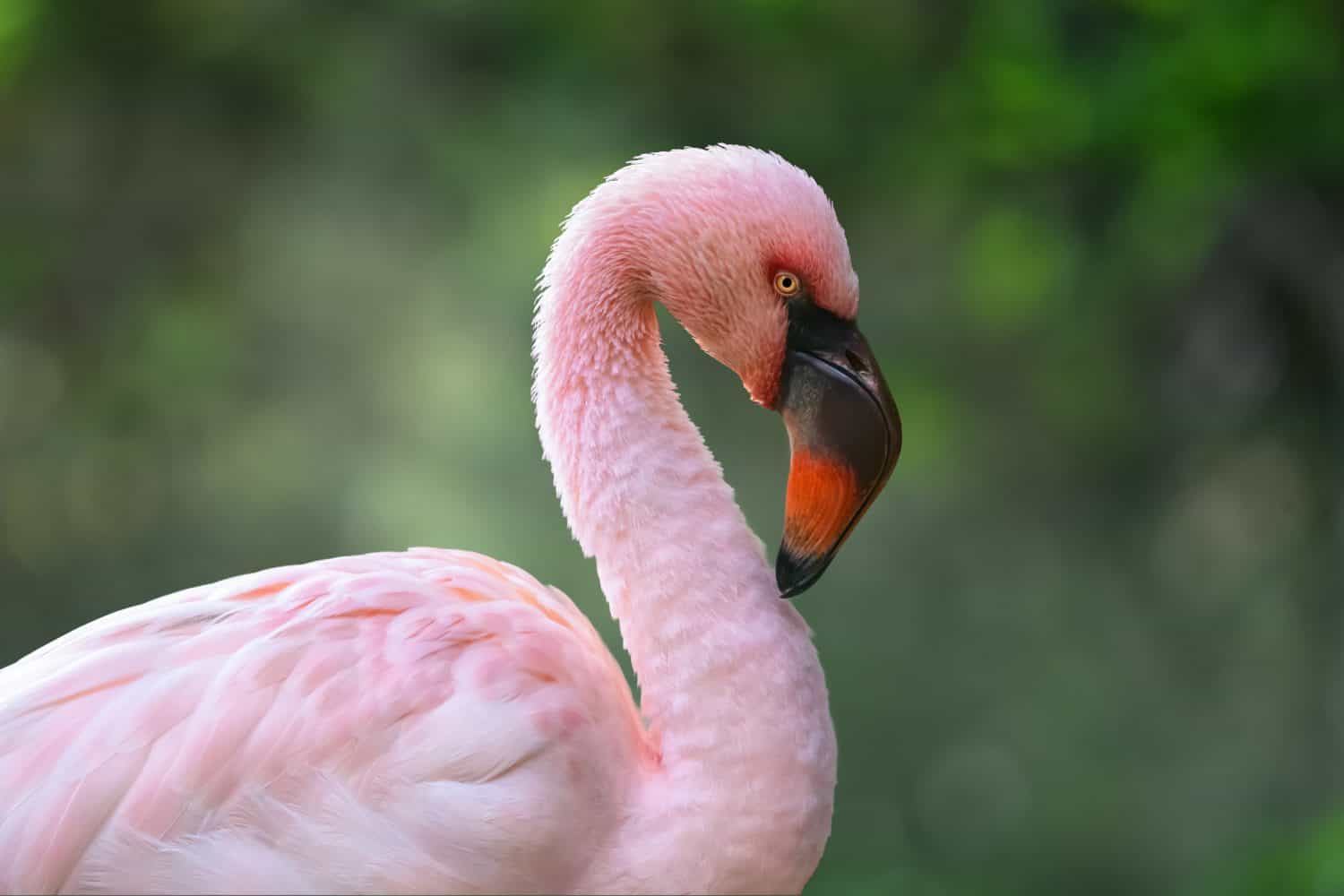
Lesser flamingos are threatened by loss of habitat, climate change, and polluted water.
©Diego Grandi/Shutterstock.com
With 1.5 to two million lesser flamingos flocking to Lake Natron when conditions are just so to breed and raise their young, it may appear that the species’ populations are healthy. Unfortunately, this is not the case. Lesser flamingos are considered a “near threatened species,” according to the IUCN. The population of flamingos has declined by up to 29% and is projected to continue declining through 2042.
The rapid population decline is not a result of predation. The reasons that fewer lesser flamingos come to Lake Natron and other lakes with high alkalinity all pertain to humans. Reasons for a declining lesser flamingo population include:
- Loss of habitat due to mining and dam construction
- Rising water levels caused by climate change decreasing suitable breeding grounds
- Climate change limiting the number of algae and bacteria available to eat
- Mining practices polluting the water lesser flamingos need to survive
Places like Lake Natron are critical to lesser flamingos. They are also very fragile. This is why any change to the environment around the lake can have devastating consequences. Consequently, when a mining project was proposed, conservationists and Maasai tribes came together to protest the project in hopes of saving Lake Natron and its lesser flamingos.
Government Put a Stop to Mining to Save Lesser Flamingos
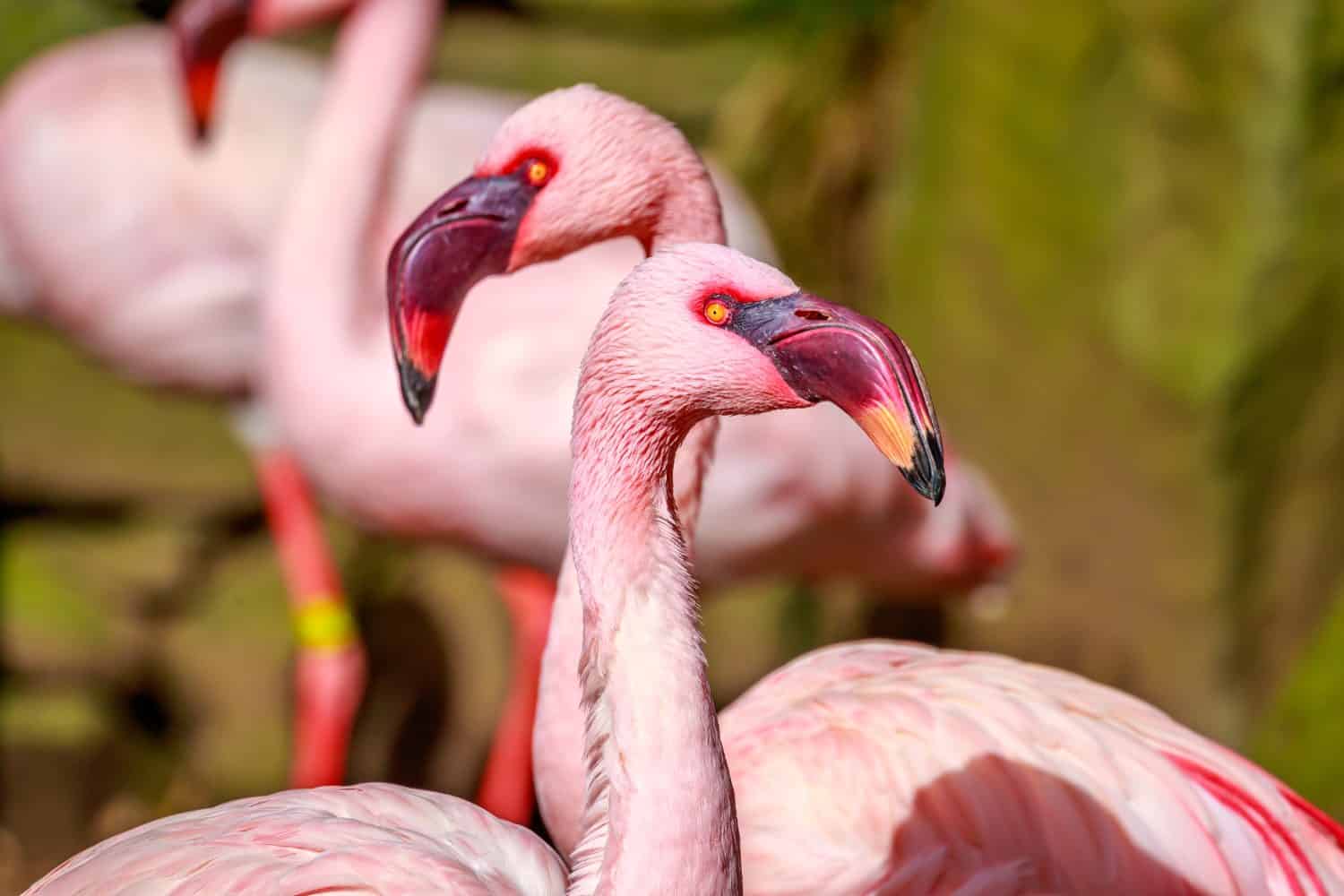
The Tanzanian government stopped drilling near Lake Natron, saving the lives of tens of thousands of lesser flamingos.
©Png Studio Photography/Shutterstock.com
Mining companies have targeted Lake Natron for decades. The lake is a natural resource for soda ash, which is used to produce a wide range of products, including detergents, glass, textiles, and is even used in food preparation. Because of this, companies have been attempting to gain government approval to mine Lake Natron for years.
In 2006, Tata Chemicals Ltd. submitted a bid to remove soda ash from the lake. The proposed mining project would have taken place 40 miles away from Lake Natron. However, according to conservationists, the pipelines would have carried away necessary water from the lake, forever altering the natural ebb and flow of the lake. By 2008, the Tanzanian government shut down any plans for the project.
A project on an even larger scale was proposed in 2025. Ngaresero Valley Company had an ambitious plan to extract and refine one million tons of soda ash annually from Lake Natron. To do this, not only would the habitat and Lake Natron itself have been changed permanently, but water would also have been diverted from nearby rivers. These same rivers are the ones the Maasi tribes rely on for survival.
Again, the Tanzanian government stopped the project, not because it is against development in general, but because it is against development that is not sustainable.
“Lake Natron is the only reliable breeding ground for Lesser Flamingos in Africa, supporting up to 75 per cent of the world’s population,” Deputy Minister for Minerals Stephen Kiruswa explains to Down to Earth. “Approving large-scale extraction would have meant altering the lake’s delicate hydrology, threatening a species that is globally iconic and vital to Tanzania’s tourism economy.”
Kiruswa continues, “We are not against development, but it has to be sustainable. The profits from soda ash would be short-lived, while losing flamingos, tourism revenue, and cultural heritage would be permanent.”
If Lake Natron were to disappear or be significantly altered, the population of lesser flamingos would dramatically decline faster than it currently is. While the lake is an important soda ash resource for Tanzania, it is an even more critical resource to the lesser flamingos. Ultimately, if Lake Natron changes from its current state, an entire breeding ground region and habitat will be lost; and with it, the majority of these beautiful birds.