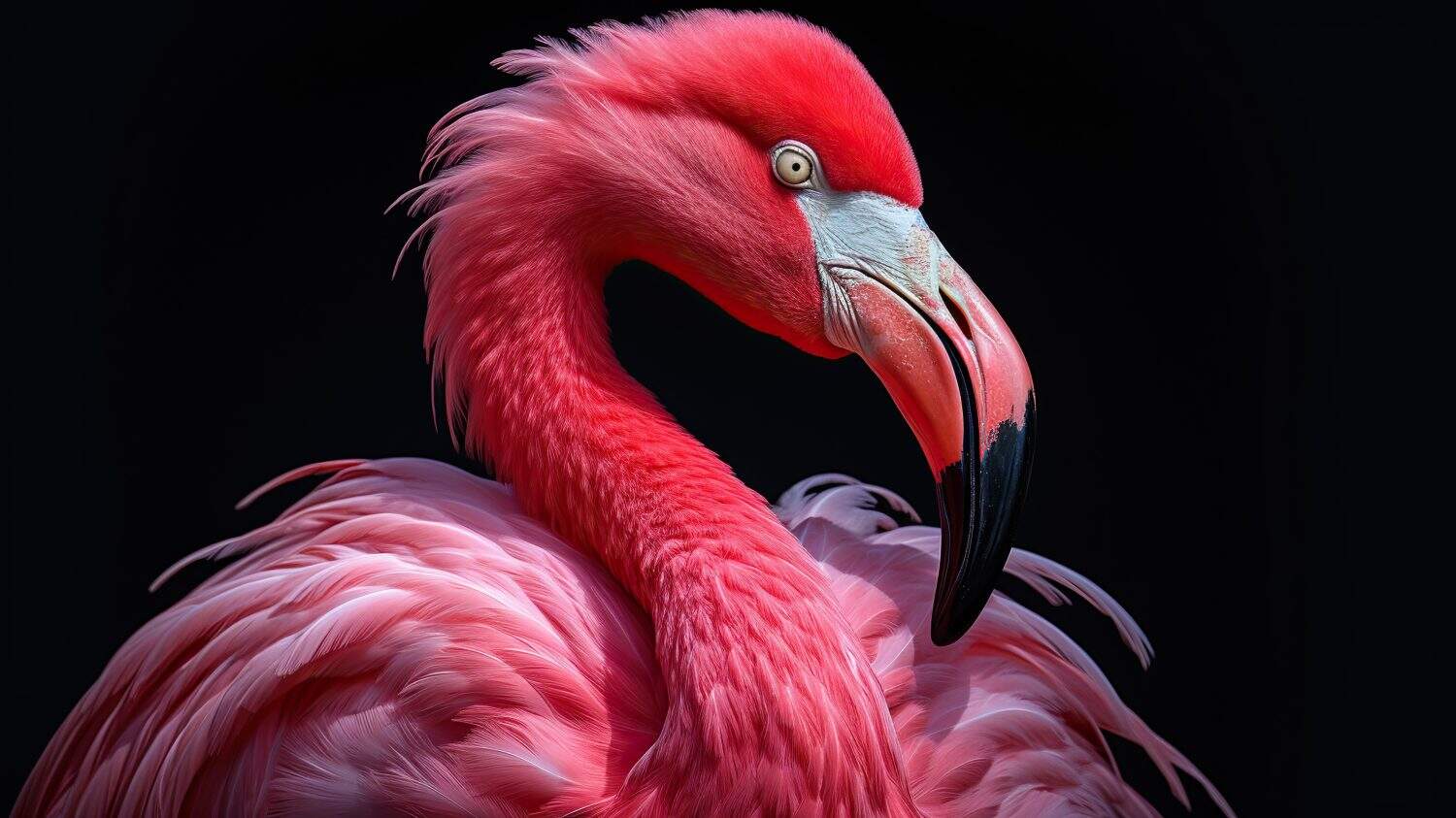

Flamingos are some of the prettiest birds around. Estimates suggest that there are between 2.5 and 3.5 million flamingos living in lakes and lagoons around the world, including in South Asia, the Middle East, Africa, Southern Europe, the Caribbean, and South America. Their long, curved beaks, skinny legs, and bright pink feathers make flamingos distinct and spark our curiosity. Why are their knees and ankles so strange? What do they like to eat? And, most importantly of all, why are they so pink?!
A-Z Animals asked the experts at Nashville Zoo, which is home to three different types of flamingo: Caribbean (or American) Flamingo, Chilean Flamingo, and Greater Flamingo. Leah Trice, a representative of the Nashville Zoo, answered all our questions about flamingos and shared some interesting facts about these birds.
Flamingos Are Pink Due to Their Diet

©HunsaBKK/Shutterstock.com
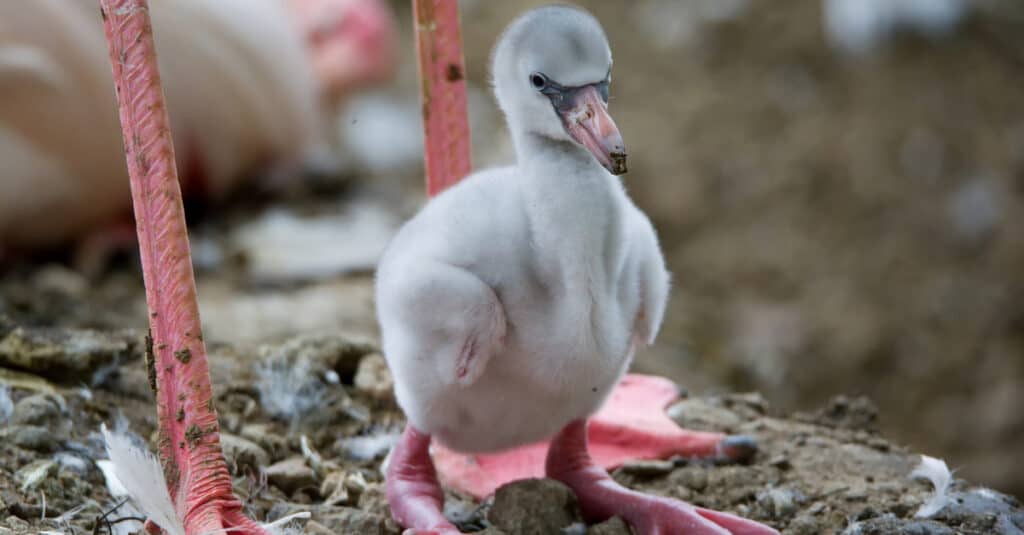
When flamingos are first born, they actually aren’t pink. They turn pink because of their diet (it takes “you are what you eat” to a whole new level).
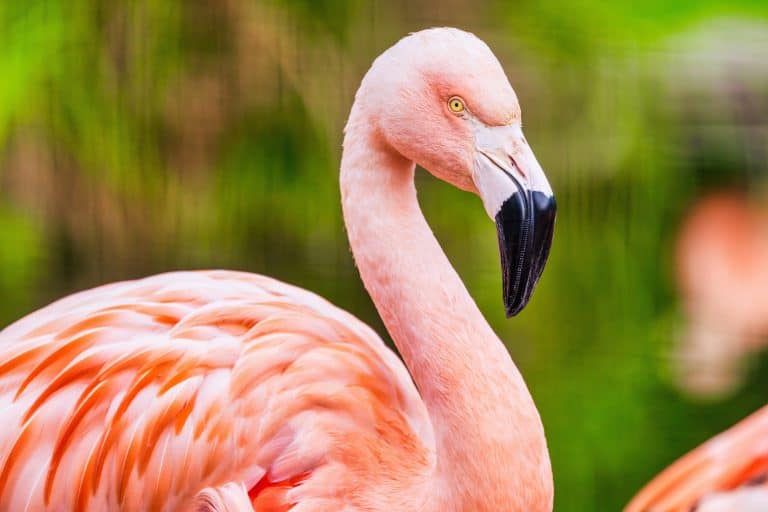
“Flamingos turn pink from the food that they eat, primarily from krill and shrimp,” she says. “There are carotenoids in the shells of shrimp and krill that accumulate in the feathers of flamingos that eventually turn them pink.”
Because not all flamingos eat enough krill or shrimp to turn pink, some are much lighter in color than others. “The ones who primarily eat algae are a lighter pink than the other species,” Trice says.
Sometimes, a flamingo can even lose its pink color. “They could lose their pink if they stop eating krill and shrimp,” Trice says. “It would take a long time to lose the color because they only molt their feathers twice a year. It would be the same as gaining the pink feathers. To get the color back, they would just need to consume krill and shrimp.”
Flamingos Aren’t Born Pink
©Ondrej Chvatal/Shutterstock.com
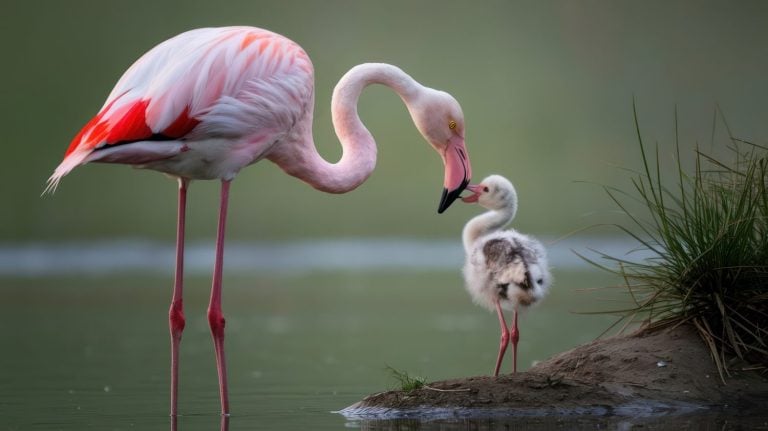
“Flamingos are actually born a gray-white with fluffy down feathers,” Trice says. “For the first few years of life, they are more of a white color. As they grow and consume krill and shrimp, they slowly turn pink.”
“It takes about 3 years for them to turn fully pink,” she adds. That’s three years’ worth of krill and shrimp!
Flamingos’ Legs Create an Optical Illusion
©Ondrej Prosicky/Shutterstock.com
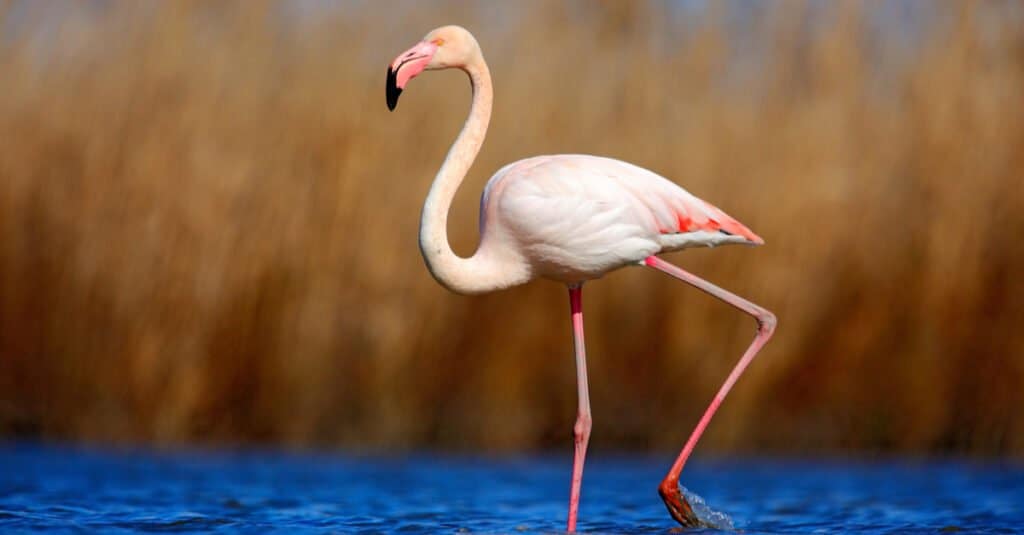
No, it’s not your imagination. Flamingos’ legs look like they are bending backward in a way that defies physics. But it’s just an optical illusion.
“When you look at a flamingo’s knee, it looks like it bends backwards,” Trice says. “But in reality, that’s not their knee, that’s their ankle!”
Wait, what? Yes, ankles move in a different direction from knees, which is why it looks so odd. Trice explains, “Flamingos have the same bones as us in their legs, just in a slightly different order. Their ‘knee’ is actually their ankle, and their ‘hip’ is actually their knee [joint]. So if you think about it, they’re actually standing on their tippy toes at all times!”
Flamingos Eat Upside Down
©Ondrej Chvatal/Shutterstock.com
If you thought the bone structure of their legs was odd, wait until you hear this: Flamingos actually eat upside down! Yes, we would probably choke if we had to eat all our meals at an angle like that, but that’s how flamingos are designed.
“Flamingos are filter feeders and have a sieve-like beak that they use to filter feed in the water,” Trice says. “They use special ridges in their beak to push water through and catch food as it passes through, similar to how baleen whales filter feed. Krill and smaller macroinvertebrates get stuck in the ridges and are therefore consumed.”
Pretty amazing!
When you look at a flamingo’s knee, it looks like it bends backwards. But in reality, that’s not their knee, that’s their ankle!
Leah Trice, a representative of the Nashville Zoo
Flamingos Produce Pink Milk
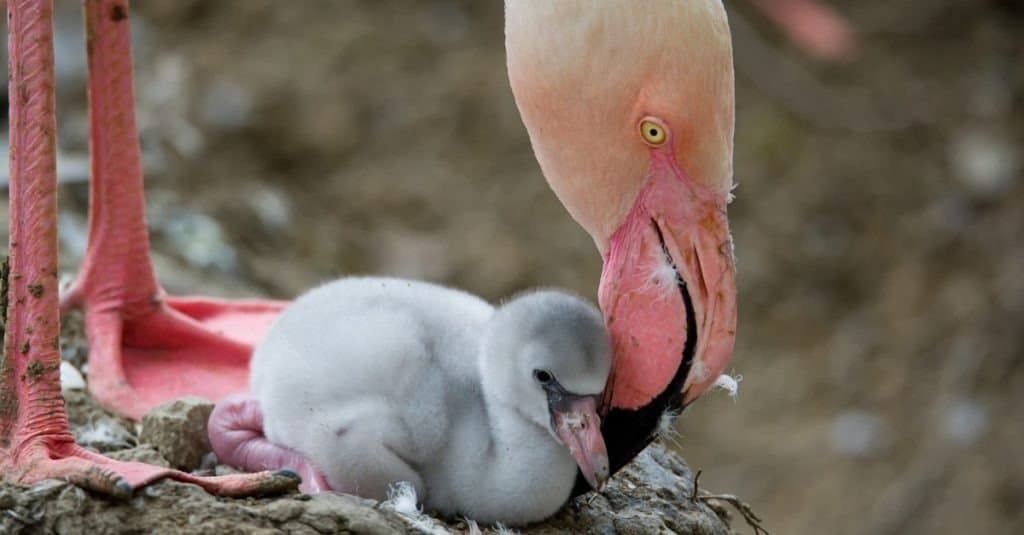
When flamingos feed their young, they do it just like other birds: by regurgitating partially digested food into their babies’ mouths. They also produce a type of ‘milk’ called crop milk to feed their babies, similar to how mammals nurse their young.
“Flamingos are also known for their crop milk, which is a substance similar in composition to mammal milk and is produced from their digestive tract,” Trice explains. “It is a reddish-pink color from their food that they eat.”
Flamingos Live in Salted Environments
©FOTOGRIN/Shutterstock.com
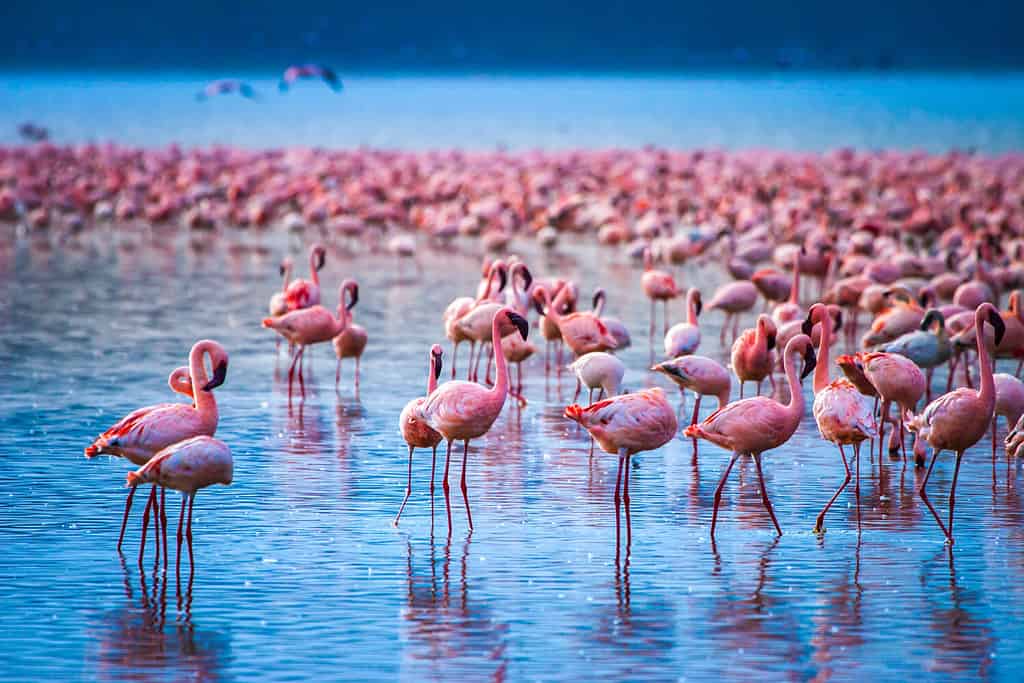
Although the Nashville Zoo has three types of flamingos, there are actually six species in total, including the Lesser Flamingo, Andean Flamingo, and Puna Flamingo. According to Trice, all flamingos can survive in salty areas.
“They tend to prefer salt water, but are also found in high alpine lakes,” Trice says. “They have something known as a supraorbital gland that acts like a second kidney to help filter out salt. This allows them to live in very salty environments such as the salt pans in Africa.”
They also live in colonies of 100 to several thousand birds, which helps protect them from predators. Flamingos are some of the coolest and prettiest birds — and it’s all thanks to their biology and dietary preferences!