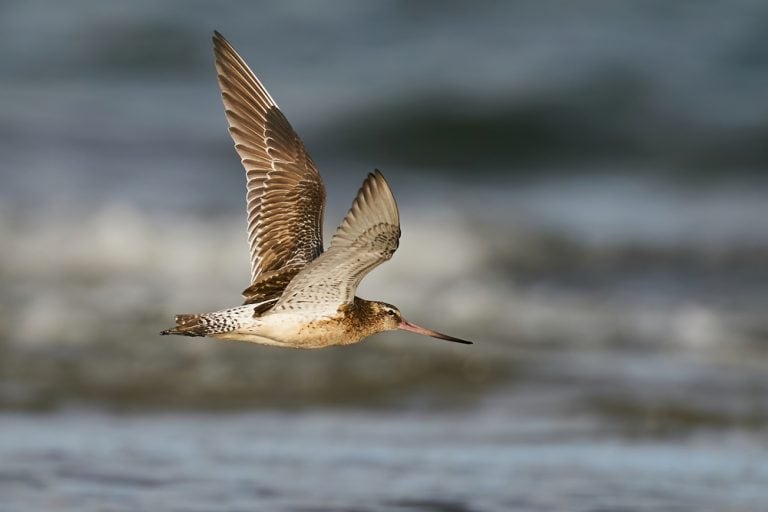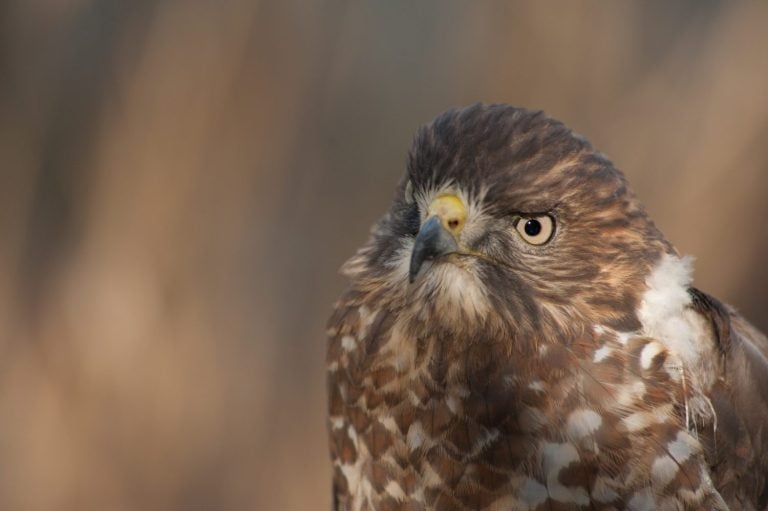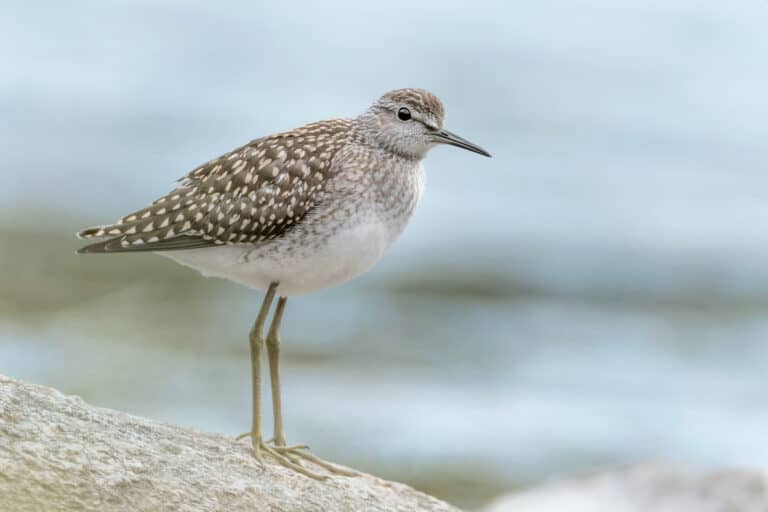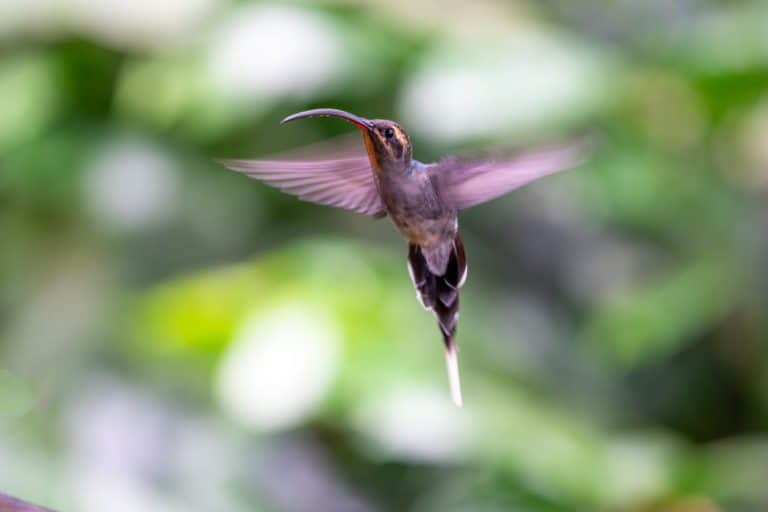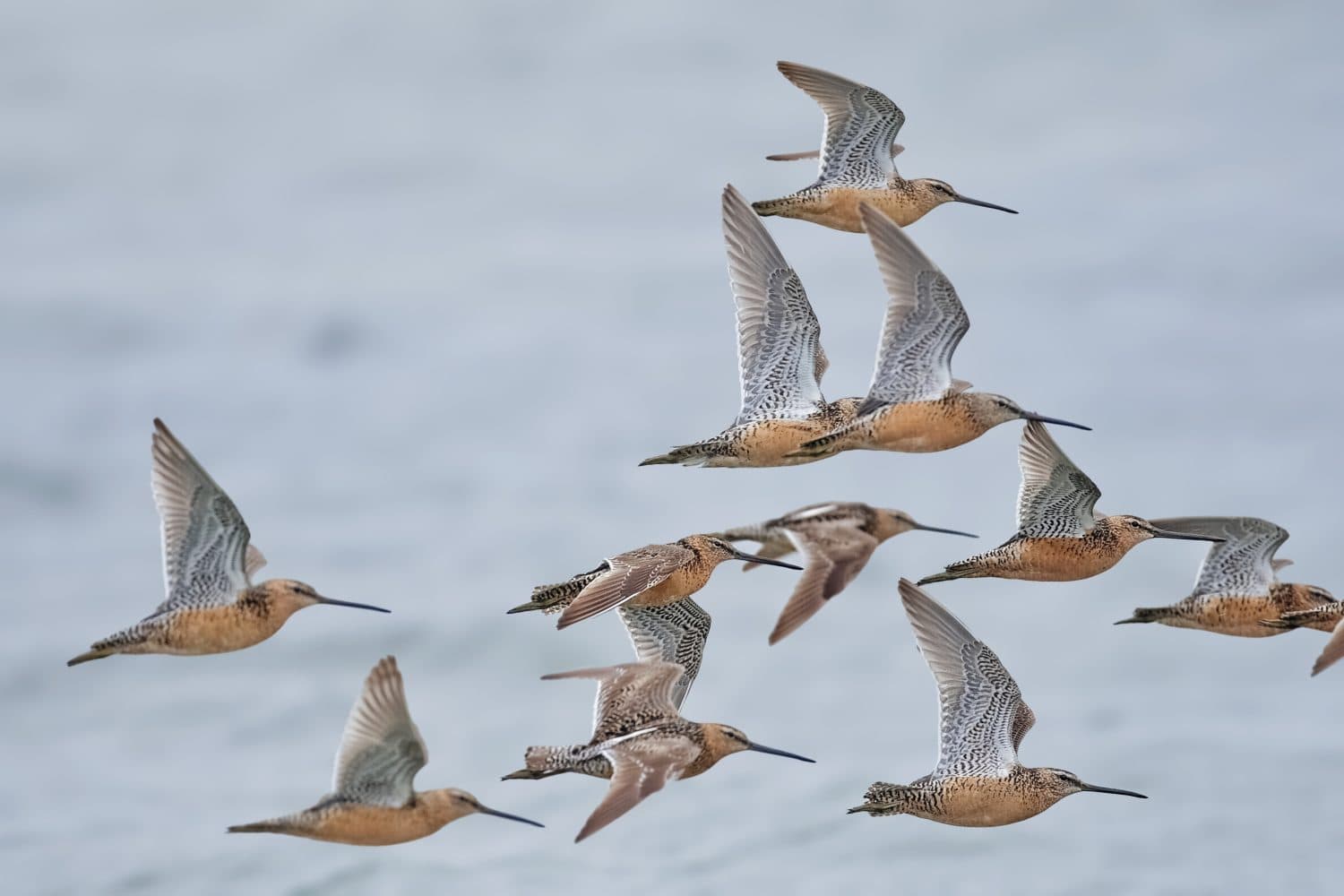

Each year, as winter approaches, many bird species undertake an exhausting migration, sometimes hundreds or even thousands of miles long. Birds will fly south to find more temperate climates, which is beneficial both for them and their future offspring. But where do birds really go in the winter? The answer to that question and other incredible migration secrets are still being uncovered today.
What is Bird Migration?
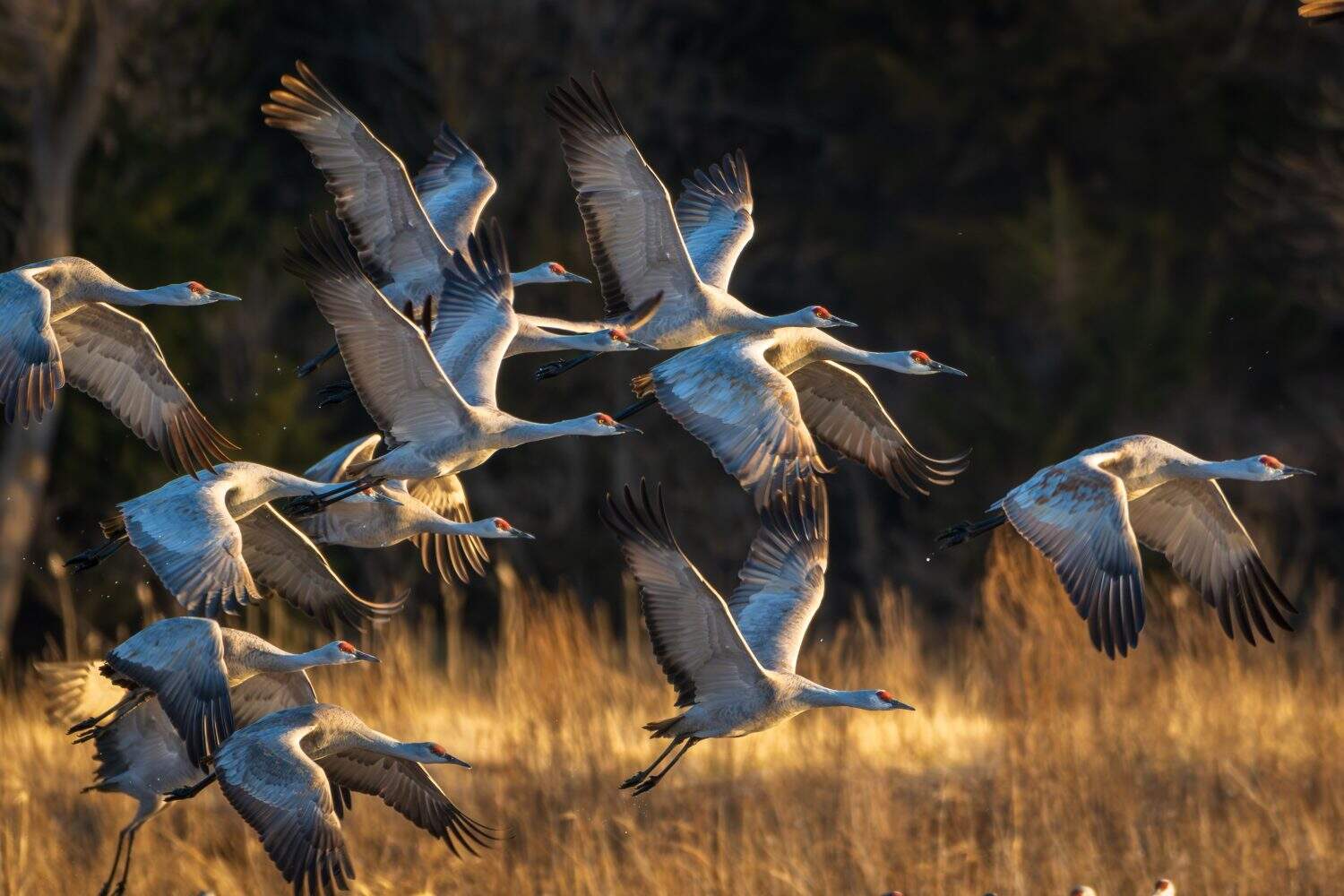
Bird migration occurs at a similar time annually as birds travel great distances twice a year.
©David Grimes/Shutterstock.com
Bird migration is an annual event in which birds move from the areas where they breed and raise their young to their wintering grounds. In most instances, migration occurs twice in one year: once when the birds go south for the winter and again when they return home in the spring or summer.
The reason birds migrate is to increase their chances of survival. While some birds can stay in the same location all year long, others must fly long distances in some cases. Wintering destinations are not based on distance, but instead, on appropriate climate and resources. This ingrained location is learned when the birds are hatchlings.
Bird migration is broken into five separate categories:
- Long-distance migration
- Short-distance migration
- Altitudinal migration
- Partial migration
- Loop migration
Each of these categories involves birds flying a different number of miles as they make their way to their migration grounds in the winter.
Where Birds Go During The Winter When They Migrate
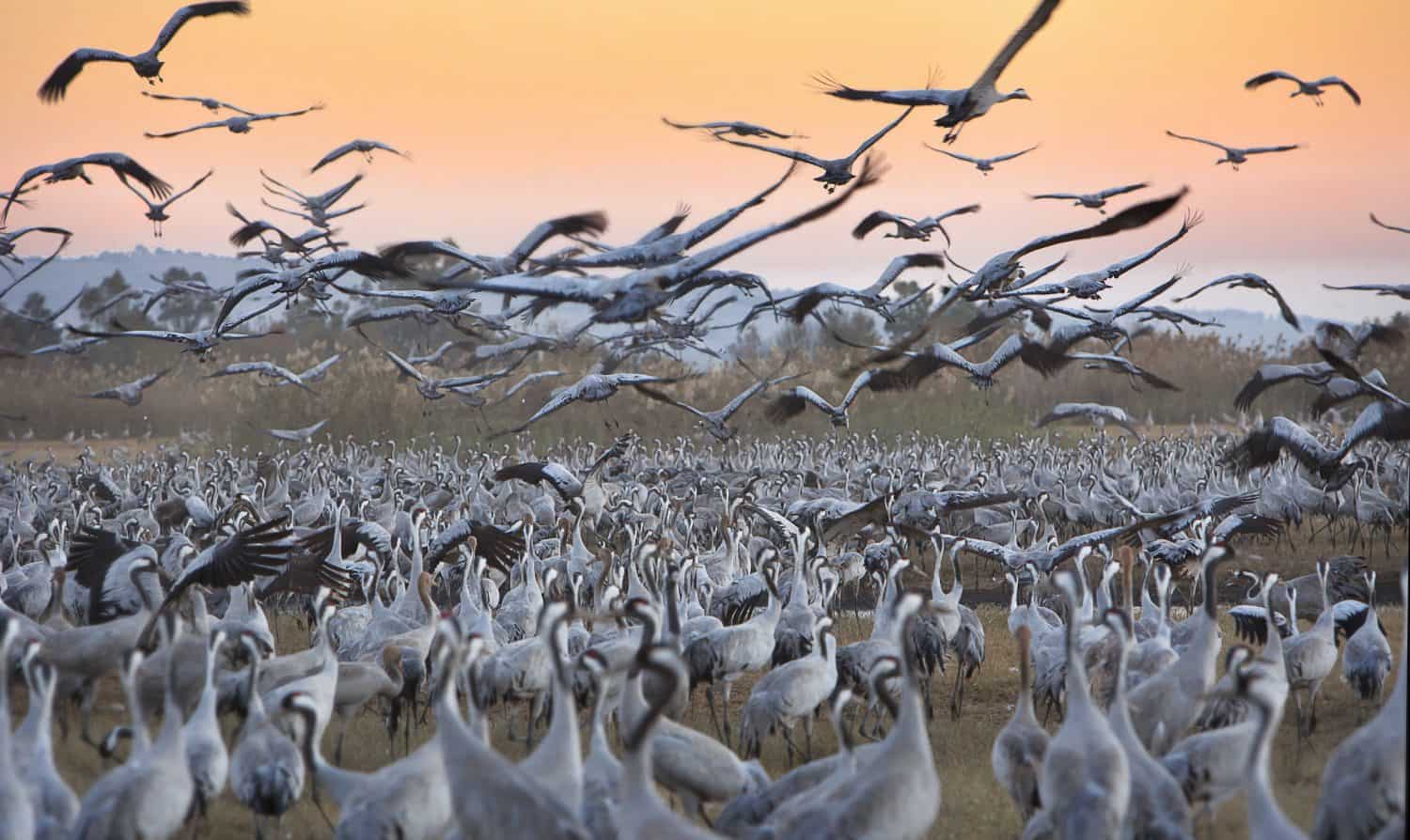
There are several distinct migratory routes, both in the United States and internationally.
©MstudioG/Shutterstock.com
Those who live along bird migration paths are no stranger to flocks of birds soaring overhead as they make their way to their winter migration grounds. But just how far south do the birds fly? Do all the birds go to one place?
There are four distinct migration routes that North American birds take. Those routes include:
| Migratory Route | Regions Where Birds Migrate |
| Atlantic Flyway | Greenland to the Caribbean and South America |
| Central Flyway | Canadian prairies to the Gulf of Mexico |
| Mississippi Flyway | Canada’s Hudson Bay to the Gulf Coast |
| Pacific Flyway | Alaska to Patagonia |
For birds across the world, common migration routes include:
| Migratory Route | Regions Where Birds Migrate |
| Africa-Eurasia | Birds from Europe, Asia, and Africa travel to the Mediterranean Sea and the Sahara Desert |
| Americas | Birds from the U.S. and Canada travel to Central and South America |
| Central Pacific | Birds travel over the Pacific Ocean to reach Chile, Alaska, New Zealand, and more |
| East Asian-Australian | Birds from the Arctic travel to Australia and Southeast Asia |
At times, birds migrate in massive numbers. This phenomenon was observed in September 2025, when approximately 1.2 billion birds were seen migrating south together in the U.S. It is not a mistake that this many birds wind up in the exact same location at the same time. It is all thanks to the navigational tools birds possess that enable them to reach their wintering migration grounds annually.
How Birds Navigate with Accuracy During Migration
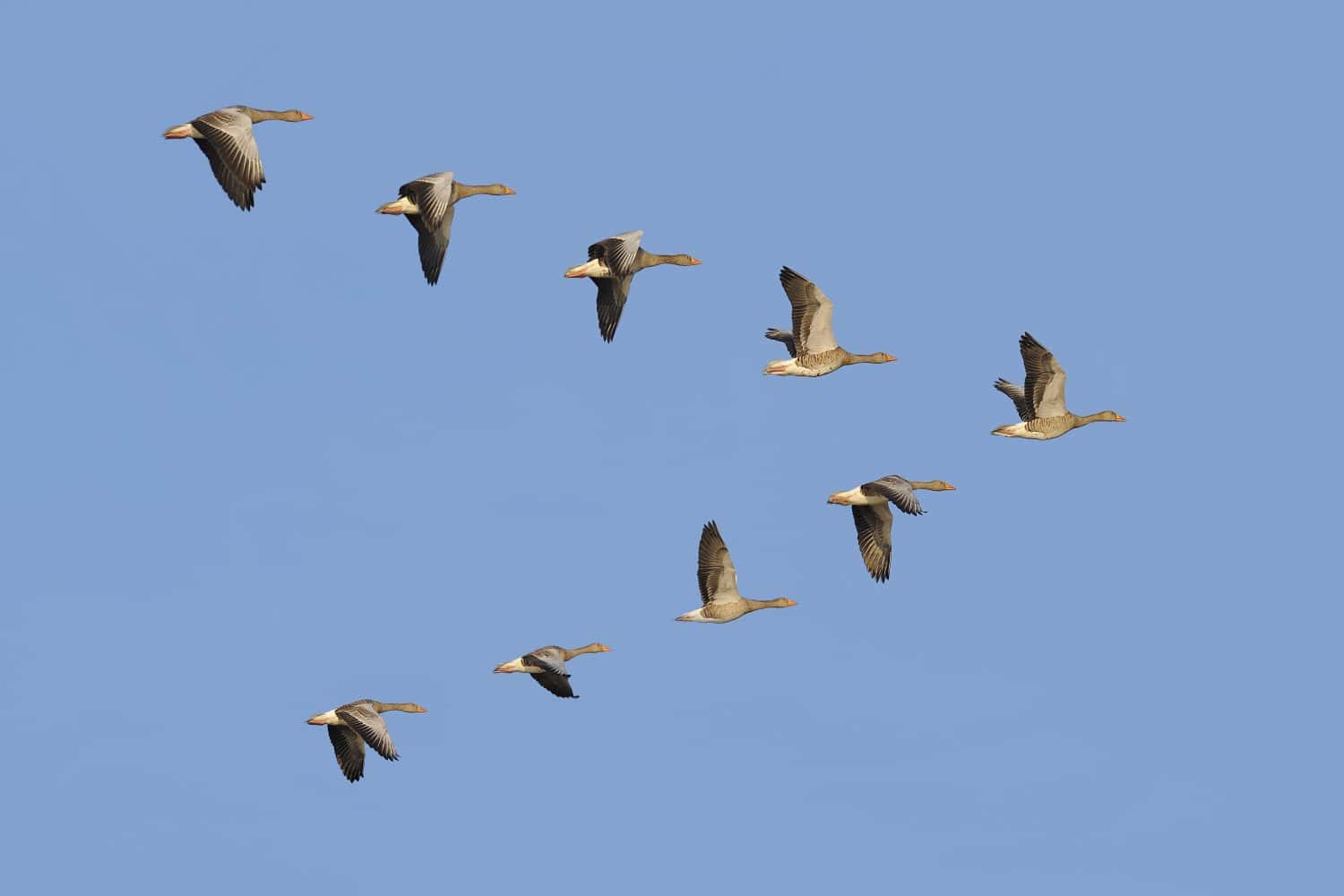
Sight, smell, and the Earth’s magnetic force are just some of the tools birds use during migration.
©Ana Gram/Shutterstock.com
The fact that birds can successfully fly to and from their winter migration grounds is nothing short of astounding. Flying, in some cases, thousands of miles over land and sea, is a daunting task. Yet, time and again, birds make the daunting trip annually. To accomplish this feat, birds use a combination of senses and cues from the environment to get them where they need to go safely.
Birds use the sun and the moon to navigate. For birds that fly during the day, the position of the sun determines the direction in which they are flying. Because this compass “requires continuous recalibration,” it is believed that birds have an internal clock to help them with this.
Birds that fly at night with precision do so by learning “stellar patterns.” Instead of focusing on one star to help them navigate, birds look at the sky as a whole. As the stars rotate, birds alter their navigation, if necessary, to stay on course.
Birds that have migrated in the past can use landmarks to help guide them along their journey. By looking for bodies of water, mountain ranges, and other features, birds can determine if they are on the correct route.
Additionally, birds use their sense of smell to navigate. This was demonstrated in a 2017 study on shearwater birds published in Scientific Reports. These birds routinely travel over the Mediterranean Sea to forage for food. After researchers intentionally diminished the olfactory senses of specific birds, they observed the shearwater birds in action. Those that had their sense of smell altered became disoriented.
The olfactory senses are crucial for birds that fly long distances over the open ocean, which lacks significant landmarks. By smelling familiar scents, the birds can remain on course. When that ability is taken away, accurate flight paths are no longer a possibility.
Lastly, migrating birds use the Earth’s magnetic force to guide their way during migration. It is believed that this is accomplished via the magnetoreceptors in the birds’ eyes. The magnetoreceptors are connected to the brain and create a “magnetic map,” which helps migrating birds navigate to their intended destinations.
Why Birds Migrate in the Winter
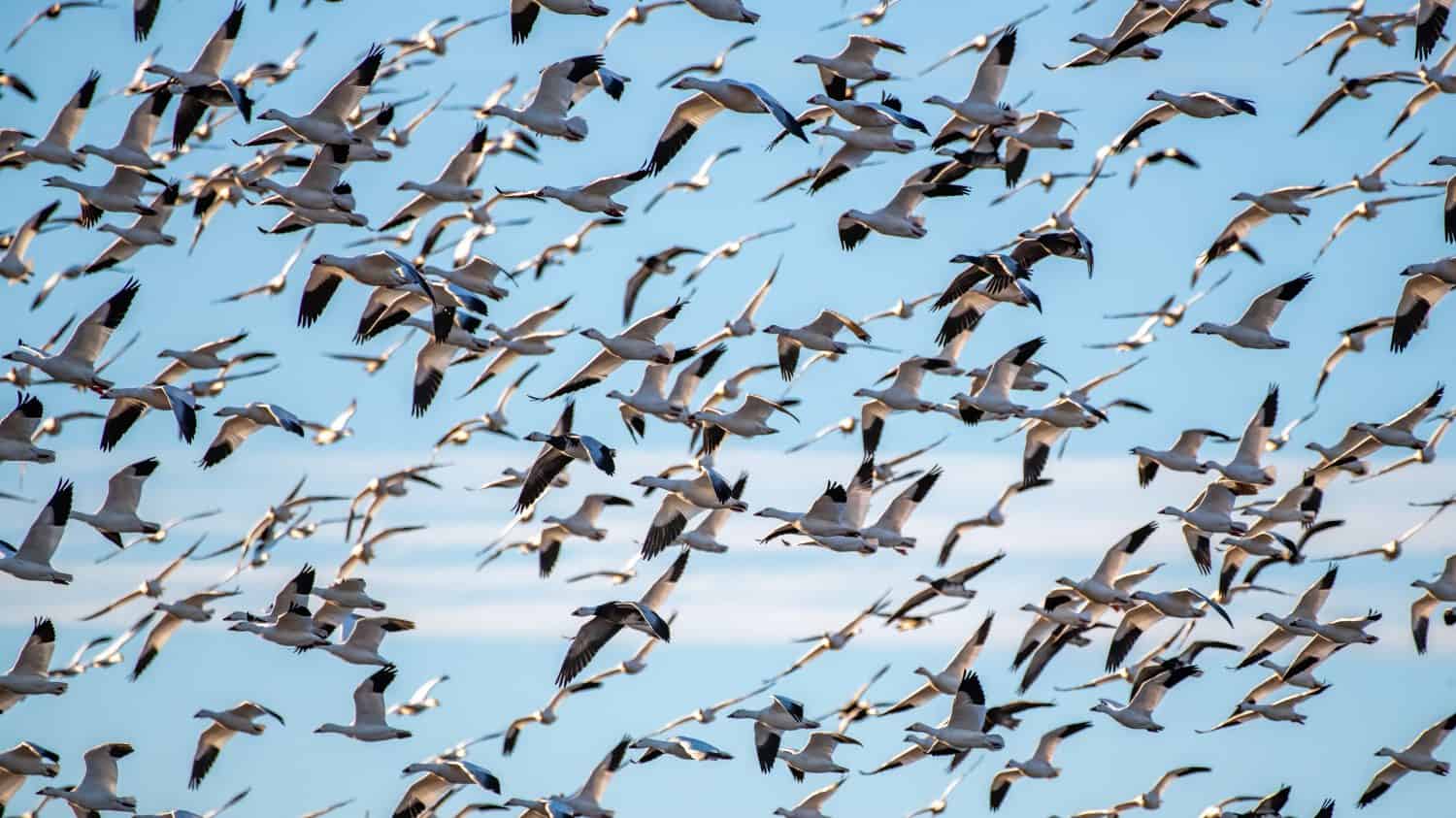
Birds migrate for a more temperate climate, a heartier food supply, and a safe place to raise their young.
©Wirestock Creators/Shutterstock.com
When birds fly south for the winter, the assumption is that they do so because the weather is less harsh in the south. While this is true, it is but one of the reasons that birds migrate when the days grow shorter and the weather gets colder.
The main reasons that birds migrate in the winter include:
- Desire to be in a warmer climate where proper shelter is more accessible
- Greater number of food sources
- Increased access to watering holes
- To breed and raise hatchlings in an environment most favorable for survival
- Ingrained biological response that makes birds want to fly to ancestorial migration grounds
With many birds choosing to live in a more temperate climate year-round, their chances of survival increase. The more access they have to food, water, and shelter, the less energy they need to exert. Birds that aren’t fatigued are healthier and better able to avoid becoming prey, which enables them to bring the next generation of their species into the world. But just because migration leads to more favorable environments, doesn’t mean the journey comes risk free.
Dangers Birds Face When Migrating
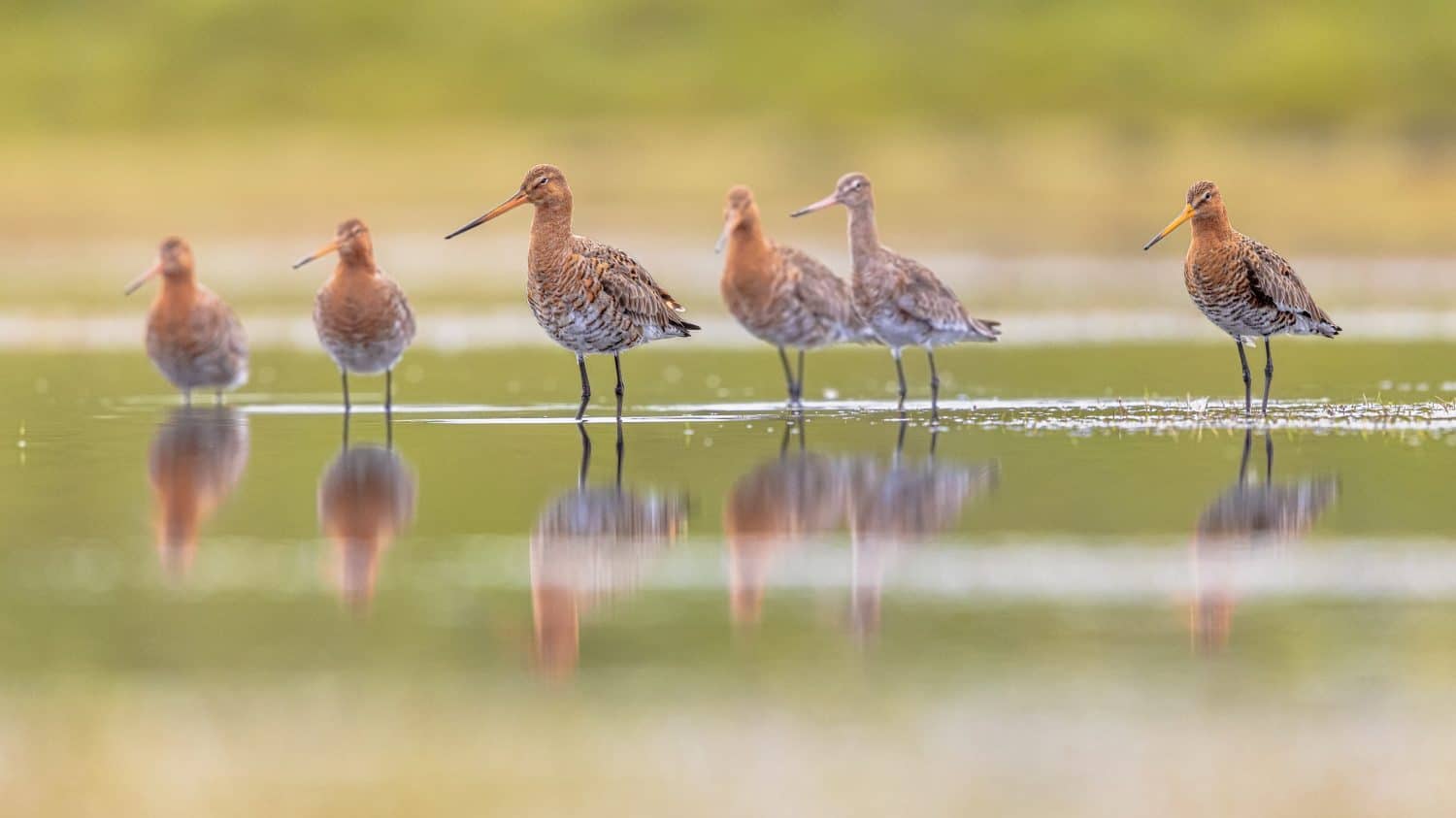
Birds face a plethora of threats as they attempt to make it to their traditional migration grounds.
©Rudmer Zwerver/Shutterstock.com
Bird migration was first noted by ancient cultures more than 3,000 years ago. Despite their evolved instincts for making such incredible journeys, the fact remains that there are always dangers birds face during migration.
Some of the most common threats to birds during their migration journey include:
- When birds stop to rest, they make for easy prey given how tired they are
- Extreme weather conditions can fatigue and disorient birds, ultimately rendering them too tired to complete their journey or so turned around that they never make it to their final destination
- As landscapes have changed over the years, there are fewer spots for migrating birds to stop and rest, leading to their demise
- Climate change is a newer threat to migrating birds, as it causes them to leave early or late, which can mean food sources are scarce
- Migrating birds may not see infrastructure before it is too late to correct their course, leading to injury or death
With all of the dangers migrating birds face, the fact that many make it to their final destination is nothing short of remarkable. Therefore, no matter how short or far the journey south may be, any birds that complete their migration should be celebrated.