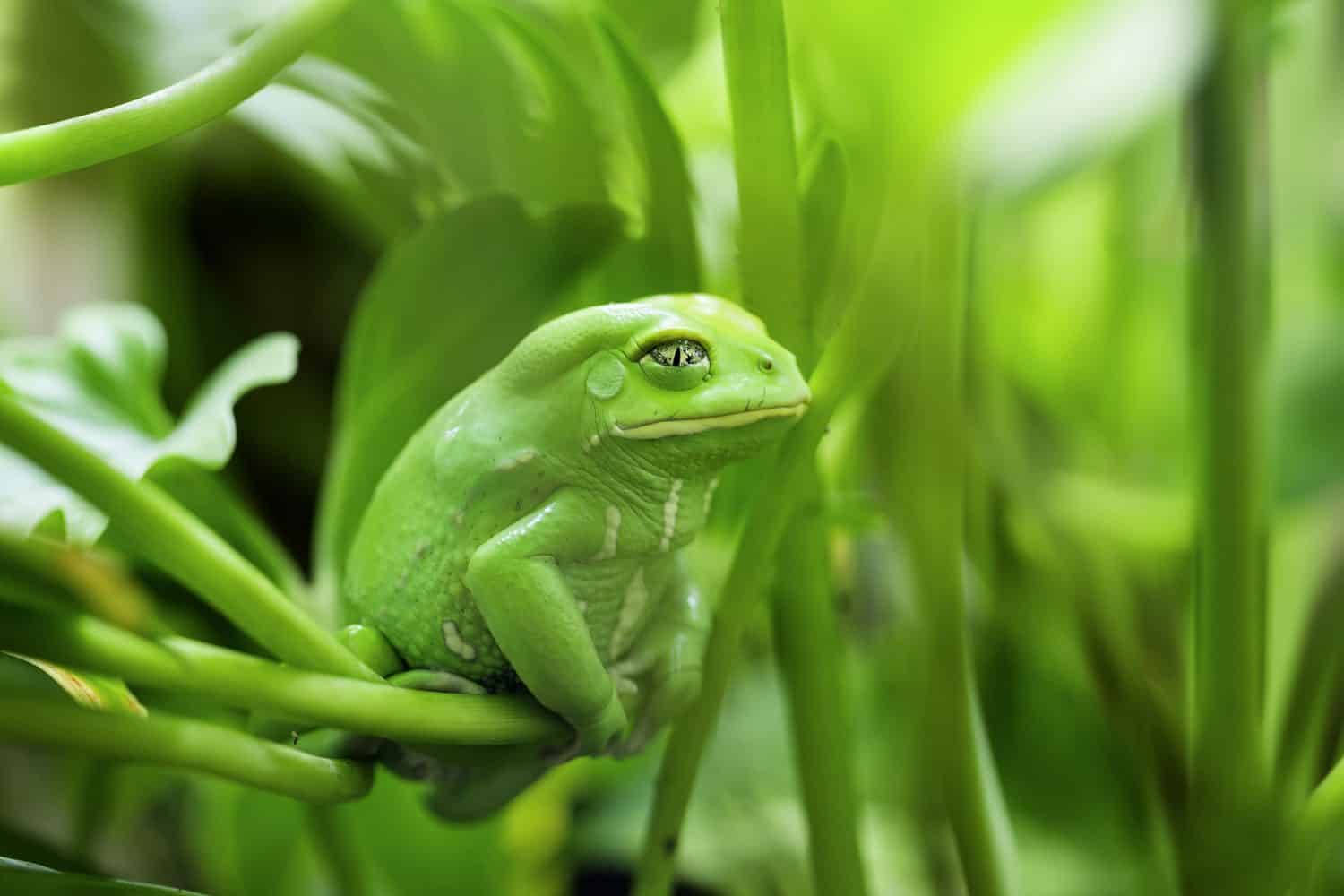

Frogs need to keep their skin wet to function correctly. Moisture helps provide oxygen to the body, aids digestion, and supports overall movement. Consequently, frogs are often found in or near bodies of water. However, there is one frog that bucks this trend, choosing to avoid water and coat itself in sunscreen instead. This odd behavior makes the waxy monkey tree frog an interesting species indeed.
Why The Waxy Monkey Tree Frog Coats Itself in Sunscreen
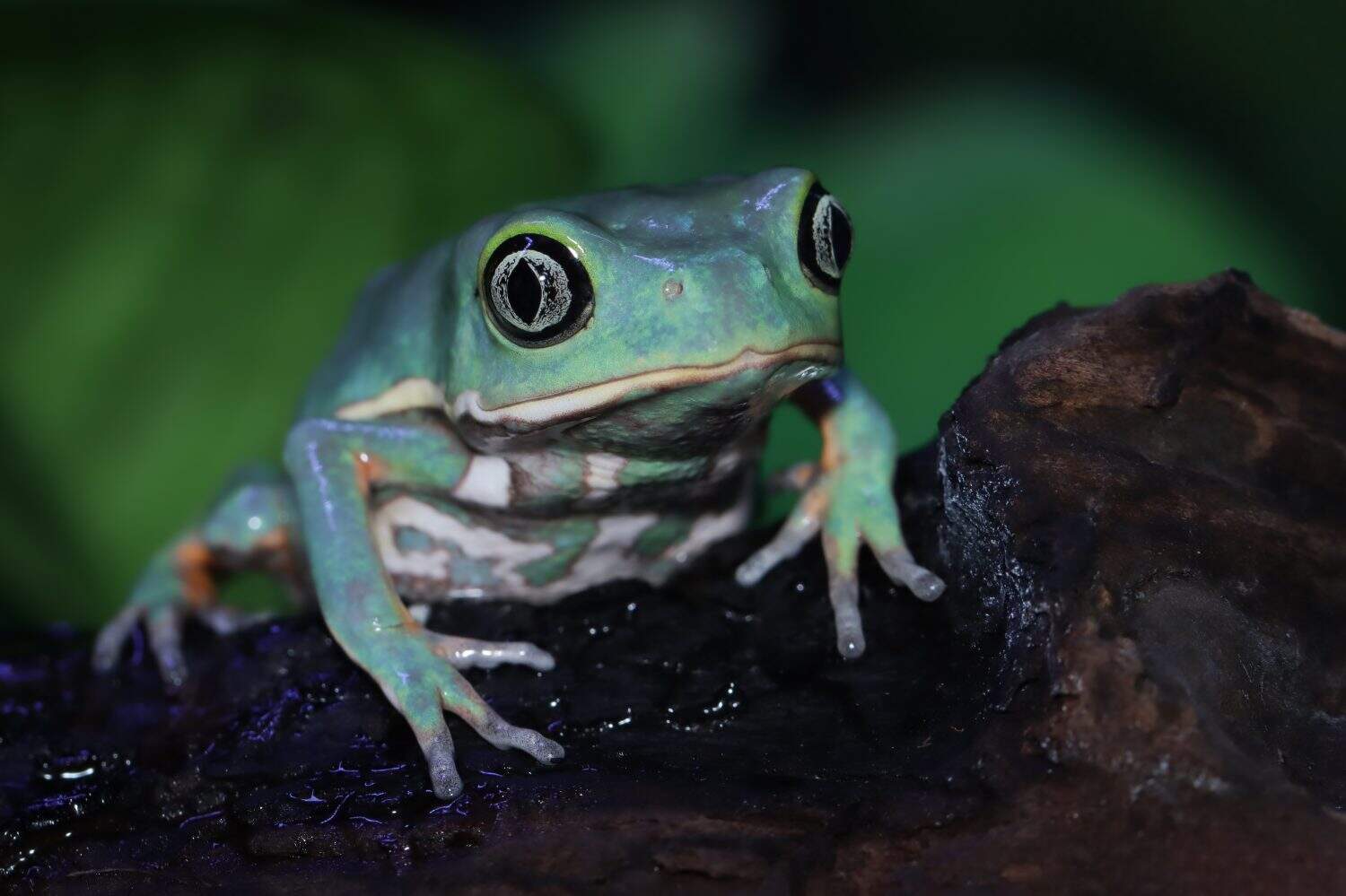
Waxy monkey tree frog coats itself in self-made sunscreen to keep its skin moist in the arid Gran Chaco region of South America.
©Kurit afshen/Shutterstock.com
The waxy monkey tree frog, like other frogs, needs its skin to remain moist at all times to survive. However, instead of jumping into a body of water, this frog takes matters into its own hands and lubricates itself with a self-made sunscreen.
The Gran Chaco region, which spans Argentina, Paraguay, and Bolivia in South America, is characterized by its arid climate. While there is a rainy season, that time is comparatively short during the year. This means that animals living in the Gran Chaco have adapted to life with little available water.
Waxy monkey tree frogs have been able to survive living out of the water by coating themselves in waxy secretions to keep the skin and body hydrated. This ensures that the frogs not only remain healthy but also thrive in an environment where they really should not exist. Were it not for the secreted substance consistently rubbed into their bodies, the waxy monkey tree frog would not survive in the Gran Chaco region.
How The Waxy Monkey Tree Frog Covers Its Body with Waxy Secretions
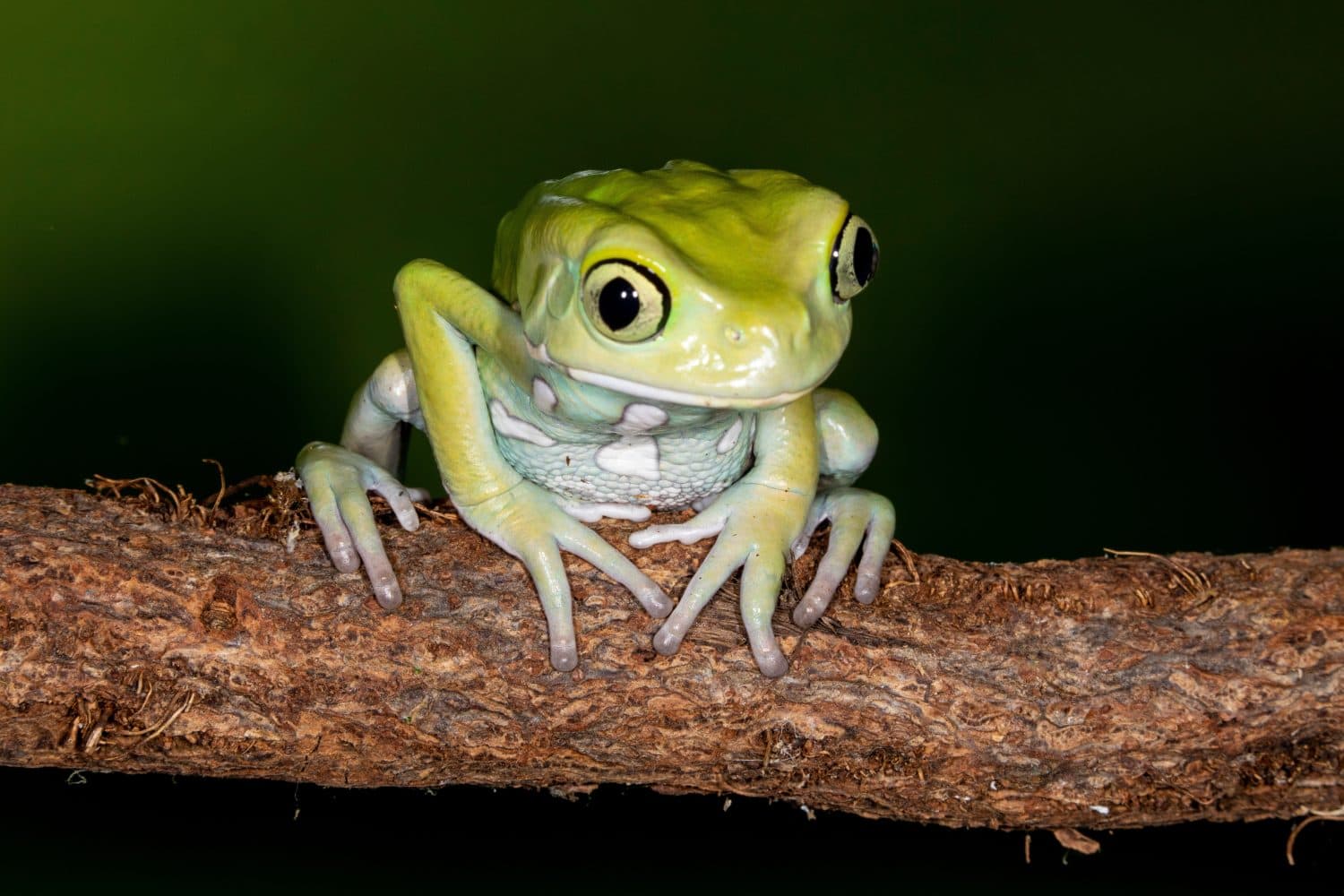
The waxy monkey tree frog uses its hands and legs to coat itself with a substance secreted from its glands to stay moist.
©Danita Delimont/Shutterstock.com
When humans apply sunscreen, the goal is to avoid missing any spots, as this can lead to burning. As the waxy monkey tree frog applies its waxy secretions, it has the same objective. If the frog overlooks an area of its body, instead of burning, the outcome can be much more dire.
The waxy monkey tree frog secretes a waxy substance from its glands to protect its skin. The substance is made from a mixture of peptides and lipids that help keep the skin hydrated in even the most arid conditions.
As the substance comes to the surface of the waxy monkey tree frog’s skin, the small amphibian engages in an act called “leg-wiping.” The frog uses its back legs to rub the waxy material into areas of its back that their hands cannot reach, and the hands ensure the head and face are covered with the sticky secretions.
There is no exact timeline for when the waxy monkey tree frog reapplies its self-made sunscreen. The reapplication naturally occurs when the skin begins to dry out from sun and heat exposure, allowing the frog to remain out of water for long periods.
Self-Sunscreen Allows the Waxy Monkey Tree Frog to Remain Out Of Water
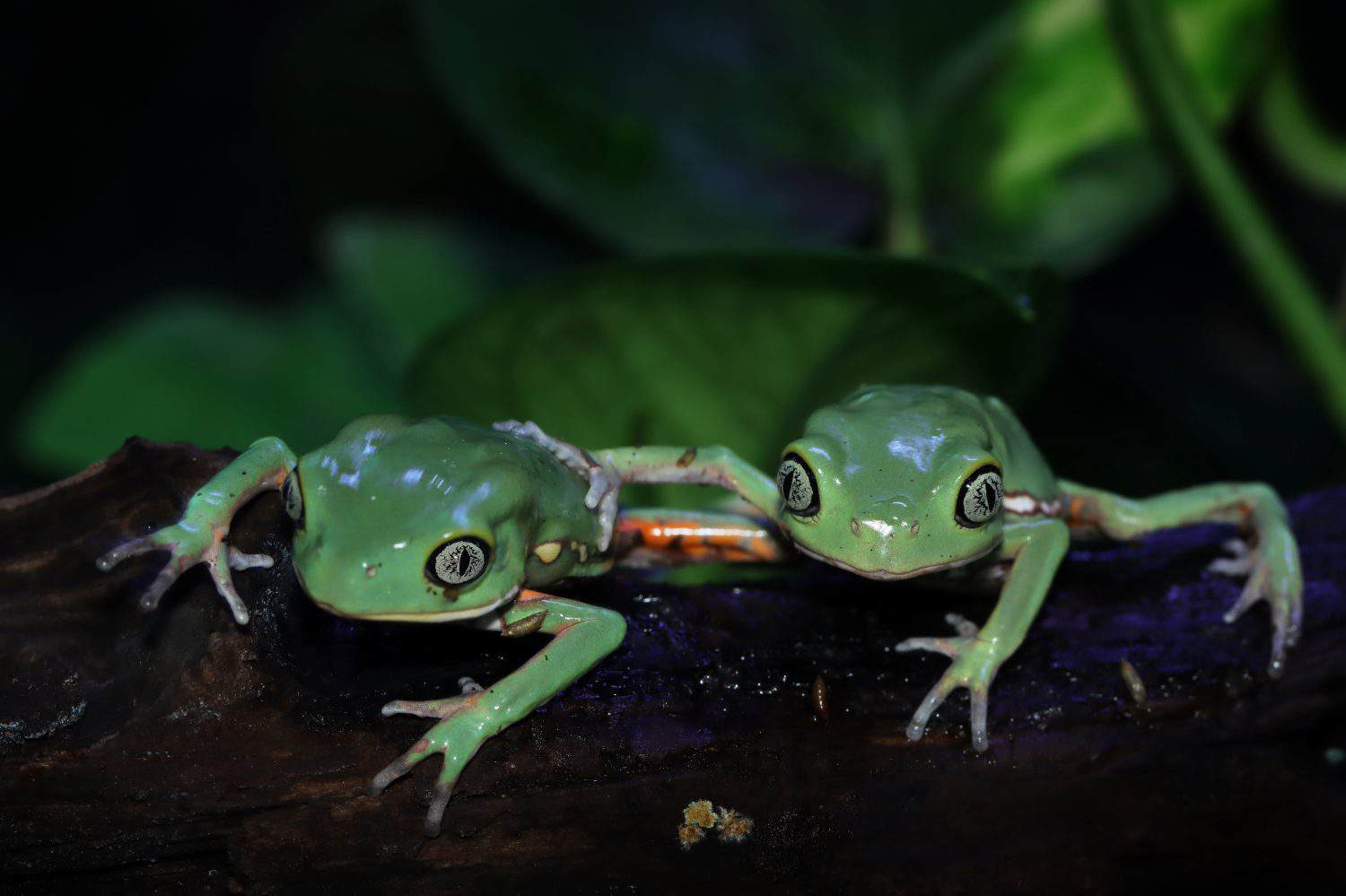
Waxy monkey tree frogs do not need constant access to water to survive life in the Gran Chaco region of South America.
©Kurit afshen/Shutterstock.com
All frogs need to keep their skin moist. This is important not only for staying hydrated but also for proper breathing and digestion.
Every species has different needs regarding how often they need to be in the water. Water frogs need to remain in the water constantly. Frogs that live on land may not need to take a dip as frequently. But the waxy monkey tree frog is truly exceptional, given that it can go long periods without needing to be in or near water.
Depending on the conditions, the waxy monkey tree frog can survive for several days to several weeks without hydration, relying solely on its waxy secretions. This comes in handy when living in Gran Chaco during the dry months, where the high temperatures hover around 90°F, but have been recorded as high as 116°F. Without the secretions the waxy monkey tree frog self-manufactures, it would be impossible for it to survive in the region it calls home.
Waxy Monkey Tree Frog Eggs Remain Out of Water
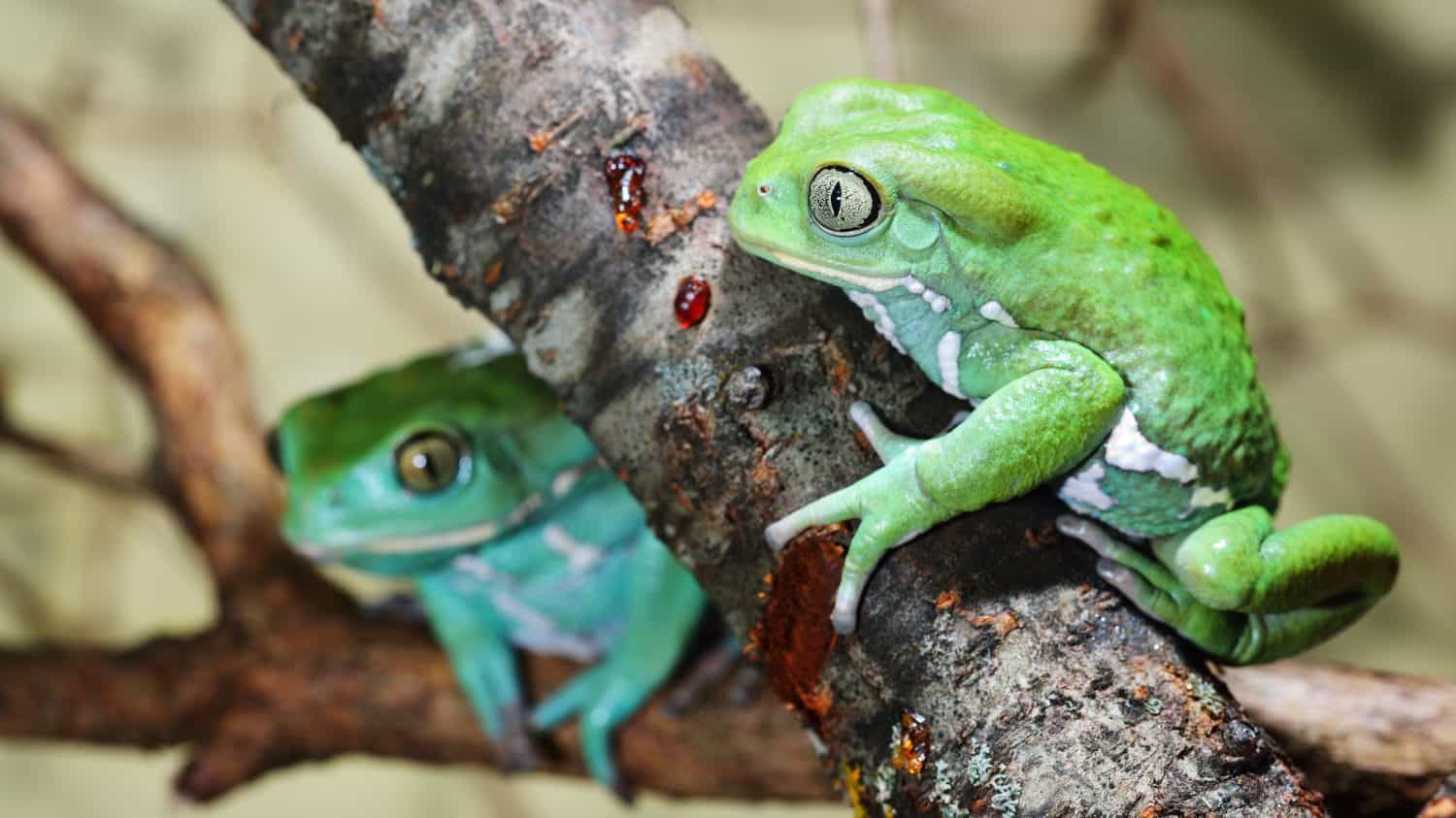
Waxy monkey tree frogs will lay eggs in a leaf over a body of water for tadpoles to fall into when they hatch.
©Alex Stemmer/Shutterstock.com
Unlike other frogs, which lay their eggs in water, the waxy monkey tree frog does not. Instead, the frog keeps the eggs out of an aquatic environment until they are closer to hatching into tadpoles. But the waxy monkey tree frogs do not transport the eggs to a water source. Instead, the frog allows Mother Nature to do the work when the time nears for the tadpoles to emerge from the eggs.
Waxy monkey tree frogs look to the weather to determine when it is time to lay eggs. When the rainy season begins, the frogs will look for a mate. Once one is found, the female will lay eggs, which the male will then fertilize.
The eggs are laid on a leaf over a source of water. The female will fold the sides of the leaf over the eggs, creating a nest. This nest will remain in the tree, covered by a gelatinous substance that not only keeps the eggs hydrated but also provides them with more albumen, the fluid that surrounds the embryos in the egg.
Amazingly, when the tadpoles are ready to hatch or have just hatched, they wait for a rainstorm to come through the area, which frees the tadpoles from their leaf nest. They drop into the water below to begin their lives as the next generation of waxy monkey tree frogs.
Unlike Other Frogs, The Waxy Monkey Tree Frog Does Not Hop
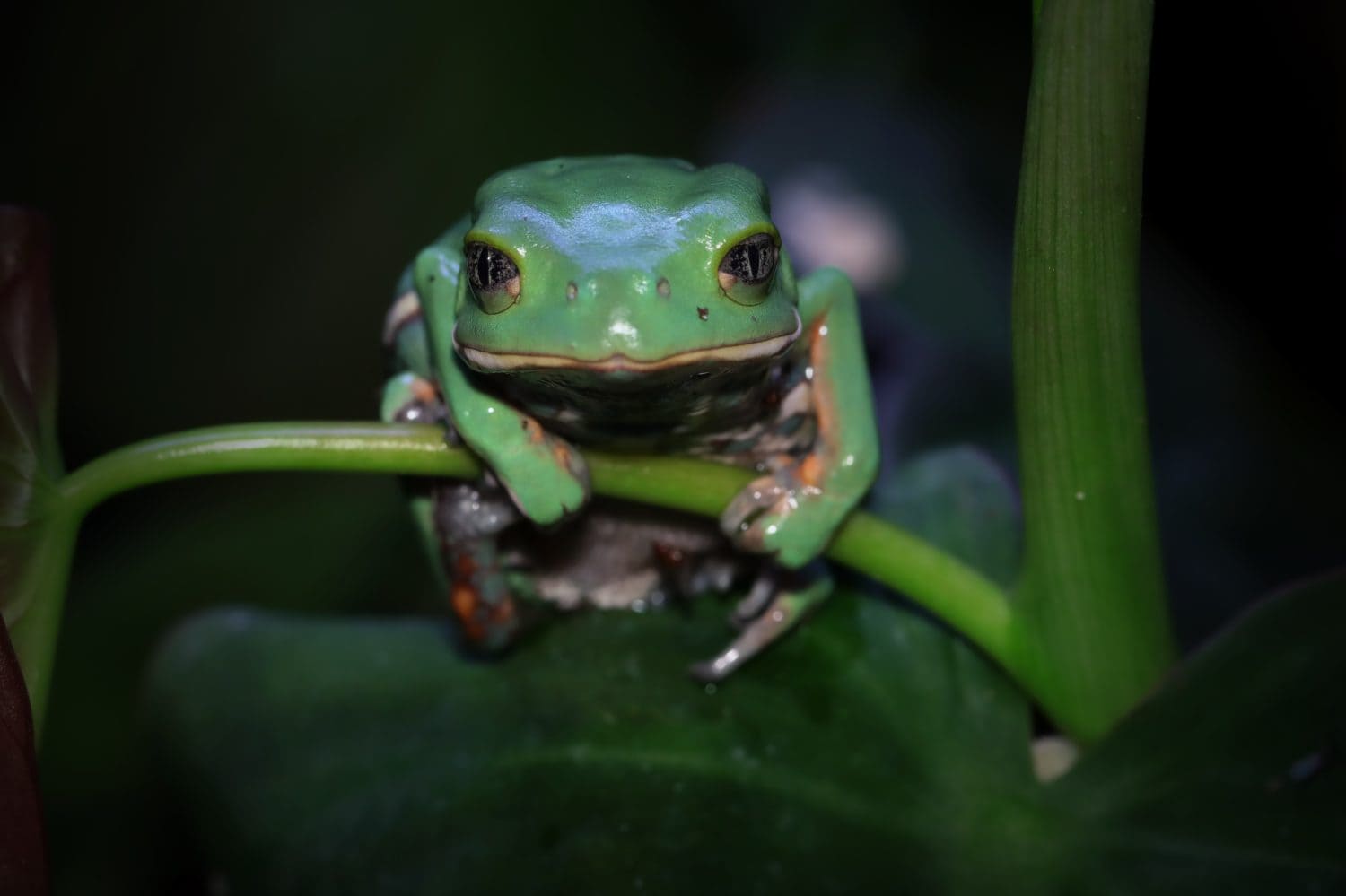
The waxy monkey tree frog walks slowly, rather than hops, to get to its destination.
©Kurit afshen/Shutterstock.com
It is not only the fact that the waxy monkey tree frog covers itself with a self-made sunscreen that differentiates it from other frogs. This particular species of frog also never hops!
The waxy monkey tree frog inhabits the trees and other vegetation in the Gran Chaco region. This would make jumping a risky mode of transportation for the frogs. A missed step or jump could lead to injury or falling into the clutches of a predator.
While it may not be speedy transportation, the waxy monkey tree frog walks. Each step is very deliberate as the frog navigates its tree home. The waxy monkey tree frog uses its prehensile hands, or hands with opposable thumbs, to grasp branches. This allows them to live in and navigate trees and bushes safely while lying in wait to grab a snack of crickets, mealworms, or roaches, or even basking in the sun in the Gran Chaco.
Threats To The Waxy Monkey Tree Frog
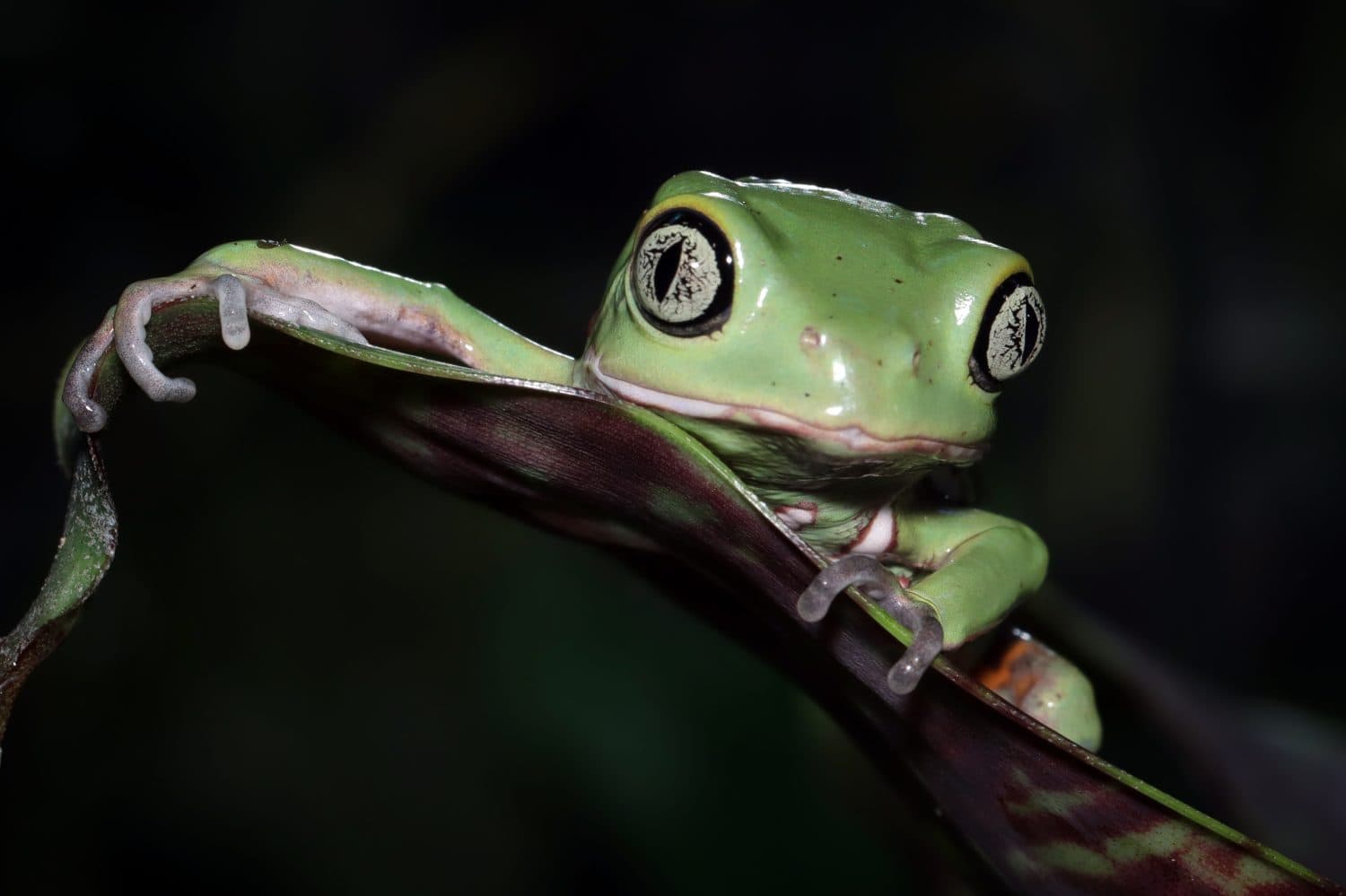
Waxy monkey tree frogs are not yet a threatened species, but they still face several threats.
©Kurit afshen/Shutterstock.com
Waxy monkey tree frogs are not a species that is currently considered to be at risk of extinction. While this is fortunate, there are still threats the frogs face that could eventually lead to their demise.
The biggest threats that waxy monkey tree frogs face include:
- Habitat loss
- Declining sustainable habitat
- Water sources being polluted by fertilizers and pesticides
- Climate change affecting breeding habits of the frogs
To ensure the survival of the waxy monkey tree frog, conservationists are calling for habitats to be both preserved and restored. This means stopping urban sprawl into traditional habitats and blocking water runoff that is filled with substances poisonous to the frogs. If these protections are implemented in the near future, then it is likely that the waxy monkey tree frog can continue to live in the Gran Chaco region, reminding us of the importance of sunscreen for years to come.