
Imagine if some of the things that you’ve heard about in fairy tales and folklore actually came true! These cautionary tales, handed down from one generation to another, often feature people or animals getting turned into stone. Frequently, this is because they have done something wicked! Petrification is the scientific term for the process of turning organic material into solid stone. There is a lake in Northern Tanzania that allegedly has the power to do just that. But does it? Is there a scientific explanation for what is happening there? Read on to find out.
Stone Animals in Lake Natron
Before 2013, few people outside of Tanzania had heard of Lake Natron. Then, a photographer named Nick Brandt published a book called Across the Ravaged Land, which included some extraordinary images. They featured the carcasses of birds and bats that appeared to have been turned into stone. The photographer positioned them on branches and in the water for his shots.
In his book, he explains that he came across these creatures unexpectedly. Among the stone statues, Brandt also found a dove and a fish eagle, which are species that live in the salt marshes and wetlands surrounding the lake.
The Deadly Water of Lake Natron
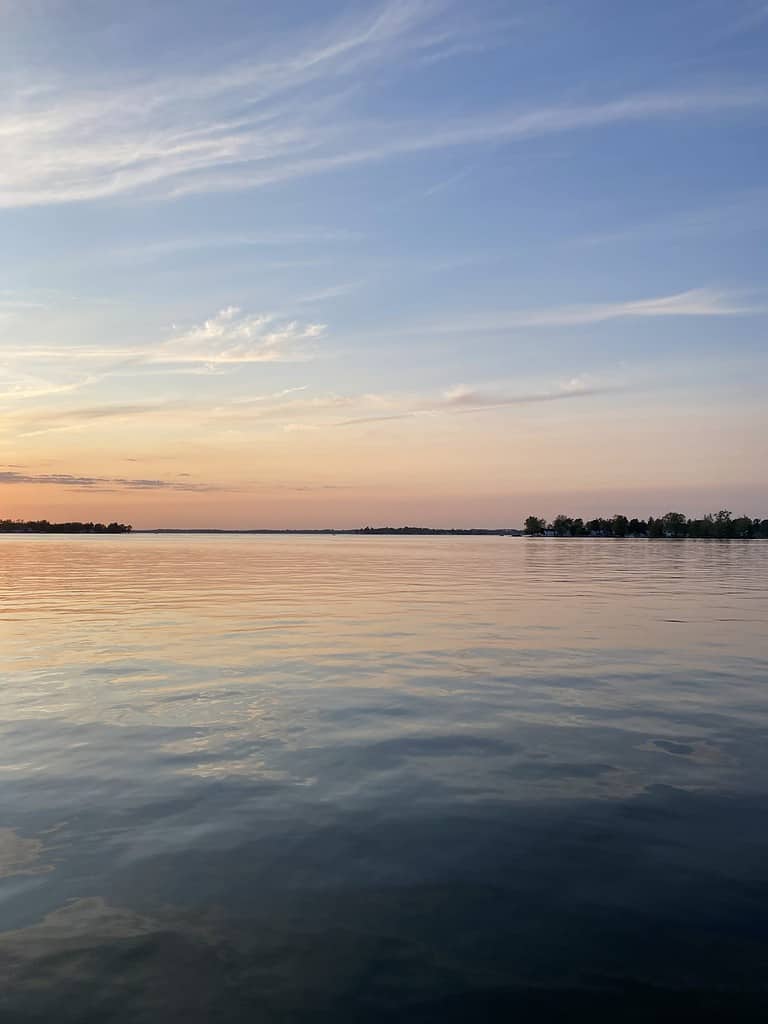
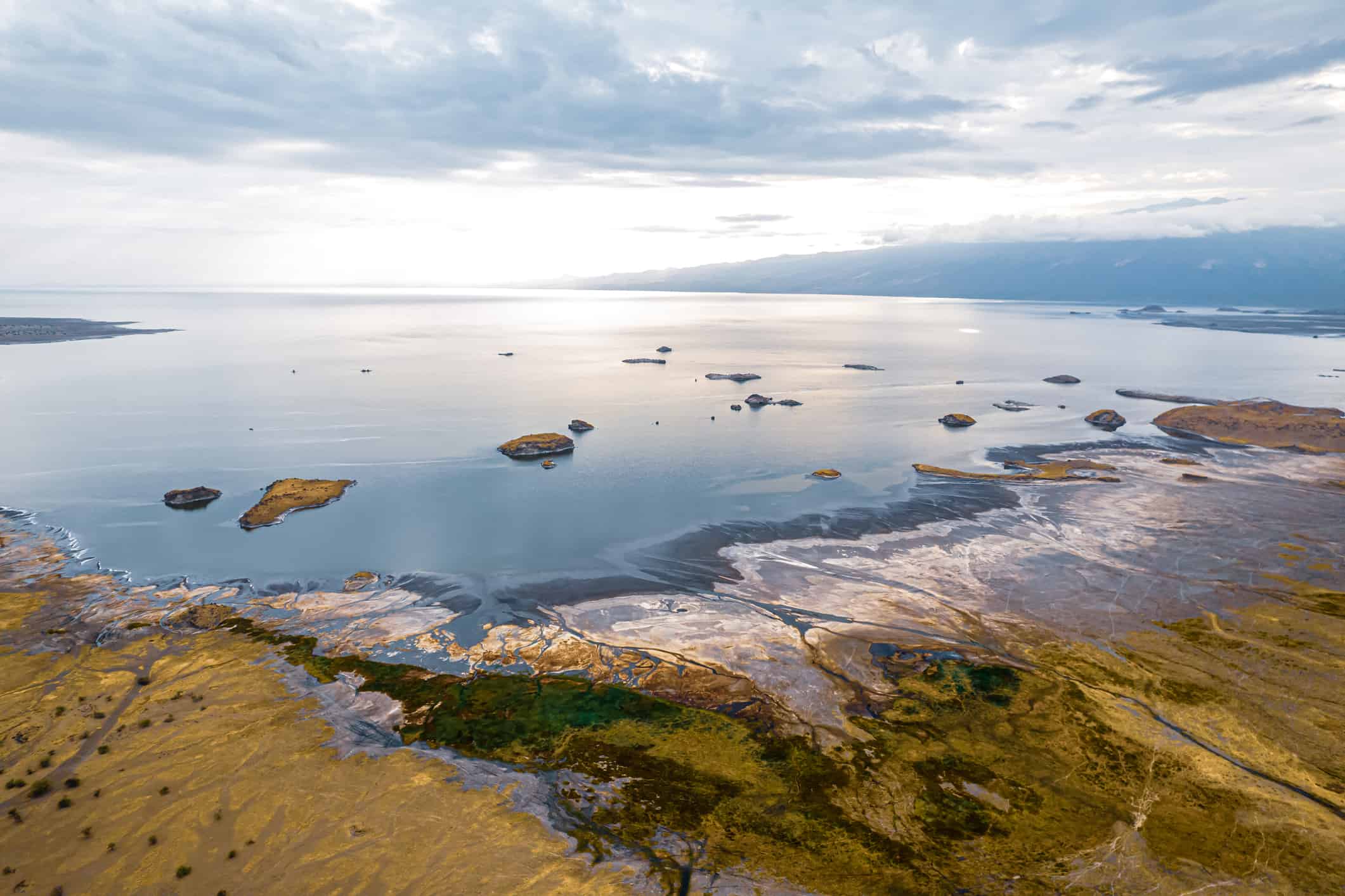
The waters of Lake Natron may look serene, but they hold a deadly secret. They have a pH that can reach as high as 10.5. That makes it almost as caustic as ammonia, and it would burn the skin and eyes of most animals, including humans. The extreme alkalinity comes from the sodium carbonate and other minerals in the water. These enter the lake from the surrounding hills. The area is on the East African Rift System and is shaped by geological processes. Large amounts of both sodium carbonate and calcium carbonate are produced. They enter the lake in hot springs, and because Lake Natron does not drain anywhere, the concentration builds up. What’s more, the water is so shallow that its temperature soars to a scalding 104 degrees Fahrenheit.
Animals that die on the shores are preserved as calcified mummies because the normal decomposition process cannot take place. Inevitably, some of the animals in the wider ecosystem make the mistake of getting too close to these deadly waters and pay the ultimate price. Pelicans, ostriches, and buffalo live in the area.
The Red Lake
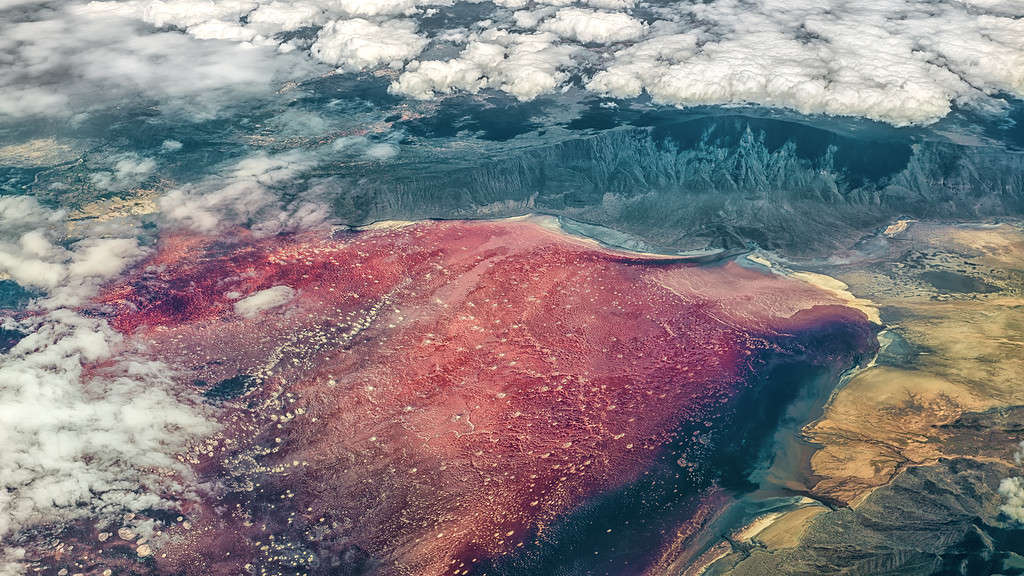
Salt-loving halophile organisms make the lake appear red.
©derejeb/iStock via Getty Images
Lake Natron takes on a stunning pink/red appearance at certain times of the year. The small salty pools that exist in the non-rainy season are home to a special type of organism. Haloarchaea are a microorganism in the Euryarchaeota class that are found in water that is completely or nearly completely saturated with salt. They are found in areas where most living things cannot survive, including geysers, oil wells, the polar seas, and salt lakes such as Lake Natron. The haloarchaea living in Lake Natron give it the red/pink coloration at certain times of the year, which can be seen from the Landsat satellite.
What Animals Can Live in Lake Natron?
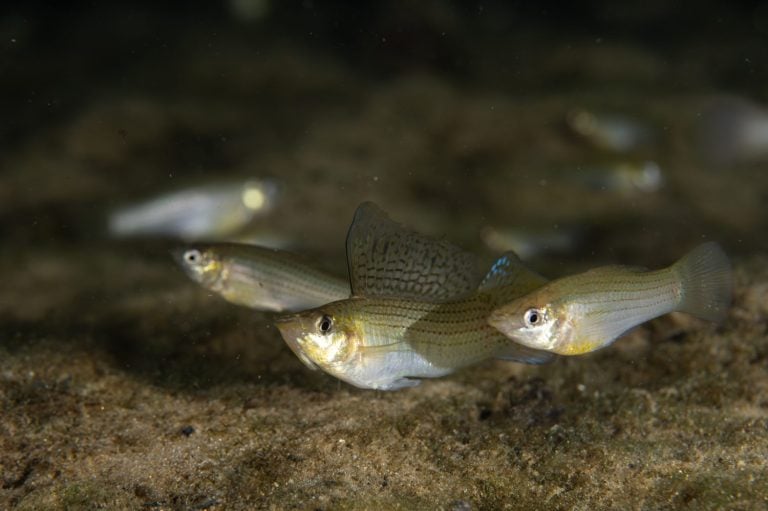
Most forms of life cannot live in such an alkaline environment. However, those that can survive in these conditions can thrive, as they will have little to no competition. At the bottom of the food chain are the archaea, bacteria, and algae that can live in extreme alkaline environments. Then, there are fish called alkaline tilapias (Alkaline tilapias). They are also called the natron cichlid or the soda cichlid. They are only found in Lake Natron and its drainage area, and the Shombole Swamps of Kenya and Tanzania. These incredible fish live in the waters at the edges of hot spring inlets, where the salts in the water are a little less concentrated. Also, fish that are adapted to living in extremely alkaline water excrete their nitrogenous waste as urea, not ammonia, which would be impossible at this pH.
The Flamingos of Lake Natron
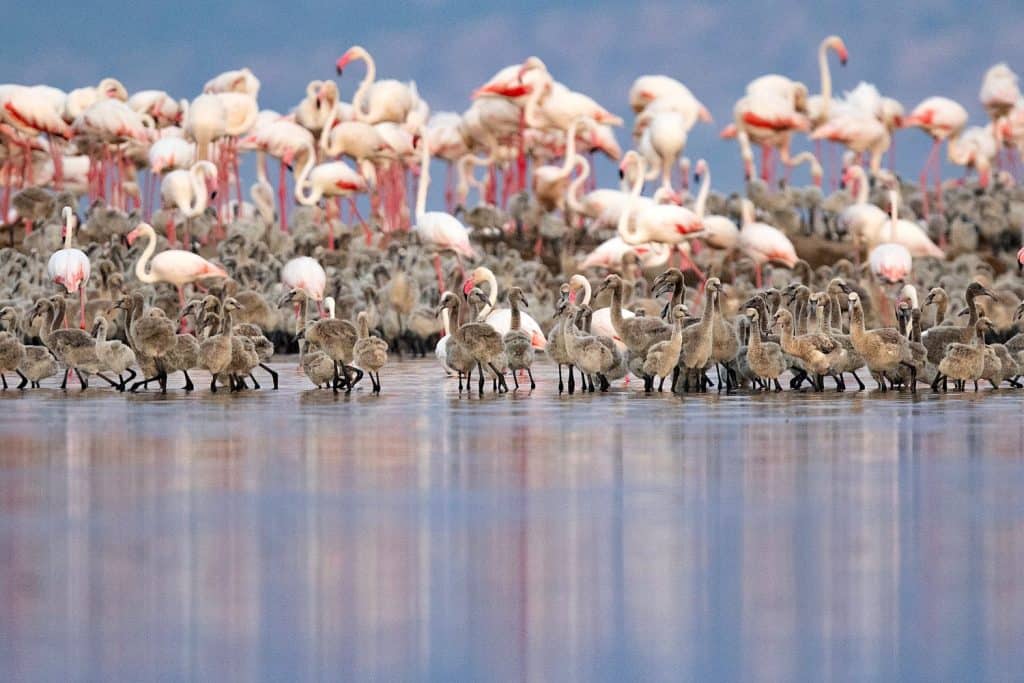
Flamingos can survive in Lake Natron.
©Dominyk Lever/Shutterstock.com
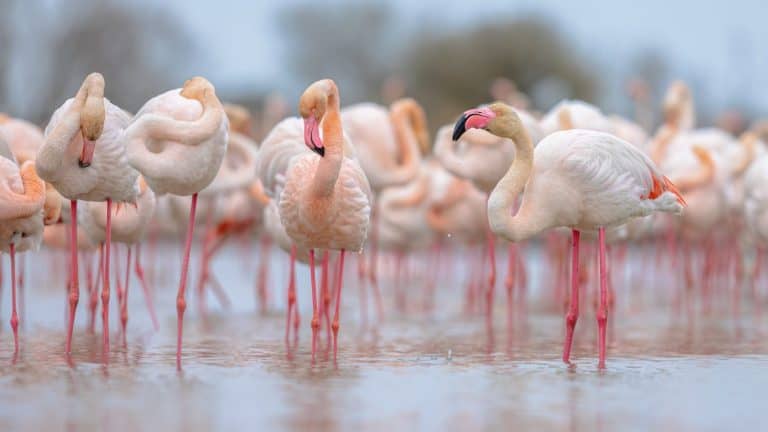
The most spectacular residents of Lake Natron are the lesser flamingo (Phoenicopterus minor). The area has the highest concentration of these birds in East Africa and is the only regular breeding site for lesser flamingos in East Africa, with tens of thousands of chicks hatched in successful breeding. The tough skin and scales on their legs protect them from alkaline burns, and they have glands in their head that remove the salts from the water. They also feed on the microorganisms that live in the lake and build their nests on small islands in the lake. Thanks to the toxic conditions, predators cannot reach the chicks, so they remain safe. Sometimes, a dead flamingo is preserved by the alkalinity and appears to have been turned to stone, creating a hauntingly beautiful scene.