
Quick Take
- Despite sharing a name, these two fish may not even belong to the same family, a distinction explained by an anatomical clue hiding in their mouths. See the taxonomic differences →
- Grass carp were intentionally introduced to North American waters for a helpful purpose, but the ecological fallout was the opposite of what anyone intended. Explore the ecological fallout →
- Grass carp eggs have a survival requirement so narrow and unusual that still water kills them entirely, a trait that makes their reproduction unlike almost any other freshwater fish. See their spawning requirements →
- These two species wreck aquatic ecosystems in completely different ways, with one of those methods triggering a chain reaction that muddies entire lakes. Compare their ecosystem damage →
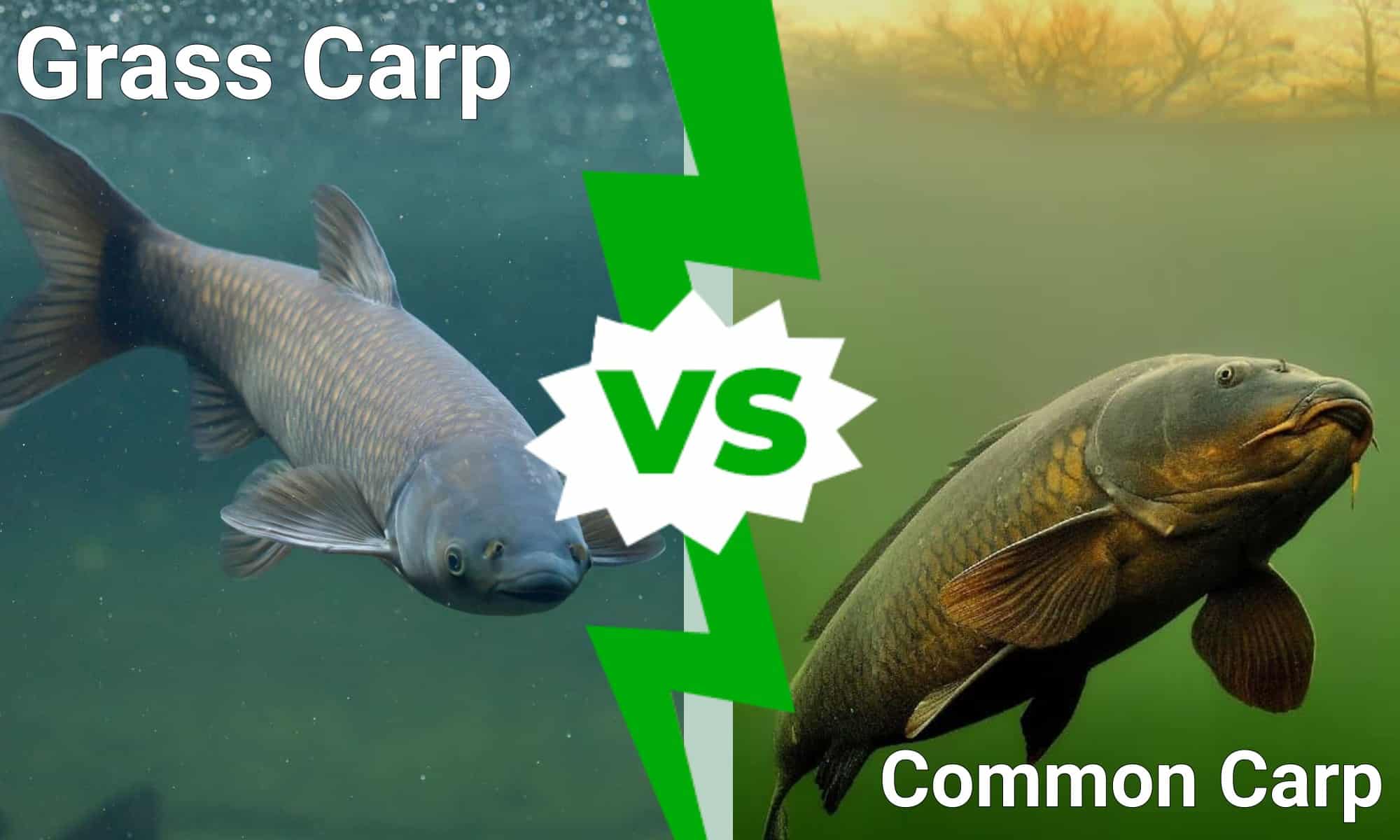
Long hot summers help carp grow to be quite large. However, no matter how perfect the summer is, the common carp usually maxes out at a smaller size than the grass carp. The key differences between grass carp and common carp include not only their size, but also their classification, physical appearance, preferred habitat, diet, and ecological impact. Continue reading to learn more about the key differences that separate these two fish.
Grass Carp vs. Common Carp: Classification
Taxonomically, the common carp and the grass carp differ fundamentally at the genus and species levels, and depending on the modern classification framework used, they may also belong to entirely separate families. While both share the same higher-level hierarchy under the order Cypriniformes. The common carp (Cyprinus carpio) is a species belonging to the genus Cyprinus within the traditional family Cyprinidae, the true carps and minnows.
The grass carp (Ctenopharyngodon idella)is the only species in the monotypic genus Ctenopharyngodon. Although historically classified as Cyprinidae, modern phylogenetic classifications frequently place the grass carp into the distinct family Xenocyprididae, the East Asian minnows, separating it from the true carps.
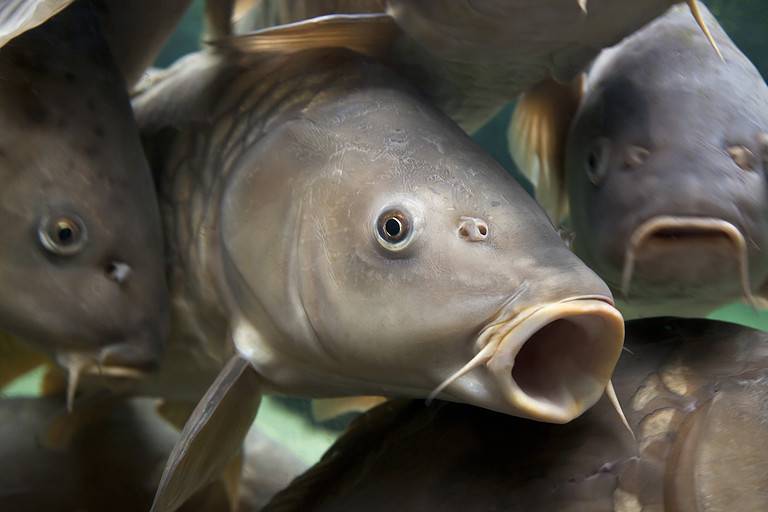
This deep taxonomic divide is reflected in their anatomy. The common carp features a subterminal sucker-like mouth with two pairs of whisker-like sensory barbels, while the grass carp lacks barbels and features specialized, comb-like pharyngeal throat teeth adapted specifically for shredding vegetation.
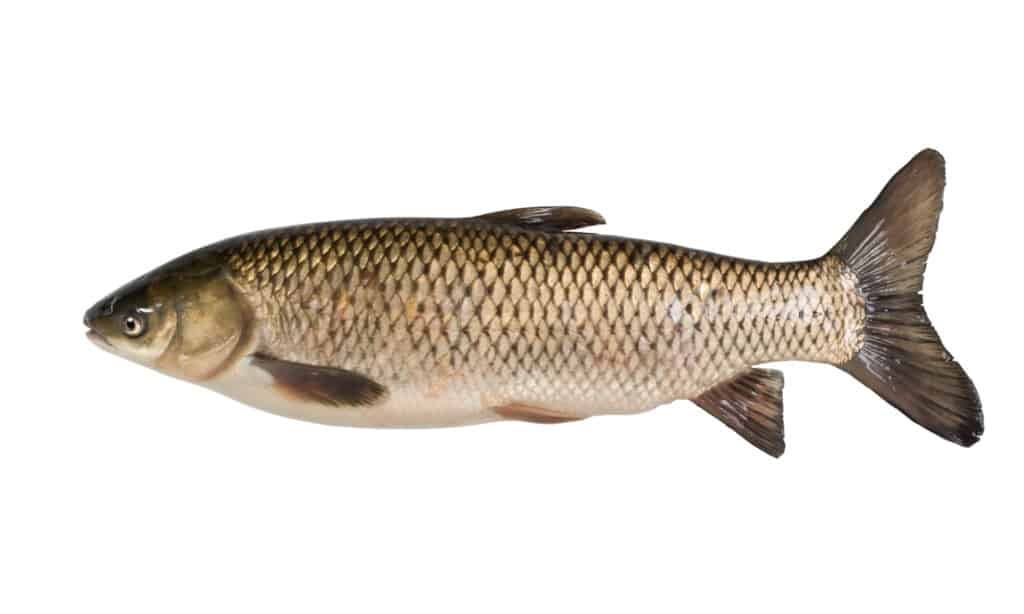
Both common carp and grass carp are considered invasive species in North America.
©Oleg_Z/Shutterstock.com
Grass Carp vs. Common Carp: Physical Appearance
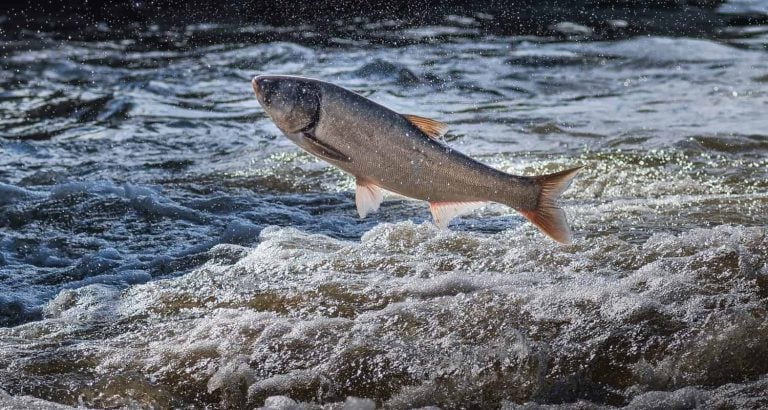
Grass carp have scales on their back and sides. A special pigmentation outlines the scales, giving the fish a unique cross-hatch effect. They have an oblong body and a flattened head. Unlike other invasive Asian carp species, grass carp have centered eyes. Their colors can be olive-brown to brassy and silvery-white. Some grass carp are even black.
Unlike common carp, which have noticeable whisker-like feelers (barbels) near the corners of their mouths, grass carp have smooth, firm lips with no barbels.
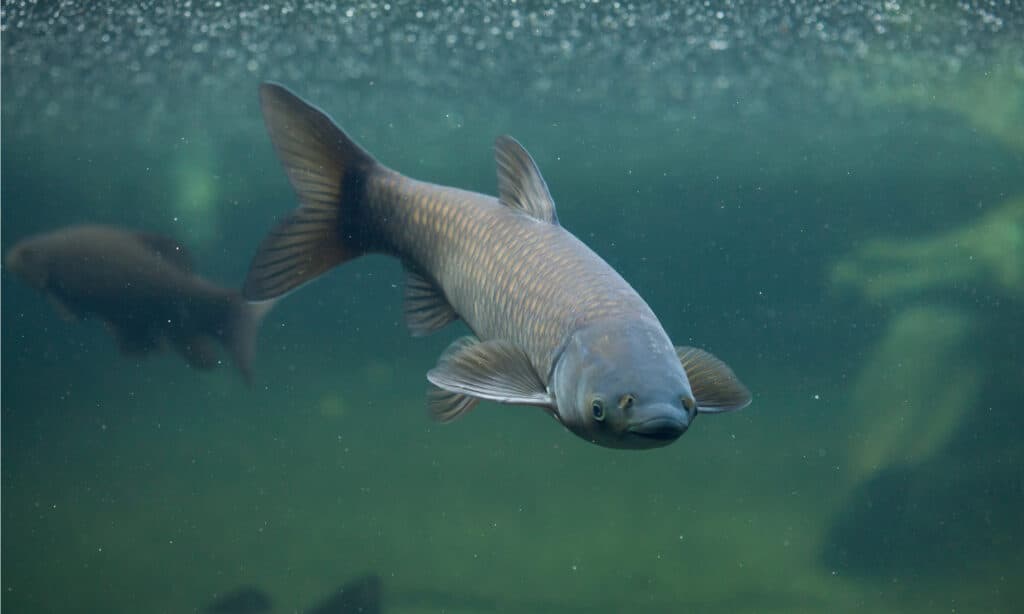
Grass carp have an oblong body shape and flattened head.
©Vladimir Wrangel/Shutterstock.com
On average, grass carp are significantly larger and longer than common carp, though both species can reach impressive sizes under ideal conditions.
Grass carp continue growing throughout their lives and can weigh up to about 71 pounds and reach lengths of up to 6.6 feet, though most large adults are closer to 4.3 feet long.
Common carp typically range from 16 to 31 inches in length and weigh 2 to 5 pounds, but exceptional specimens can reach up to 47–48 inches and weigh over 80 pounds. Their color varies from a brassy olive-green or golden-brown on the back and sides to a yellowish-white belly. Their bodies are usually covered in large, heavy, thick-rimmed scales. A defining hallmark of the species is its mouth, which features a pair of conspicuous barbels on either side of the upper lip used to scan riverbeds for food.
Grass Carp vs. Common Carp: Preferred Habitat
Grass carp are native to the large, slow-moving rivers of Eastern Asia. Common carp are originally native to large parts of Europe and Asia, where they inhabit warm, slow-moving or standing waters. So, it’s no surprise that both of these fish prefer large, slow-moving bodies of water.
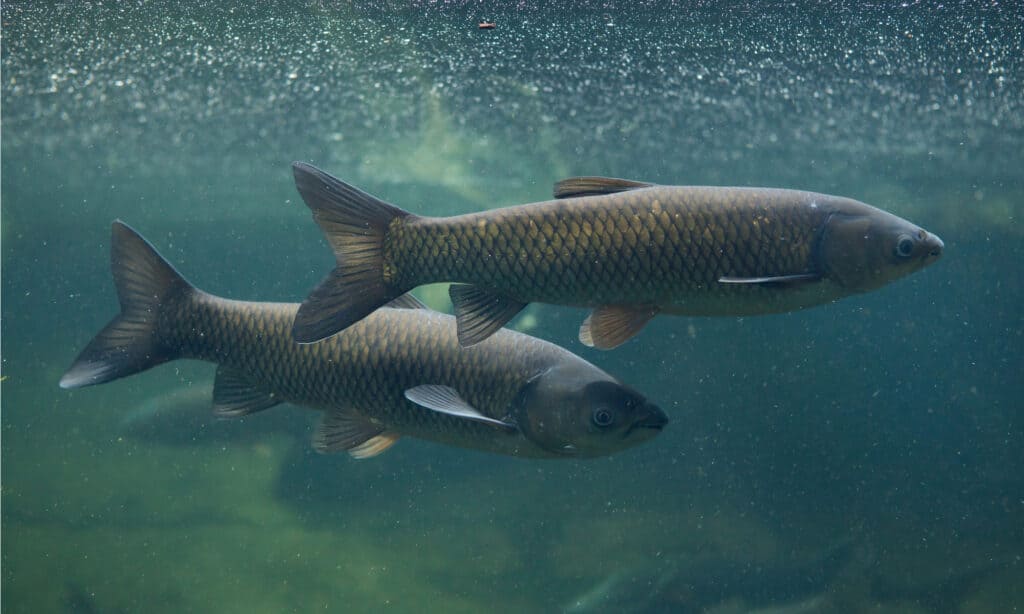
Grass carp require fast-moving currents to spawn successfully.
©Vladimir Wrangel/Shutterstock.com
However, while common carp can spawn in still water, when it’s time to spawn, grass carp make their way to larger rivers with stronger currents. Grass carp eggs must float downstream suspended by turbulent currents. In still water, their eggs sink to the bottom and die.
Egg survival also depends on the water temperature, which should be around 64°F.
Grass Carp vs. Common Carp: Diet
Grass carp and common carp eat substantially different diets. Strict herbivores grass carp primarily feed on living aquatic vegetation, such as submerged pondweeds and hydrilla, often consuming up to their own body weight in plants daily.
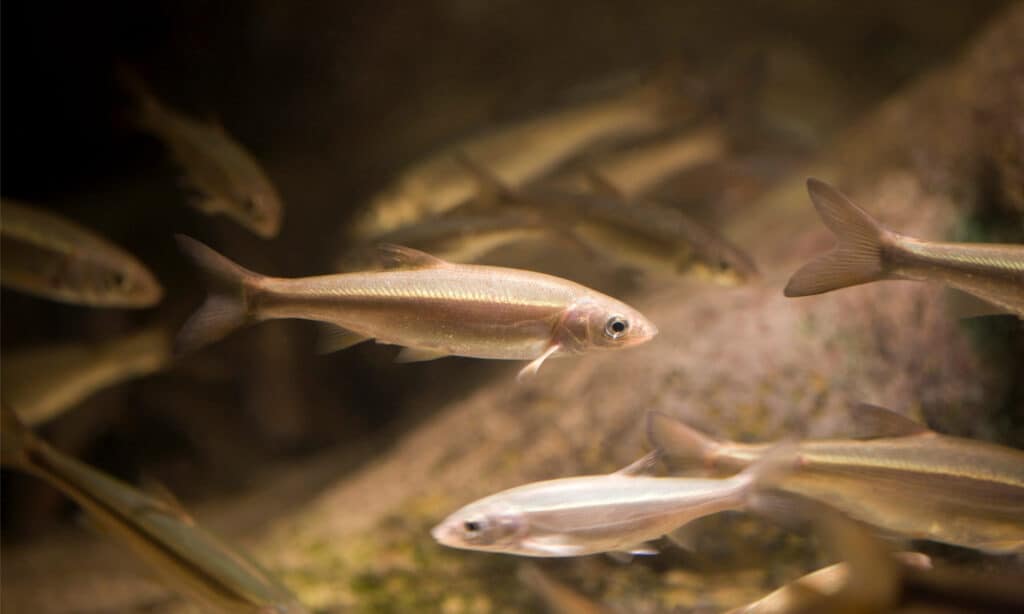
Grass carp are strict herbivores.
©iStock.com/y-studio
Common carp are opportunistic bottom-dwelling omnivores that use their mouths to root through mud and silt to feed on insect larvae, worms, snails, and small crustaceans, alongside various plant seeds and organic debris.
Grass Carp vs. Common Carp: Ecological Impact
Both grass carp and common carp are considered invasive species in North America, and both are highly destructive, though they damage aquatic ecosystems in entirely different ways.
Grass carp, originally imported to control weeds, can completely strip bodies of water of their native vegetation, destroying vital habitat and food sources for native fish and waterfowl.
Common carp devastate environments through their bottom-feeding behavior, in which they root up the mud, uproot native plants, destroy spawning beds, and release trapped nutrients that trigger harmful algal blooms.
As a result, both species drastically alter habitats, muddy the water, and outcompete native wildlife, making them two of the most ecologically damaging fish in North America.