
The common carp arrived in North America centuries ago and maintains an evolving reputation despite its consistent presence. Once celebrated as a fish ideal for cuisine, it is now seen in many regions as an invasive and resilient species. But just how resilient are carp, and how does this resilience help them grow to such impressive sizes?
We’re here to discuss the largest record-breaking carp ever caught in Maine, as it stands as a testament to how this hardy fish has managed to thrive even in this state’s cooler waters. Let’s dive in and learn more about the common carp and its history within the state.
How Carp Arrived in the State of Maine
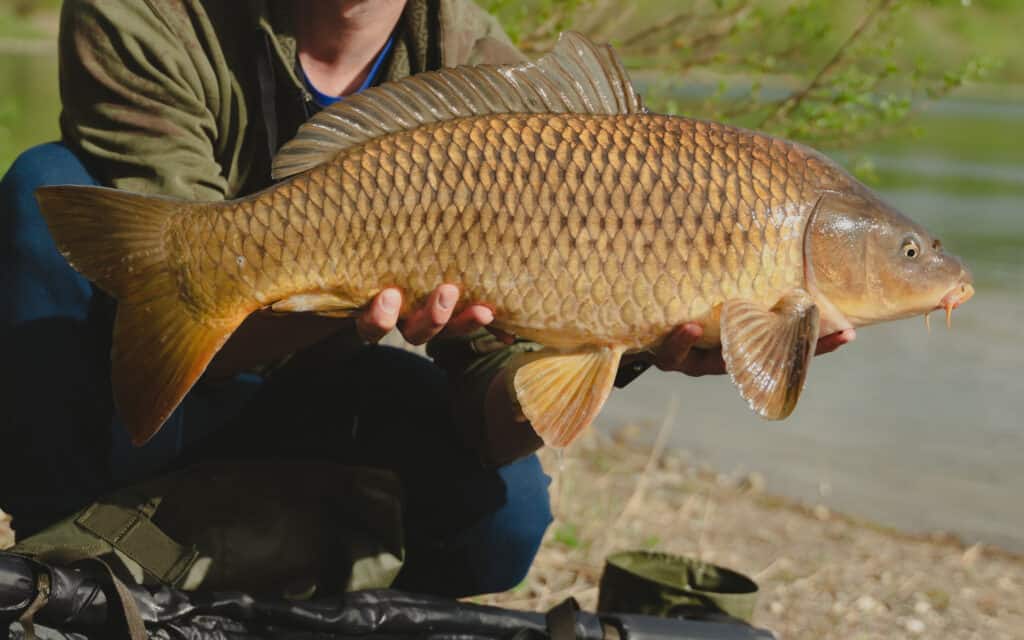
Carp were introduced to the U.S. in the 19th century.
©iStock.com/HenrikNorway
Originating in Europe and Asia, carp have been cultivated for centuries as a food source, first and foremost. It was introduced to the United States in the 1870s through government programs aimed at improving domestic food supplies, according to the National Park Service.
However, carp appeared in Maine nearly a decade after their initial introduction to the United States. The Maine Department of Inland Fisheries and Wildlife (MDIFW) noted that “Carp were first introduced into Maine in 1879. Several dozen stockings into privately owned ponds occurred between 1879 and 1896.”
While those early introductions were fairly small in scale, they ultimately set the stage for scattered carp populations to expand in the southern and central parts of the state. The MDIFW described common carp as a non-native fish that “presents a risk to Maine’s fragile native ecosystem,” as the species regularly competes for space and food with native fish while also stirring up sediment, impacting water quality.
Size, Habitat, and Behavior
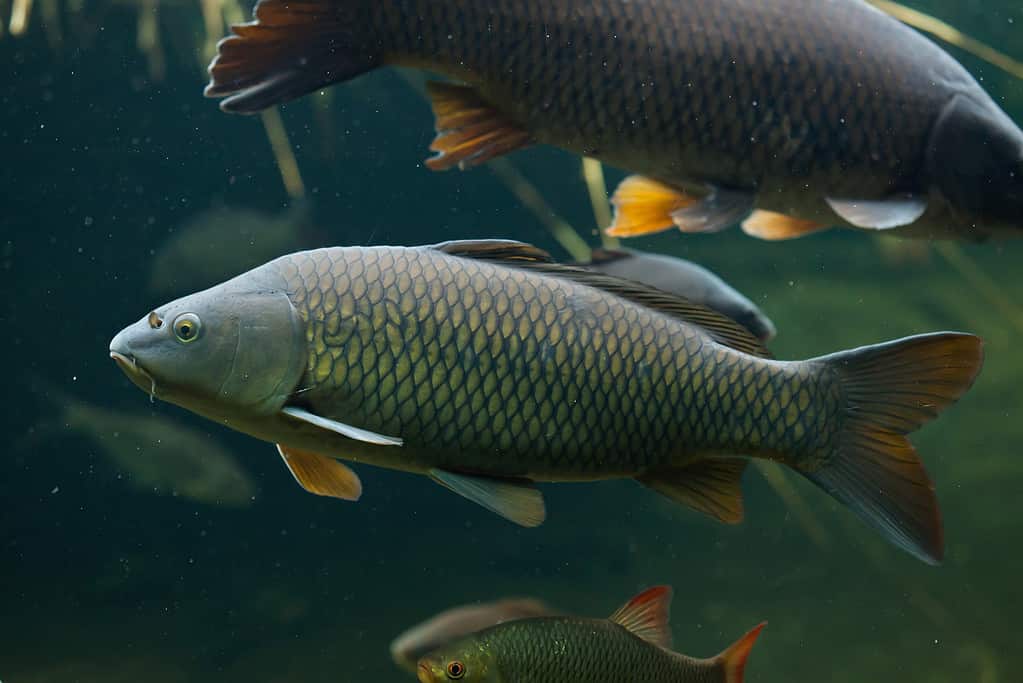
Carp prefer slow-moving waters.
©Vladimir Wrangel/Shutterstock.com
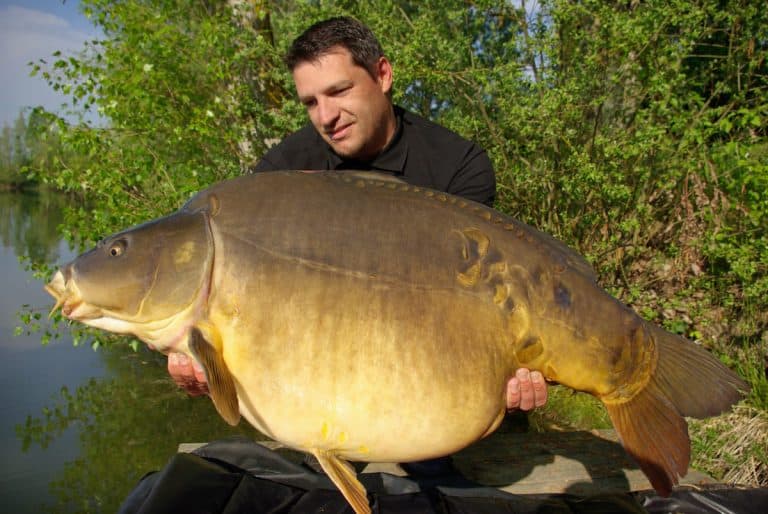
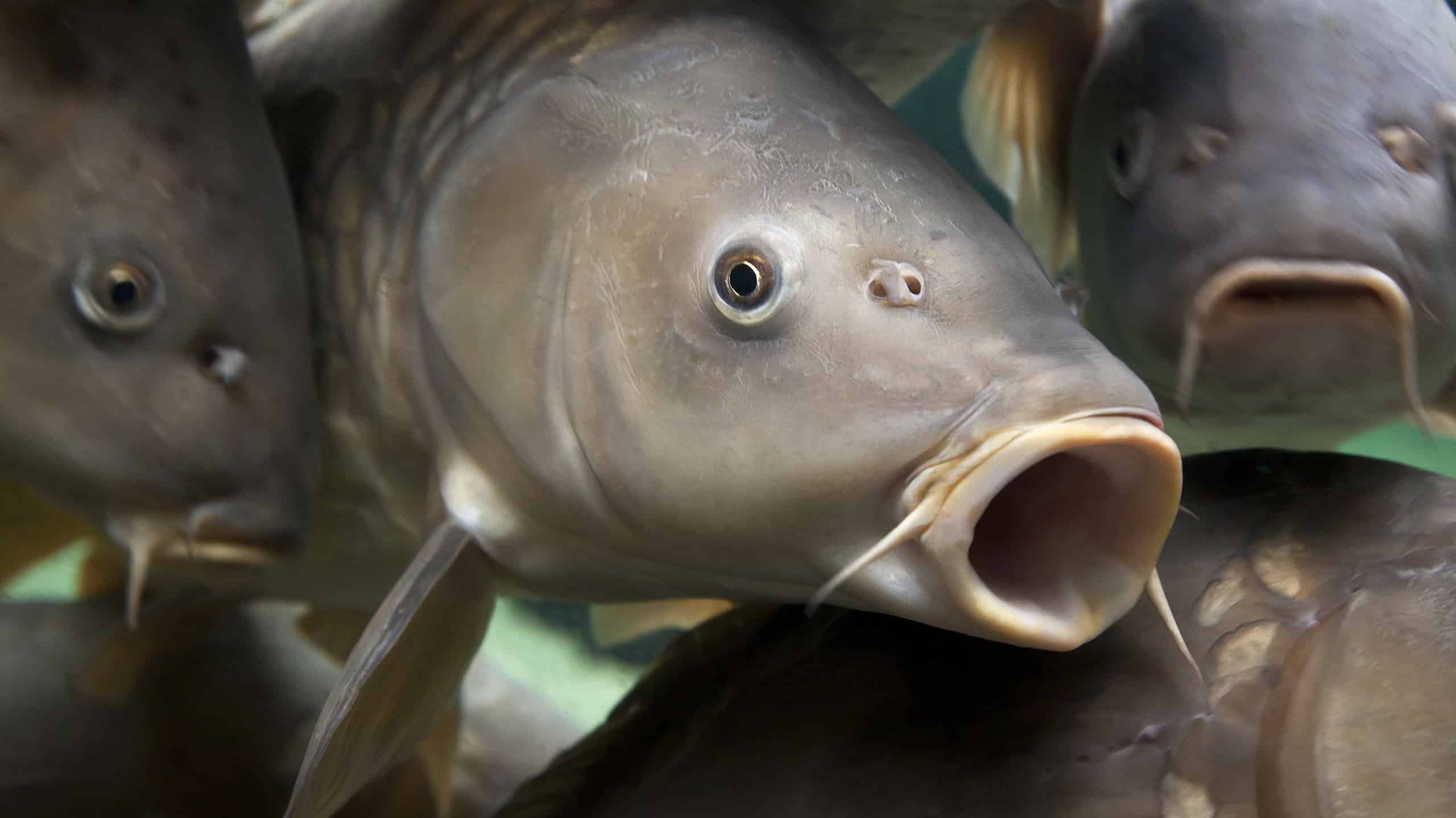
Common carp usually weigh between 1 and 8 pounds and grow to about 2 feet long, but in the right conditions, they can exceed upward of 30 pounds. In colder states like Maine, however, their growth tends to be far slower than in warmer U.S. states. No matter where they reside, all carp prefer slow-moving or still waters with soft, muddy bottoms and abundant vegetation, as these habitats provide both cover and access to food.
As bottom feeders, carp use their unique barbels to locate food in murky water, often stirring up sediment as they feed on plants, insects, crustaceans, and detritus. Unfortunately, this feeding behavior can negatively impact water quality in Maine’s waters.
Catching Carp in Maine: Tips and Tricks
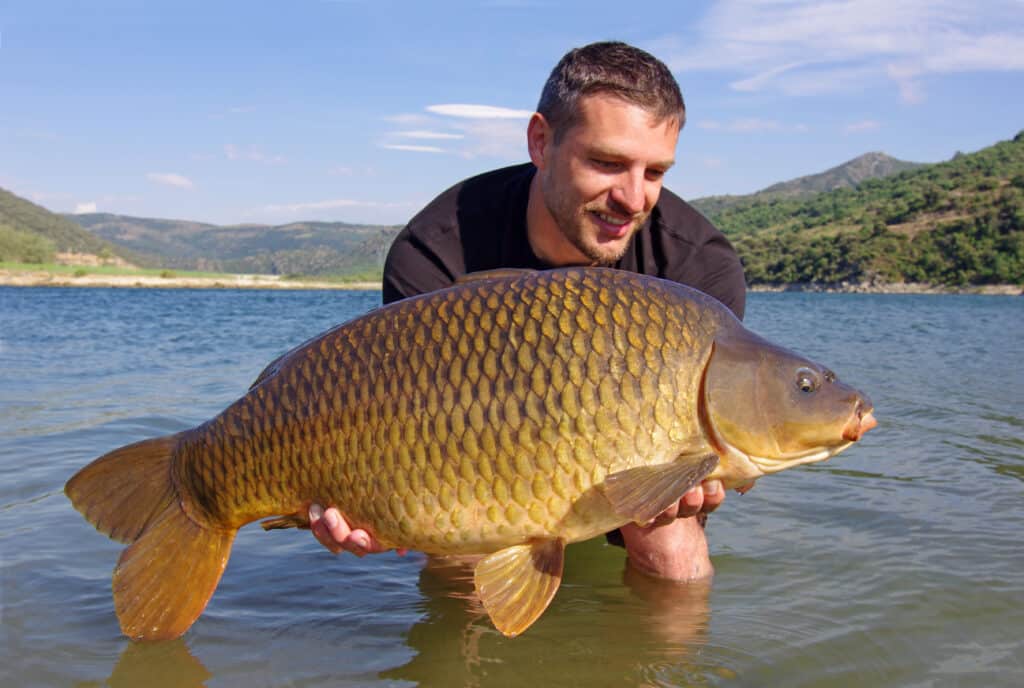
Corn and dough balls can be used as bait.
©Fabien Monteil/Shutterstock.com
Fishing for carp in Maine and beyond is a test of patience and subtlety. The most productive spots for experienced anglers are along shallow bays, backwaters, and river mouths, places where the fish feed in large groups. The best time to fish for carp is during warmer months, anytime from late spring through early fall, when they move closer to shorelines and shallows in schools.
Effective baits can include corn, dough balls, bread, and store-bought options. Because carp are often easily spooked, successful anglers often use light tackle and bottom rigs designed to mimic a slow, natural pace to lure in these fish.
In Maine specifically, carp are regularly found in tidal and lower portions of major river systems, including the Kennebec River drainage and Merrymeeting Bay, according to the MDIFW’s minor sportfish management plan. Heading to these spots is a great first place to look for this shy, invasive fish.
So, where was Maine’s largest carp caught, and just how big was it?
Maine’s Record Carp
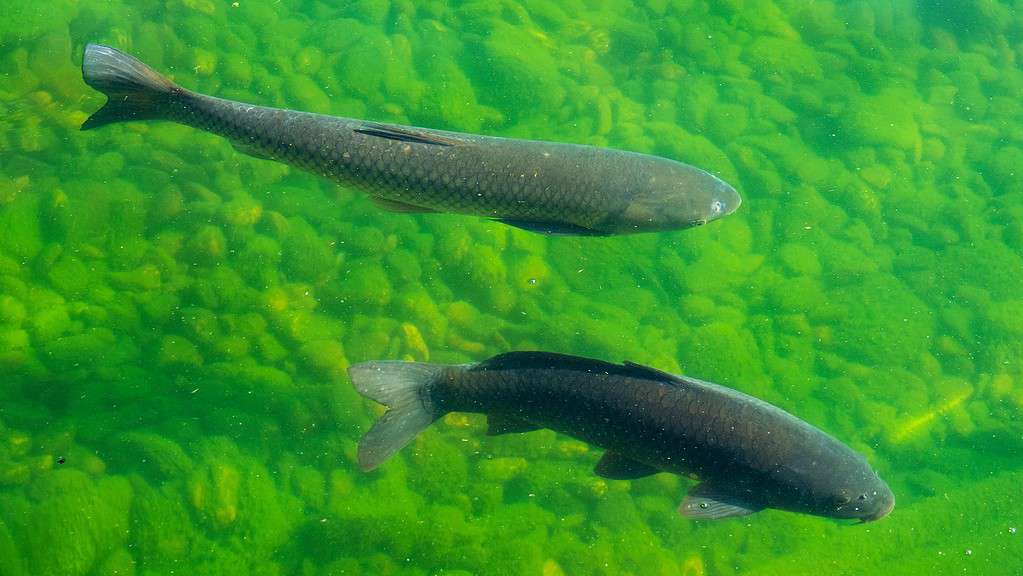
The last record-largest common carp in Maine was caught over a decade ago.
©Milan Rybar/Shutterstock.com
Maine’s record for the largest common carp ever caught belongs to an angler by the name of Samuel Foster, who landed a whopping 16.3-pound fish in the Kennebec River in September of 2014. The catch, verified by the MDIFW and listed by Untamed Mainer, remains the heaviest documented common carp in state history.
While the department doesn’t commonly publish non-native fish records, a fisheries biologist with MDIFW noted that carp populations are “restricted to flowing waters primarily within the tidal water of the Kennebec River drainage.”
The agency also reaffirmed that these populations are closely monitored because of their potential ecological impact, but added that individual carp anglers “provide valuable data points through their catches.”
Why Maine’s Largest Carp Record Matters
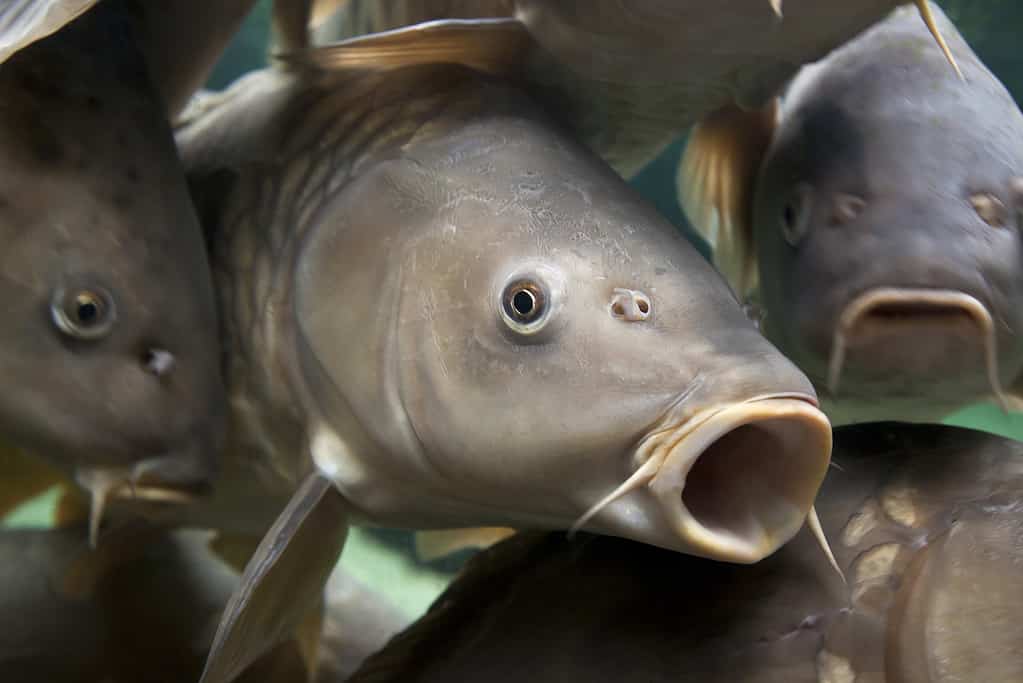
Fishing is a conservation tool.
©Jane Rix/Shutterstock.com
In a state where native trout, landlocked salmon, and smallmouth bass are Maine’s prime catches, a 16-pound carp may seem like an outlier. However, this catch proves that, even in Maine’s northern and colder climate, this species can thrive. The catch also underscores the importance of maintaining a balance between preserving native ecosystems and supporting recreational fishing, a challenge faced by modern wildlife agencies. Maine is all about preserving native ecosystems while recognizing the sport of fishing and the interest generated by non-native species.
The MDIFW continues to track carp catches and educate anglers on responsible practices. “We encourage anglers to enjoy fishing in Maine’s diverse waters but to remember that non-native fish should never be introduced to new habitats,” the department stated in a press release. “Preventing the spread of invasive species protects our waters for future generations.”