
Quick Take
- A newborn Masai giraffe at the Kansas City Zoo was born on December 29, 2025.
- Aspen joins her half-brother Beni and half-sister Willow, along with mom Alika, dad Aidan, plus two other female giraffes, Makali and Chandy.
- Newborn Masai giraffes weigh about 150 pounds and stand six feet tall.
- The Kansas City Zoo is an accredited AZA facility, and Aspen’s birth was part of AZA’s Giraffe Species Survival Plan program.
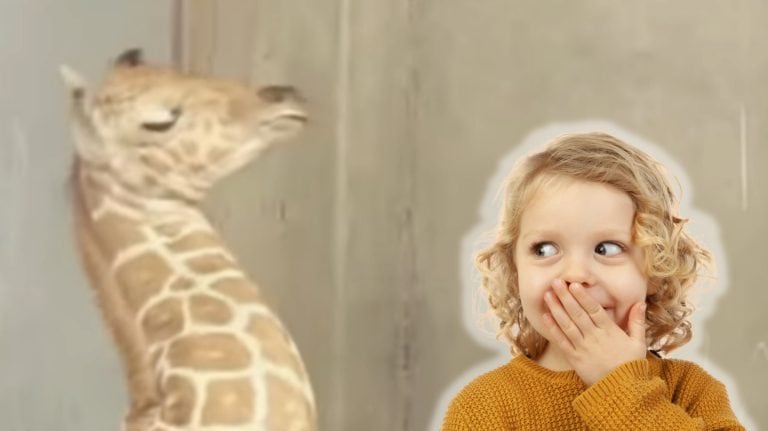
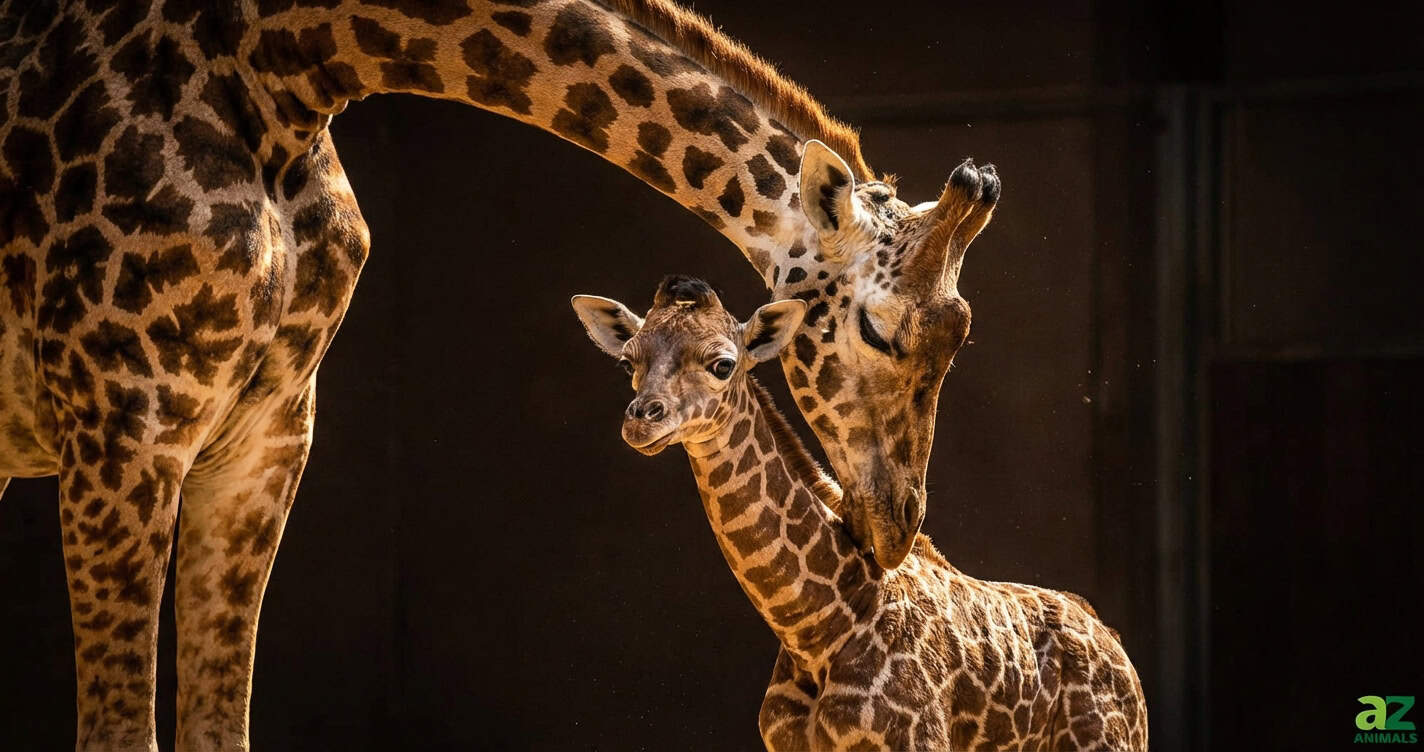
There’s nothing tiny about a baby giraffe. Standing about six feet tall and weighing around 150 pounds at birth, a newborn giraffe calf is bigger than many humans. But their size only adds to their cuteness. After all, there are few things cuter than newborn animals, and giraffes are no exception. The Kansas City Zoo got to experience this first-hand when they welcomed Aspen, a female Masai giraffe born at the zoo on December 29, 2025.
Meet the Zoo’s Newest Arrival
Aspen was born to mom Alika and dad Aidan. Aspen has already had a neonatal exam and is in good health. She’s also quickly adapting to life with the rest of the zoo’s giraffe herd.
“Aspen is already spending quality time with 2-month-old half-brother, Beni, and getting a masterclass in zoomies courtesy of her half-sister, 1 ½-year-old Willow,” a news release from the zoo said.
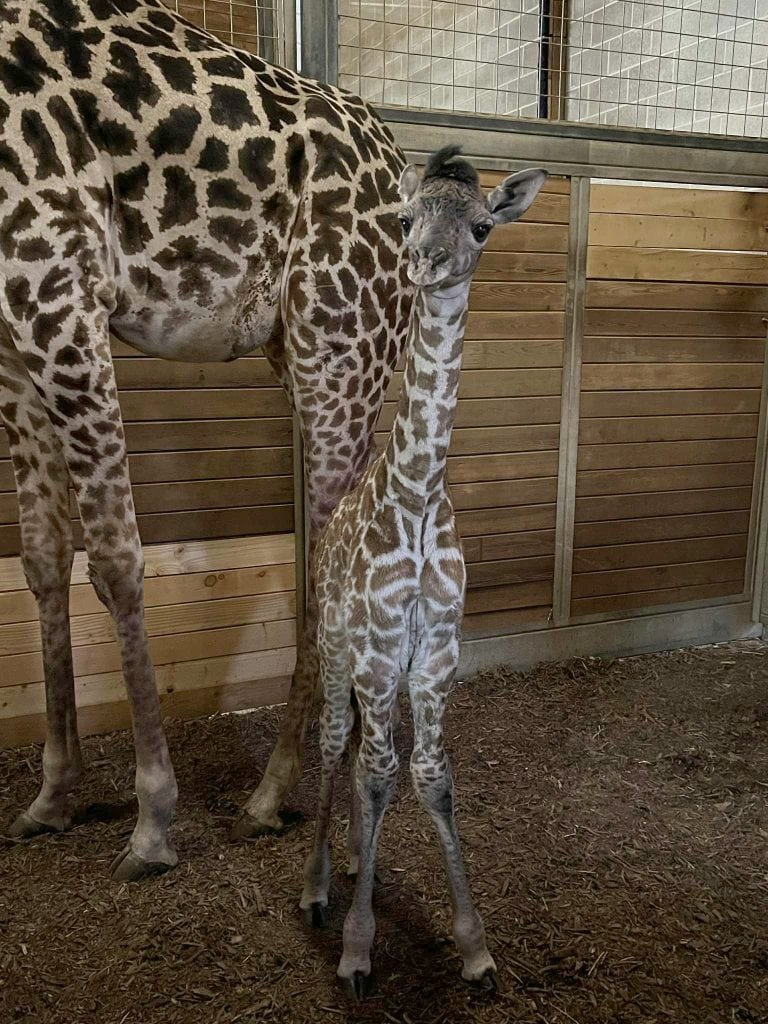
Baby Aspen stands with mom Alika. She is Alika’s first calf.
Aspen is Alika’s first calf and Aidan’s third. The zoo’s giraffe herd also includes two adult females—Makali and Chandy, who are moms to Willow and Beni, respectively. Since construction work is still underway on the zoo’s brand-new giraffe habitat, all the giraffes will remain behind the scenes until the new exhibit opens. The zoo will soon launch a live giraffe camera feed. Once available, the public will be able to watch the giraffes until they make their public debut in the new habitat.
“This exciting new arrival is part of our Wild Beginnings program presented by Saint Luke’s Health System that celebrates ‘zooborns’ at the KCZoo,” the news release noted.
Discover the Kansas City Zoo’s New Giraffe Habitat
Construction on the new giraffe habitat kicked off in February 2025. The goal is to give the zoo’s giraffes a better living environment and offer guests a close-up, “nose-to-nose” experience with the tallest land animals in the world.
The old giraffe exhibit was designed nearly 30 years ago when the zoo’s Africa section debuted. The layout included a nearly quarter-mile-long corridor between the giraffe barn and the savannah habitat where the giraffes could be viewed by the public. That long trek makes it difficult for the entire herd to navigate the corridor quickly.
“This means viewing the giraffes is highly dependent on weather conditions, as we must take the forecast into account and how long it may take to move the herd,” the news release said.
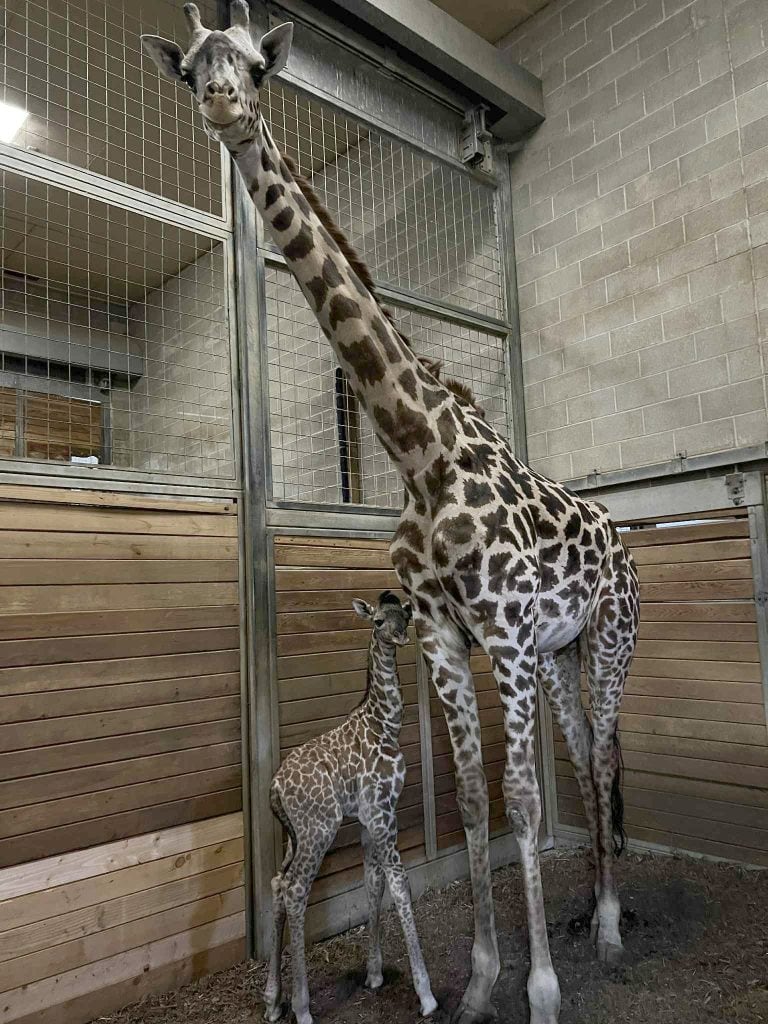
Aspen will make her public debut in the new giraffe habitat.
The new giraffe habitat eliminates this obstacle. A large indoor area is directly attached to the expansive outdoor yards. This gives the giraffes more choices about where they want to spend their time. They are free to roam inside or out. They’ll also have ample outdoor protected areas where they can stay comfortable, no matter the weather.
The new exhibit will also enhance the experience for guests. Guests will be able to view the giraffes both indoors and outdoors, and feeding stations throughout the exhibit will allow them to interact with the giraffes. New restrooms will be ADA-accessible and will include a baby changing table, a private mother’s room, and toddler seats. A new concessions area will be located at the midpoint of the exhibit’s pathway loop.
Why the New Giraffe Calf Is a Conservation Win
Aspen’s arrival is part of the Kansas City Zoo’s participation in the Association of Zoos and Aquariums’ Species Survival Plan (SSP) program for giraffes. The Masai giraffe is listed as an endangered species by the International Union for Conservation of Nature (IUCN). According to Save Giraffes Now, giraffe numbers in Africa have dropped more than 40% in 30 years, and they’ve already gone extinct in seven countries.
According to the zoo, “Each year the SSP makes recommendations for animal transfers and reproduction based on what is best for the overall genetic diversity of the species in AZA-accredited facilities.”
Aspen’s birth continues a strong genetic line, carefully planned through a collaborative effort between the zoo and the SSP.
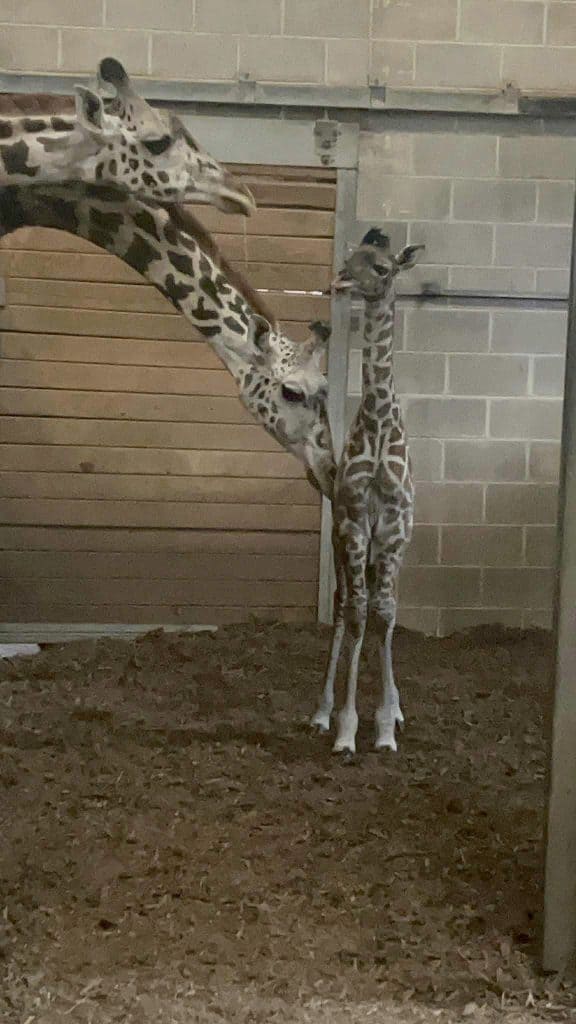
Aspen’s birth was a success for giraffe conservation.
The zoo also promotes giraffe conservation in other ways. The zoo partners with Save Giraffes Now to study the relationship between giraffe herd movement in the Athi-Kapiti region of Kenya and wildlife underpass structures. “The region is heavily populated and human, and wildlife conflict is a constant struggle,” the zoo said. These underpasses provide a safer alternative for giraffes to cross Kenya’s busy roads. A zoo staff member traveled to Kenya to assist with camera installations and data collection.
The zoo also supports the Black Mambas, the world’s first all-female group of anti-poaching activists in the Greater Kruger National Park in South Africa. The group covers nearly 78 square miles, conducting round-the-clock patrols and setting up roadblocks to reduce poaching in the Balule Nature Reserve. The zoo’s support goes towards maintaining base camp vehicles, providing patrol equipment, and contributing to the “Bush Babies” environmental educational program in local schools.
More About Masai Giraffes
Masai giraffes are native to Kenya. They live 10 to 15 years in the wild but can live up to 27 years in captivity. They can grow up to 17 feet tall and weigh up to 2,600 pounds. Their feet are 12 inches across, about the size of a dinner plate.
Both males and females have two hair-covered horns called ossicones. You can see these on the tops of their heads, above their eyes. Their tongues are blue/black and about 18 to 20 inches long. They can hiss, roar, moo, and even whistle. Read even more cool facts about giraffes here.