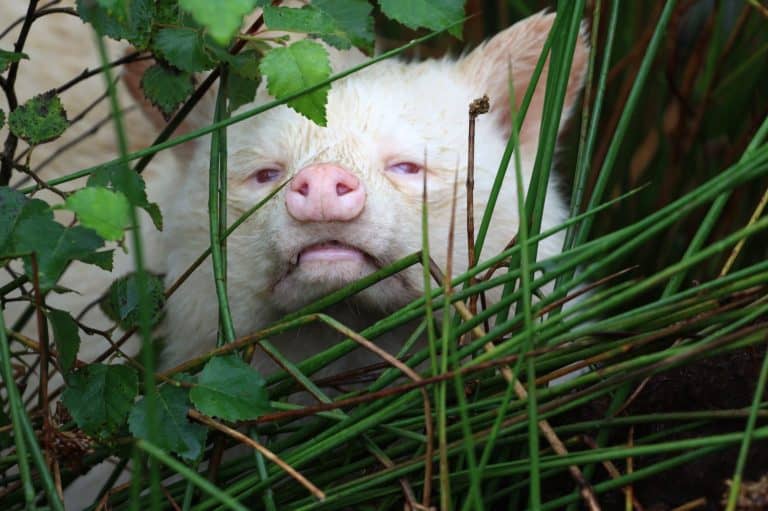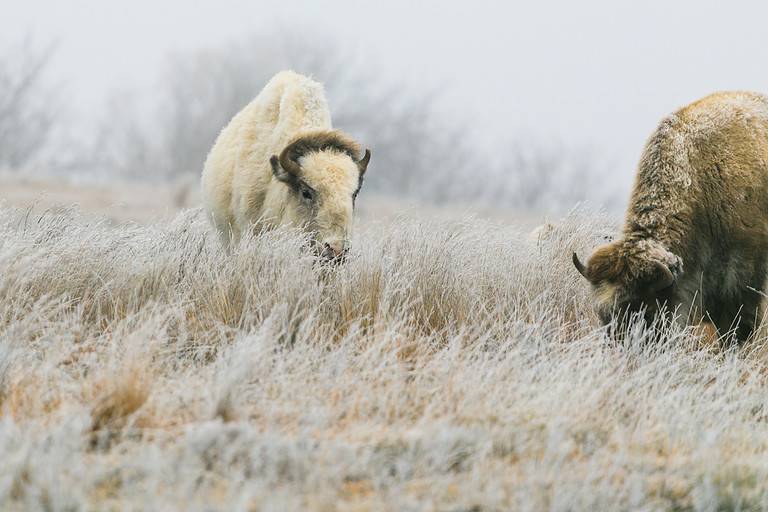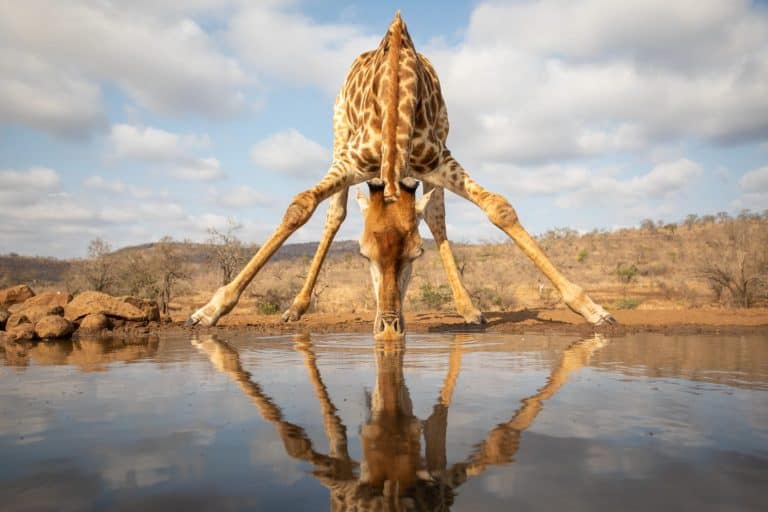

White giraffes are a startling sight on the savannas of Africa. Looking like ghosts, they stand out dramatically from their spotted relatives and their surroundings. But that makes them rare for a reason: lacking camouflage, they become easy prey for predators and poachers. Interestingly, white giraffes are not albinos, they’re just… white. Read on to understand the difference and why it matters.
Giraffes and Their Spots
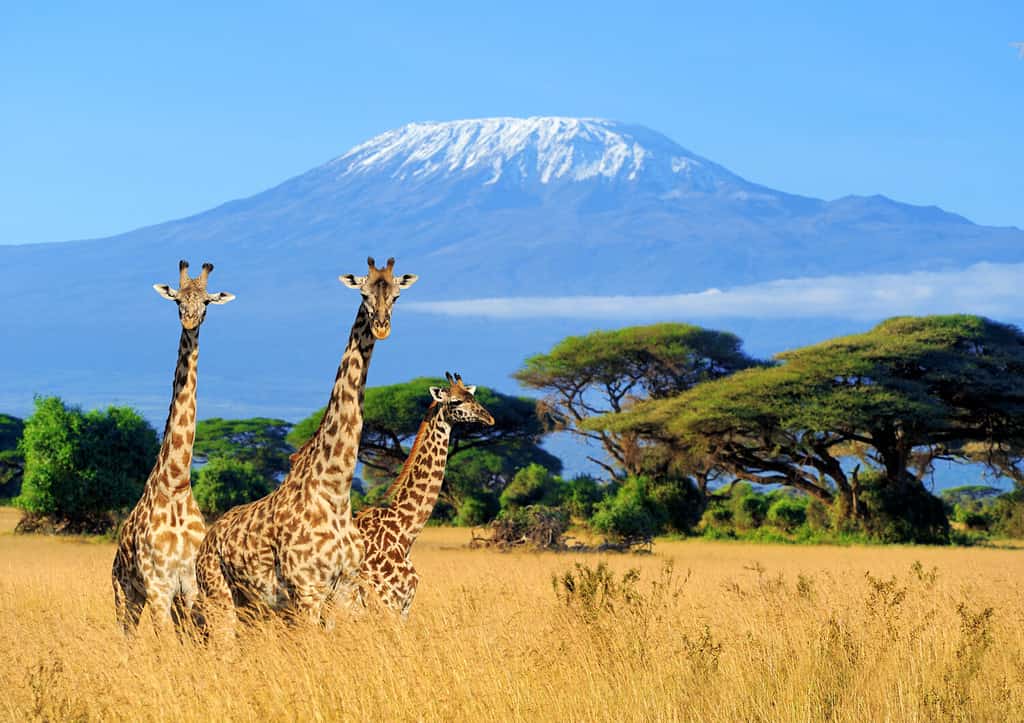
Mt. Kilimanjaro looms over the savanna and its tallest creatures.
©Volodymyr Burdiak/Shutterstock.com
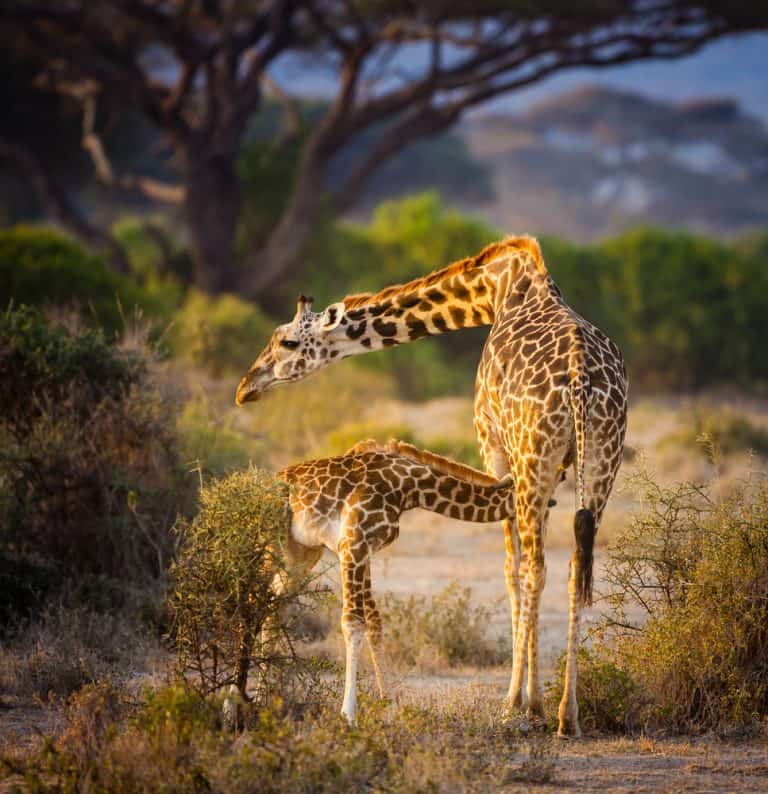
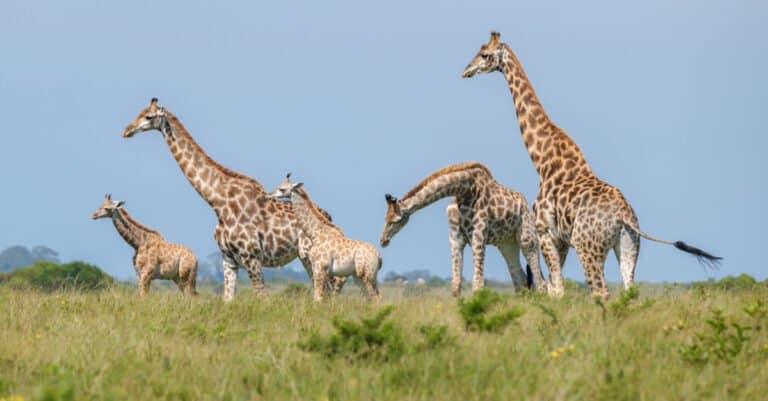
Giraffes might be known first for their height, but their coats are just as striking. Every giraffe has its own pattern, with shapes that can look star-like, rectangular, or webbed with thick white borders. And those spots aren’t just for looks—they actually serve some vital functions:
- Camouflage: The broken-up outlines blend into trees and tall grass, especially under shifting sunlight. Predators don’t see the full color spectrum as human beings, so the spots make giraffes harder to notice. That’s especially important for calves, which face the most danger in their first year of life.
- Thermoregulation: The spots also help with heat. Under each patch, there’s a network of blood vessels and sweat glands that help the animal release heat from its body and survive the blazing hot African sun.
- Identification: The exact pattern of spots is unique to each individual giraffe, sort of like fingerprints for humans. Calfs, though, share some similarities in patterning with their mothers. That makes it easier for them to recognize each other.
What Is Albinism?
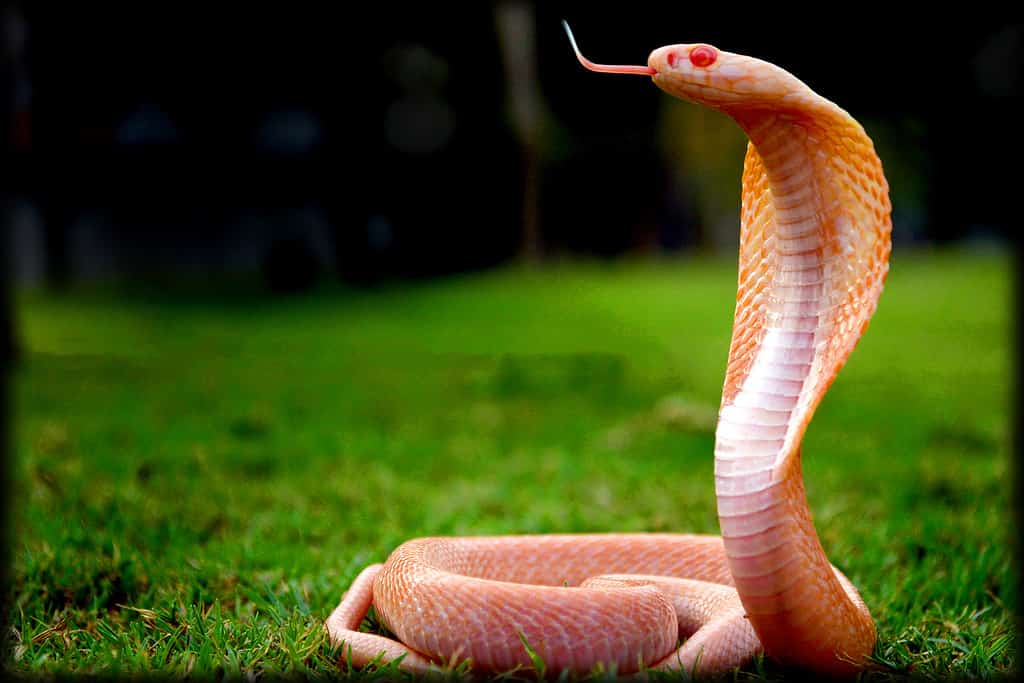
Albinism is a genetic condition causing a lack of body pigment that affects many animal species, including humans.
Albinism is a genetic condition caused by mutations in the genes that control melanin, the pigment that gives color to skin, hair, eyes, and other tissues. Without it, an individual ends up with white or very light coloring and red or light-colored eyes. In humans, albinism occurs in about one out of every 17,000-20,000 births. For animals in general, it affects much less than 1% of the population.
Albinism causes increased sensitivity to sunlight, a higher risk of skin damage, and, in many cases, poor eyesight. In the wild, albinism often makes animals more visible to predators and hunters. Among humans, cultural beliefs add further risks: in some places, albino people and animals have been feared, rejected, or harmed. Traditional healers sometimes regard them as rare, magical beings. This creates a black market demand for their body parts that makes them especially vulnerable to poachers.
Albinism vs. Leucism
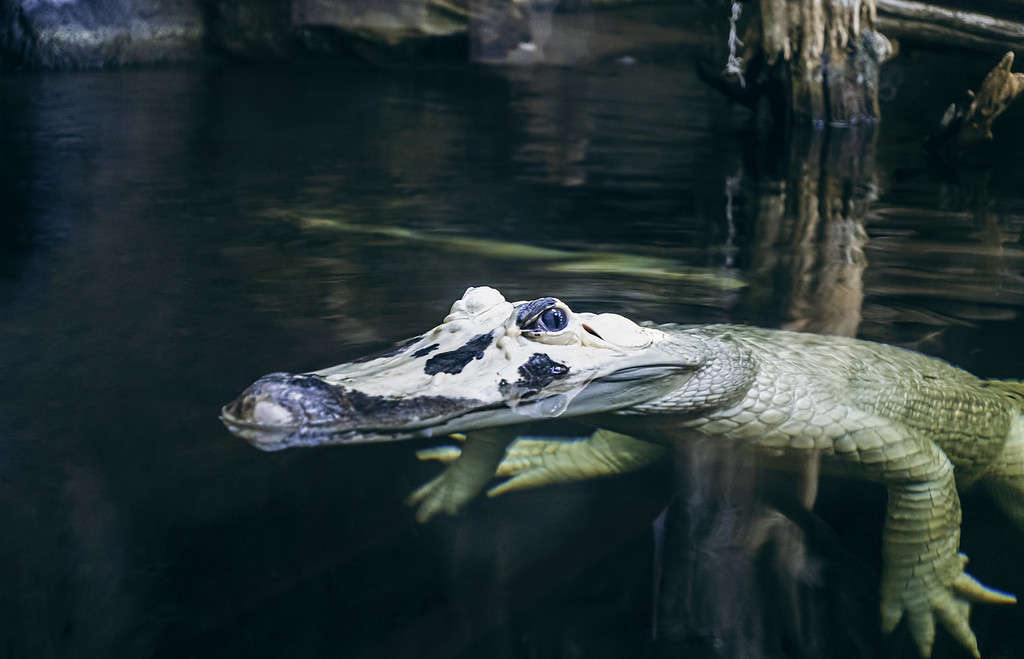
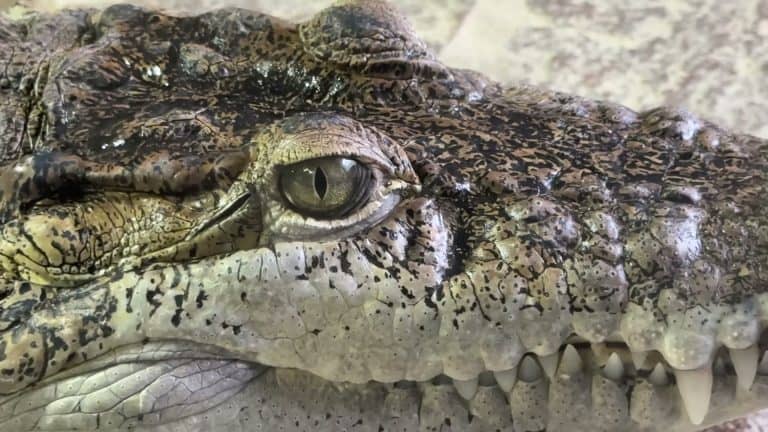
You can tell this white alligator is not an albino, but instead has leucism, because its eyes are normally pigmented.
©sfe-co2/iStock via Getty Images
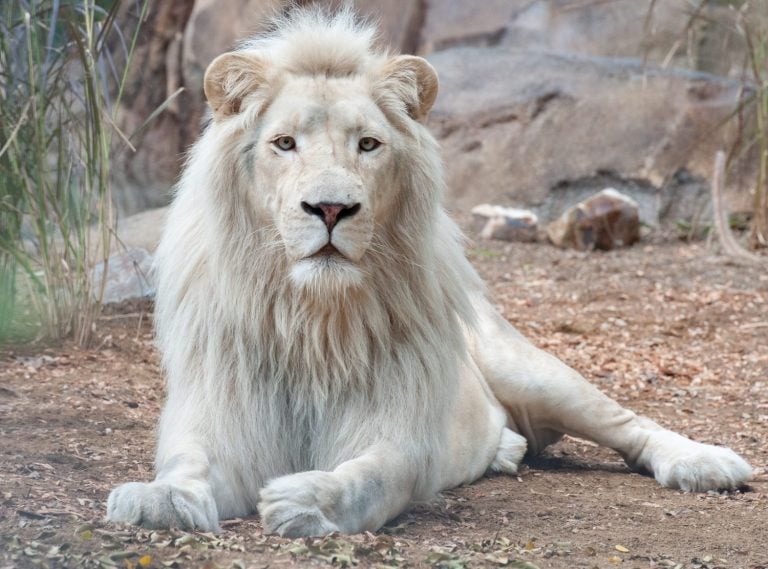
Leucism happens when pigment cells, called melanocytes, don’t develop or spread through the body the way they should. Instead of blocking pigment production like albinism does, leucism leaves fewer pigment cells in place. This creates animals that look very pale, patchy, or nearly all white—but with normal dark eyes and skin tones. Because it depends on cell development rather than a single pigment pathway, leucism is even rarer than albinism.
It’s also less harmful, since the eyes develop normally. Albino animals often struggle with poor vision and light sensitivity, but leucistic animals usually avoid those problems. Still, their pale coats reduce camouflage, making them easier targets for predators and hunters. So while leucism spares their eyesight, it still leaves them vulnerable due to a lack of camouflage, just as if they were albinos.
The White Giraffes of Africa
Several rare cases of white giraffes with leucism—not albinism—have been documented in the wild. In 2015, a leucistic calf nicknamed Omo was spotted in Tarangire National Park, Tanzania, her pale coat and dark eyes marking her as leucistic rather than albino. In 2017, a white mother giraffe and her calf were observed in the Ishaqbini Hirola Conservancy in Kenya, drawing international attention for their unusual coloring. That same area later became home to a white adult male giraffe. They interacted normally with other giraffes and didn’t seem to suffer any health repercussions from their condition.
There were also two cases of spotless, solid brown giraffes: one born in 2023 at Brights Zoo in Limestone, Tennessee, and another discovered later the same year in Namibia. Some people have speculated this might be a form of leucism, but experts have only confirmed that it’s the result of a rare genetic mutation. As of September 2025, there hasn’t been a formal study or genetic test published that confirms it as leucism specifically.
A Conservation Tragedy

Giraffes with leucism can be snowy white or have lighter spots than typical for giraffes.
©paula french/Shutterstock.com
In 2020, poachers killed the rare white mother giraffe and her calf in Kenya, a tragedy that caused worldwide grief and consternation. To protect the only surviving male, the Ishaqbini Hirola Community Conservancy quickly fitted him with a GPS tracker attached to one of his ossicones, or horns. The device sends hourly location updates to rangers, allowing them to follow his movements in real time and respond swiftly to any threat. As of September 2025, the white male giraffe remains alive and is being attentively monitored by rangers.
Saving the Giraffe
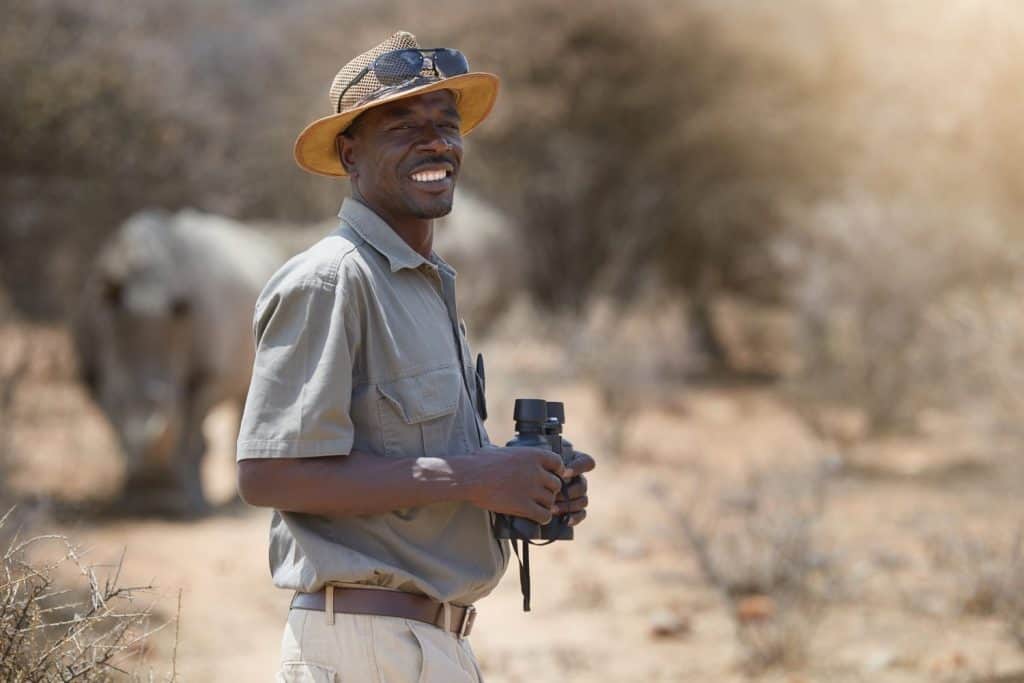
Park rangers play an essential role in protecting Africa’s wildlife, including giraffes.
©PeopleImages/Shutterstock.com
The shocking poaching of the white mother and calf in Kenya underscored the risks giraffes face daily. This outrage has fueled greater awareness of giraffe conservation, reminding the public that every one of these animals is vulnerable. By harnessing the fascination and affection people feel for these gentle giants, conservation groups are able to draw attention to the urgent need for protection across the entire species. In this way, white giraffes have become ambassadors for a much larger fight to save Africa’s tallest animal.
Across Africa, giraffes are facing what scientists call a “silent extinction.” Their numbers have dropped by about 40% over the last 30 years, largely because of poaching and shrinking habitats. That sharp decline has led the International Union for Conservation of Nature (IUCN) to list giraffes as a vulnerable species.
Conservation groups are working to reverse these losses by protecting habitat, limiting poaching, and partnering with local communities to show the ecological importance of giraffes. These programs often include population tracking, breeding studies, and policy work with governments to strengthen long-term protections.
Ways You Can Help
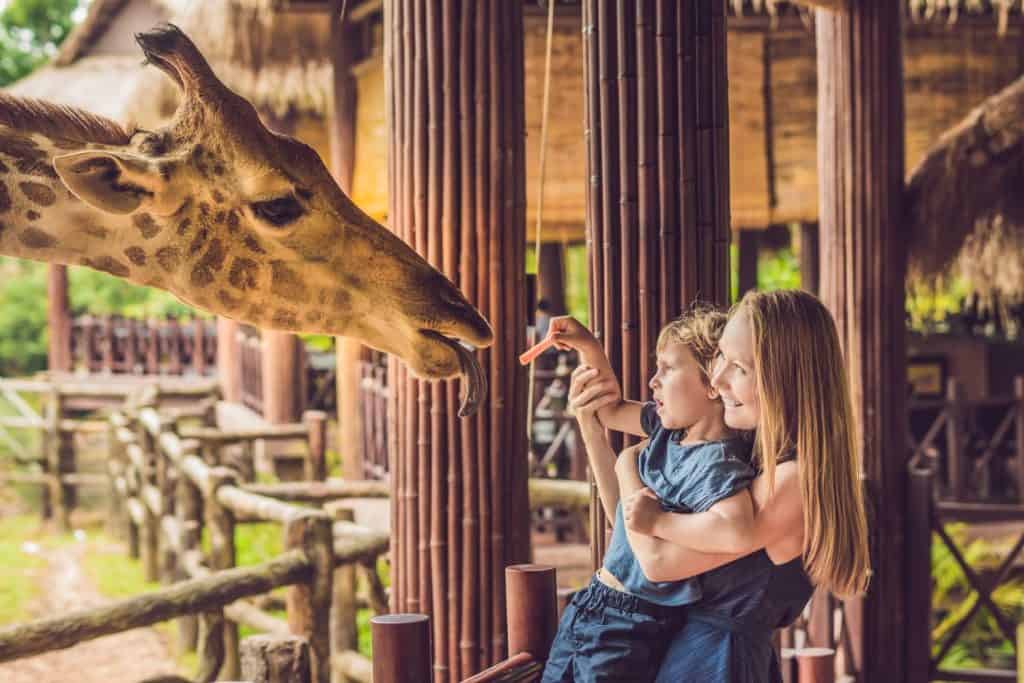
Well-managed zoos deserve support as places for research, breeding to preserve genetic diversity, and raising public interest and support for conservation.
©Elizaveta Galitckaia/Shutterstock.com
Anyone can play a role in giraffe conservation, even from far away. Supporting reputable organizations that protect giraffes—through donations, adoptions, or volunteer programs—helps fund anti-poaching patrols, habitat restoration, and research. Well-run zoos also play an important part, since many contribute to breeding programs, education, and funding for conservation projects in Africa. Travelers to Africa can choose ecotourism operators that give back to local communities and protect wildlife. Ecotourism incentivizes local people to protect their wildlife, as living species draw tourist dollars and create jobs. Closer to home, raising awareness matters: sharing information, teaching children, and advocating for conservation policies keep giraffes on the public’s radar. Every action, big or small, adds up to help ensure these animals continue to stride across Africa’s landscapes for generations to come.
Seeing Spots in a New Light
Looking at a giraffe’s coat—whether richly patterned or startlingly pale—reminds us of the role appearance plays in survival. For spotted giraffes, camouflage is a built-in defense and a family inheritance. For white giraffes, those defenses are stripped away, leaving them more noticeable to predators and poachers, but also to animal supporters. Thus, their unusual visibility is both a weakness in the wild and a strength for raising awareness among people whose choices determine their fate.