
Quick Take
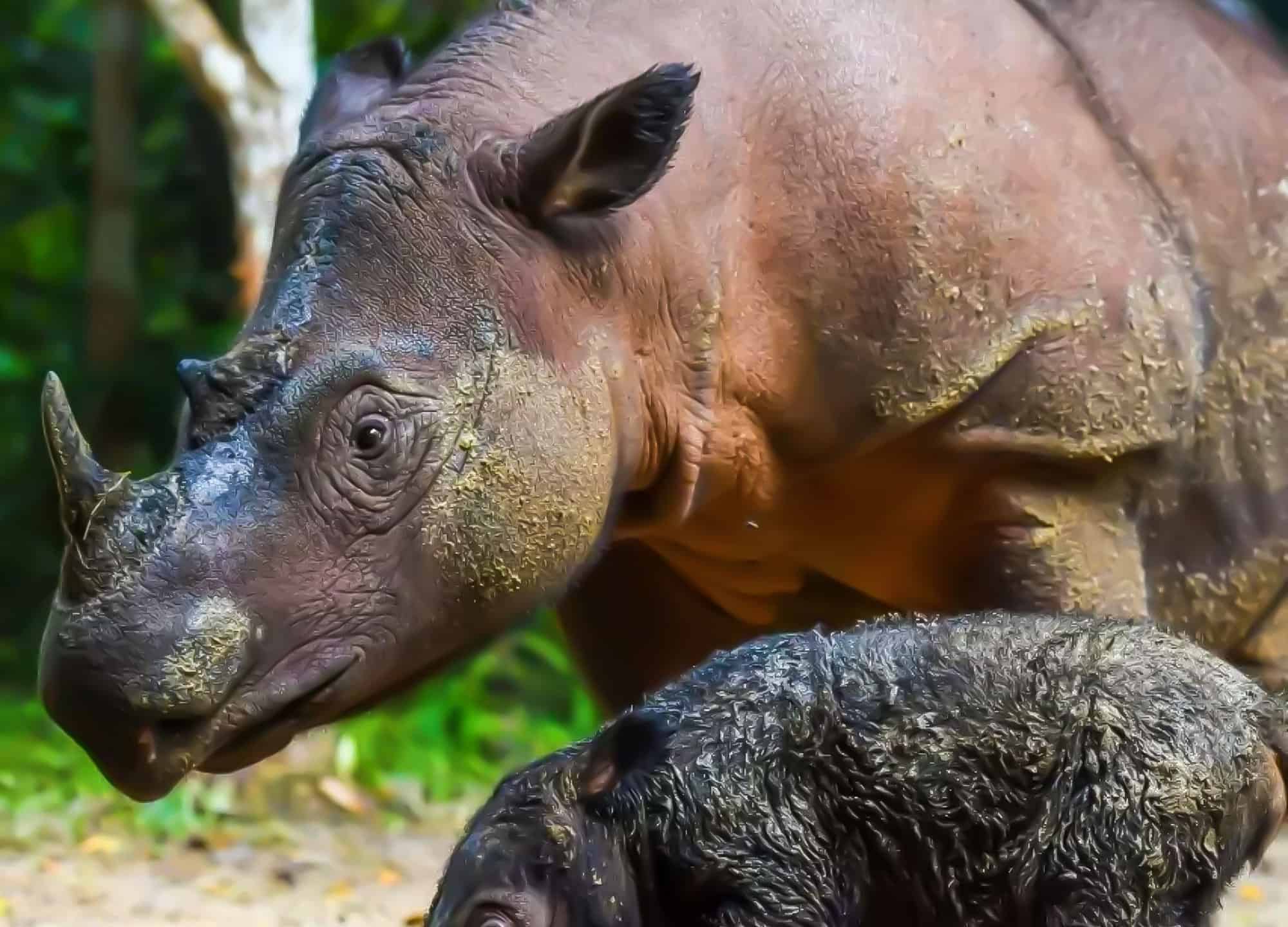
- The Sumatran rhino is the smallest and hairiest of all rhino species, adapted for life in dense rainforest.
- Traits shaped by evolution offer little defense against habitat loss, fragmentation, and poaching.
- Fewer than 80 Sumatran rhinos remain in the wild, making conservation efforts critical.
The Sumatran rhino looks like it wandered out of another era and somehow got lost in the present day. Smaller than its African cousins, covered in coarse reddish hair, and rarely seen by humans, it feels more like a forest spirit than one of the world’s most endangered mammals. Yet this shy animal is very real, and it is running out of time. The Sumatran rhino is a powerful example of how evolution can produce extraordinary adaptations for survival in nature, but also how those same traits can offer no protection at all against modern, human-driven threats.
Meet the Sumatran Rhino
The Sumatran rhinoceros (Dicerorhinus sumatrensis) is the most distinctive of the five living rhino species. For starters, it’s the smallest. Adults typically stand about 4 to 5 feet tall at the shoulder and measure roughly 8 to 10 feet long from nose to rump. Weight estimates range from around 1,100 to 1,750 pounds, depending on age and sex. Compared to the white rhino of Africa, which can weigh well over 5,000 pounds, the Sumatran rhino seems almost miniature.
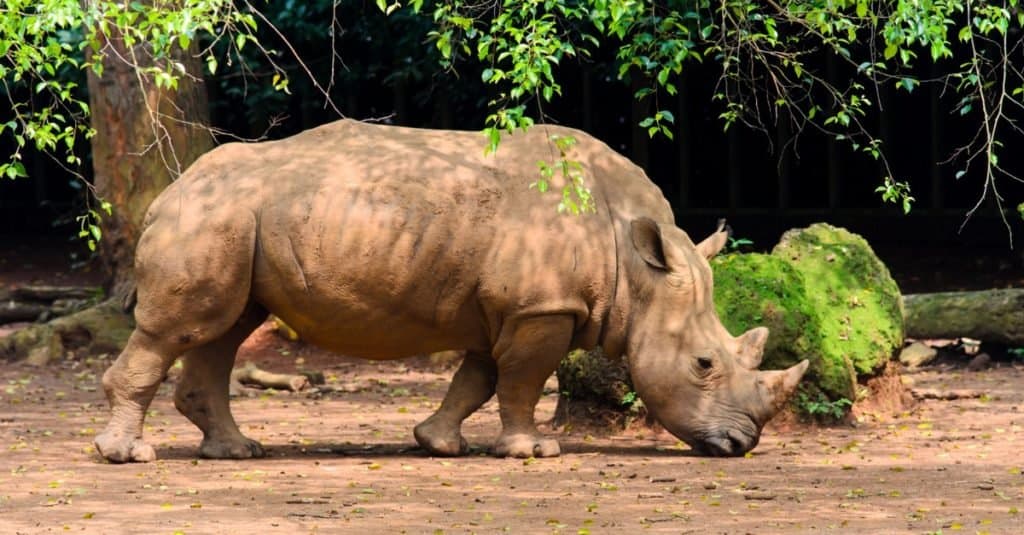
The Sumatran rhino is the smallest living rhino species, standing just 4 to 5 feet tall at the shoulder.
©Light And Dark Studio/Shutterstock.com
Not only is it comparatively small, but it’s also the hairiest rhino species. While most rhinos have nearly hairless skin, the Sumatran rhino is covered in coarse, reddish-brown hair, especially when young. Calves are noticeably fuzzy, and adults retain a thinner coat along the body, legs, and ears. This trait links the species to extinct woolly rhinos, hinting at its ancient lineage.
Another defining feature is its two horns. Like African rhinos, the Sumatran rhino has two horns made of keratin, the same material as human fingernails. The front horn is larger and typically measures less than 10 inches, while the rear horn is often just a small bump. Compared with other rhino species, the Sumatran rhino’s horns are much smaller and less prominent—a reflection of the animal’s adaptation to forest life rather than open landscapes.
Built for Dense Forests
Unlike other rhino species that favor open grasslands or savannas, the Sumatran rhino evolved for life in dense tropical rainforests and mountainous terrain. This forest lifestyle explains many of its unusual physical traits. In this environment, their smaller size is actually an advantage. Moving through thick undergrowth, steep hills, and muddy forest floors requires more than brute strength. Their smaller bodies allow Sumatran rhinos to navigate narrow trails and push through tangled vegetation without expending excessive energy.
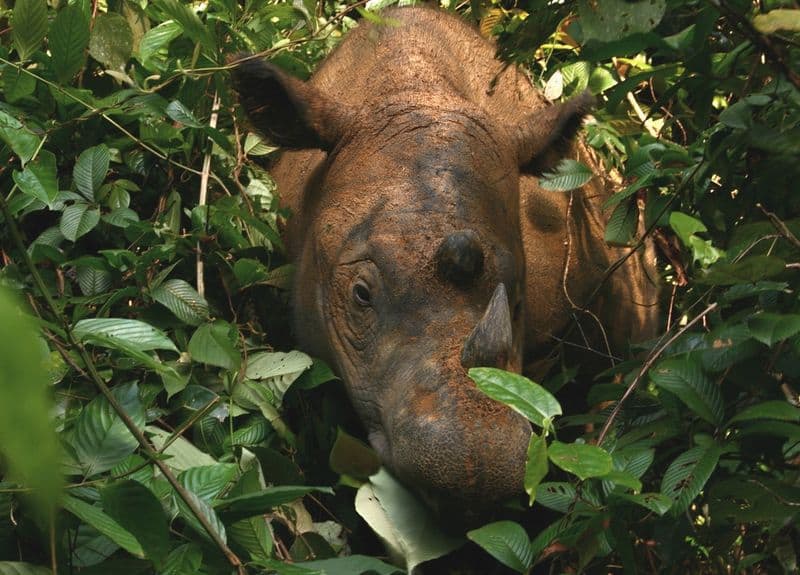
Built for dense rainforest, the Sumatran rhino’s smaller body helps it move through thick jungle vegetation.
©Bruce1ee – Public Domain
Their skin also differs from that of their larger relatives. African rhinos are known for their thick, armor-like skin, which helps protect them in open landscapes where they’re likely to face predators or territorial conflicts. The Sumatran rhino’s skin is thinner and more flexible, which is better suited for squeezing through dense foliage and uneven terrain.
Even its hair plays a role. The coarse coat helps repel moisture and may offer some protection against insects in humid forest environments. Combined with frequent wallowing in mud—which helps cool the body and deter parasites—this makes the Sumatran rhino well-adapted to a warm, wet climate.
Sociability
Sumatran rhinos are solitary by nature. Adults typically live alone, except for mothers with calves or during brief encounters for mating. This trait is shared with most other rhino species, but in the Sumatran rhino, it’s especially well-suited to life in dense rainforest, where food is widely scattered, and visibility is limited. Large groups would be difficult to maintain, and solitary living helps reduce competition for food while allowing individuals to move more easily through thick vegetation.
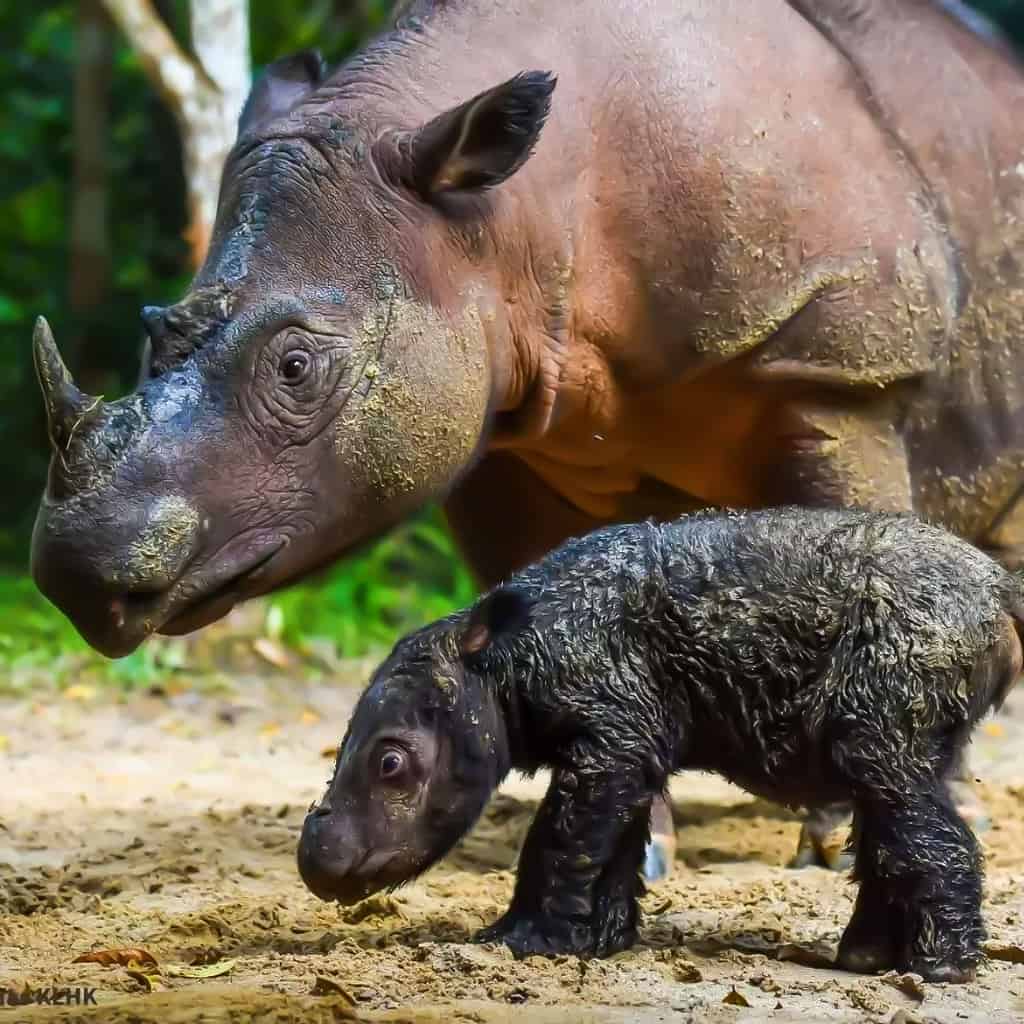
A mother Sumatran rhino stays close to her calf, a rare bond in a species that is otherwise solitary.
©iStock.com/Merupik Rupik
Communication
Their sense of smell and hearing are well developed, while their eyesight is relatively poor, which suits life in a forest where smells and sounds matter far more than long-distance vision. They communicate through scent marking and vocalizations rather than visual displays. They’re surprisingly vocal animals, producing whistles, squeaks, and even—as researchers have described them—“whale-like songs” that can carry through thick vegetation. These sounds help individuals locate one another in an environment where direct lines of sight are rare.
Diet
The Sumatran rhino is a browser, feeding on leaves, twigs, bark, fruit, and shoots from hundreds of different plant types. This diverse diet allows it to survive in forests where no single food source is abundant year-round. To meet its nutritional needs, a Sumatran rhino may eat well over 100 pounds of vegetation in a single day—the equivalent of about 65 heads of iceberg lettuce.
Ancient Roots to Modern Endangerment
The Sumatran rhino is likely the most primitive living rhino species. Genetic studies show that it diverged earlier from the rhino family tree than the African or Indian rhinos. Its combination of hair, smaller size, and forest adaptations reflects a lineage dating back millions of years. For most of its history, these traits served the species well, helping it to survive ice ages, climate shifts, and natural predators. That same evolutionary success story is now working against it.
Its reliance on dense, undisturbed forest makes it extremely sensitive to habitat loss. Logging, agriculture, mining, and road construction have fragmented the rainforests of Sumatra and Borneo into smaller and smaller patches.
Because Sumatran rhinos are solitary and naturally occur at low population densities, habitat fragmentation is especially dangerous. When individuals become isolated from potential mates, it can lead to inbreeding and failed reproduction. Even if a forest patch is large enough to sustain several Sumatran rhinos, it may not support a viable breeding population.
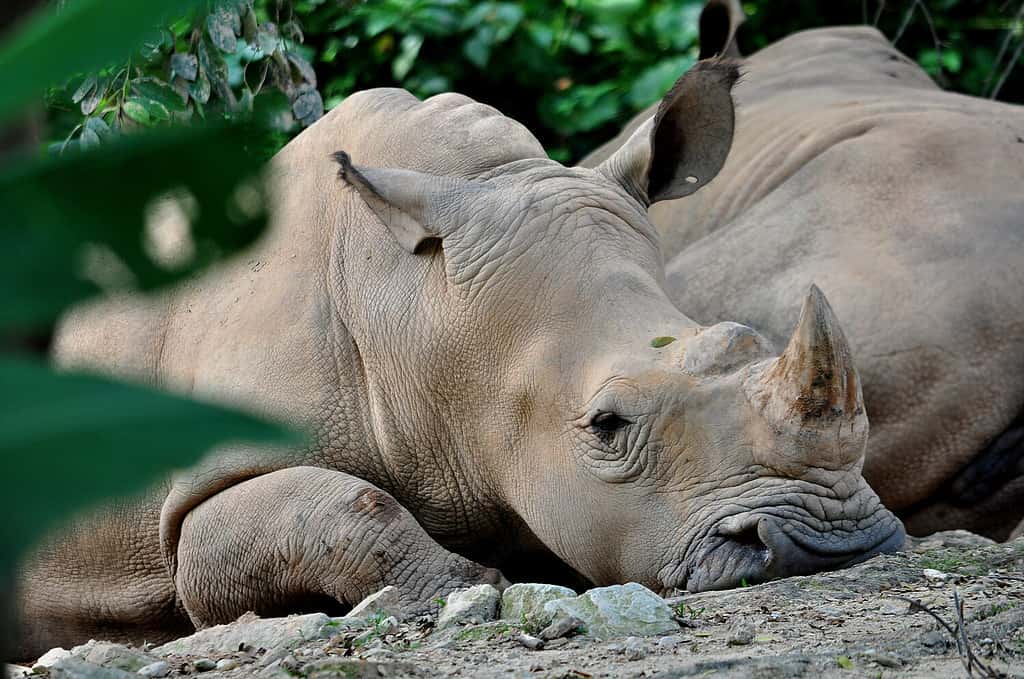
Habitat loss and fragmentation make it difficult for solitary Sumatran rhinos to find mates and reproduce.
©KF photo/Shutterstock.com
Their shy nature and low reproductive rate add to the problem. Females typically give birth to a single calf after a gestation period of about 15 to 16 months, and calves may stay with their mothers for several years. This slow reproductive rate means populations recover very slowly from losses.
As if all that weren’t devastating enough, there’s also the problem of poaching. Although Sumatran rhino horns are smaller than those of African rhinos, they are still targeted for use in traditional medicine, despite a lack of scientific evidence supporting their medicinal value. A single poaching event can remove a breeding adult from an already fragile population.
It’s tempting to think that species will simply adapt to new conditions over time, but this is rarely the case. The rapid pace of deforestation and poaching is occurring over decades—far too quickly for genetic adaptation to keep up. The Sumatran rhino cannot suddenly evolve to thrive in farmland, tolerate human disturbance, or reproduce more quickly. Its biology is finely tuned to a world that, in many parts of its former range, no longer exists.
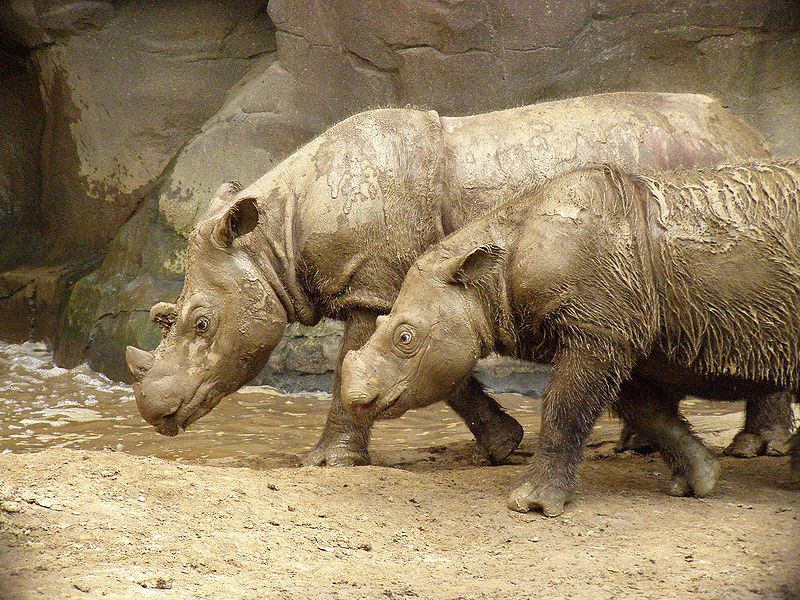
With fewer than 80 individuals left, the Sumatran rhino faces extinction without continued conservation efforts.
©Charles W. Hardin / Creative Commons – Original
A Call to Action
The numbers are bleak. Today, estimates suggest that fewer than 80 Sumatran rhinos remain in the wild, scattered across isolated pockets of Indonesia. Some populations may consist of only a handful of individuals, making long-term survival uncertain without—and perhaps even with—human intervention.
Still, we must try. Saving the Sumatran rhino now depends on humans stepping in to do what evolution won’t have time to do. Conservation programs focus on protecting remaining habitat, preventing poaching, and, in some cases, bringing individuals into managed breeding facilities where reproduction can be carefully monitored.
The harsh reality is that the Sumatran rhino’s extraordinary adaptations can’t shield it from chainsaws, snares, and bulldozers. Humans are responsible for endangering this animal, and now it’s up to us to save it. The future of the Sumatran rhino depends not on natural selection, but on whether humans choose to value its continued existence.