
Quick Take
- The Argyroneta aquatica maintains a near 100% underwater existence despite relying solely on atmospheric air.
- Specific low pH environments and high dissolved oxygen levels dictate where these nests must exist.
- Using silk anchors to build a breathing bell defies standard arachnid hunting and nesting paradigms.
- A specialized surface-dive sequence is the only way to facilitate molting and raising young.
The diving bell spider (Argyroneta aquatica) is the only spider species known to live almost entirely underwater. This is quite an achievement because the spider still needs air to breathe. This extraordinary arachnid gets around this problem by taking its own air with it. Here we will explain the step-by-step process of how the diving bell spider creates and uses the “air bell.”
Spotting a Diving Bell Spider
Diving bell or water spiders are found from northern and central Europe through Siberia and Central Asia. However, there are also isolated populations in Japan. They spend nearly their whole lives underwater in eutrophic lakes and ponds. They can also be found in marshes, swamps, and slow-moving streams. These spiders prefer water with a relatively low pH and a high dissolved oxygen concentration. Also, there must be water plants that they can use to anchor their ‘bells’ and to provide attachment sites.
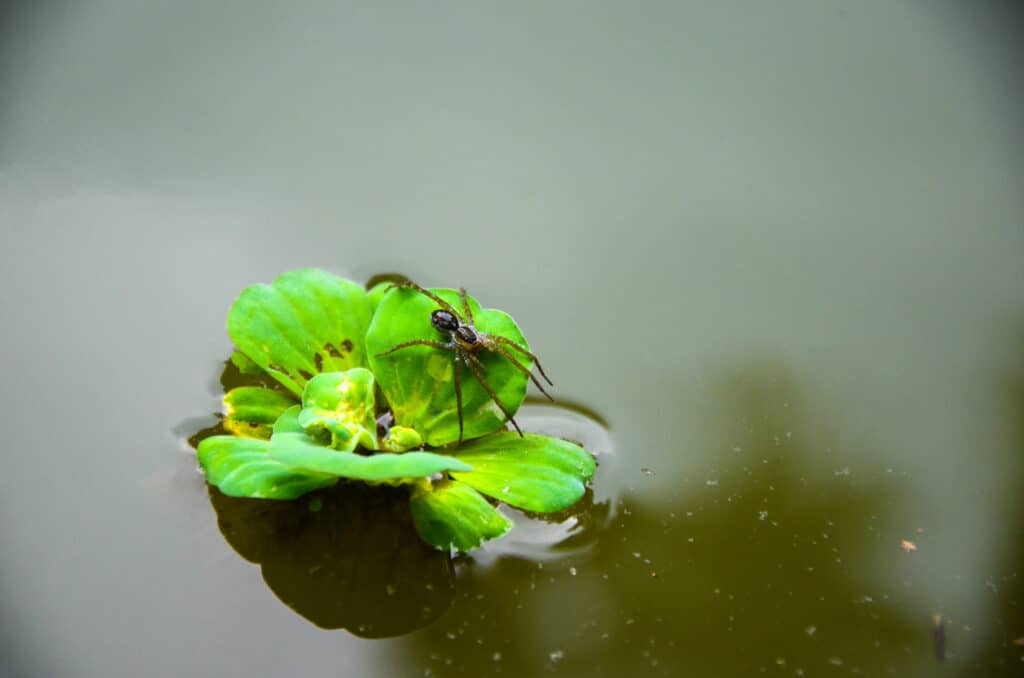
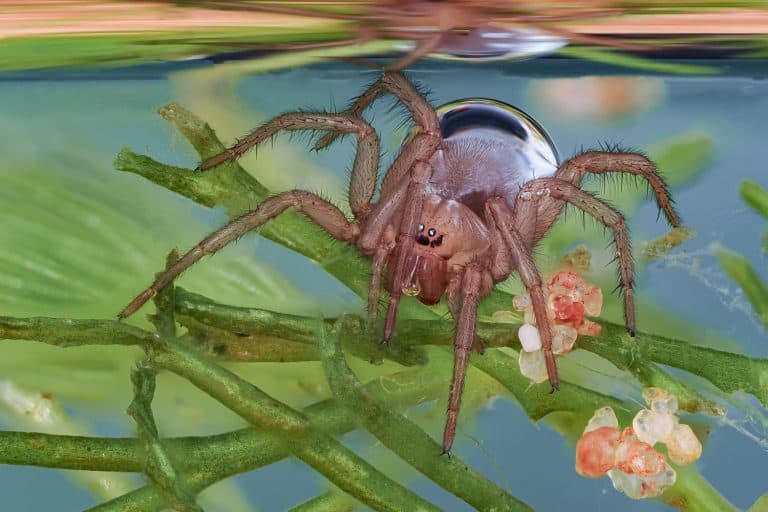
The diving bell spider uses trapped air to breathe underwater.
©iStock.com/Lingkon Serao
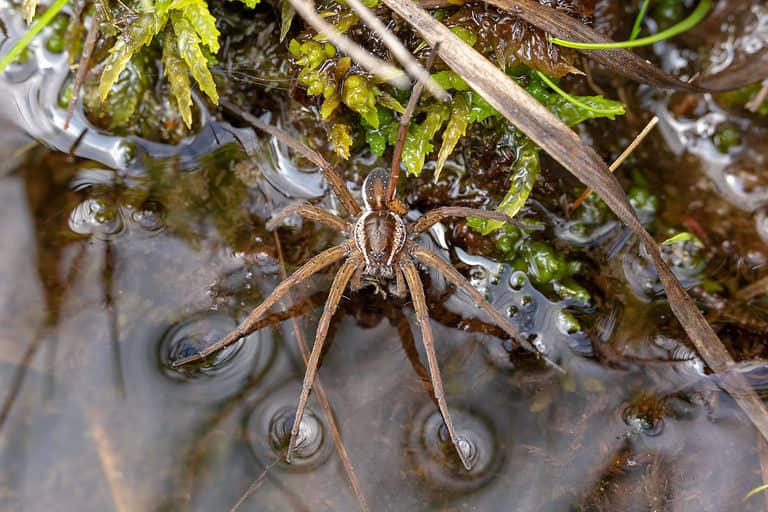
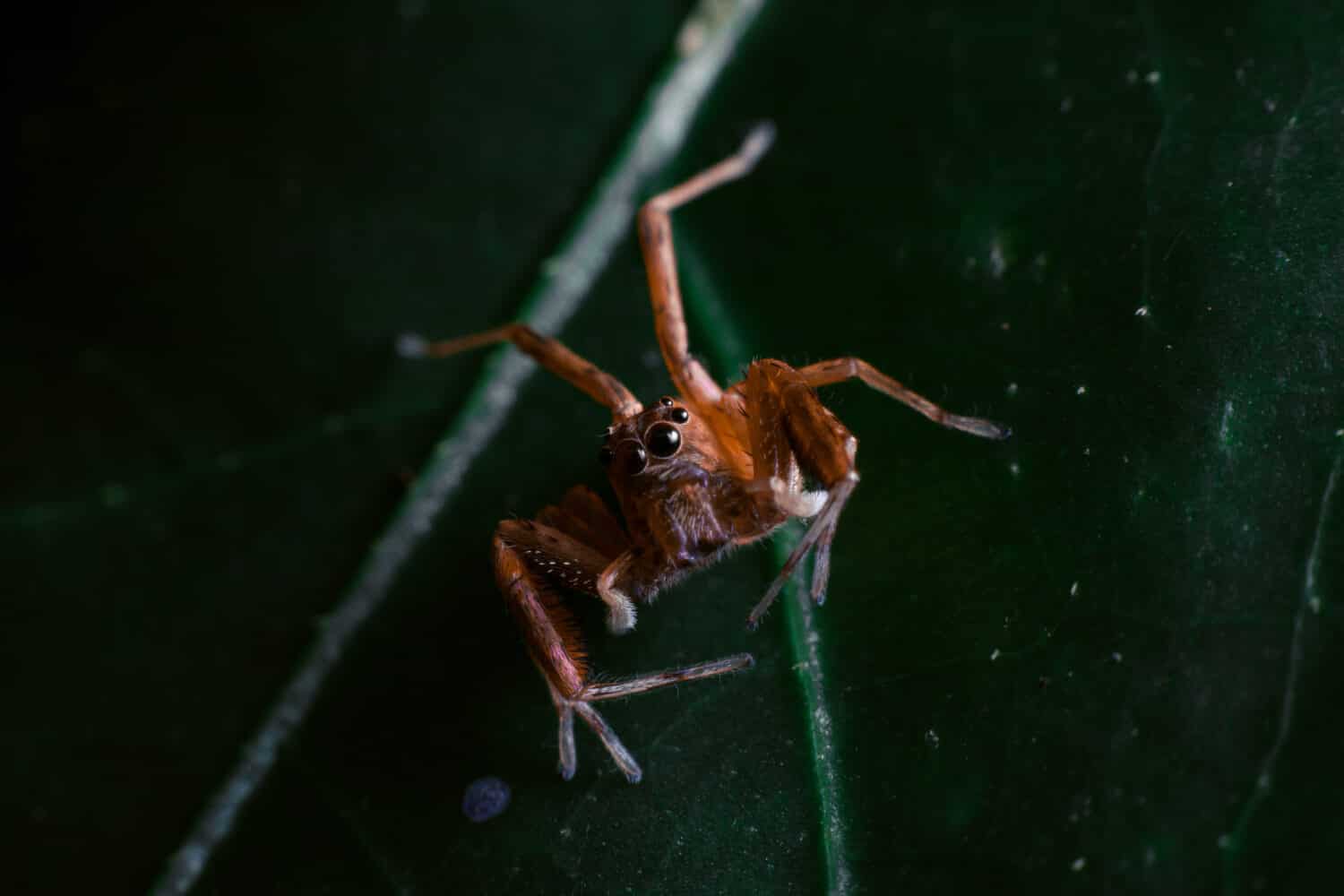
Under the water, they appear silver because of the air bubble surrounding their abdomen. If you see one outside of the water, it looks brown with a dark, velvety abdomen. These spiders are quite small; they measure between 0.3 and 0.6 inches.
Step-by-Step Underwater House Construction
Both males and females build underwater nests or “diving bells.” To construct the diving bell, the spider first weaves a platform of silk between two aquatic plants. It uses different types of silk for the actual structure and for the anchoring lines. It then swims to the surface and thrusts its abdomen out of the water. On the abdomen, there are many very fine waterproof hairs to which bubbles of air adhere.
At the same time, the spider holds its hind legs backward around its abdomen, allowing even more air to be trapped by the hairs. Next, the spider dives down and climbs along the plants to reach its platform. Once the spider is beneath the platform, it releases the air bubble. At this stage, it may also strengthen and extend the diving bell. Once complete, the diving bell is ready for use
How Do the Spiders Use Their Diving Bell?
The diving bell functions as an oxygen reservoir, similar to an external lung. The spider uses the space for digesting prey, molting, breeding, and raising its young. The spider can sense when the oxygen level in the bubble is too low and the carbon dioxide level is too high, prompting it to return to the surface for more air.
In general, females spend more time inside the diving bell, waiting for prey to vibrate the silk threads, while males are more mobile and spend more time outside the diving bell hunting. When the spiders are not in their diving bells, they respire using trapped air on their abdomens, where their respiratory organs are located.
Watch how this spider uses its amazing capabilities in this YouTube video.