
Quick Take
- The American foxhound is the first breed developed specifically within the United States.
- 18th-century English foxhounds lacked the endurance required to navigate colonial forests.
- Despite its official status, the American foxhound is counterintuitively avoided as a common household pet.
- George Washington maintained detailed kennel records to address a performance gap in American packs.
The American foxhound may look like a relaxed, floppy-eared dog, but in Virginia, it carries centuries of meaning. In 1966, the Commonwealth officially named the American foxhound its state dog, recognizing a breed closely tied to the region’s early history, rural life, and sporting traditions. The decision honored Virginia’s long association with mounted foxhunting and its connection to George Washington, who played an important role in shaping the breed.

The foxhound came to represent qualities many Virginians admired, including tradition, cooperation, and a working relationship with the land. Although fewer residents participate in foxhunting today, the American foxhound remains a symbol rooted in real places, real animals, and real traditions. Its selection reflects how Virginia chose to define part of its identity through history and working landscapes.
A Breed Shaped in the Colonies
The American foxhound developed in the British colonies during the 18th century, especially in Maryland and Virginia. Early settlers wanted a dog capable of handling long chases across open fields, forests, and uneven terrain. Imported English foxhounds provided the foundation, but colonial breeders sought a lighter, faster animal with greater endurance.
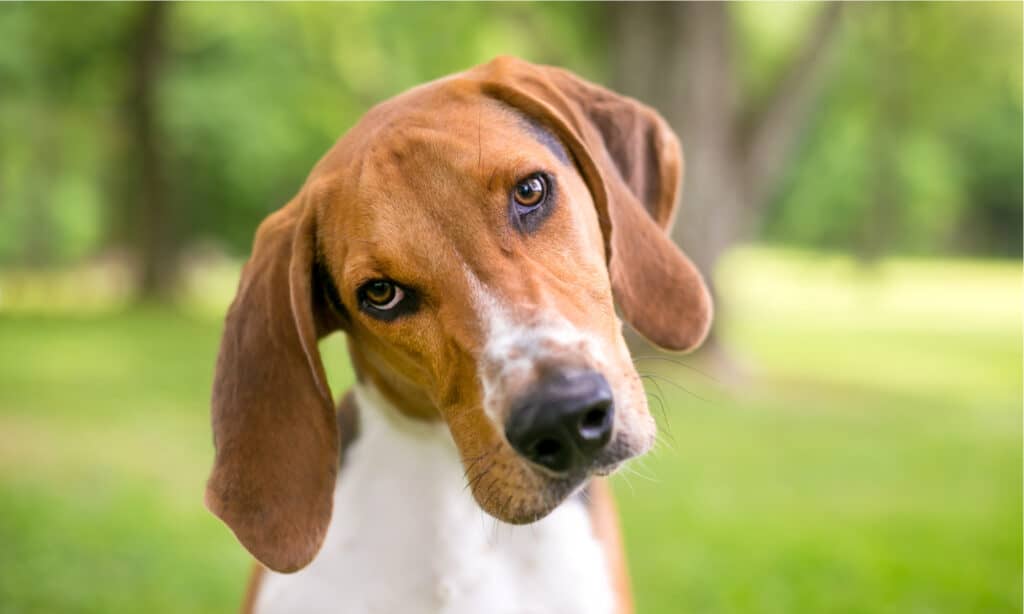
The American foxhound reflects early American breeders’ efforts to adapt European hounds to a demanding new landscape.
©Mary Swift/Shutterstock.com
Over time, breeders introduced French and Irish hounds, producing a taller dog with a strong sense of smell and the ability to run for hours without tiring. Unlike dogs bred for guarding property or hauling loads, foxhounds were designed for sustained movement and teamwork. Packs worked together, following scent rather than relying on sight, which made them well-suited to American hunting styles.
This process produced one of the first dog breeds developed specifically in what would become the United States. For Virginians, the foxhound became a point of local pride, reflecting the ability of colonial breeders to adapt European stock to American landscapes and needs.
George Washington and the Early Foxhound
George Washington’s relationship with foxhounds played a major role in the breed’s history and later recognition. At Mount Vernon, Washington kept detailed records of his hounds, noting breeding, performance, and temperament. He regularly visited the kennels and rode out with the pack when his responsibilities allowed.
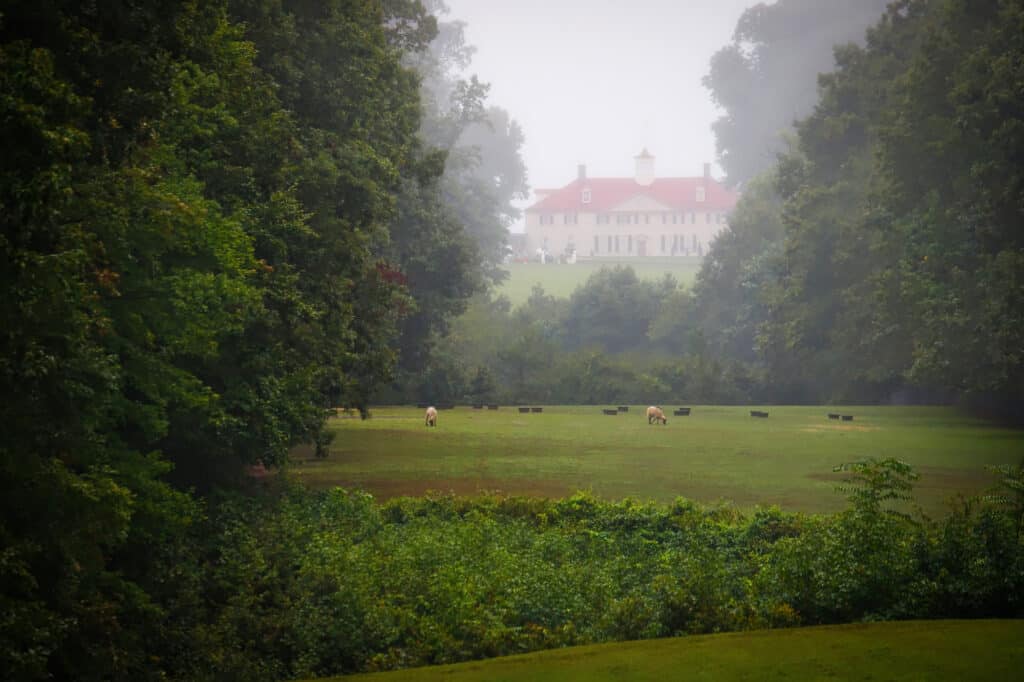
George Washington developed foxhounds at Mount Vernon, his estate in northern Virginia.
©iStock.com/Bill Chizek
Washington imported English foxhounds early on and later received French hounds as gifts from the Marquis de Lafayette during the Revolutionary era. By crossing these dogs, he helped influence the development of a distinct American type. His careful attention to breeding emphasized speed, stamina, and voice, traits still valued in working foxhounds today.
Because Washington was both Virginia’s most prominent historical figure and the nation’s first president, his association with the breed carried lasting symbolic weight. When lawmakers later considered a state dog, the foxhound offered a way to honor Washington while also recognizing a broader rural tradition tied to the land.
Foxhunting in Virginia’s Social Life
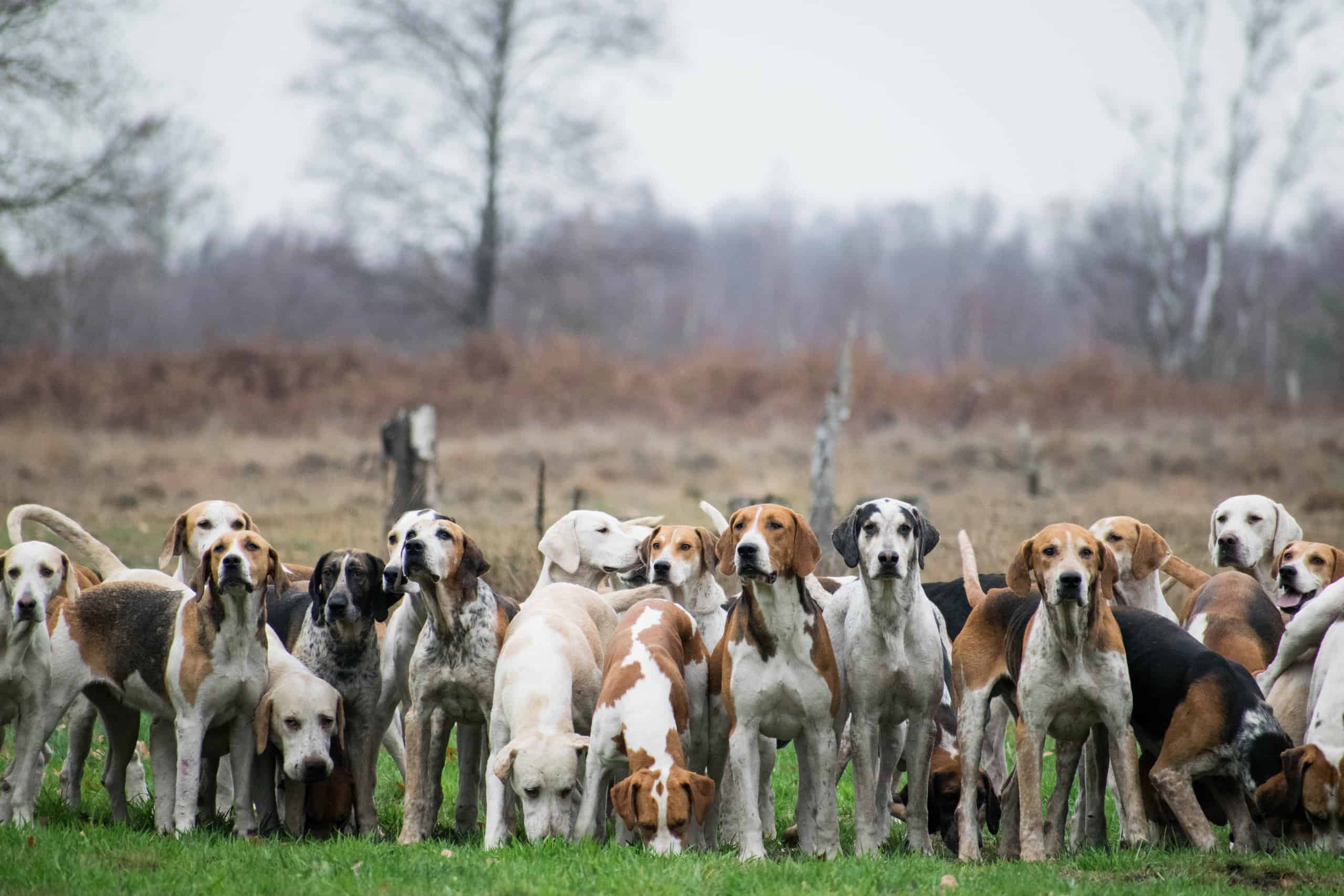
During the 18th and 19th centuries, foxhunting was a central feature of Virginia’s social world. Mounted hunts brought together landowners, guests, and political allies who rode across open country behind large packs of hounds. The focus was usually on the ride itself, the sound and coordination of the dogs, and the shared challenge of the terrain rather than on killing the fox, which often escaped in American-style hunts. Although foxes were originally pursued to protect poultry, mounted foxhunting evolved into a sport where endurance, horsemanship, and pack discipline mattered more than eradication.
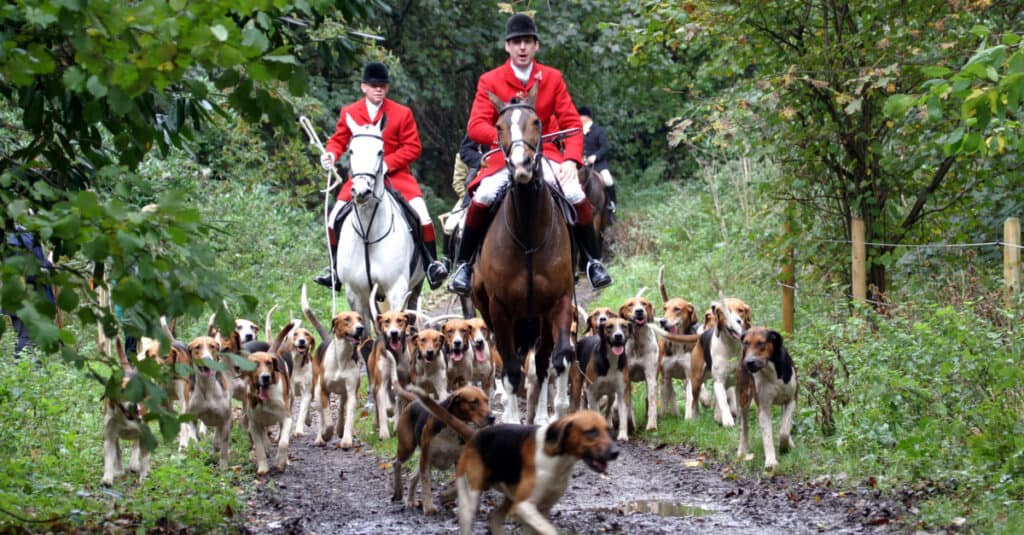
A foxhunt could include dozens of trained hunting dogs.
©Mick Atkins/Shutterstock.com
Foxhunting also carried a strong social meaning. In Britain and parts of Europe, mounted hunts were closely tied to elite identity and required wealth, land, and leisure. English colonists brought this tradition to Virginia as a way to recreate familiar social customs and signal refinement. Hunts functioned much like golf does today, offering an informal setting where influential figures could build relationships and conduct quiet business outside formal institutions. Over time, organized hunt clubs helped formalize these practices, allowing foxhunting to serve as both a sport and a social framework in Virginia.
Foxes, Conservation, and Modern Foxhunting
Today, foxes in Virginia are considered stable and are not listed as endangered. Red and gray foxes are classified as furbearers and may be legally hunted or trapped during regulated seasons under state wildlife laws. These rules aim to balance population management with ecological health, recognizing the fox’s role as both predator and prey.
Organized foxhunting generally follows a different philosophy nowadays. In modern mounted hunts, foxes are not typically killed as part of the activity. Hunt staff often take steps to reduce risks to foxes, including avoiding roads and ending chases when conditions become unsafe. Foxhunting remains active in parts of northern and central Virginia, particularly in the Piedmont, where large areas of private land still support the tradition.
Foxhunting Around the World Today
Outside the United States, foxhunting continues in modified forms across several countries with historical ties to British hunting culture. In the United Kingdom, the traditional hunting of live foxes with hounds was banned in England and Wales in 2004. Trail hunting—where hounds follow an artificial scent—remains legal, though some major landowners have banned it on their properties. Fox hunting with hounds is also illegal in Scotland, with further restrictions enacted in 2023, while in Northern Ireland, fox hunting remains legal as of early 2026, though bans have been proposed. Since then, most mounted hunts practice trail hunting, in which hounds follow an artificial scent rather than a live animal. While controversial, these events retain many ceremonial elements of historic hunts.
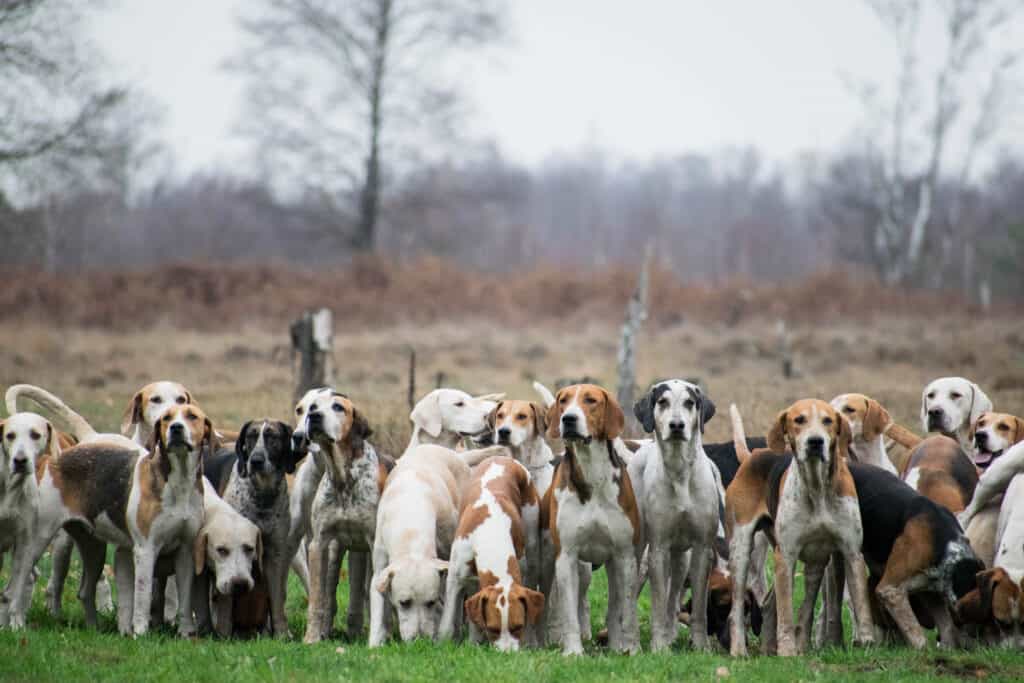
For foxhunters, the chase itself mattered more than catching the fox.
©Marjolein Hameleers/Shutterstock.com
In Canada, some mounted hunt clubs continue to operate, focusing on the chase rather than the kill and adapting to local wildlife regulations. In Australia, traditional foxhunting with hounds is now largely defunct due to strict animal welfare laws, and in South Africa, while some hunt clubs exist, the practice is not widespread. Across these regions, where hunts do occur, they tend to emphasize horsemanship and tradition rather than the pursuit of quarry.
From Tradition to State Symbol
By the mid-20th century, foxhunting continued in parts of Virginia, though suburban growth and land fragmentation were reshaping rural life. Supporters of the sport worried that its cultural importance might fade. Breed advocates and hunting organizations promoted the American foxhound as both a functional working dog and a historical symbol.
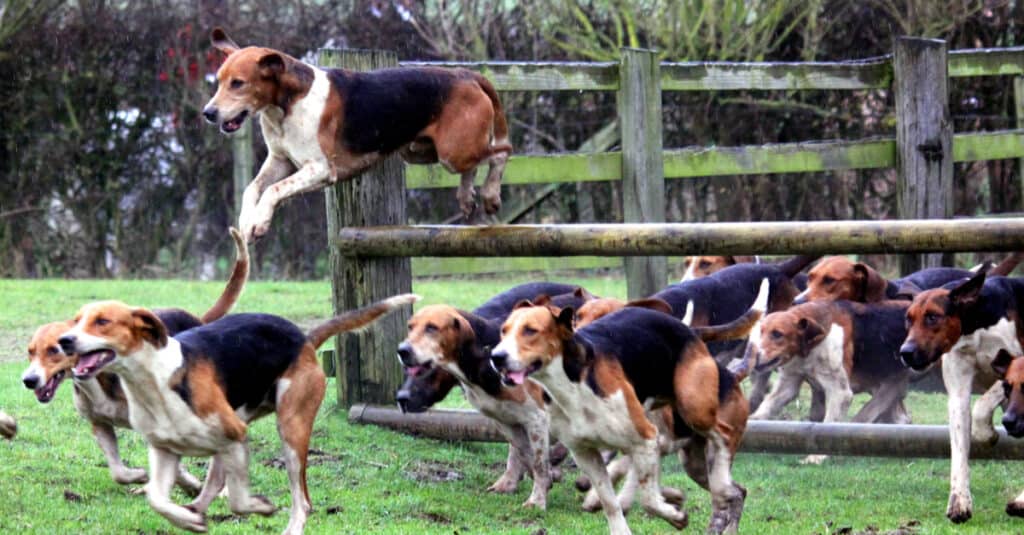
Running and clearing obstacles together, American foxhounds show off their ability to work as a team.
©Mick Atkins/Shutterstock.com
In 1966, the Virginia General Assembly named the American foxhound the official dog of the Commonwealth. Lawmakers cited the breed’s association with George Washington and its long role in Virginia’s countryside traditions. The designation placed a working animal alongside other state symbols, signaling that rural heritage remained part of the state’s identity.
A State Dog Few People Own
Despite its official status, the American foxhound is rarely kept as a household pet. Bred to live in packs and run long distances, foxhounds are highly independent and driven by scent rather than close human direction. Compared with retrievers or spaniels, they are less responsive to repetitive training and more likely to follow their noses despite commands.
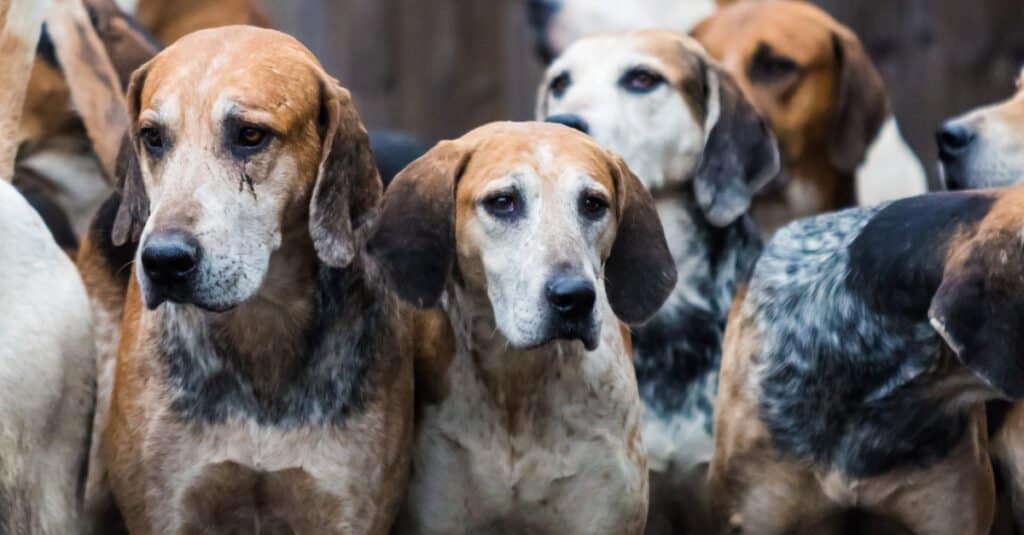
Although they are devastatingly adorable, foxhounds have been bred for generations for a vigorous, noisy outdoor sport, so they do not have the ideal qualities many people value in a suburban pet.
©Derek Hunter/Shutterstock.com
Foxhounds require extensive daily exercise and secure fencing, as they may wander great distances if allowed to roam. Their distinctive baying, designed to carry across open countryside, can be challenging in suburban environments. While they are generally friendly and sociable, especially with other dogs, their physical needs and vocal tendencies make them better suited to working or rural environments than to typical pet homes.
Land Preservation and the Hunt Club Landscape
One often overlooked effect of foxhunting is its role in preserving open land. Hunt clubs depend on large, uninterrupted tracts of countryside. This encourages landowners to maintain farms, fields, and woodlands rather than subdividing them for development. In some areas, long-standing hunt territories have indirectly supported conservation easements and rural zoning policies.
While not conservation organizations in the formal sense, hunt clubs have historically acted as informal stewards of working landscapes. This relationship has helped preserve open space in parts of Virginia that might otherwise have been fragmented by suburban expansion. In this way, foxhunting has influenced land use patterns beyond the sport itself.
Changing Views on Hunting Traditions
Public attitudes toward hunting have evolved since the foxhound became Virginia’s state dog. Some residents support mounted foxhunting for its role in preserving open land and maintaining rural traditions. Others question its place in a modern, increasingly suburban state. These debates have shaped regulations governing land use and hunting practices.
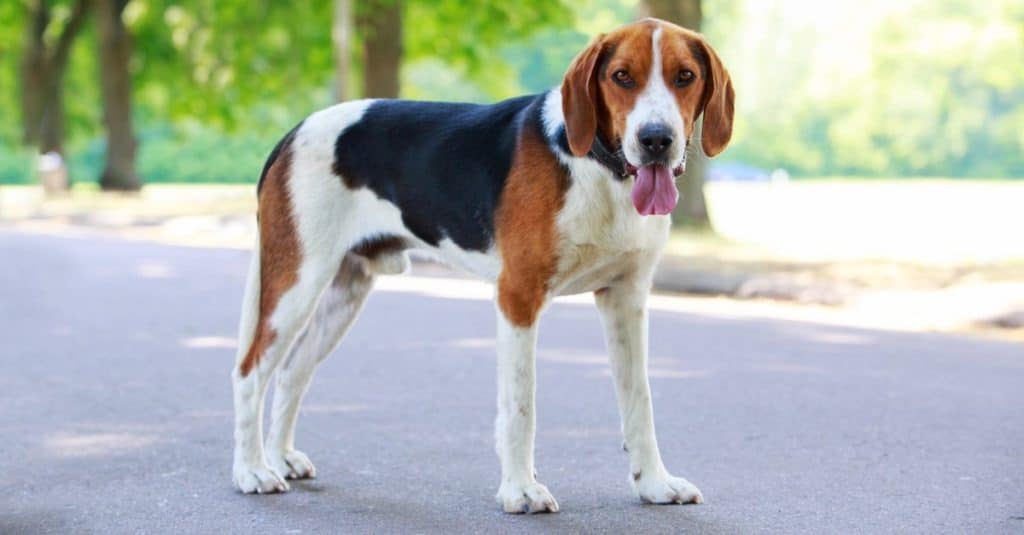
Even as foxhunting faces increasing scrutiny, the foxhound itself remains a respected symbol of Virginia’s past.
©Olga Aniven/Shutterstock.com
Virginia’s Identity and Historical Pride
Virginia takes pride in being the birthplace of eight U.S. presidents, including the first. Figures such as George Washington, Thomas Jefferson, James Madison, and James Monroe anchor the state’s identity, alongside later presidents born in Virginia. This legacy reinforces the Commonwealth’s image as a center of early American leadership.
Choosing the American foxhound as a state symbol fits within that historical framework. Virginia highlighted a working breed tied to everyday rural life and one of its most influential figures. As long as foxhounds continue to run across Virginia fields, the state’s chosen symbol remains a living connection between past and present.