
Quick Take
- A spider figured out something it took human engineers centuries to replicate, and it does it with silk. See how it's built →
- The air bubble isn't just a pocket of air. It does something no ordinary bubble can. Discover the gill effect →
- There's a catch that forces the spider back to the surface, though it has nothing to do with running out of oxygen. Find out why it resurfaces →
- This spider completes its entire life cycle without ever truly leaving the water, carrying out activities you wouldn't expect to be possible inside a bubble. Explore life in the bubble →
Meet the spider that spends virtually its entire life underwater even though it needs air to breathe. Although humans have used diving bells at least as long as Aristotle described them in ancient times, the diving bell spider can make its own silk diving bell. This small spider can remain inside its dome-shaped air bubble for up to a day before needing to surface for fresh air. What’s more, the air bubble is more than just a pocket of air. It also functions as a gill by bringing in fresh oxygen.
Continue reading
Building an Underwater Air Chamber
The diving bell spider (Argyroneta aquatica) is the only spider known to live most of its life underwater. Because it needs to breathe air, the resourceful spider has evolved to survive by building its own diving bell.
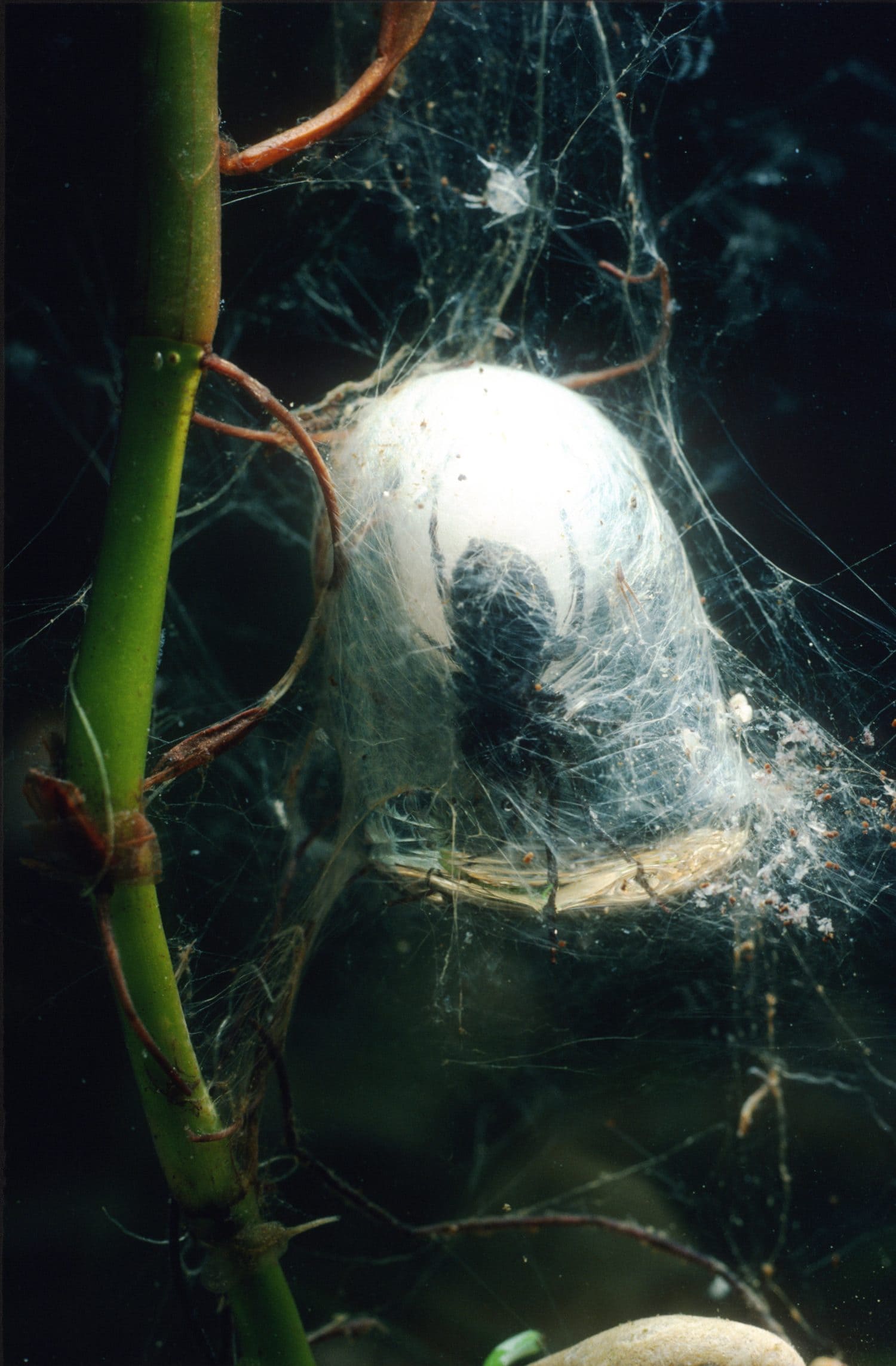
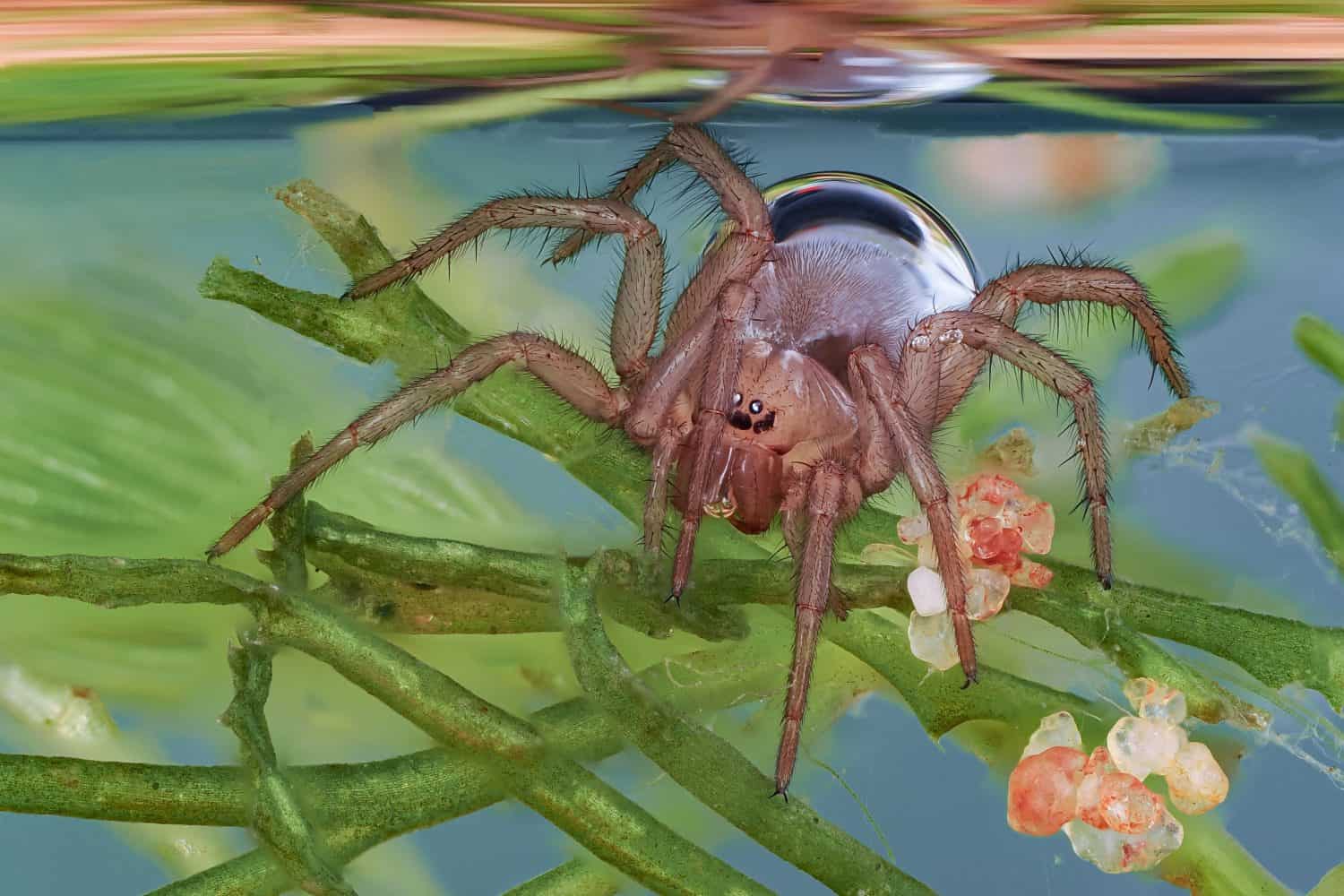
Diving bell spiders spend most of their lives underwater inside dome-shaped air bubbles made of silk.
©Neil Bromhall/Shutterstock.com
The spider begins by spinning a dome-shaped web between underwater plants. Once the web is complete, the spider rises to the surface to gather air bubbles, trapping them on the hydrophobic (water-repellent) fine hairs covering its legs and abdomen. When the spider returns to its web, it releases the bubbles, gradually filling its dome-shaped home with air. The spider must make several trips to the surface before the air pocket becomes large enough for it to enter and remain inside.
A Bubble That Acts Like a Gill
Like a biological gill, the spider’s special chamber exchanges gases with the surrounding water, keeping the air fresh for the spider to breathe. This process works because there is more oxygen dissolved in the surrounding water than inside the bubble, causing oxygen to diffuse into the bubble. Similarly, as the spider breathes, carbon dioxide builds up inside the bubble and diffuses out into the water.
Researchers discovered that diving bell spiders could stay inside their underwater homes for more than a day with only one quick trip to the surface for fresh oxygen. Scientists theorize that the spiders could survive even longer because their bells can extract oxygen from even the most stagnant ponds. However, nitrogen gradually diffuses out of the bubble, causing it to shrink over time. Once the bell becomes too small for the spider to inhabit, the spider returns to the surface to gather more air.
Life Inside a Custom Bubble Home
Spiders spend much of their time quietly waiting—waiting for prey to come by and for predators to pass. Being able to stay in its bubble for extended periods is advantageous for the diving bell spider. Diving bell spiders live their lives inside the safety of their air chambers, where they molt, rest, eat, mate, and lay eggs.
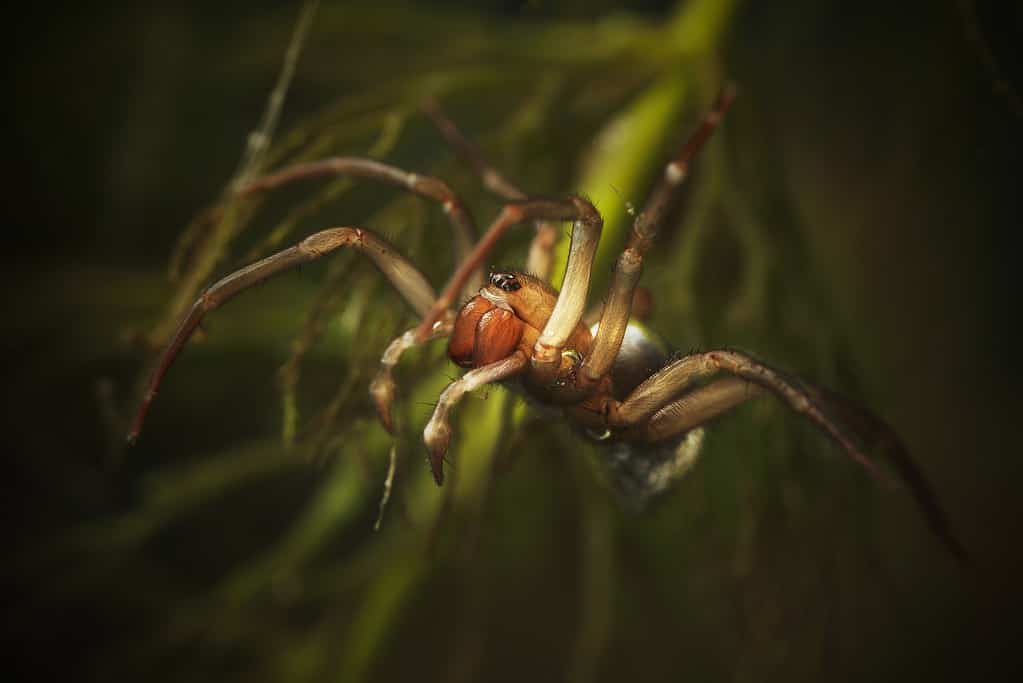
Diving bell spiders patiently wait inside their air bubbles, detecting vibrations from prey. They quickly pounce on their victims and bring them back to the air chamber to eat.
©Patel Krasensky/Shutterstock.com
In addition to breathing inside its diving bell, the spider uses specialized hydrophobic hairs to trap a thin layer of air around its body. This adaptation allows it to breathe directly from the trapped air while swimming, enabling the spider to leave its bell to hunt.